
Kelowna to Vancouver Island and Return to Calgary
We set off from Kelowna towards Vancouver, enjoying the stunning views of the mountains for the first time this trip. Rain and a little wind had cleared the smoke, although fires were still burning.
There are three possible routes to Vancouver and the west coast from the interior of British Columbia. You can travel the southern route, that is close to the border with USA, coming from Alberta and the rest of Canada through the Crowsnest Pass. This is a common route for trucks and is less scenic. Although the road was not closed, there was a large fire causing visibility problems. The second route follows the Fraser River and is part of the TransCanada Highway. We have taken this route in the past, and for various reasons, said “never again”. As it happened, that road was closed by a huge out of control fire that had been burning for some time. The third route is the Coquihalla Highway.
Between Kamloops and Hope, British Columbia, Highway 5 is known as the Coquihalla Highway. It is a 116-mile freeway running over the 4081-foot Coquihalla Pass. We joined the highway at Merritt, partway down the route. In the 1960’s the Merritt Board of Trade began lobbying the government for a highway to given them access to Hope and thus an easy approach to Vancouver and the port. Surveying began in 1973, but it was not until 1984 that the then provincial premier decided to fast-track the project so it would coincide with Expo 86, the 1986 World’s Fair, held in Vancouver. The section between Merritt and Hope was completed on time, but two further northern sections took until 1990 to finish the highway as far as Kamloops.
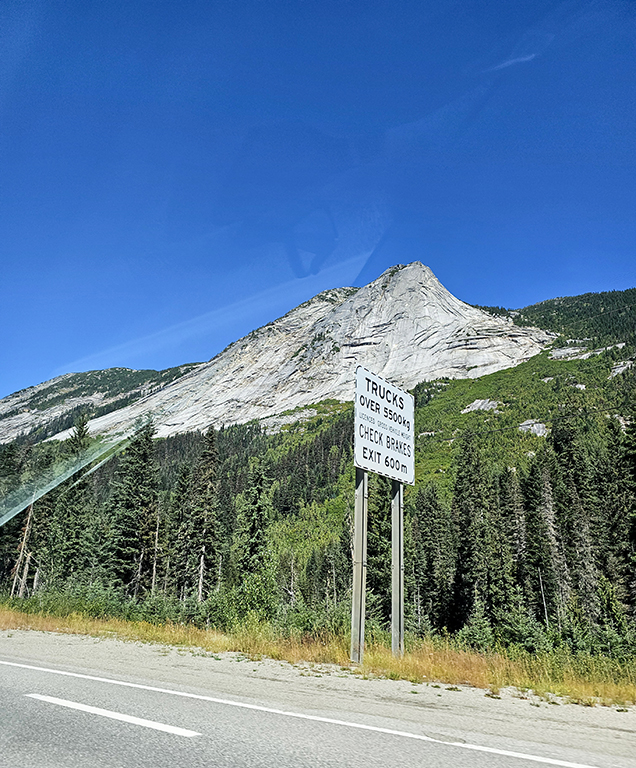
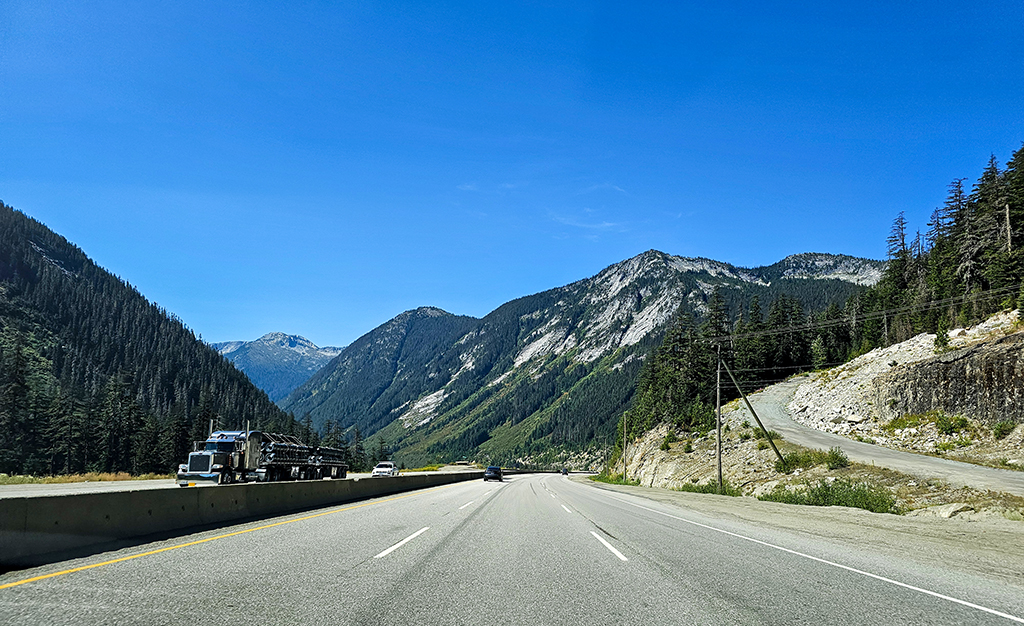
I can remember bumper stickers that said “I survived the Coquihalla Highway” from the years when we lived in Calgary. It can be a dangerous route, especially in winter, when snow can fall at a rate of 4 inches per hour. There are typically between 400 and 500 accidents during a winter season. On occasion, the highway shuts down and drivers have to stay overnight in their vehicles. When it first opened, there were still a lot of older cars on the road that would overheat as they climbed up the pass. A large yard with tow trucks was situated at the bottom of the pass to rescue breakdowns. On a sunny summer day, the highway was an easy drive and the views were spectacular. The day we drove down the highway, we passed an 18-wheeler that had burned out his brakes and was off to the side of the road. On our return drive up the pass a week later, we passed three vehicles that had broken down, so it is still not a road to take lightly.
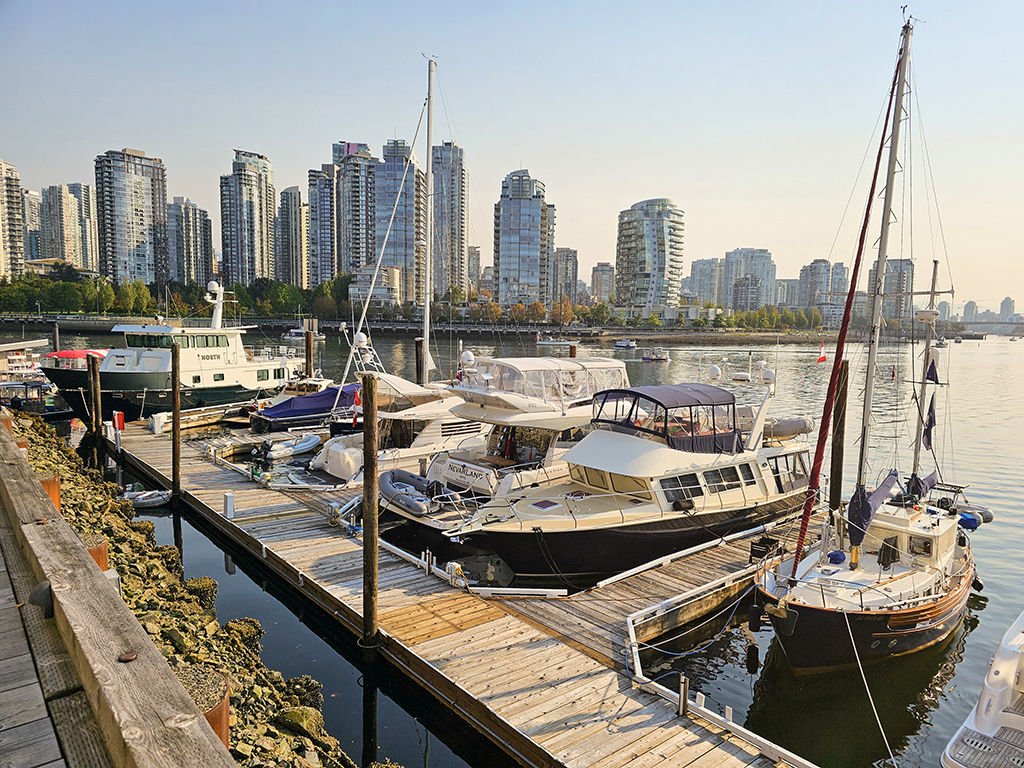
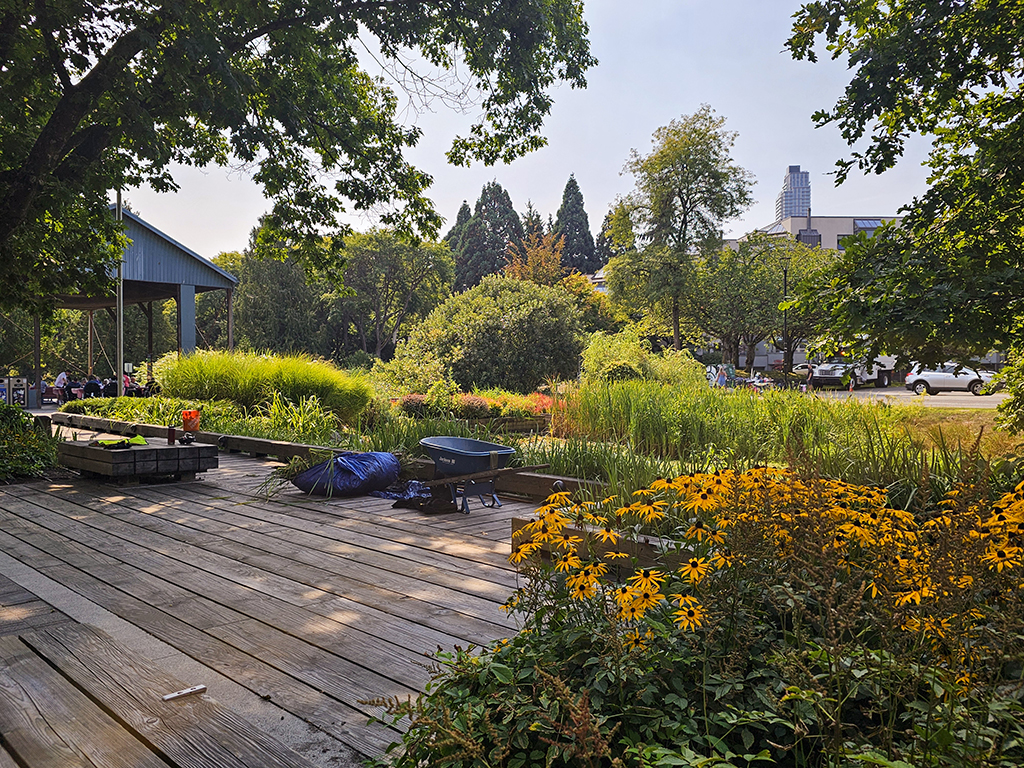
We arrived in Vancouver by mid-afternoon, and made our way to Granville Island, in the heart of the city. In keeping with our preference for taking time to explore one area, rather than buzzing all over trying to see everything, Dick had booked a hotel on Granville Island for two nights.
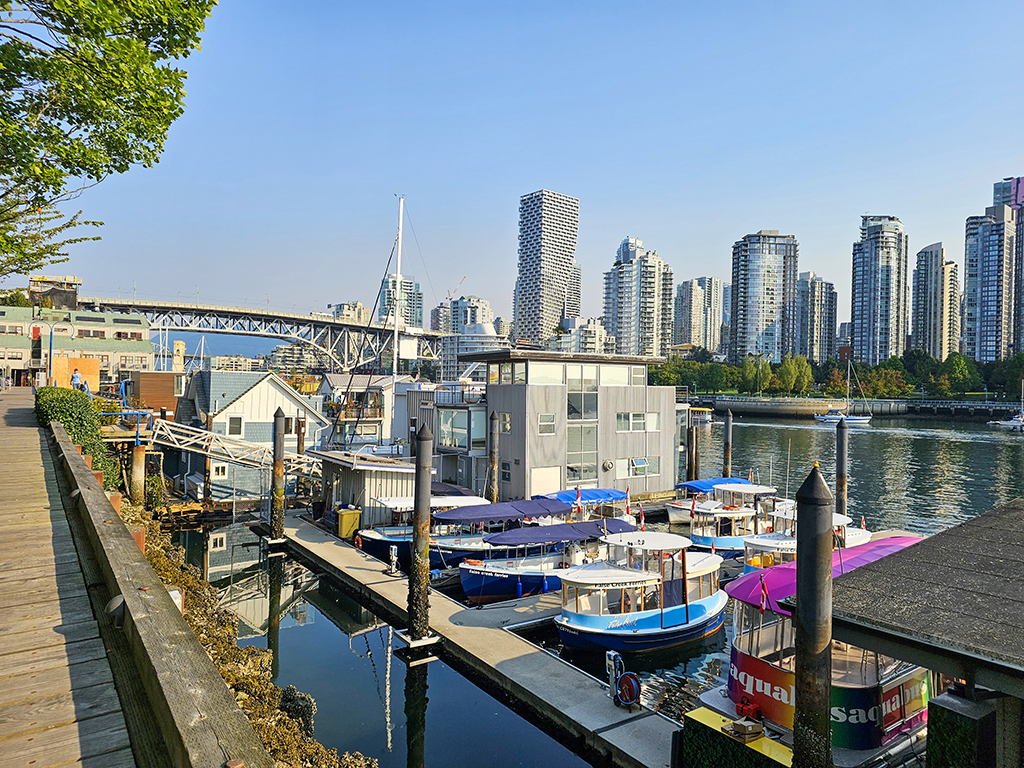
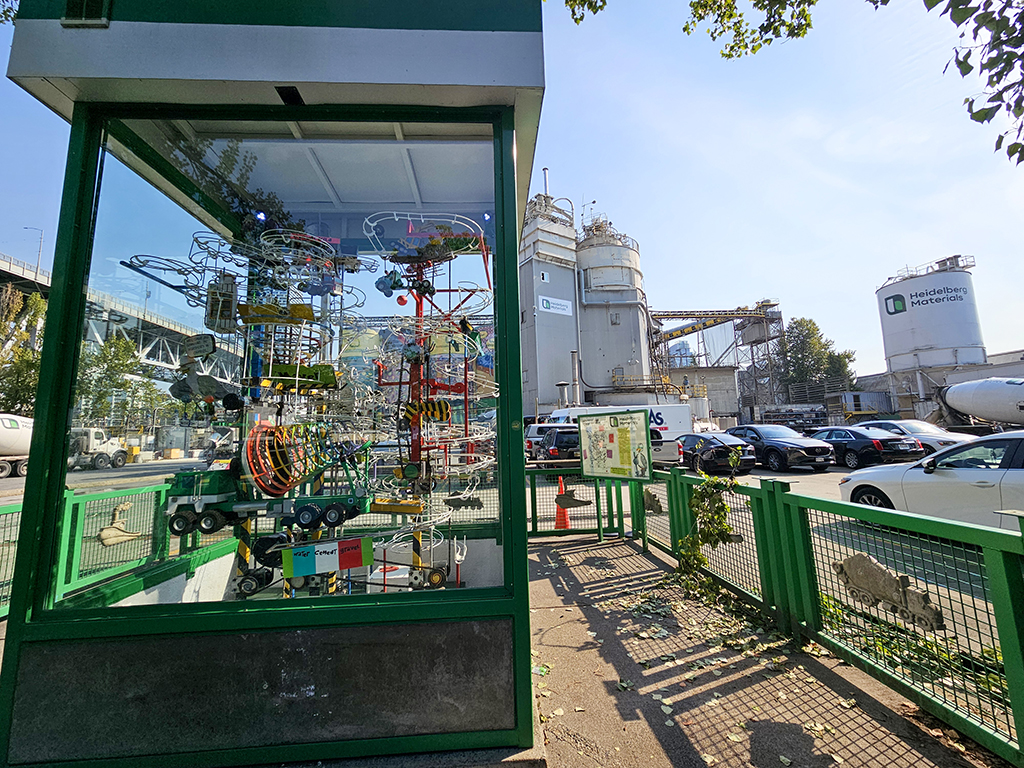
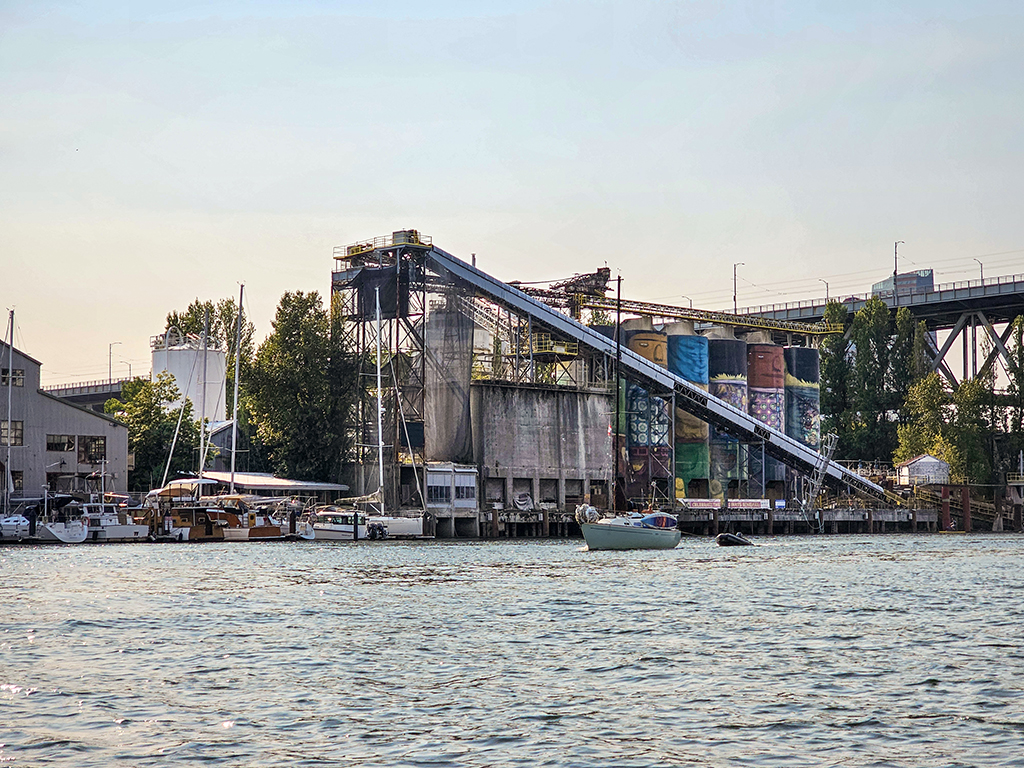
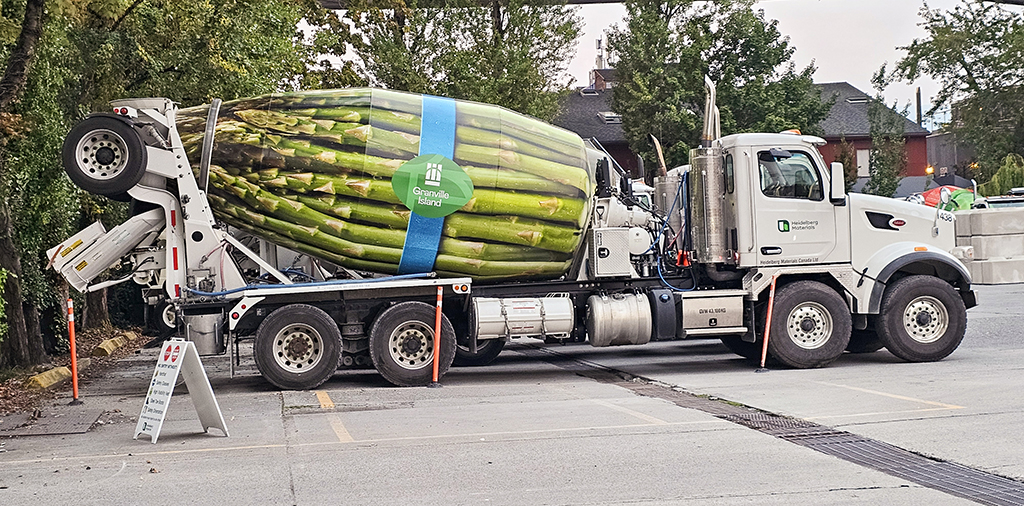
The island is artificial, created out of dredging spoils in 1915 as the Port of Vancouver was growing and there was a need for an industrial area close to the port. A million cubic yards of fill was dredged out of False Creek to create a 35-acre island, connected to the mainland by a combined road and rail bridge. By 1923, every available lot on the island housed factories, built out of corrugated tin. Some of these buildings are still in use, one of them holds the Public Market, housed in a 50,000 sq ft former factory. Over time, the industries relocated, leaving only a cement plant (still in operation) and the island was gradually converted to an arts and culture venue. There are many shops and restaurants, as well as artists’ studios, theatres, and education centres.
On our first evening, we were delighted to get together with Debra and her husband Murray. I went to grade school with Debra. 50 years after the class that I was in graduated from high school, Debbie made incredible efforts to track down as many former students as she could find for a reunion. This was just after covid, but I was invited and participated in a Zoom gathering of many of my former classmates. Debbie and Tannis (who we met later) have kept in touch ever since. We enjoyed a great evening catching up with Debbie and her husband. They are great travellers, so Dick and Murray had things to talk about while the ladies lost themselves in reminiscence. We certainly hope our paths will cross again.
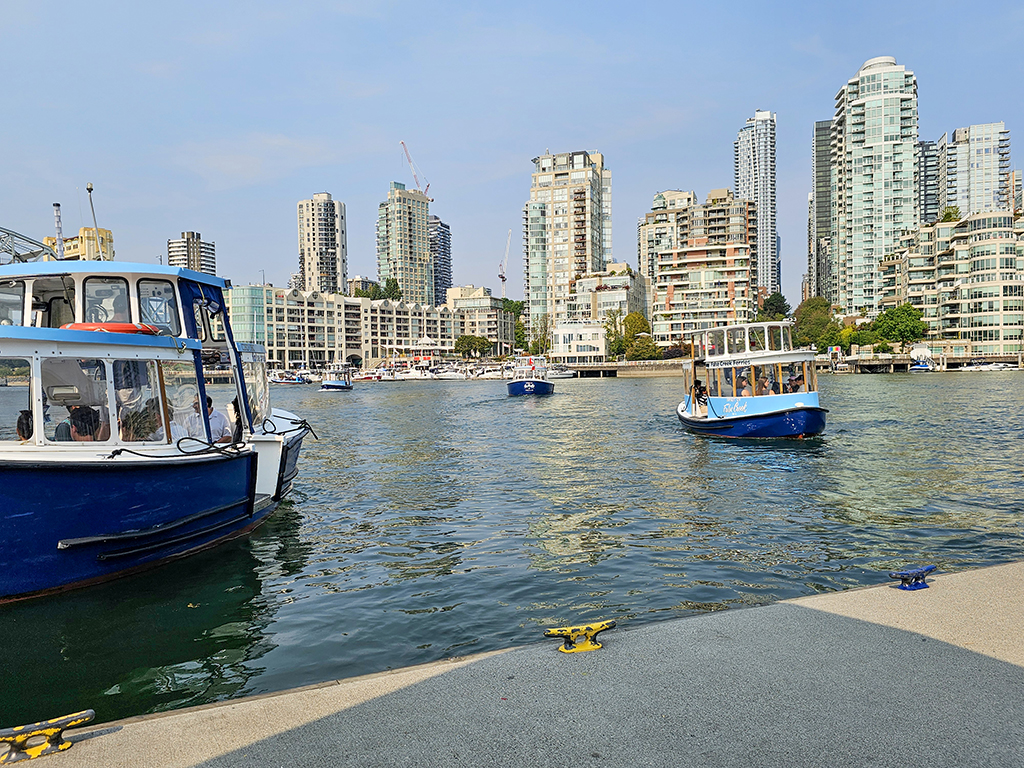
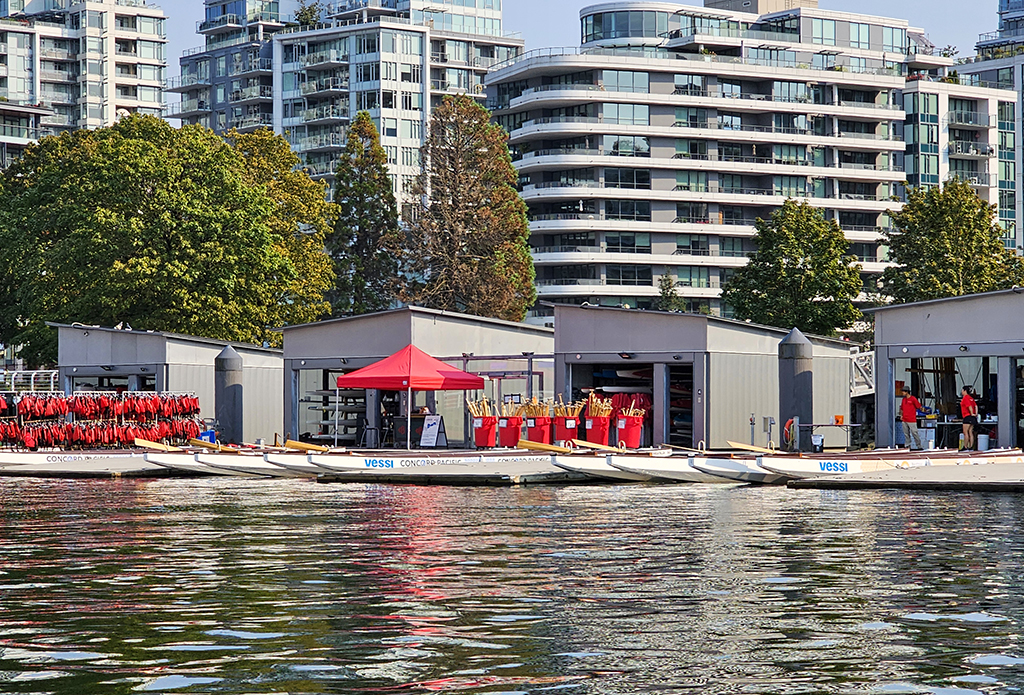
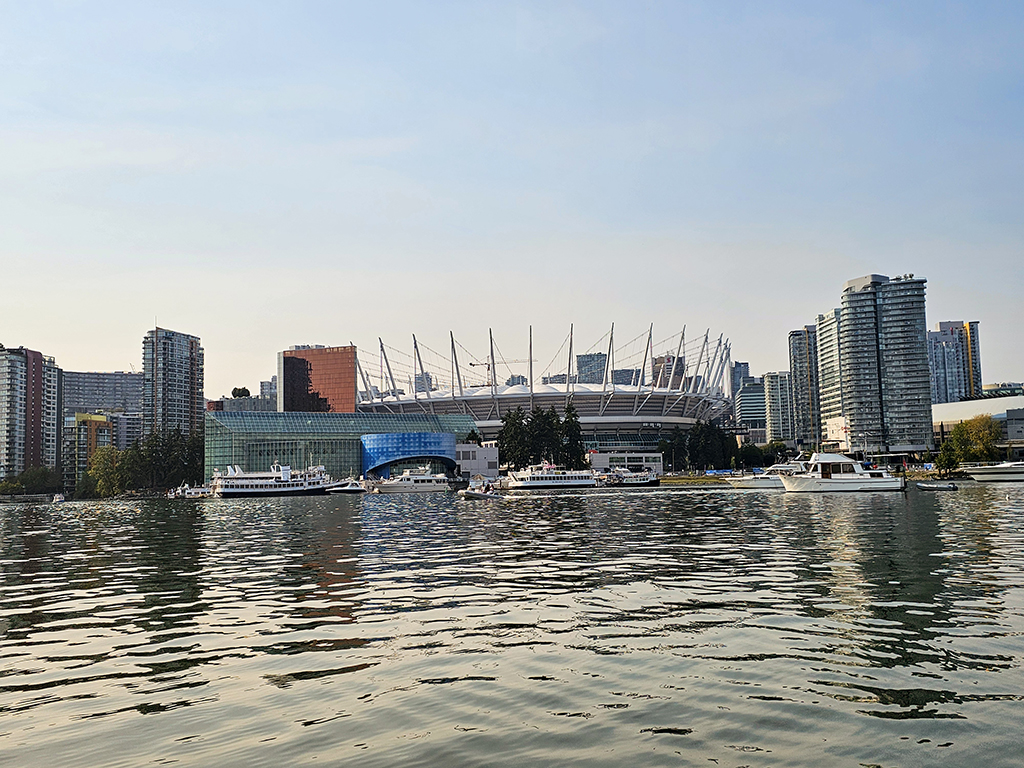
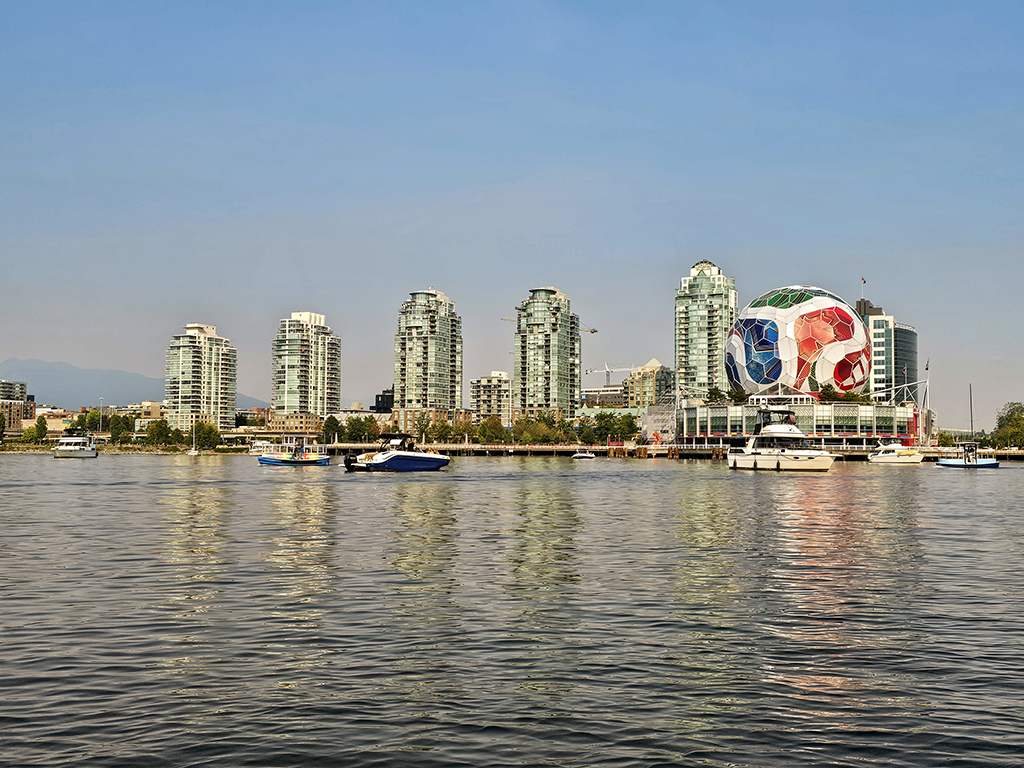
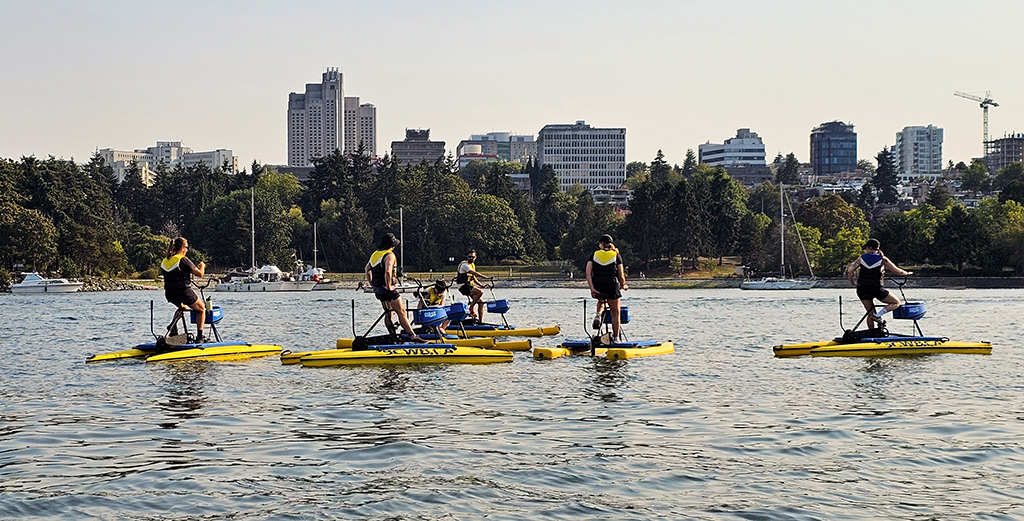
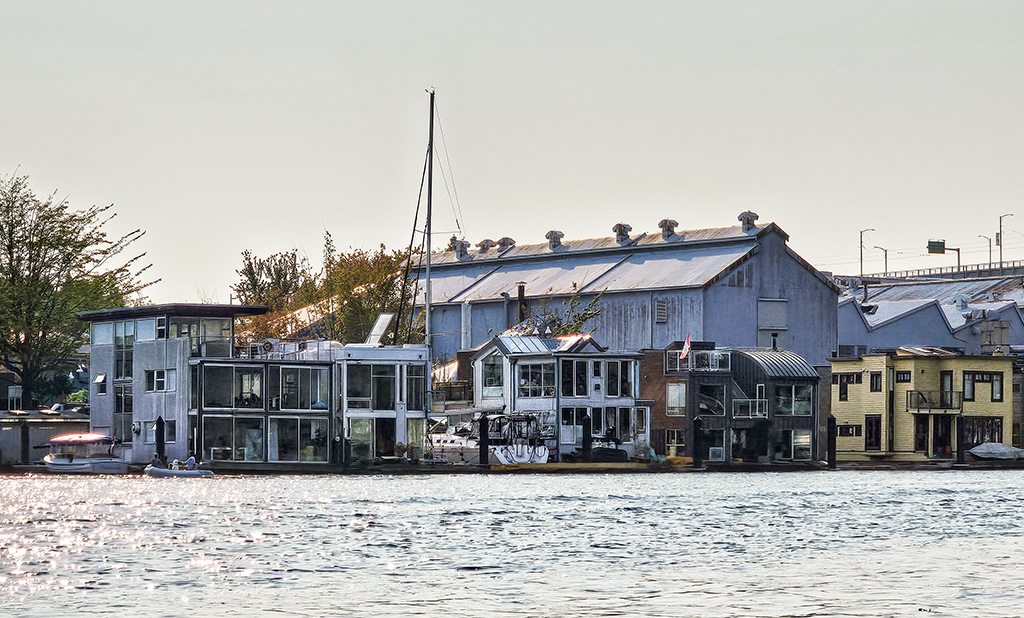
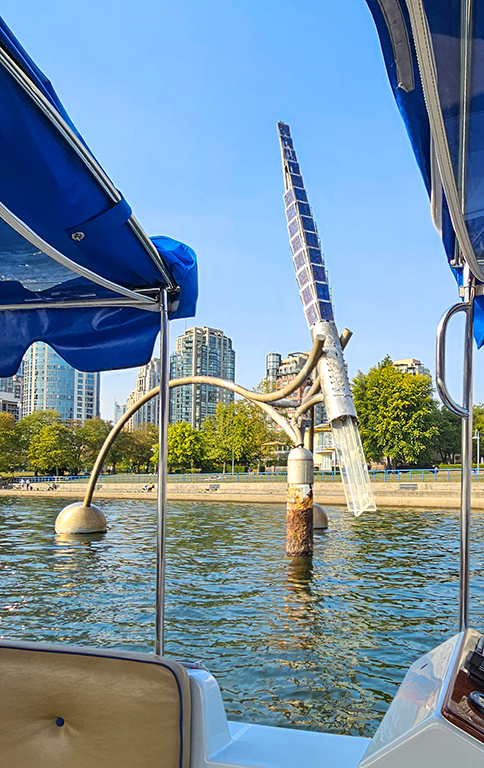
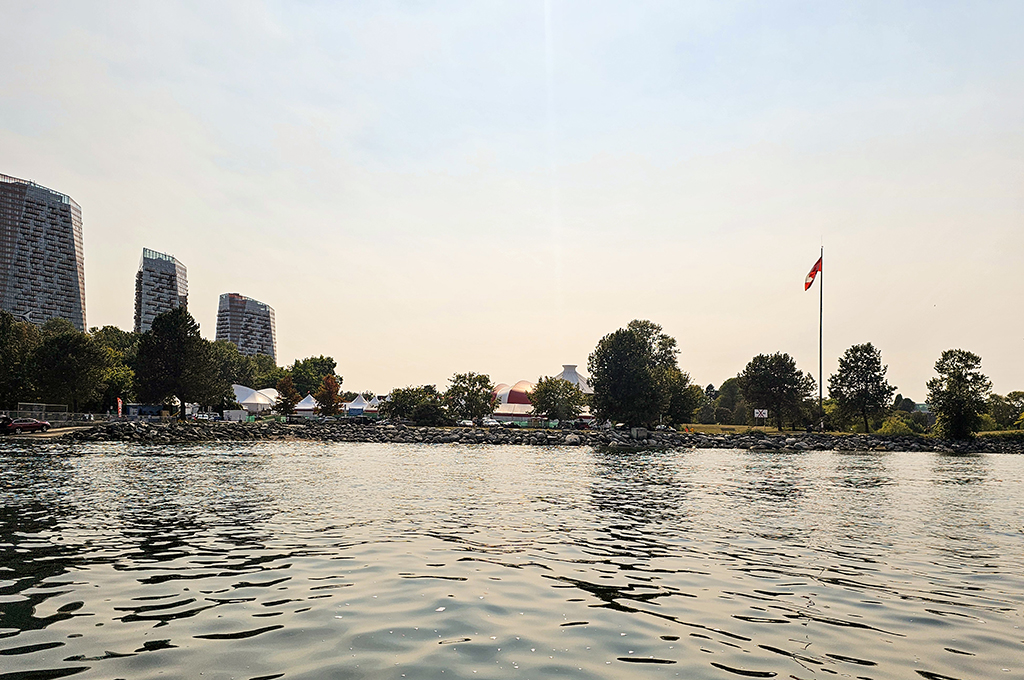
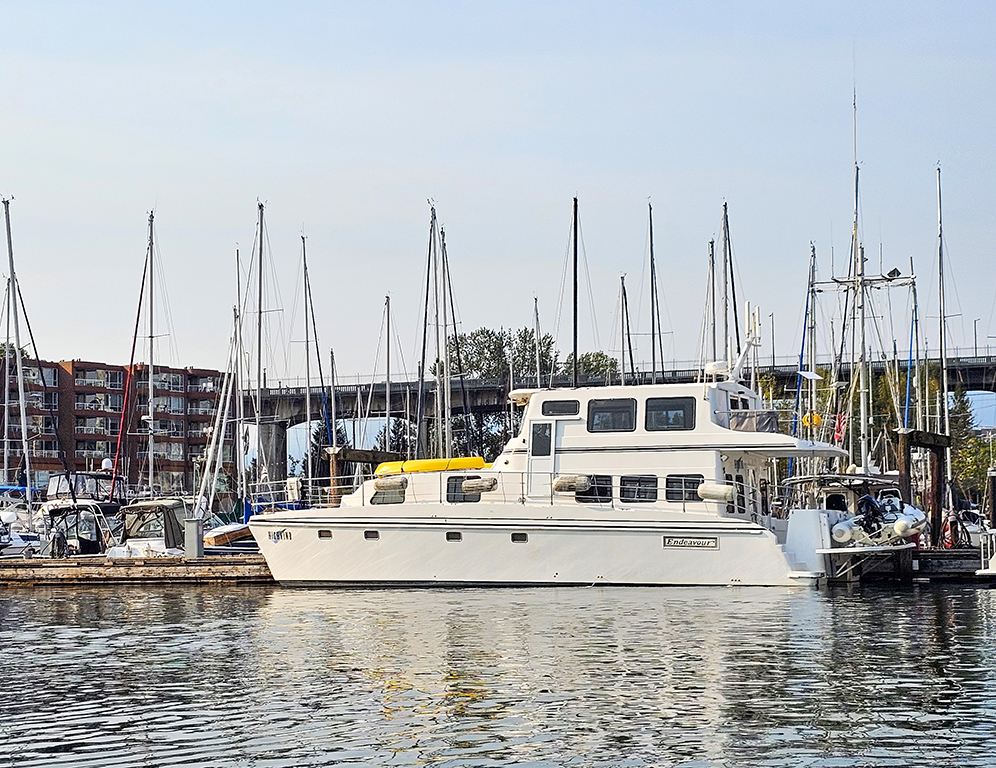
The next day, we enjoyed exploring the island, and we also took a one-hour narrated tour of False Creek on an electric boat. False Creek winds through the heart of Vancouver, the third largest city in Canada. We enjoyed seeing all the interesting condos as well as landmarks such as BC Place and the Science Centre, Science World. The geodesic dome of Science World is temporarily painted in jolly colours to resemble a soccer ball, in honour of the FIFA World Cup. Some of the games were played in Vancouver this summer. We also saw the cement plant from the water, and the interesting floating homes on Granville Island. Dick and I think that we might actually enjoy living in a floating home. Sort of like a boat without the need to move. In the marina at Fishermen’s Wharf we were surprised to see a beautiful 48-foot Endeavourcat. This is the newer version of our Nine Lives. We had just finished telling our captain and tour guide about our Great Loop voyage and Nine Lives. There were very few of these 48s built, so it was lovely to see one so far away from their usual haunts on the eastern seaboard.
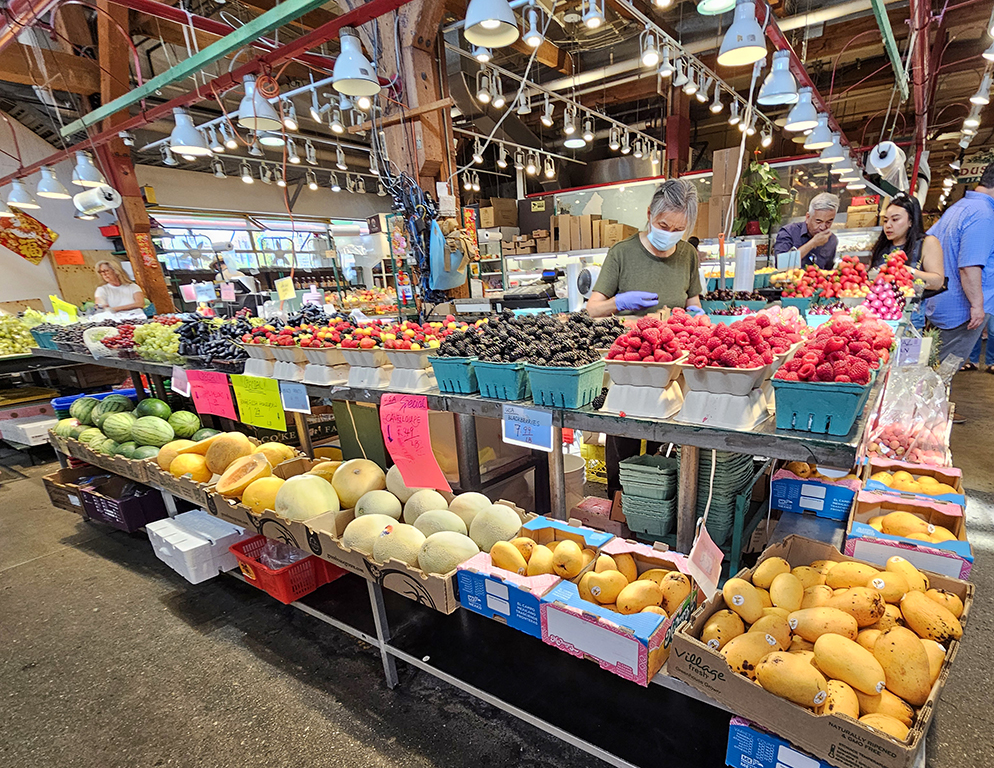
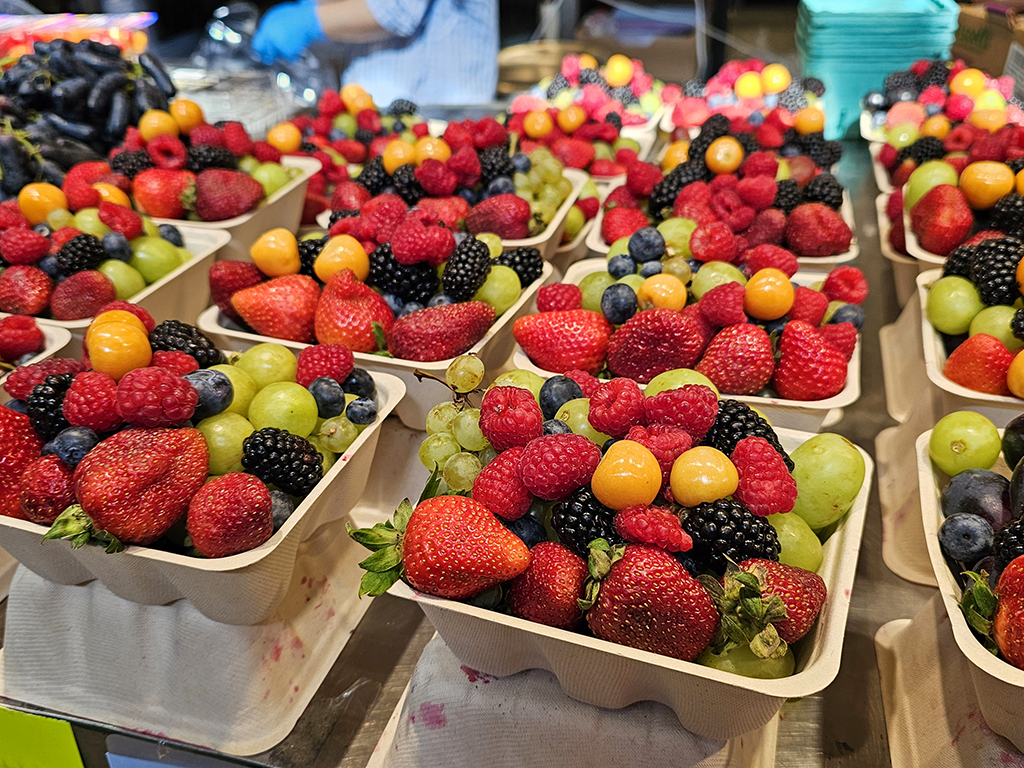
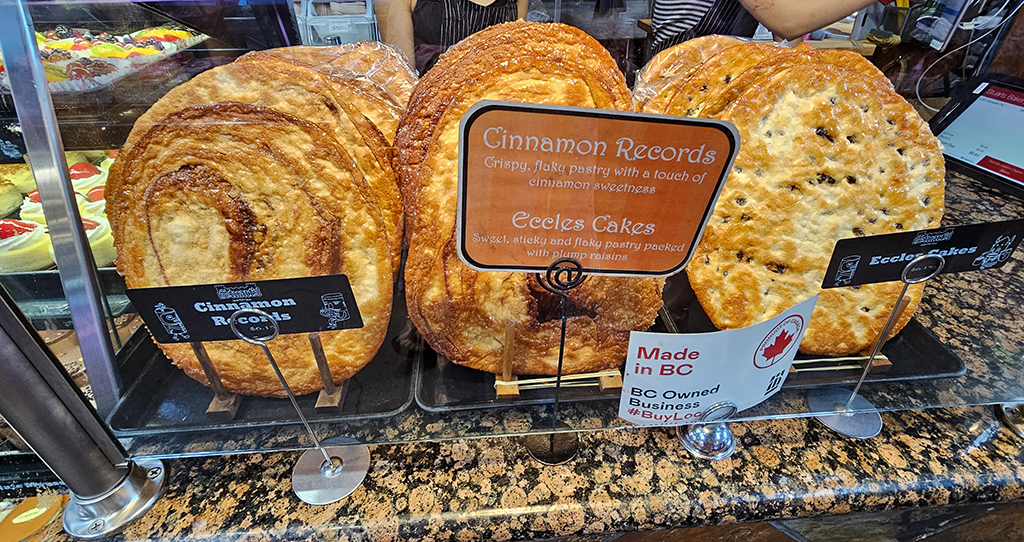
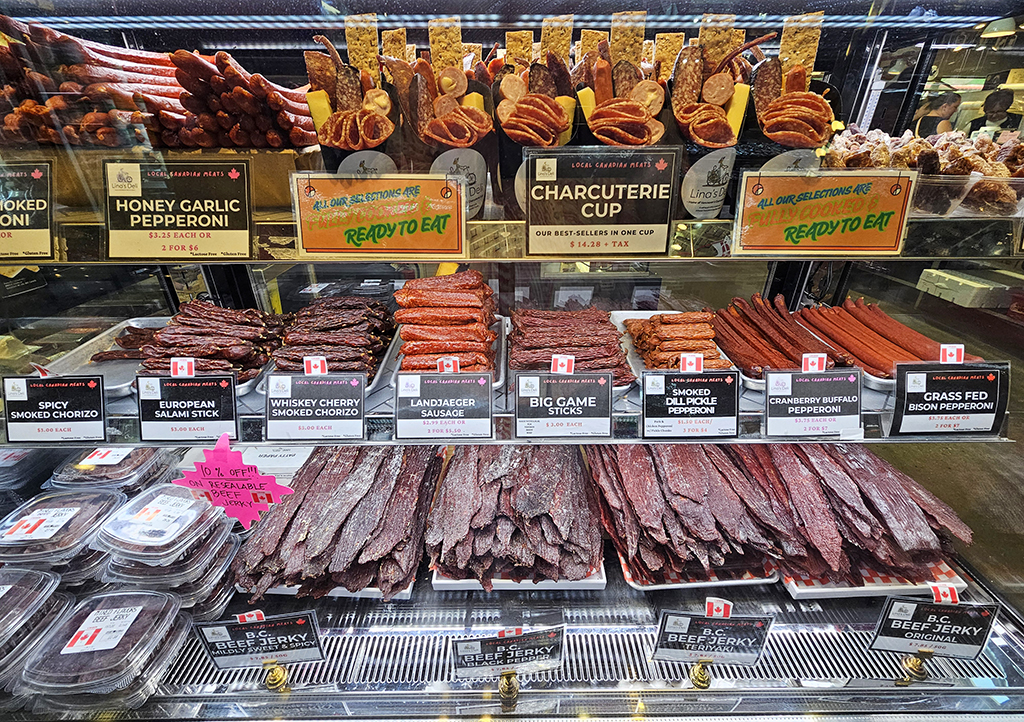
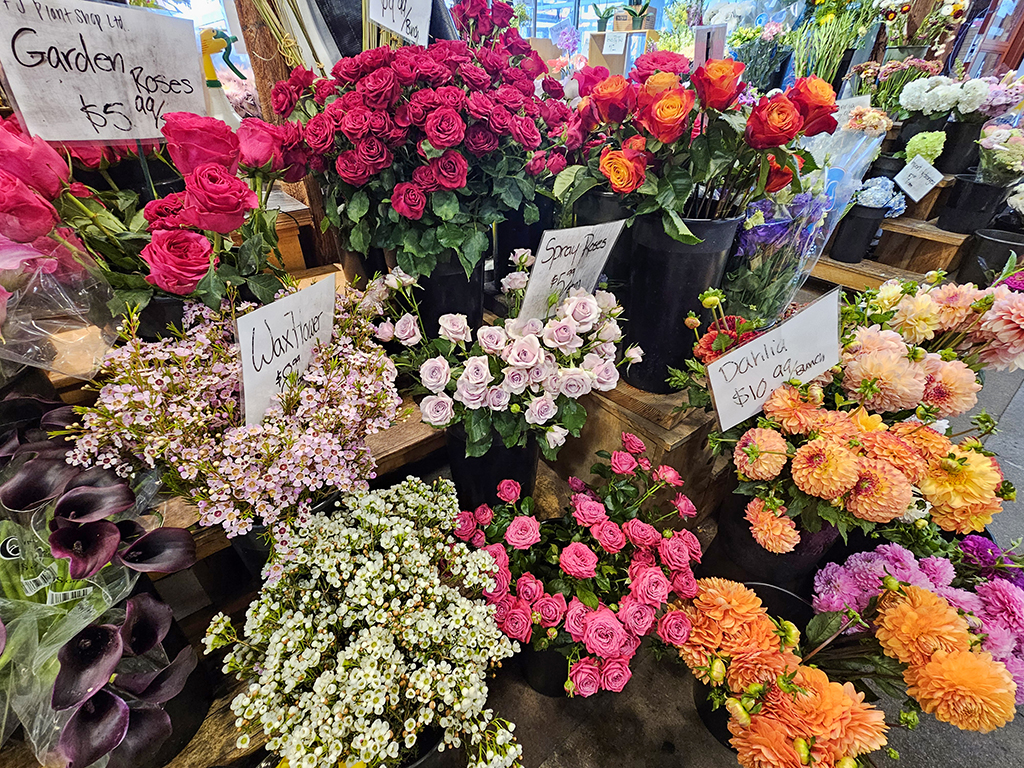
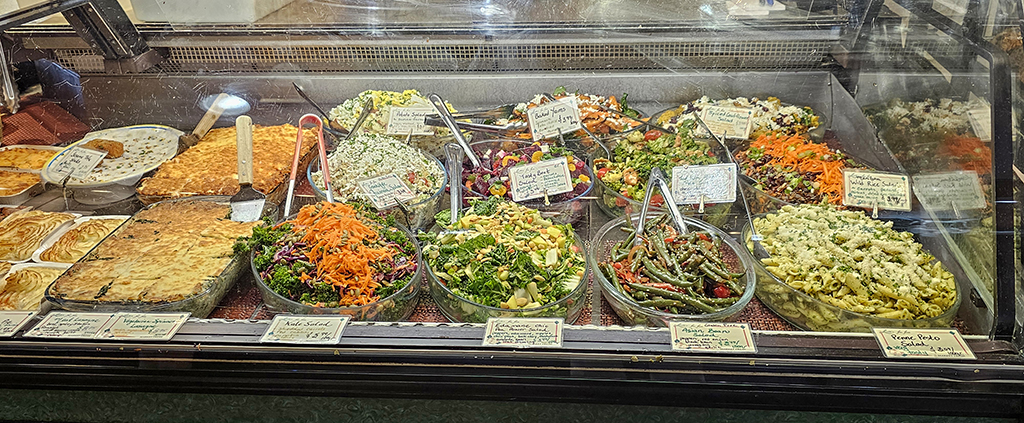
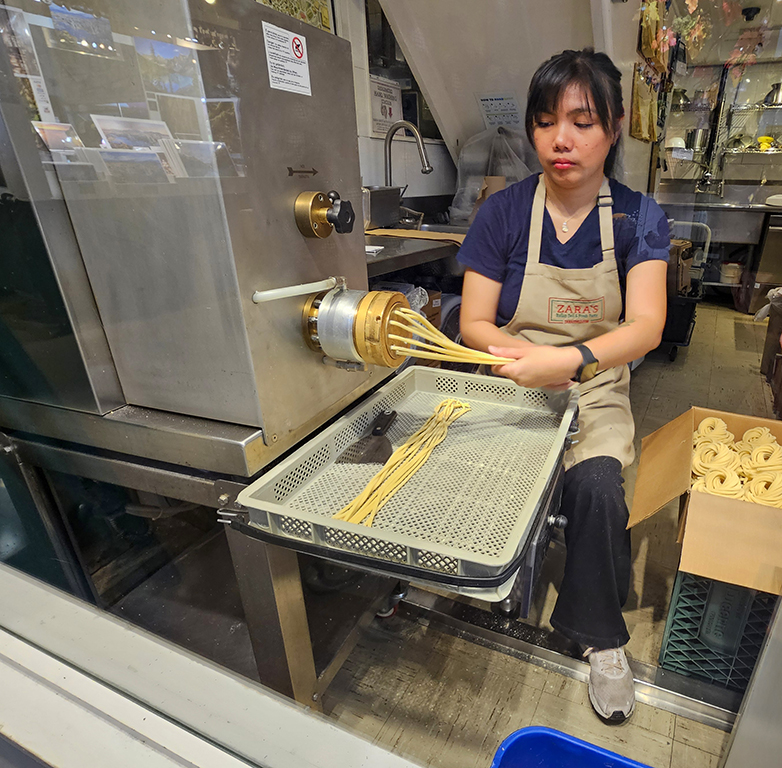
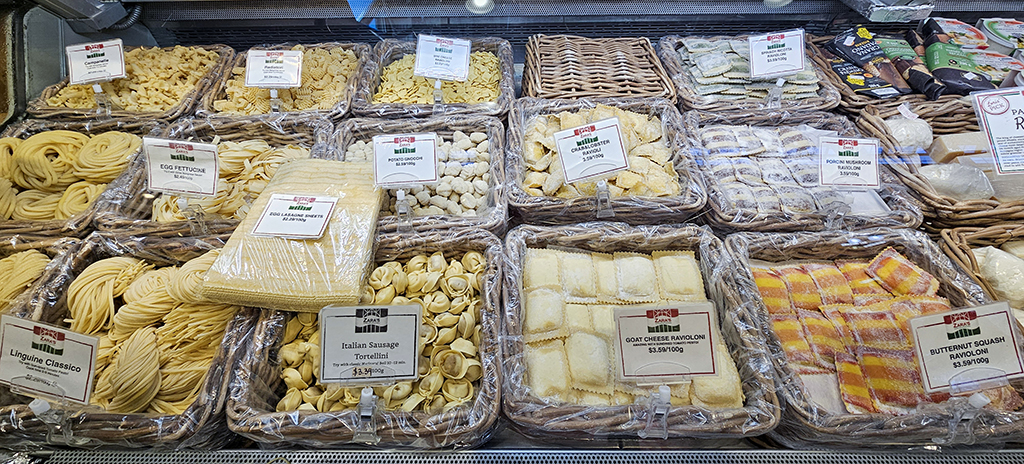
The market on Granville Island is one of the best we have ever visited. The sheer variety of foods on offer, and the outstanding quality, particularly of the fruits and vegetables, is testimony to the size and cosmopolitan nature of the city of Vancouver. Dick was particularly intrigued by a stall selling charcuterie. Given our disappointment in the so-called “cheese and charcuterie” platters we have received on this trip, it was surprising to see such a variety of offerings, and some were even presented in little paper cones so you could enjoy several different types of sausage. No arugula or pickles polluting the sausages here! You could live near Granville Island and buy all your meals in the market, already cooked, or as ingredients. As markets that we have visited go, Byward Market in Ottawa came close, as did Atwater Market in Montreal (according to Dick who saw it without my company). Of course, the market in Venice is something else, and we used to live near Rue Cler in Paris, so we know what a good market can be!
We wandered into and out of shops around the island, and were persuaded by a great salesman to buy a beautiful hand made silk duster jacket with a matching scarf. I am a bit dubious about the scarf. My friend Sarah wears one all the time, and always looks incredibly elegant, whereas when I wear one, I always feel that it is slipping and sliding about and looking seriously gawky. Our lovely salesman assured me that with the assistance of a tiny, magical magnet, I would be instantly transformed into a tastefully stylish and sophisticated woman. (To those of you who just choked and spit out your coffee, I am ever so slightly offended!)
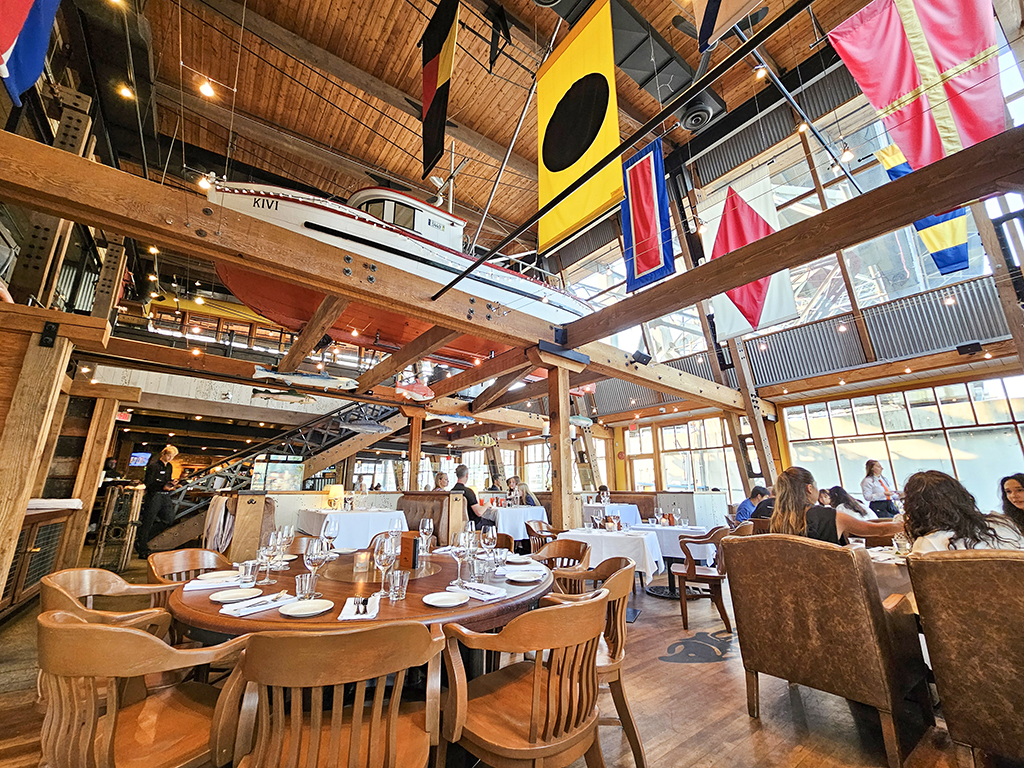
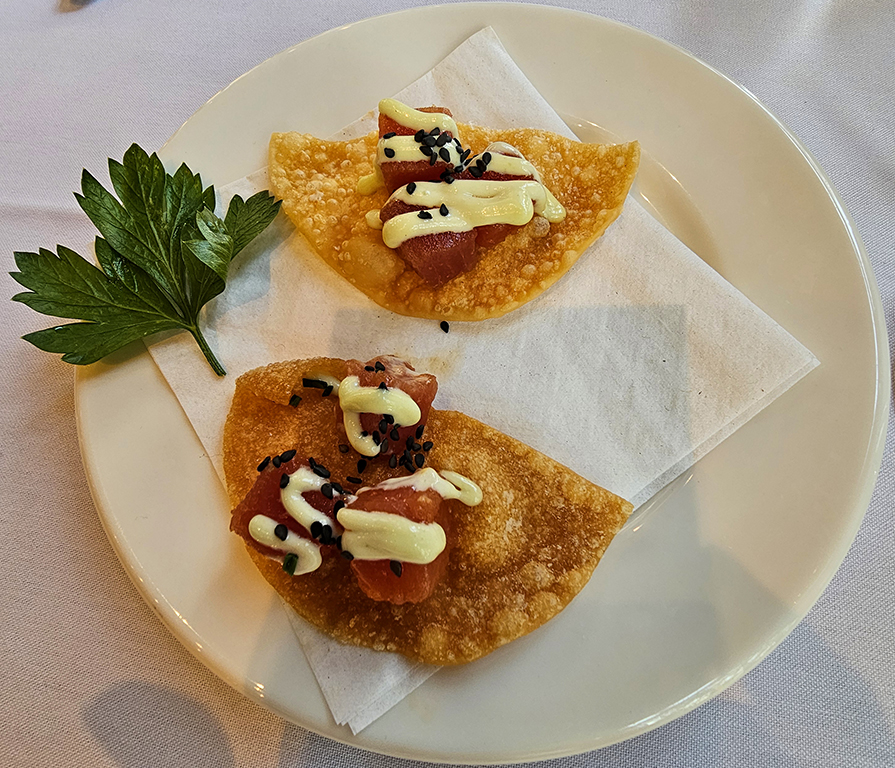
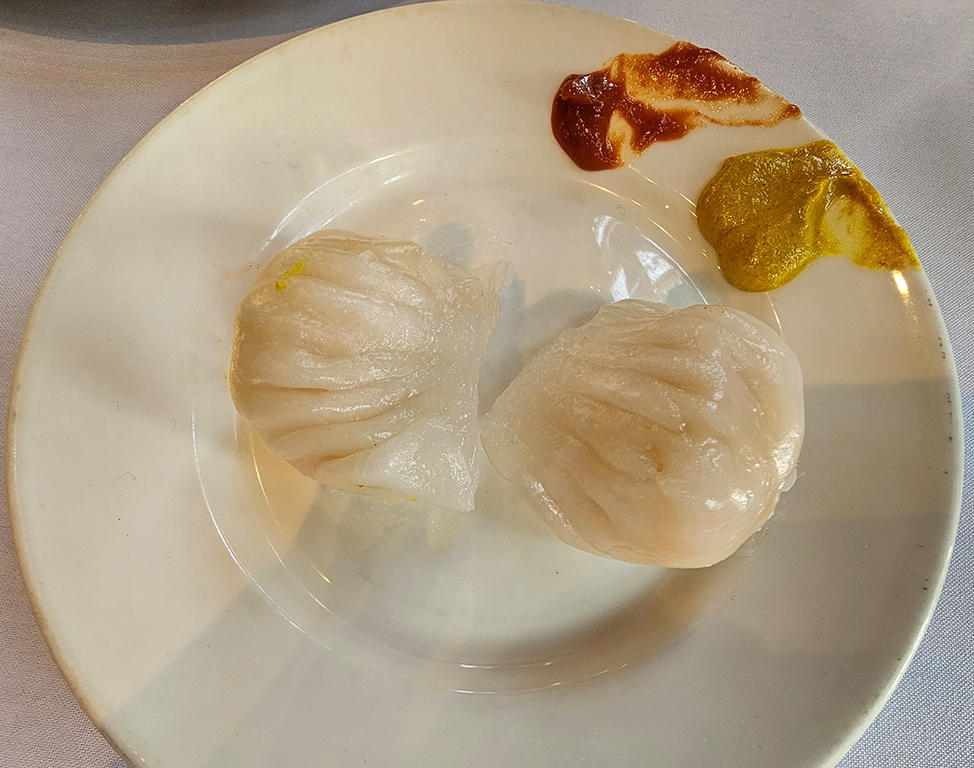
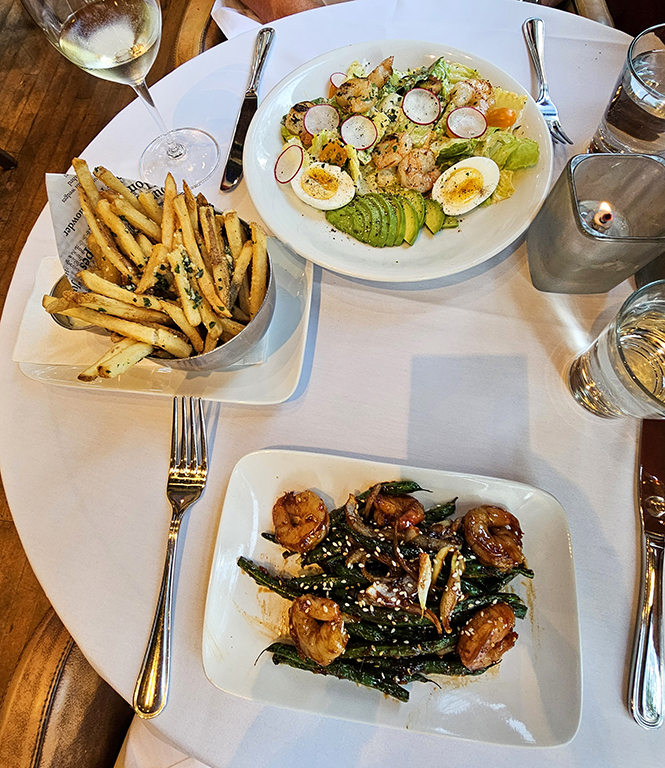
In the evening, we walked round to the Sandbar Restaurant. The food was excellent, and the venue was interesting. We started with shrimp dumplings, not realizing that they would be steamed, instead of our favourite crispy potstickers. We are now converted, and in future will be happy to order whichever type is on offer! We had received a card from the boat tour captain, that he said would give us 10% off our bill, but upon presentation, instead it was for free canapes. Fortunately, we presented the card at the beginning of the meal instead of the end! Sadly for me, the canapes were raw tuna on tortilla chips. I avoid raw fish, so Dick ate both of them. For main courses, Dick had a salad special called Shrimp Louie, essentially a chef’s salad with avocado, shrimp, eggs, and butter lettuce. I ordered wok spicy green beans with grilled prawns and a side order of truffle parmesan fries. Everything was delicious, and we would certainly return.
The next morning, we drove south to Tsawwassen to catch the ferry to Nanaimo on Vancouver Island.
At this point I am going to digress and offer a little geography (and history) lesson to my readers. People tell me they are going to visit “Victoria Island”. Victoria Island is a huge island in Canada’s Arctic Archipelago, so I hope they are taking fur-lined boots and extra warm clothing! Victoria Island is certainly not the island off the western shore of Canada that folks like to visit when they take a cruise to Alaska.
In the late 1700’s, European exploration of the west coast of north America included several expeditions from Spain. The large island off the coast, north of what is now Oregon, was part of the land claimed by the Spanish explorers. On his third expedition, Captain Cook, of Britain, spent time in Nootka Sound, on the west coast of the island, and claimed the whole island for Britain. This added another to the many disputes between Britain and Spain over territory in the New World. In 1792, British naval captain George Vancouver was sent to Nootka Sound to negotiate an agreement. Nothing was resolved, but George, and his counterpart, the Spanish captain Juan Francisco de la Bodega y Quadra became friendly, and they agreed that the island should be named “Quadra and Vancouver Island”. Later, the new port city on the mainland was named after George Vancouver, who explored the area in that same year. Ultimately, the island, as well as the mainland, ended up in British hands, and eventually the name of the island was shortened to Vancouver Island, to the eternal confusion of visitors from all over the world! The great big, world-class city of something approaching 3 million people, on the mainland on the west coast of Canada, is Vancouver. If you take a ferry ride of between 1.5 and 2 hours from the mainland, you arrive on Vancouver Island. The capital city of the island (and, as it happens, also the seat of government of British Columbia), is Victoria, on the southernmost tip of Vancouver Island. I just know it is now clear in everybody’s minds…
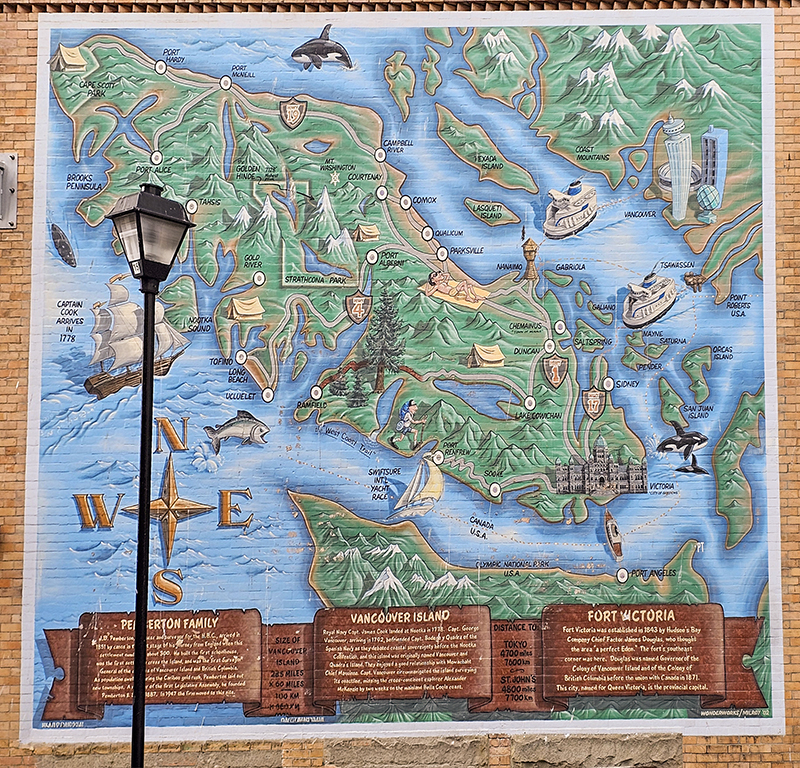
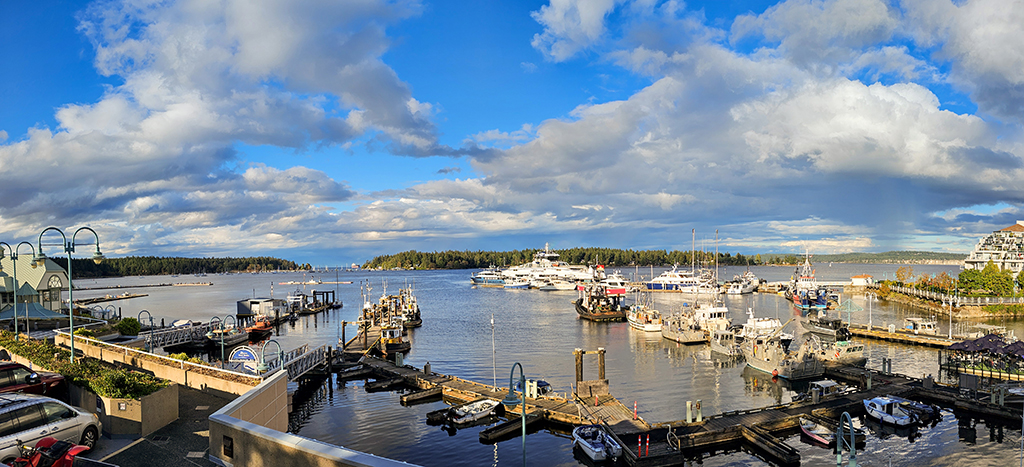
Our plan was to go first to Nanaimo, a couple of hours north of Victoria, and stay for two nights. We were looking forward to two reunions with old friends. We stayed on the harbour in Nanaimo, in a very pleasant Best Western hotel.
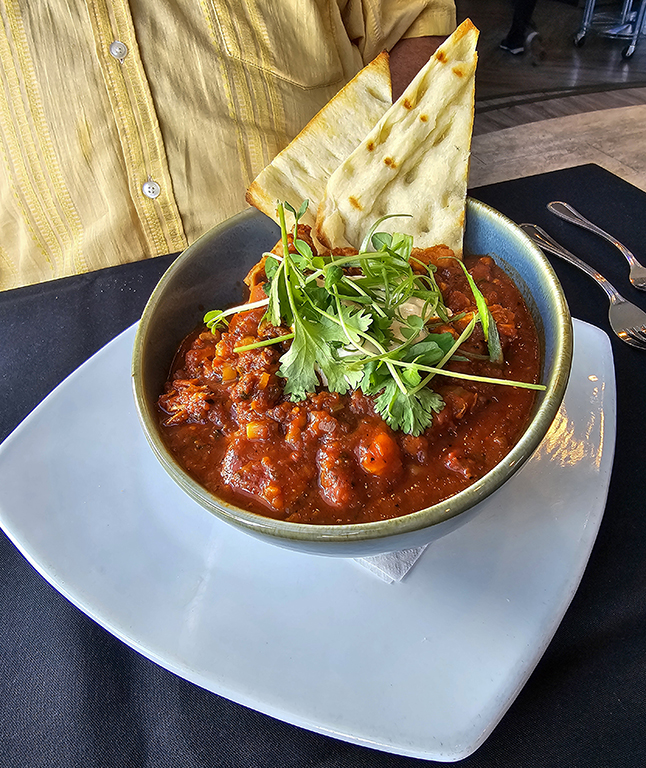
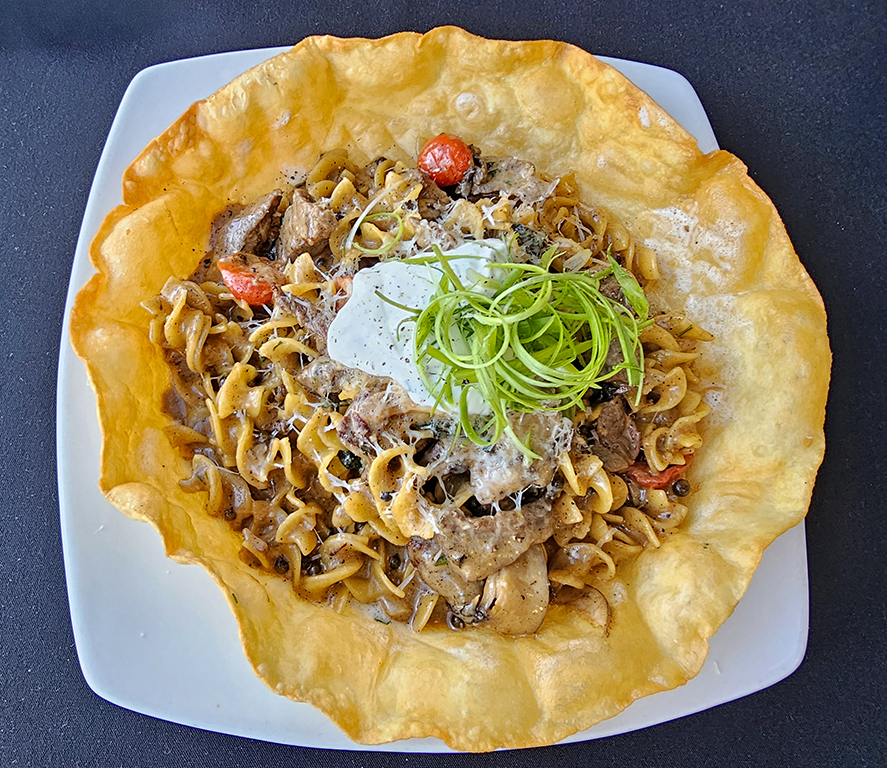
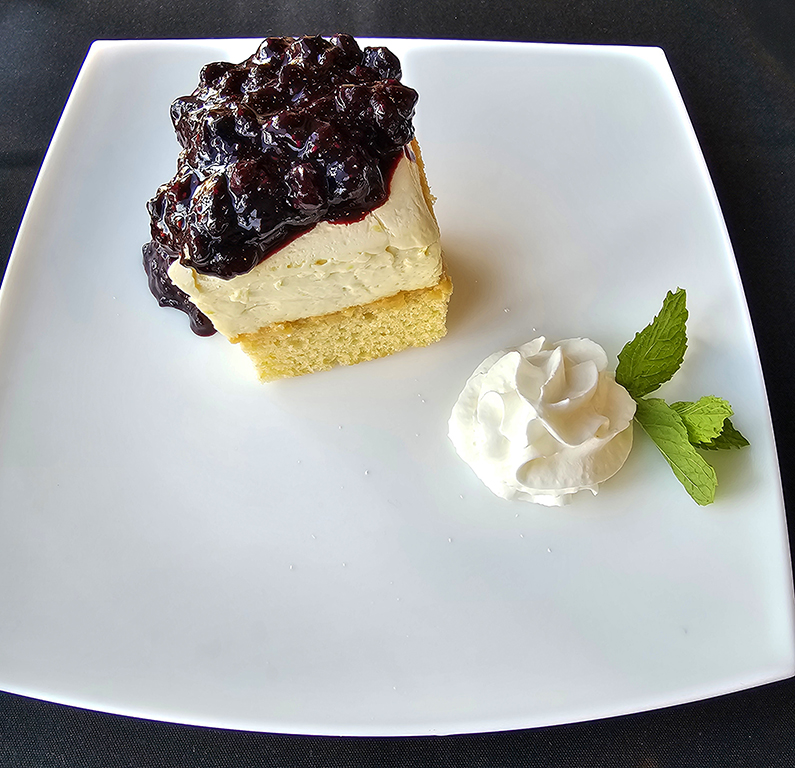
Three restaurants occupy the same building but are not associated with the hotel. On our first evening, we enjoyed a good meal at The View Oceanside. Dick ordered the Southwest Jambalaya. It was spicy and delicious, and such a huge portion that even he could not finish it. I ordered the Peppercorn Stroganoff, tenderloin tips in a slightly spicy sauce, served in an absolutely delicious bowl formed from a buttered taco. I have no idea how they made that bowl, let alone buttered it! We saved the rest of that dish for later (Dick enjoyed it while we were staying in Victoria). Dessert was a shared cheesecake with blueberry topping.
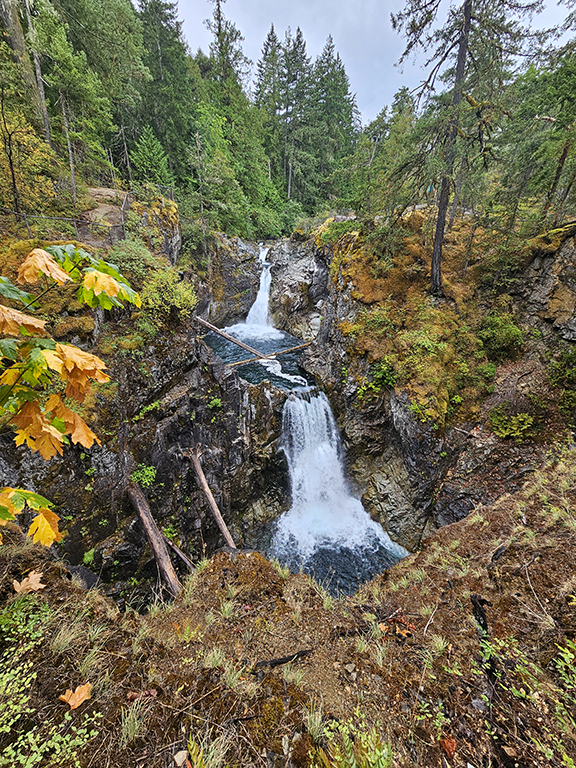
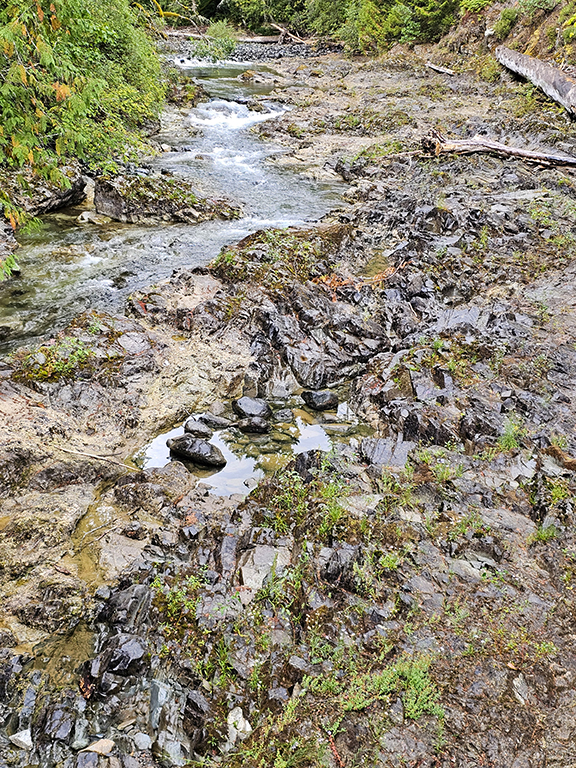
The next morning, we were up early to drive about 40 minutes north to Qualicum Beach. We had arranged to meet a friend from our first years at Queen’s University, who we hadn’t seen since about 1974. He suggested a walking tour of Little Qualicum Falls, followed by Cathedral Grove. We met in the parking lot near the falls, and it was a wonderful reunion. The walk to and around the falls gave me a chance for some “real” photography”, with my proper Canon cameras and lenses (thank you Dick for carrying them). As we walked, we had a great time catching up with each other’s careers. Stuart finished university with a geography degree, but his life took an interesting turn when, during the summer of my first year, my Dad asked me if I knew any fellows who might like a job working for TransCanada PipeLines. Stuart was hired, and spent the rest of his varied career in the oil and gas industry. He went to Hawaii to earn an International MBA, and continued his successful career, eventually settling on Vancouver Island, where he continued to work from home as a consultant for some years. He and Dick knew and worked with many of the same companies, but in different countries, so they had lots to talk about while I concentrated on photography.
Little Qualicum Falls was lovely. We took the different paths to allow us to see the gorge and the falls from both sides. Our next stop was Cathedral Grove. This is a stand of Douglas Fir trees, some of them over 800 years old. The forest includes other species, including western redcar, bigleaf maple, western hemlock, and grand fir. Fallen trees become nurseries for new growth, and the understory is an amazing jumble of ferns, moss, and other shade trees and shrubs.
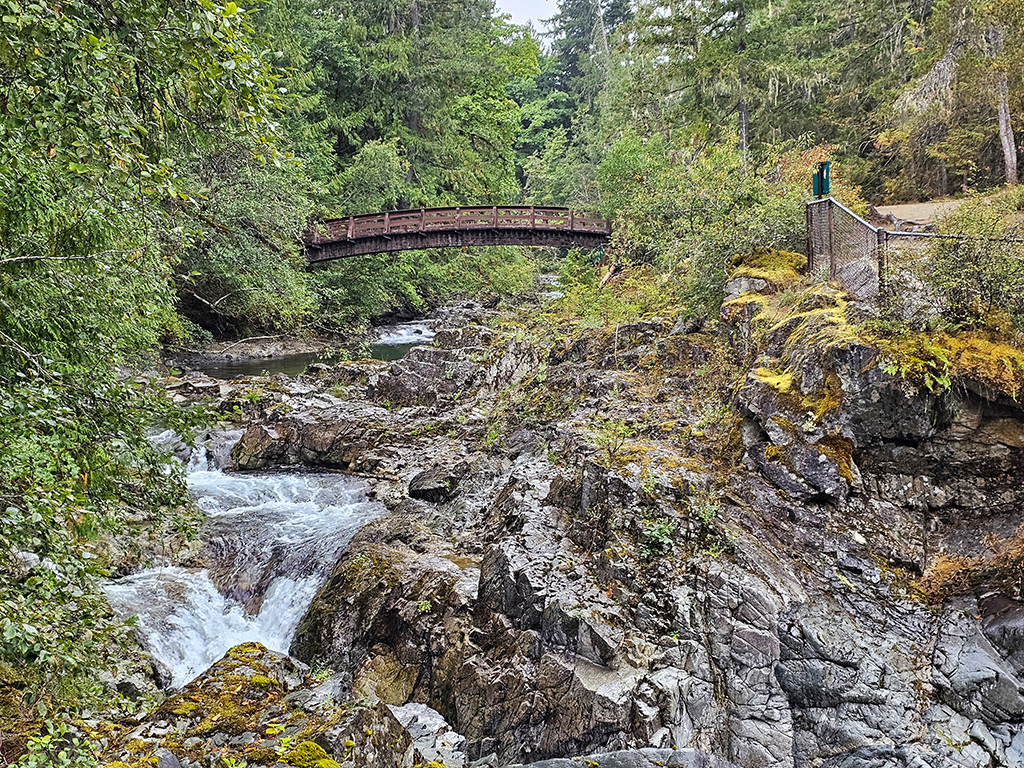
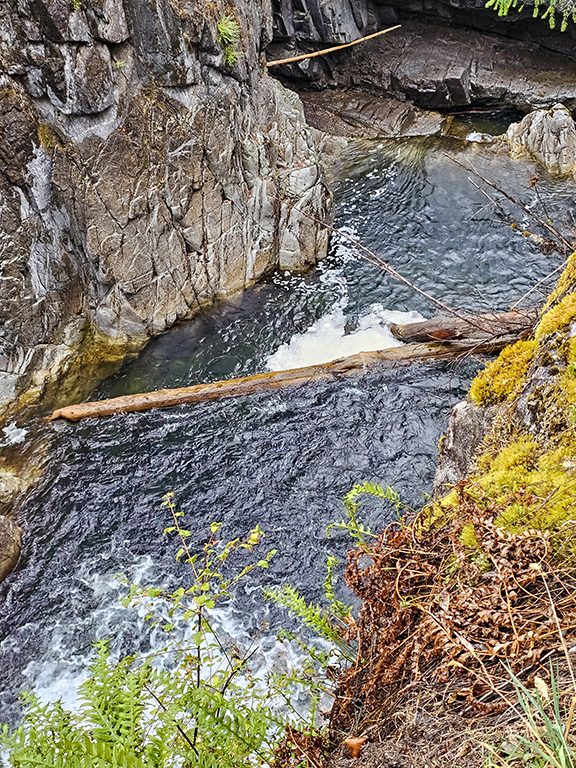
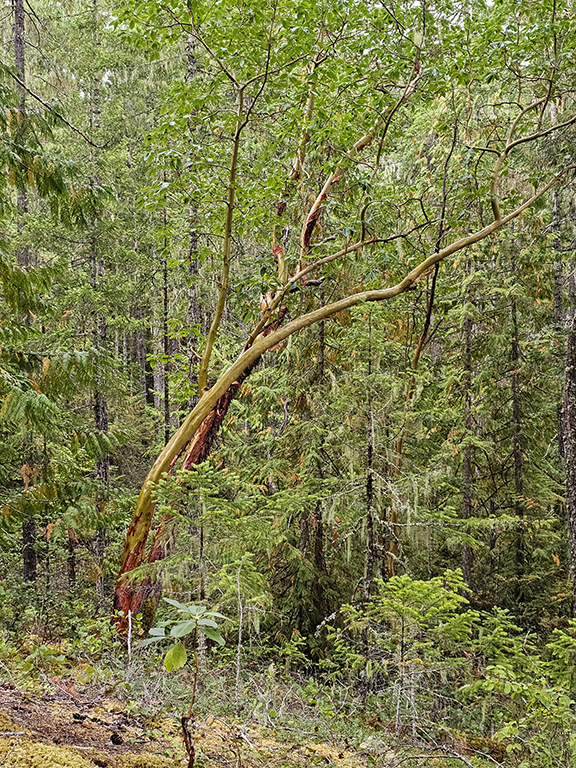
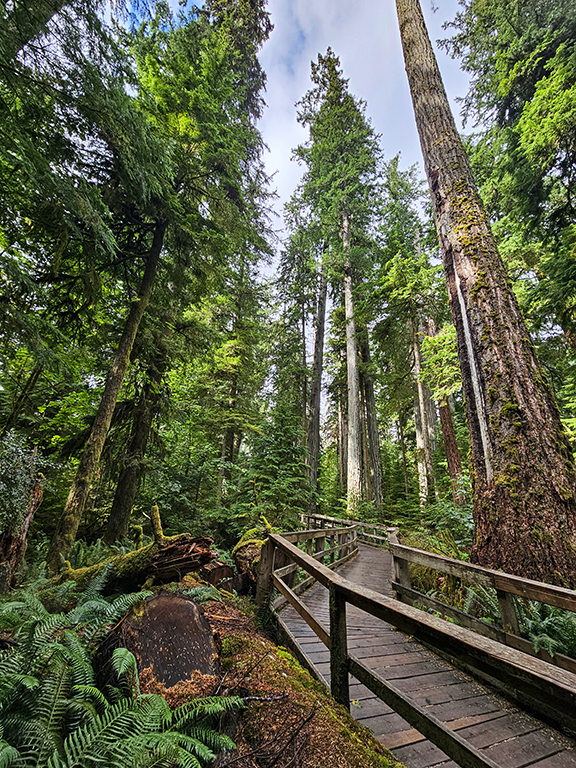
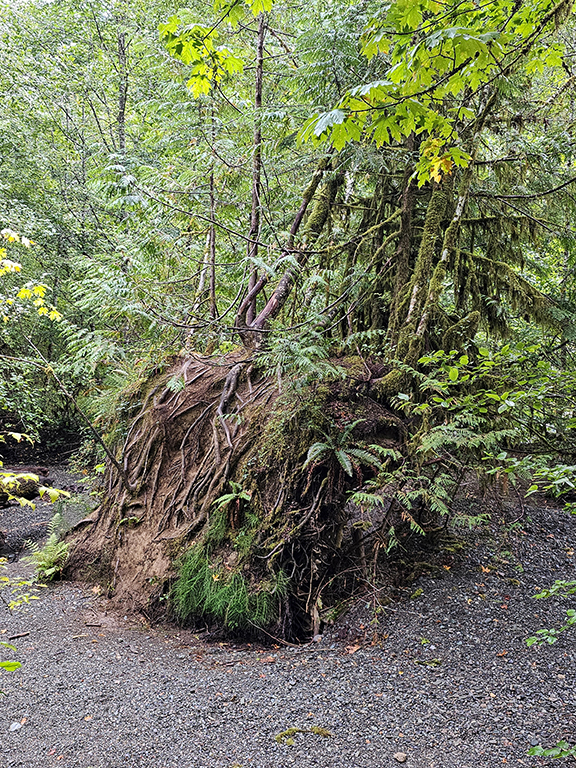
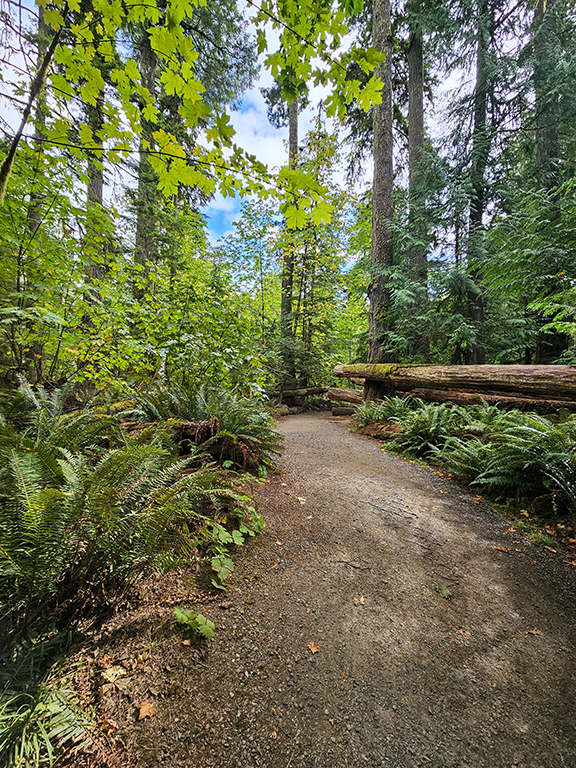
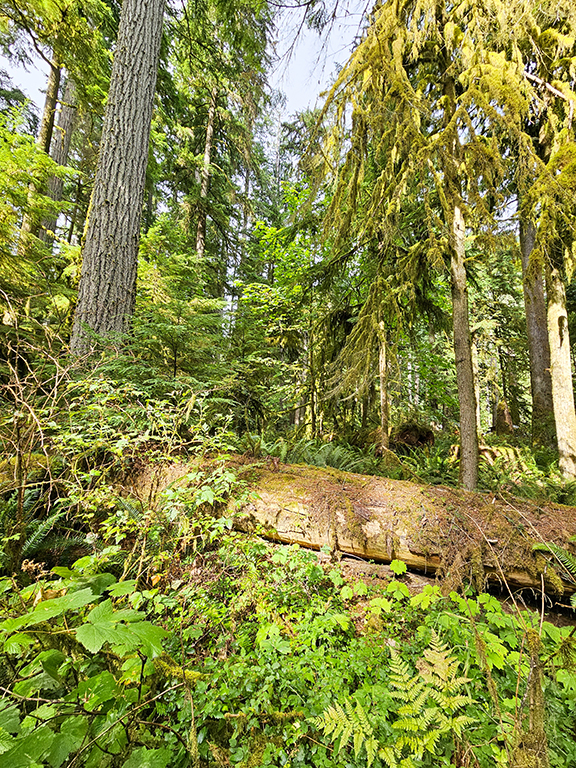
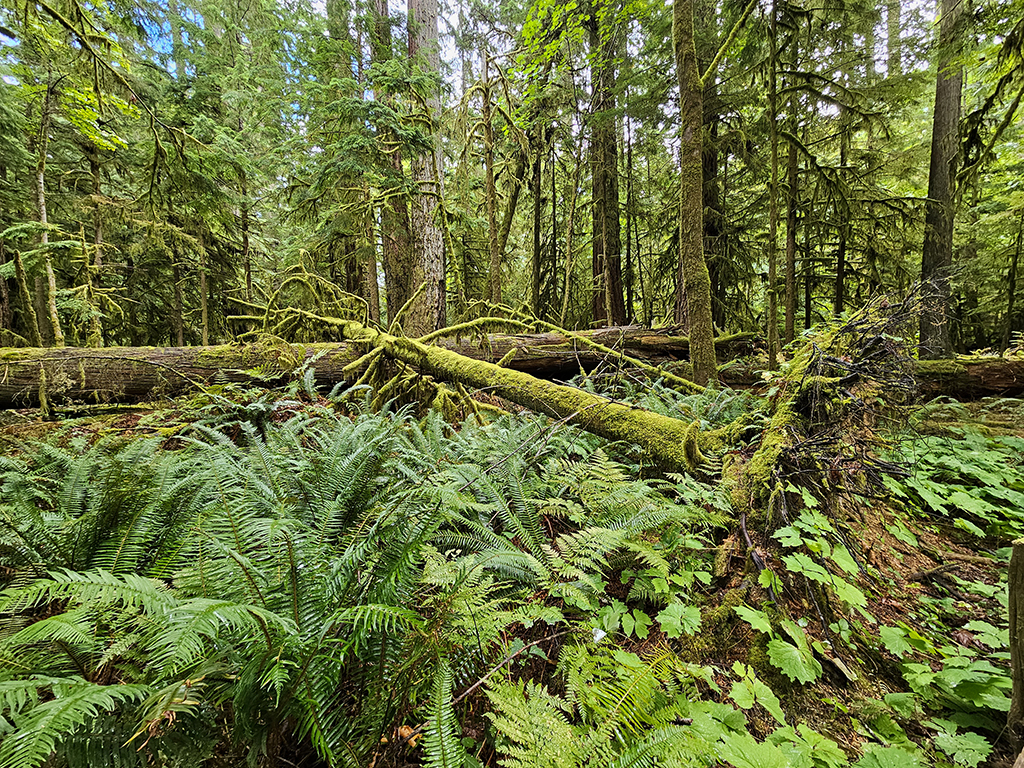
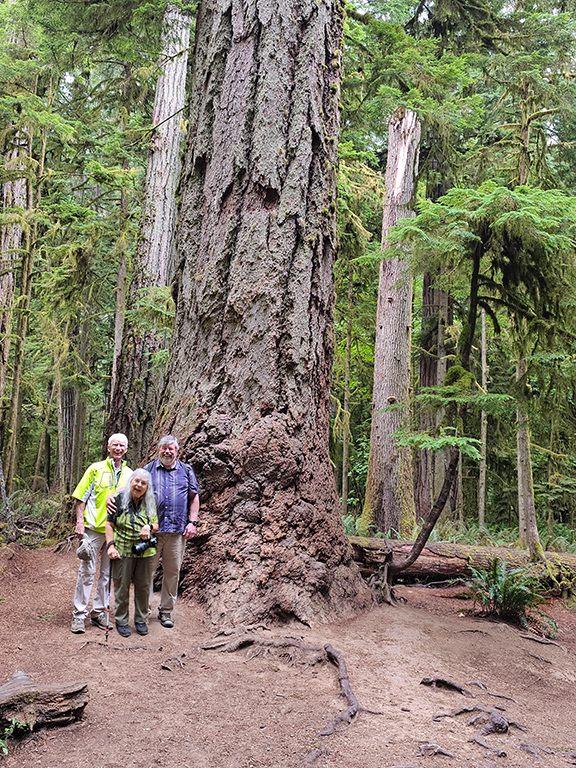
After a lovely outing, we said goodbye to Stuart, with promises to keep in touch, and headed to Nanoose Bay and the café overlooking the waterfront. There we met Tannis for lunch. I was at school with Tannis, (junior high school would be the north American description), at the same school as Debbie, the friend we met in Vancouver a few days earlier. Tannis had a very interesting career in film and commercials and has retired to Vancouver Island a few miles north of where we met for lunch. It was interesting to see what things we remembered from nearly 60 years ago when we were young teenagers!
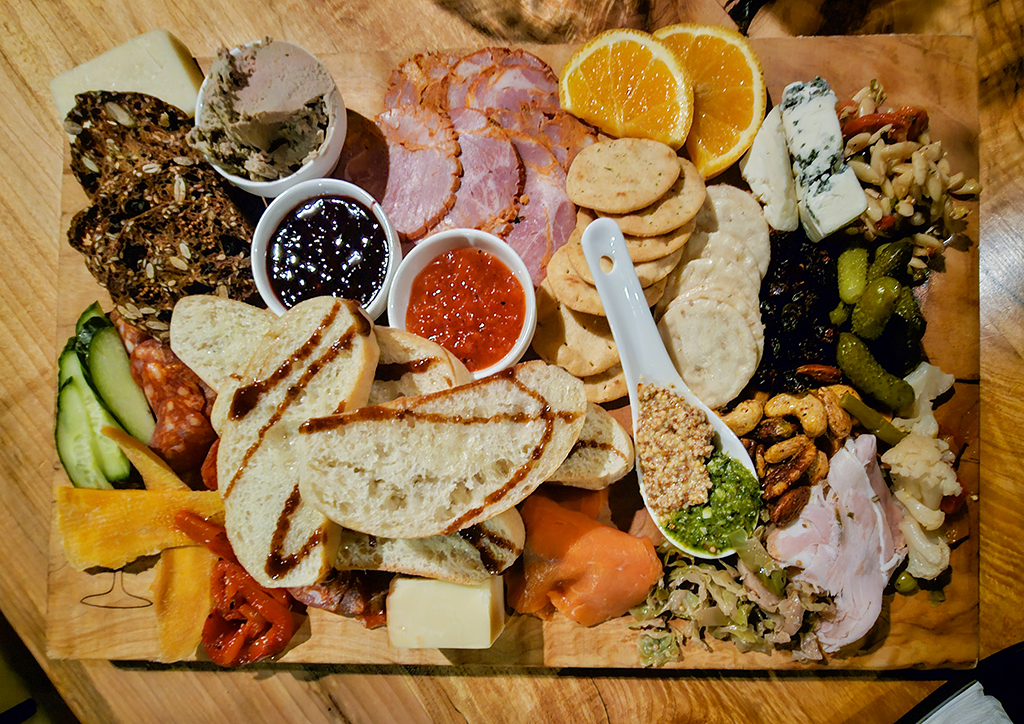
Returning to Nanaimo, we had a walk around the waterfront and then tried the third of the restaurants in the same building as the hotel. This was Embers Wine and Charcuterie Cellar. We thought that after a large lunch, we would enjoy a cheese and charcuterie plate instead of another big meal. On this occasion, we were in charge of how much cheese and sausage we would be given, as each piece was ordered individually, so we were optimistic. While we did enjoy it, once again there was an overwhelming assortment of pickles and pickled vegetables, and even some chilled orzo! Somebody thought it was a good idea to drizzle balsamic vinegar over the crusty bread, making it wet and vinegary, and annoyingly sticky! We now have to make a note to remember to ask servers to leave the balsamic on the side, in the same way that we have to ask for NO POWDERED SUGAR on our breakfast in both USA and Canada!
The next morning, after a nice breakfast (sans the dreaded powdered sugar) at the restaurant in the hotel, we headed south on the TransCanada Highway towards Victoria. Our route took us over the Malahat, a 15-mile climb over a summit of 1168 feet. The area is sacred to the Malahat First Nations. On the southern end of the drive is Goldstream Park, popular for outings from Victoria, and contributing to congestion. Traffic is heavy in both directions, and there is no stopping to admire any views. We passed the turnoff towards Bear Mountain, our destination that evening, and continued on towards Saanich Peninsula so that I could visit the cemetery where my parents were laid to rest.
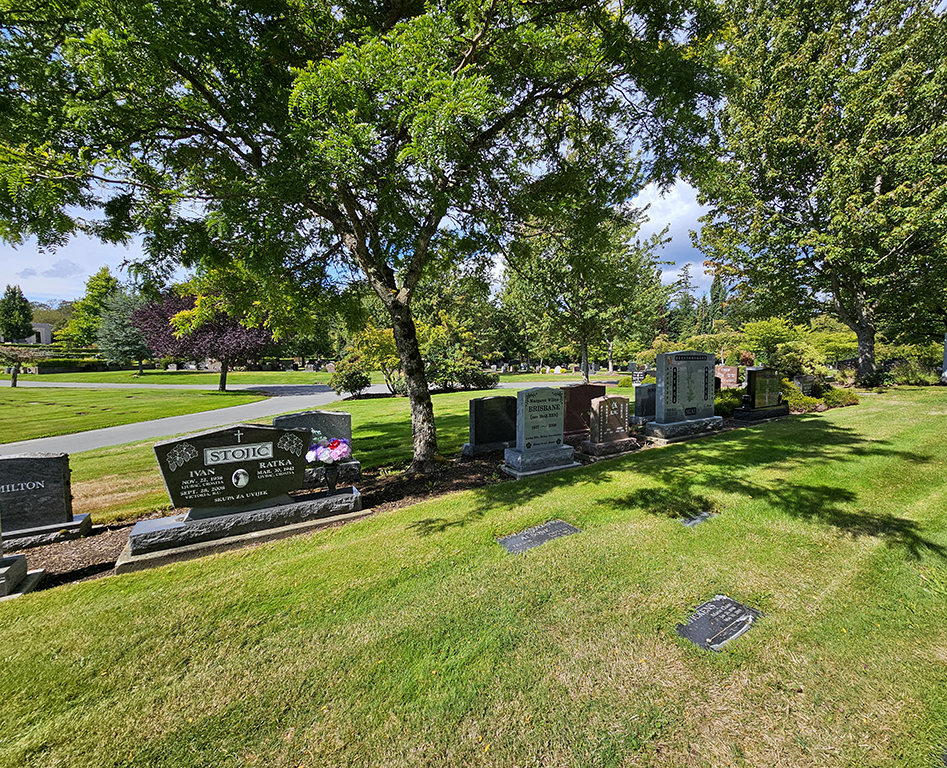
The Royal Oak Burial Park is a pleasant place. It has been 10 years since Mum’s funeral, but I had no trouble finding the small stone that marks the site. I was unhappy at the time, and still am, to learn that if you are cremated your options are either a slab on the ground, a columbarium, or a mausoleum. Seeing this small stone in the ground, where the mowers clearly drive over it, made me feel very sad.
I cheered up a bit as we drove south, slowly around the eastern side of the city, on a route that was my Mum’s favourite drive. Cattle Point is interesting. Paddle steamers and barges used to bring cattle to the area, and the crew delivered the cattle by pushing them off the vessels into the water to swim to shore.
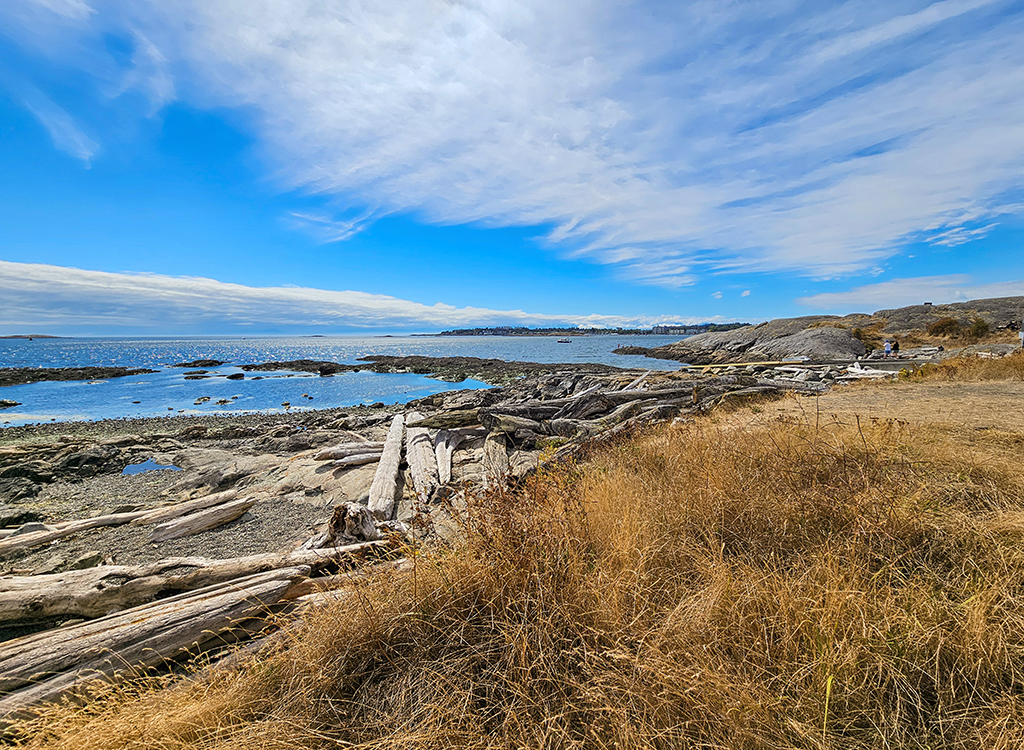
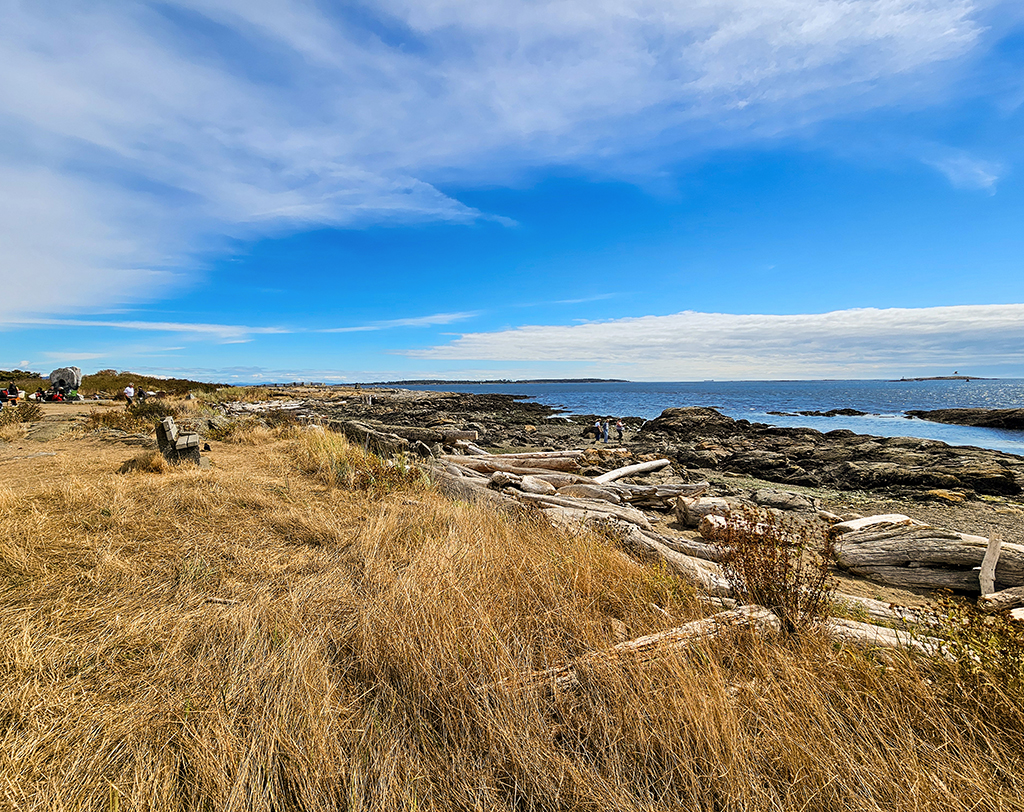
Willows Beach was a great disappointment. When Mum and I used to visit, there were lots of dogs of all sizes and breeds, running up and down, chasing balls and sticks into the water, and generally having a wonderful time. We both loved watching them. Now dogs are banned from the beach from May to September. I see this all over the world and always feel sad and unhappy that this simple pleasure has been spoiled for everyone.
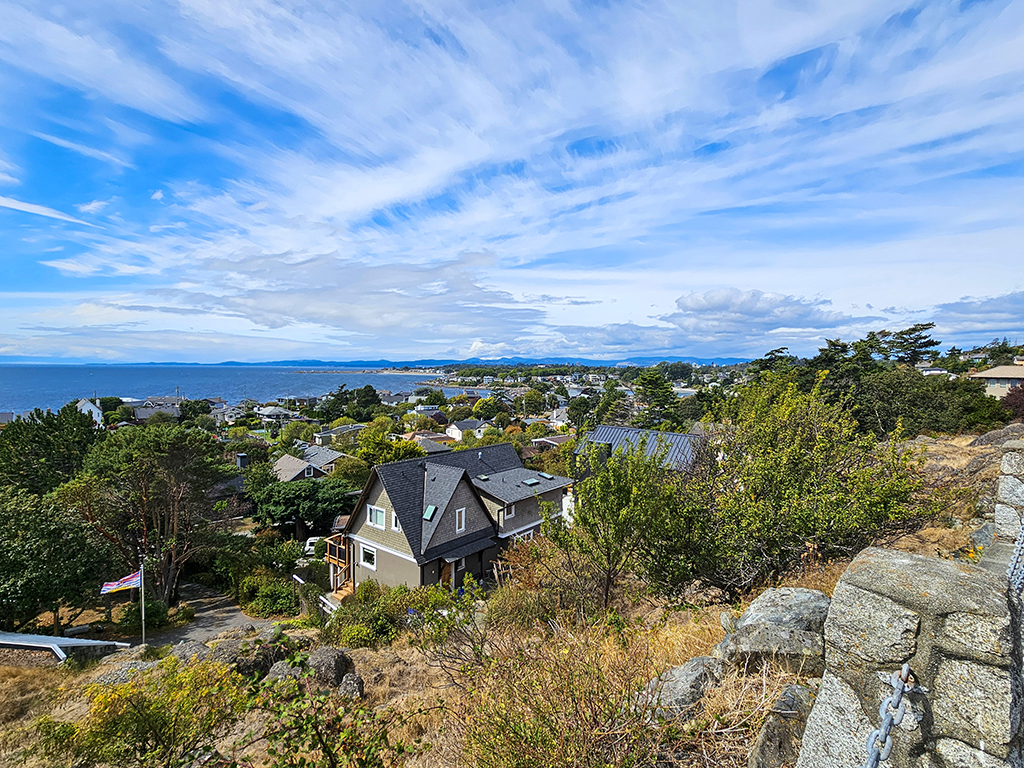
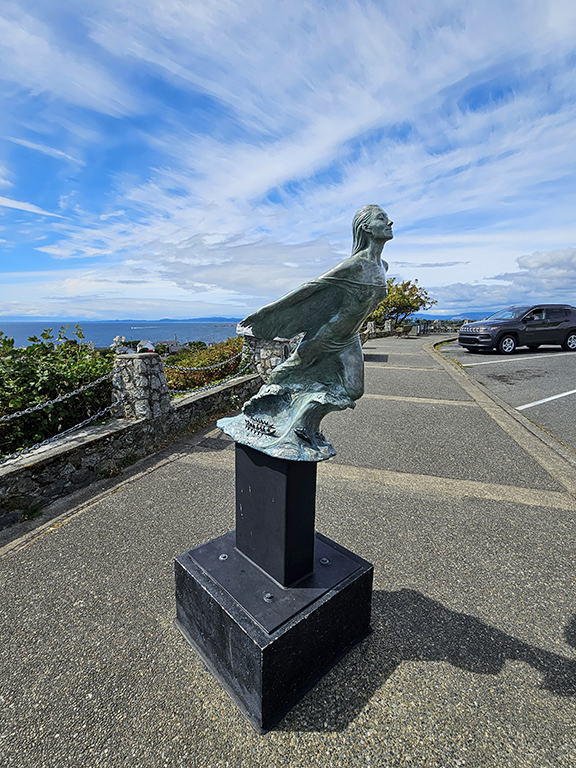
We continued on our meander south, stopping on King George Terrace to look at the views across the straits towards Port Angeles and Mt Olympus in Oregon (too misty for a clear view). From there we made our way through downtown Victoria and back towards the western end of the city and Bear Mountain.
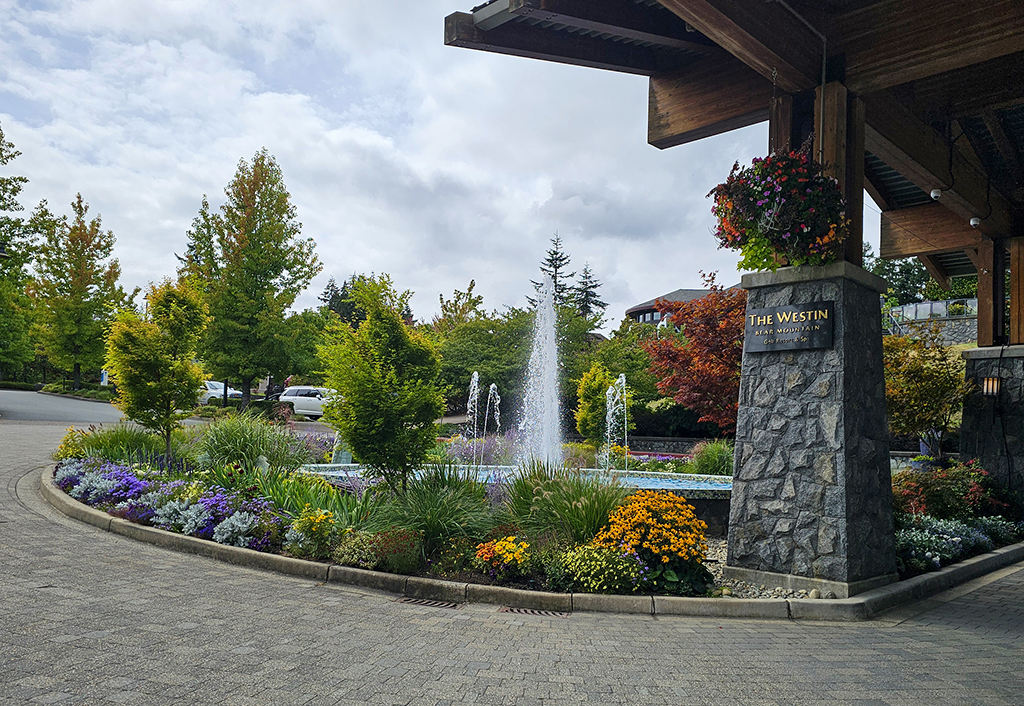
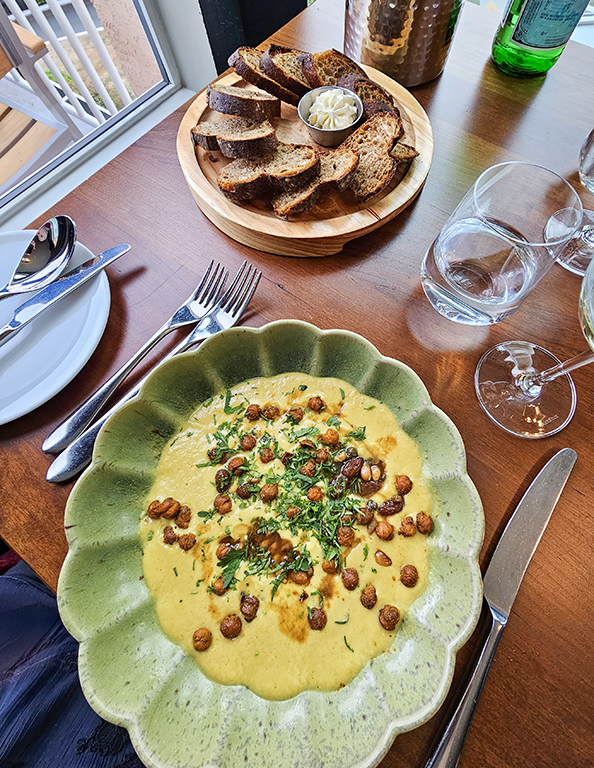
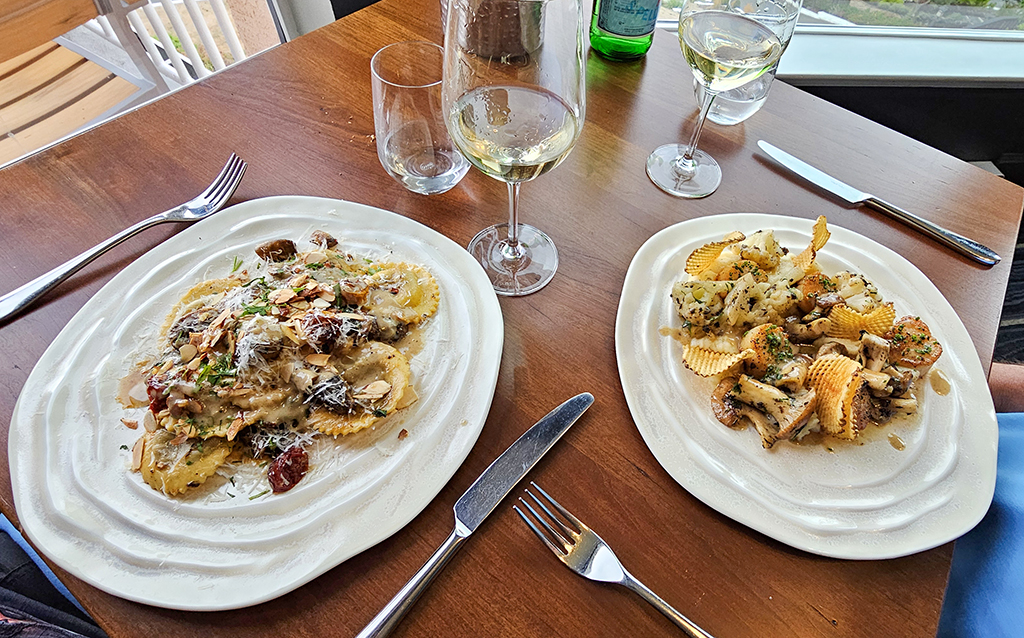
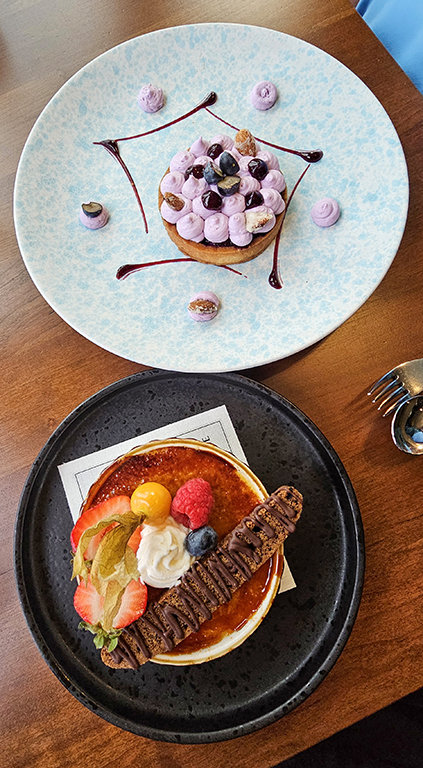
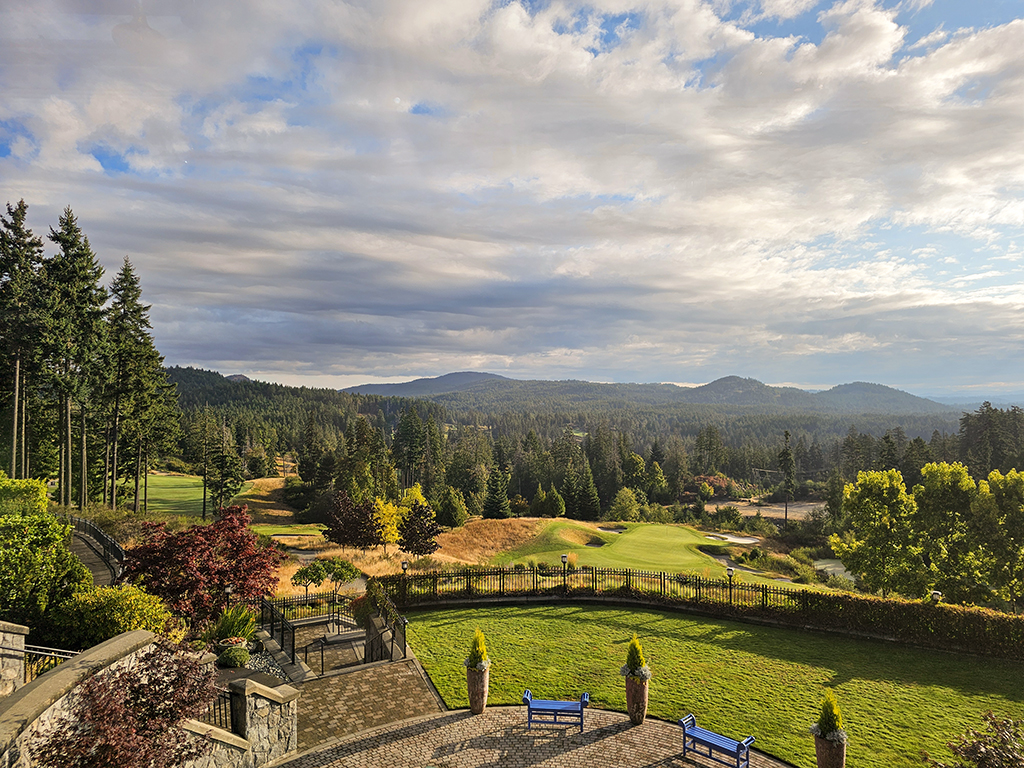
Dick booked a stay and play golf package at the Westin on Bear Mountain. We were given a pleasant room that had useful cooking facilities. That evening, after settling in, we drove up the Malahat to Villa Eyrie Resort, to have dinner at the Alpina Restaurant. The views across the sound from the windows were spectacular. The meal was excellent. We began with a very interesting cauliflower soup, that had turmeric and roasted chickpeas. Homemade rye sourdough bread and herb butter accompanied the soup. For his main course, Dick chose scallops with oyster mushrooms, Boursin mashed potatoes and cauliflower, served with waffle chips. I enjoyed the mushroom ravioli with dried cherry tomatoes and truffle butter sauce. For a change, we each ordered a dessert instead of sharing. Dick enjoyed the blueberry almond custard tart, and my crème brulee was delicious. We would certainly return for a meal, but the resort is quite isolated, so we would be unlikely to consider staying there.
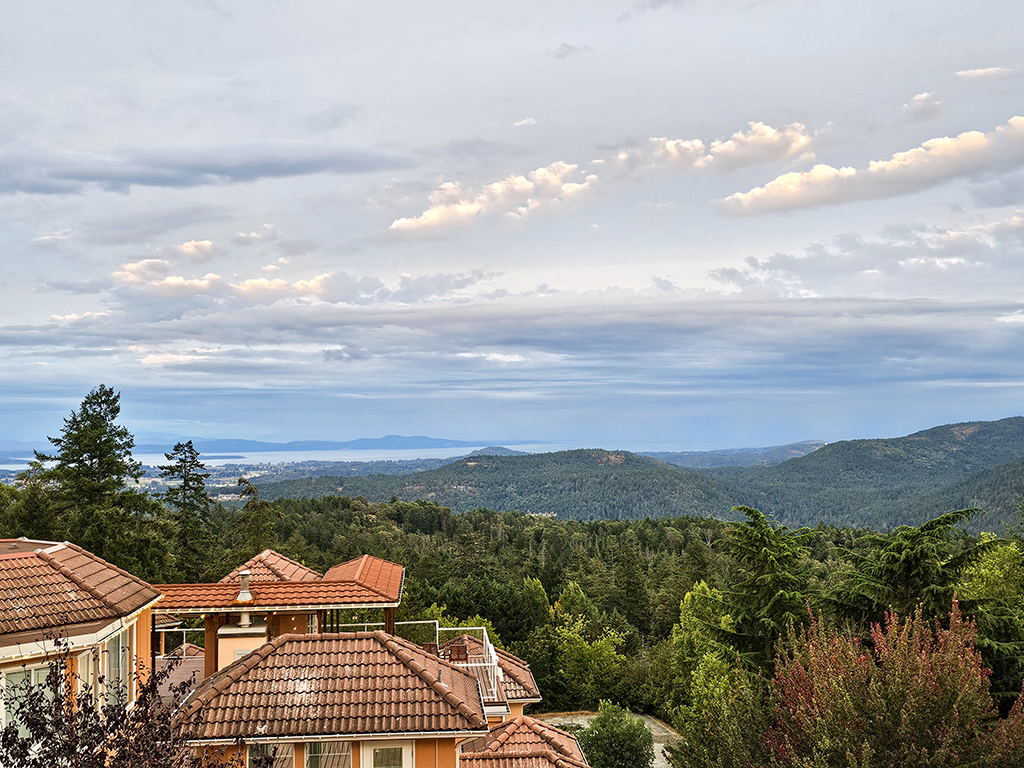
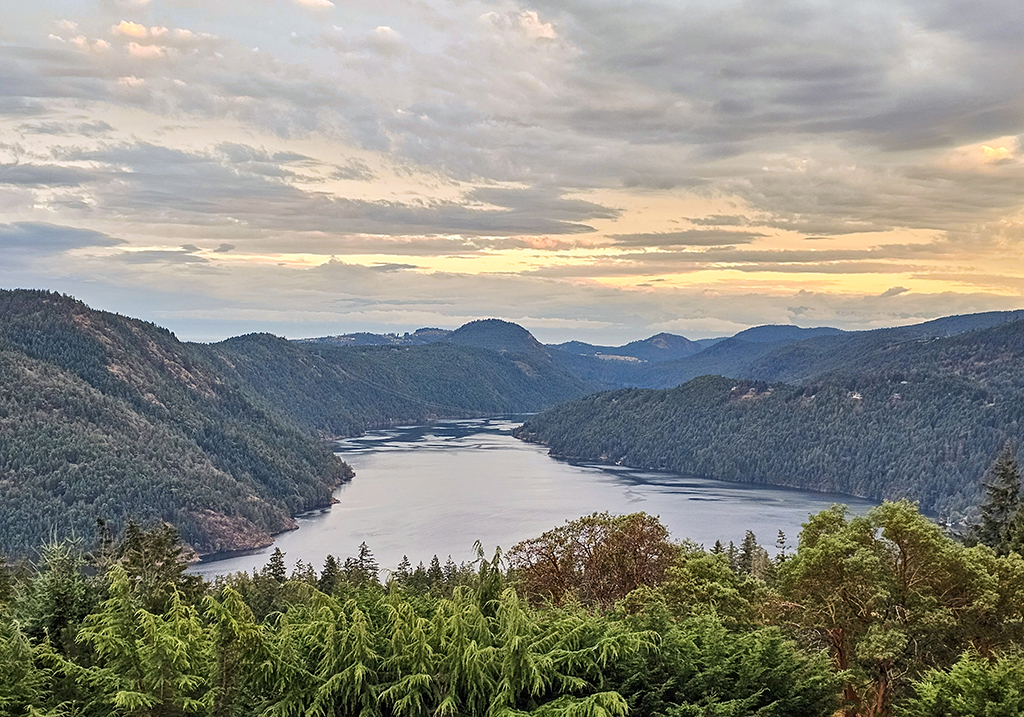
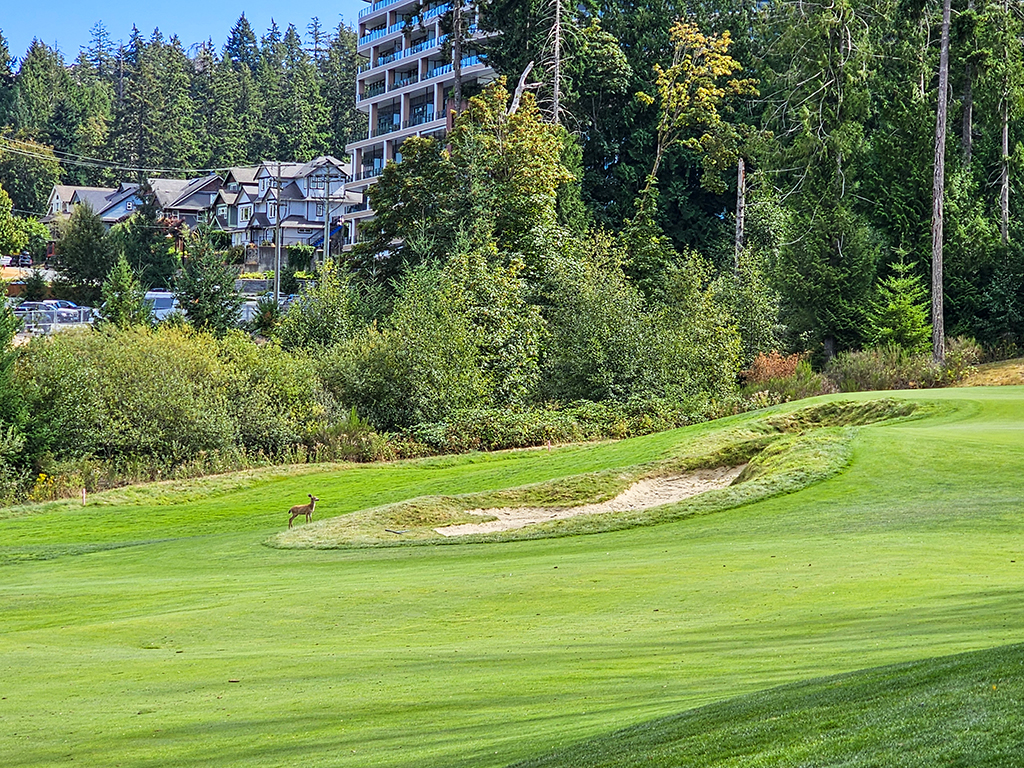
After the few days break, we were ready for our first round of golf at the famous Bear Mountain Valley Course. We would have been suspicious if we had noticed that all the golfers on the driving range were young men, just one other woman, who was with an older man. This turned out to be the couple we were paired with for the round, and it worked out very well. The course ate us all up. Almost every tee is raised, and many of the greens are also raised, with great swathes of rough in between. Many holes just had too long a carry required for the tee shot, even from the forward tees. By the second half, I started teeing up at the beginning of the fairway, the only way I could have a hope of playing the hole. Dick had quite a few really good drives off the tee, but the carry was so long and the fairway so narrow, that he lost a lot of balls. At least we were compatible with the couple we were with, Mike had a great sense of humour and that helped to ease the frustration. The course was in great condition, and the scenery is gorgeous. I picked up on quite a few holes, but when Dick calculated my score based on averages of the holes I finished, I had one of my best rounds. Dick’s was not so good.
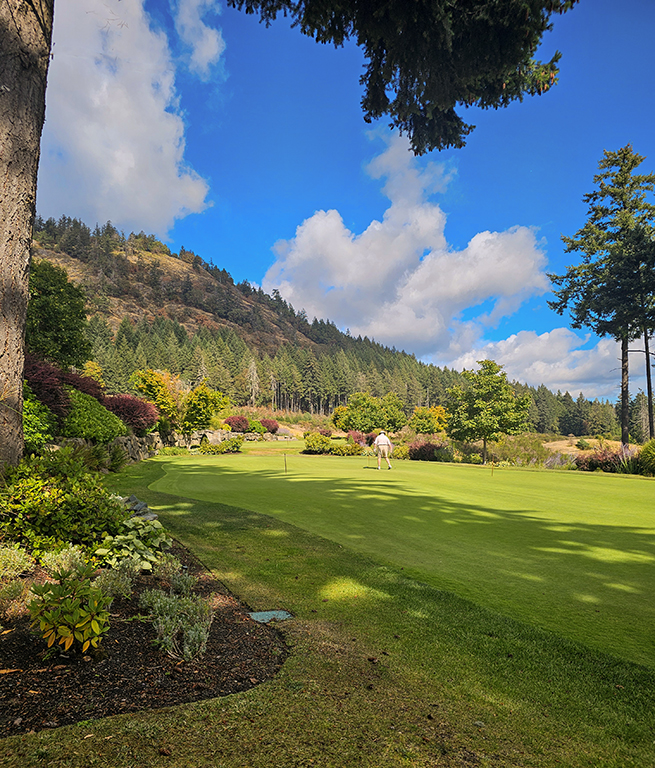
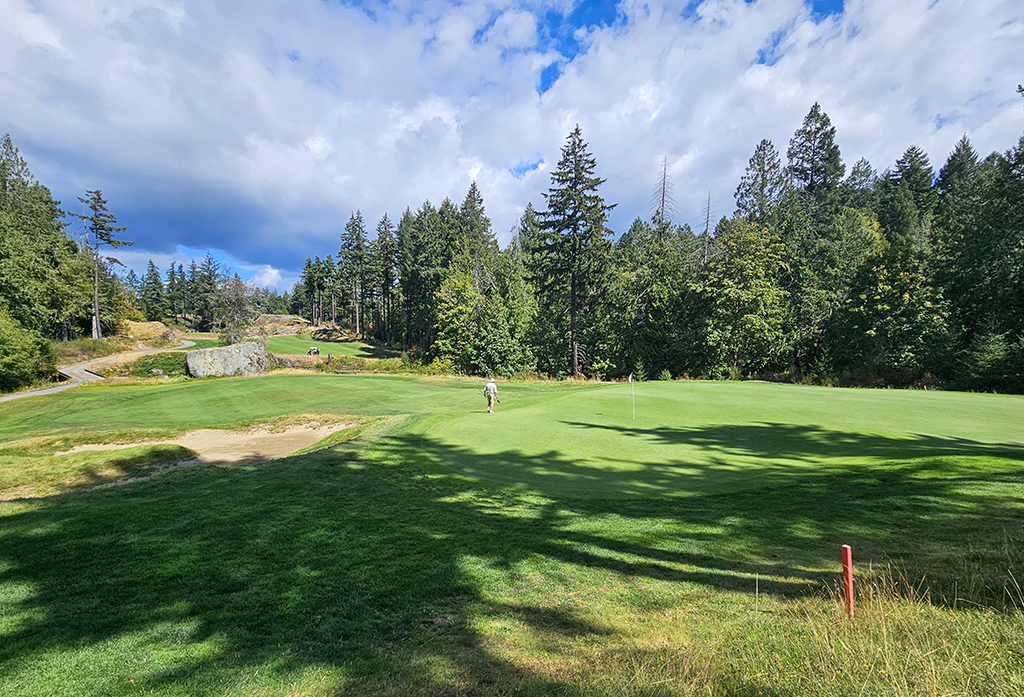
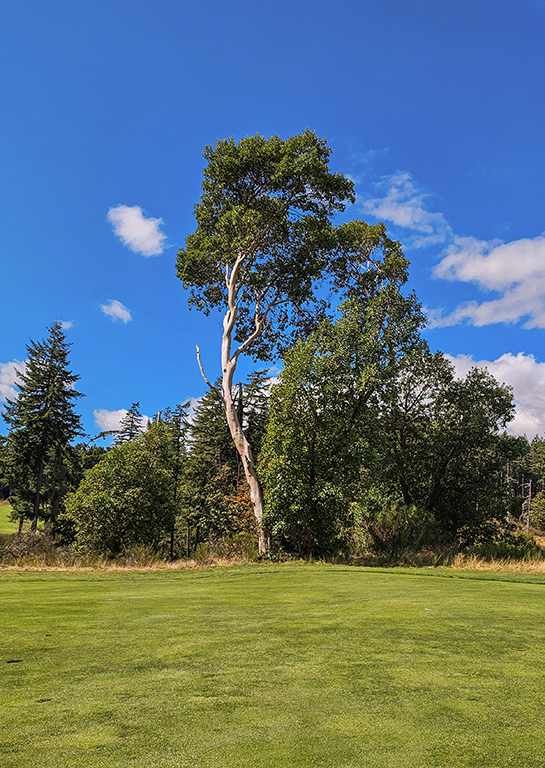
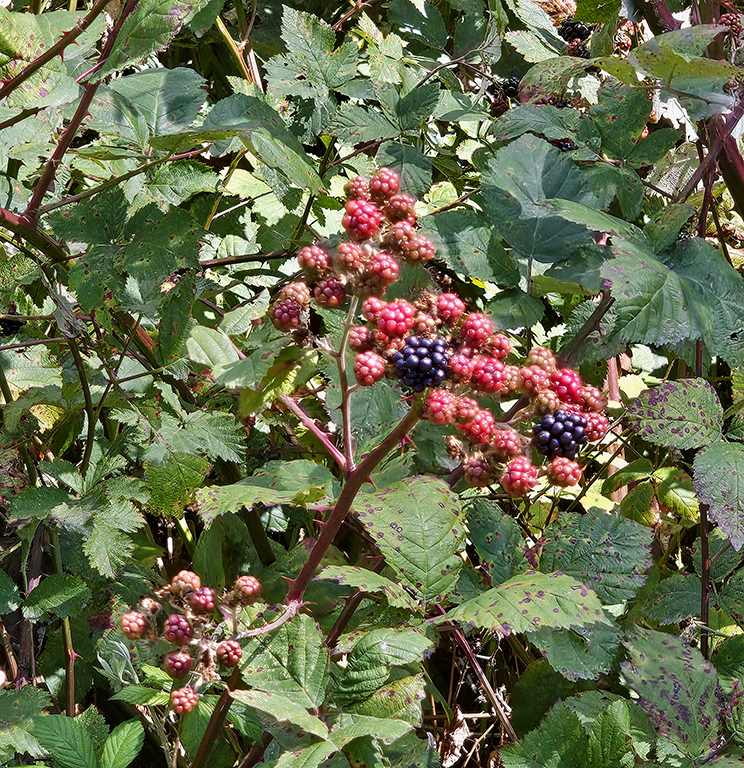
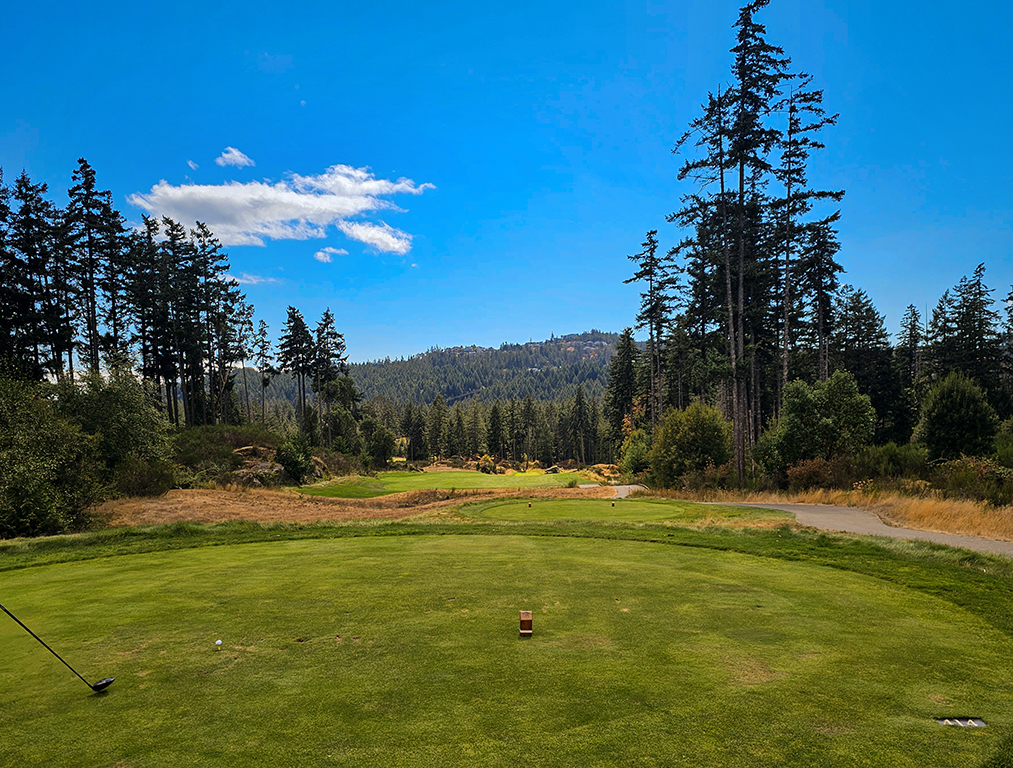
After a little time to recover from our exertions, we met Jill and Paul in the hotel for drinks in the bar and dinner. They were great friends of my Mum. Jill is a very accomplished artist, working in mixed media collage. Mum admired her work tremendously, and they were good friends. Paul shares an interest in photography with me, so we have lots to talk about. It was lovely to see them and spend time catching up. It has been 10 years since we last met.
The next morning, we were scheduled to play golf on the second of the Bear Mountain courses, described as the more difficult of the two. It was an easy mutual decision to skip the golf and spend the day getting reacquainted with Victoria.
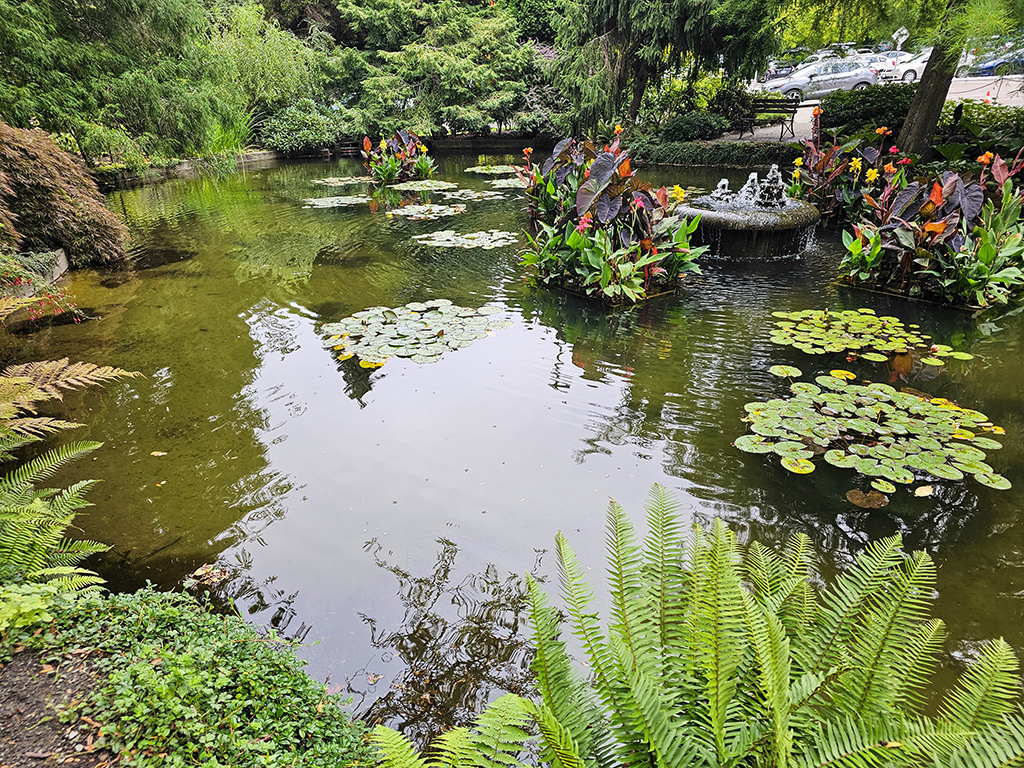
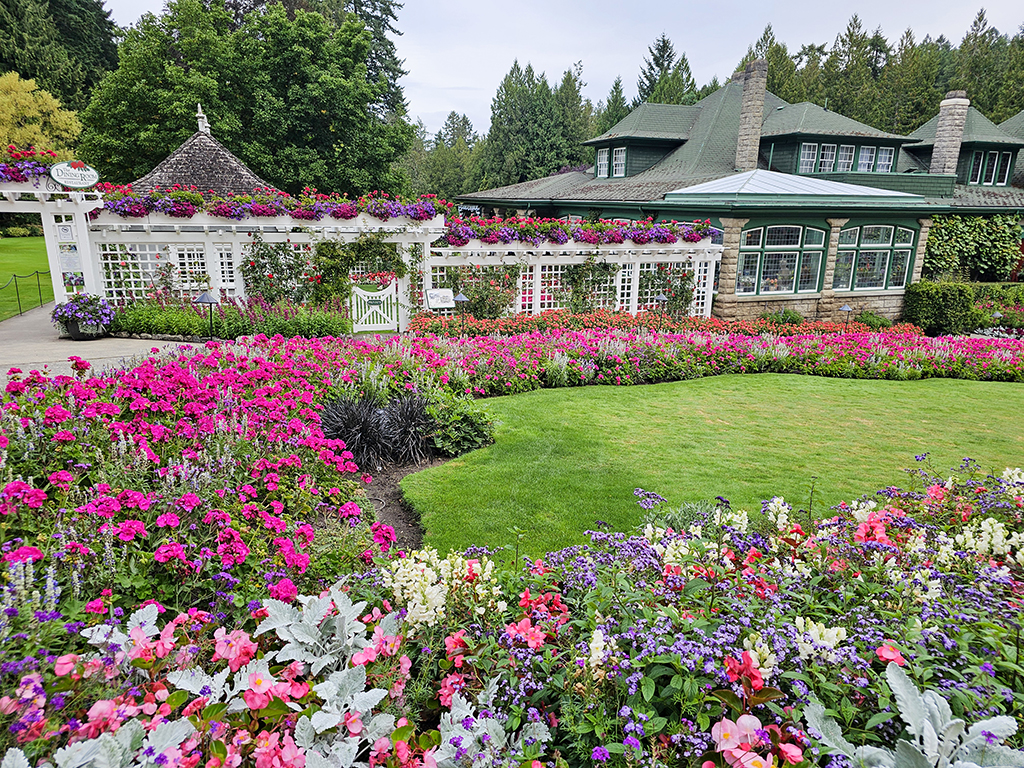
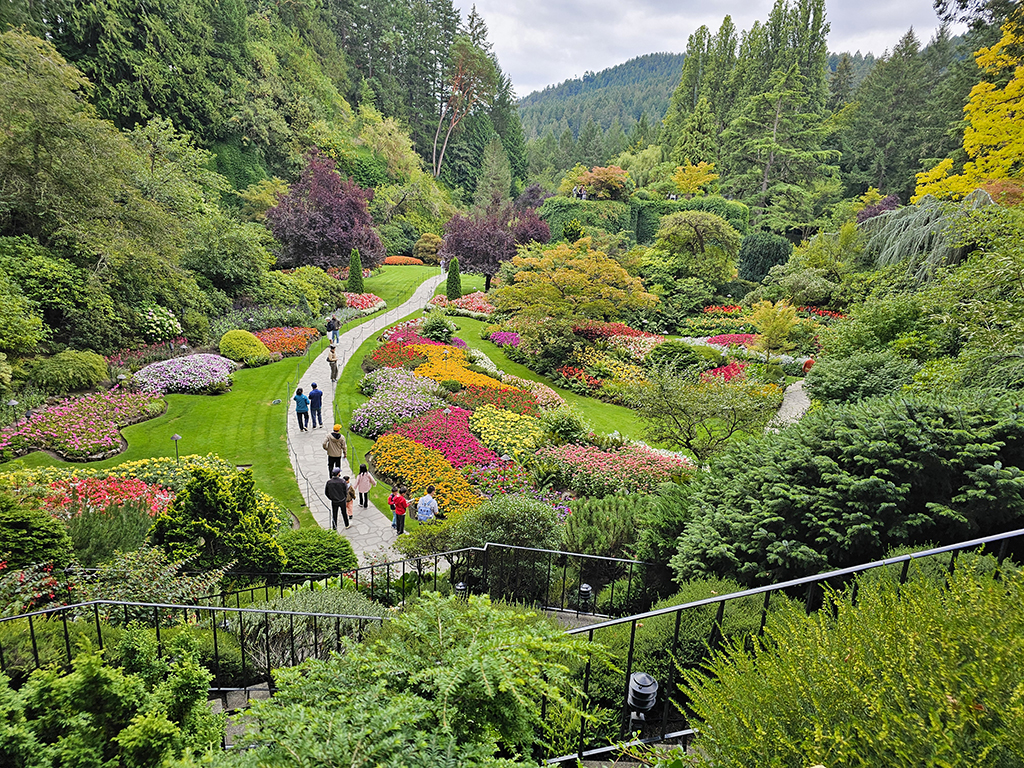
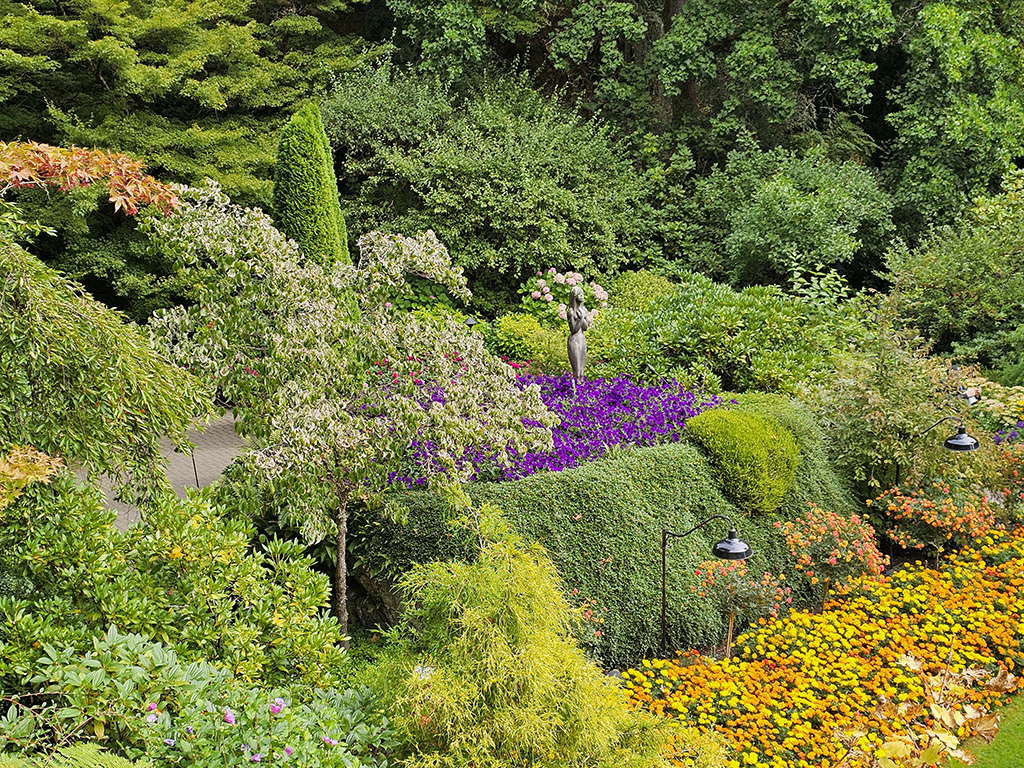
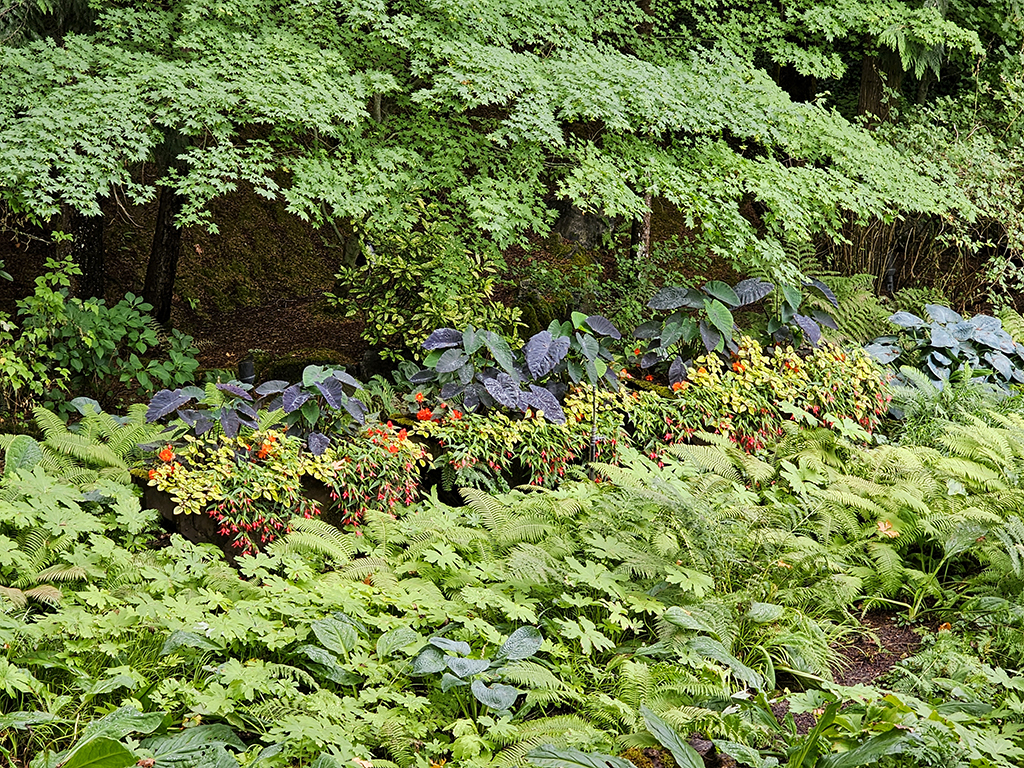
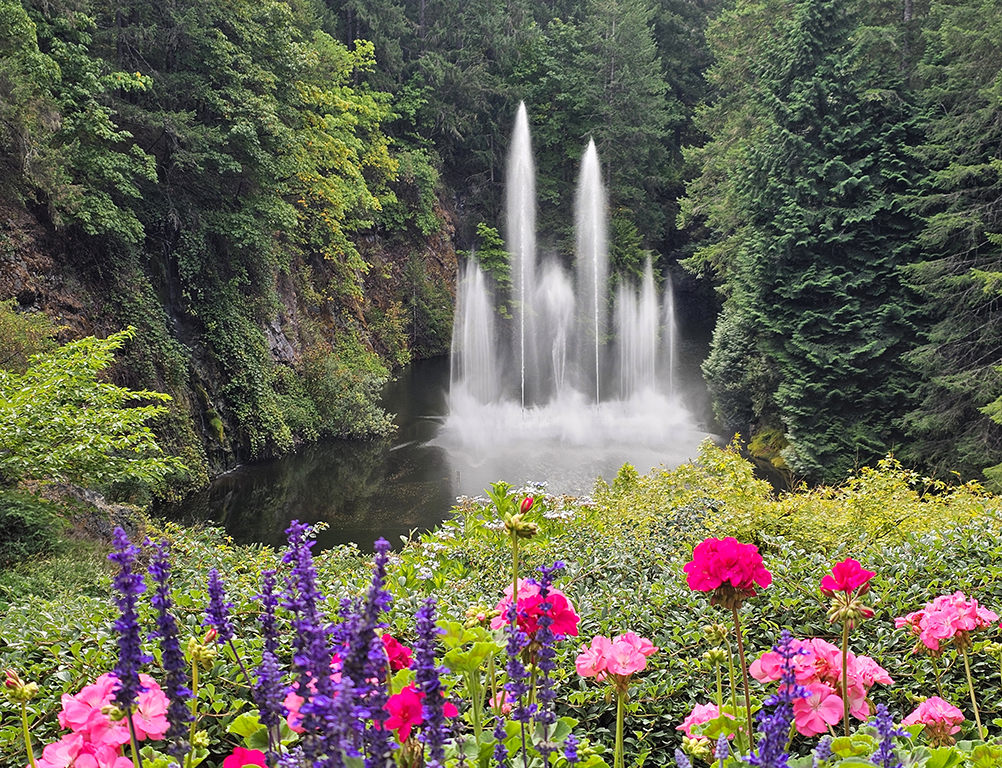
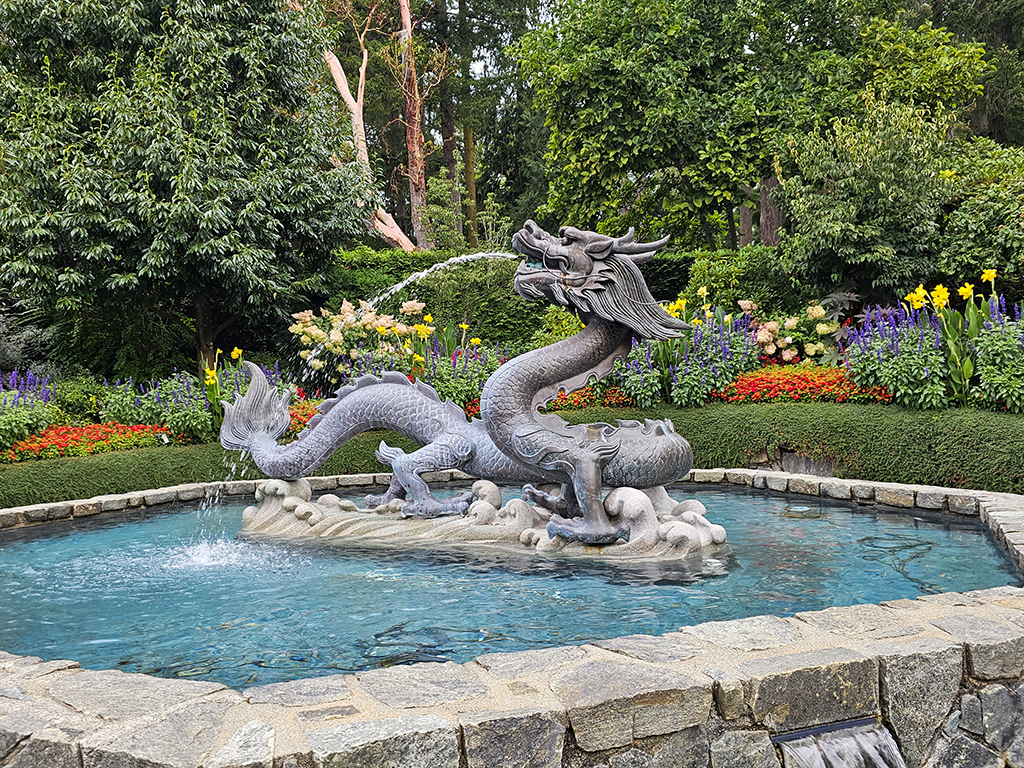
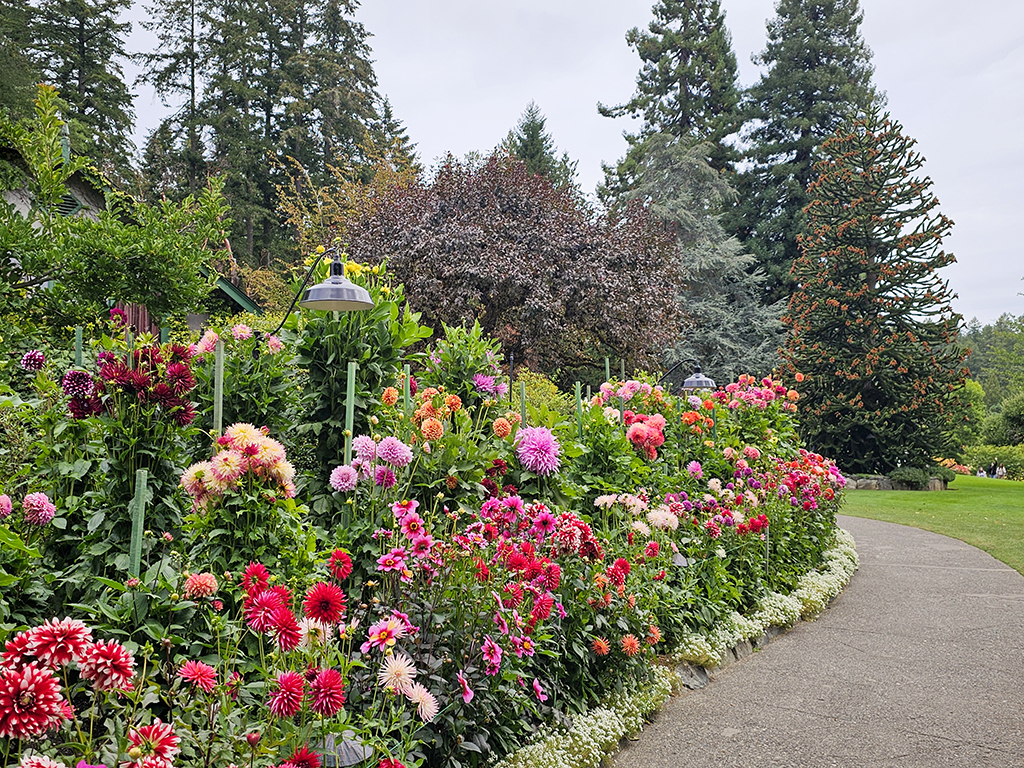
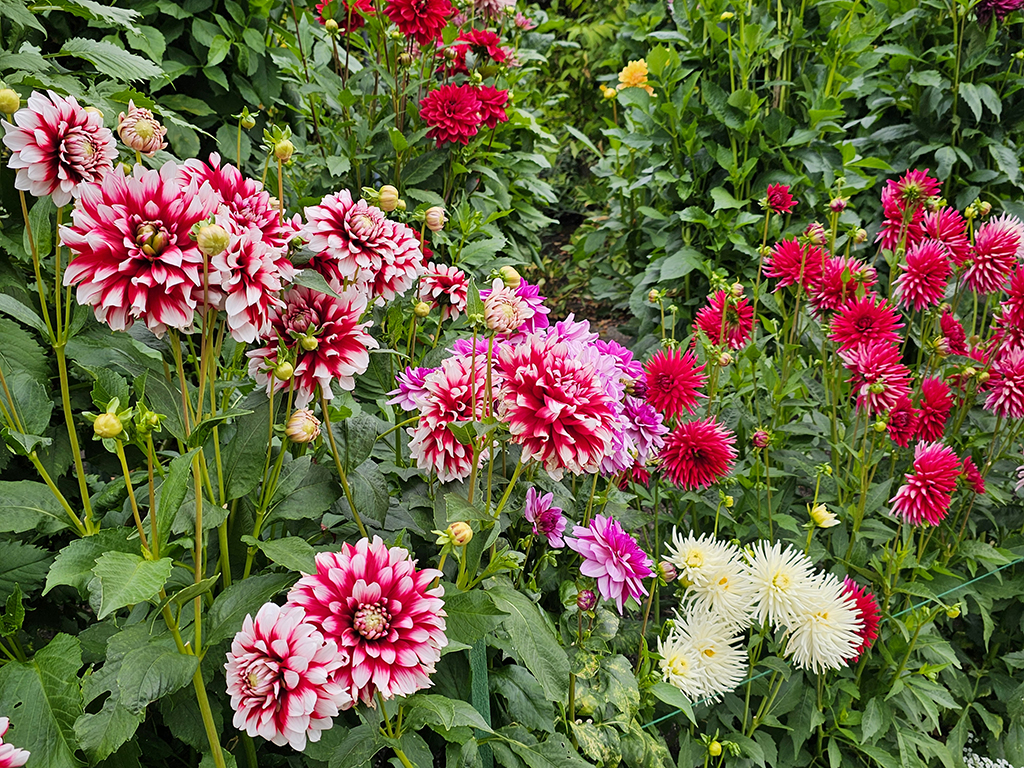
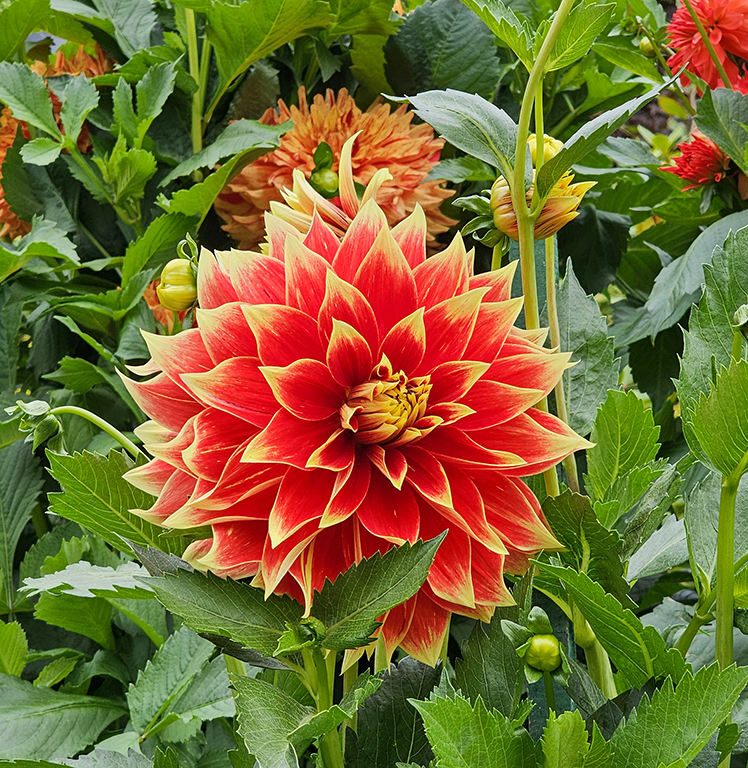
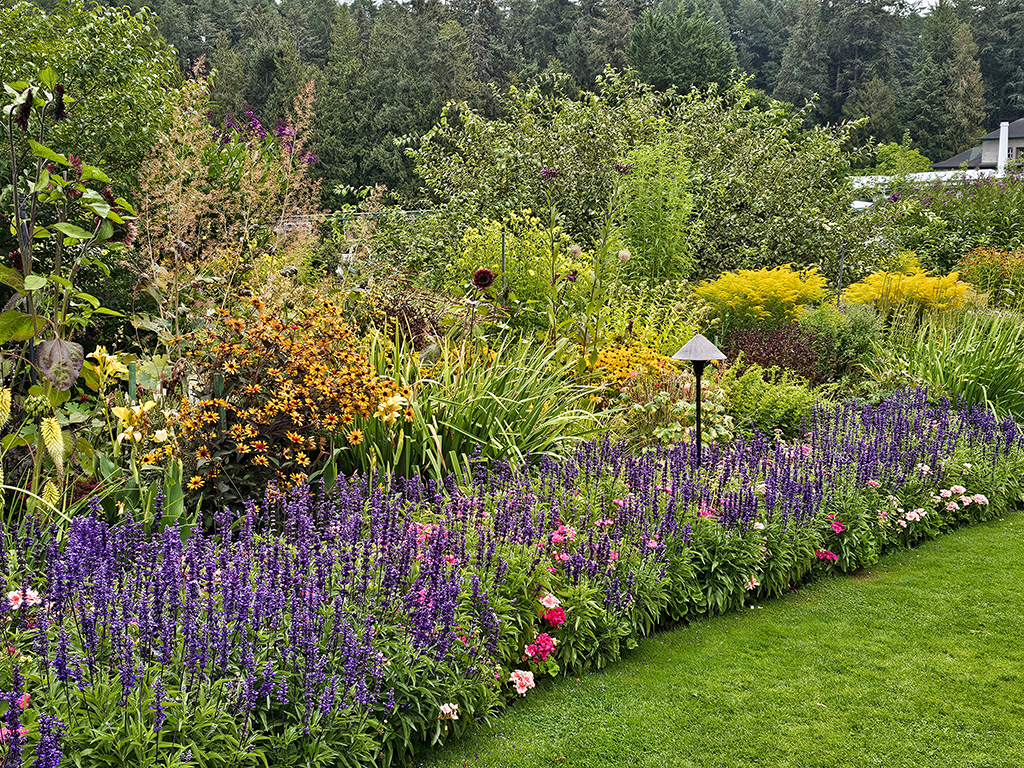
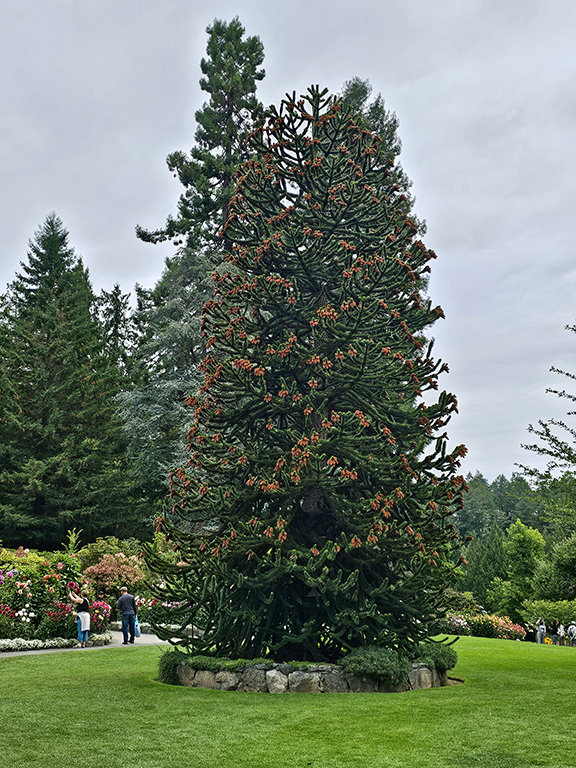
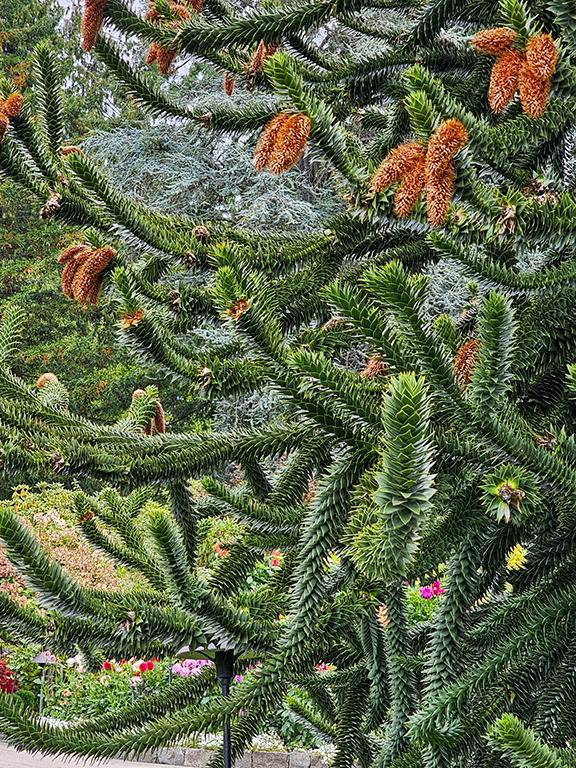
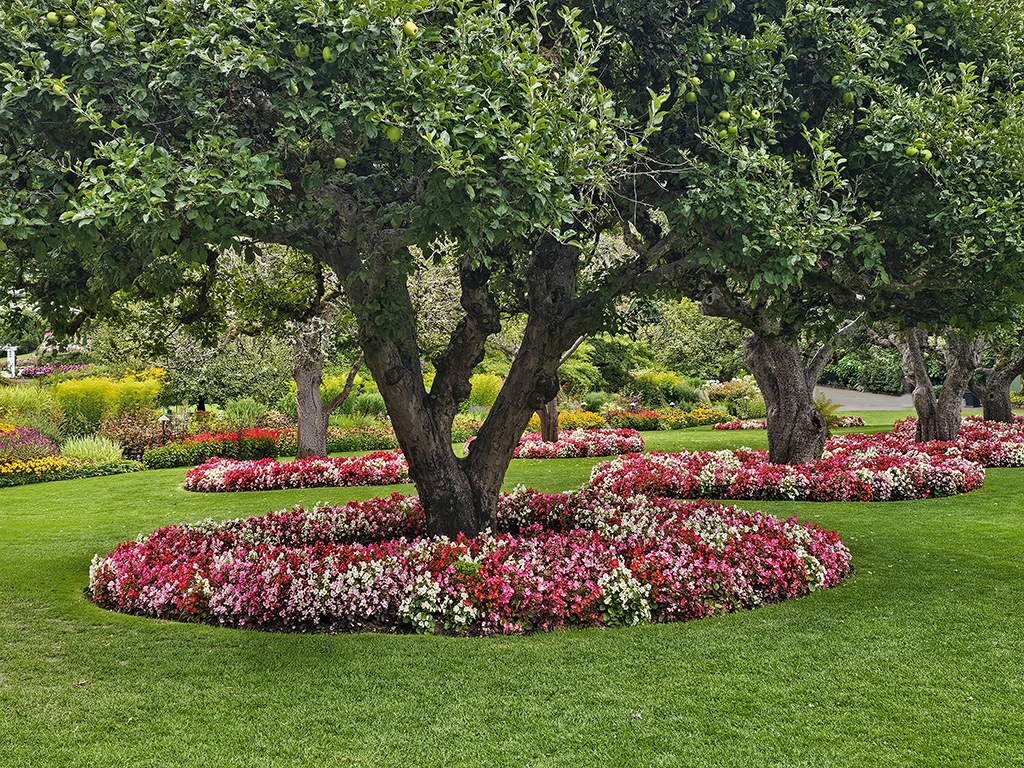
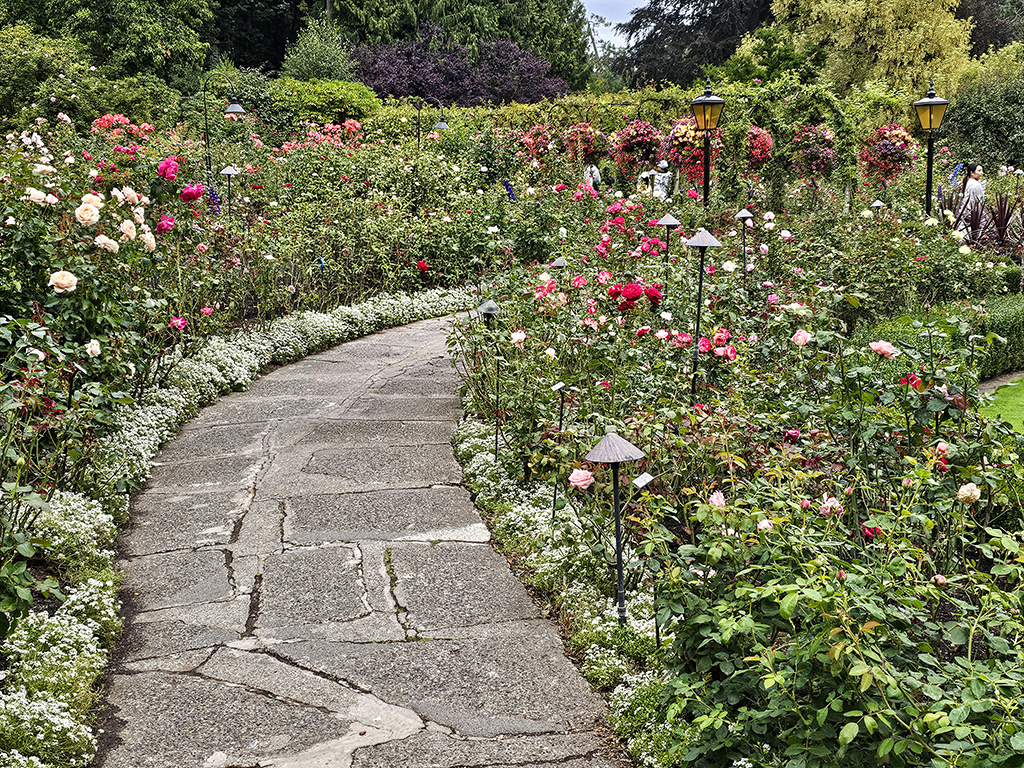
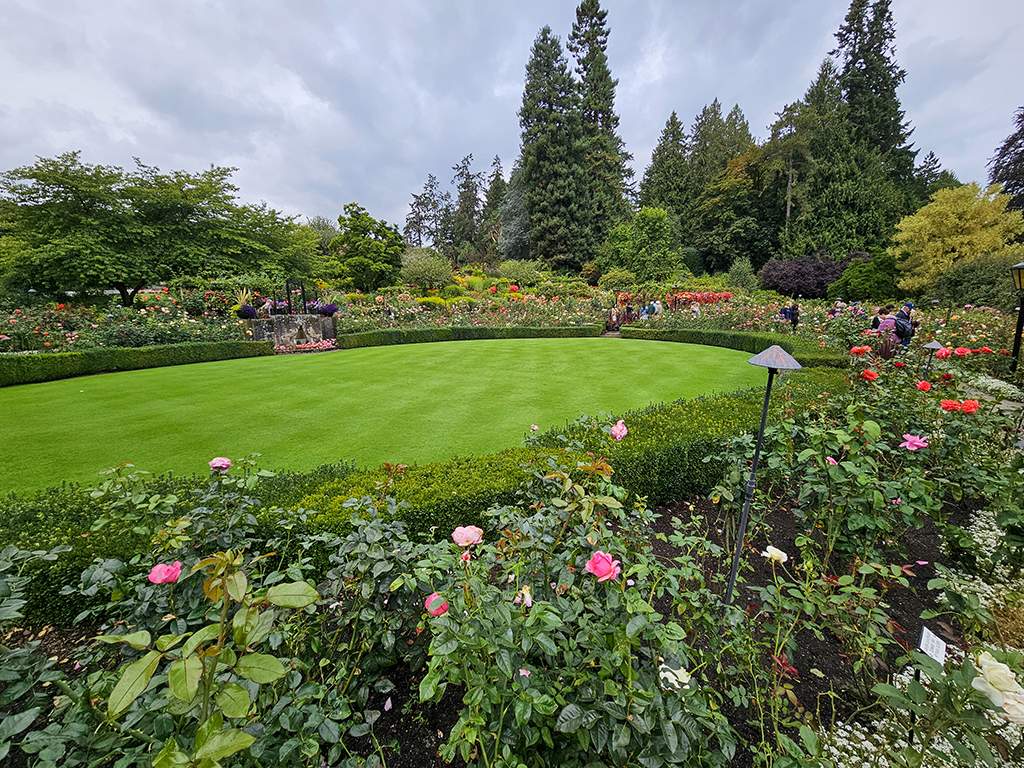
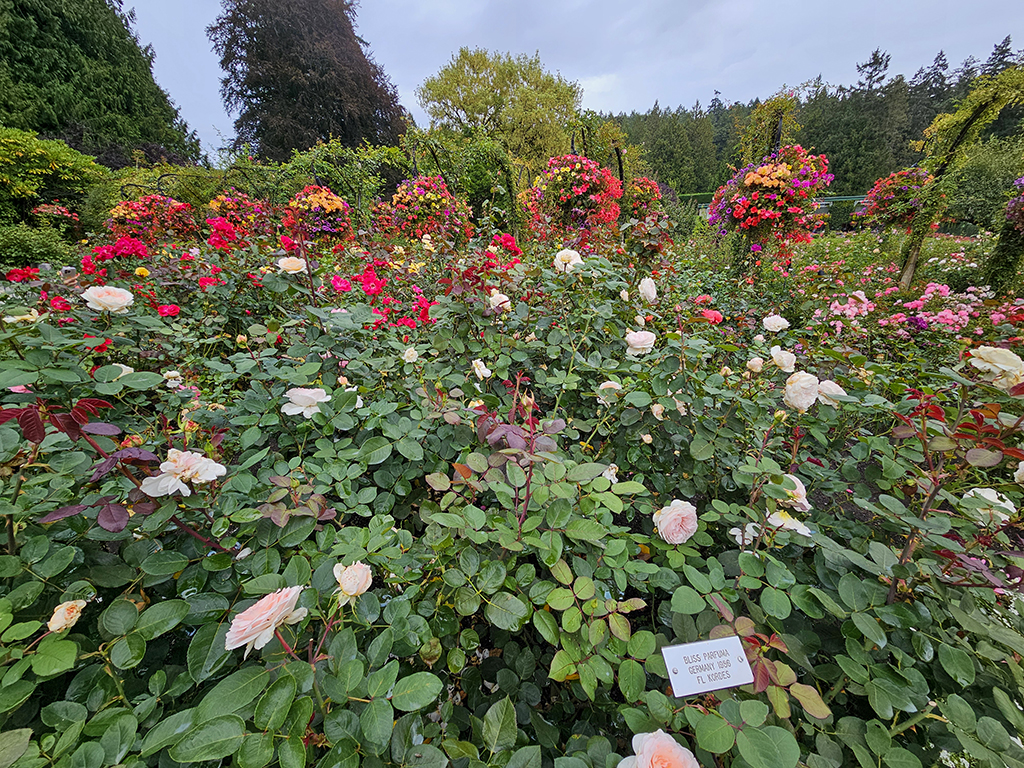
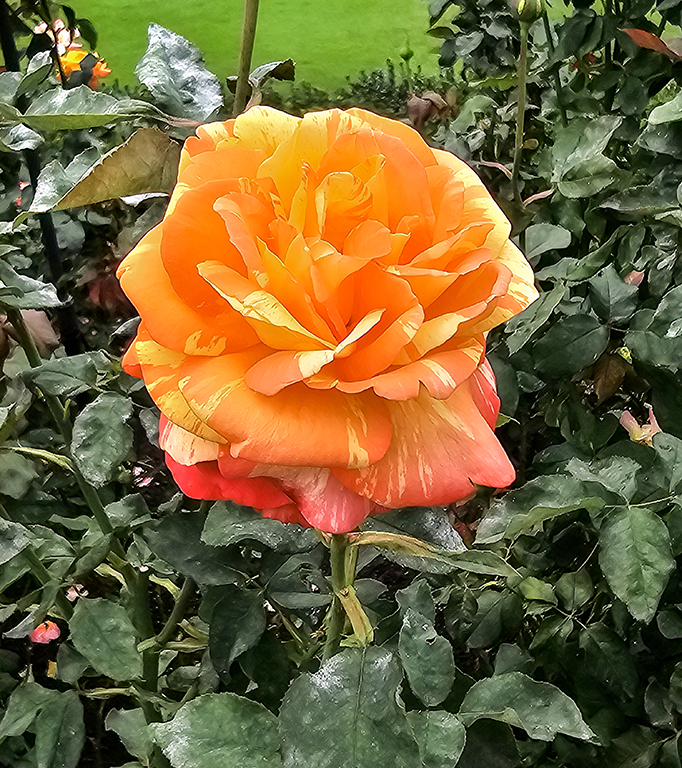
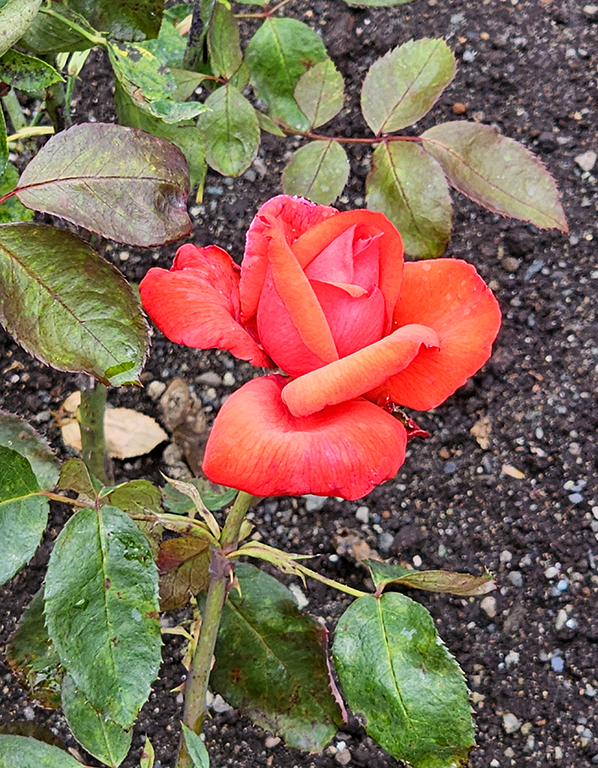
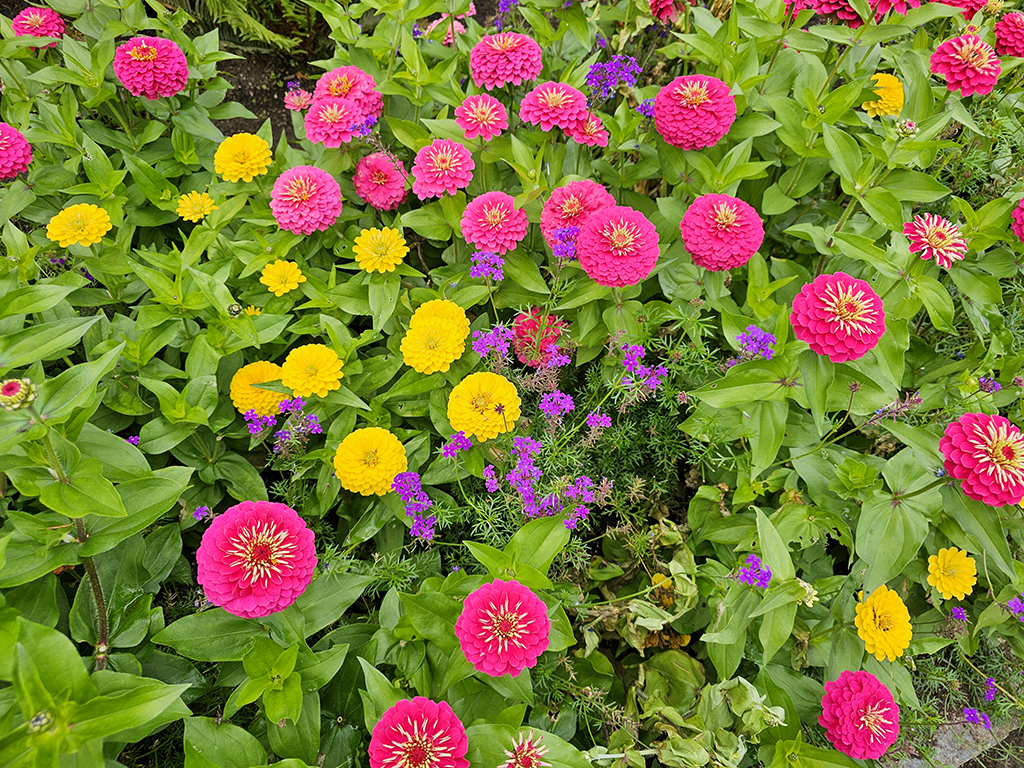
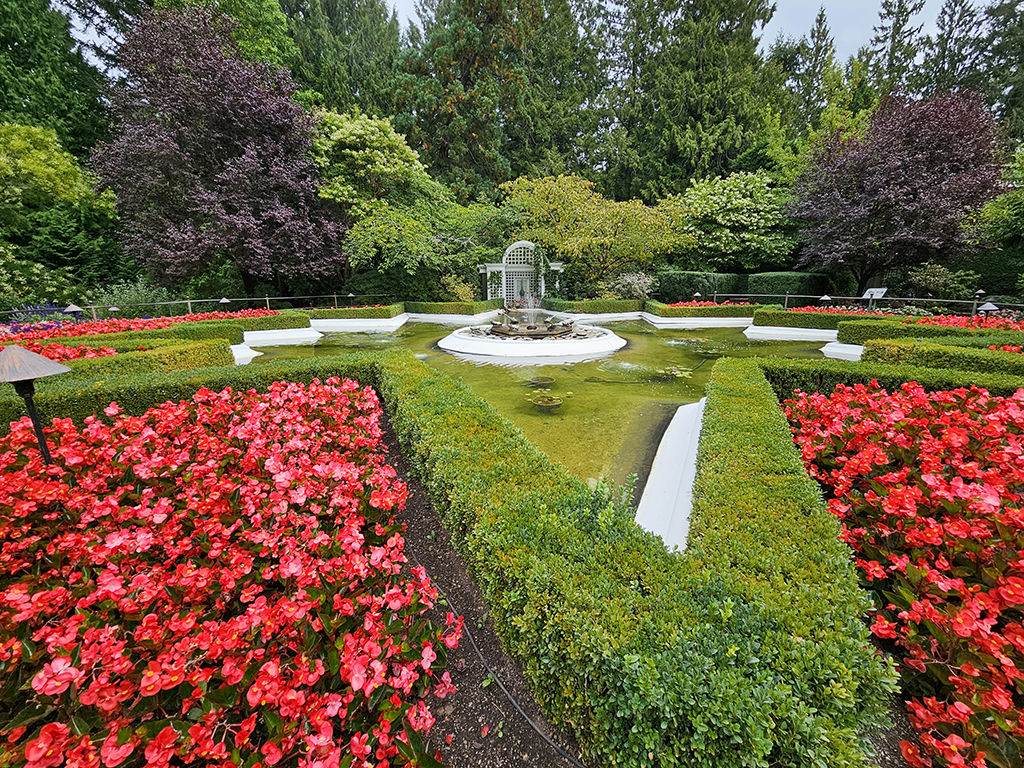
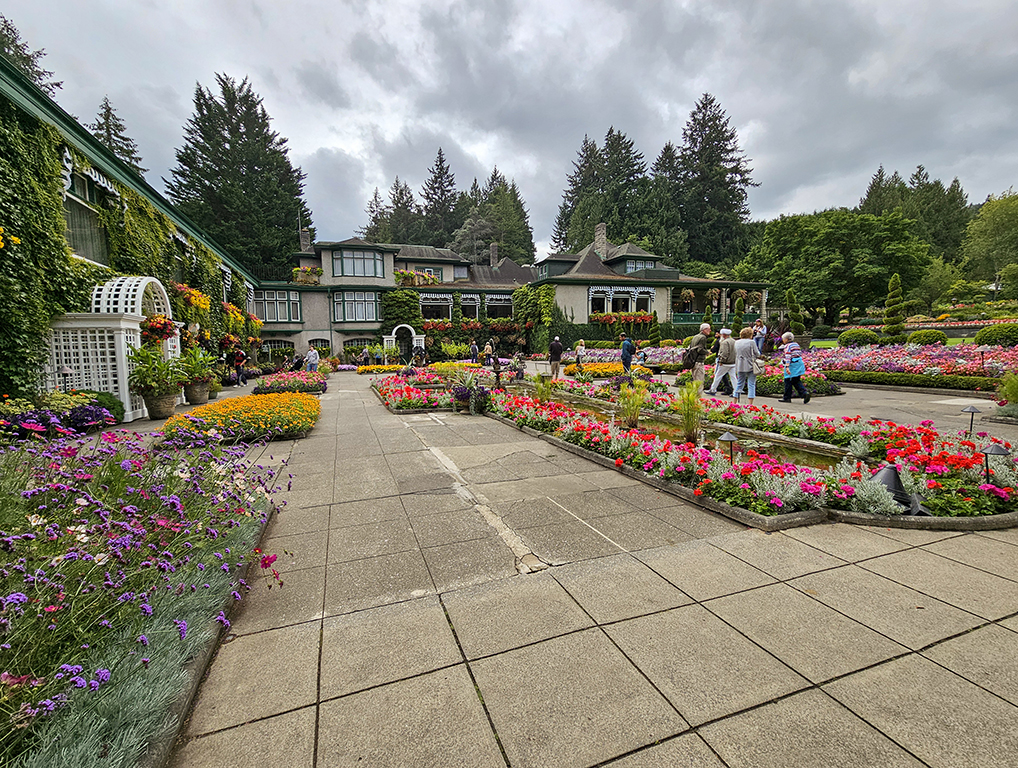
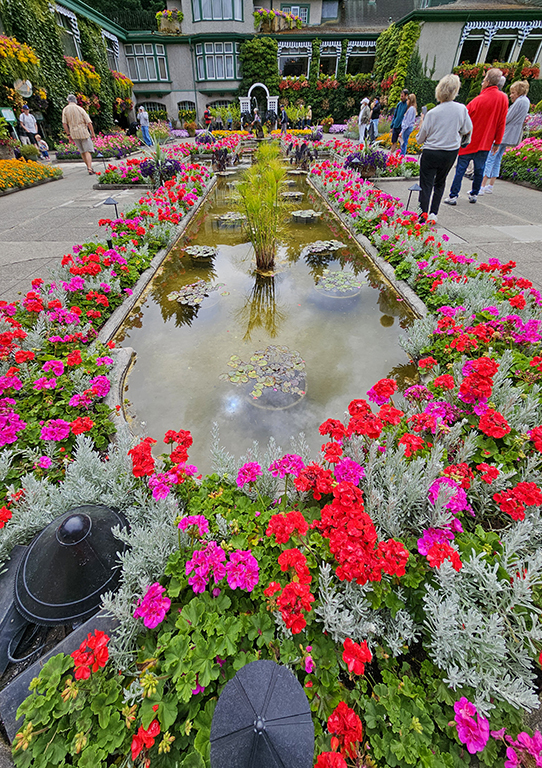
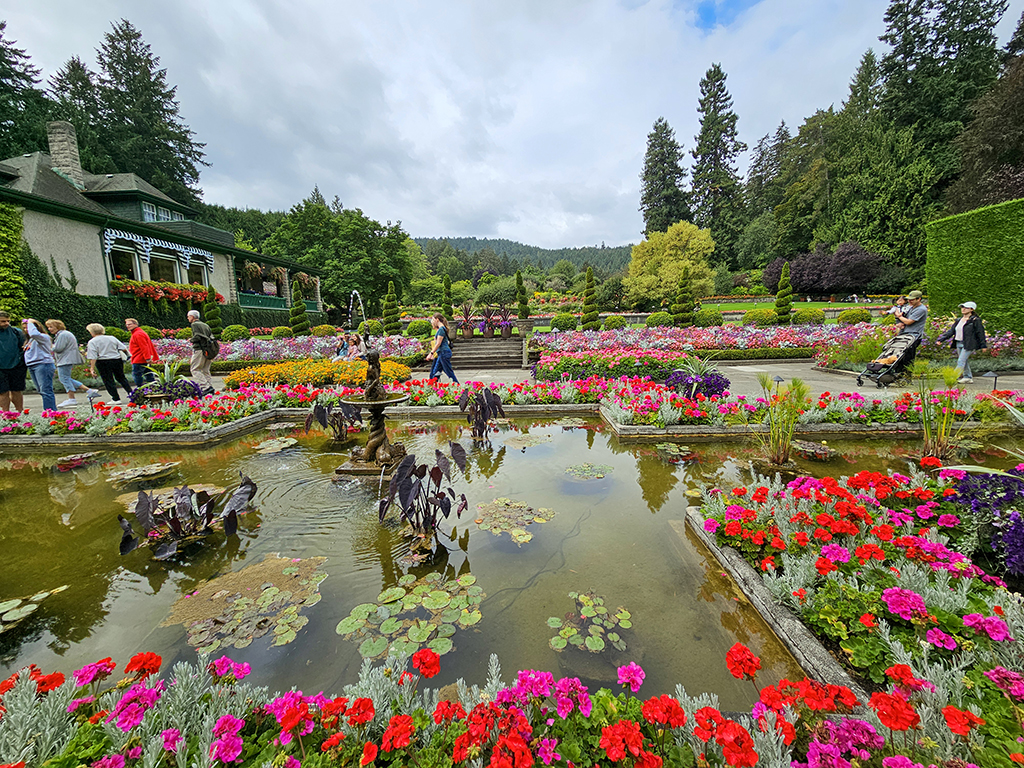
We drove up to Butchart Gardens, arriving just before the big influx of bus tours and cruise ship visitors. I have always loved the gardens, making a point of visiting each time I was in Victoria. I have seen them in every month of the year, and they never disappoint. As always, they were looking glorious on the late summer morning, with some of the trees just starting to change colour. We ate ice cream in the Italian Garden, and then went into the shop. I seldom fail to find something interesting, and this visit was no exception. Dick picked out two very different tops, that I will enjoy wearing for dressy occasions! Although the Dining Room offers an excellent Afternoon Tea, we decided to go downtown and have a late lunch at Murchies.
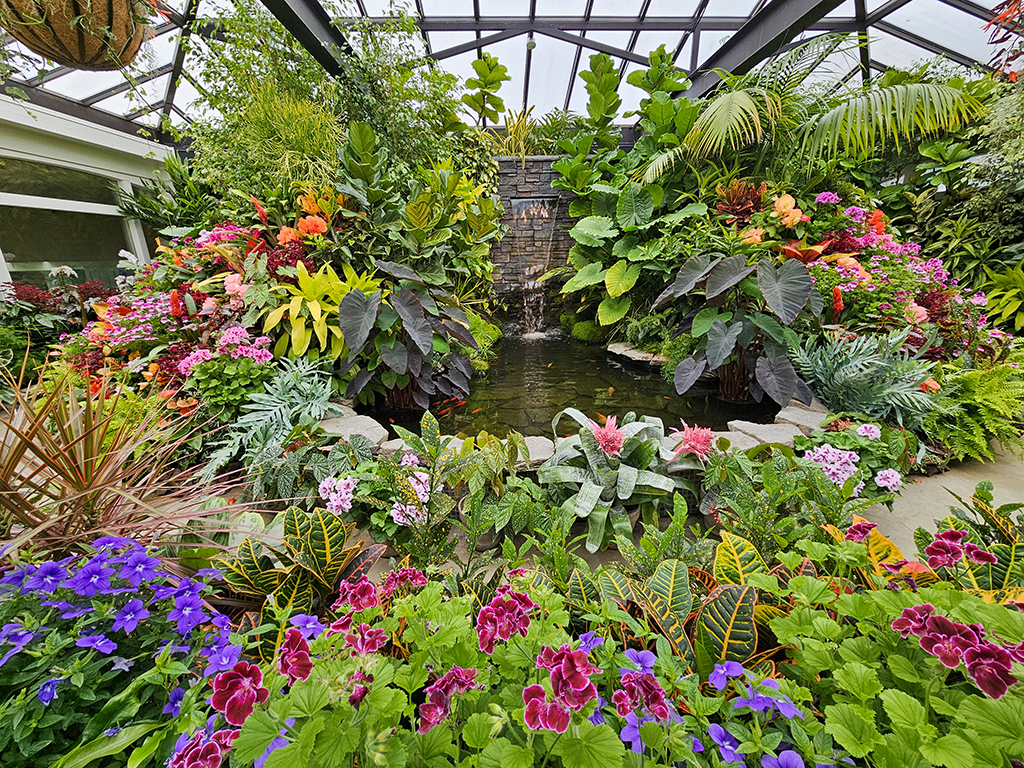
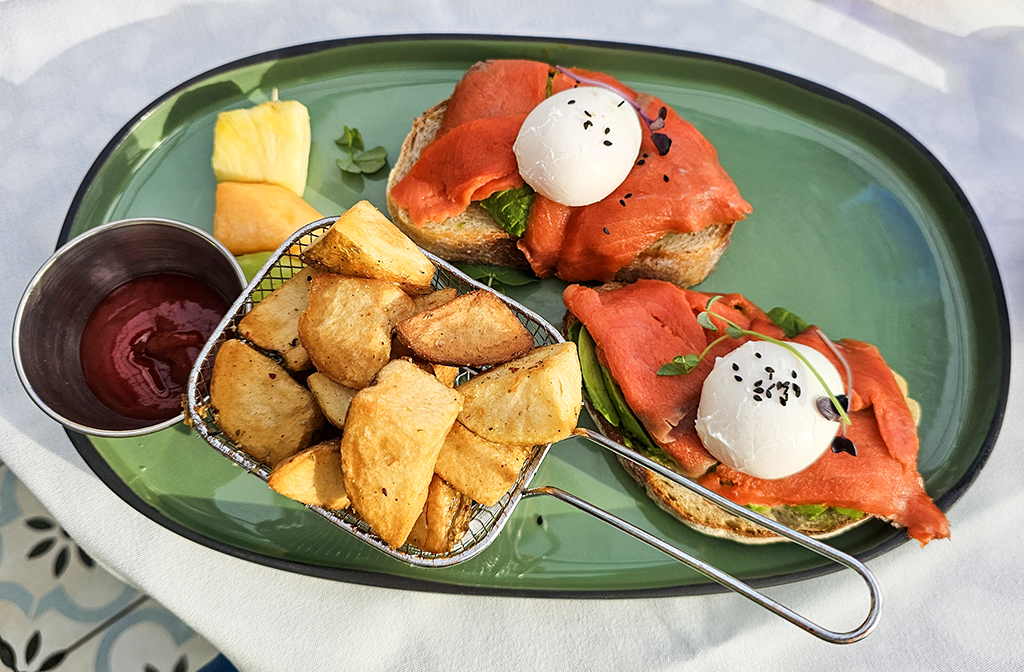
Murchies began as tea merchants in 1894. Today they sell teas and coffees, and in their flagship store they have a large restaurant that offers gourmet sandwiches and an extensive array of delicious cakes. Sadly, there was a long queue, and after waiting for a few minutes, Dick lost patience and we left and went across the road to Earl’s, part of a small chain of restaurants.
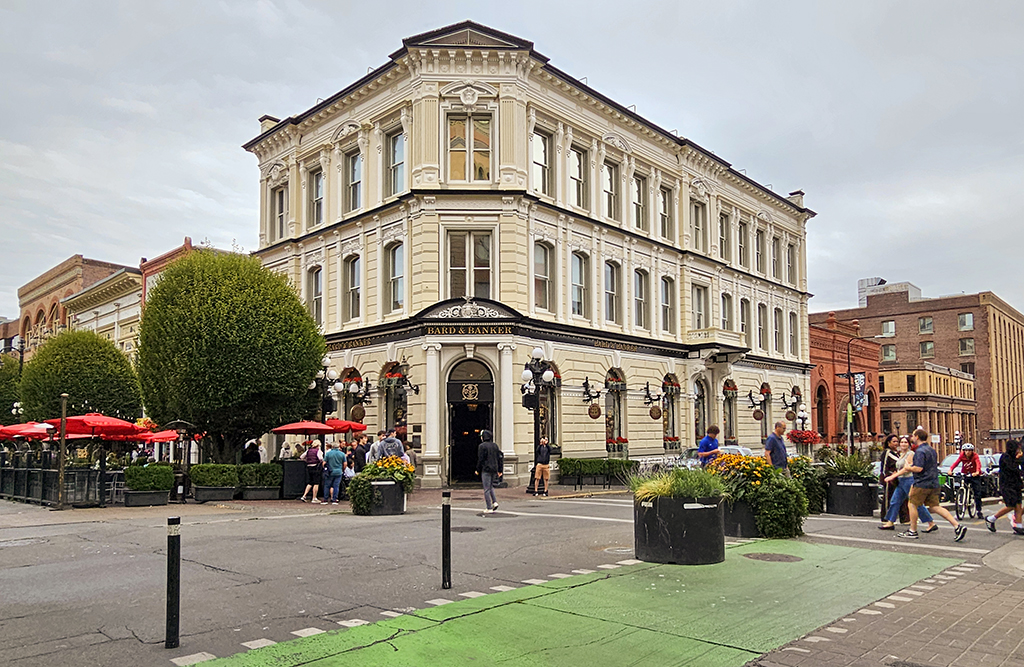
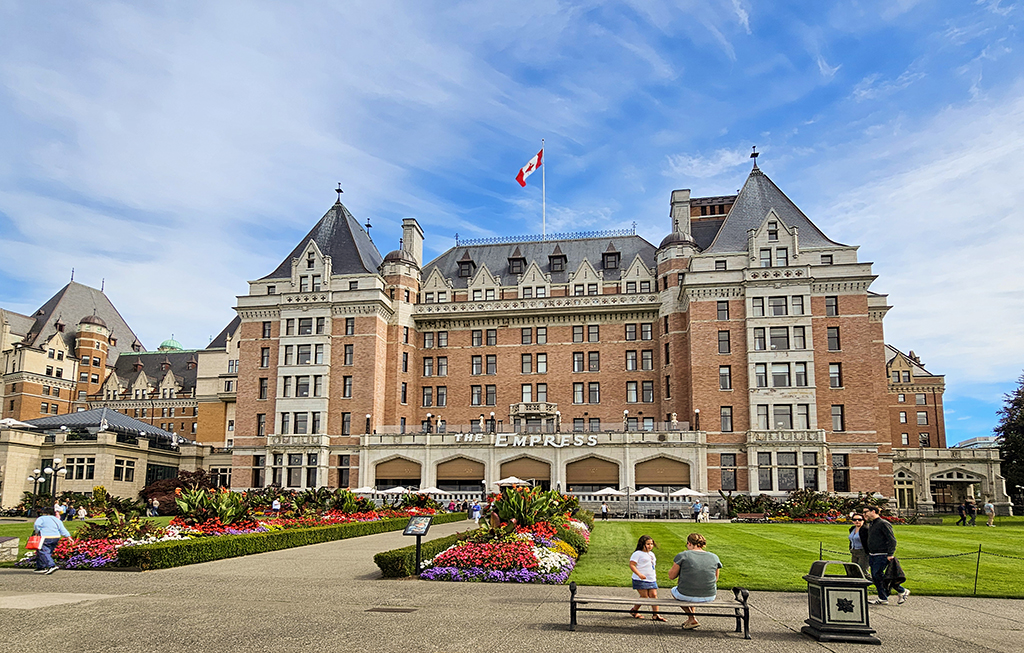
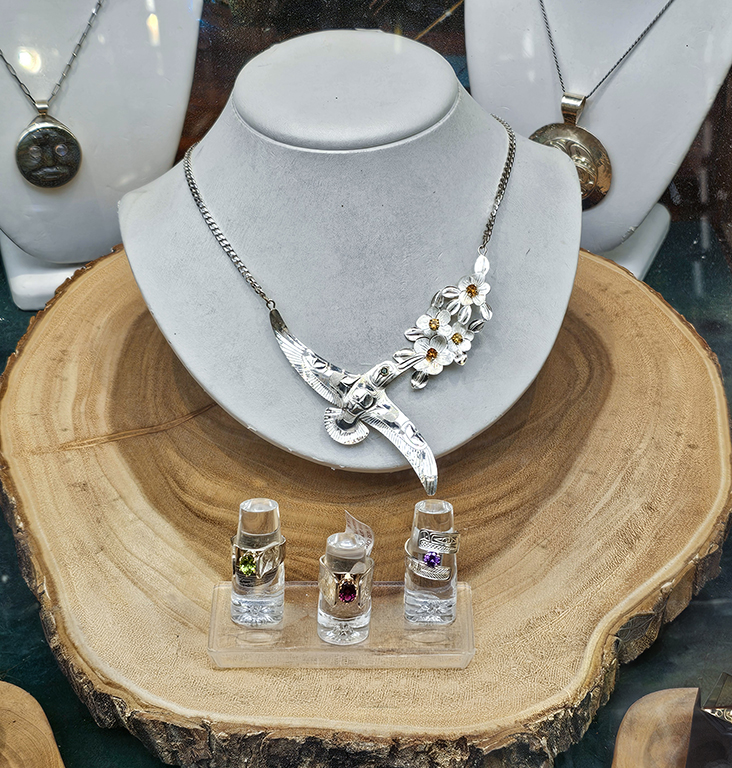
Next door was a shop selling fine, handcrafted jewellery. We looked into the window, and Dick pointed out a stunning necklace. It was made of silver, with small citrines, and was shaped as a hummingbird with a spray of flowers. We thought about it for two seconds, and decided to go into the shop and make enquiries. The nice young lady told us that the necklace was indeed sterling silver, and the price was $400. It was an easy decision for me to try it on, and we both loved it, so we said we would buy it. Imagine the disappointment when the young lady discovered that she had made a teeny mistake, and there was a digit missing between the $ and the 4… That is, the necklace was, in fact, priced at $3400.00! While the corrected price seemed far more appropriate for the beauty of the unique, handmade, intricate piece, it was far out of our comfort zone, and we reluctantly left it behind.
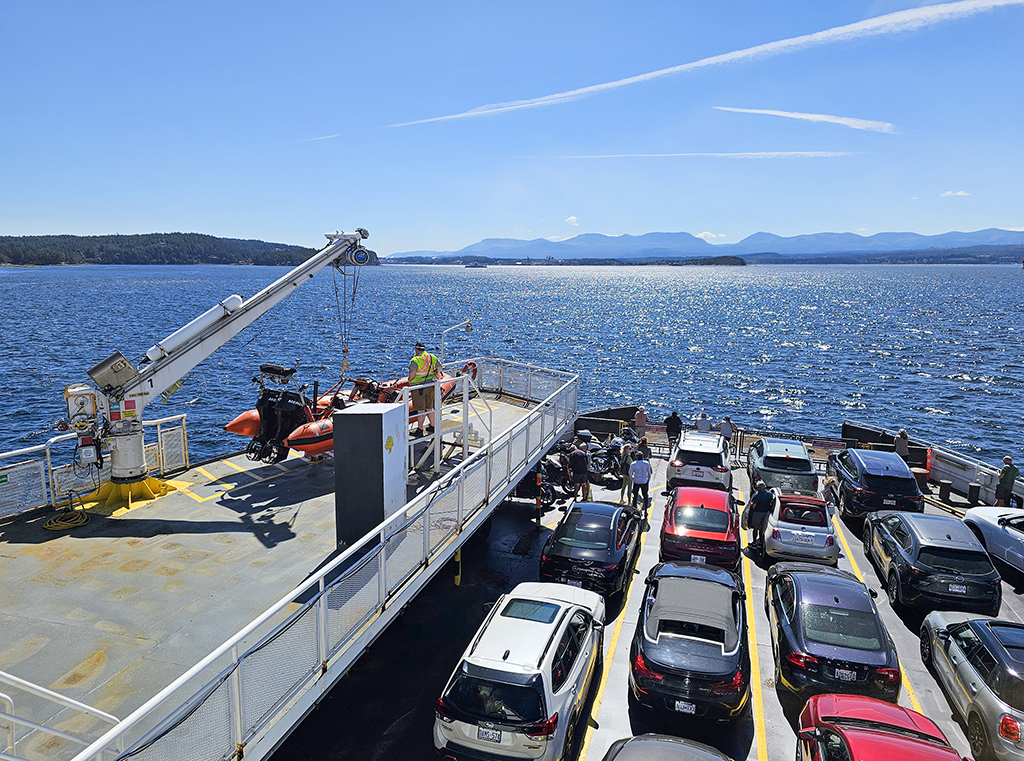
The next morning, we were away from the hotel by 9am, with the ferry to the mainland booked for 11am and a long drive to Kamloops after that. The terminal was busy, and while we arrived before the earlier ferry left, it was completely full, as was the one we had booked, so just as well we made a reservation. I was happy that our car was on the top vehicle deck, which meant that I was allowed to stay in the car and I could just sleep for the hour and a half passage. I do tend to get seasick, so I take medication, and that makes me sleepy, so it was nice to be able to relax in the comfortable car.
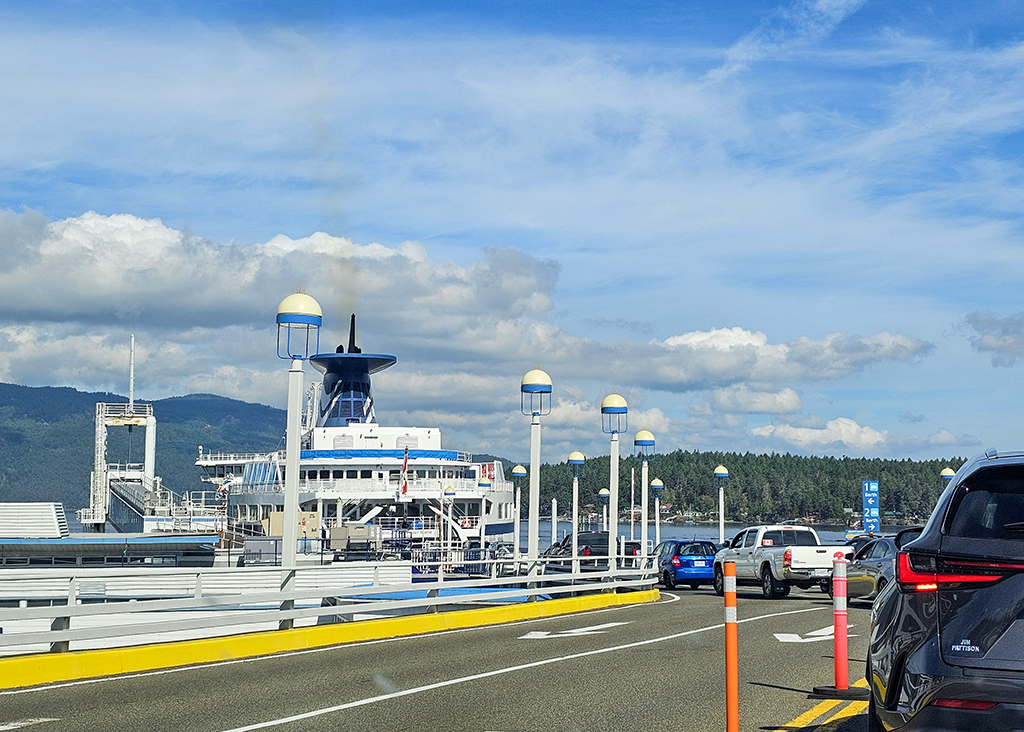
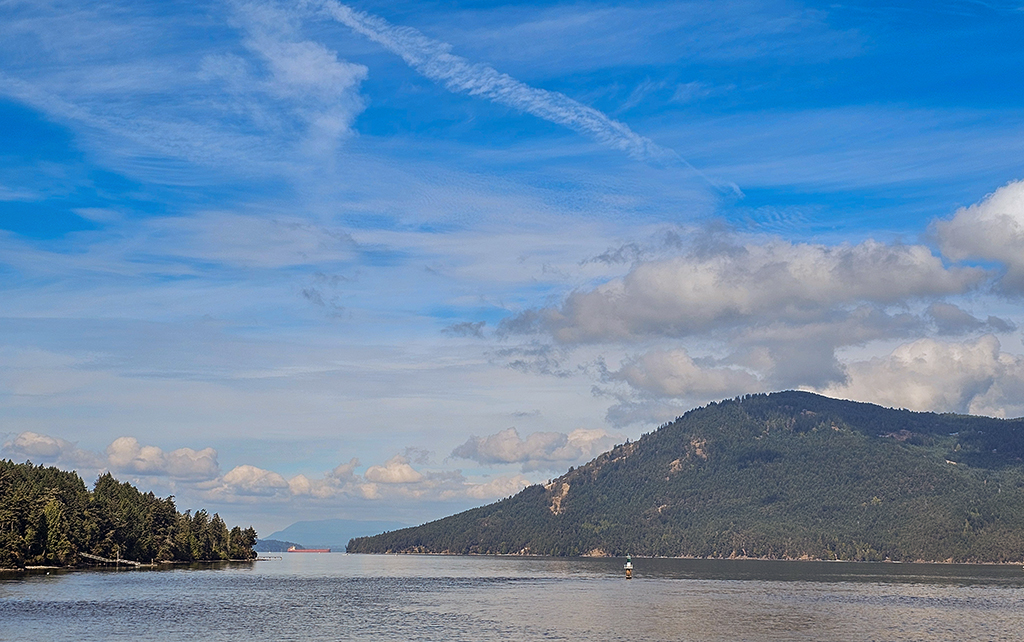
The drive to Kamloops was uneventful. The day was bright and sunny, and there was not a lot of smoke from the still burning wildfires. We arrived at our hotel in Kamloops by 5pm and immediately went out for an early dinner.
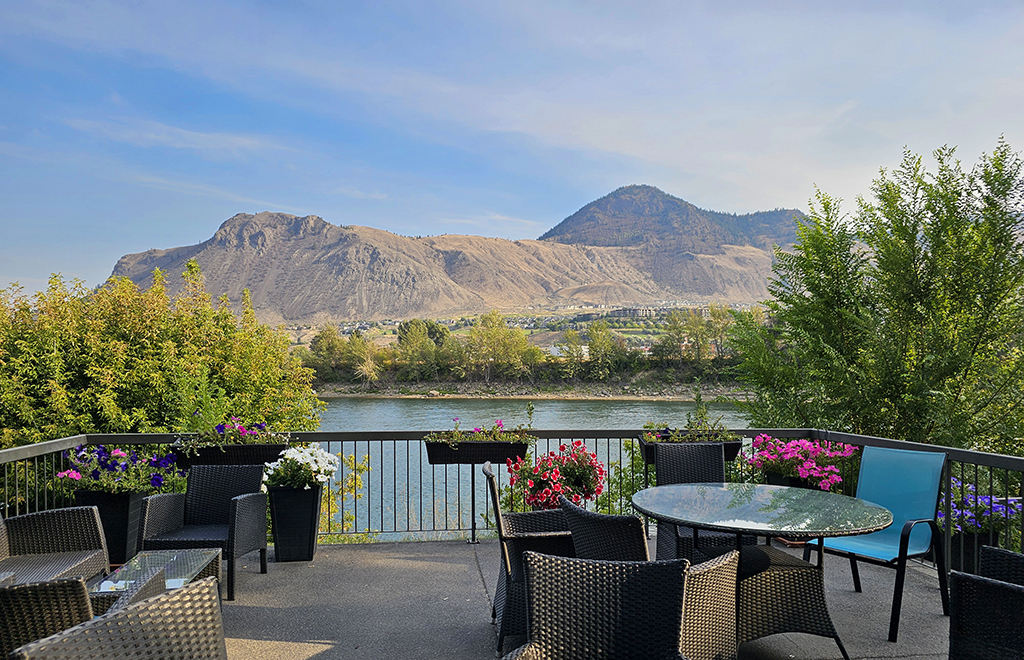
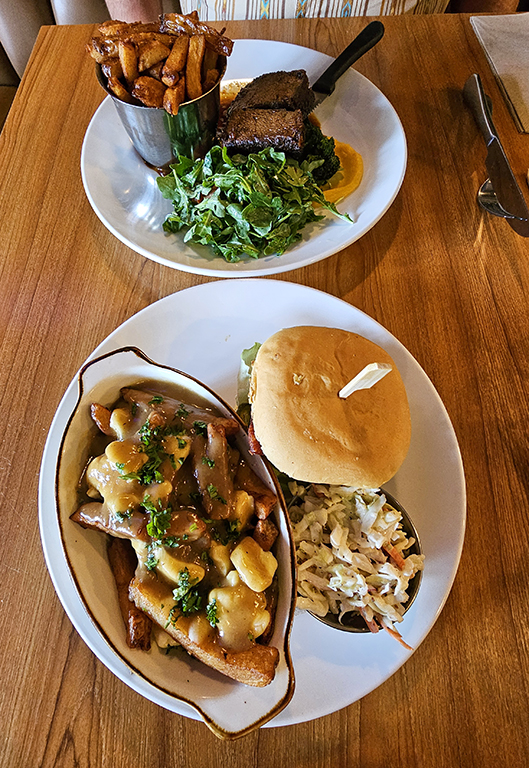
We had chosen the top-rated restaurant in the city, Noble Pig. The menu looked interesting, so we thought we would enjoy the food. Dick is quite tolerant of “home cooking”, so liked his short rib with vegetables and salad well enough (this is B.C. so they add greens to everything), although the accompanying fries were soggy. I ordered a crispy chicken burger that was truly awful. It was supposed to have avocado crema and chipotle lime mayo with pickled jalapenos. The sauce was incredibly sweet, and the pickles made the bun wet and squishy. The only way to eat it was to deconstruct it, but even after scraping off the sweet sauce, it was horrible. The accompanying side of poutine was tasty but fell into the trap that so many do, the fries did not start out hot and crisp, so the gravy just made them soft and it was not hot enough to melt the cheese curds. We thought we would salvage the meal with a shared prosecco pound cake with citrus poached fruit. It tasted all right, but the pound cake was as stale as if it was made last year.
Although we have stopped in Kamloops overnight many times as we travelled back and forth for many years, it has never impressed me, and so far it was living down to my memories of past visits!
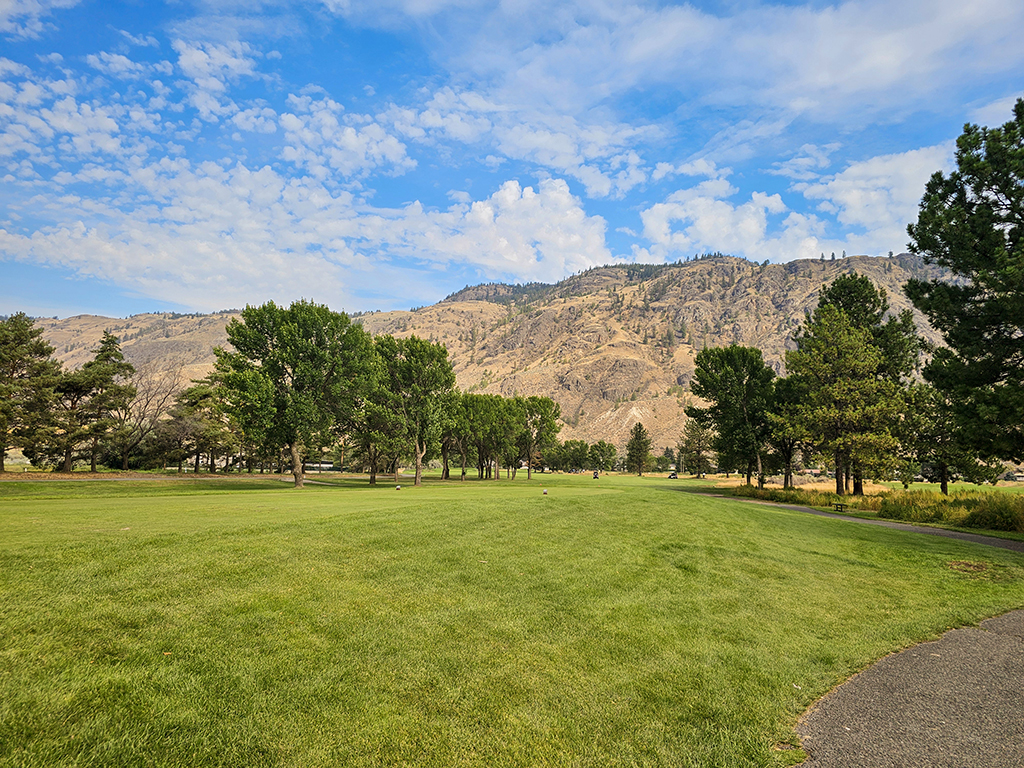
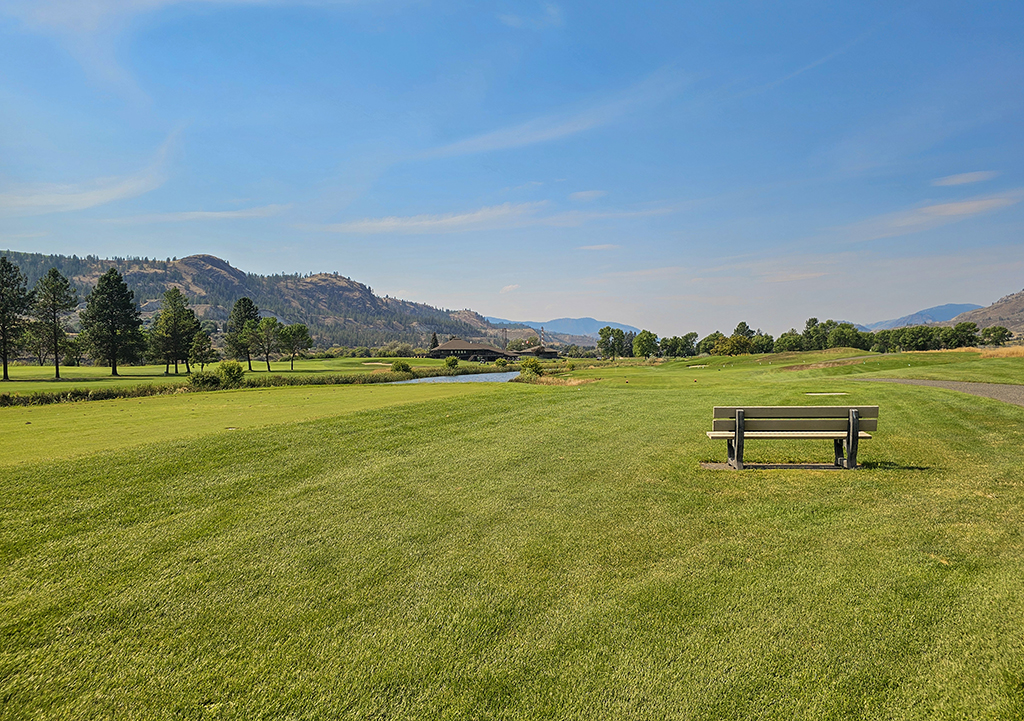
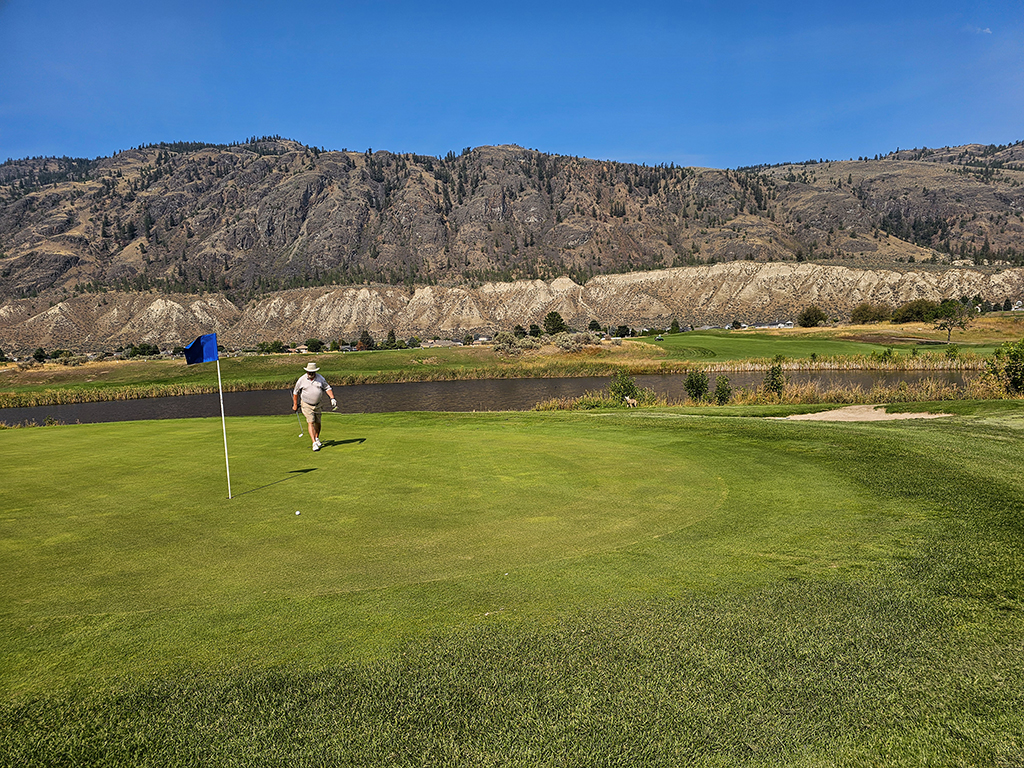
The next morning we set off for Rivershore Golf Links. Dick had chosen it to be a relatively friendly course for our last round of the trip. It’s a links course, and it was in beautiful condition. Even the forward tees were green and soft. There were no raised tees or greens (with one exception), but in its own way the course was quite challenging. After the first nine, I was thinking that the course was a bit boring… be careful what you wish for! On the back nine we were treated to one hole that finished with a pond before the green, one with stands of rushes beside the river, and hole 16 was a masterpiece of misdirection as it dipped down into a deep hole (with a piece of fairway at the bottom), and then you had to hit across a pond up to a raised green! In keeping with my track record, at a time of year when the day should have been in the low 70’s, it was 10 degrees above normal, so by the afternoon it was getting quite hot. Neither of us played particularly well, and we were quite frankly glad to pack up the clubs into the travel bags ready for the flight home.
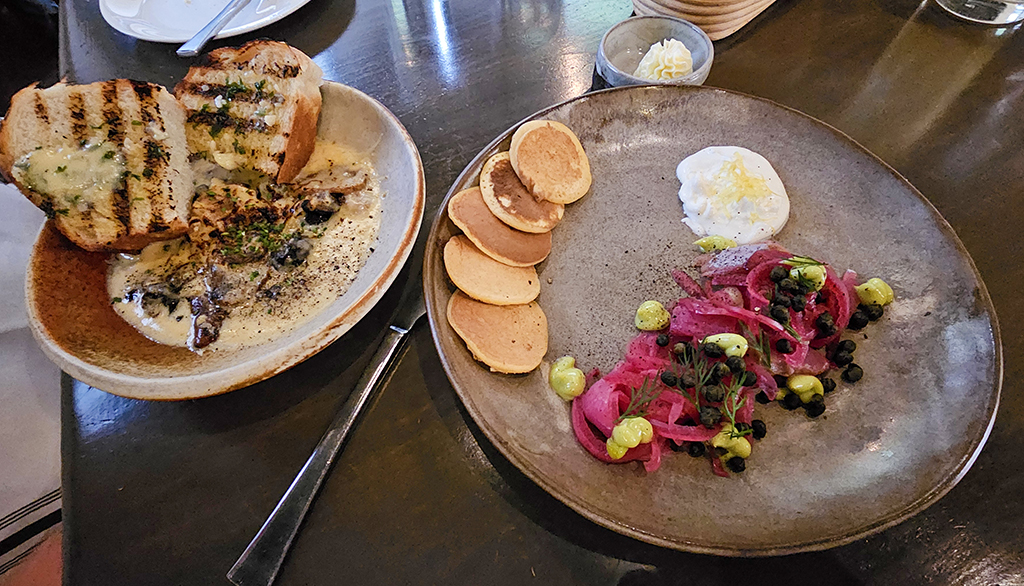
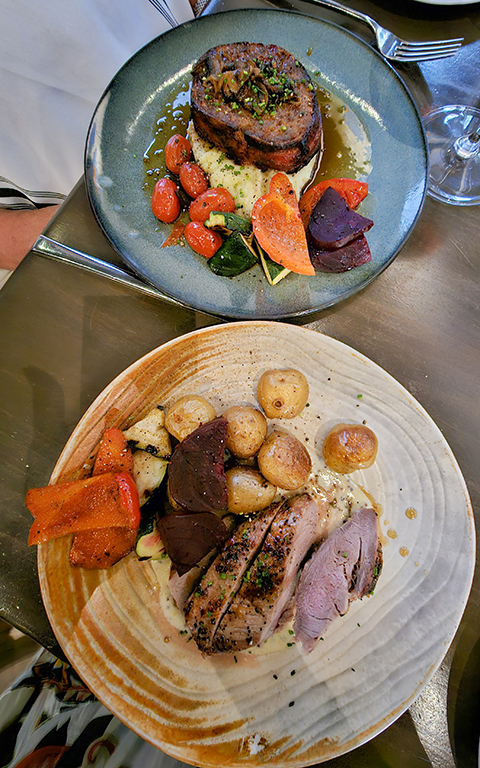
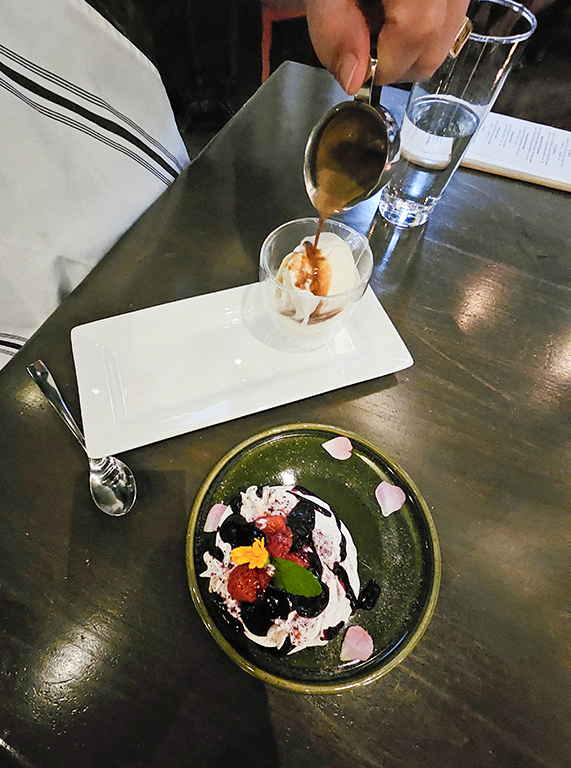
In the evening we went to Brownstone Restaurant, a fine dining establishment in the town centre. It was a very nice meal, and we would certainly return. They had an outdoor patio, that was very popular, but it rained on and off and we watched guests ask to sit outside, and then almost immediately change their minds and request an inside table. Dick started with an interesting escargot and mushroom fricassee, and I enjoyed trout gravlax with blini and herb aioli. The special that evening was bacon wrapped elk meatloaf with mushroom sauce. Dick was delighted! I tried the maple glazed pork tenderloin, which was tender, but unfortunately, I should have realized that the maple glaze would make the dish rather sweet. For dessert, Dick decided on affogato, and I had their signature pavlova. The meringue was excellent, with lemon sabayon and a blueberry sauce.
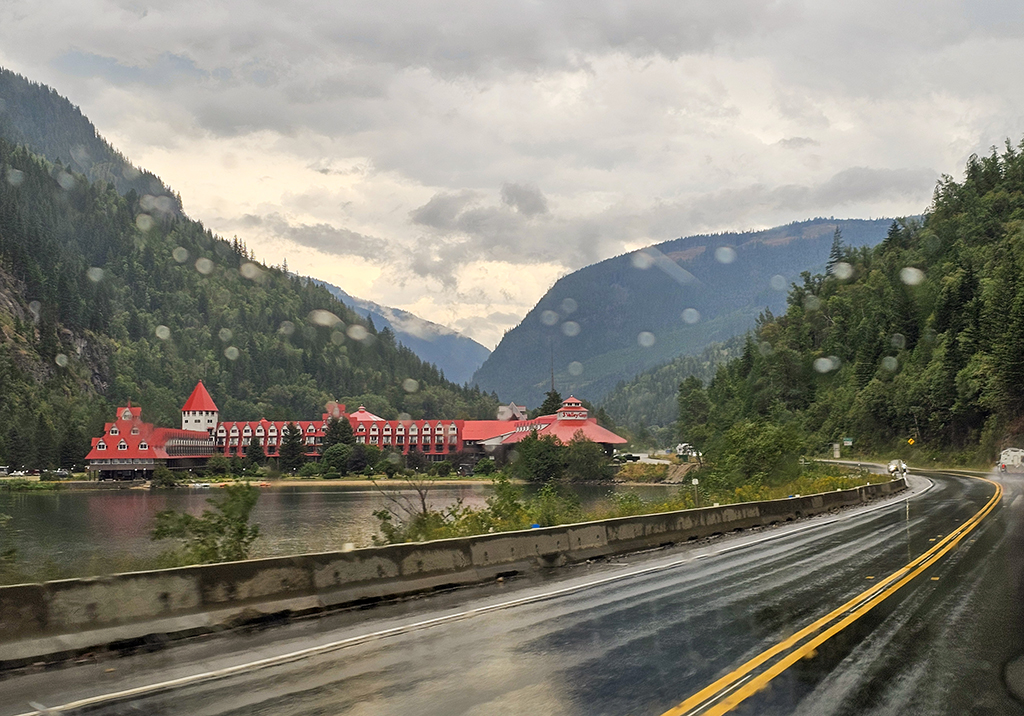
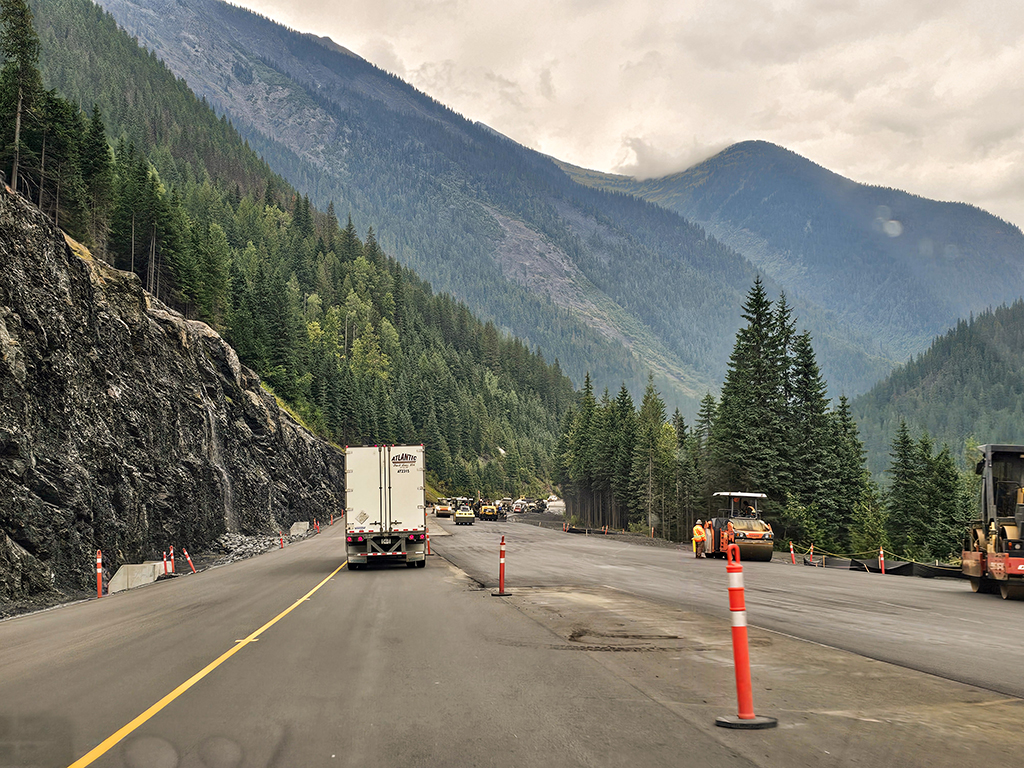
The next morning was a relatively early start, with a long drive back to Calgary. Once we were a few miles out of Kamloops, the desert landscape receded and we were back to lush valleys and stunning mountain scenery. Much of the smoke from fires had cleared, but sadly, it was replaced with lowering clouds and intermittent rain. Sometimes the rain was so heavy that it pooled on the highway and we found ourselves aquaplaning. The vehicle’s passenger brake certainly got a workout!
I was highly amused by a particular road warning sign that appeared frequently when the road widened into a passing lane. It warned motorists not to pass a snow plough on the right-hand side. Well, duh! Apparently, accidents happen this way, around 10 times each winter in B.C., as impatient drivers try to squeeze by. Some are blinded by the flying snow and run off the road, some collide with a small secondary wing blade that extends into adjacent lanes. I spent some considerable time trying to capture a picture of the sign, but was not successful.
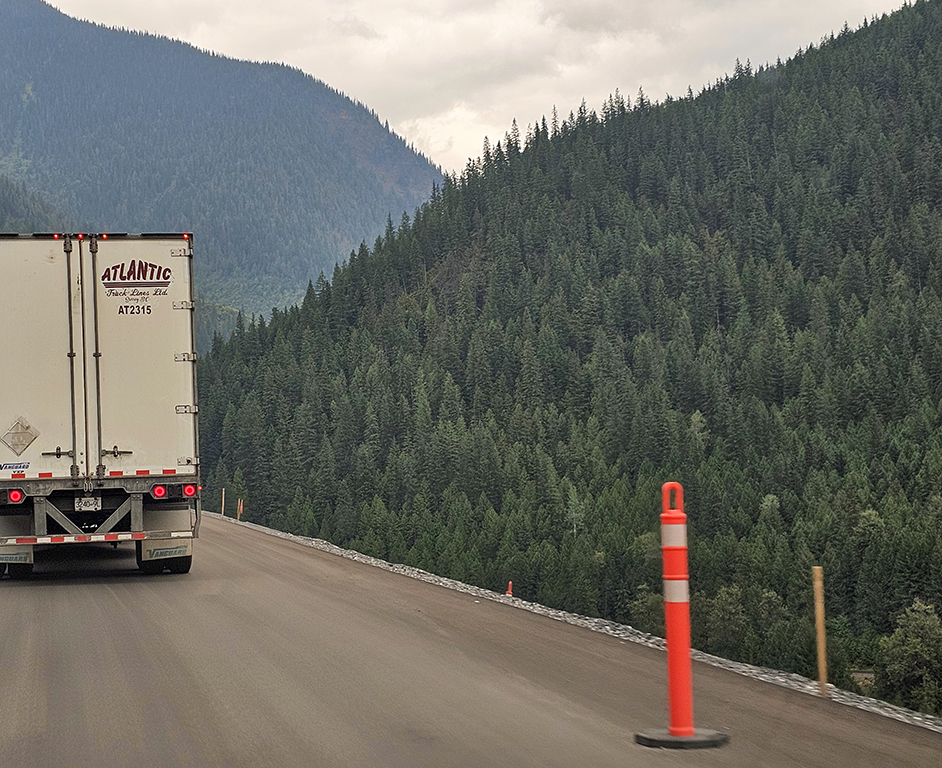
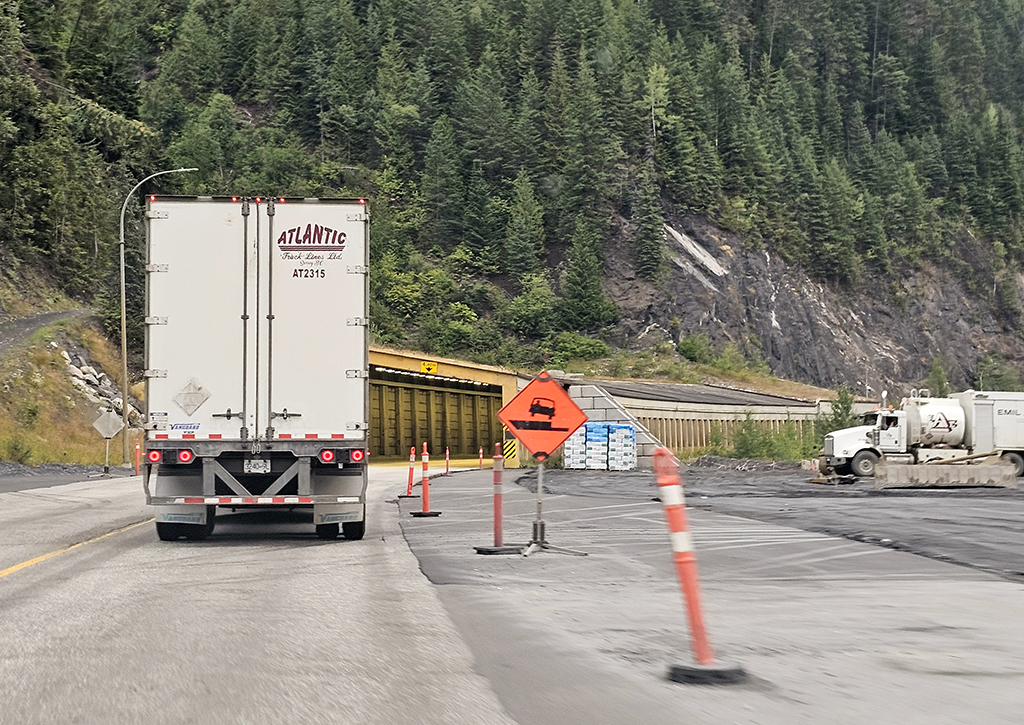
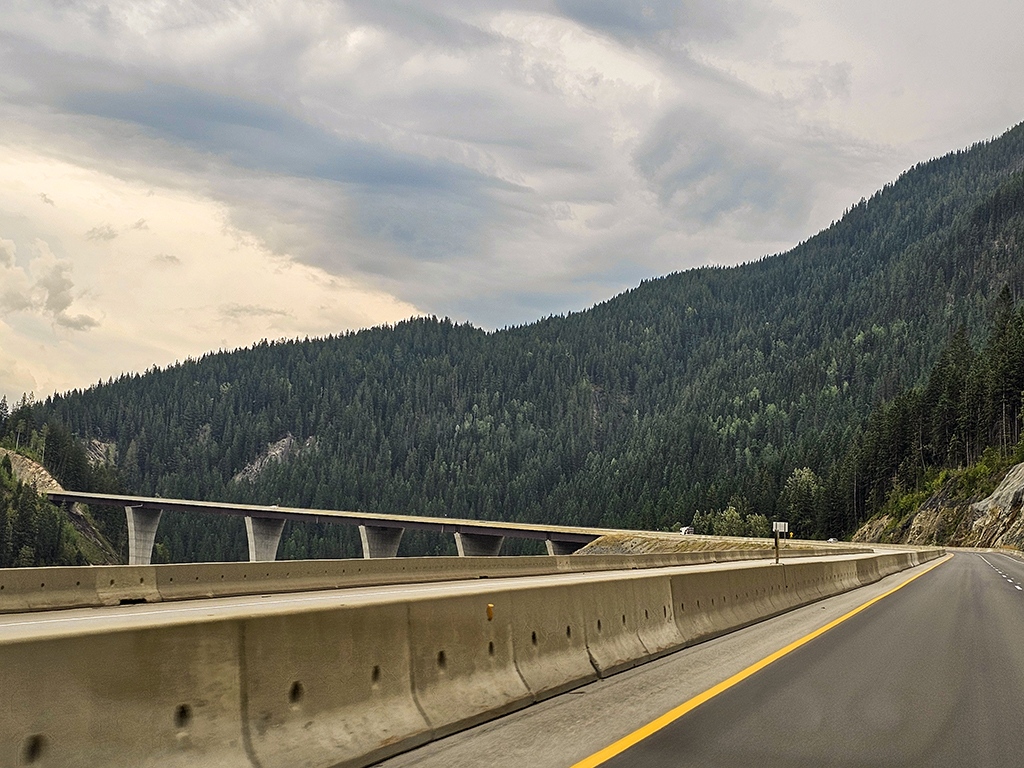
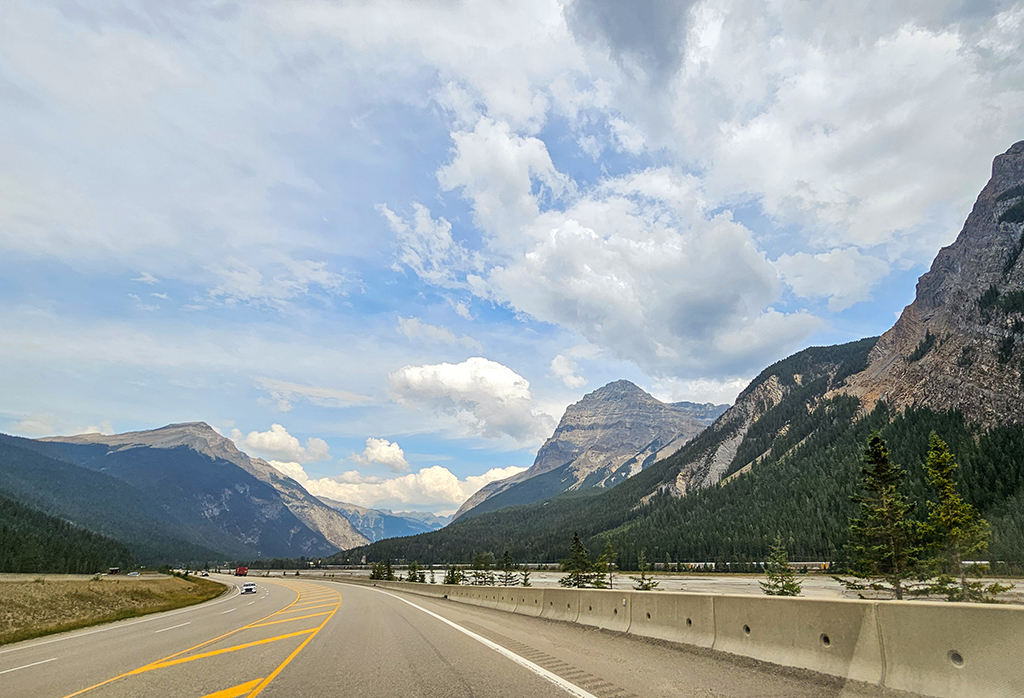
Once we were in the National Parks and travelling south towards Banff, we could see that the animal crossing bridges that were installed years ago when we first lived in Calgary, have grown up with vegetation and small trees. There is now a high fence along both sides of the highway that has also helped reduce collisions with deer and elk by more than 90%. I read that there are now 82 km of fencing, with 38 underpasses and 6 of the highly visible overpasses.
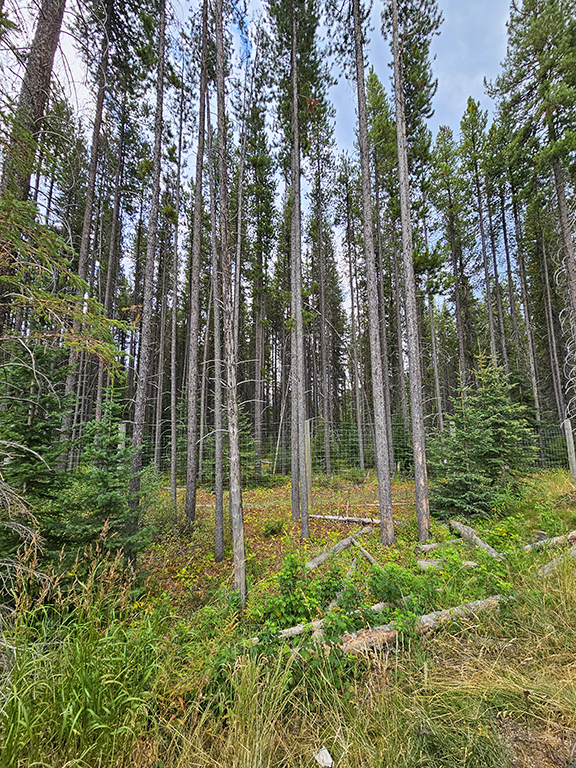
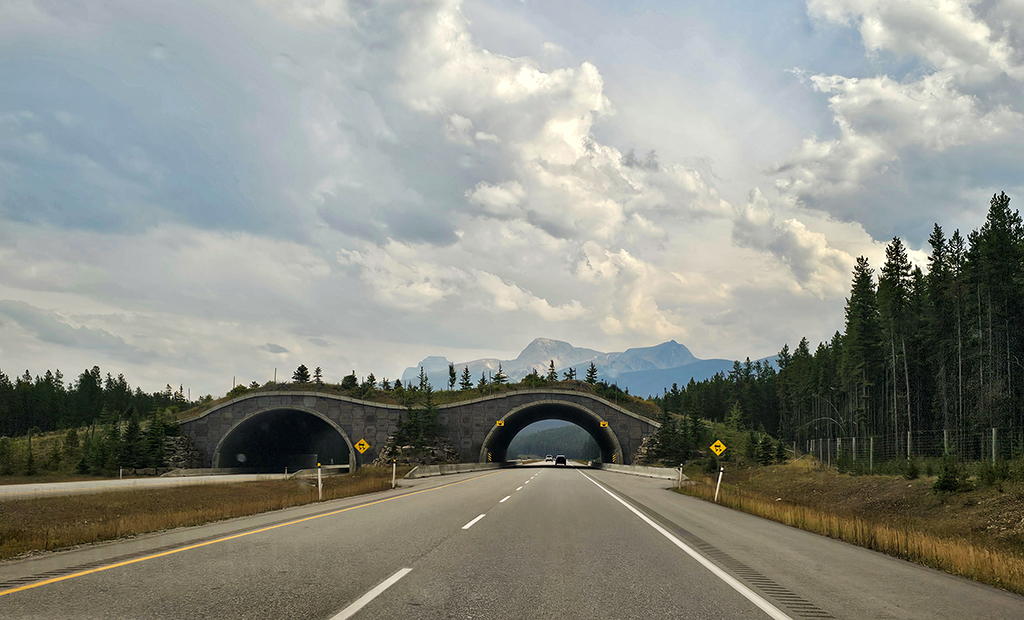
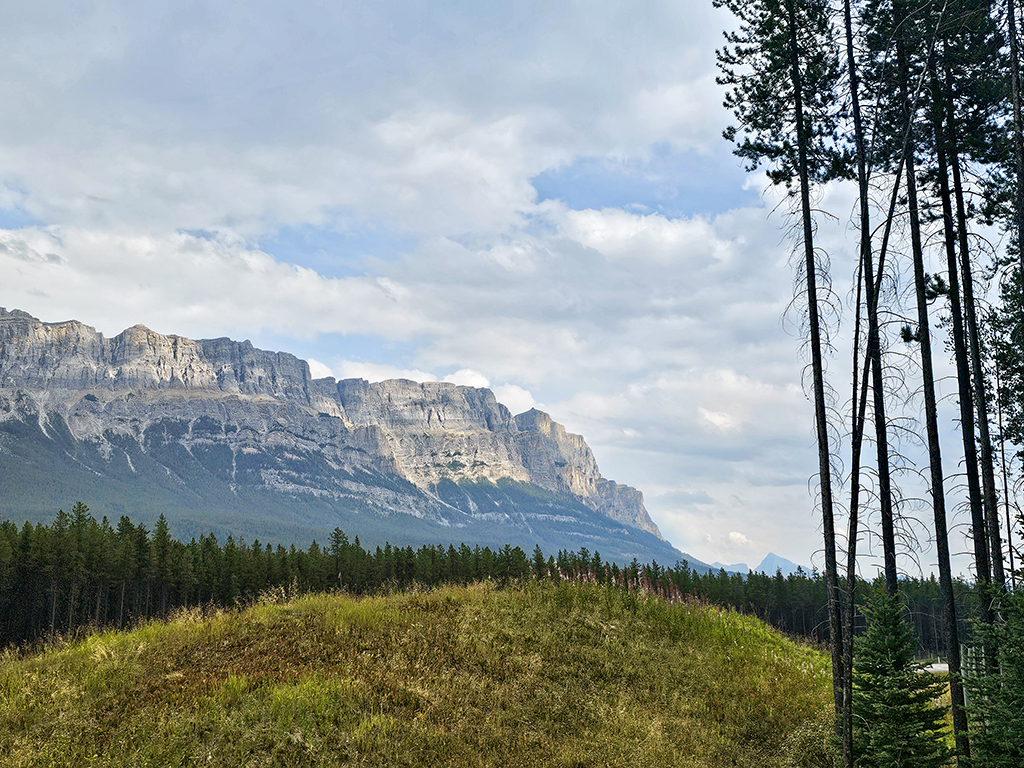
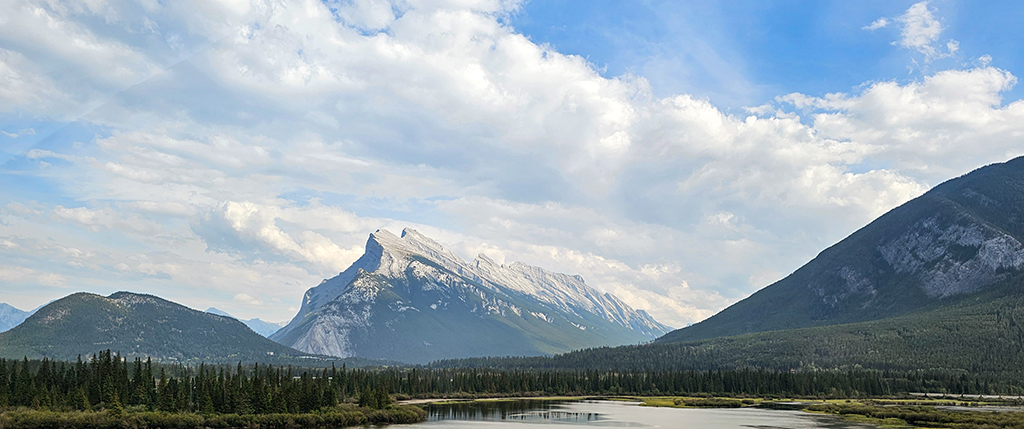
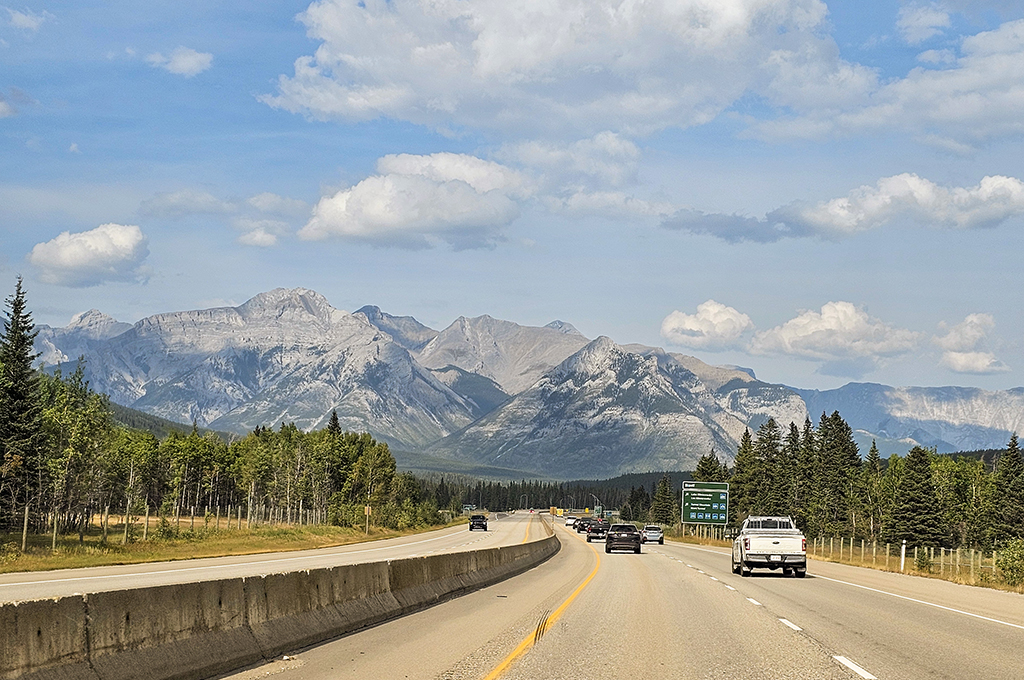
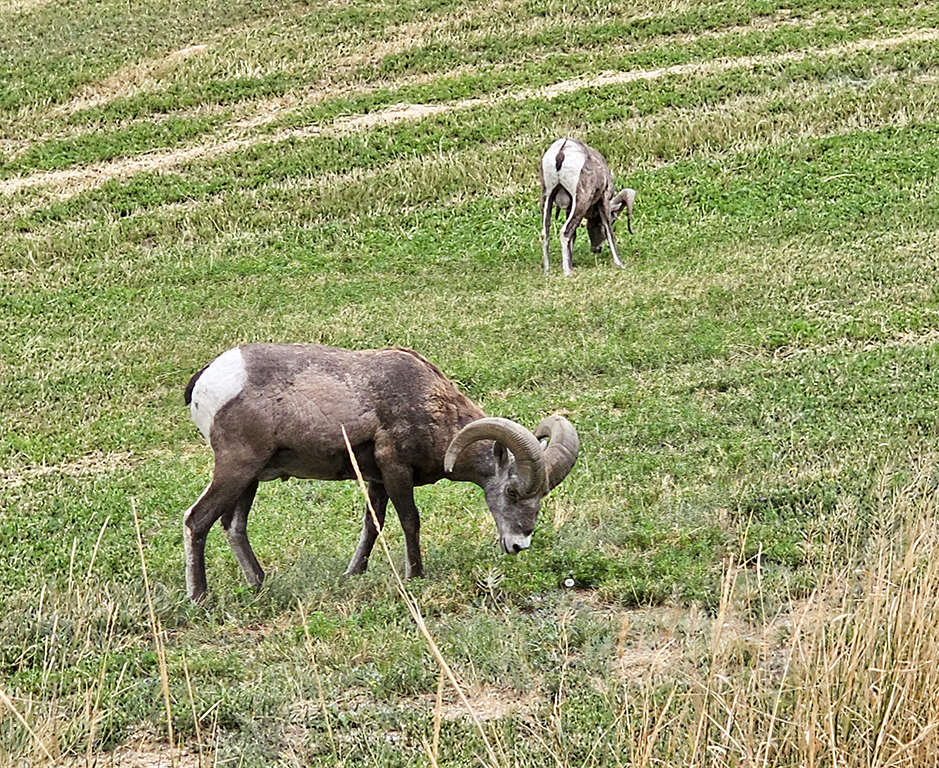
On the drive we saw elk, deer, moose, mountain goats, and bighorn sheep. Unfortunately, these were all pictures on the warning signs, the actual animals were nowhere to be seen.
Dick had booked a suite at the Delta in Calgary Airport. After getting up at 4am the next morning, to get everything finally packed and ourselves to the United check-in desk by 6am, our flight was cancelled. Apparently, there was a large leak of hydraulic fluid, that was not discovered until after the crew were on board, so the plane had to be taken out of service. We were rebooked on a flight the next day, going through Denver this time, and requiring an even earlier exit from the hotel (4am). The second attempt was successful and we eventually arrived at Savannah airport along with thousands of other travellers. We have never seen the airport so busy! Another reminder to avoid flying on a holiday weekend.


Leave a Reply