
Calgary to Fairmont Hot Springs, July 29th to August 12th, 2026
We left hot and muggy Hilton Head on July 29th, destination Calgary and a western road trip. We had booked business class flights through Chicago on United Airlines, not our usual choice of carrier. The reason for choosing that airline was to have only two flights instead of Delta’s three. Ahh well, the best laid plans and all that!
When we arrived at the gate in Savannah, at boarding time, the crew were still waiting to board, never a good sign. It was an hour later before boarding started, due to the lack of a gate agent. Apparently, the FAA forbids boarding until a gate agent is present. After boarding, there was a delay while the overly large carryon cases of some passengers were taken off and stowed in the hold. Then there was a very long wait on the tarmac because we had missed our slot. Altogether we took off two hours late. Dick had, as always, made sure that we had a three-hour layover in Chicago, to allow for any delays. A few weeks before the flight, United changed the itinerary, and our layover was reduced to two hours. Our ongoing flight was boarding as we arrived in Chicago, but by the time we actually arrived at the gate, we had missed it.
On the one hand, United did well for us. They offered us a choice of hotels, and we were able to stay in a very nice room at the Renaissance. On the other hand, they tried to send us all over North America, on four different flights the next day, starting at 5:45 am. Help from an agent reduced it to two, Chicago to Denver, then Denver to Calgary, starting at a more civilized hour. Those flights went as planned, although we were not confident that our luggage would arrive, as we had already been notified that it was not on our flight. On arrival in the baggage hall, both our suitcases were on the carousel, and to our delight, our golf bags arrived promptly in the oversize area!
Arriving a day late meant that we paid for a full day’s accommodation that we didn’t use, plus we missed a much-anticipated round of golf with cousin Leon and his wife Dana at the prestigious Earl Grey Golf Course. We were very lucky to be able to catch up with them a few days later for dinner at the golf club.
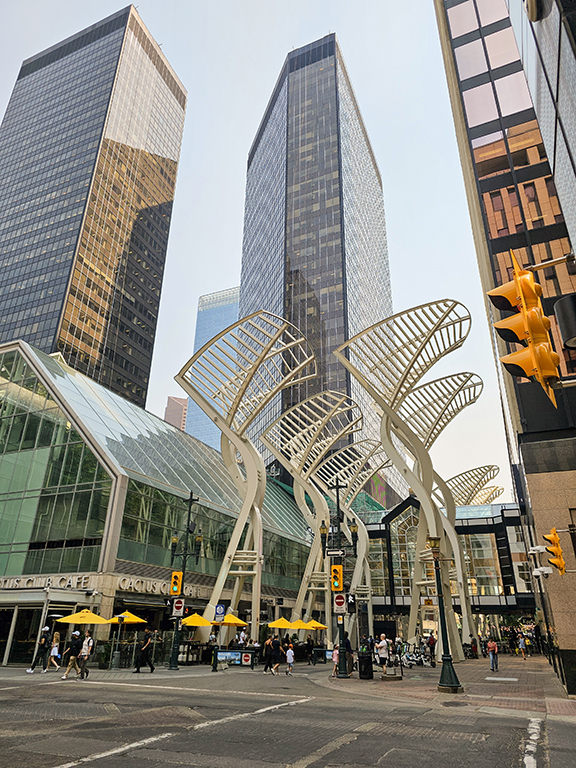
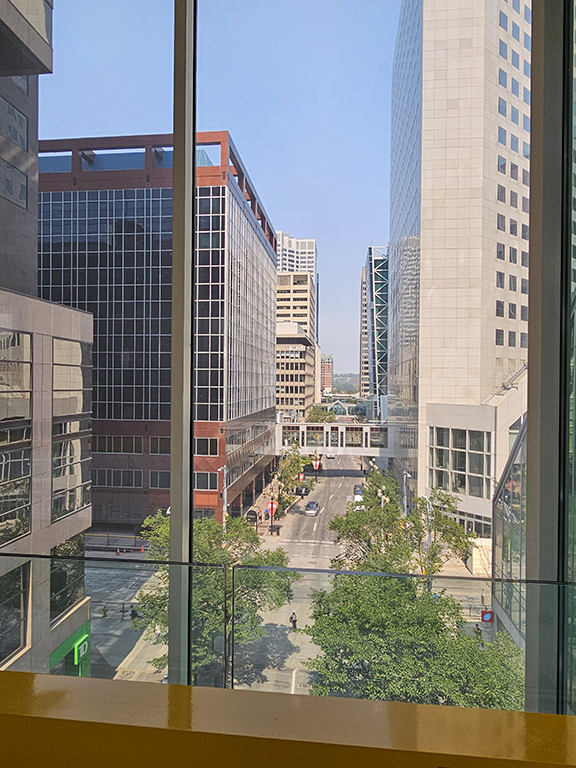
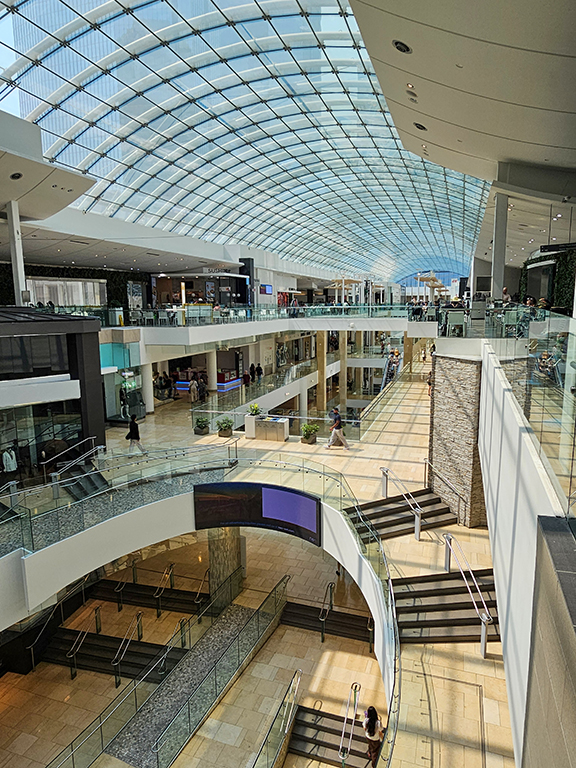
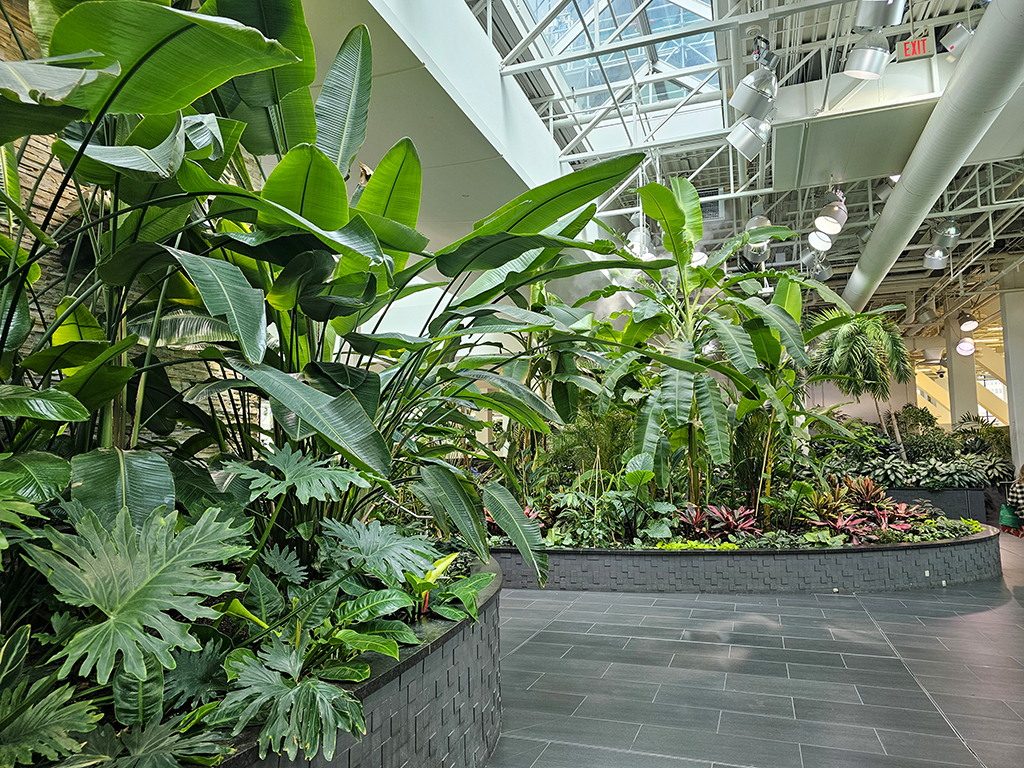
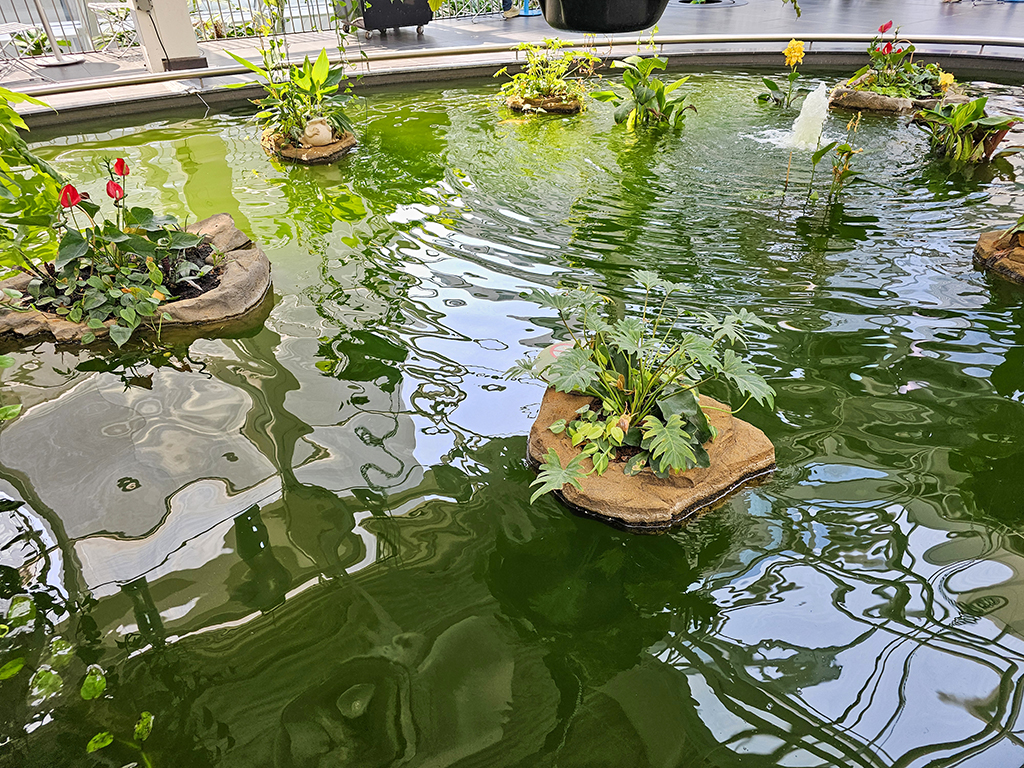
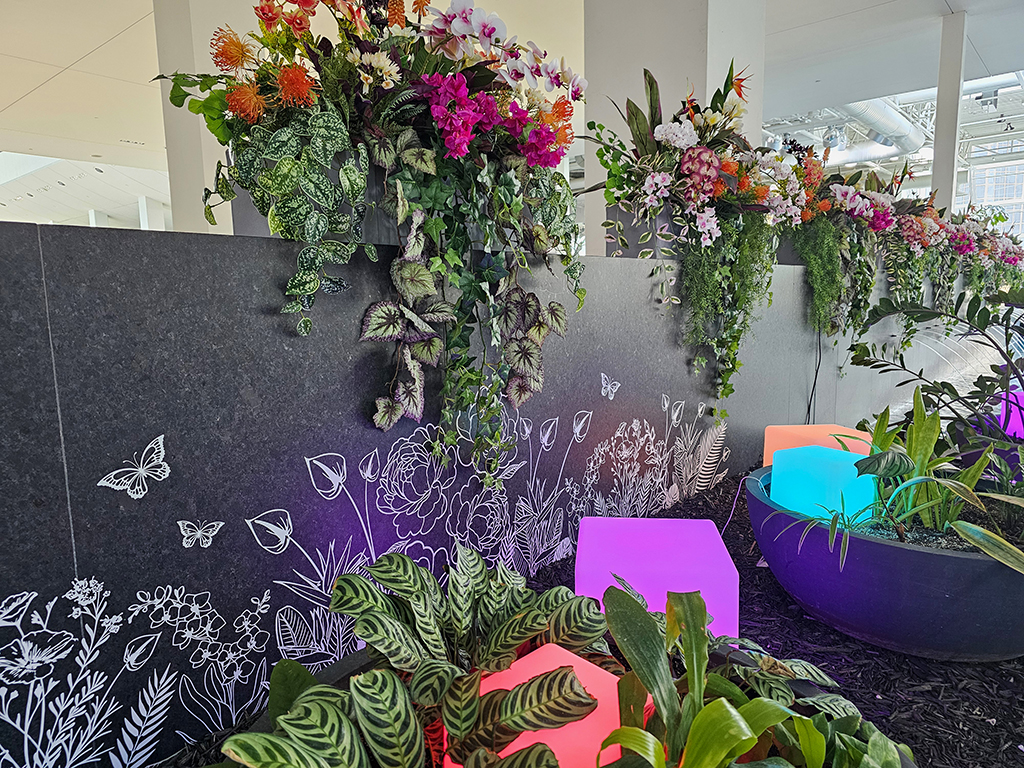
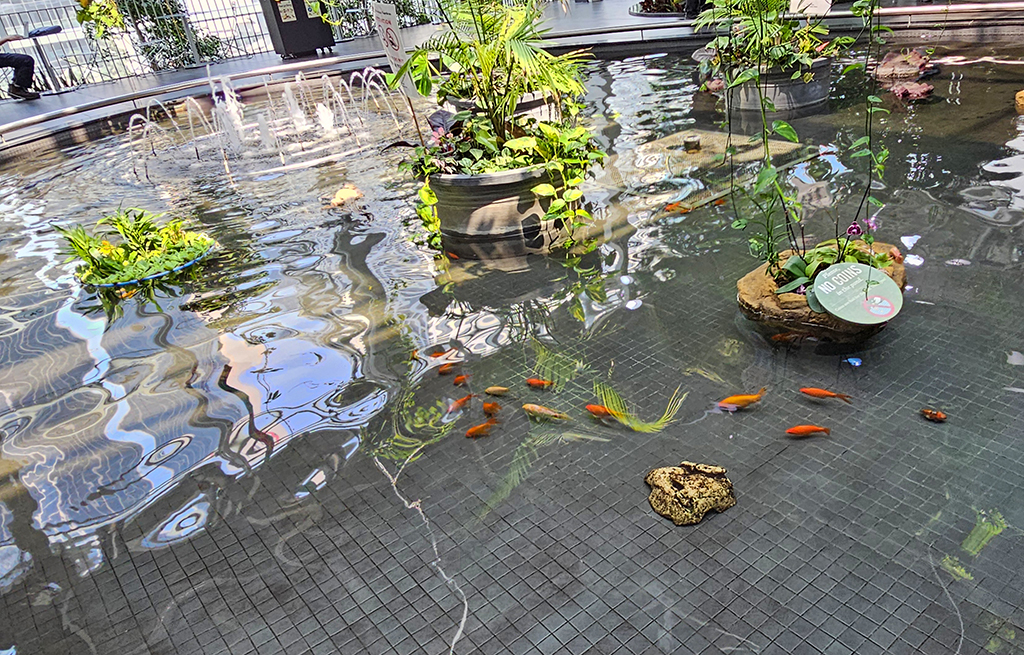
Friday was a quiet day. We stayed in an apartment that Dick had arranged for our first few days, instead of a hotel. It was smaller than expected, and the furniture was not very comfortable, but the location was great. We went for a walk to Stephen Avenue pedestrian mall, and visited Devonian Gardens, a lush, tropical oasis in one of Calgary’s many high-rise office buildings. Most of downtown Calgary is connected by enclosed bridges that cross the streets at 15, 30, and 45 feet, allowing downtown workers and visitors to stay indoors during the long and very cold winters. There are 86 bridges connecting 130 buildings over a ten-mile stretch of downtown.
During our stay we made a point of driving around the construction area of the new hockey arena, and also part way around the enormous ring road that has at last been completed to create a bypass of the city, regardless of which direction one is coming from. The city has grown incredibly since we lived there, urban sprawl at its finest. Deerfoot Trail, the major north-south highway on the east side of the city, is still under construction. I have never seen it without construction, as neighbourhoods grow and traffic requires more capacity.
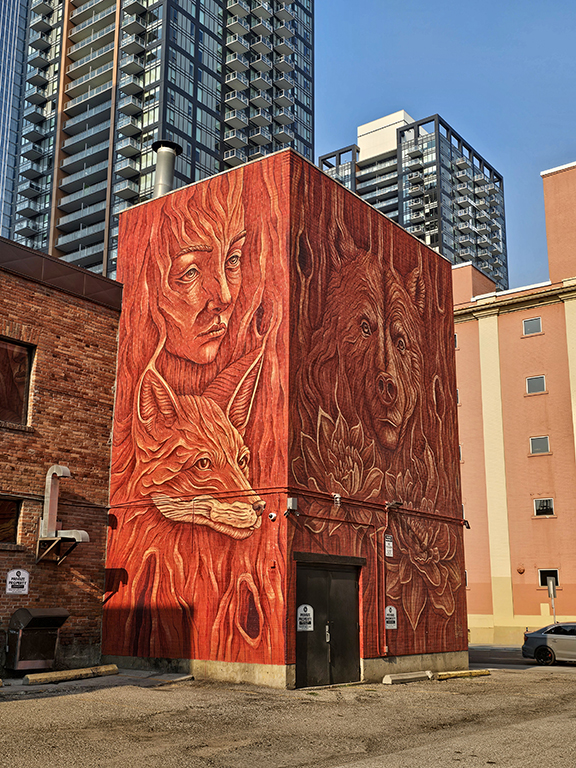
One aspect of Calgary today that I found quite shocking was the homeless population. There have always been a relatively large number of (mostly men) transients and street people, but I have never seen as many who are obviously severely under the influence of drugs or alcohol. We saw a number of roving vans that stopped to assist the worst affected, but still, there were a lot of men staggering into walls or wrapping themselves around light poles on the sidewalks. On the more positive side, we enjoyed the large number of beautiful murals covering formerly blank walls around the city. These are not just the usual realistic depictions of historical events, instead they represent a great many artistic styles and are a great addition to beautification of the city.
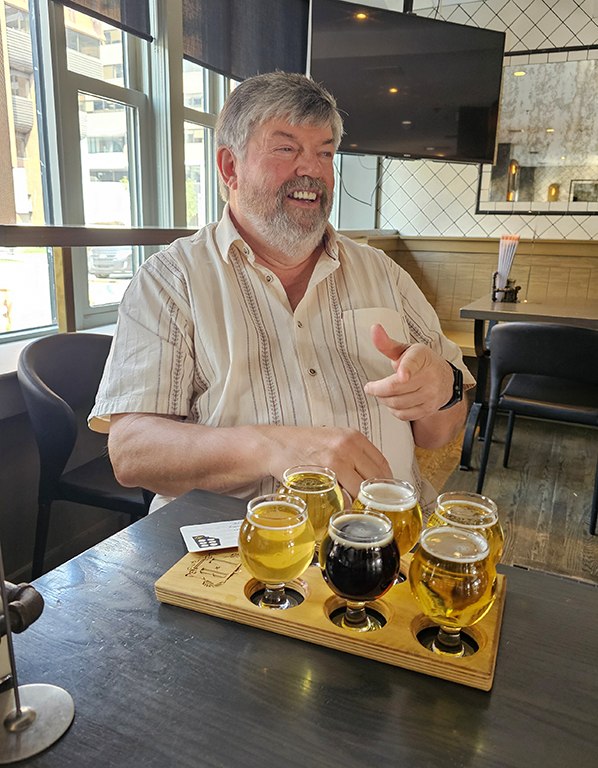
In the evening we met Wally, a former colleague of Dick’s, and his wife Karen at Last Best Brewing for supper, catch up, and the inevitable trips down memory lane. The next day we were also able to briefly catch up with former neighbours Bless and Brian for coffee.
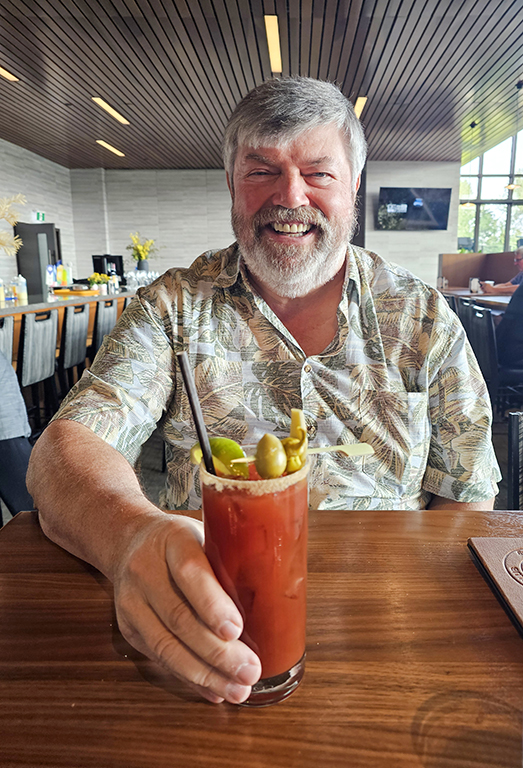
We enjoyed a visit to cousin Angela and her husband Richard in their new home in an independent living complex. Every possible amenity is offered, including a small movie theatre, a large craft room, games room, two fitness centres, and both a restaurant and a coffee shop. There are a great many activities that residents can enjoy. It was lovely to see Angela and Richard and catch up with them after their move. We have always been close. I first met Angela when she came from England to stay with us when I was 13 and she was a 22-year-old architecture student with a summer job in Toronto. The only time I was a bridesmaid was at Angela’s wedding. When Dick and I were at Queen’s University, Angela and Richard were living in Kingston, and we went to their home for Sunday dinner. What do you do with a couple of young people once you have fed them? You teach them to play bridge! More than 50 years later, Dick and I still enjoy playing together. Later, Dick’s job took us to Calgary, and who was there waiting for us? Angela and Richard, who had arrived a few years earlier. After Dad died, Angela and Richard came out to Victoria to help move Mum into a new apartment, and then a few years later when Mum died, they were there for me again, helping sort out and being a rock in a difficult time.
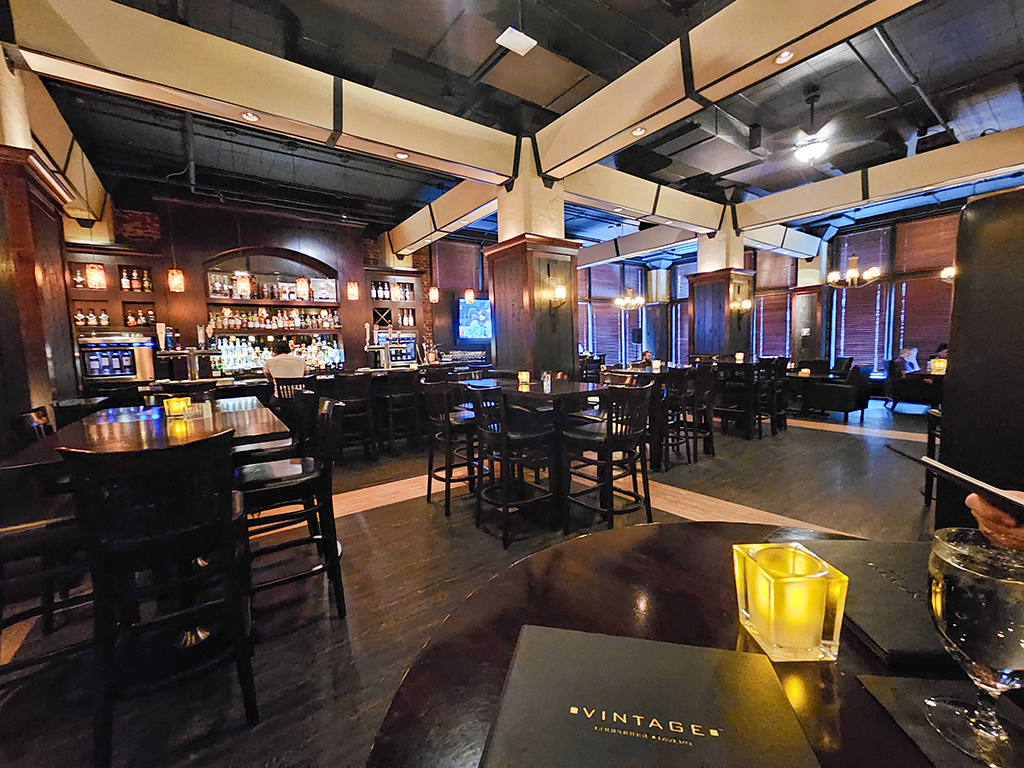
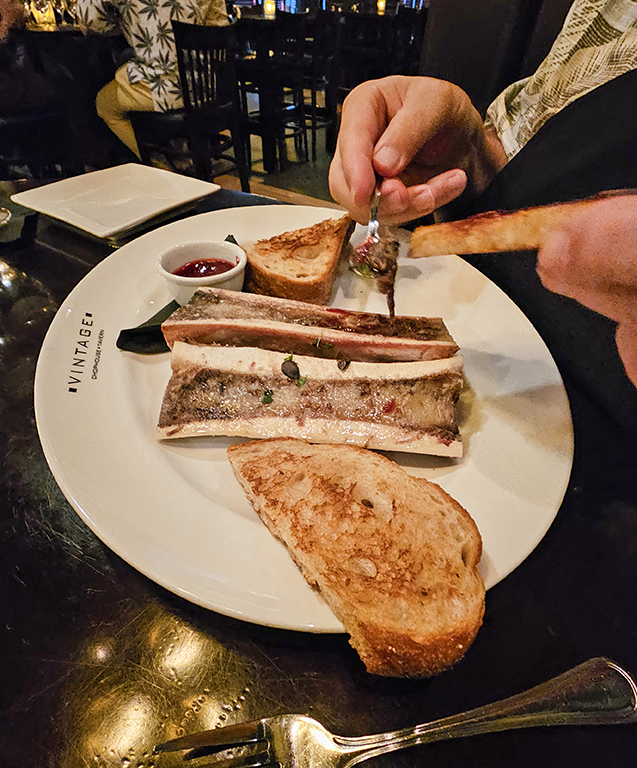
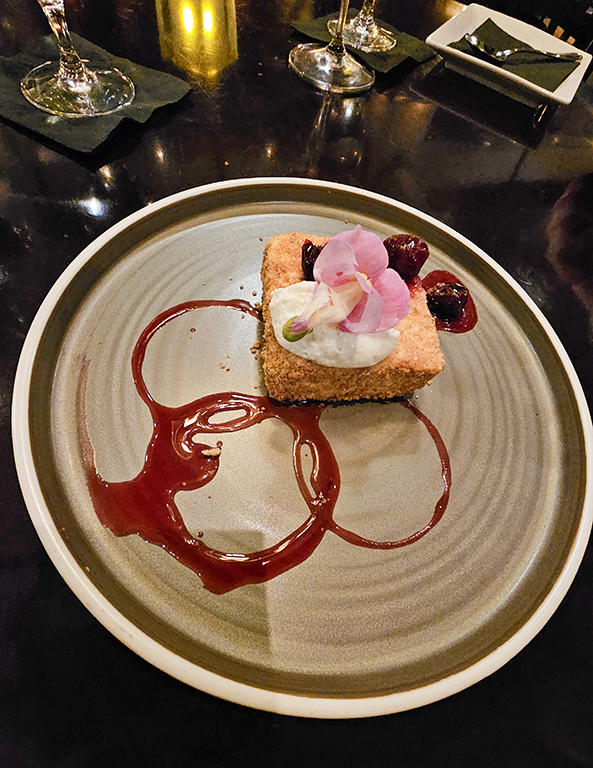
Dinner on our last evening downtown was at Vintage Chophouse, an upscale steakhouse.
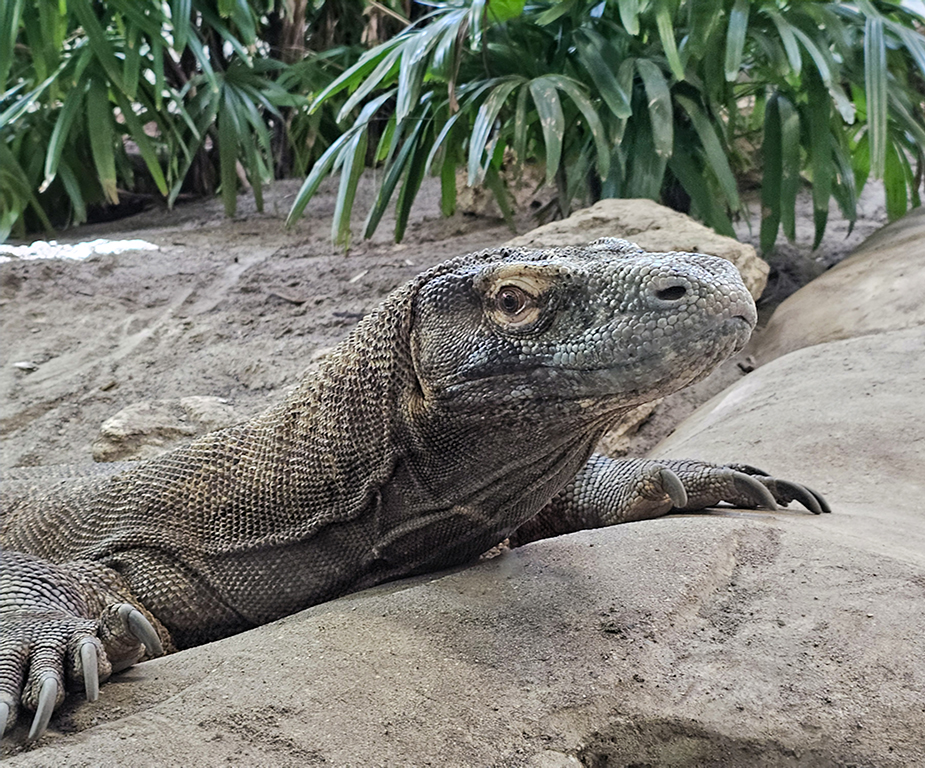
On Monday, we left the apartment and visited Calgary Zoo. It has always been my favourite zoo. From the start the concentration was on natural enclosures (no bars, ever), conservation, and education. There are animals at Calgary Zoo that I have not seen in other, larger, or more famous zoos around the world. As with many zoos, there is a lot of walking. Also, the site is quite hilly. We decided to try renting an electric wheelchair for me, to limit the amount of walking (especially as it was quite hot that day). It worked very well, I zoomed around in the more open spaces, and got out and pushed the chair when it was crowded.
Being a holiday Monday in August, the zoo was a zoo… There were huge crowds, with a great many children. Something we have not seen before, most families were using wagons for the children, in fact the zoo rented them if they didn’t bring their own. Some were quite elaborate, even having canopies to keep the sun off. These wagons of course contributed to the congestion and chaos. We enjoyed the visit regardless, and for the first time I was able to tour all the areas including the new Asian Highlands, and the extensive Wild Canada area. We didn’t bother with the prehistoric park.
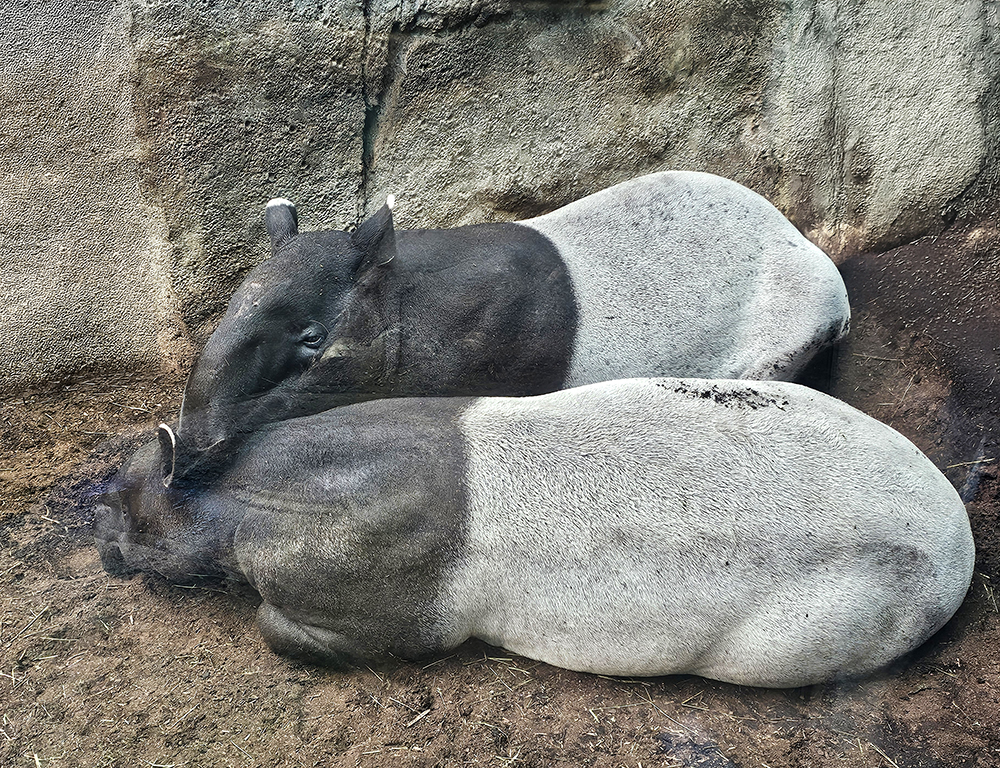
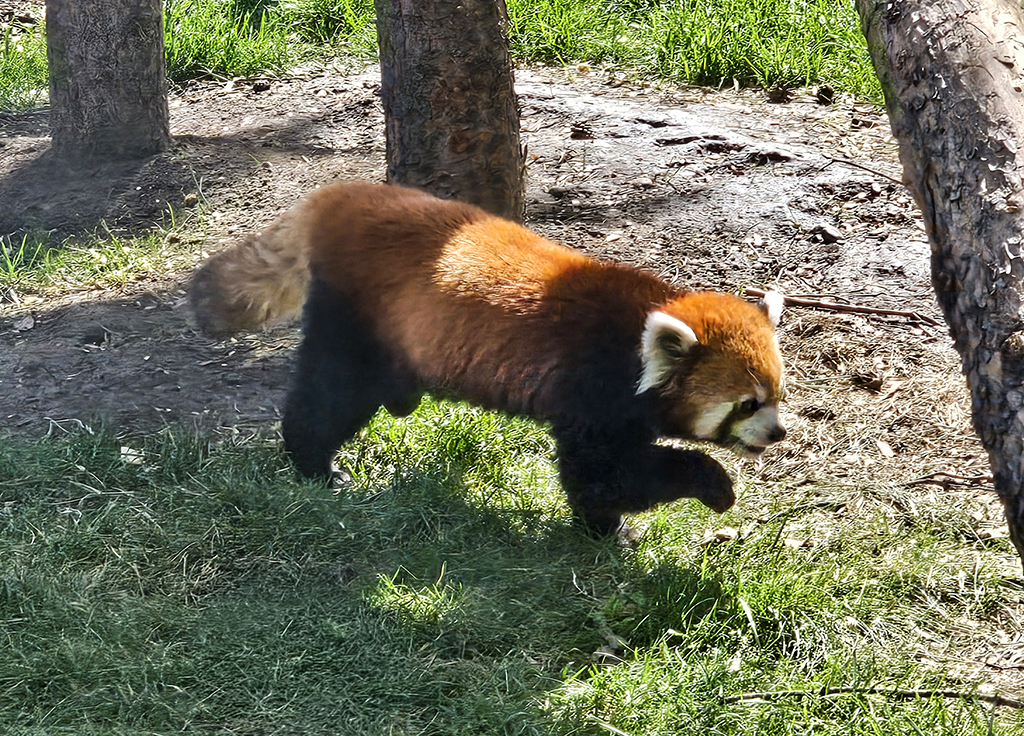
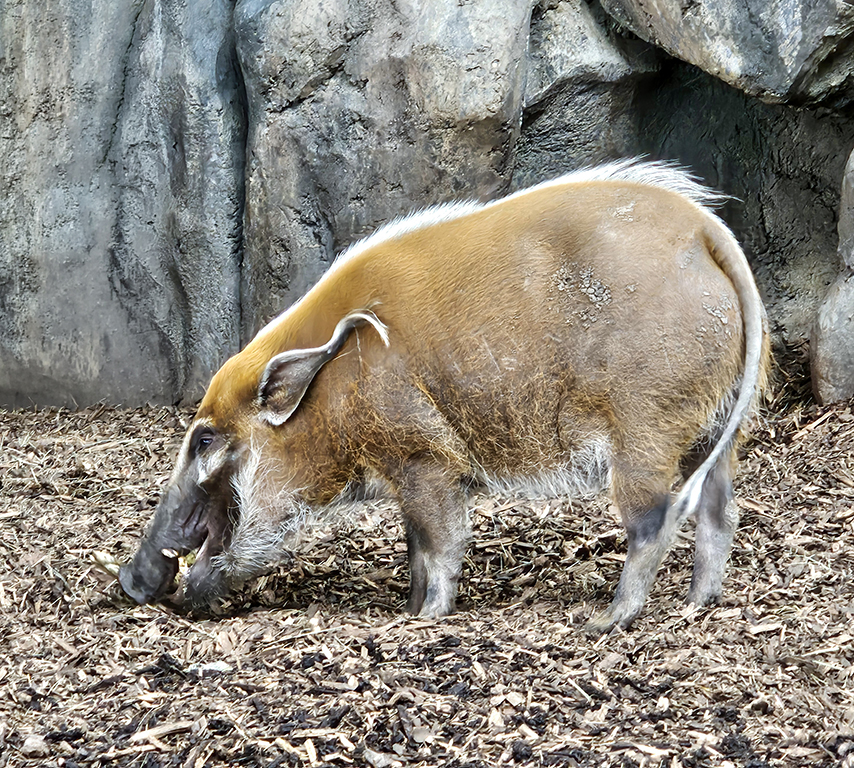
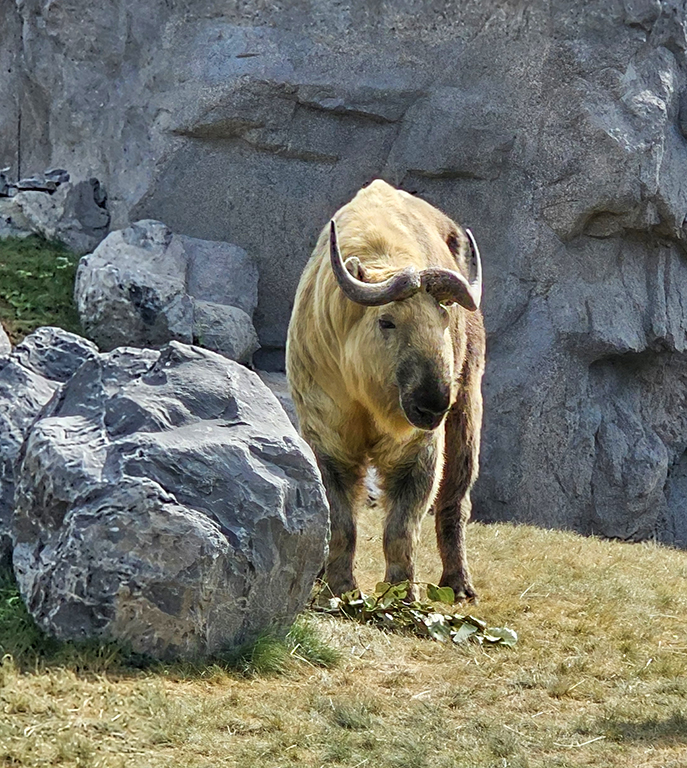
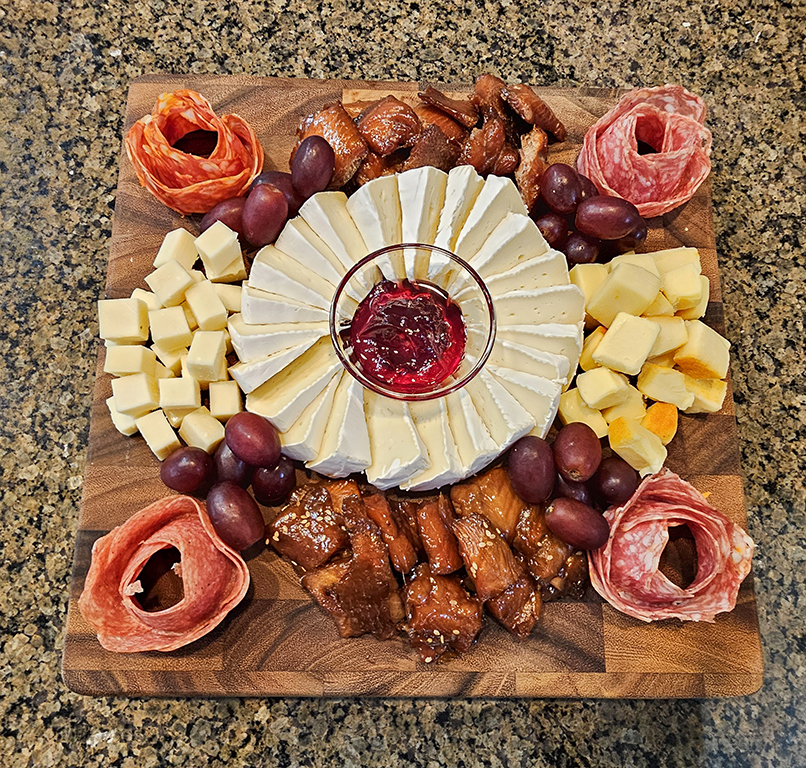
After the zoo, we arrived at the home of Kim and Stuart, friends for over 40 years. Kim was preparing a beautiful cheese and charcuterie tray for the planned small party that evening. The other guests were Omer, who Dick and Stuart played hockey with years ago, and his wife Nancy. They live in Florida, and we have spent time with them on several occasions over the years.
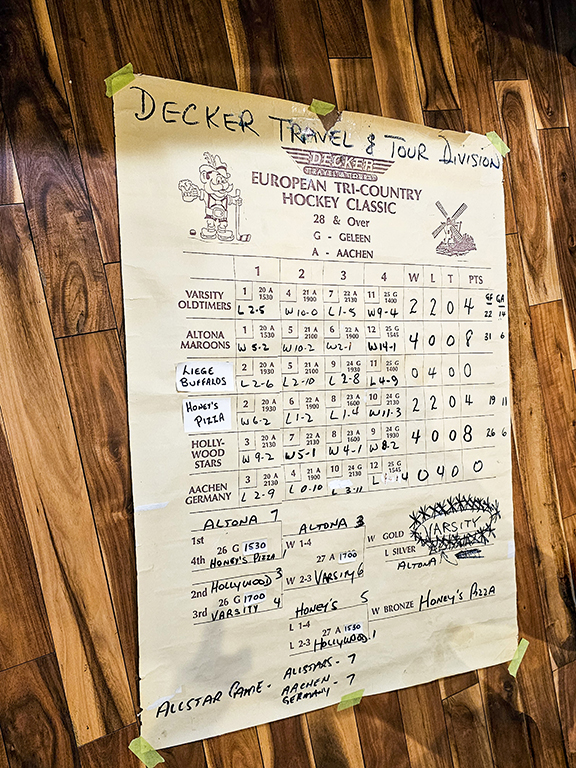
Back in the late 80’s, Omer was the organizer and captain of the Varsity Oldtimers hockey team. In 1988, they decided to join an annual tournament that took place in Europe. Called the European Tri-Country Hockey Classic, it was based in Valkenburg, Netherlands, and games were played there and in neighbouring countries Germany and Belgium. Not all members of the team were able to go, so recruits were sought from other Calgary oldtimer teams. (oldtimer being defined as over 35 years). Dick was invited, and was delighted to participate. Friends and family were also invited to travel with the team. There were three divisions in the tournament, Open, Over 35, and Over 45. Omer’s brother Norm, a little younger, also was happy to join the team, thus pushing them into the Open division. It has always amused me that 60 Canadian amateur hockey teams, with one American team, travelled to Europe to play hockey against each other! There was also a token Dutch and one Belgian team.
Things didn’t go so well at first, with 2 wins and 2 losses, but the record was enough to get the Varsity Oldtimers into the playoffs. By this time, the younger players in the division were getting into the local festival in a big way, and were spending quite a lot of time sampling local beer. Varsity guys, being older (and possibly wiser), refrained from overindulging, and thus were not playing hungover during the playoffs! The competition was still challenging, but perseverance, good goaltending, and sheer determination resulted in a final victory for Varsity. The trophy was so large that it took up an extra seat on the return flight!
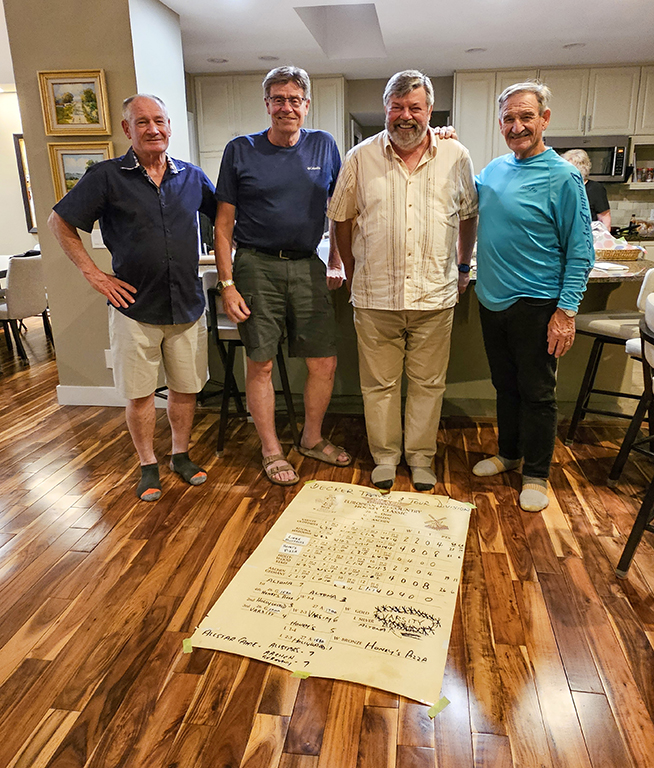
The party that Kim was preparing included Omer, Norm, another former teammate, their respective partners, Dick and me, and of course Kim and Stuart. It was an evening of reminiscing and much enjoyed by all. The poster from the tournament with all the scores was brought out, and the players posed for memory lane pictures.
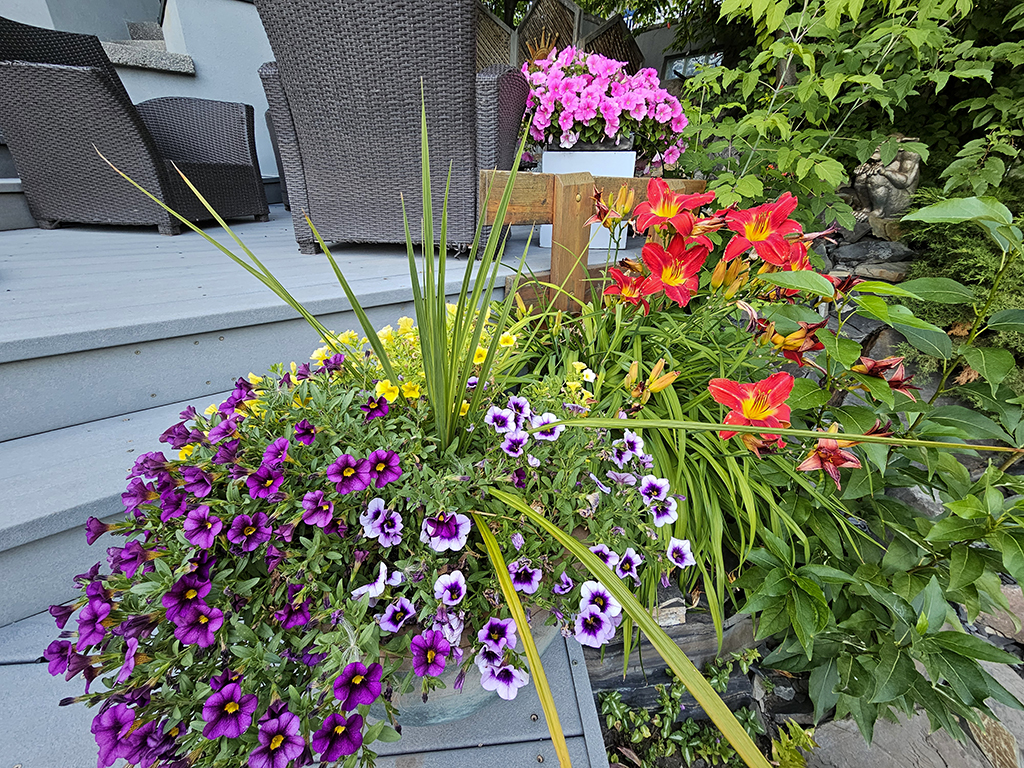
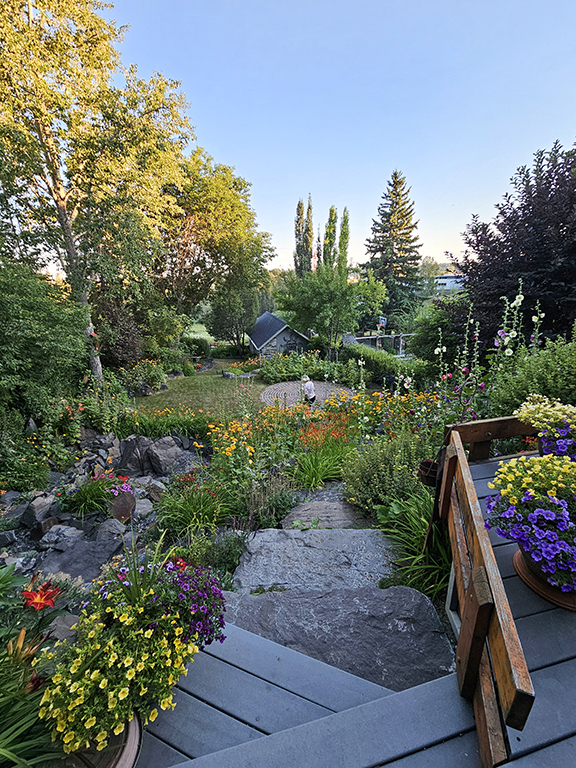
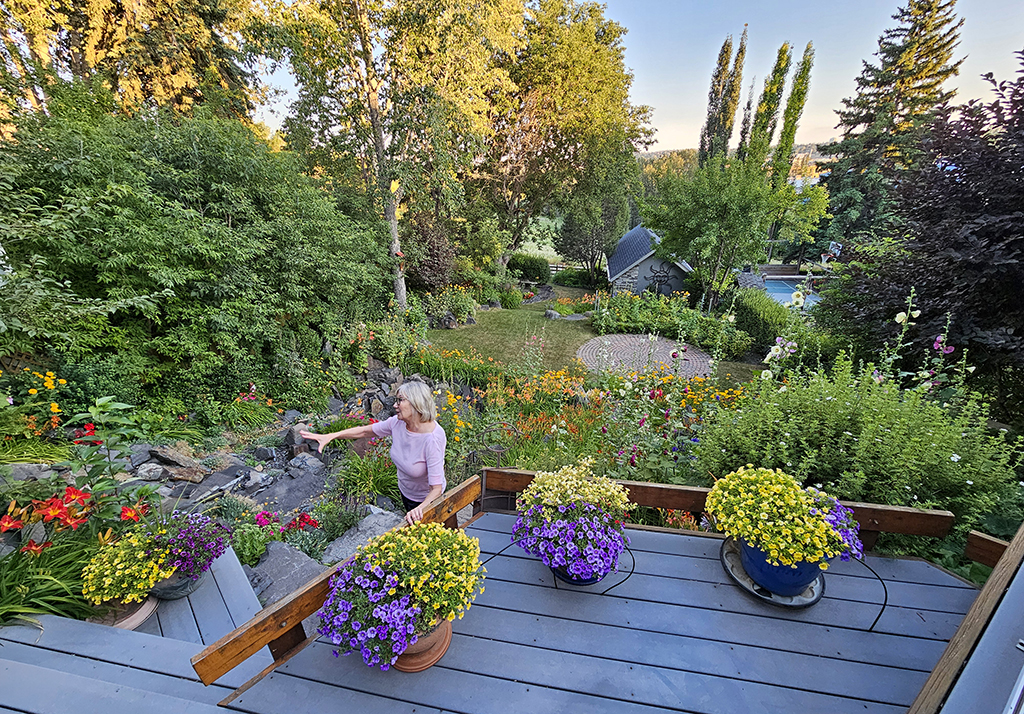
Some of the ladies took a few minutes to go next door and admire the beautiful, terraced garden of Kim’s neighbour. When they are away, Kim helps out by keeping everything watered, essential in Calgary’s desert climate. The garden is absolutely stunning.
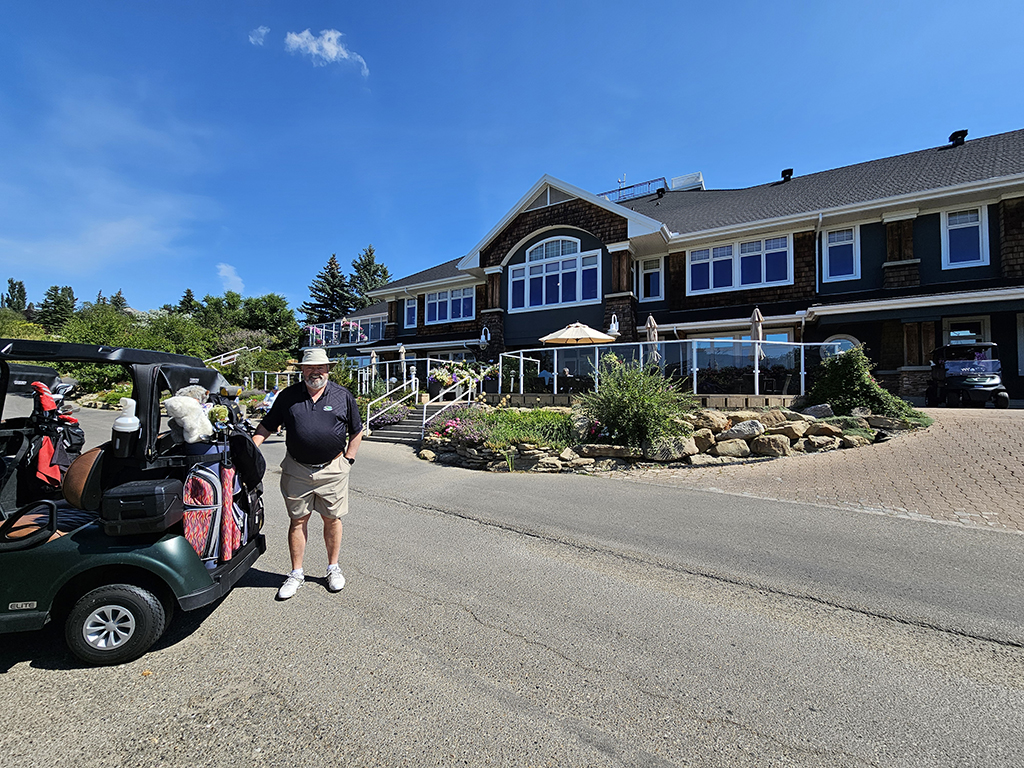
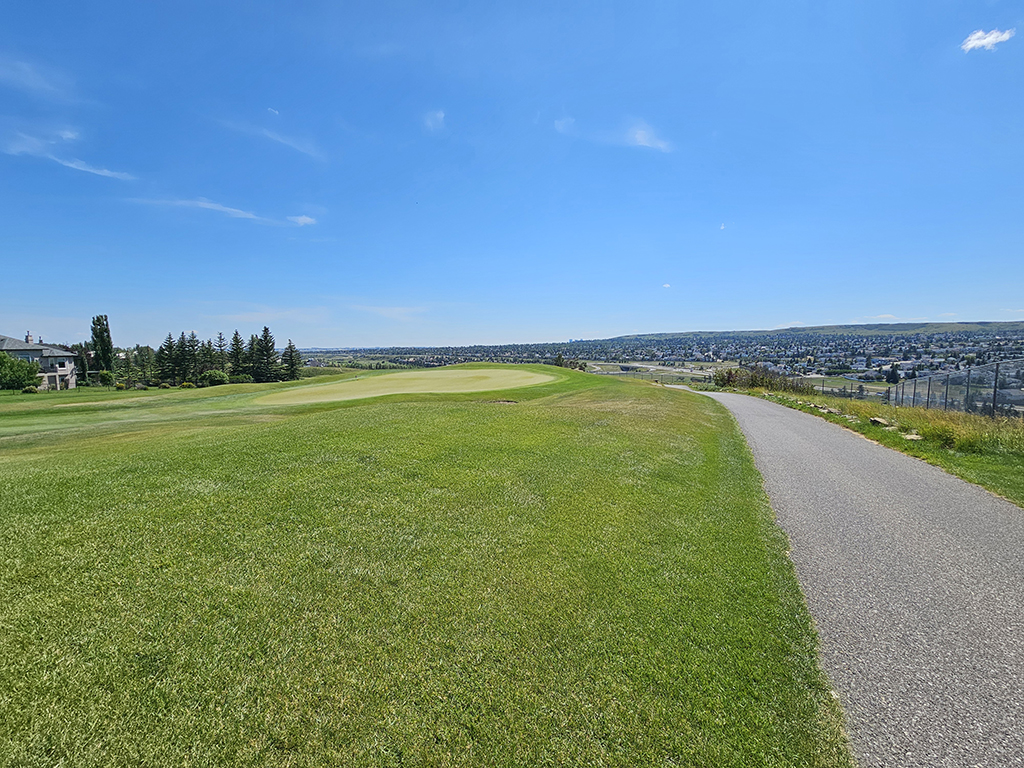
The next day we played a round of golf at Country Hills, the club where our friends are members. We enjoyed the round, and supper after. It was great to spend time with Kim and Stuart, and we are looking forward to our next encounter.
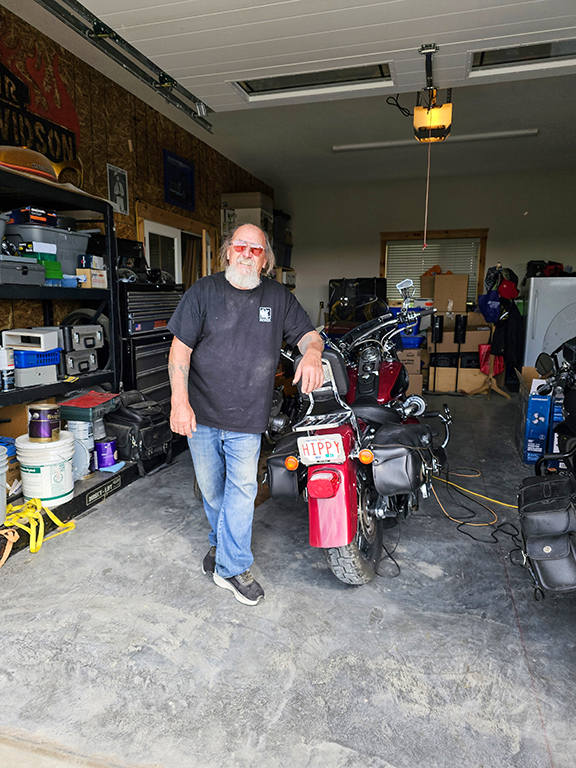
Wednesday morning, after “exchanging” our rental vehicle at the airport, we drove south to Lethbridge and another get-together with a friend from our past. Dick played hockey with Darryl for a lot of years. Today, he and Christine live on an acreage outside Lethbridge. Darryl has an interesting job in his retirement, building sets for Calgary’s theatre company, Stage West. He also operates a gun range, offering training and practice for law enforcement and other groups. For as long as we have known him, Darryl has had long hair and a beard, and his nickname when he played hockey with Dick was “Hippy”. He posed for us with one of his motorcycles, with a distinctive license plate!
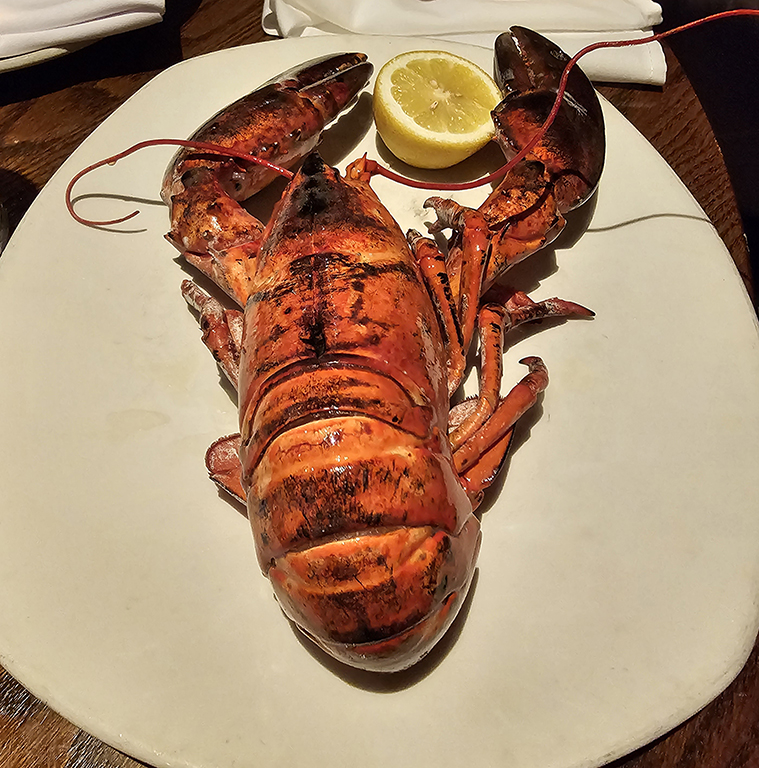
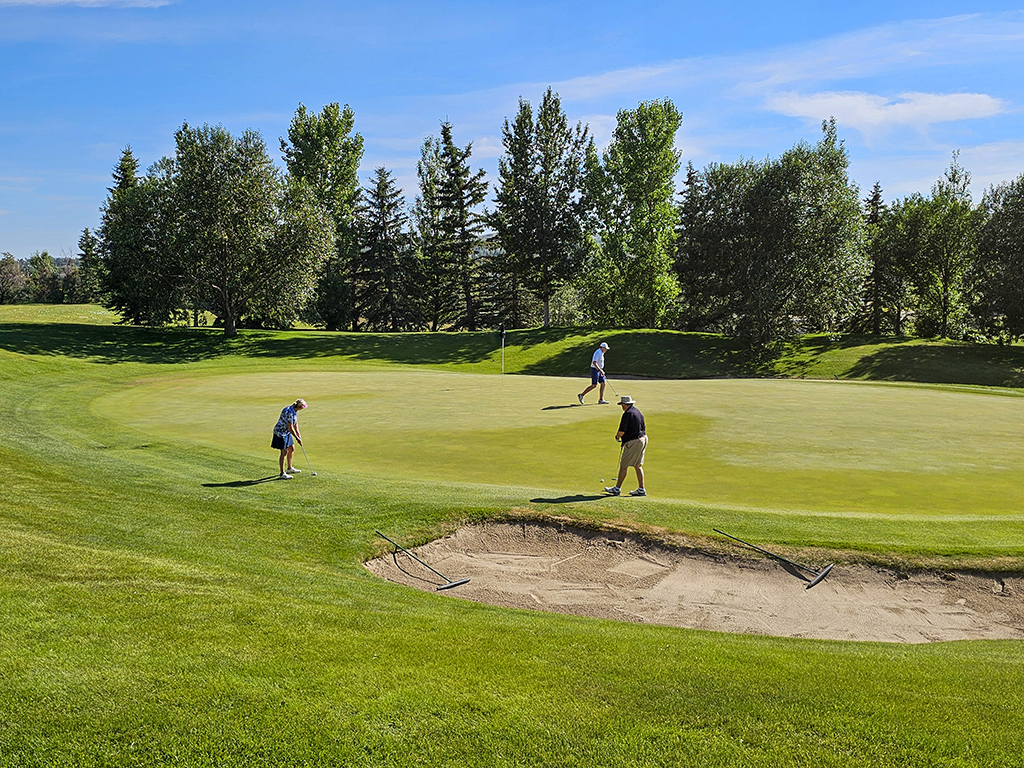
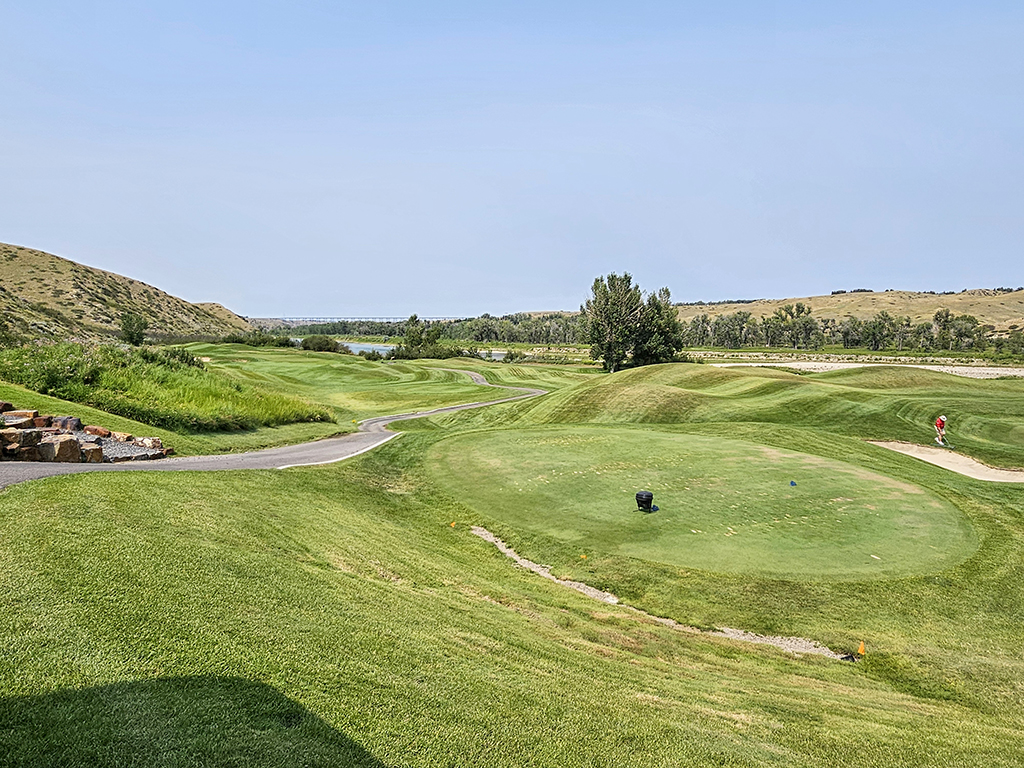
We stayed at a golf resort outside Lethbridge and played a round of golf the next day. It was an interesting course, but I found it pretty hot and skipped quite a few holes.
The city of Lethbridge began as a whisky trading post in nearby Fort Hamilton, after the US Army stopped alcohol trading with the Blackfeet Nation in Montana. The post’s nickname became “Fort Whoop-Up”, and lives on as the name of one of the major roads in the city. The early economy of the city was driven by coal mining and agriculture. The railway opened in 1885 and brought settlers as well as increased coal production. The Lethbridge Viaduct, a trestle bridge also known as the High Level Bridge, opened in 1909, and is the largest railway structure in Canada. It is the longest and highest steel trestle bridge in North America. It is visible as you approach the city, and from much of the University and new developments on the west side of town. It is still in daily use by freight and commercial trains.
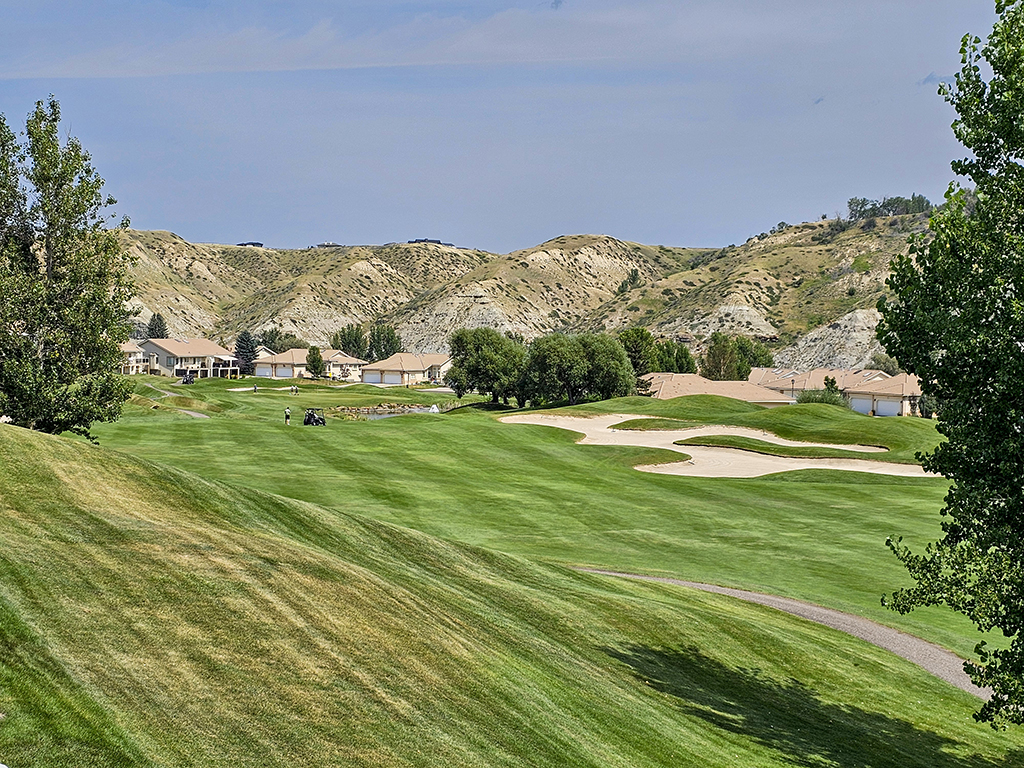
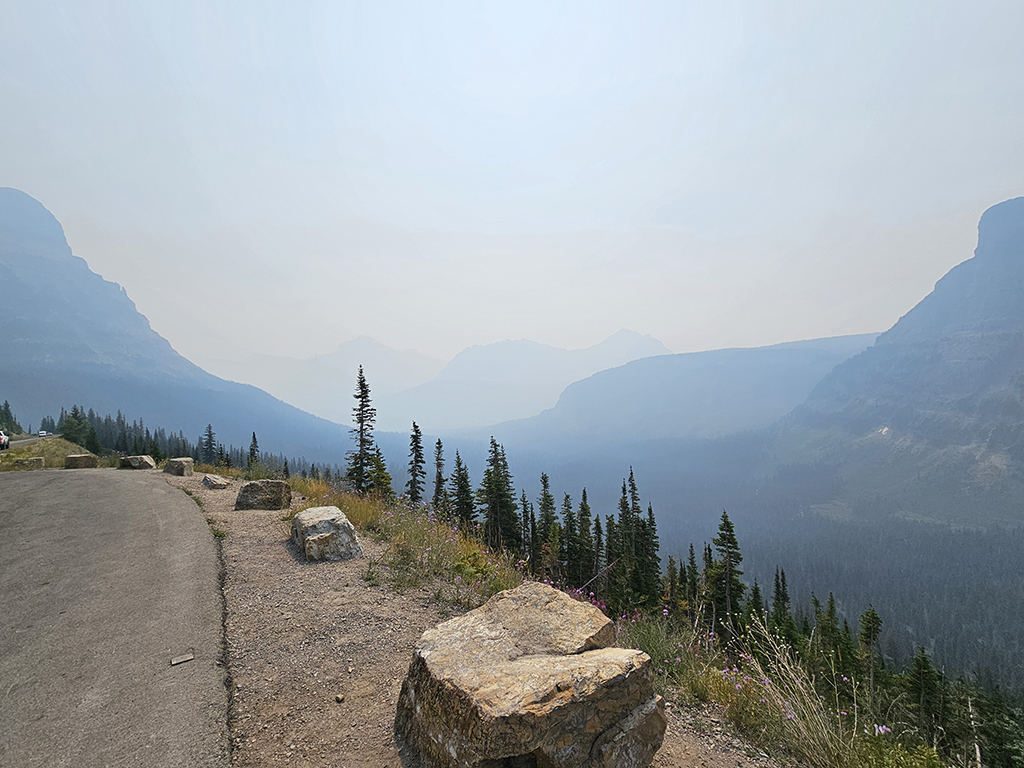
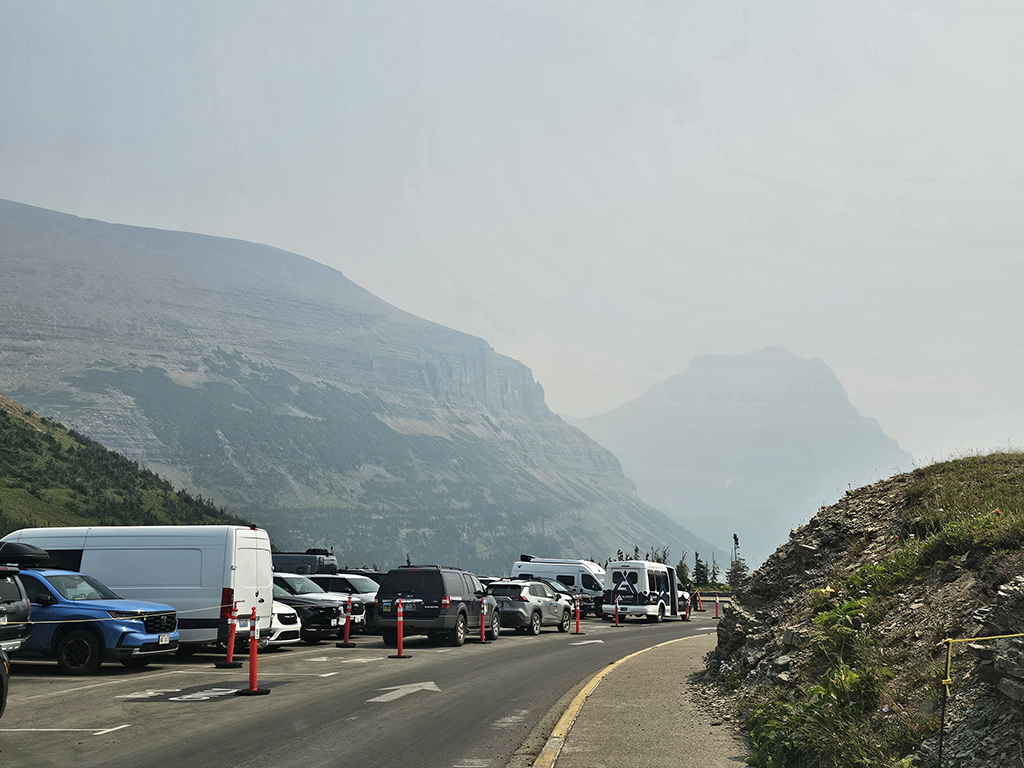
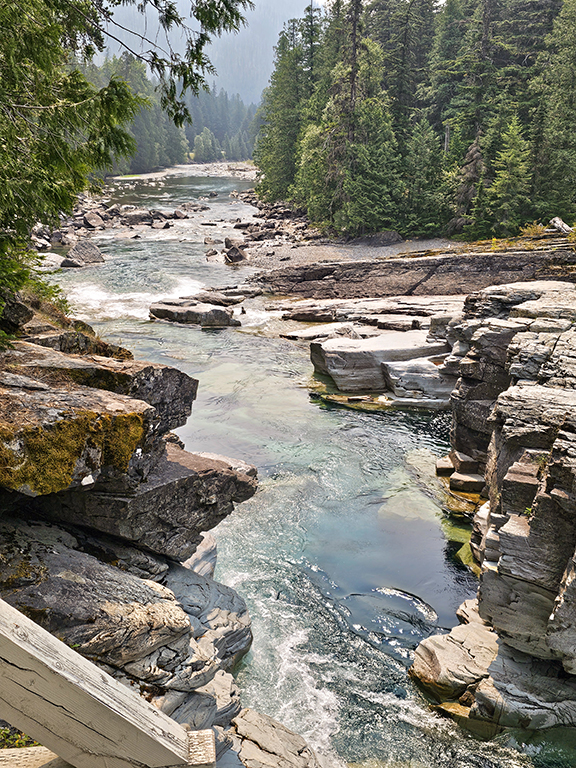
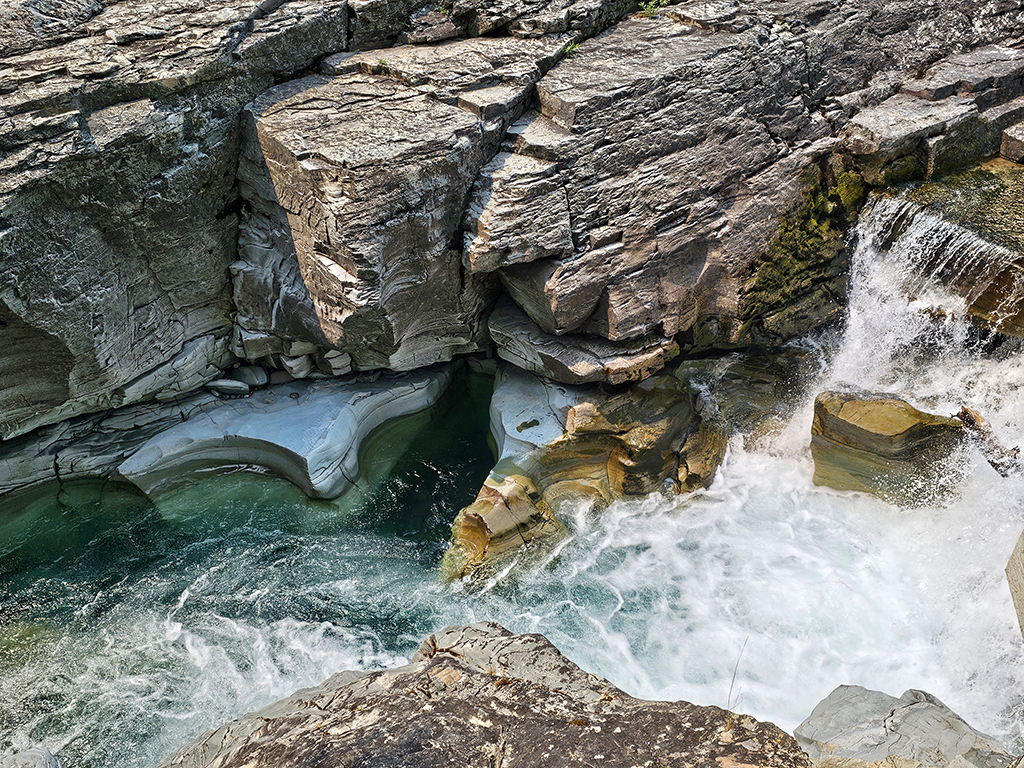
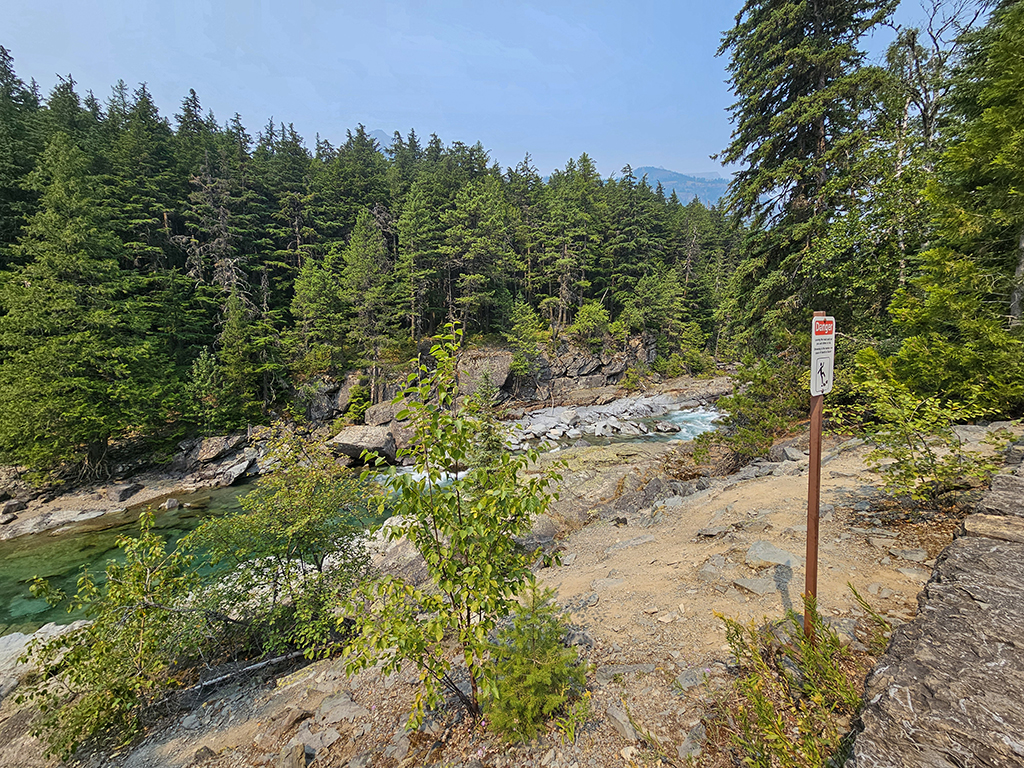
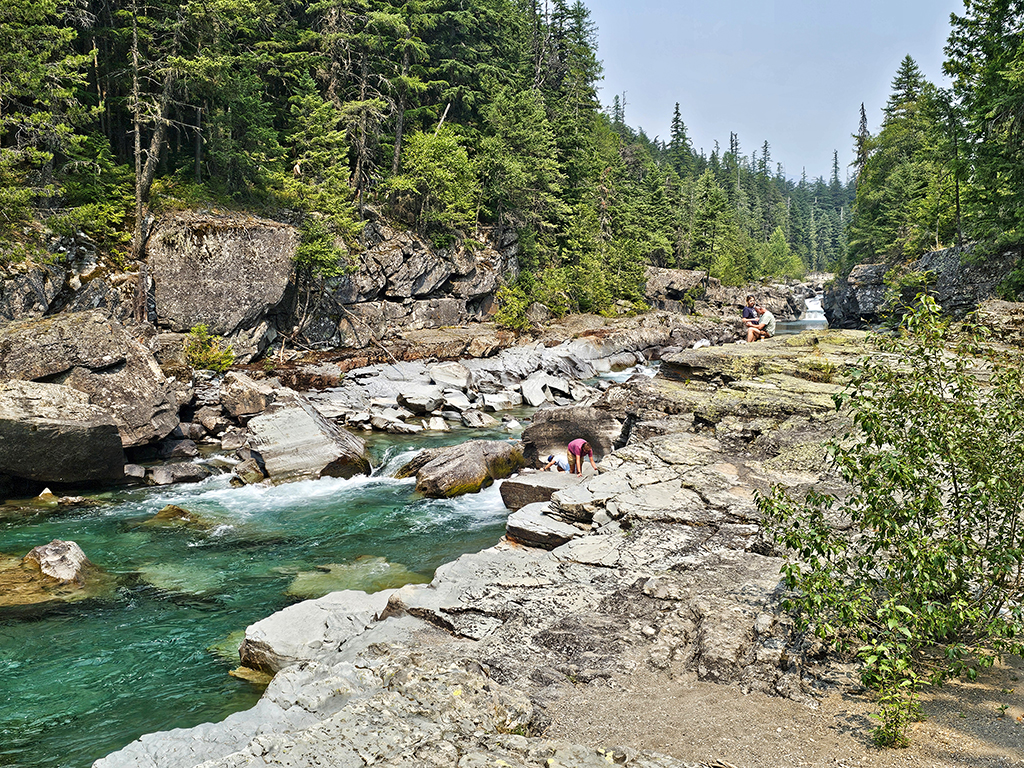
The next part of the trip was supposed to be for me, a few days of photography. We headed south towards Montana and Going to the Sun Road, that crosses the Continental Divide at Logan Pass, at 6646 feet. We have driven this road many times in the past, and it is truly one of the most spectacular drives in the world. The project began in 1921 and was not completed until 1932. The road opens in early June and closes in mid-October. We were looking forward to the spectacular scenery. Sadly, fires in western Canada and USA meant that the whole pass was covered in smoke, one could barely make out the tops of a few of the mountains, and most were completely obscured. We have driven this road before, quite a few times, but I felt very sorry for the visitors who had travelled a long way for a once-in-a-lifetime experience. At the bottom of the pass, we stopped for a look at the Flathead River. I had hoped for wildlife, but apart from a Mountain Goat posing for visitors near the top of the pass, there were no animals to be seen. However, the flowers were stunning, although the best ones were on the other side of the road from the sightseeing pullouts. Given the incredibly heavy traffic, I was not going to cross the road to take pictures!
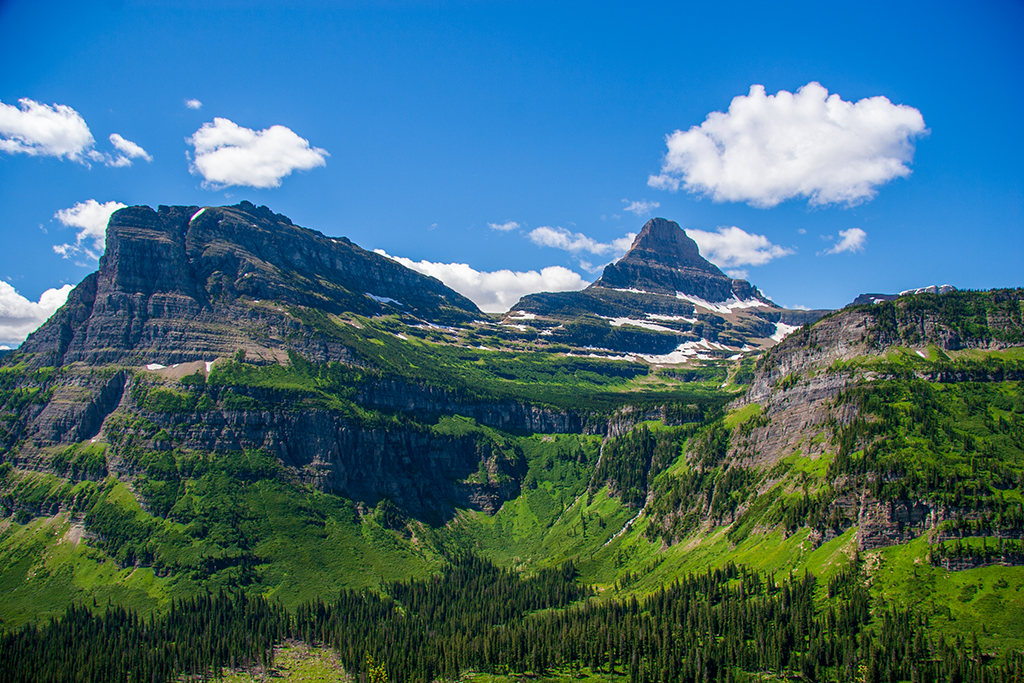
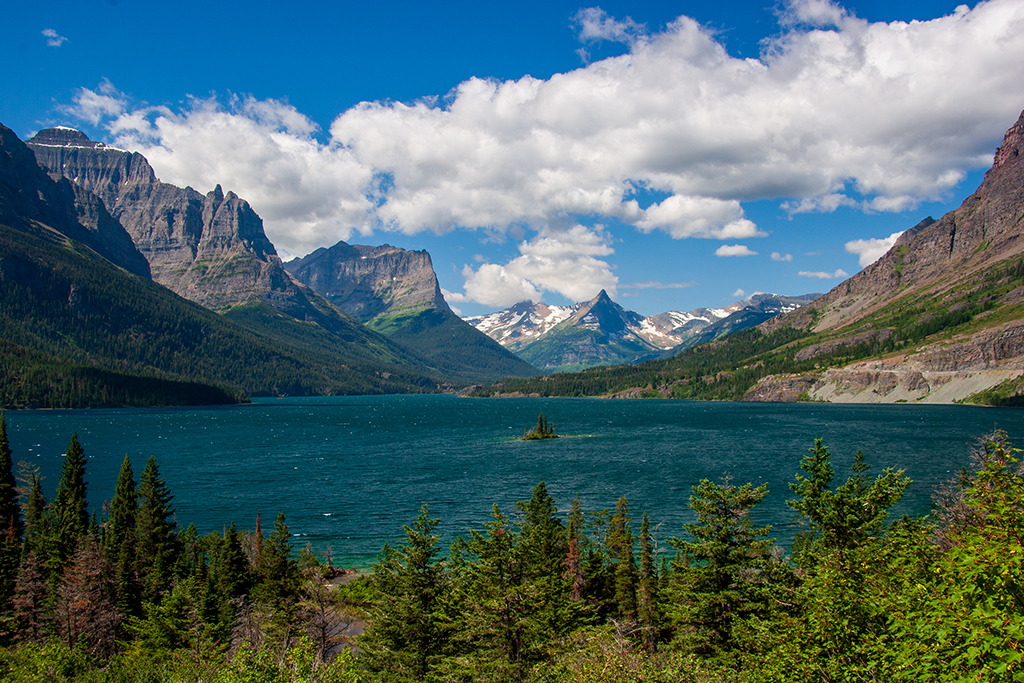
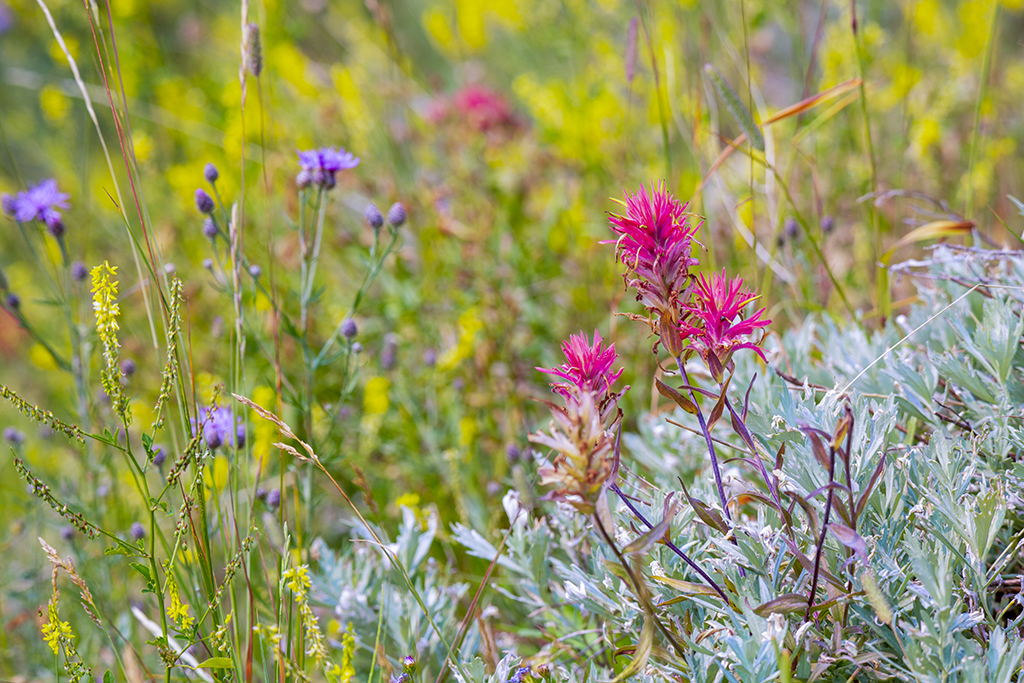
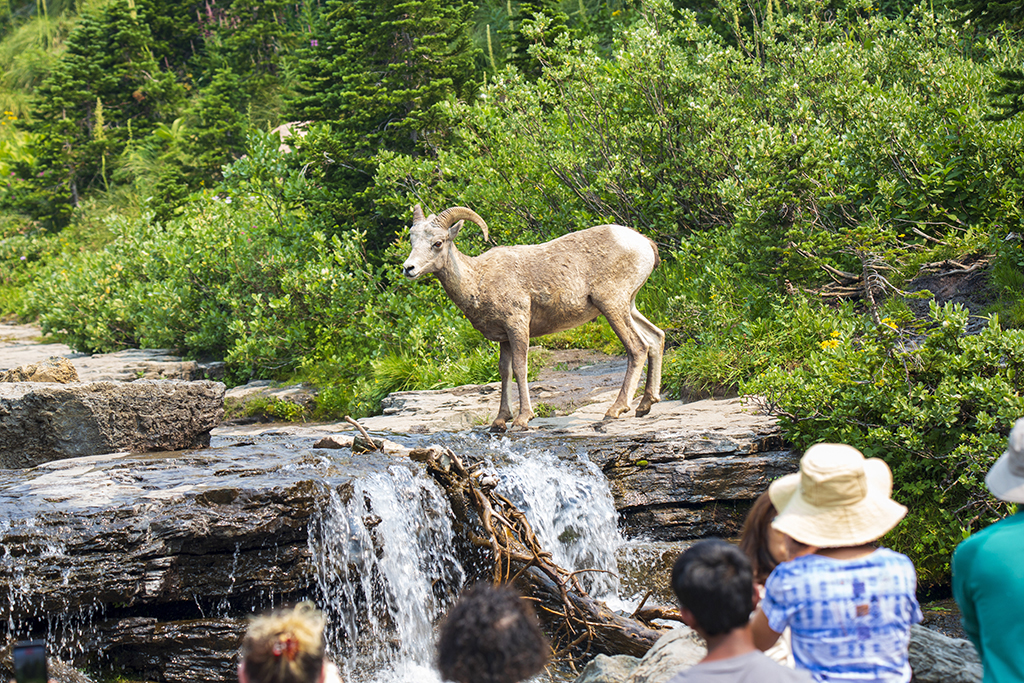
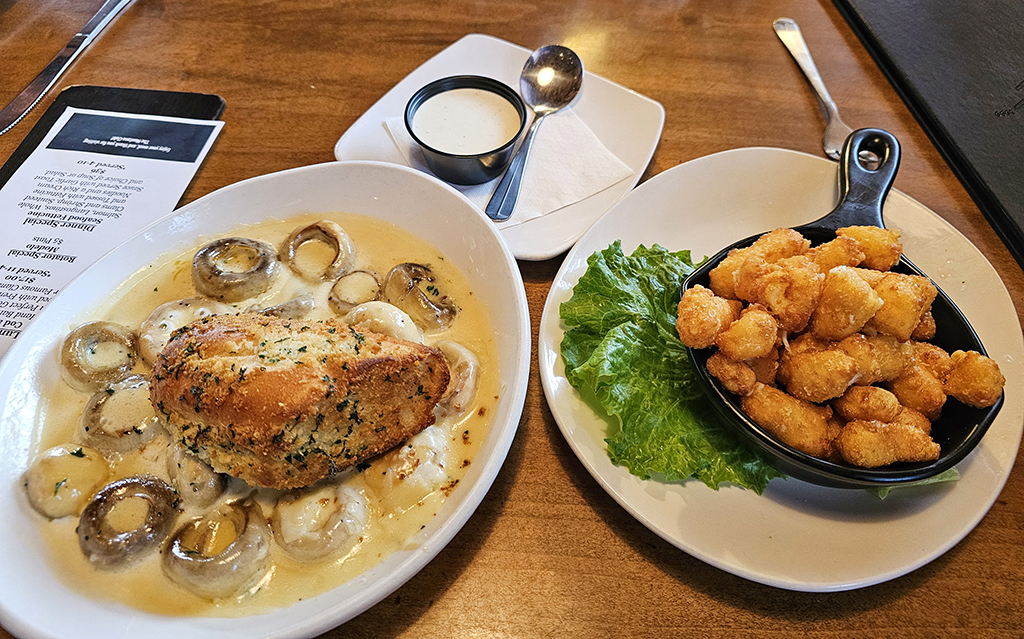
We tried a steakhouse in a casino in Kalispell on our first night, and another one the next evening. The second restaurant was in a beautiful historic building, but the meal was pricey, about 50% more than the previous night and certainly no better.
The highlight for me was a return to Triple D Game Farm for photography. Dick came along to be my assistant and carry cameras. I had arranged for 3 animals, but this time I didn’t get to choose which ones. As it happens, I am quite happy with their selections.
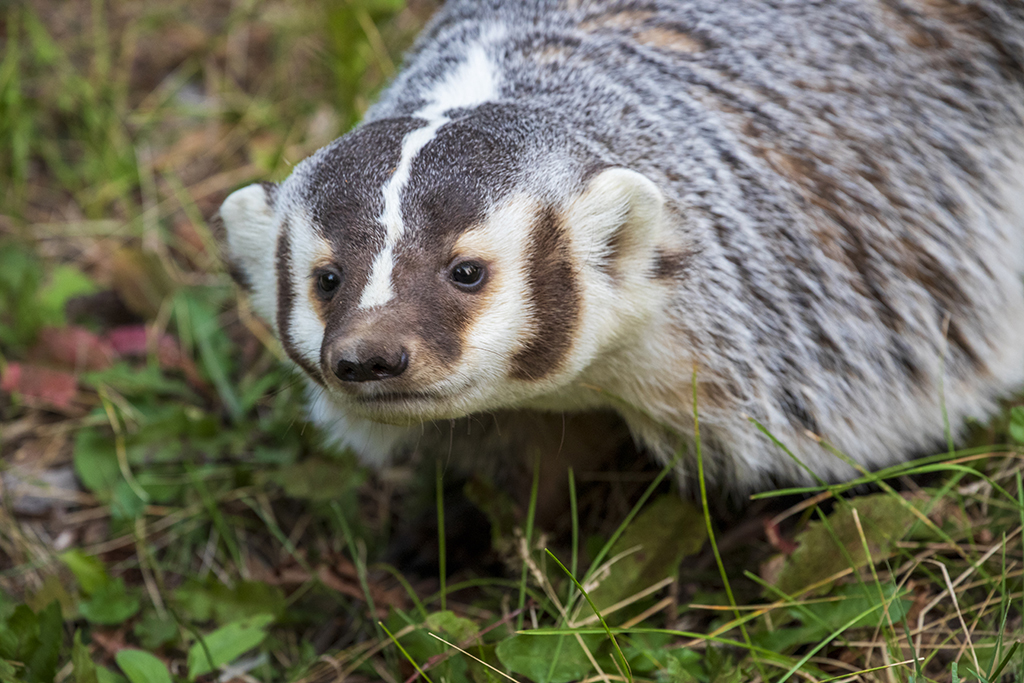
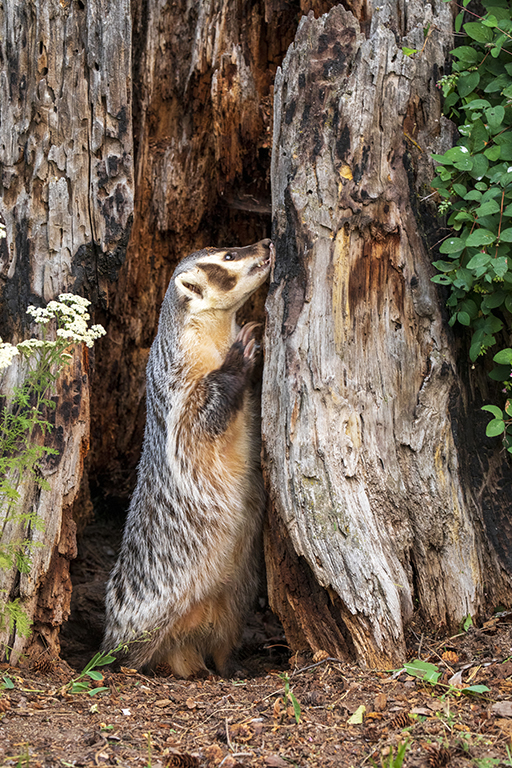
We began with an American Badger (Taxidea taxus). They are quite different from the European badgers that I am familiar with from England. American badgers are generally solitary, and nocturnal. They have huge claws for digging burrows. They are carnivores, eating quite a variety of animals including gophers, mice, birds, and even snakes. They are quite aggressive and have few natural enemies. Their main predator is the cougar, but they are occasionally hunted by wolves and bears. I was interested to read that on occasion, badgers will hunt in tandem with coyotes. The badger waits in the burrow, the ground squirrel sees the coyote and drops into the burrow. Then, seeing the badger, he jumps back out again, and while he is able to outrun the badger, the coyote is faster and gets a meal. No one is quite sure what the badger gets out of the arrangement! Our badger was a handsome fellow, and quite calm, happily snatching the chunks of meat the trainer tossed to him, and returning to his crate without fuss when we were finished.
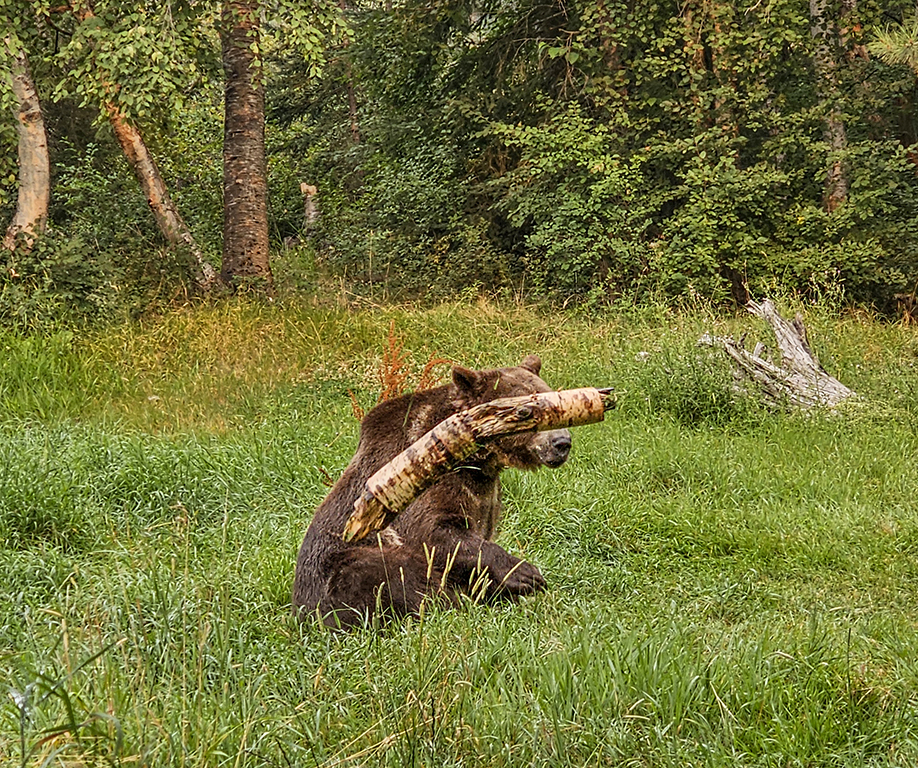
Next was the grizzly bear. His name is Bruno! He is about 11 years old and is captive-born and raised. He mostly prefers to stay in his private quarters but comes out about once a week to have a play in the enclosed field. Photographers stay behind a half fence, as does the trainer, but it is very open and easy to see what he is doing. One of the more fascinating habits is throwing small logs (to the 800-pound bear, these are sticks). This is apparently natural behaviour, intended to loosen small grubs from the bark. It was really something to see him pick up these pieces of wood, each about 3 to 5 feet long, and at least 8 inches in diameter, and whirl around and toss them away. He would then go after the stick, pick it up, and throw it again. Very interesting that Bruno does this, especially as he was raised in captivity and had no mother to teach him to do this.
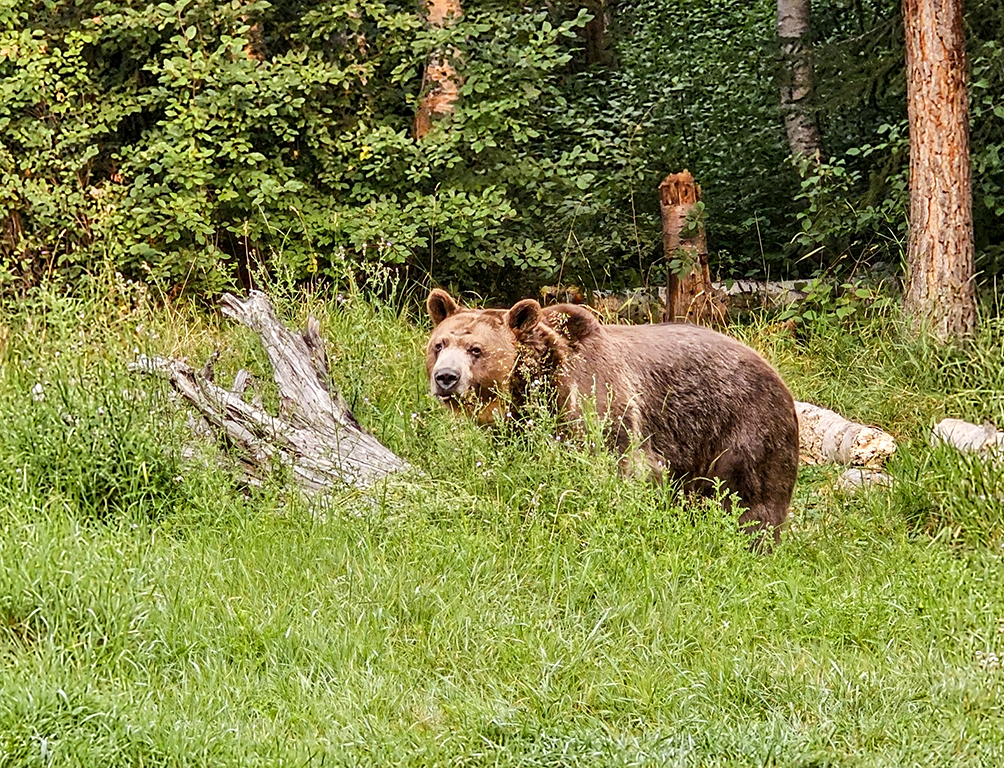
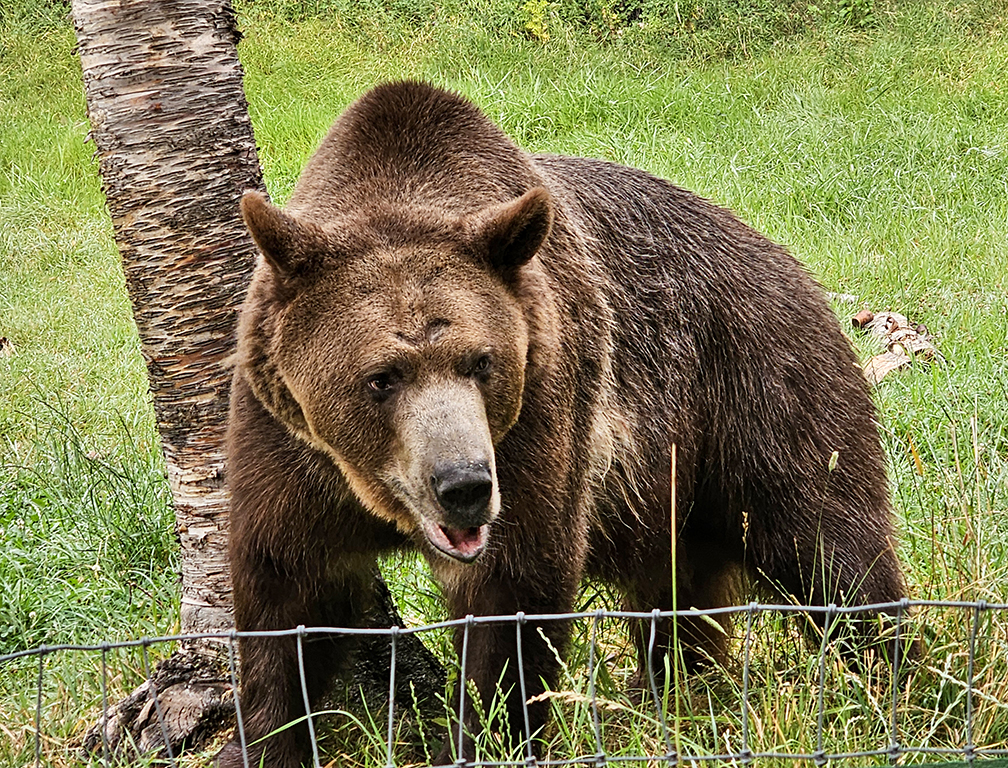
Grizzly bears have the somewhat amusing latin name of Ursus arctos horribilis. They are in fact a subspecies of the brown bear and are native to North America. They first arrived from Eurasia, and had quite an extensive range across the western part of North America, but today they inhabit only the mountainous part of Montana, the western and northern Canadian provinces, and Alaska. The more southern grizzlies share their range with black bears, and can be of a similar size, but are easily distinguished by their hump on their upper back. They are not considered to be endangered, but there are only about 60,000 in the wild, with half of those in Alaska. They will chase moving animals, and they can climb trees. We were warned not to turn our backs, and especially not to run if Bruno approached! There was always a trainer present.
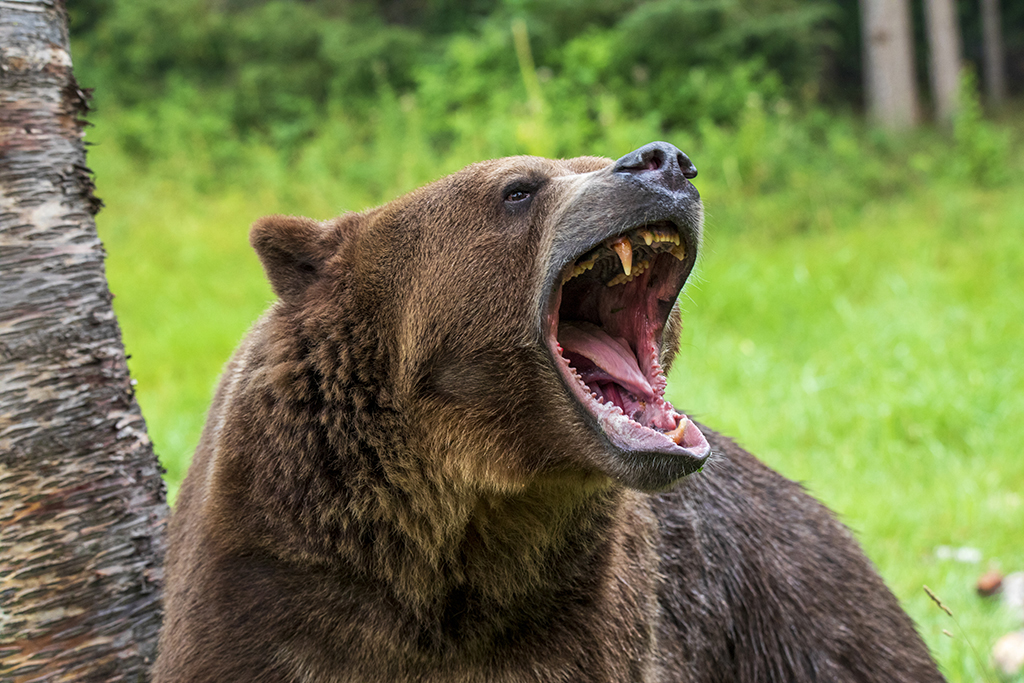
Grizzlies are omnivorous, and from what I read, they will eat almost anything! Including unwary hikers and campers. Habituation is a problem, and while it is incredible to see, and watch, a bear in the wild, it is critical to keep a good distance and not try to feed or attract them. A habituated bear becomes a nuisance bear and, ultimately, a dead bear. We found ourselves in a “bear jam” as we entered Glacier National Park. Two grizzlies were feeding on fruit in the middle of a clump of bushes, and someone in a vehicle had spotted them. Cars and trucks were stopped at the side of the road and tourists were trying to get pictures of the bears. Fortunately, nobody was being foolish and getting out of their vehicles. Interestingly, grizzlies are known to compete with wolves over a kill, with the bear trying to steal it, and the wolves protecting their meal.
It was fascinating to watch the interaction between Bruno and his trainer. Hand signals were recognized, and he clearly enjoyed the marshmallows that were tossed as a reward. He knew where the marshmallows came from, and when he stood with his mouth open asking for more, she would tell him, “Go do bear things!”
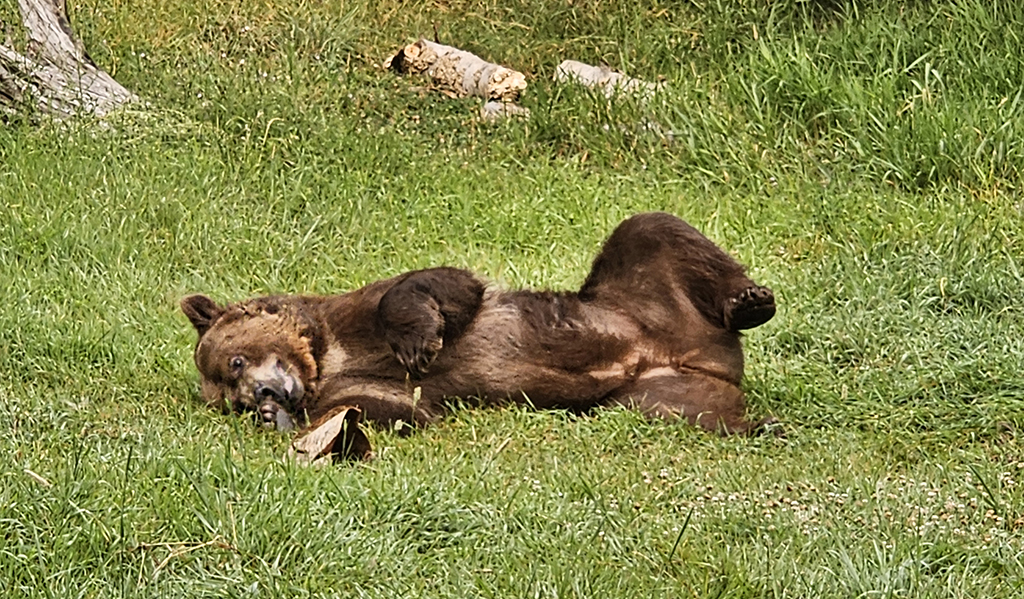
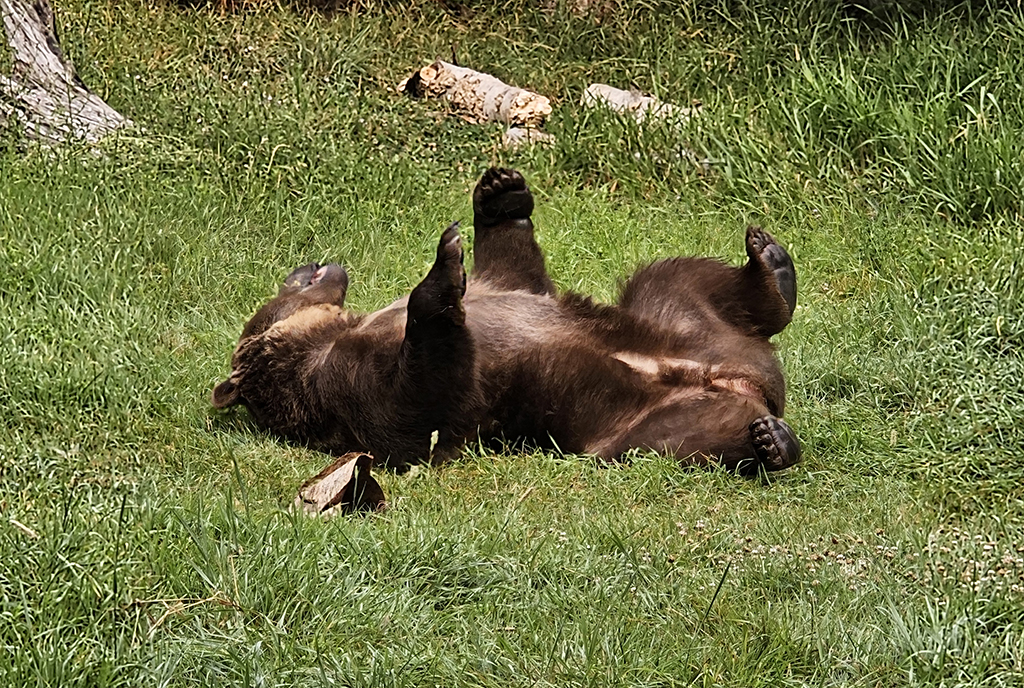
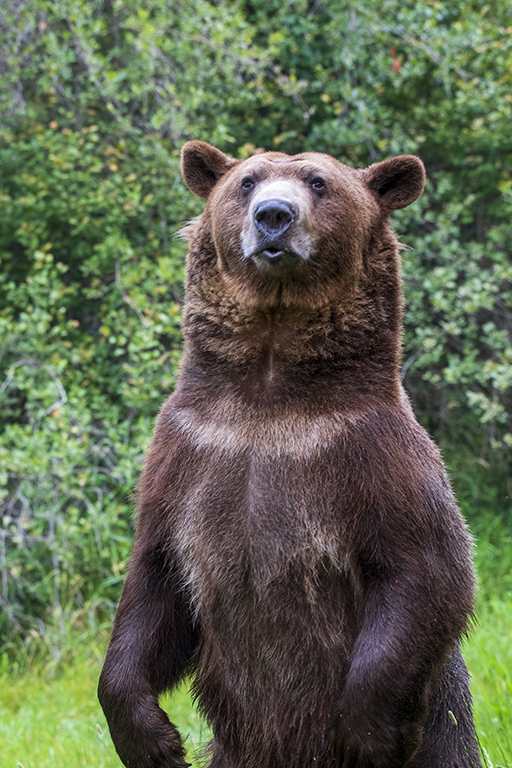
After about an hour of playing, tossing sticks, and standing up to catch treats, Bruno decided he was tired and wanted to go home. As the owner of Triple D told us, “What the bear wants, the bear gets!” Both the owner and the trainers thought that perhaps Bruno was less lively than usual because he was unhappy about all the smoke in the air. I am still delighted with the number and variety of pictures I took.
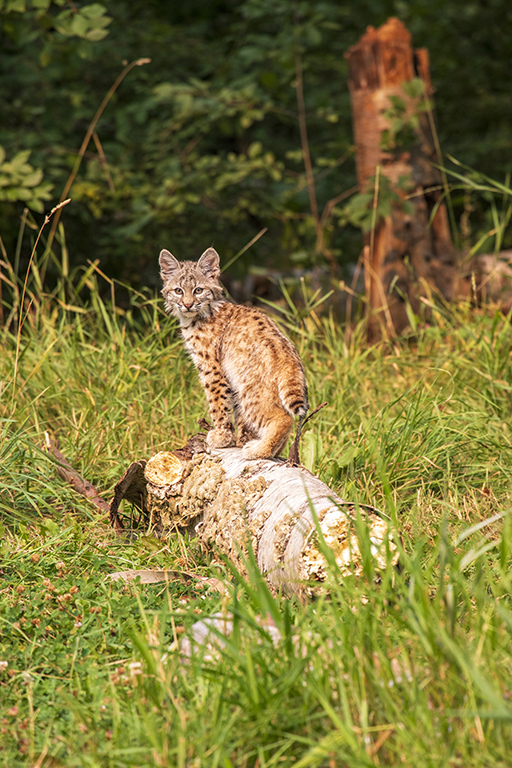
Our last animal was a bobcat kitten. At first, she was taken to the large, enclosed field, but she was clearly very skittish and kept trying to disappear into the forest. After a short while, the trainers decided that perhaps the smell of the bear was troubling her, so we moved to a different area. I was happy, because it meant that I got to take pictures in two different environments. The kitten was quite adorable, and it was very interesting to see the interaction with her trainer. She was just over 3 months old. It was clear that each animal has their own trainer that they work with, rather than everybody working with every animal.
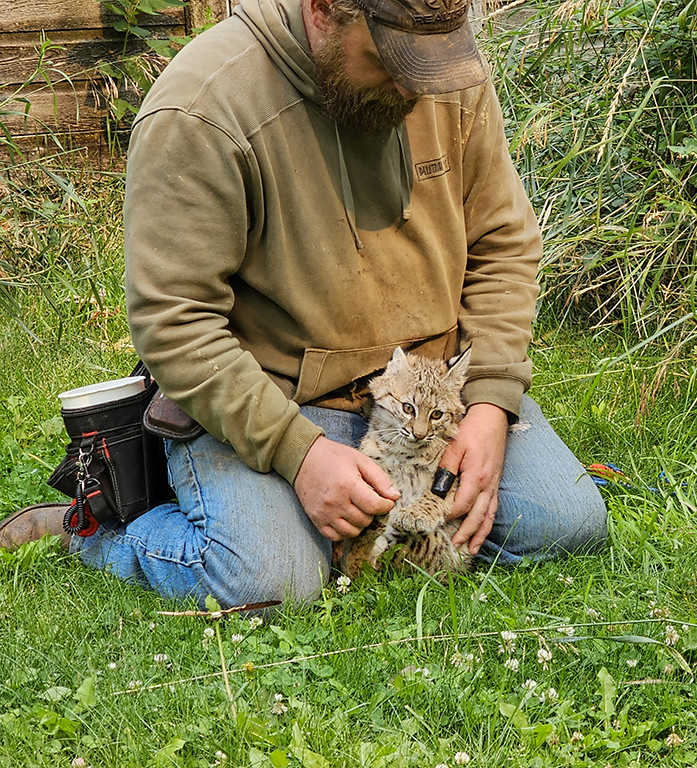
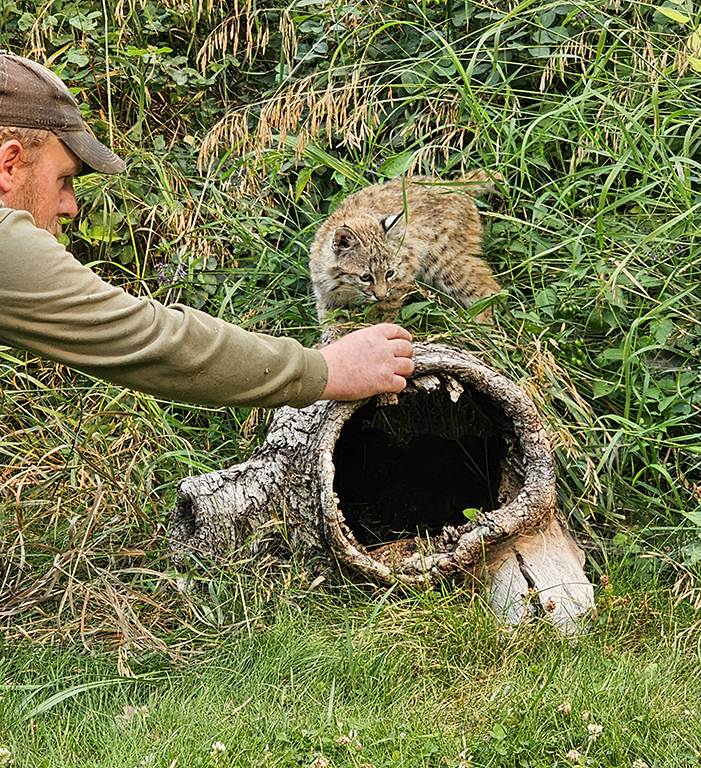
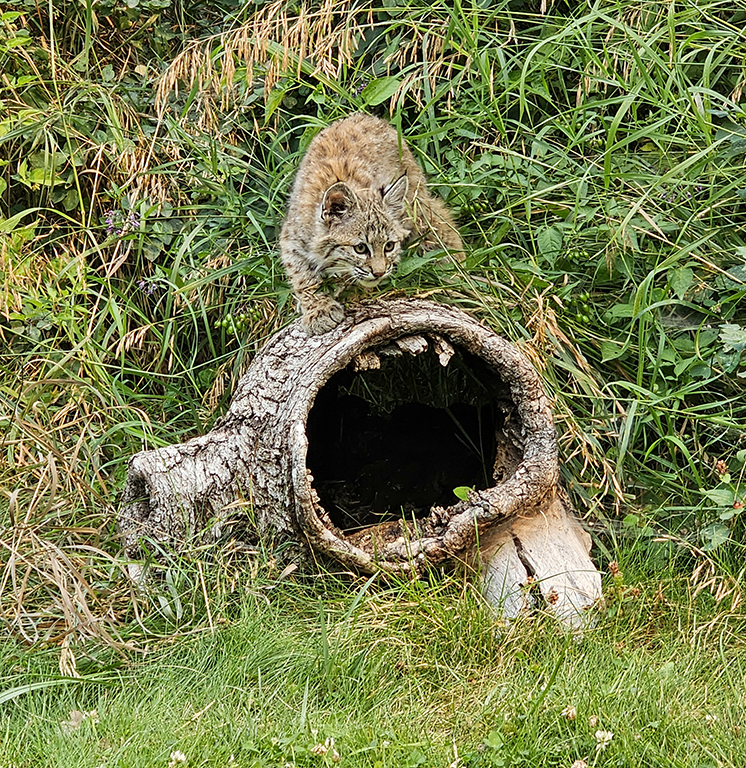
The bobcat (Lynx rufus) is another native North American animal. Their range is from southern Canada, through most of the United States and into Mexico. They are carnivores, with a preference for rabbits and hares, but they are also happy to prey on insects, birds (including chickens and geese), small rodents, and even deer. They are territorial and mostly solitary. Adults are comparatively small, standing between 12 and 24 inches at the shoulders, and weighing 14 to 40 pounds. They tend to be larger in their northern range and in open habitats. They can be found in urban areas, usually on the edges of towns and cities. Friends have taken pictures of bobcats in their back gardens. They prefer to be active during the evenings and early mornings. They have few predators, and prefer to run away rather than compete over a kill. Bears, wolves, coyotes, cougars, and occasionally alligators or eagles may prey on unwary bobcats.
After a pretty intense morning of photography, we were happy to return to the hotel for a rest before heading out to dinner.
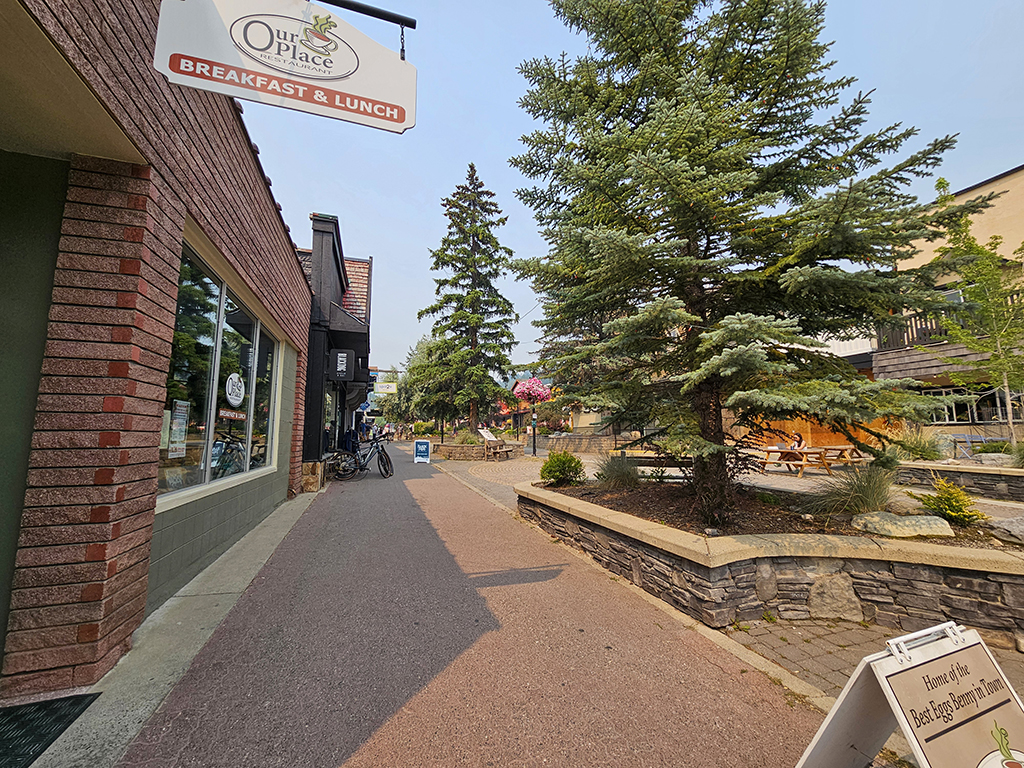
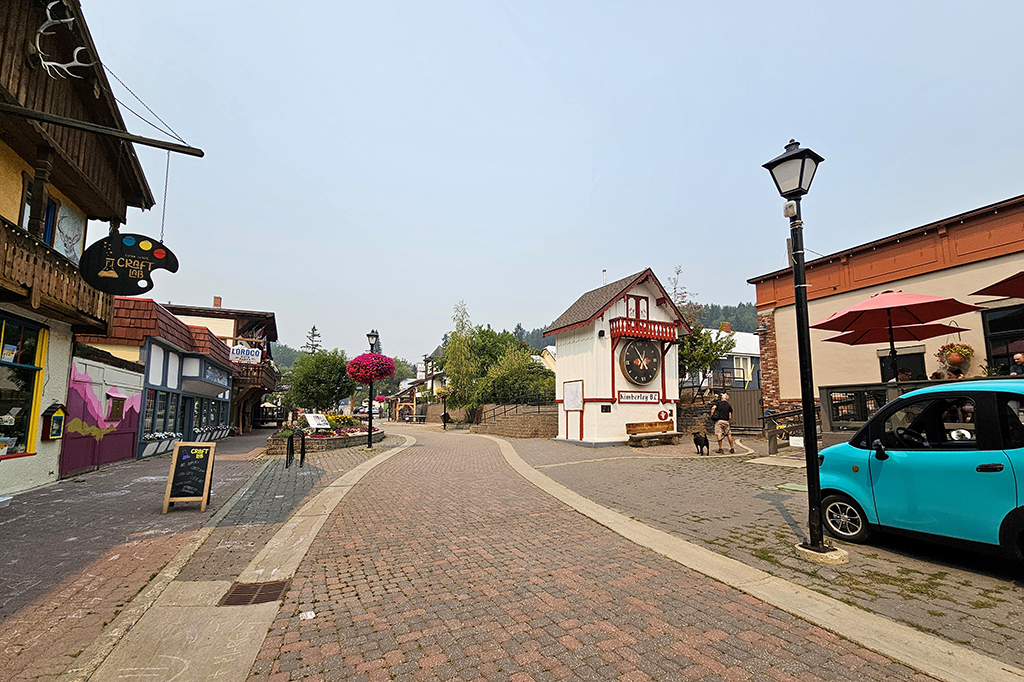
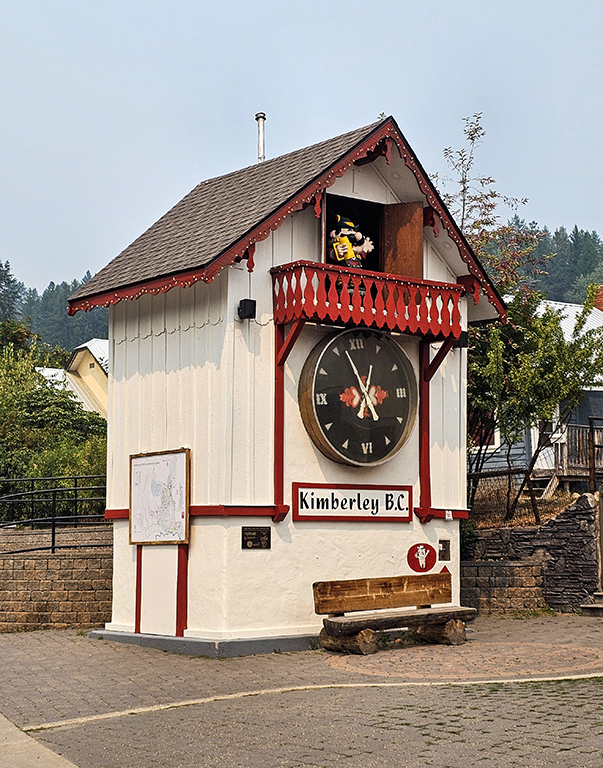
The next day we drove north, back into Canada, towards our destination in the Radium Valley, in the East Kootenay Region between the Rocky and Purcell Mountain ranges. We stopped for brunch in Kimberley, a small town that we have visited many times over the years. The town is looking prosperous, but we were sorry to see that they no longer have their distinctive German Black Forest style, instead they are just another small town. The wonderful cuckoo clock is still there, but instead of the yodeler coming out every hour, you have to put coins in a box to see him.
We had booked a last stay at the timeshare at Fairmont Hot Springs, that we have owned for nearly 40 years. This ownership was flexible rather than fixed, meaning that we did not get a specific unit and a specific week, instead we are entitled to a week at any available unit during a particular season. Unfortunately, as these leases expire, the ownership (and the best sited units) are being taken over by the hotel chain that purchased the resort from the original owner. None of the nicer located units are still available, and it is extremely difficult to book a week during the peak July and August season. We have many happy memories of the resort, but we won’t return. It is also sad to see that the new owners are not taking proper care of the resort, and the golf courses are not in good condition.
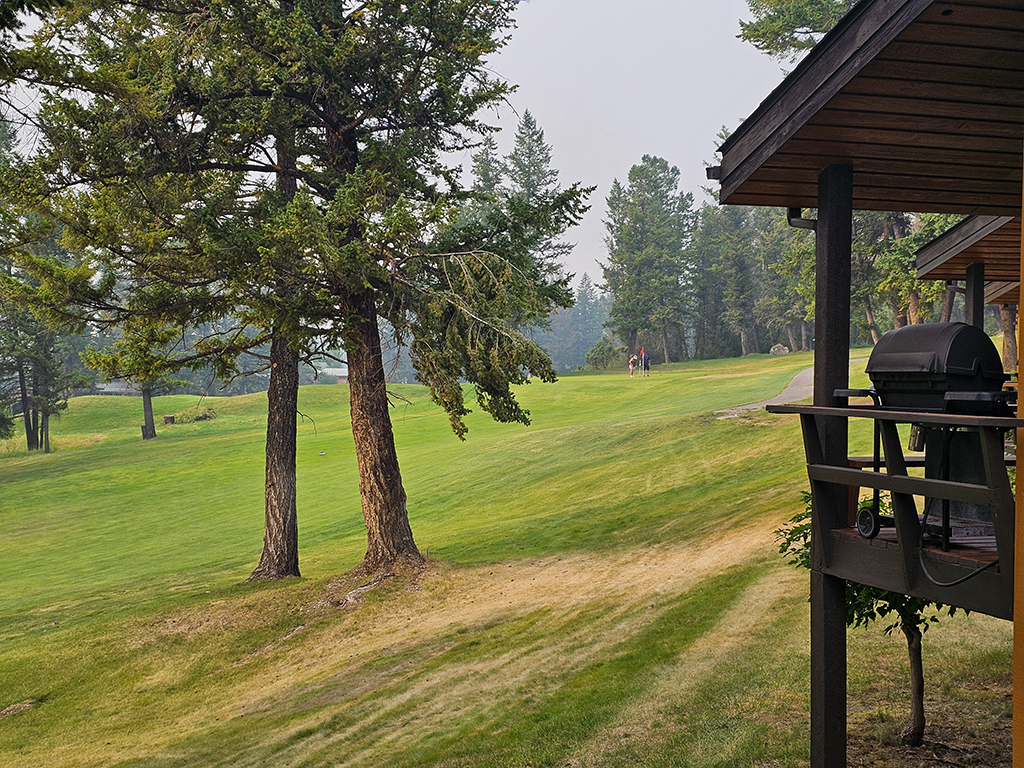
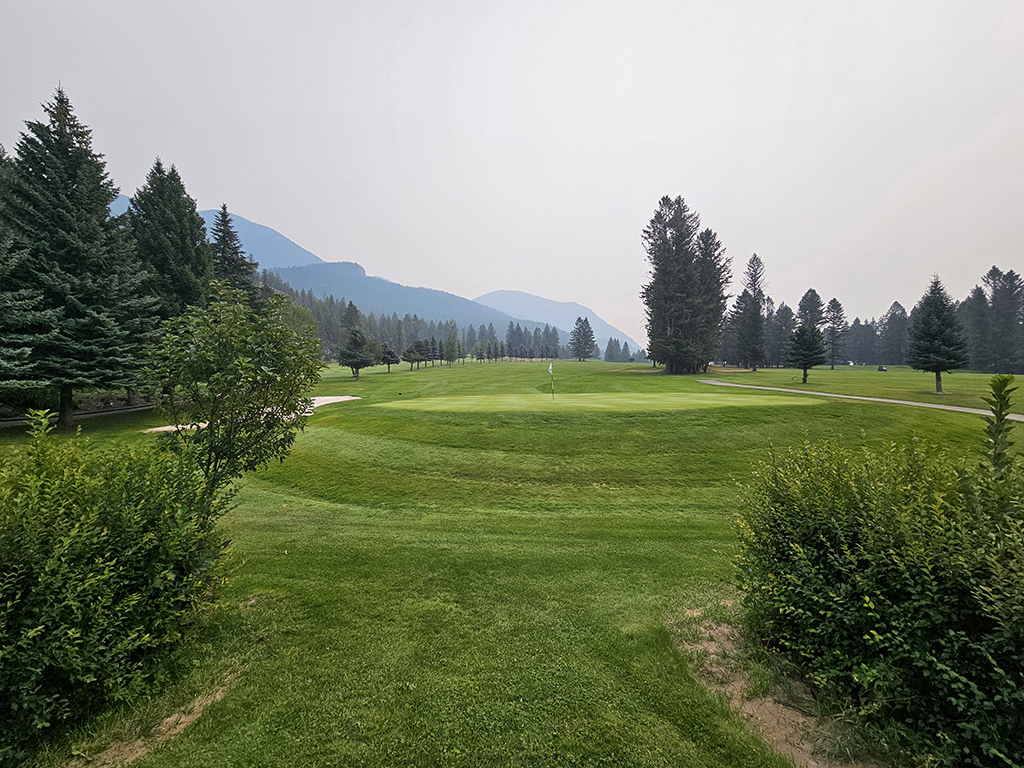
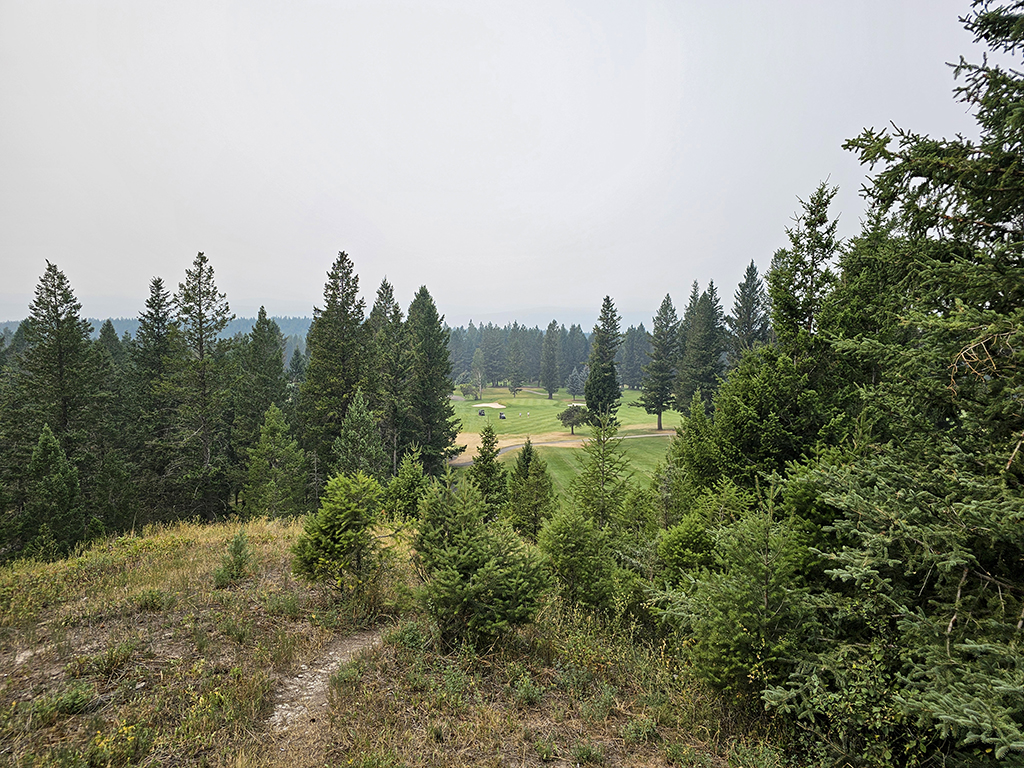
Our first round of golf is traditionally at Radium Golf Course. This is a relatively short course, with lots of elevated tees, and we usually start the week off on a high note, playing well and setting ourselves up for the more challenging courses in the area. Not so this time. The lush grass and soft greens that we have been missing so much in the east, require a different style of play, and apparently in the ten years since we were here, we have forgotten what we once knew! I will draw a line under our scores. It was still a lovely trip down memory lane, as we played this course years ago with my Mum and Dad, and Dick played once with Betty and Cathie and watched a mother bear and two cubs cross one of the fairways in front of them.
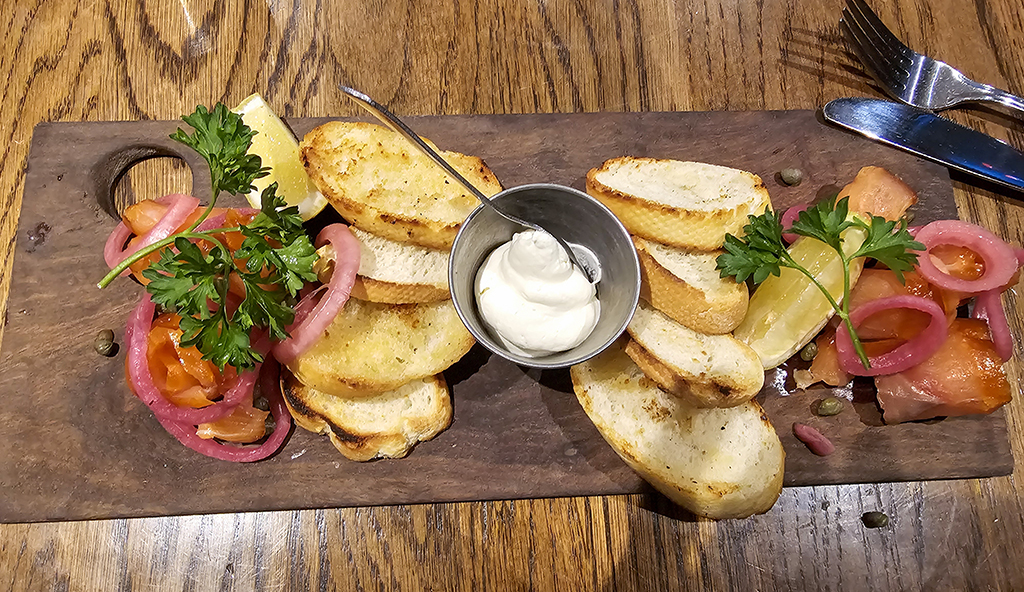
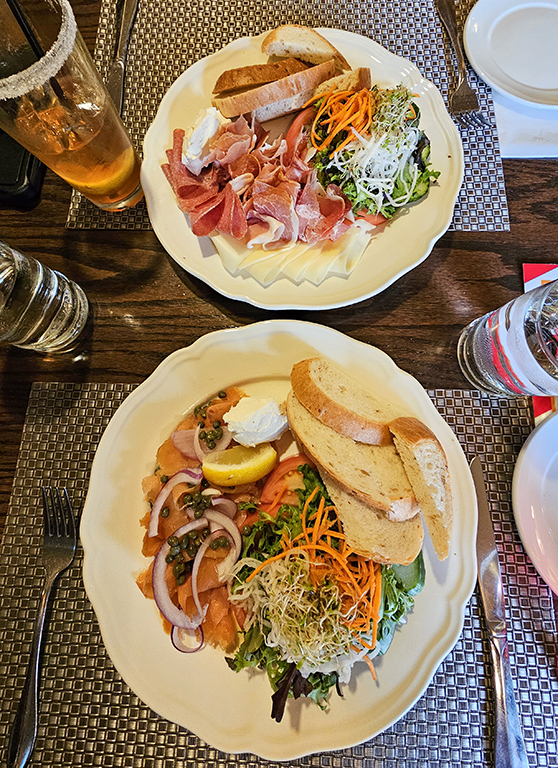
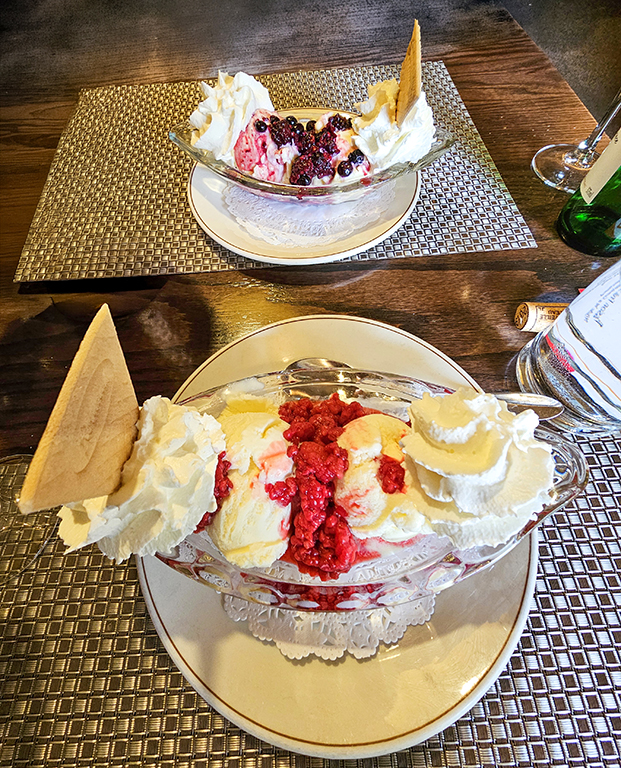
We went to an Austrian restaurant for dinner. It was reasonably good food as we remembered. Dick particularly enjoyed his “special” a plate of chicken, bratwurst, and lamb chop. We started with two shared plates, cheese and charcuterie for Dick, and smoked salmon for me. They were quite a bit larger than expected! I could not resist the typical German dessert, Heisse Liebe, which translates, Hot Love. It is vanilla ice cream topped with hot raspberries. Dick also ordered an ice cream dessert, Coupe Sisi, which was mixed berries over vanilla ice cream. Sisi was Elizabeth, the Empress of Austria and Queen of Hungary from 1854 to 1898. If you travel around Austria and Hungary and visit museums and historical places, Sisi’s story is a common thread. The desserts were delicious!
The next day was our much-anticipated return to Greywolf, a stunning golf course high up in the Purcell mountains at Panorama. For about 20 years we owned another timeshare there, but we have only stayed there three or four times. On our first visit, we took a trail ride on horseback, and the guide took us around the area that was being prepared for a new golf course. It turned out to be one of the most beautiful we have played on, and we were very happy to find that the course is as lush and beautiful as ever, despite the incredible challenge of maintaining grass at 3800 feet on the side of a mountain. The course is ranked 7th in Canadian public golf courses.
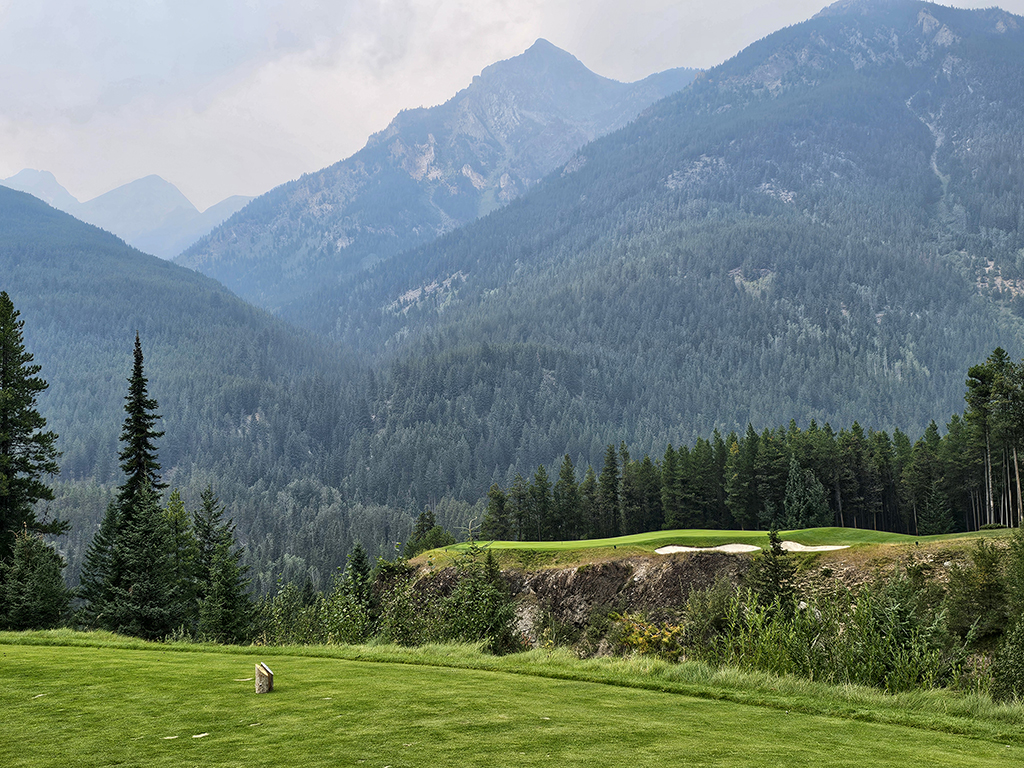
We were paired with a young couple, and it turned out to be a great afternoon. They were interesting and relaxed, and we enjoyed exchanging stories. Apparently, John’s father invented a process for combining used tires with asphalt for road repairs, and many years later, a British entrepreneur contacted the son and proposed a business startup. When I worked at a research lab in Calgary, one of the scientists was studying polymerized asphalt, so I found it fascinating to learn that the material is now being used to repair roads. John enjoyed talking to Dick about his career and some of the interesting places where their experience overlapped.
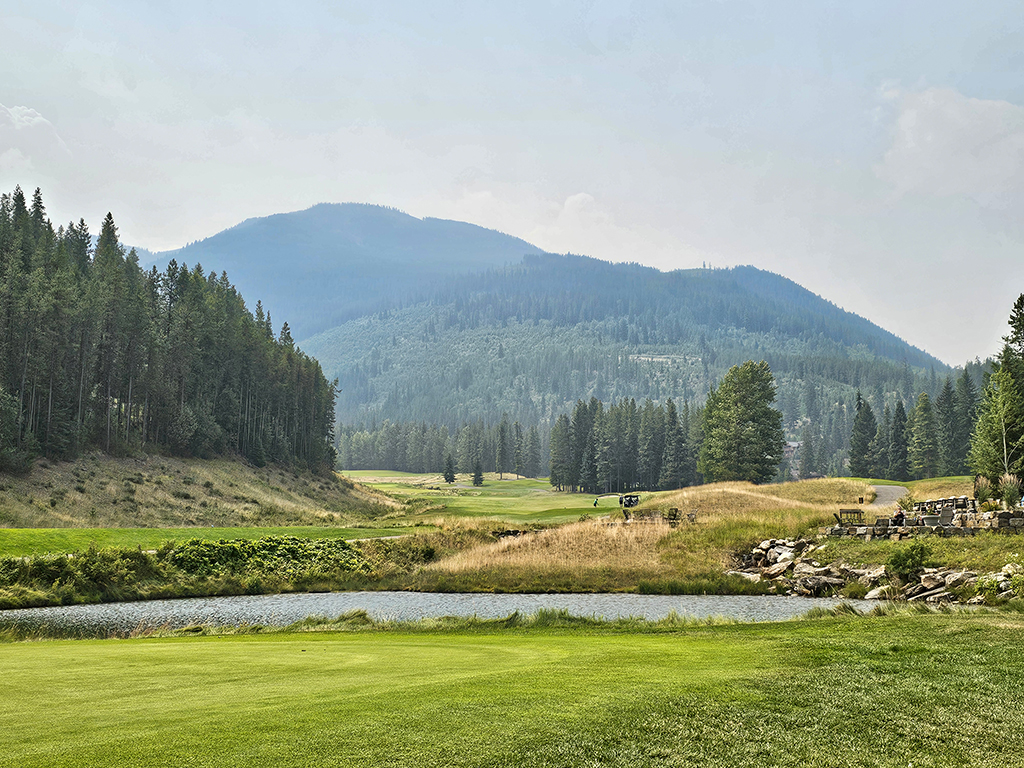
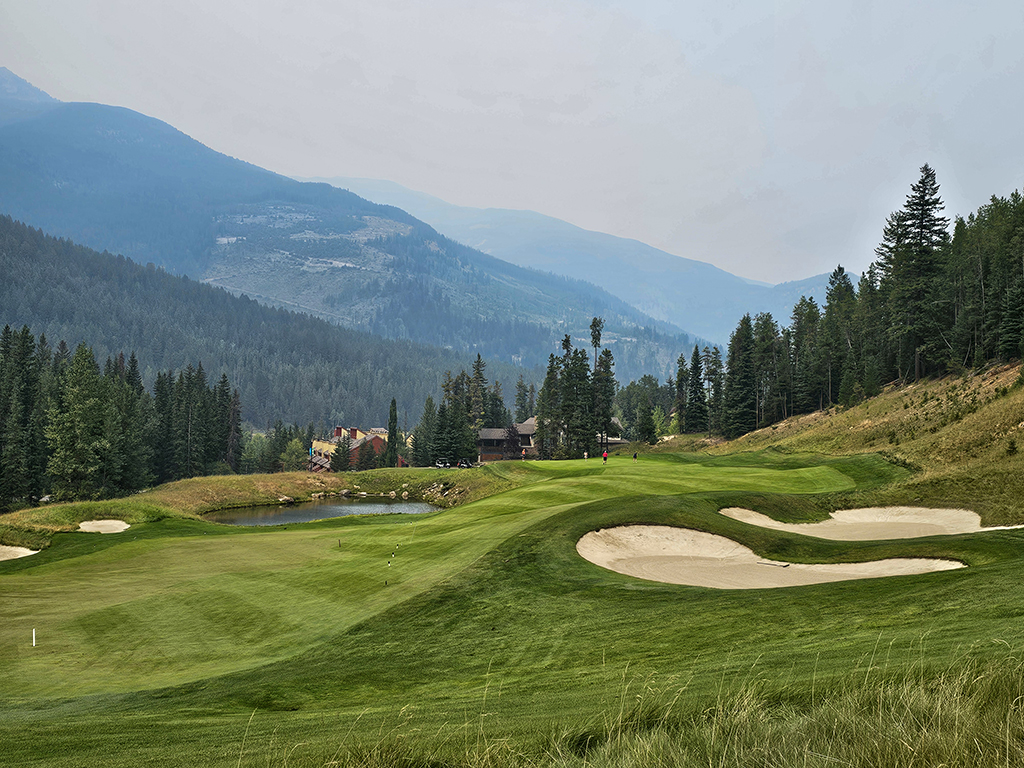
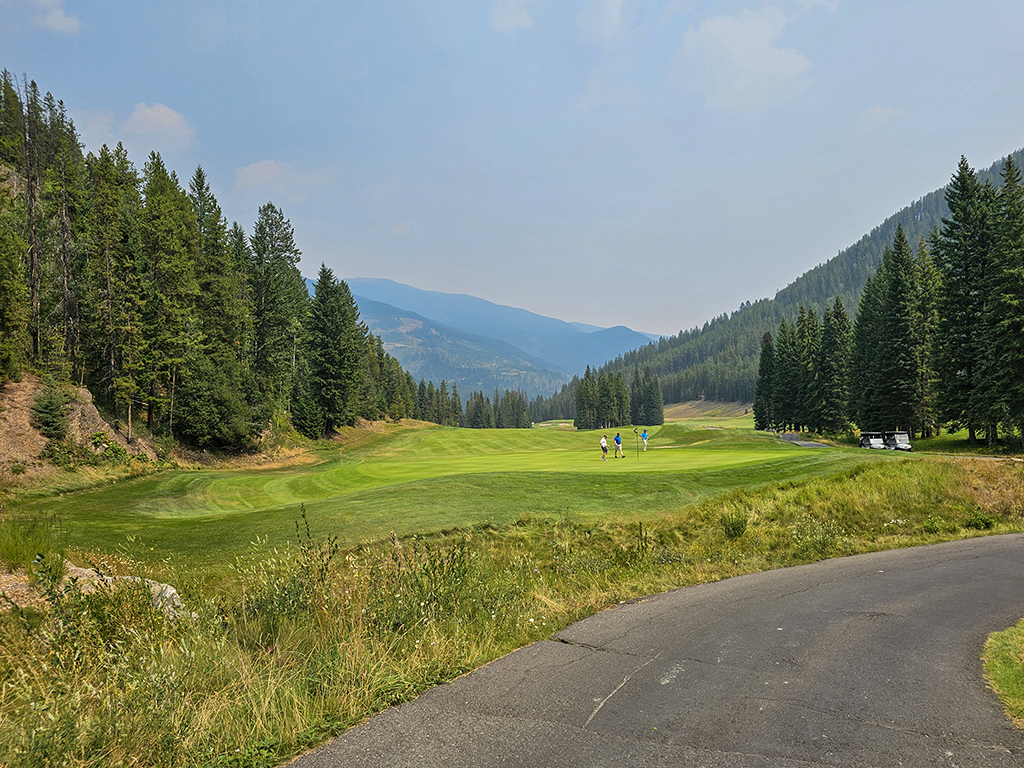
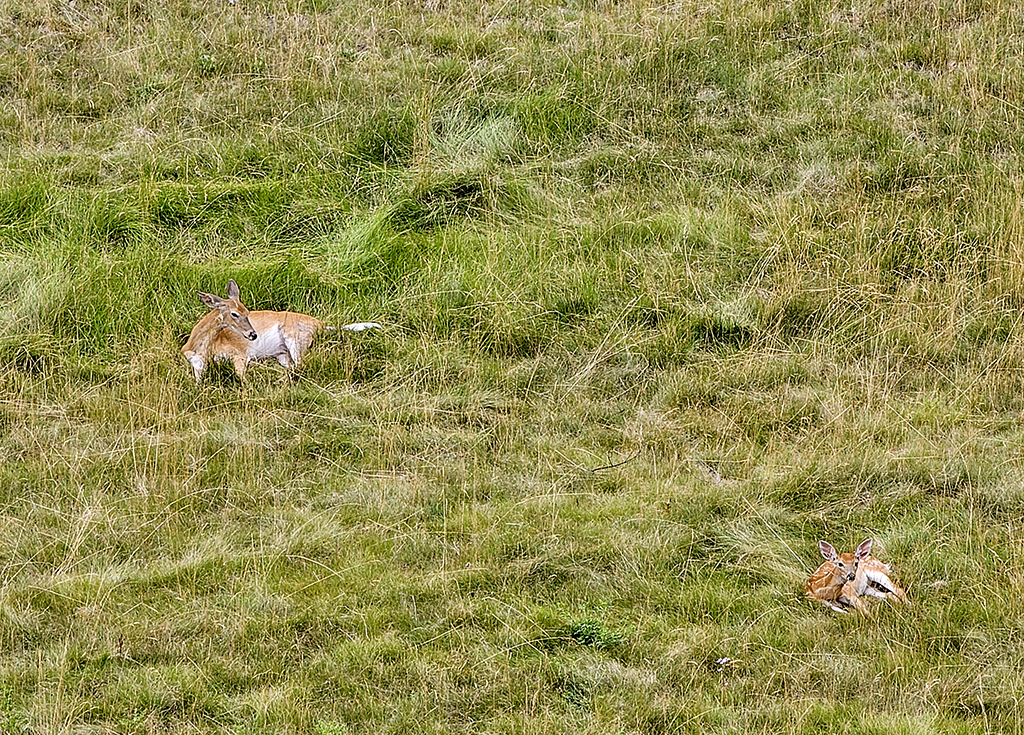
We played much better than the day before, even though the course is much more difficult. We both scored 10 strokes lower than the previous outing! Unfortunately, while the course is still spectacular, the fires west of the mountains meant that the tops were shrouded in smoke. There was very little wildlife to be seen, just a couple of marmots, and some deer having a rest in a grassy area. We stayed afterwards to have dinner in the restaurant.
Wednesday was a day for relaxing and a brief visit to Invermere to see how the town has grown.


Leave a Reply