
Christmas 2025
It’s a long way from Wensleydale to Devon, so we were happy to break our journey with a stop in St Albans and a chance to have dinner with cousin Peter and his wife Alla.
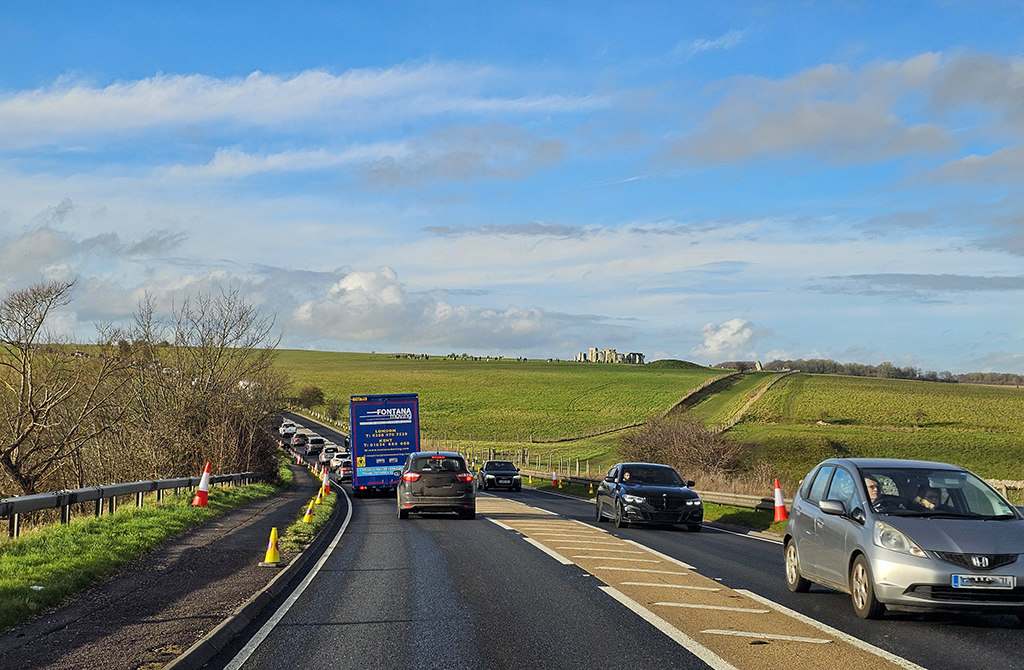
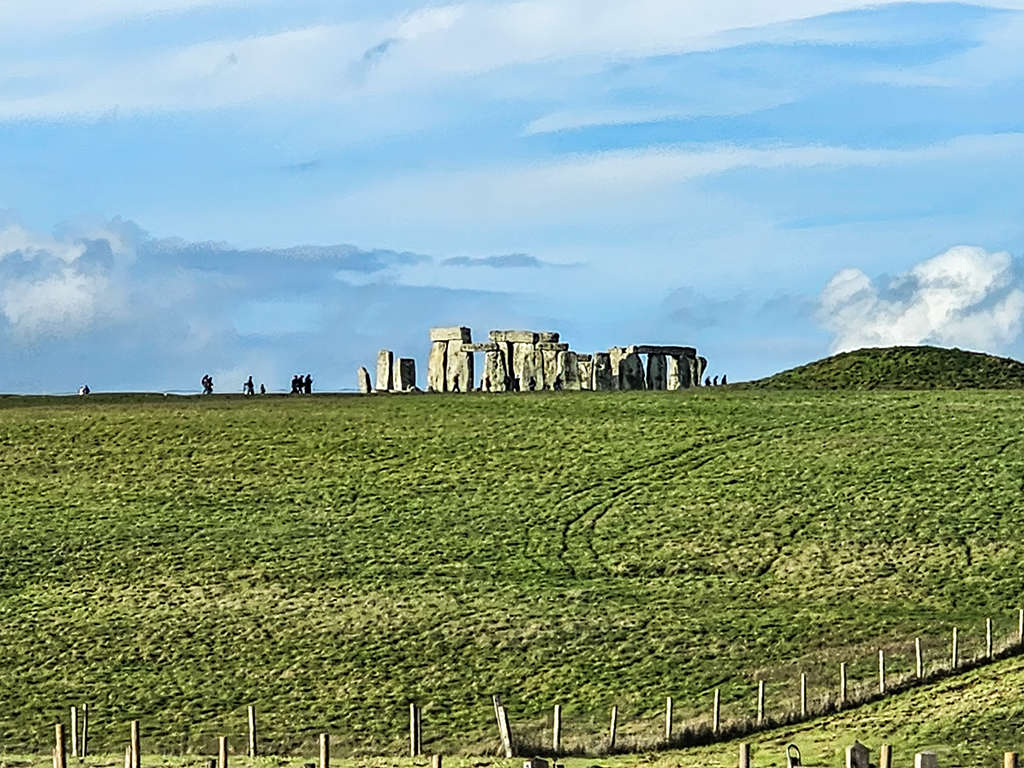
The next morning, we set off on the M25 London orbital, and then eventually we were on the A303 and heading west. Once we were into Wiltshire, traffic slowed down as the highway passed Stonehenge. It is quite a sight from the road, so the delays are not surprising. Various proposals have been made, including re-routing the highway or building a tunnel, but nothing much has changed since we lived in this country more than 20 years ago.
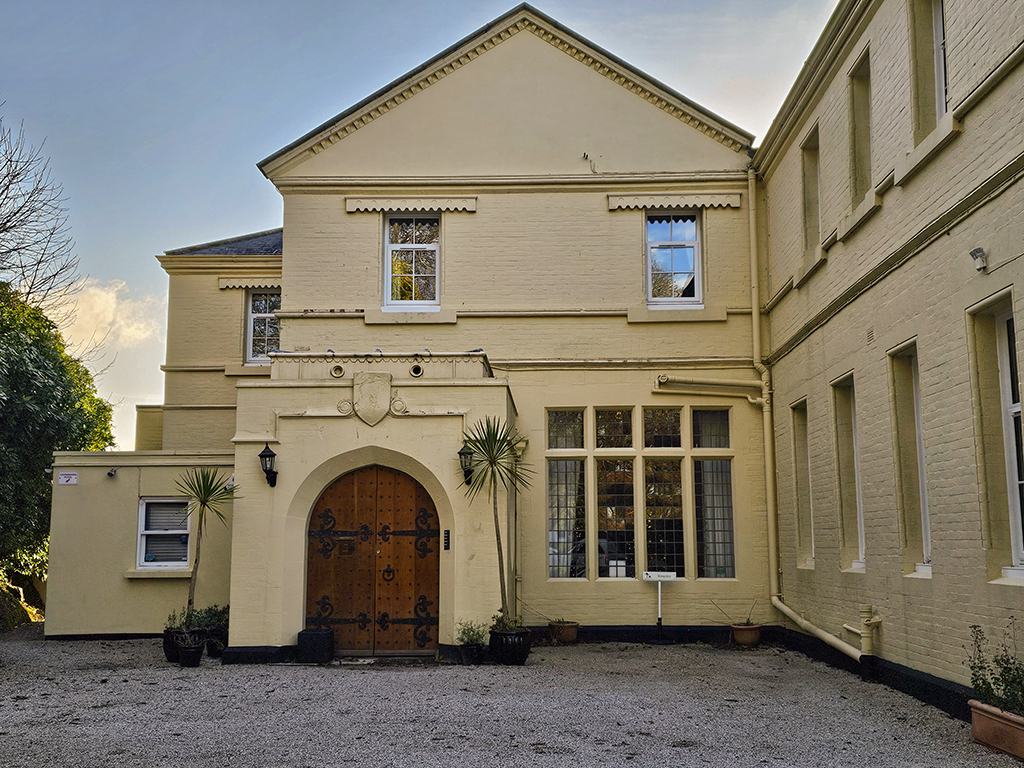
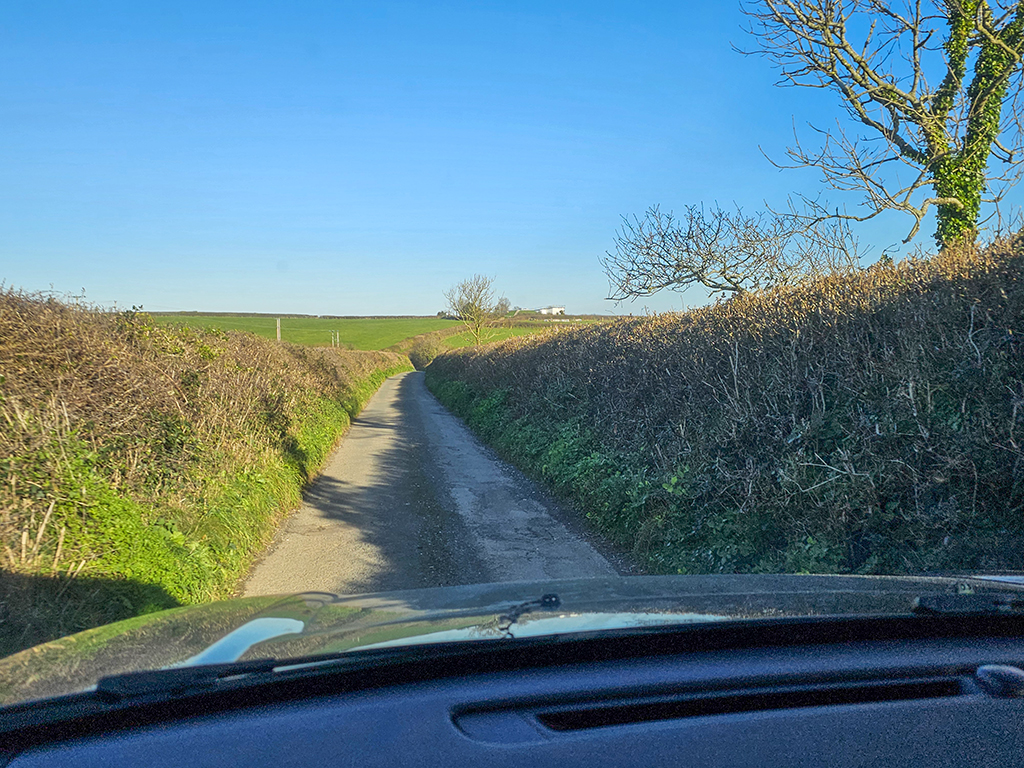
Eventually, we arrived in Kingswear. This is a hillside town overlooking the River Dart, across from Dartmouth. The timeshare we exchanged into (our second visit) was once a country hotel. Rooms are spacious and furniture is comfortable. It is quite an adventure arriving and leaving, as many of the local roads are single lane with high hedges, and they are also very steep.
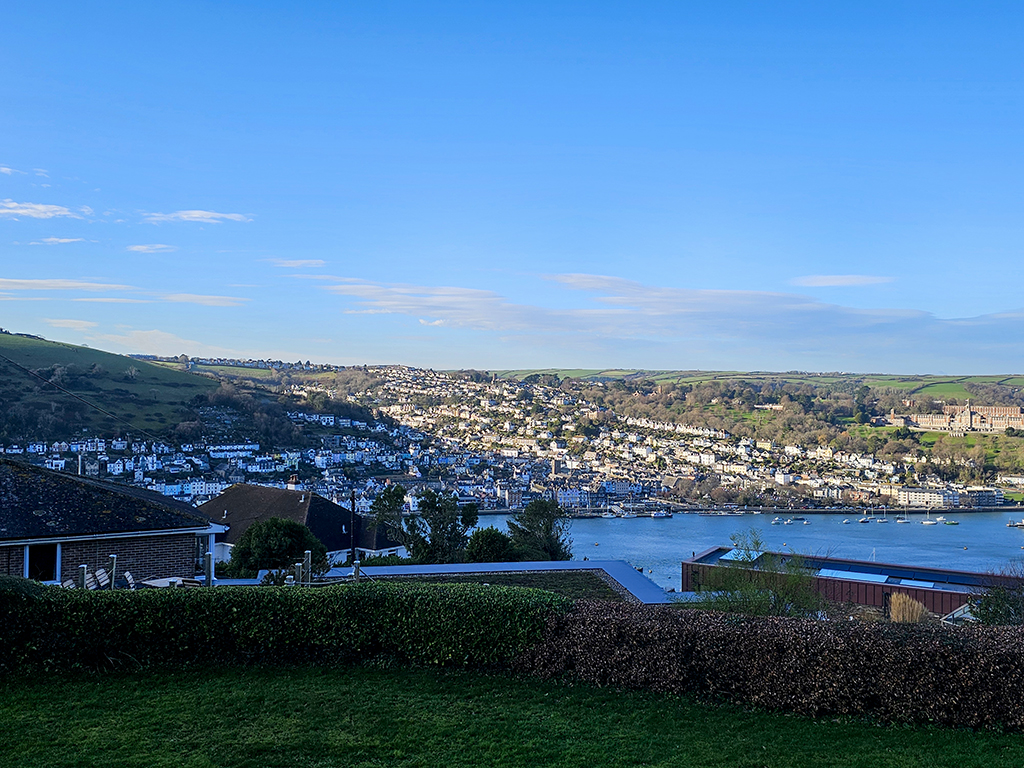
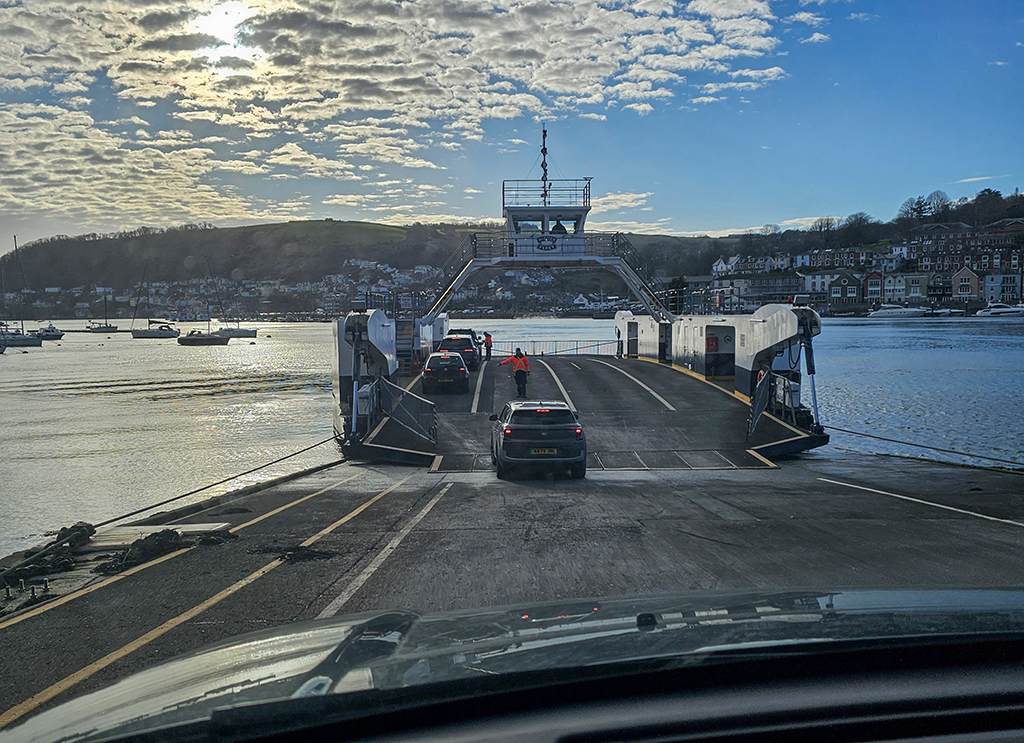
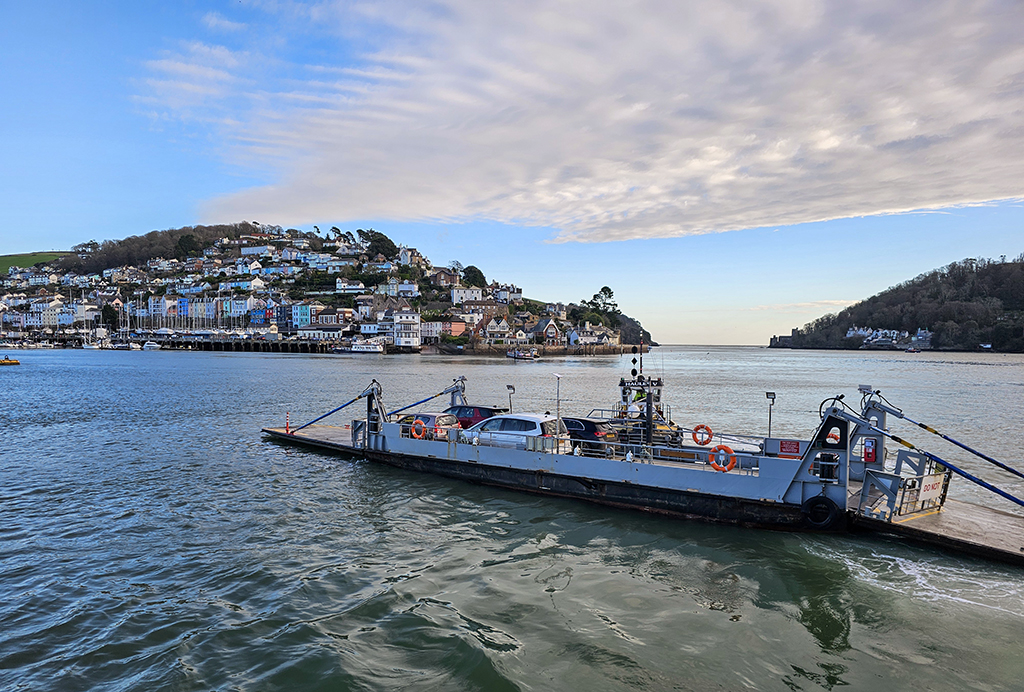
From Kingswear, visiting Dartmouth and western Devon requires a ferry ride across the river. The ferry is a very efficient cable ferry, and rather than running on a schedule, it simply crosses back and forth all day until 10:45 at night. There is a second ferry, further down the river, that crosses directly to Kingswear. This one is a large barge, pushed by a tug, and to be honest, we didn’t fancy it given the swift currents and tides in the river! Another ferry takes foot passengers only.
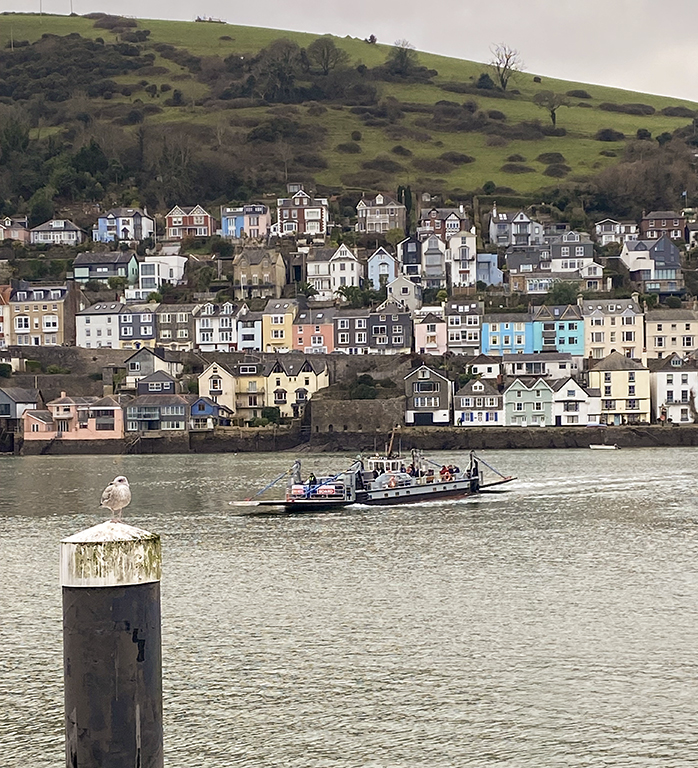
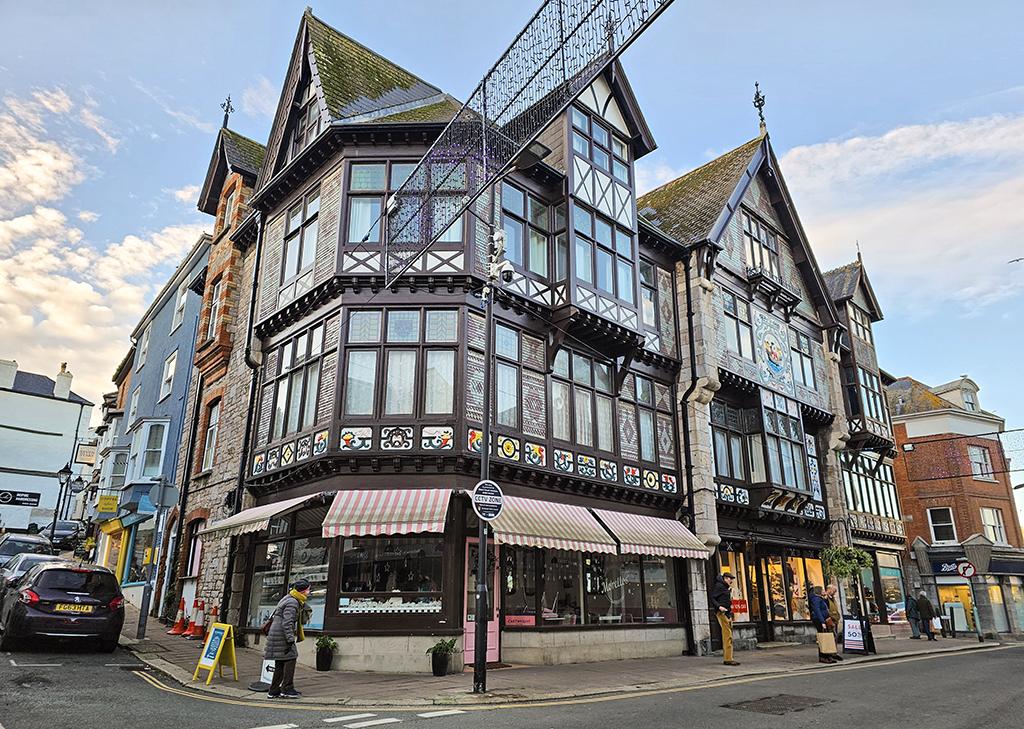
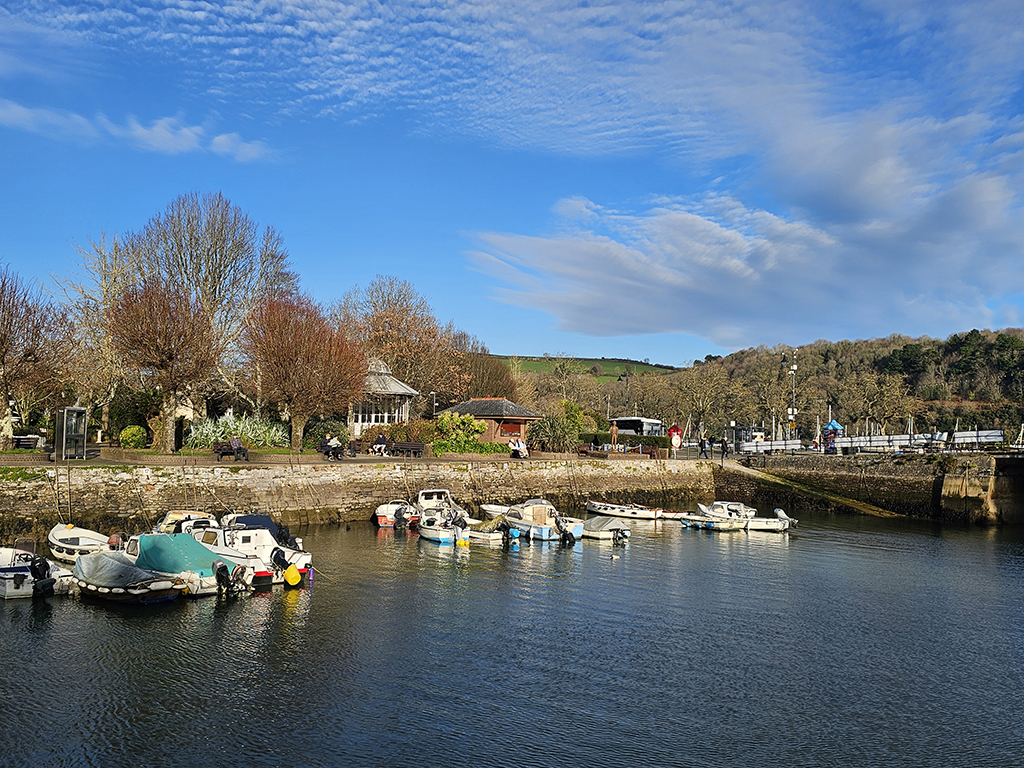
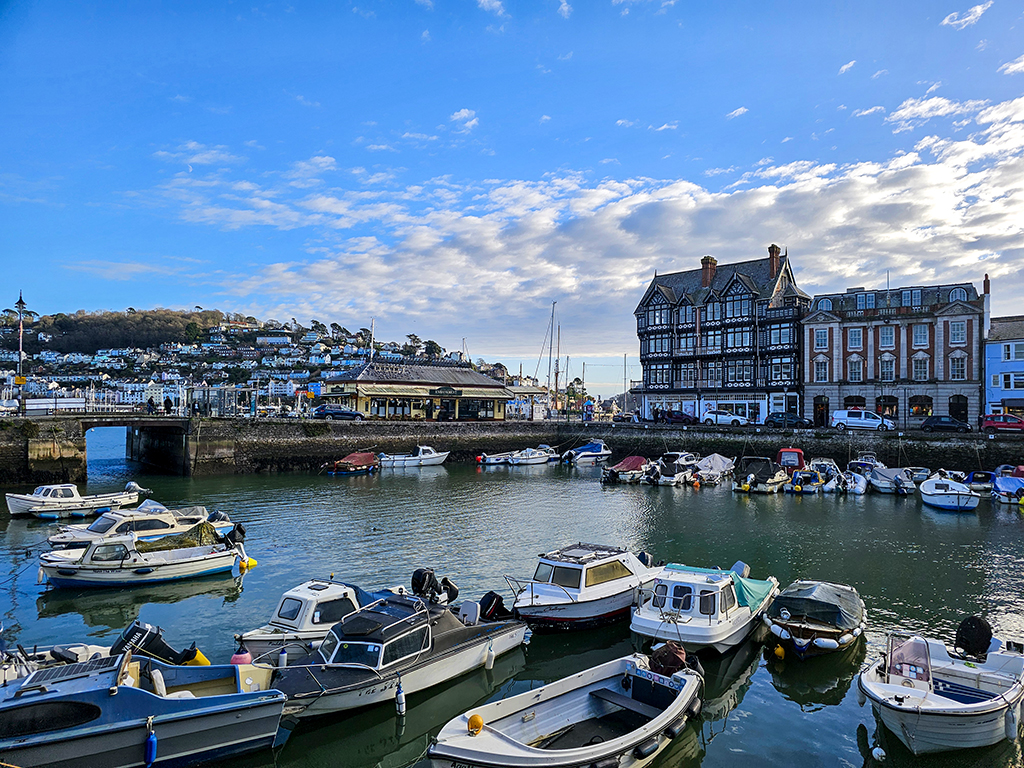
Dartmouth is the home of Britannia Royal Naval College, where all officers of the British navy are trained. It has been an important port since the 12th century, and was the sailing departure point for two of the Crusades. It was a naval base from the 14th century, and it was also a base for privateers from medieval times. Two castles guard the estuary, and there was also a small fort at the southern end of the town. Today it is a tourist destination, and a centre for yachting, with hundreds of sailboats moored in lines up the river.
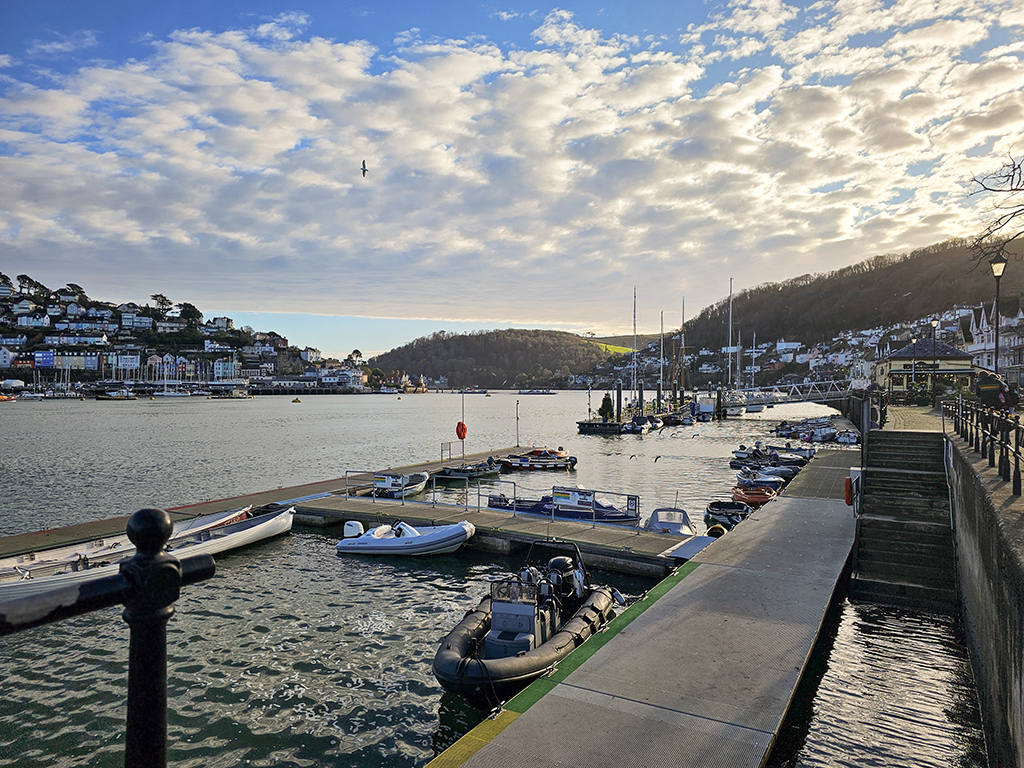
Some of the ships that joined the fleet that defeated the Spanish Armada sailed from Dartmouth. The Pilgrim Fathers stopped here on their way from Southampton to North America in 1620, and rested for a while before heading out. One of the ships, Speedwell, was unseaworthy, and turned back and returned to Plymouth, while the Mayflower carried on and eventually landed in Cape Cod. During World War II, the town was a base for Americans, and it was one of the departure points for Utah Beach in the D Day Landings.
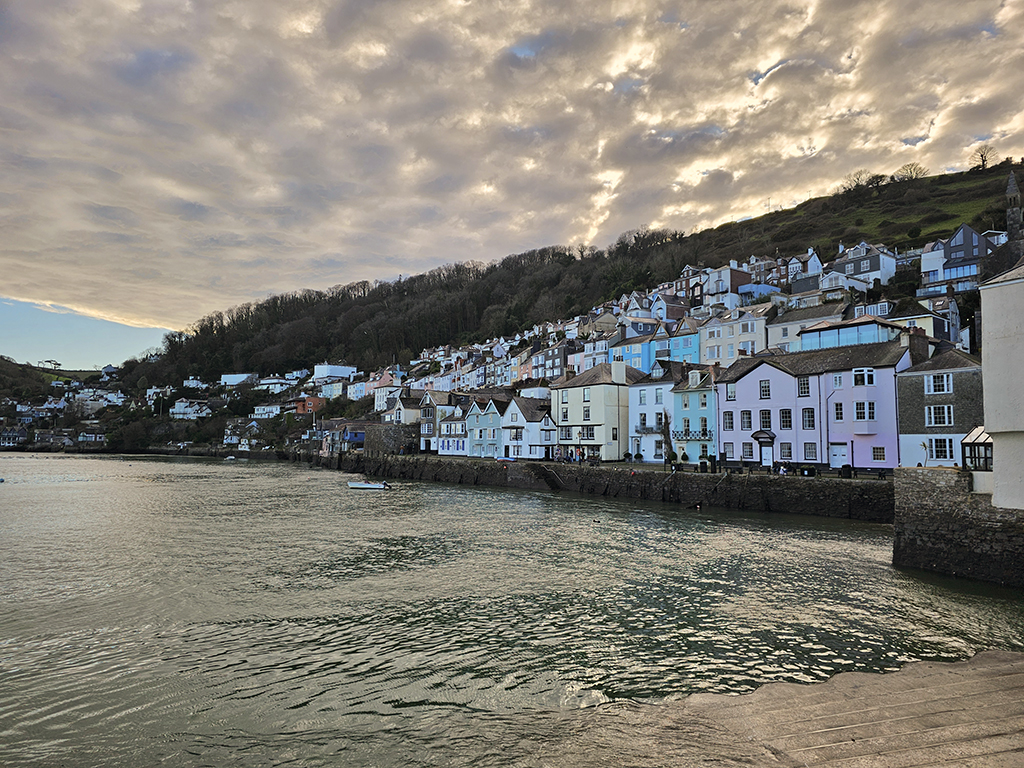
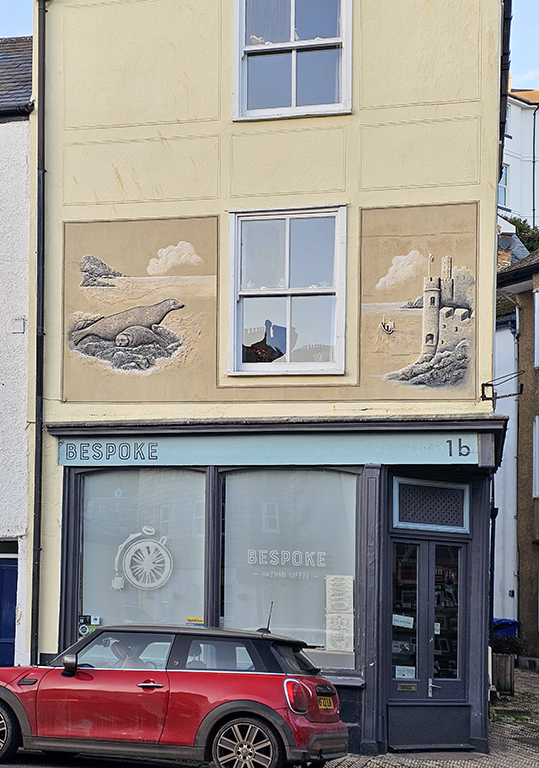
There are quite a few excellent restaurants, many independent shops, and wide walks along the riverside. In the season, tourist boats offer excursions. There are still many medieval buildings along the narrow streets.
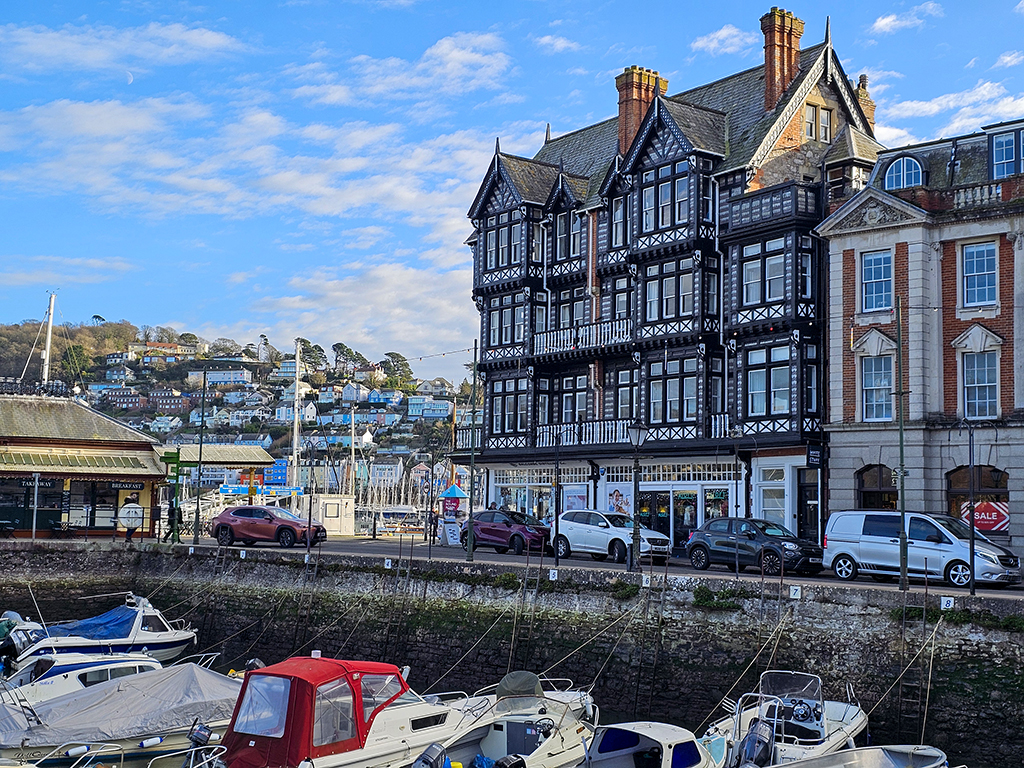
We had originally planned to try one of the pubs in Kingswear for dinner on our first evening, but with a lot of leftovers to finish up, we decided to stay in. Dick had fondly imagined that we would walk down the hill for the meal (in the dark), as it is only half a mile. Perhaps he had forgotten just how steep the hill is, and that our accommodation is at the very top, while the pubs are at the waterfront. Later in the week, Dick went for a walk to explore, and even he found the return quite strenuous! According to his watch, it was a climb of 331 feet!
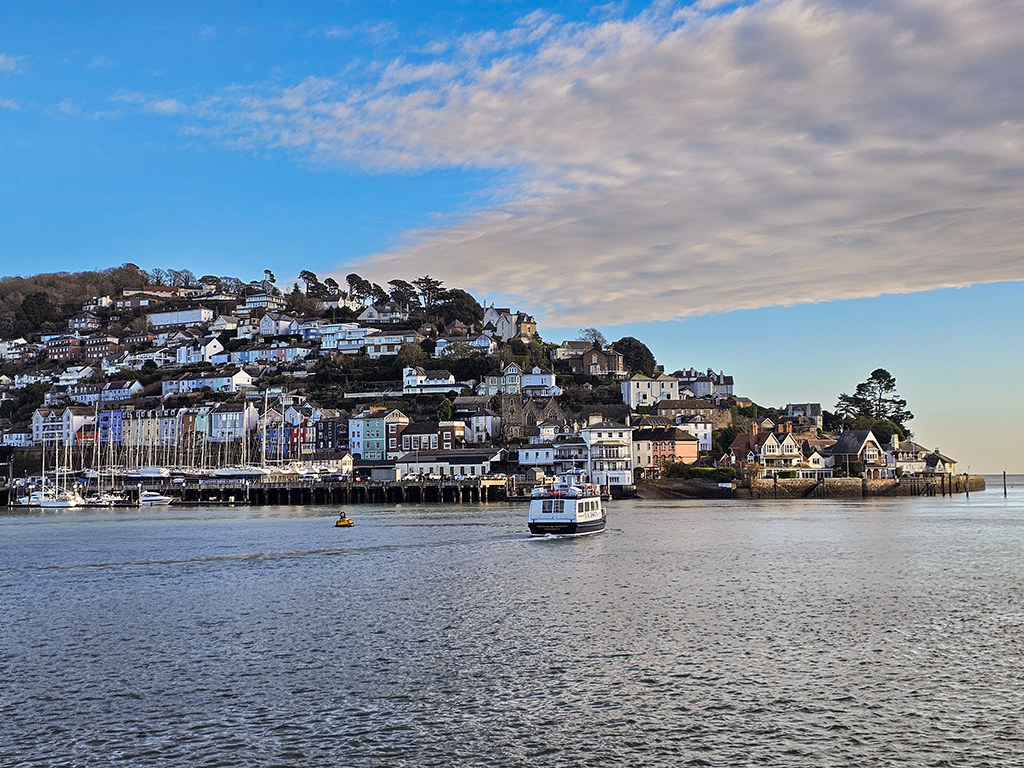
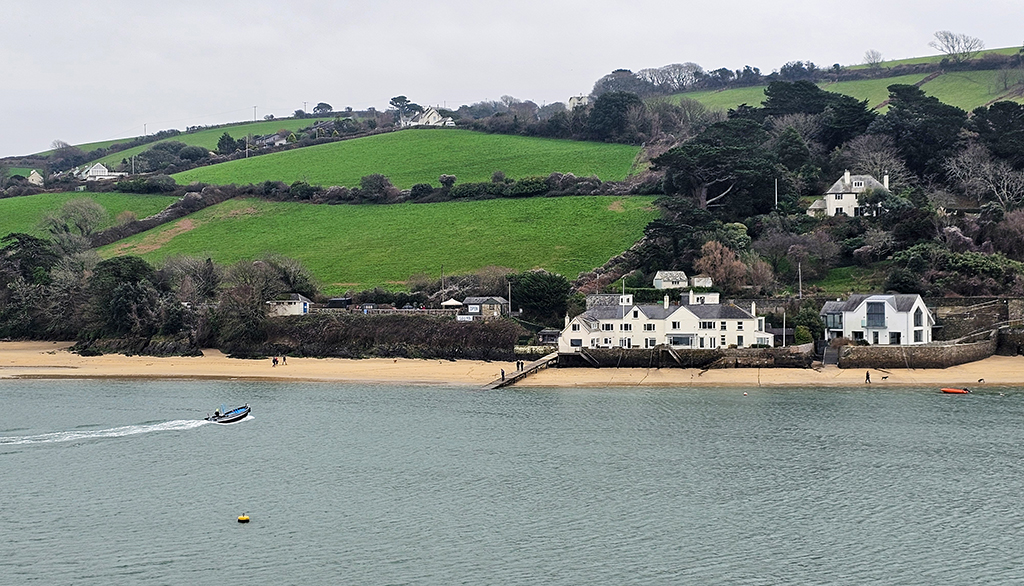
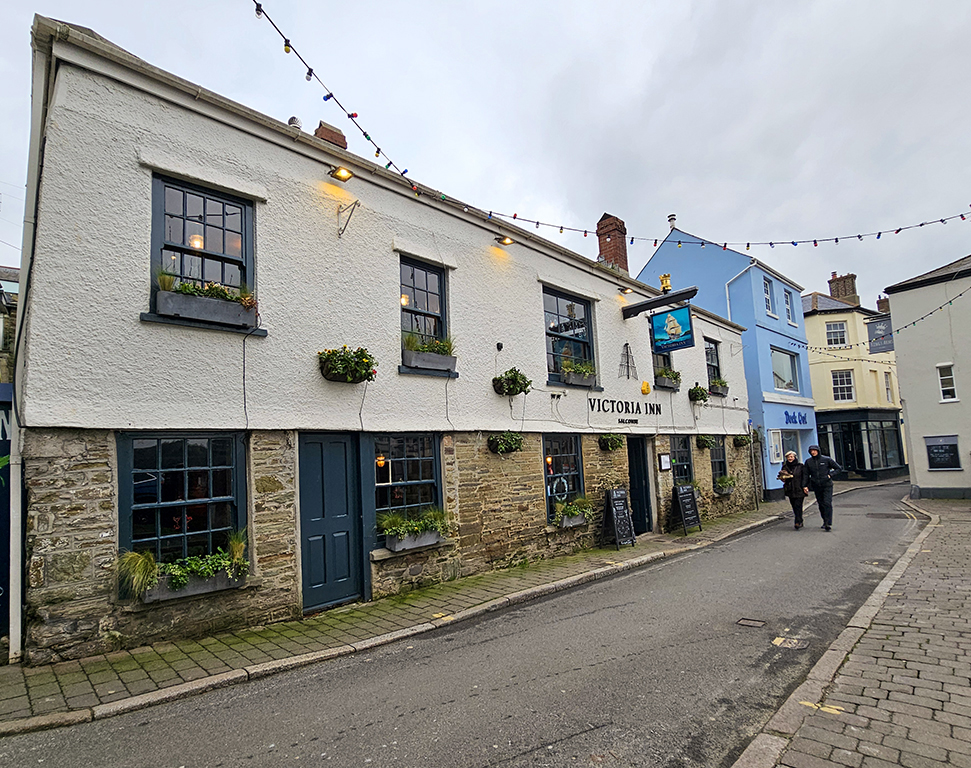
The next day we set off to visit Salcombe. We stopped there for a short time many years ago, and I stayed there a few years later for a week with Aunty Helen. We enjoyed wandering around the streets and visiting the many interesting independent shops, followed by an excellent lunch at The Crab Shed, a tiny bistro on the waterfront.
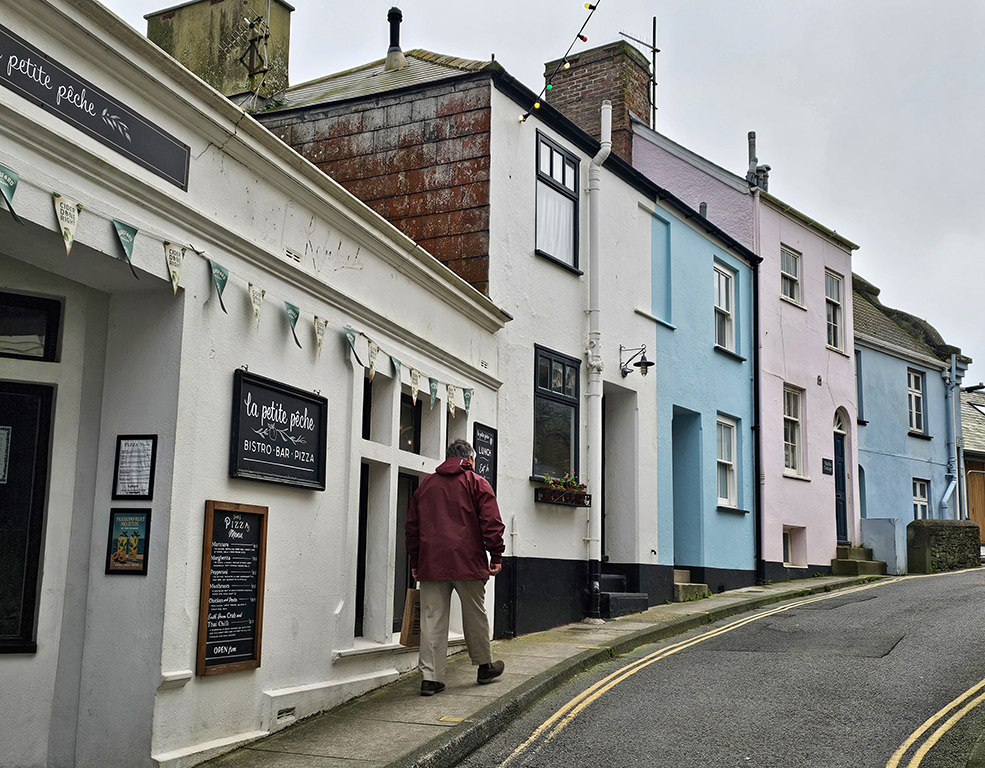
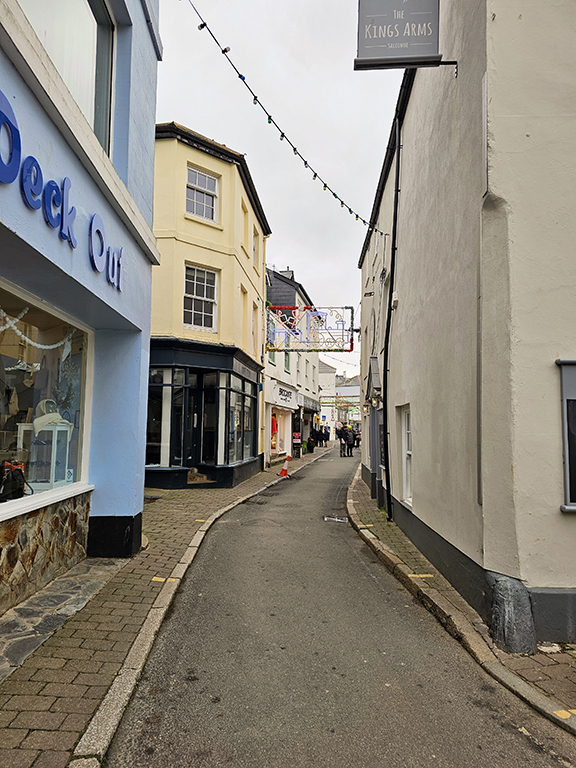
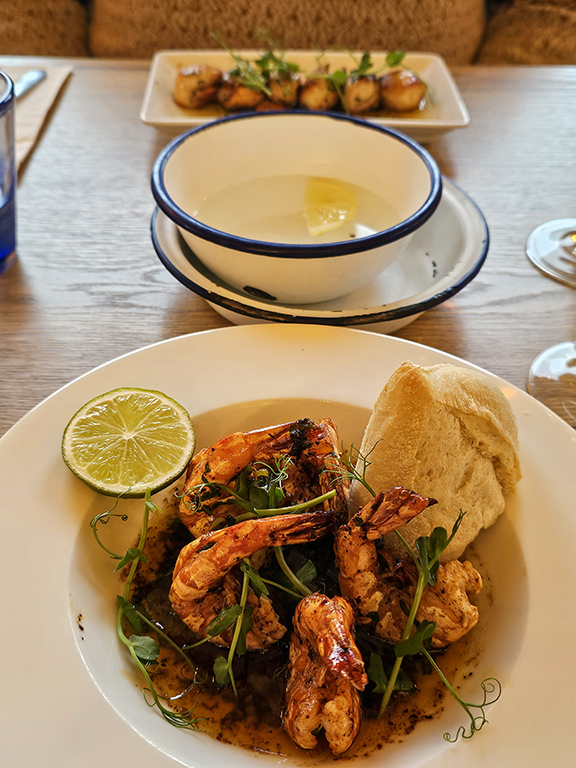
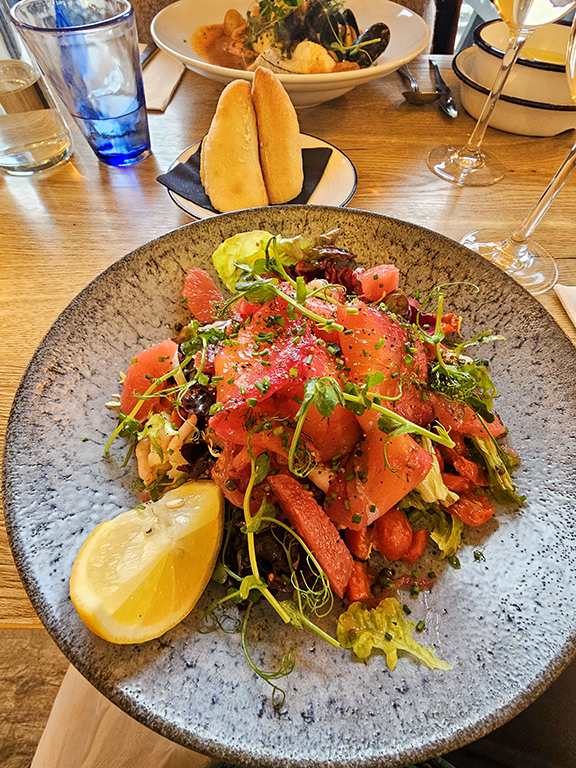
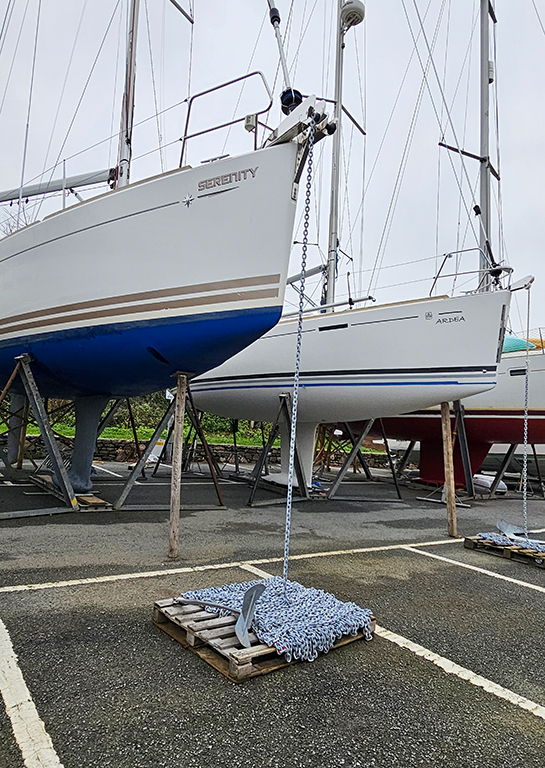
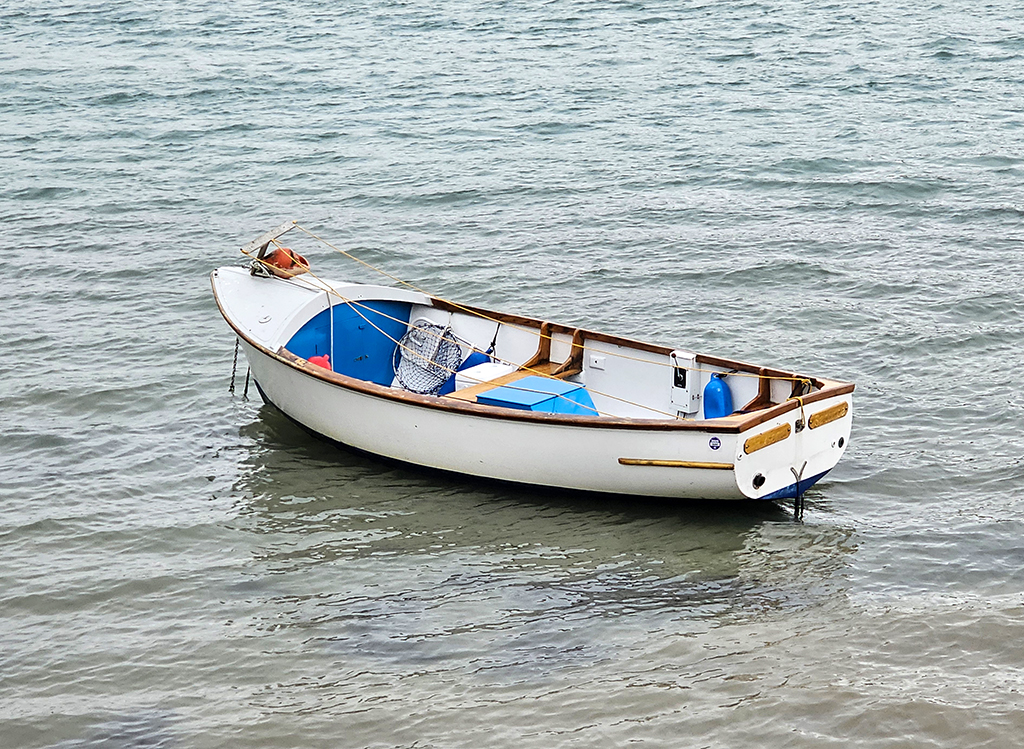
The main car park was almost completely filled with boats that had been pulled out of the water for the winter. I guess it makes sense to use the space during the off-season when there are fewer tourists, but it did mean that parking was scarce during the busy Christmas week! We were interested to see that most of the boats had pulled their anchor chains out of their lockers, and laid them on wooden pallets below the bow. We assume this is to dry out the locker and the chain, and allow it to be washed and marked. In Europe, all-chain anchor rode is the norm, compared to mostly rope in North America. This is likely the reason why we have never seen this before.
Salcombe was a fishing port and ship building centre from the 16th century. By the 19th century it was a centre for the fruit trade, sending ships to Iberia, the Mediterranean, the Caribbean, and even Newfoundland. Other local trade included coal, cider, malt, grain, and slate. During WWII, Salcome was a radar base, and the Advance Amphibious Base for the United States Navy. 137 officers, and 1793 men were based at Salcombe, and 66 ships plus auxiliary vessels sailed for Utah Beach on D Day.
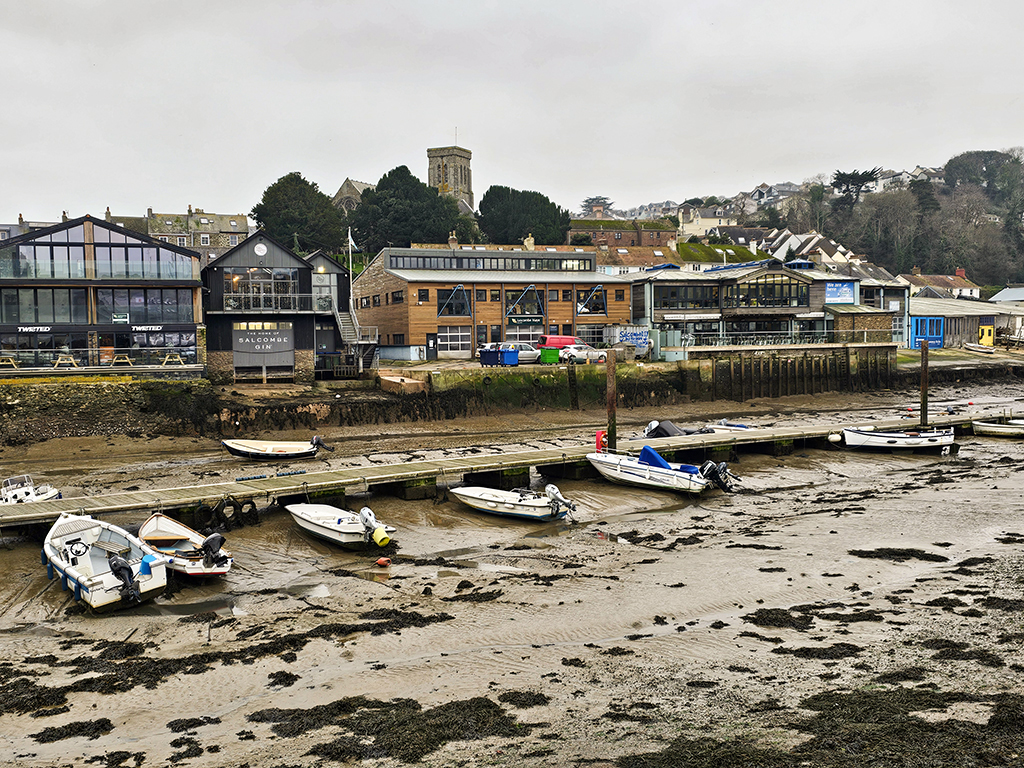
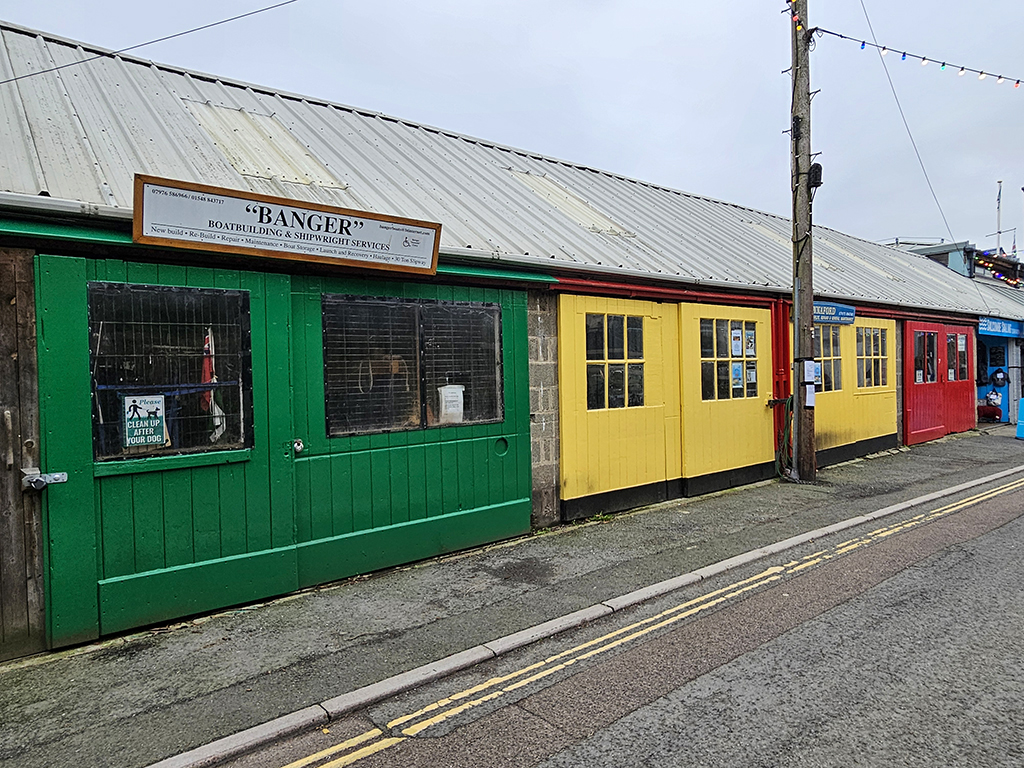
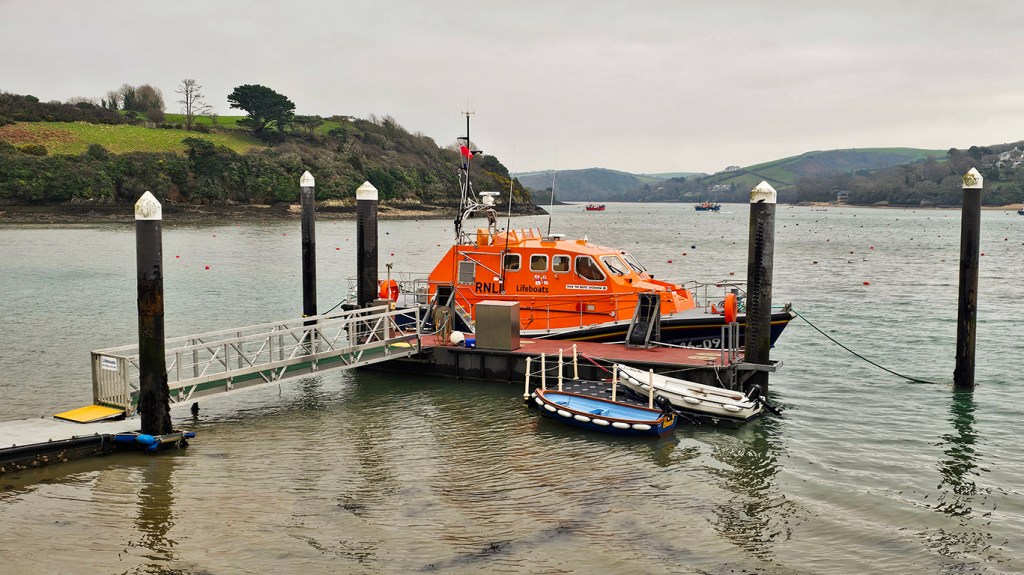
Today Salcombe is a sailing centre, with more than 1600 yachts and power vessels, and is visited by over 6000 vessels each year. There are no longer any large commercial vessels using the harbour and estuary. Apart from fishing boats (mainly shellfish), it is strictly recreational. Today, the town has one of the highest average property prices in UK, and local wealth is reflected in the high prices and upscale offerings of the shops and restaurants. We enjoyed looking around the town, and took advantage of the nautical shops and each bought a new pair of sailing gloves.
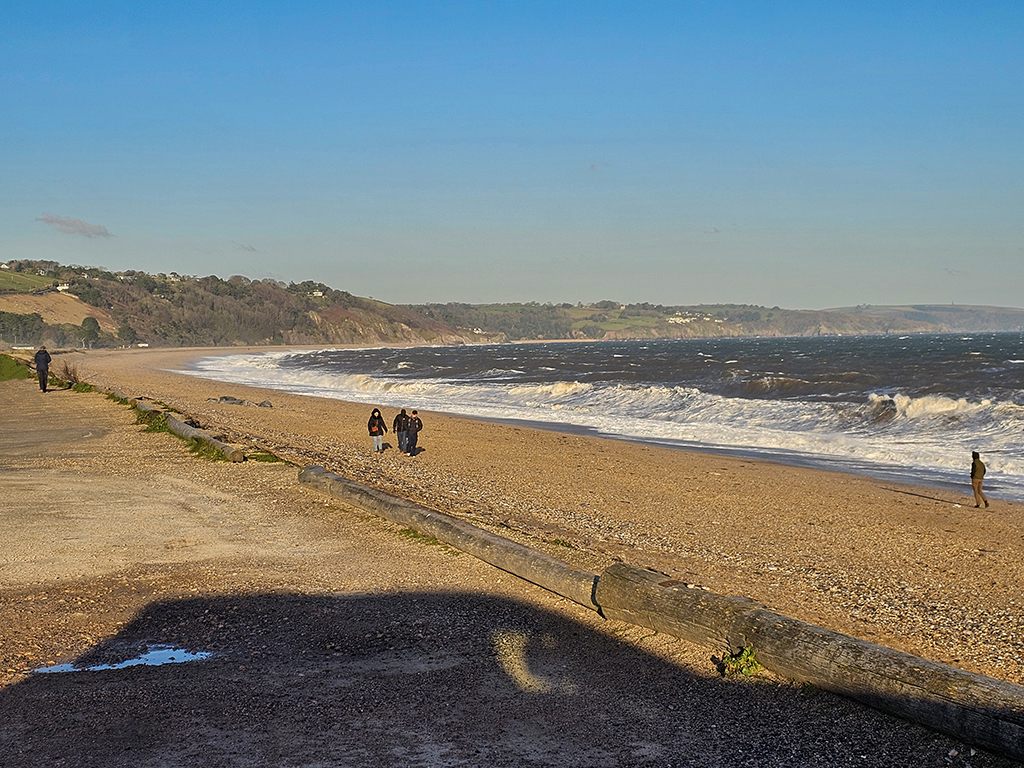
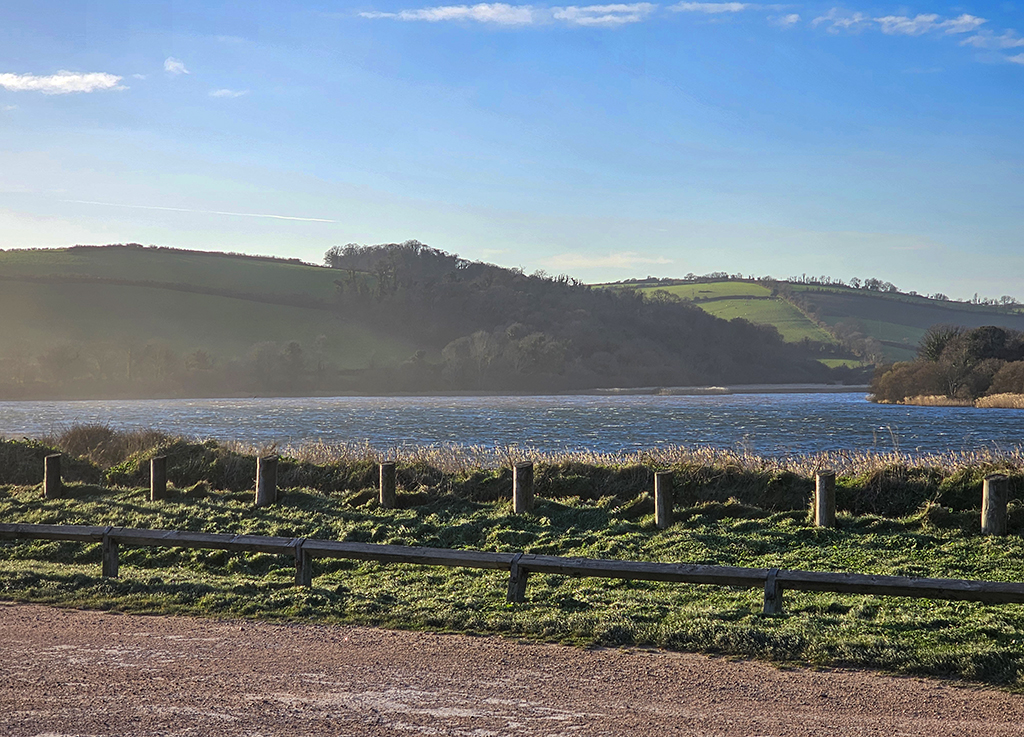
Our next excursion was to the town of Kingsbridge. We decided to take the coast road, and found some stunning views of the cliffs and beaches. We drove across Slapton Sands. Although Slapton, the village at the end of the shingle beach, is mentioned in the Domesday Book, the shingle beach is more recently famous for the part it played in WWII. It was used for Exercise Tiger, a rehearsal for the invasion of Normandy. There were coordination and communication problems, resulting in friendly fire incidents. A German E-Boat fleet attacked one of the convoys, sinking two landing craft and damaging others. At least 749 American servicemen died. D-Day was nearly called off because the debacle was thought to have let the Germans know what was planned and even narrowed down the possible locations for the invasion. In 1984, one of the tanks that had been lost was raised and now stands at the end of the beach as a memorial to the tragedy.
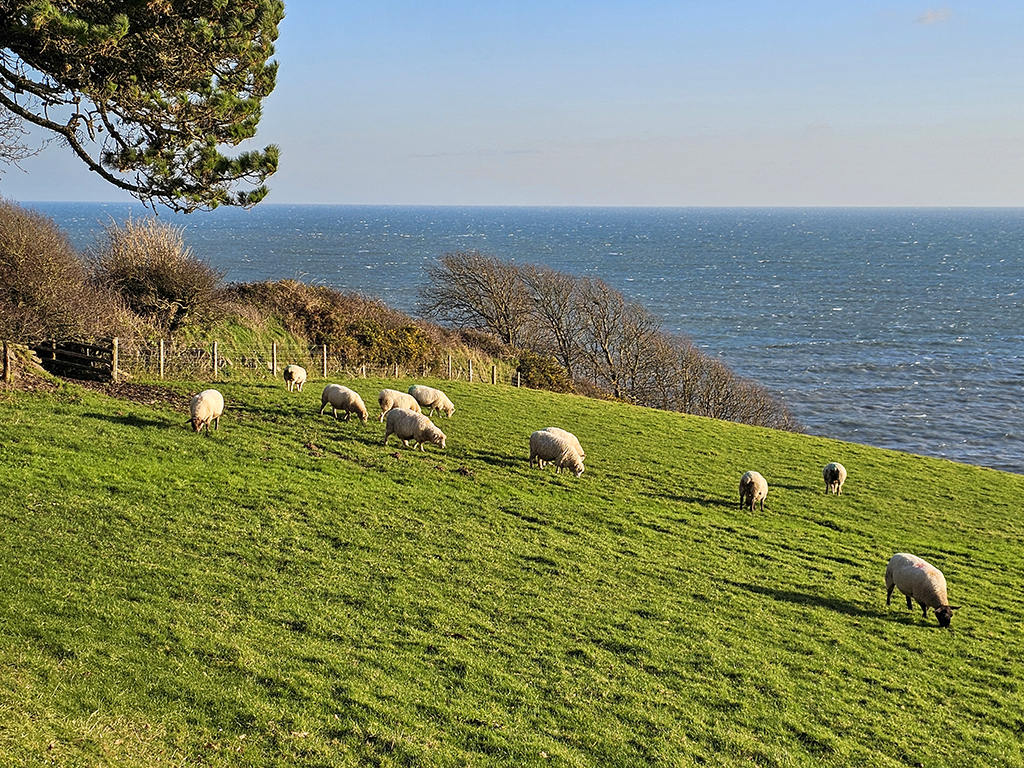
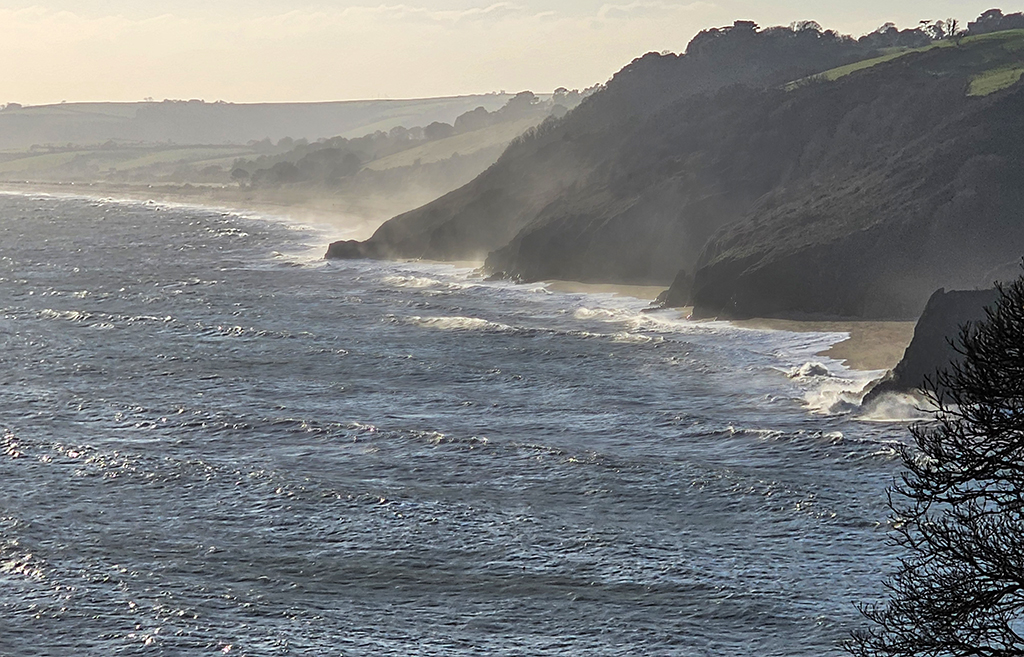
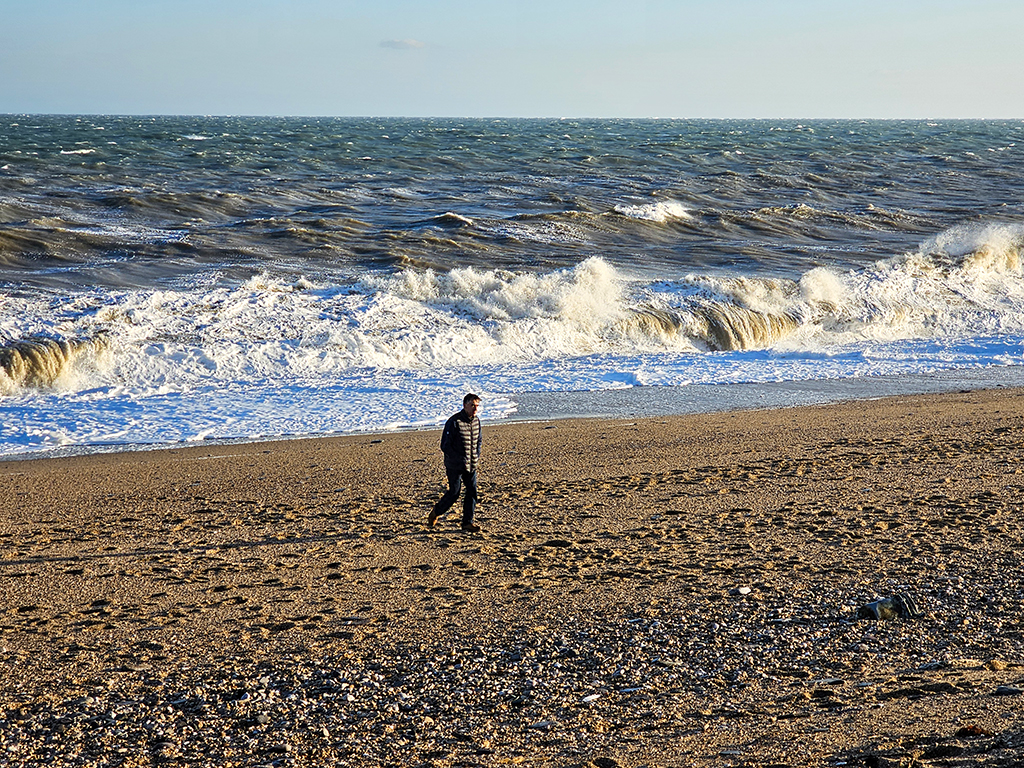
The rest of the coast drive was interesting, although the roads are very narrow and there are many blind corners. There are a surprising number of villages along the route, and so there is also quite a lot of traffic. The beaches are very popular, especially in summer, but even on a very cold and windy day in December there were people walking on the sands and watching the surf.
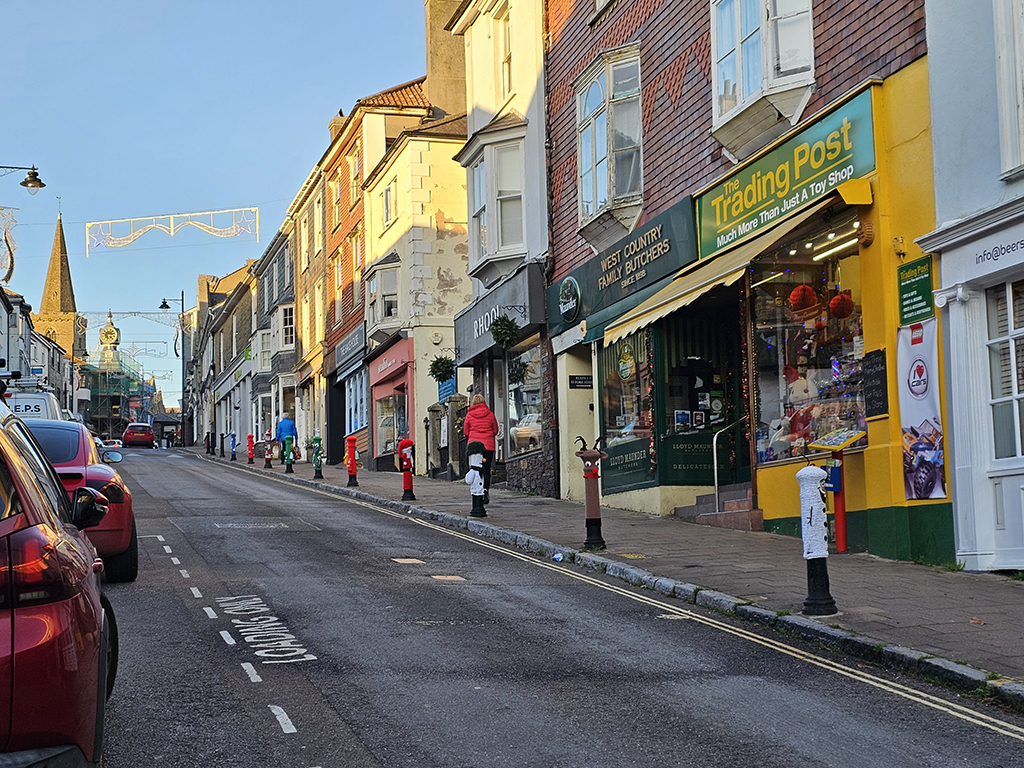
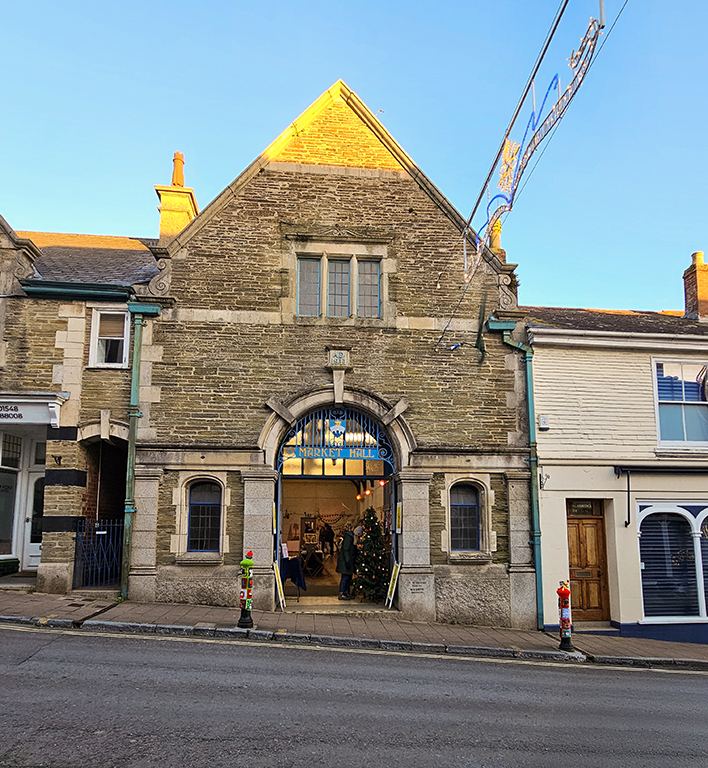
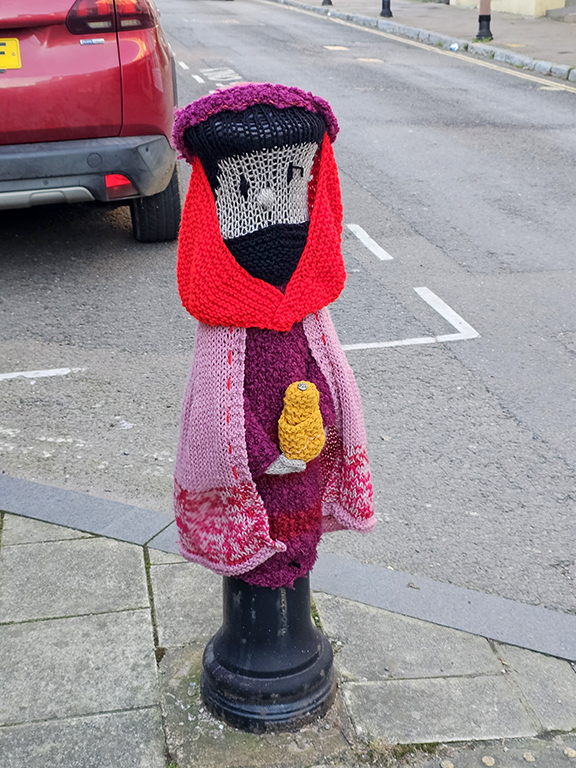
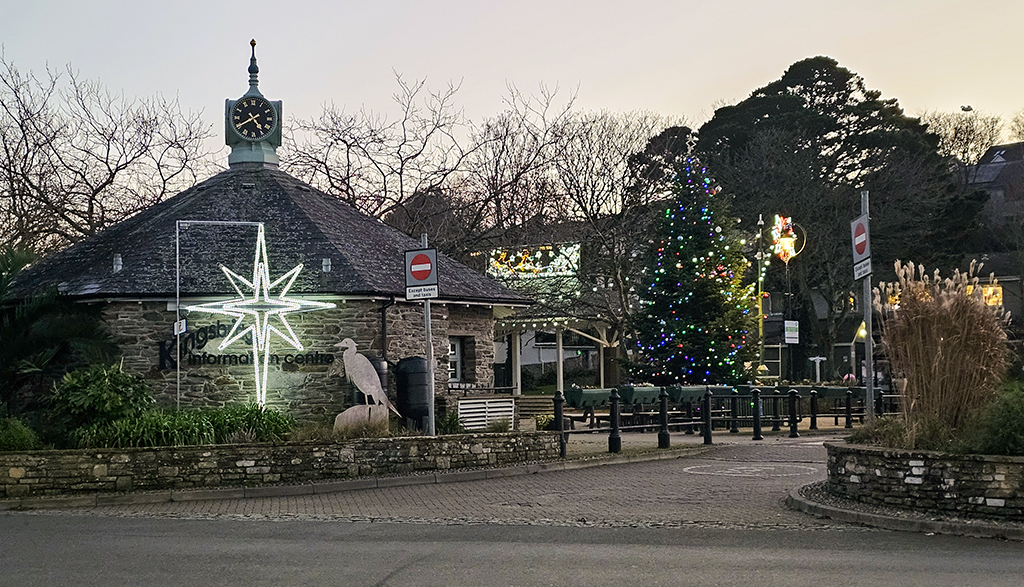
Kingsbridge is quite a large town, and we were looking forward to browsing the shops before our dinner reservation. Unfortunately, although most had posted Christmas hours and planned to stay open until 4pm, we found many of them were already shut by 2:30. The craft tables in the Market Hall stayed open, and we found a new cutting board for the house and a pretty wooden bowl for nuts. There was a very interesting antique shop with a note on the door that said, “Back in 10 minutes.” Nearly an hour later the note was still there, and the shop was still shut. Pity, they had very interesting looking things. The yarnbombers in this town must prefer to knit. Instead of the usual crochet, the woolly coverings on the posts were all knitted. Very clever and colourful!


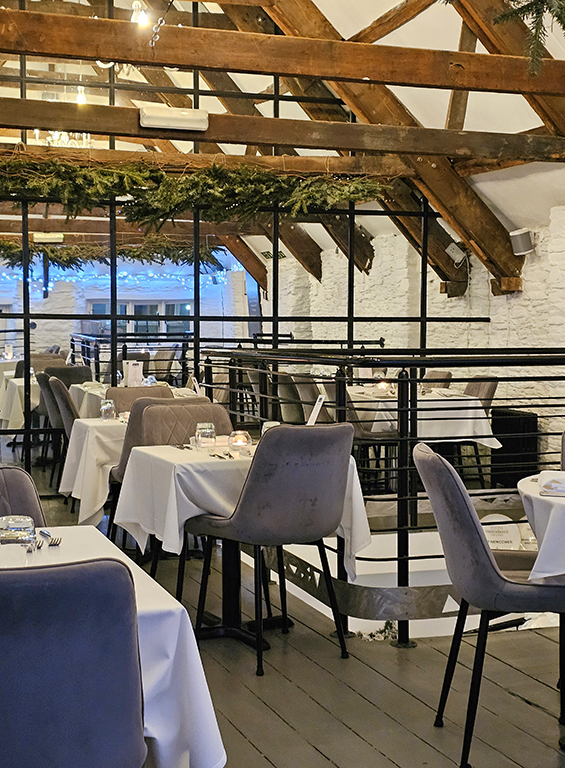
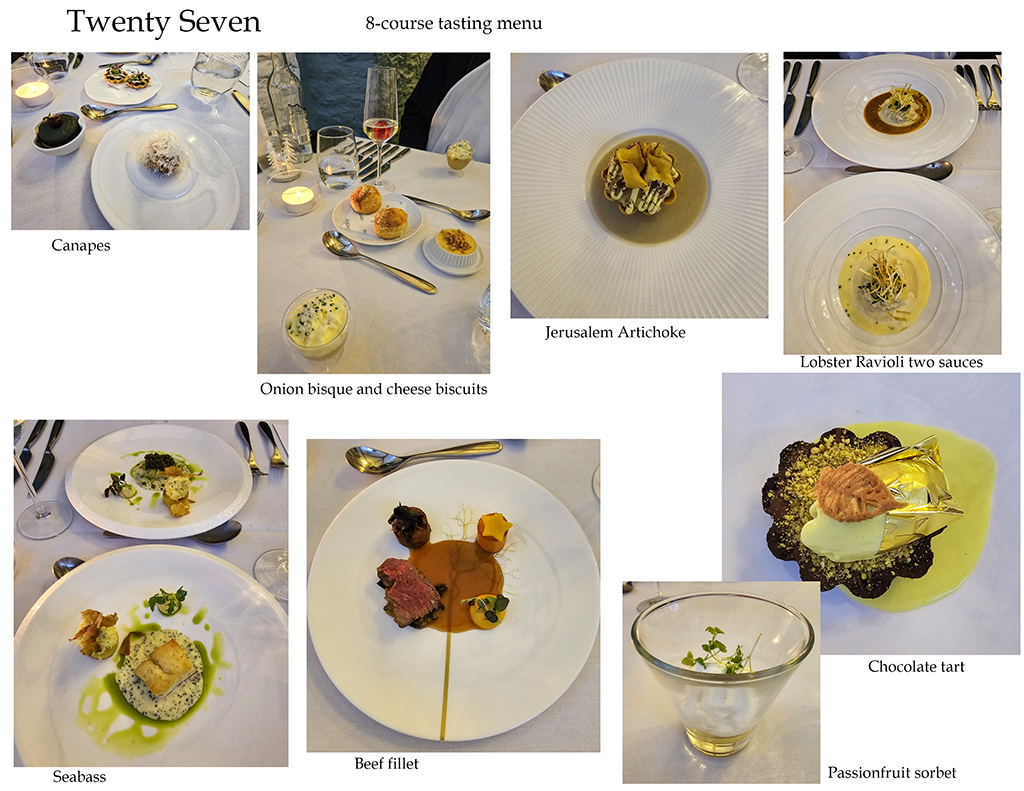
Our dinner reservation was for a fine dining restaurant called Twenty Seven. Dick had booked their 8-course tasting menu, with the wine pairings. It was an excellent meal, and we both enjoyed it. The great thing about a tasting menu is that the courses are so tiny that you can eat a great variety and not feel as though you need to be rolled home! Also, you try things that you probably would never order if you were choosing from a regular a la carte menu. The restaurant accommodated my sensitivity to crab, preparing a different sauce for the lobster ravioli, and leaving the crab off the seabass.
The only real downside of the evening was the amount of time it takes to get to Kingsbridge from Dartmouth (and even farther from our accommodation across the river). It takes about 45 minutes total, and after a large meal the narrow lanes and complicated route are not very pleasant. We had planned to return to Kingsbridge a few days later for a meal at an Indian restaurant, but we decided instead of try one of the pubs in Kingswear.
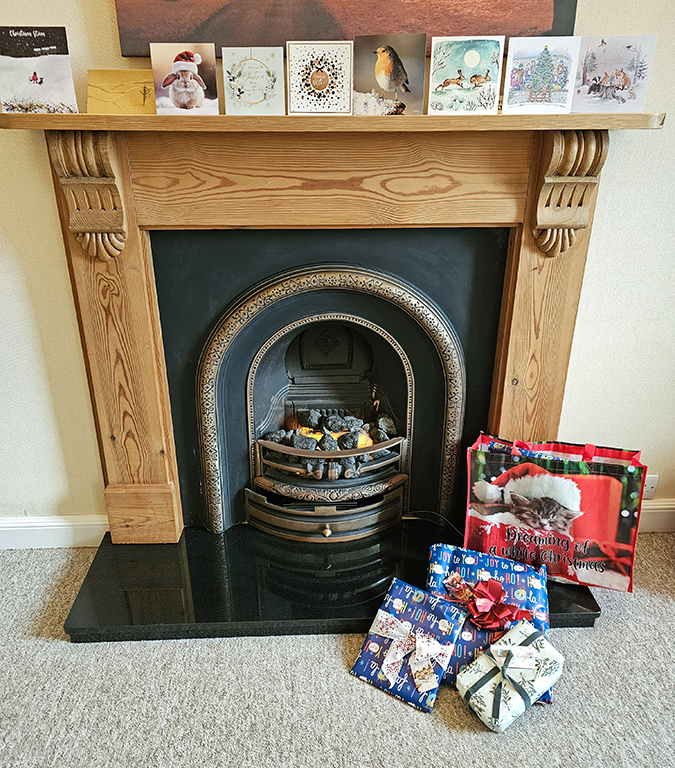
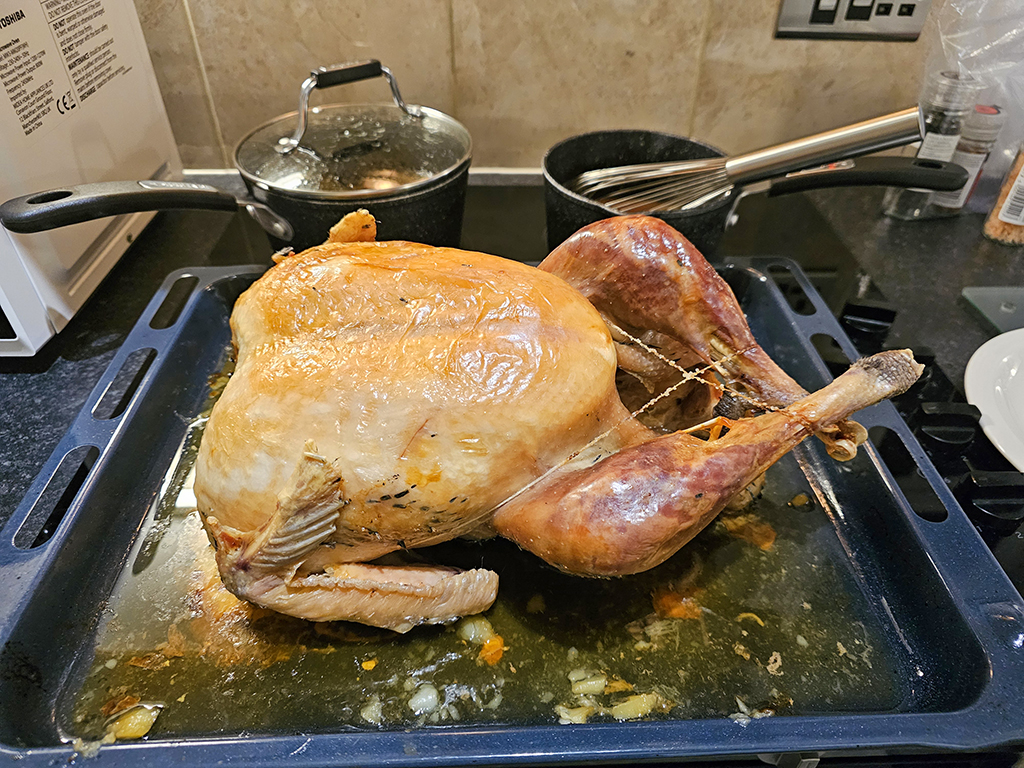
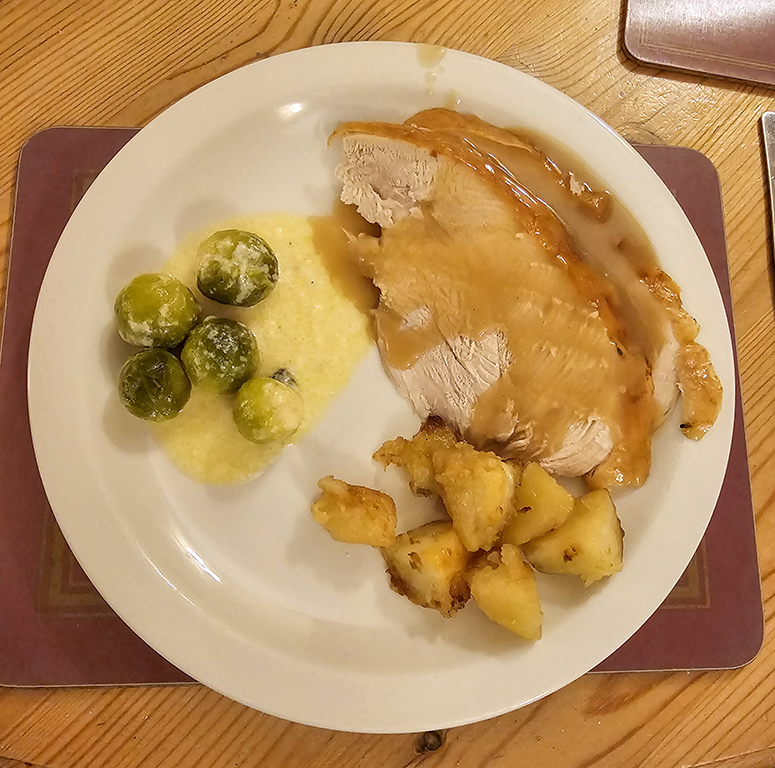
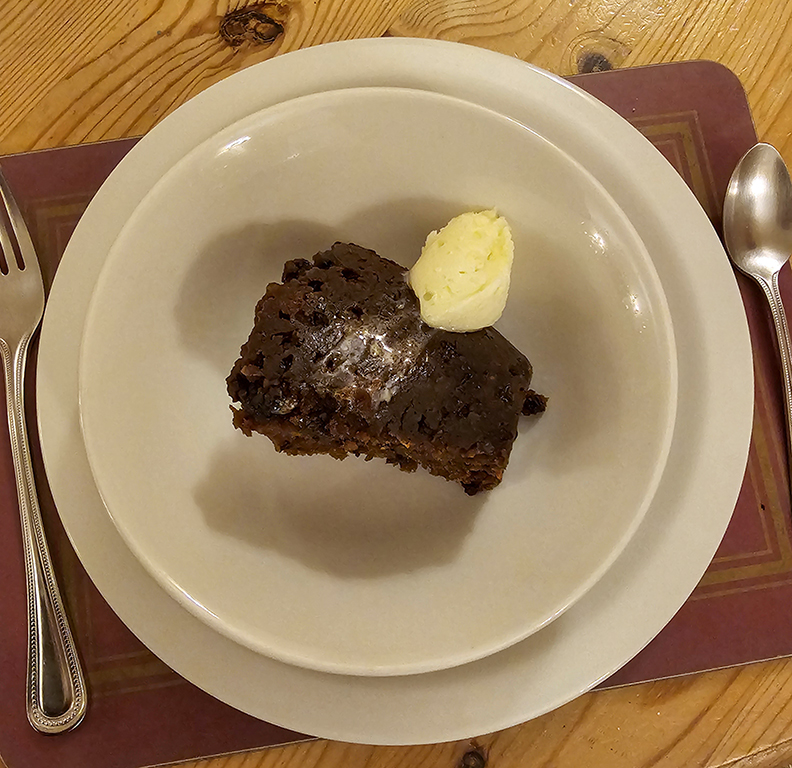
The next day was Christmas. We brought some presents with us, so there was something for each of us to open on the day, and I like to bring the Christmas cards and put them on display so we are suitably festive. We finished the home-made eggnog with some spiced rum while we opened presents. Later there was a bottle of champagne to begin the Christmas dinner. Previous experience has shown that restaurant reservations are difficult to get, and many places prefer to close on Christmas Day, so we arranged for a turkey to be delivered to our home and froze it to bring to Devon. We cooked it with the usual bacon on top, but given the complication and small kitchen, we didn’t make our special sausage stuffing. We had brussels sprouts in smoked cheese bechamel sauce (left from our dinner party), and Christmas pudding for dessert. It was a very nice meal, but we doubt that we would do it again. It was quite a lot of bother, and now we have the issue of trying to keep the leftovers frozen in the inadequate freezer in our next place!
The next day we also stayed in and enjoyed a quiet day. Boxing Day is traditionally a day for huge sales in the shops in Britain. Unfortunately, takings were down considerably this year, for the second year in a row. Shoppers have limited funds. Expecting them to shop on “Black Friday”, copied from USA, and embraced with enthusiasm by frugal Brits, and then shop again again on Boxing Day, is wildly optimistic, particularly in times when people are feeling the pinch of what is considered to be a poor economy.
We planned to visit a nearby stately home, Coleton Fishacre, an Arts and Crafts house that was built for the D’Oyly Carte family, with beautiful Art Deco interiors. The house is just 2 miles from Kingswear. We navigated the single lane roads and discovered that we were by no means the only people who thought this would be a perfect place to visit after Christmas. The usual National Trust muddy parking lot was completely full. We drove around, maneuvering past the poorly parked cars, and ultimately gave up. Given the number of cars, we decided that the house would be absolutely full of people and unlikely to be enjoyable with the crowds. Since we plan to return to Dartmouth in the future, we will leave Coleton Fishacre on the bucket list.
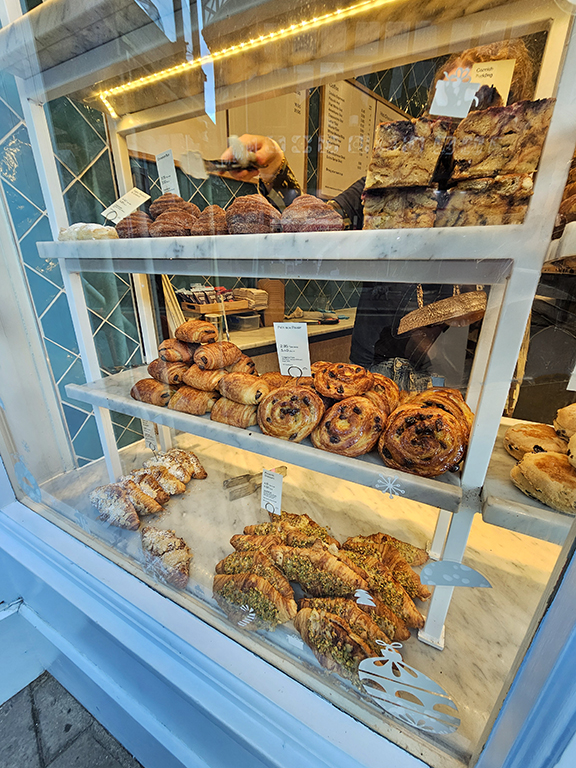
Leaving the house without visiting meant that our plans for the day were thrown out. We took the ferry across to Dartmouth, and meandered around the town, exploring the narrow streets, and enjoying the views across the river. By 3:30, we had seen all we wanted to see, and after stopping for cappuccino in a café on the river, we just decided to return to Kingswear. A bit of an extravagance, with the round-trip ferry charges, but with nothing to do until our dinner reservation at 6:30 (and the restaurant not open until then), it was really the only sensible thing to do. A drive in the countryside was also out, because by that time it was getting dark!
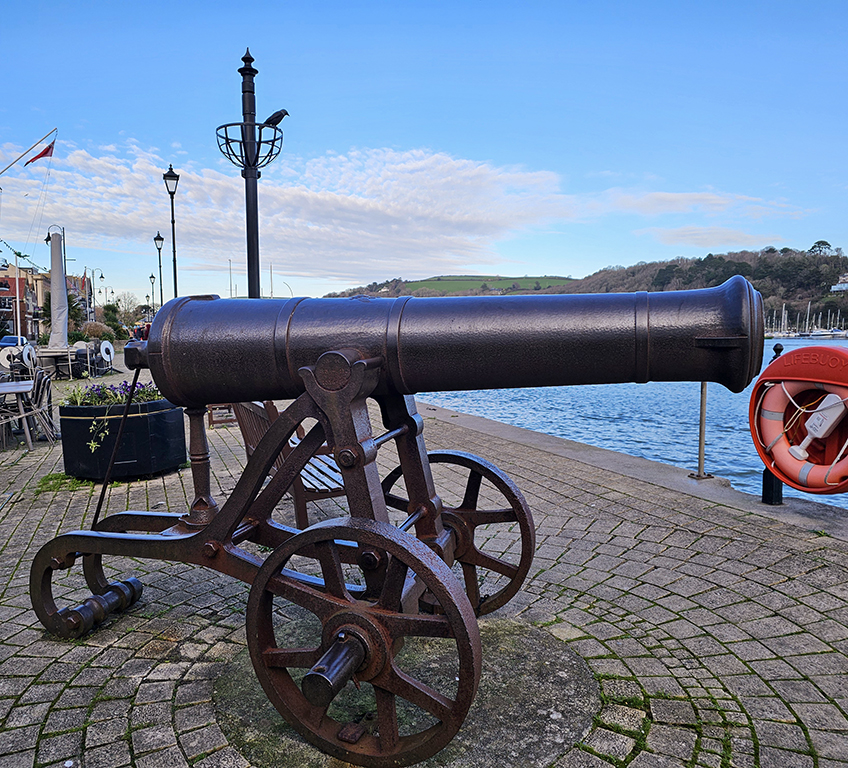
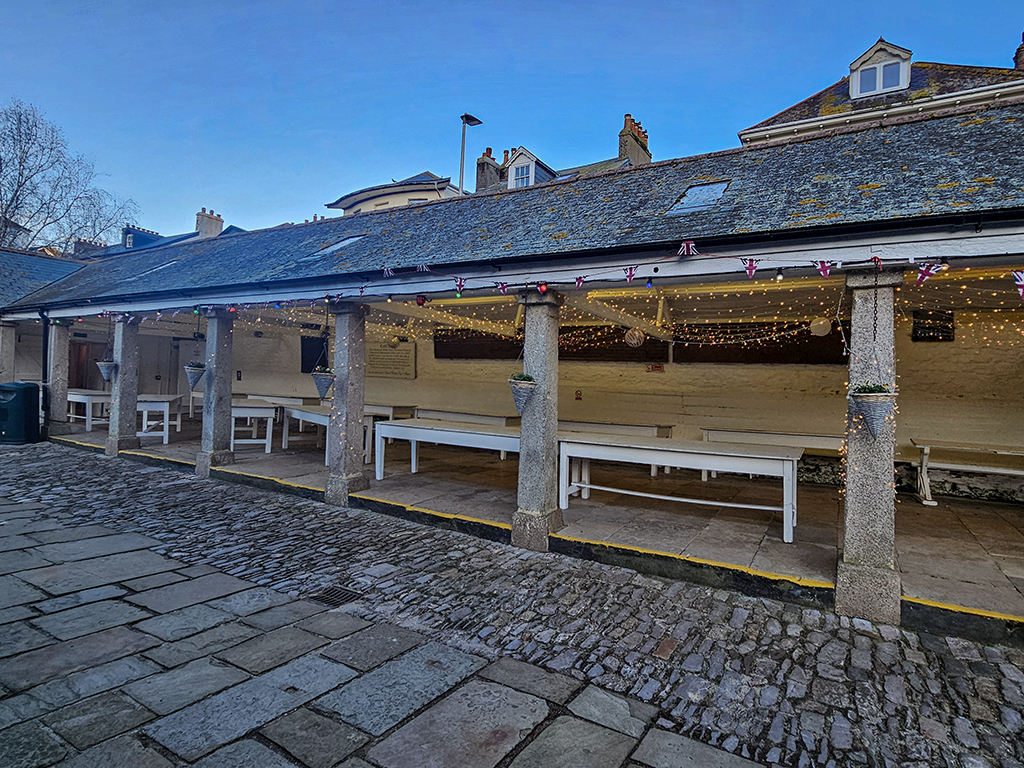
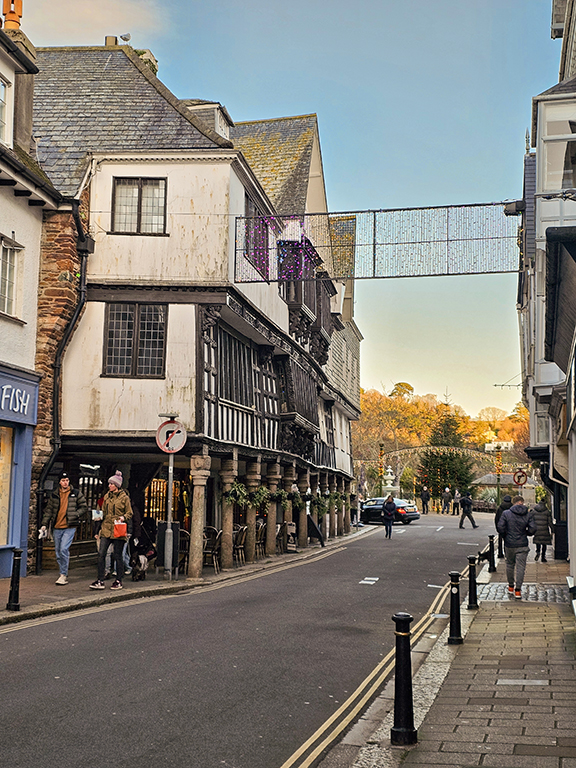
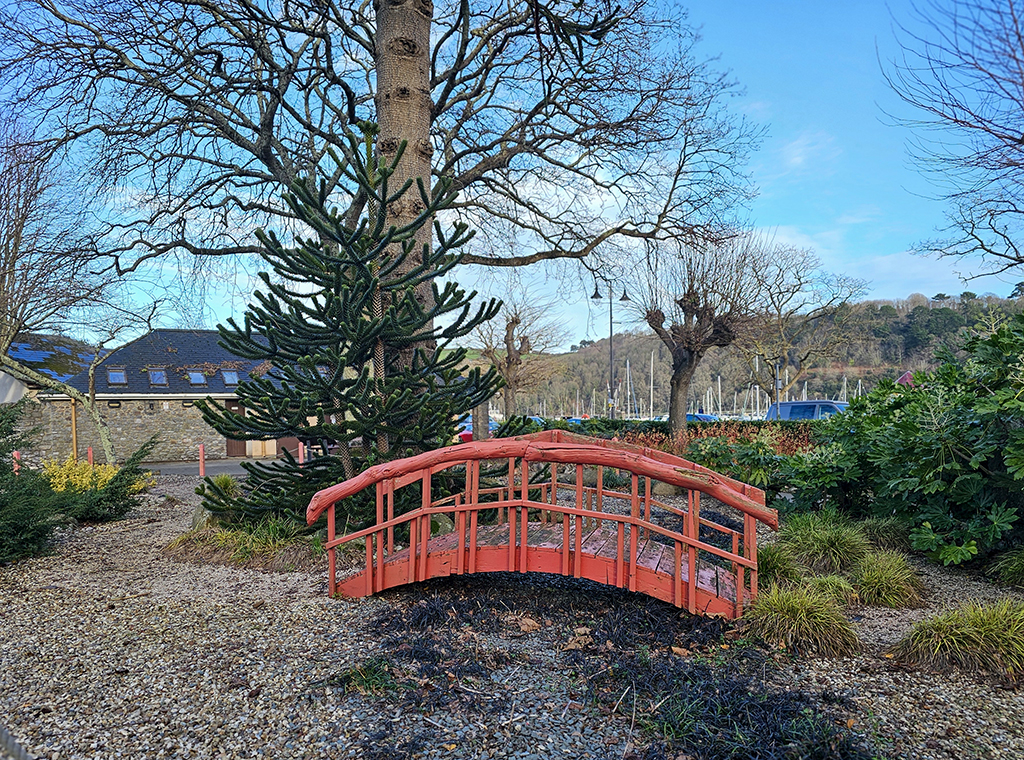
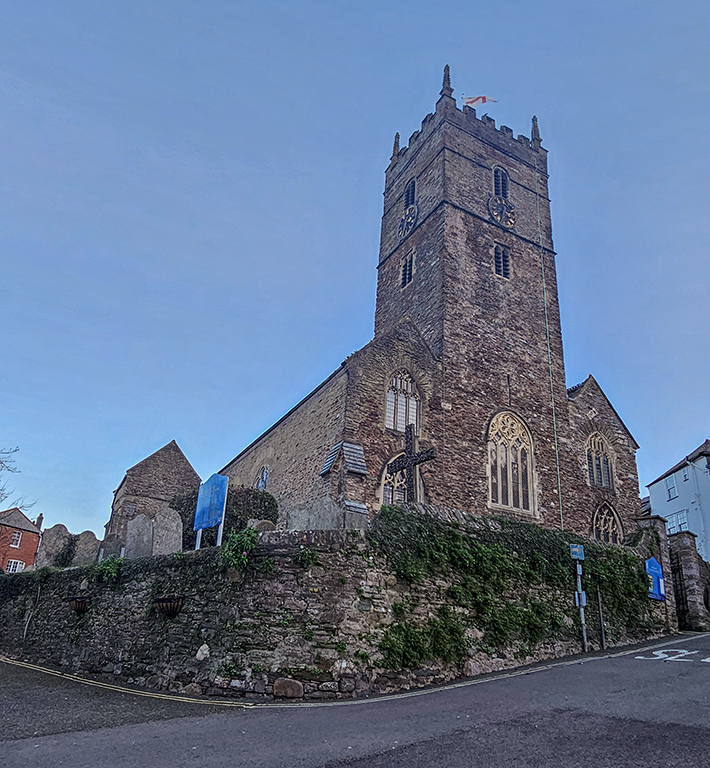
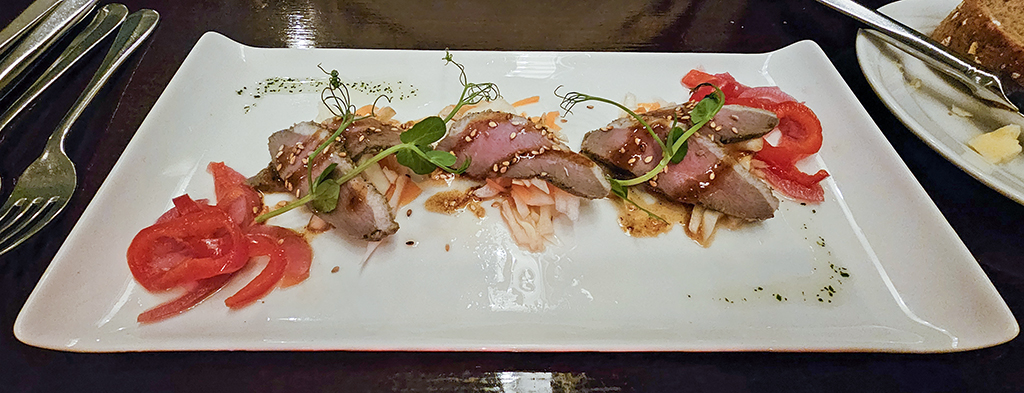
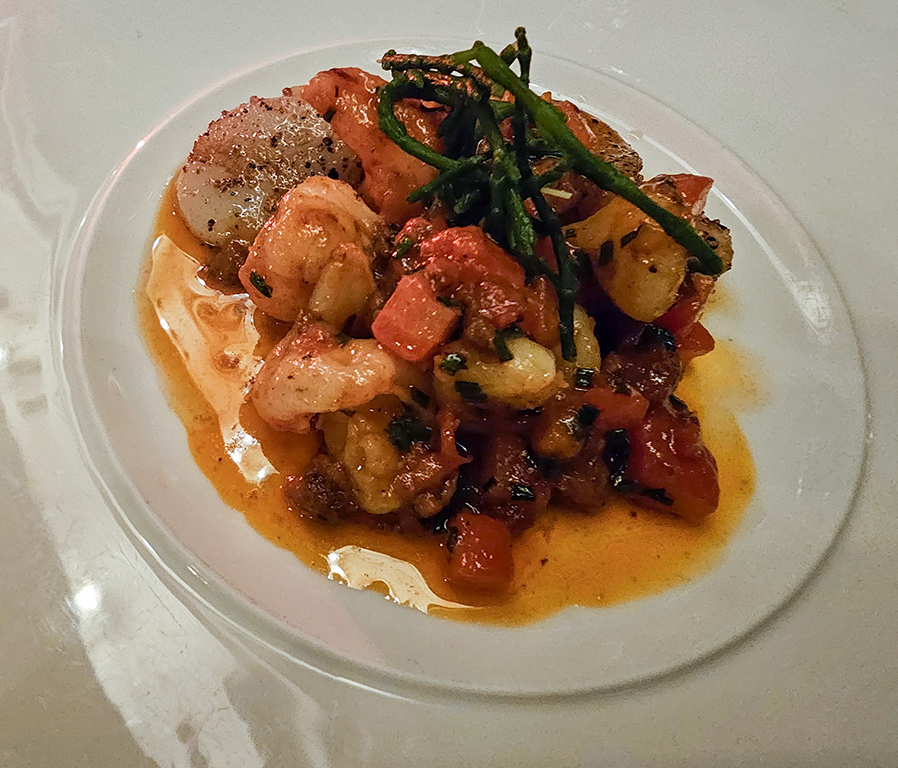
We spent a quiet couple of hours relaxing (one of us enjoying his customary afternoon nap), and then returned to the ferry and Dartmouth. We had eaten at Taylor’s on our last visit, and enjoyed it, so we had high expectations. Dick began with a very interesting, cured duck breast starter, and I tried scallops and prawns sauteed with sausage. My seabass was excellent, and Dick had the fish special, local sole served on the bone. I enjoyed a liquid dessert with a Baileys base, and Dick liked his Sicilian lemon pudding.
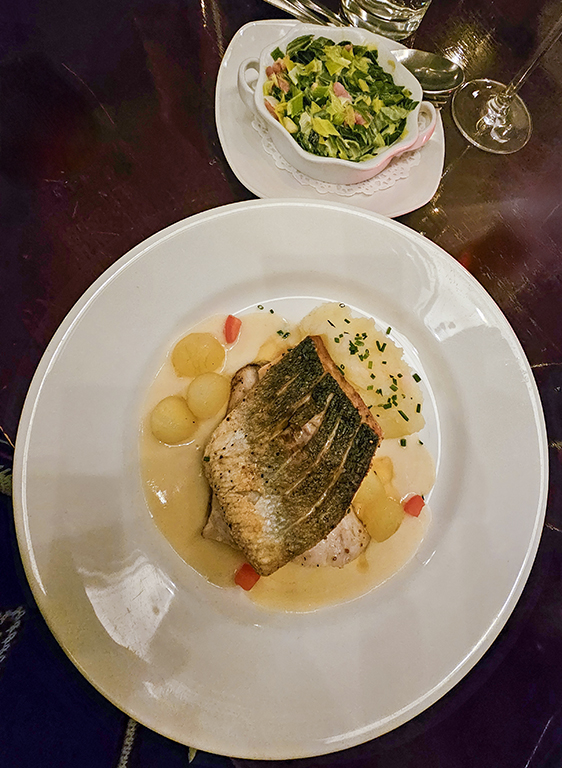
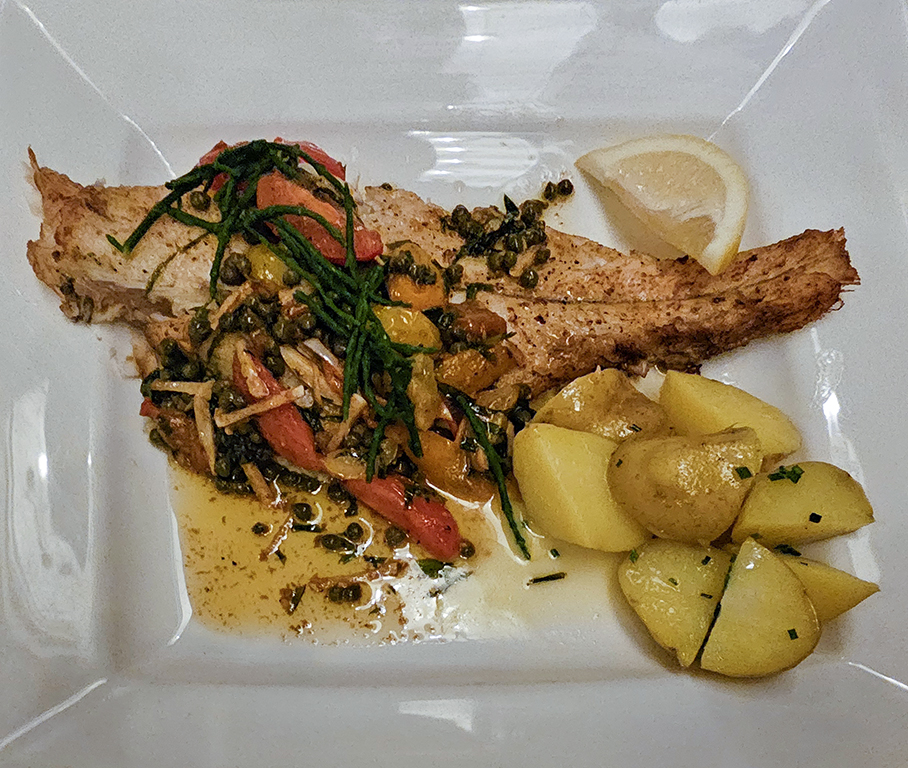
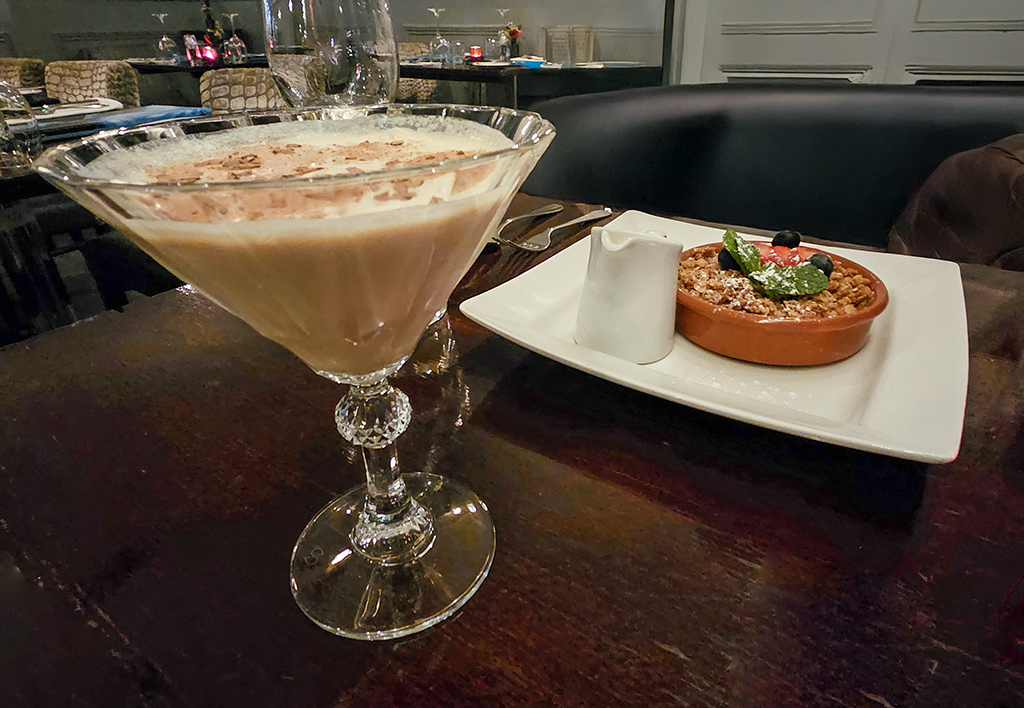
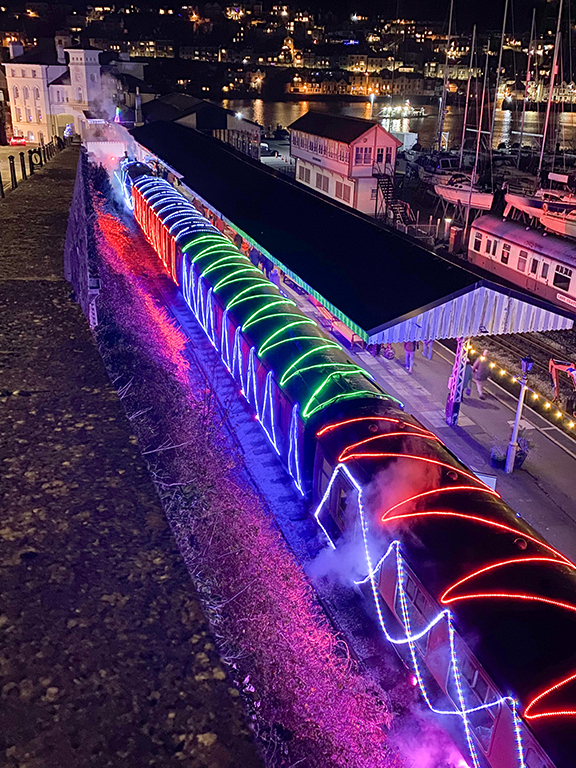
There were only 3 tables occupied in the restaurant, and ours was a prime spot in the window, overlooking the harbour and the river. Partway through dinner we saw a brightly lit train passing on the other side of the river. It looked fantastic, but it was much too far away for any photos.
Our next planned excursion was to the Dartmoor Otter Sanctuary. There is also a butterfly house, but the butterflies are left to hibernate during the winter, so only the otter sanctuary was open. It is just off the parking lot of South Devon Railway, and steam trains make regular trips from the station.
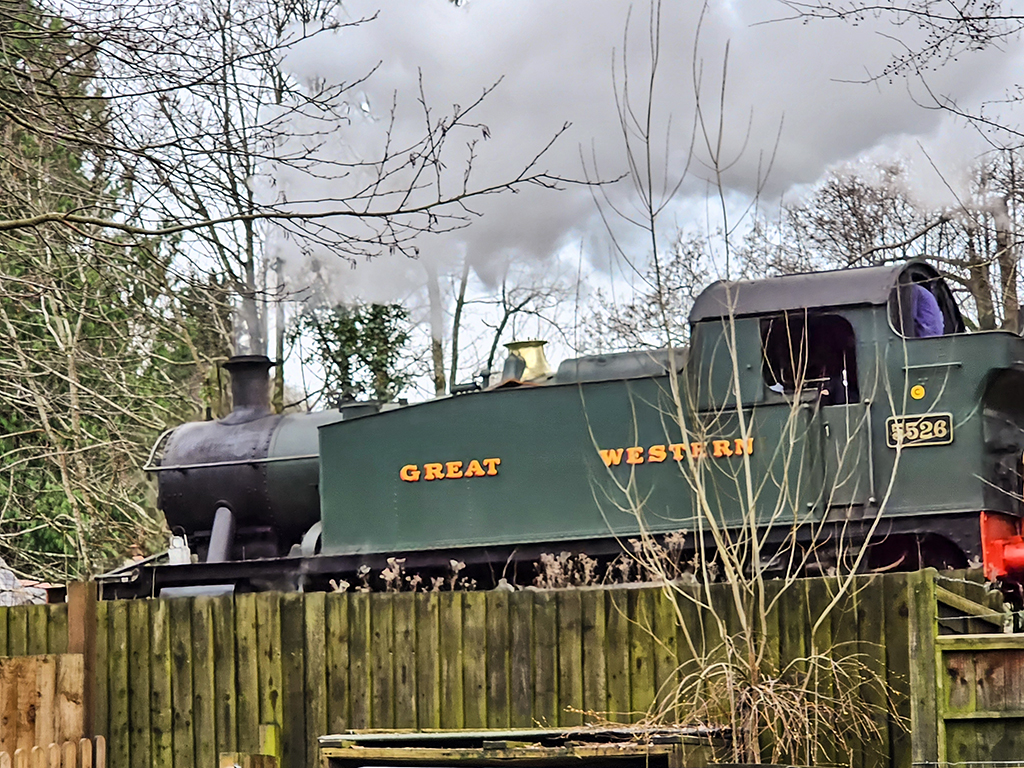
We timed our visit to arrive just before the afternoon feeding time. After a warm up coffee at the station, it was time for the feeding. The sanctuary currently has three breeds of otters in their public enclosures. Otters that are rescued are kept in a separate area, to avoid contact and habituation to humans so that they can be released back into the wild. The feeding progresses from pen to pen, and the keeper gives an absolutely fascinating commentary as he moves along.
There are three enclosures with Asian Short Clawed Otters. These are pretty, and lively little creatures, and always enjoyable to watch. They are diurnal, playful and very social. When we arrived the lady in the shop explained that at this time of the day, the British and Eurasian otters were sleeping, but they would appear exactly at feeding time acting as though they have been starved for days.

The British otter, a female, was rescued by another sanctuary, but although well-meaning, they did not look after her in a manner that would allow her to be released back into the wild. She was given the wrong kinds of food, and had far too much human contact. A habituated otter is sure to become a nuisance, so she was fortunate that this sanctuary had space for her and was able to take her. I thought that the way the keeper put it was really nice, the otters on public view are ambassadors for their wild relatives, giving people an opportunity to get to know what are, in this country, shy, solitary, and nocturnal creatures.
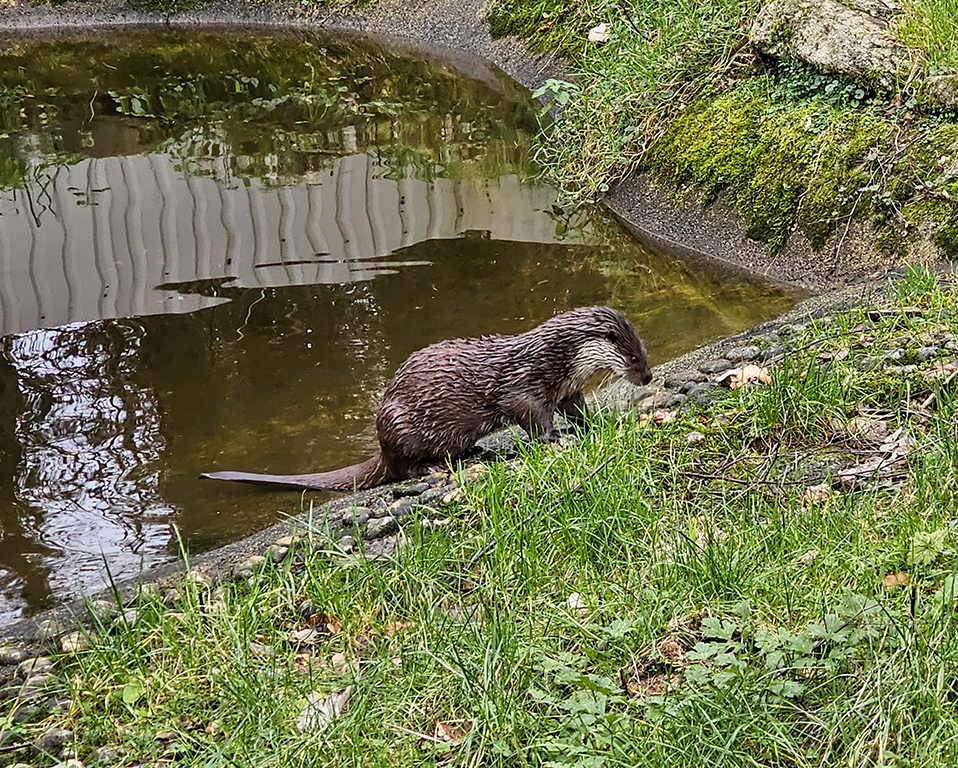
British and European otters are apex predators. It was good news to hear that in the last 20 years the British populations have recovered from near extinction to the point that there are otters in every river system in Britain, and it would now be detrimental to continue to captive breed and release them into the wild. These otters are solitary and territorial. They are also nocturnal. Like foxes, they are beginning to encroach on towns and cities, and are very fond of ornamental fish ponds! The keeper told us that people lose all their fish one night, and the next day they go out and buy more, to the great delight of the otters!

The most amusing enclosure has 12 Asian Short Clawed Otters, a large family group. The male died recently, so Mum continues to raise her large family. They are full of mischief. They like to crowd at the edge of their enclosure, waiting for the keeper. As soon as they hear him at the next enclosure, they start chirping loudly, and then, when he is not quick enough to arrive, they start banging stones on the fence. Altogether they make quite a racket!
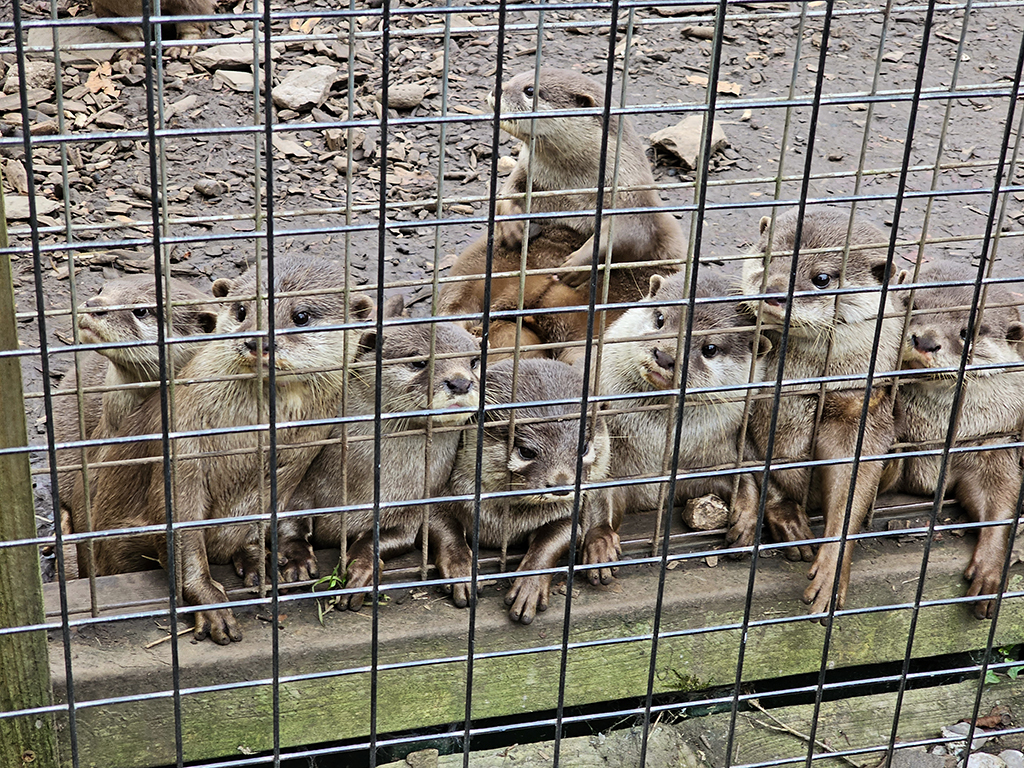
We had a wonderful time, and really enjoyed the outing, well worth the hour’s drive.
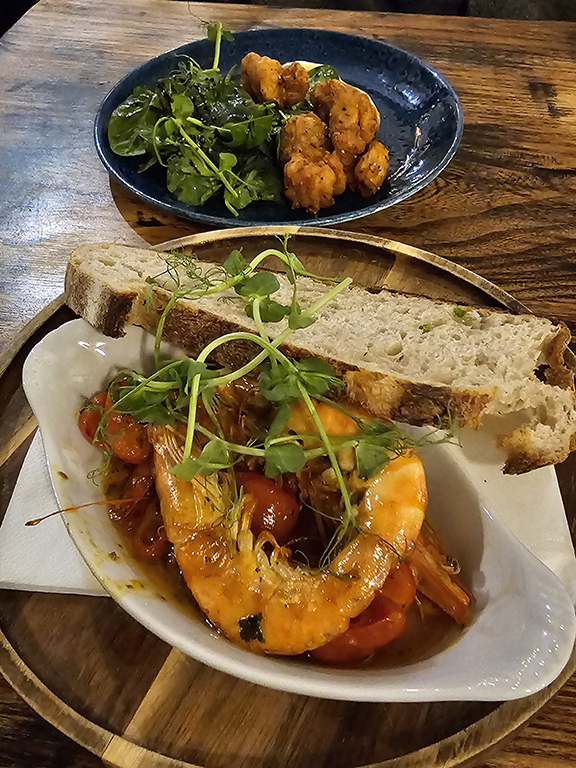
On our last evening at Kingswear, we drove down the hill and had dinner in one of the two local pubs. We enjoyed our meal, and the pub is very popular. That was a bit unfortunate, because our table was beside the main door, and there was a continuous parade of pub-goers arriving, all politely holding both the inner and the outer doors open for each other, and as a result we were treated to an arctic blast every few minutes through dinner. The food was very good, and we would return, but certainly ask for a different table!
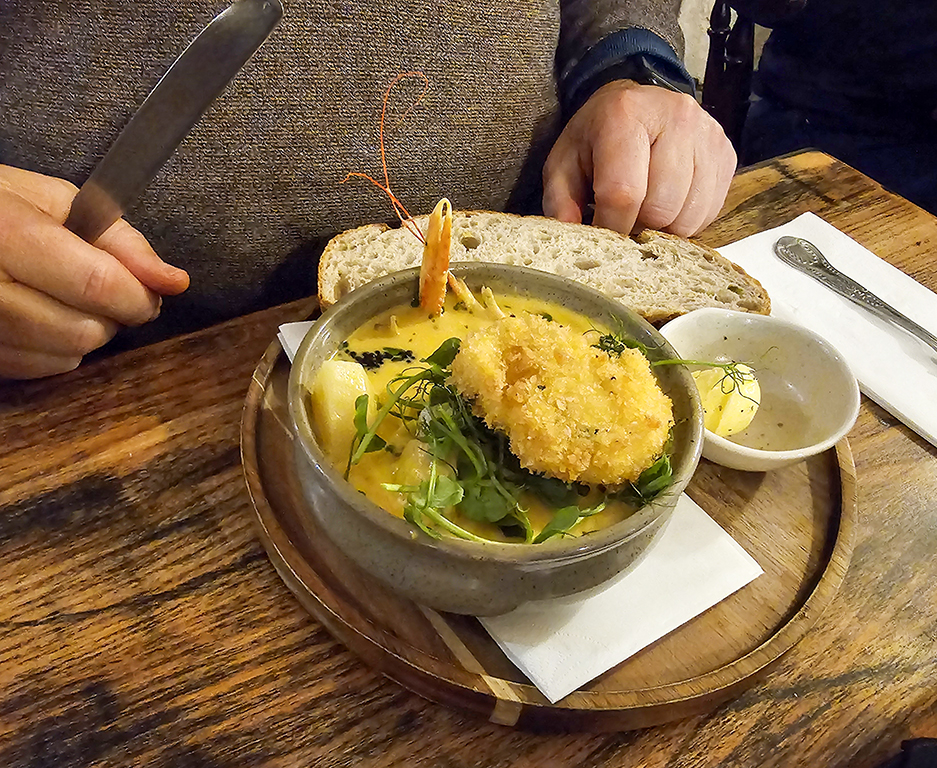
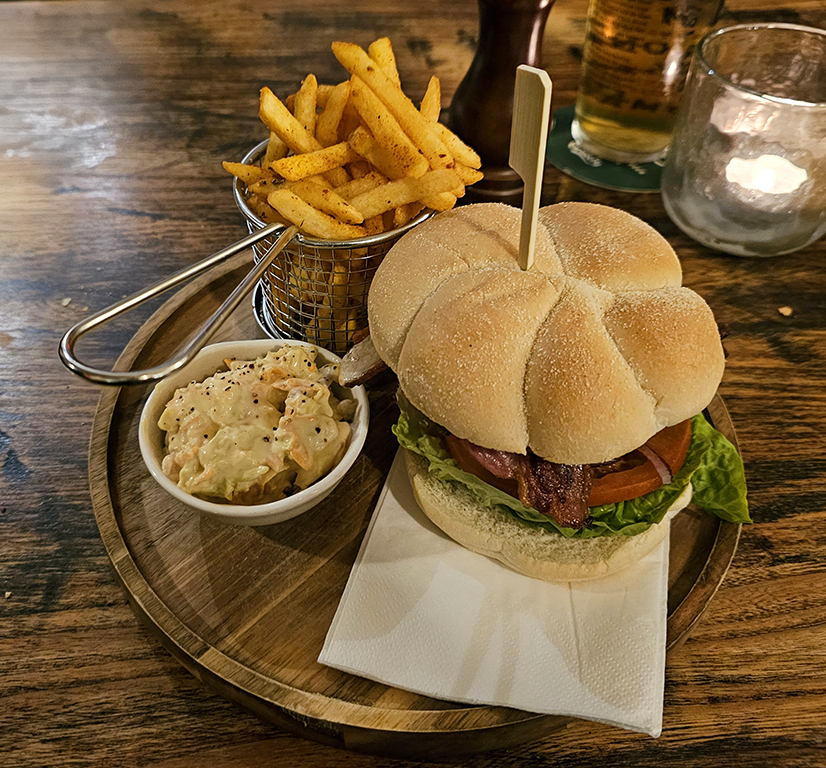
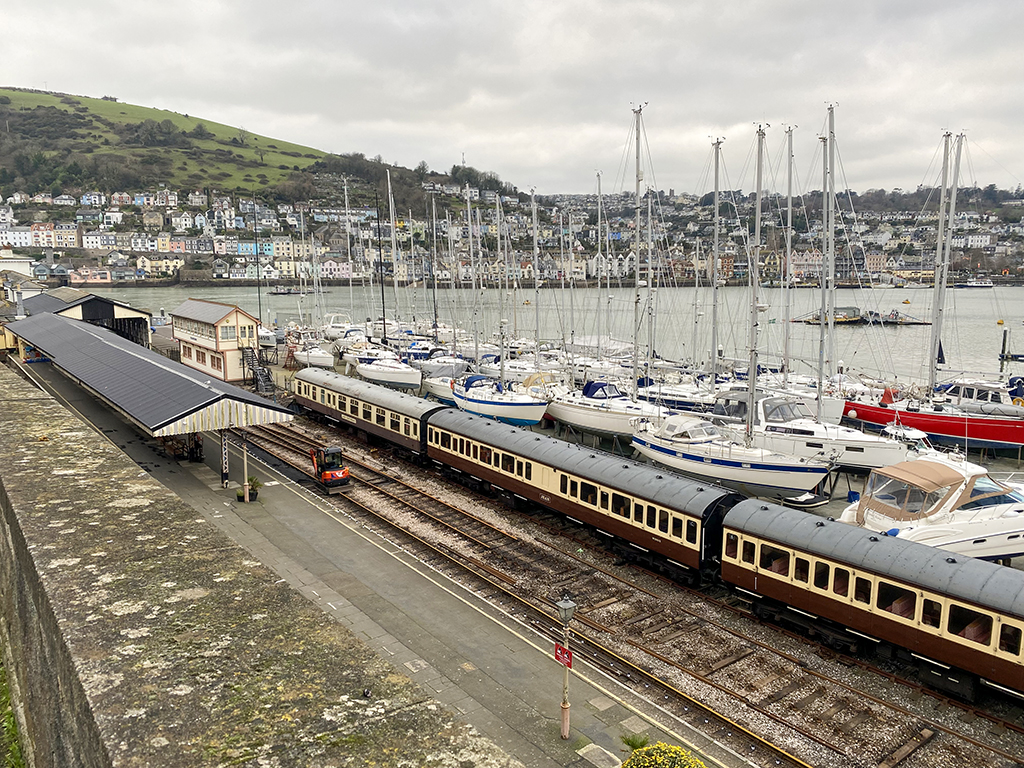
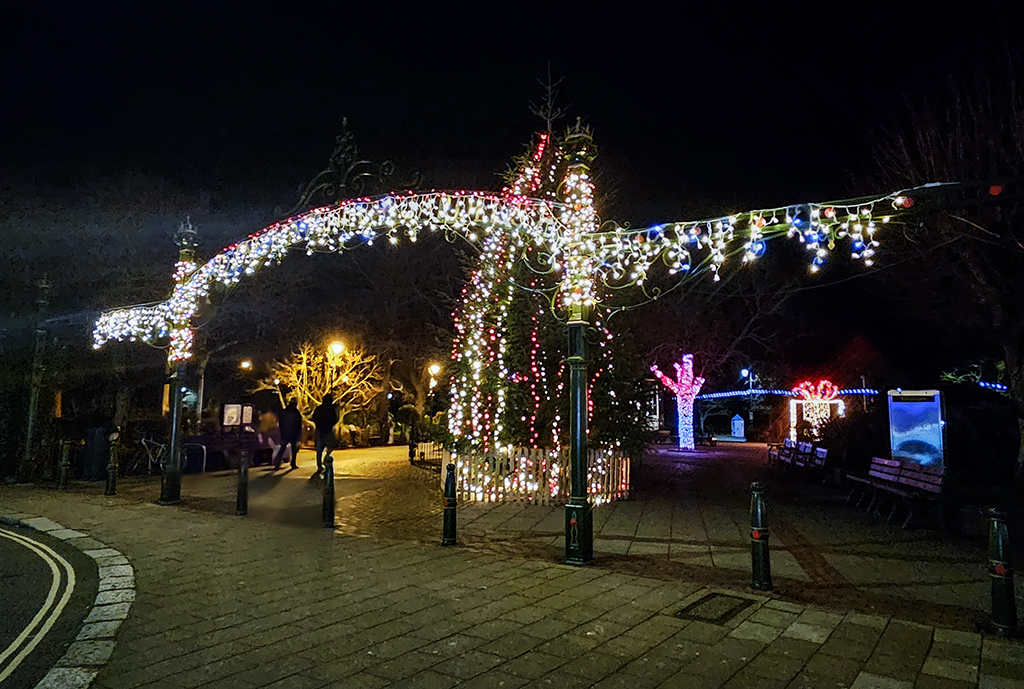
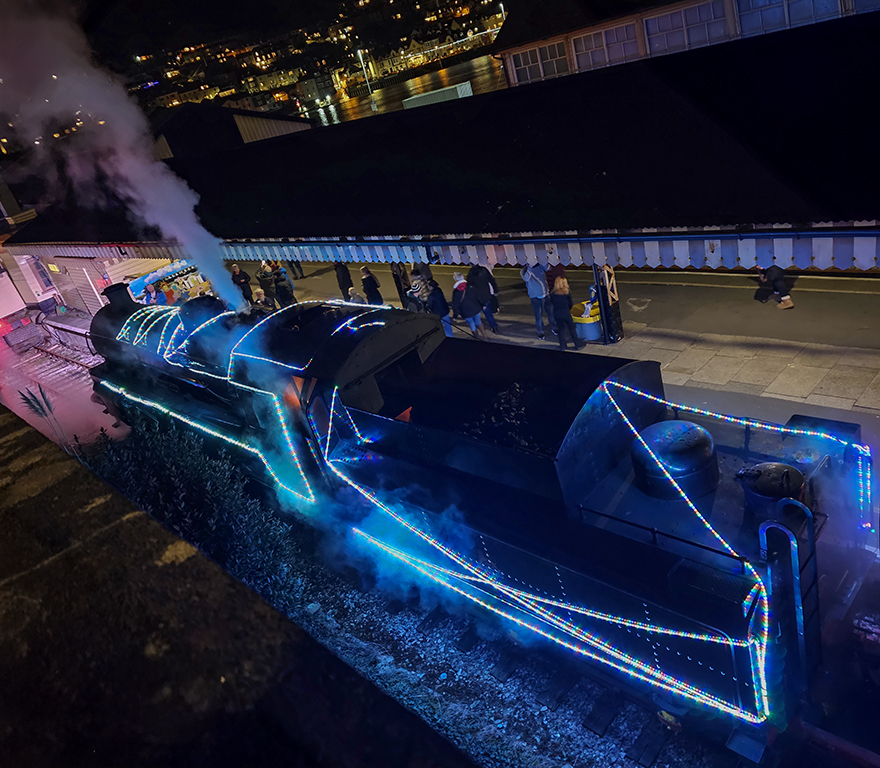
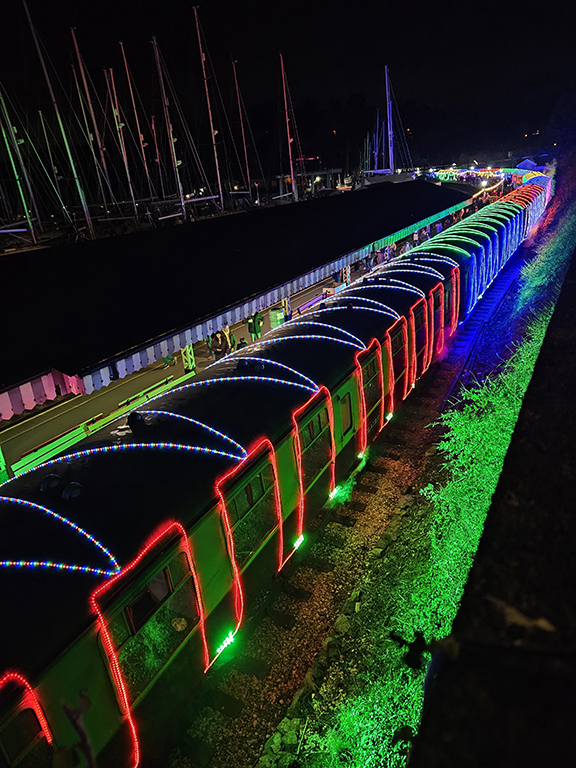
As we came out of the pub, we were delighted to have perfect timing, as the Christmas train arrived at the station! It is the Dartmouth Steam Railway Christmas Train of Lights. The 25-minute journey includes a stop to walk around at Kingswear, and I gather that some of the areas surrounding the tracks are also lit up for the festive season. A visit to Santa can be included with the ticket. The train looked magnificent, and it is clearly very popular given the number of people who got out at the Kingswear station. Seeing the train was a great finish to a most enjoyable Christmas week in Devon. We will certainly return.

 Scene and Done
Leave a comment