
October 25th to November 1st
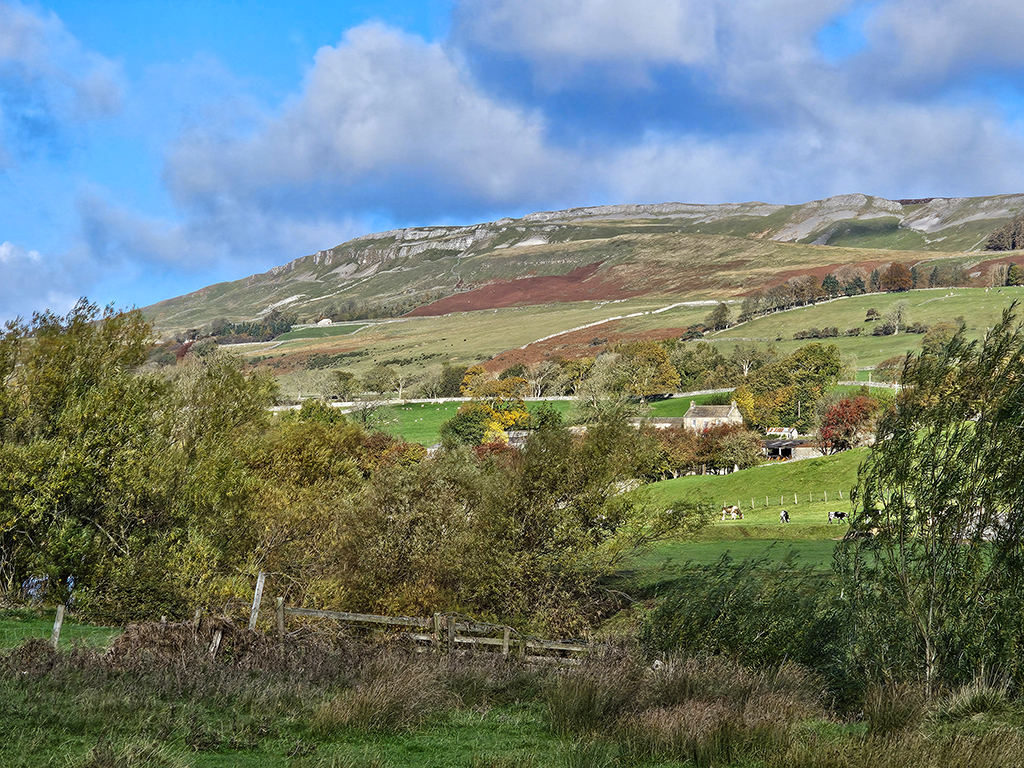
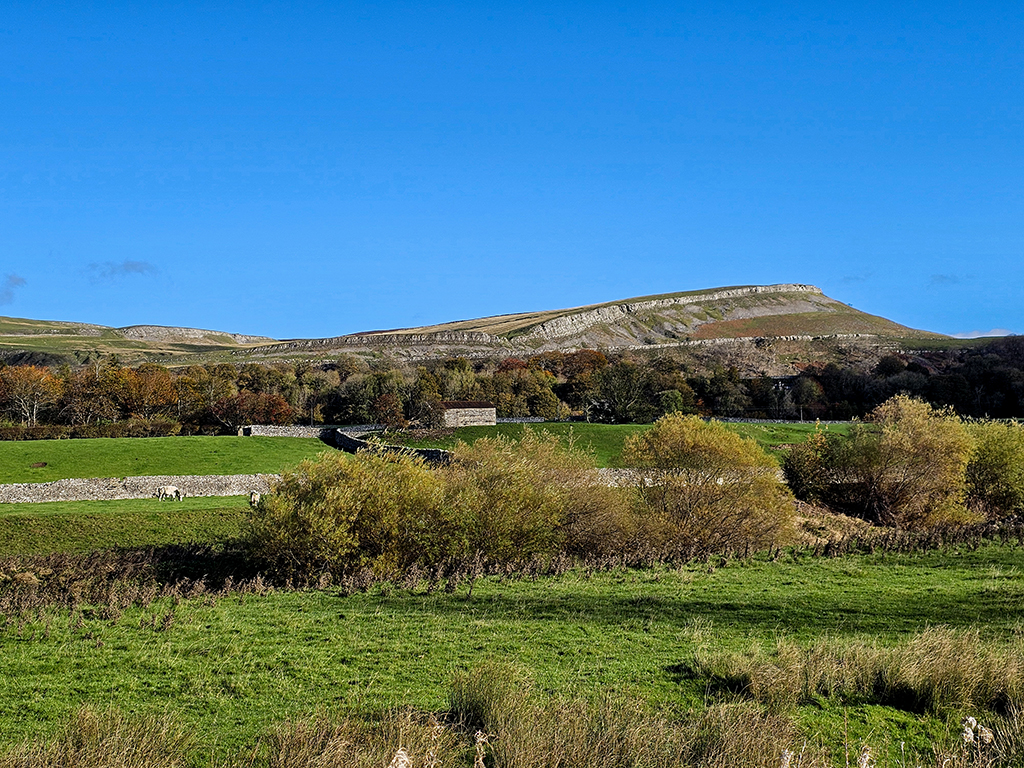
It was a glorious morning for a drive as I set off eastbound from our home in Hawes. The sun is low in the sky at this time of year, and it lights up the hillsides and the landscape, as well as creating beautiful long shadows. Cattle were grazing in the fields. We don’t usually see the cattle on our visits, because in winter they are usually inside in barns.
The drive was supposed to take about 5 hours, but of course it was longer. I arrived in Mundesley at about 5pm. The house was not difficult to find, as it is on the main road, but there are “traffic calming” measures at this point on the road as it comes into the village, so it is quite easy to safely back into or out of the drive. I had the code for the lockbox, and later my host knocked on the door to make sure I understood how to operate the heating.
The holiday let is an annexe to the owner’s home, and my hostess had told me that this is their first year in operation and they have been overwhelmed by the number of guests. It is a tiny place, although it does have a large, beautiful and private courtyard that would be a lovely suntrap in summer. There is a double bedroom and a single bed is set in the entrance hall, an odd arrangement, but it worked fine and Sarah did not find the accommodation unpleasant. The property was spotlessly clean, and there were a number of little extras, a bottle of orange juice, water bottles and glasses at each bedside table, two packages of nice quality biscuits (cookies), and a generous supply of extra toilet paper! The toilet paper was of particular note, because at the last place we were only supplied with the partial roll that was already on the holder.
The location is very central for the various attractions of North Norfolk. Unfortunately, the village of Mundesley is quite unprepossessing. It is a mixture of retirement bungalows on the outskirts, and a rather dreadful town centre that has a lot of empty shop spaces, and those that are occupied are nothing that one would wish to patronize. The beach would be a big draw for families, but it is quite a long drive from the holiday let.
On Sunday I headed out to the nearest supermarket, which happened to be Waitrose. For our non-English friends, this is one of the more upmarket options for groceries in this country, and we are always happy to be able to visit one of their stores because they do not feel any need to locate their stores in the north (until you get to Edinburgh). Don’t get me started on the north/south economic divide in England!
I have to say that I was somewhat disappointed by the offerings this time at Waitrose. They have gone over almost entirely to own-brand products, and while those are to a high standard, I generally avoid supermarket branded products. Also, much of their produce and meats are already prepared. This is very helpful I am sure for busy working families, but in addition to being an expensive option, it is unlikely that the various preservatives required to keep cooked food fresh are particularly healthy. I found it quite remarkable that in a country that loves cooking and baking TV shows, there is an array of cooked vegetables, including carrots, and even boiled potatoes, in the supermarket. In fact, there are more already-cooked foods than fresh. I remember my Australian friend Lesley being shocked that our local supermarket in Hilton Head sells hard boiled and already peeled eggs. I find already-boiled potatoes and carrots to be equally disturbing!
After stocking up on the few things I needed, I drove back a different way and had a brief look around the area and Mundesley.
Sarah was coming by train on Monday to join me for a few days. Her train was not due until the afternoon, so I spent the morning and early afternoon exploring the wider area.
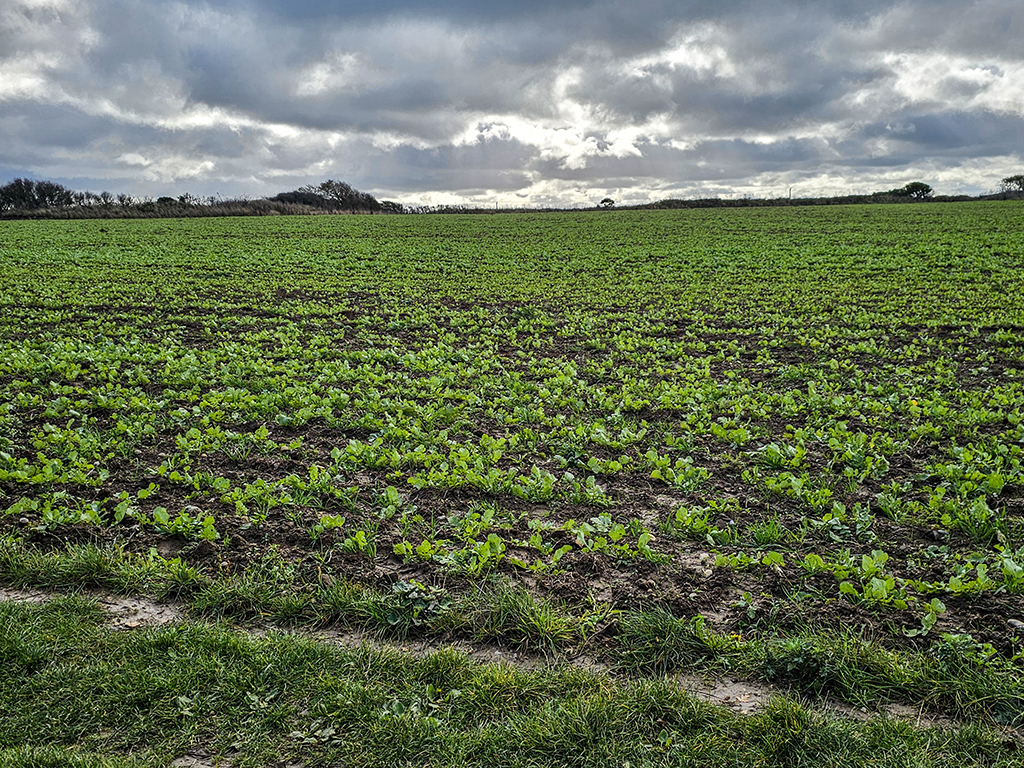
Norfolk is a very fertile agricultural county, and very, very flat. Once away from the sea cliffs, you can see a long way across huge fields. Many of these are newly planted with winter crops. I have also seen sugar beets being harvested. Agriculture and tourism are the main contributors to the local economy. Much of the arable land was drained hundreds of years ago, and crops today include sugar beet, barley, wheat, and oil seed rape. Over 20% of the employment in the county is in agriculture and food industries.
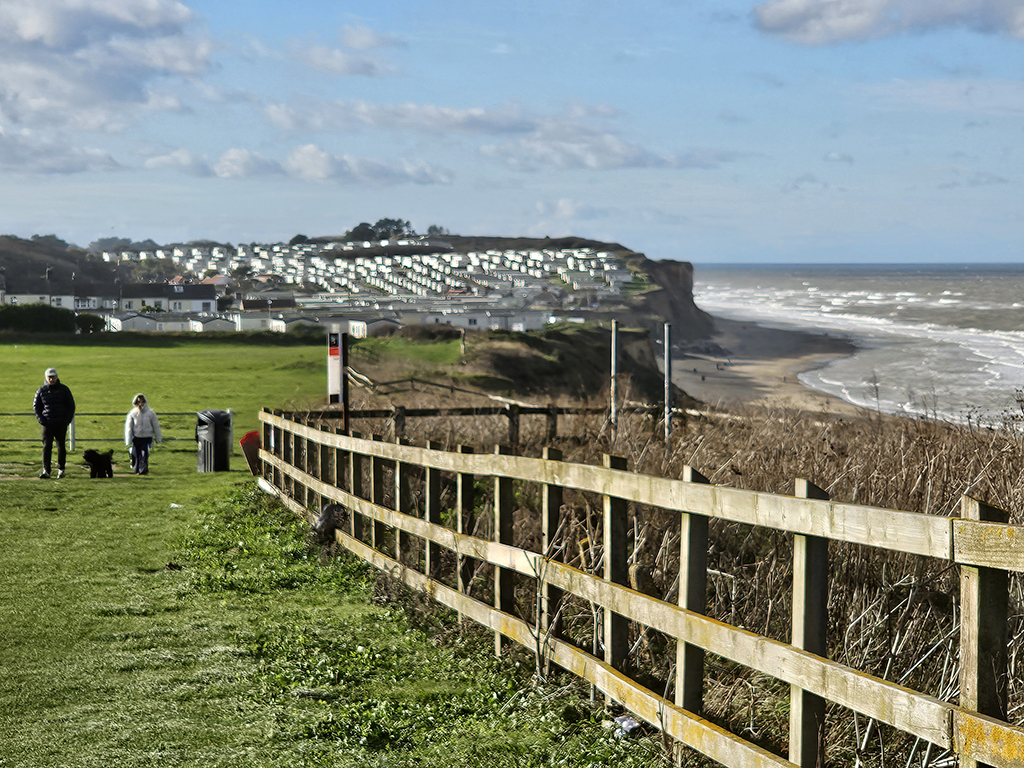
The tourism aspect of the economy, is very much in-your-face. As I came over a hilltop outside Cromer (the largest town in this part of Norfolk) I was greeted by the sight of hundreds of fixed trailers (caravans and lodges) coating the sides of the cliffs above the sea. There were miles and miles of these holiday parks, and no attempt has been made to tuck them out of sight, or even paint them green so they are less obtrusive! Extraordinary, when you find out that the north Norfolk coast has been designated a National Landscape (these are also called and considered to be Areas of Outstanding Natural Beauty). How conservation efforts and miles of holiday parks can possibly be present on the same piece of land I do not know. And the question remains, what have you DONE to an Area of Outstanding Natural Beauty??
This is a county with a lot of history. It begins in the Stone Age, with a succession of prehistoric peoples, including one of the earliest traces of European man, and also one of the most important sites of Neanderthal man. During the Bronze Age, Norfolk was a centre of metalworking, and in the Iron Age the county was intensively farmed. It was occupied by the Iceni Tribe when the Romans arrived in Britain, and was the site of Boudica’s rebellion. Once the Romans left, the Angles and the Saxons arrived and settled. They replaced the culture of the Romans and the ancient Britons.
Norfolk was part of the Earldom of Harold of England, and after his defeat by William the Conqueror, Norfolk offered no resistance to the Normans. Much of the county was presented to Ralph de Gael as the Earldom of East Anglia, and when he rebelled against the Crown, his estates were forfeited and presented to Roger Bigod. His son Hugh became the first Earl of Norfolk, and our favourite cheese, a beautiful, gooey, flavorful brie, Baron Bigod, is named after him! (I had some a couple of weeks ago, but it all disappeared before I could take a picture…)
By the 14th century, Norfolk was the most densely populated and intensively farmed region in England. The Church was important and powerful, and more medieval parish churches were built in Norfolk than in any other county in England.
Over time, and following a long depression in English agriculture and industry during the 19th century, the great estates were broken up and other landowners and businesses took over. Aviation became important during the first and second World Wars, and Norfolk has the distinction of being the first place on earth to have been bombed from the air. German Zeppelins raided the county a number of times.
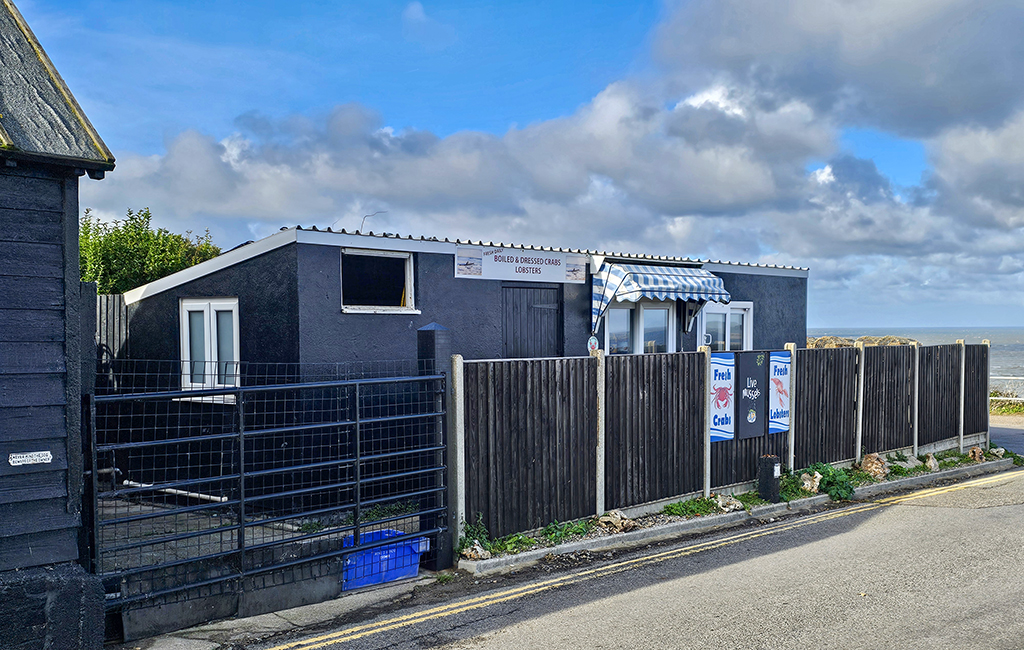
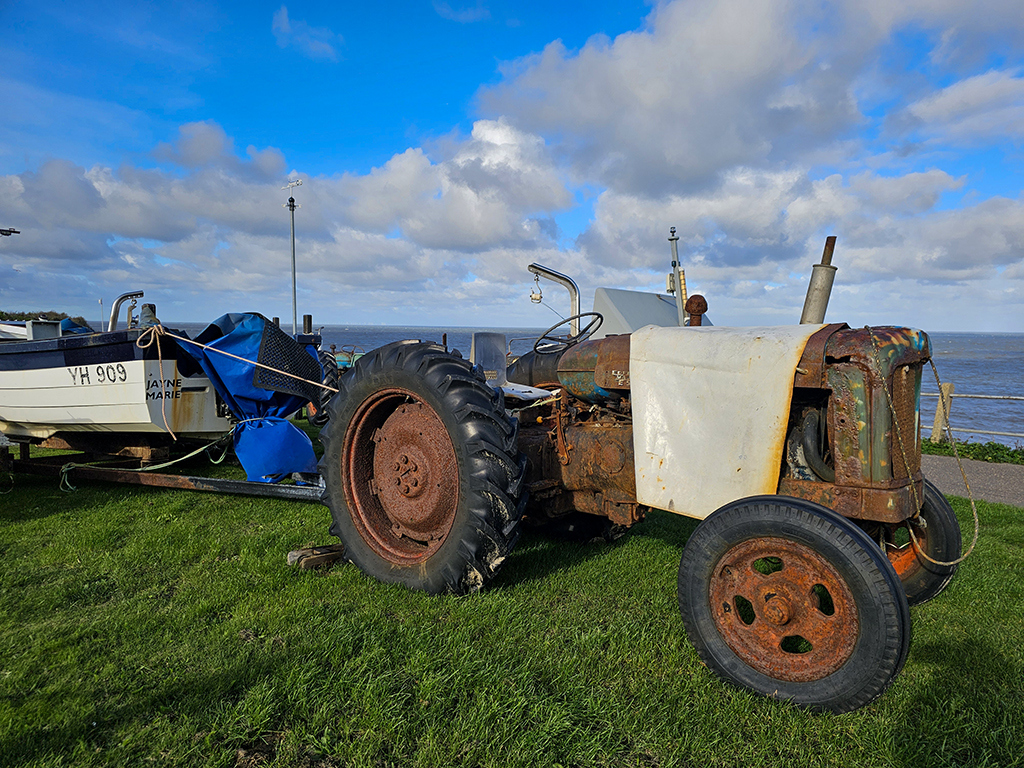
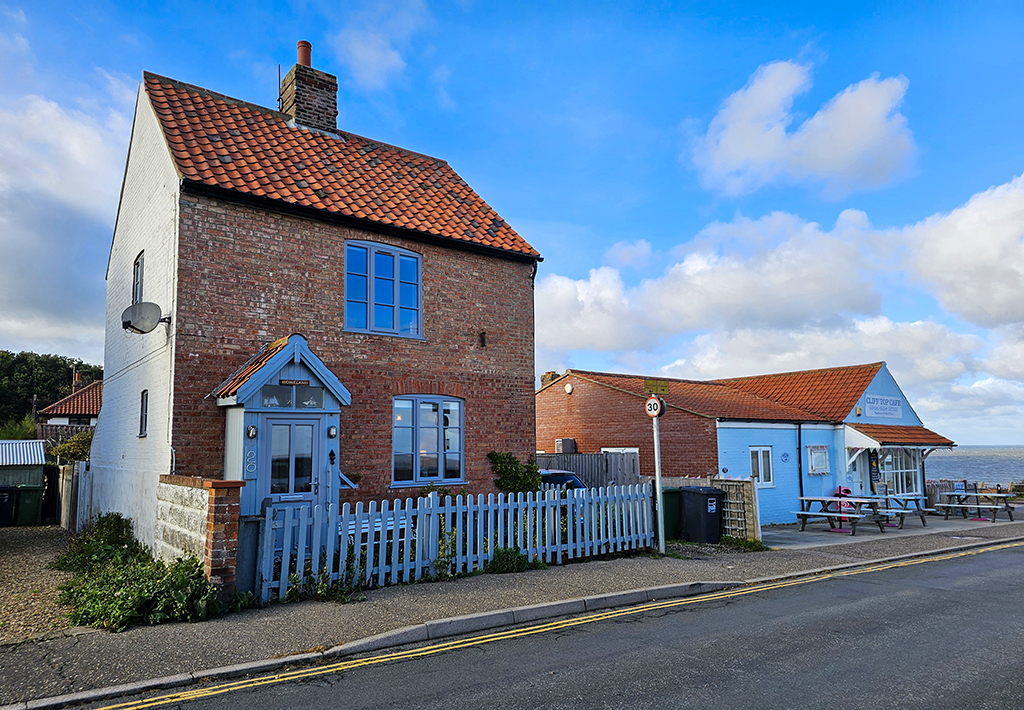
The nearby town of Overstrand was much more pleasant than I had expected. The retirement bungalows and cottages had nicely tended gardens, and in the town centre, the Victorian homes were in good condition and most are clearly occupied full time. Above the sea cliffs I found a tiny hut selling dressed lobster and crabs, as well as a couple of fishing boats drawn up out of the water with tractors. Whether those two tractors will ever move those boats again is questionable, but it all looks very romantic. There is also a nice-looking clifftop café, where you can get fresh local seafood sandwiches, or just refresh yourself with a cup of tea. The steep path to the beach is paved, but there are warning signs that the cliffs have eroded, and some parts of the beach are inaccessible at high tide.

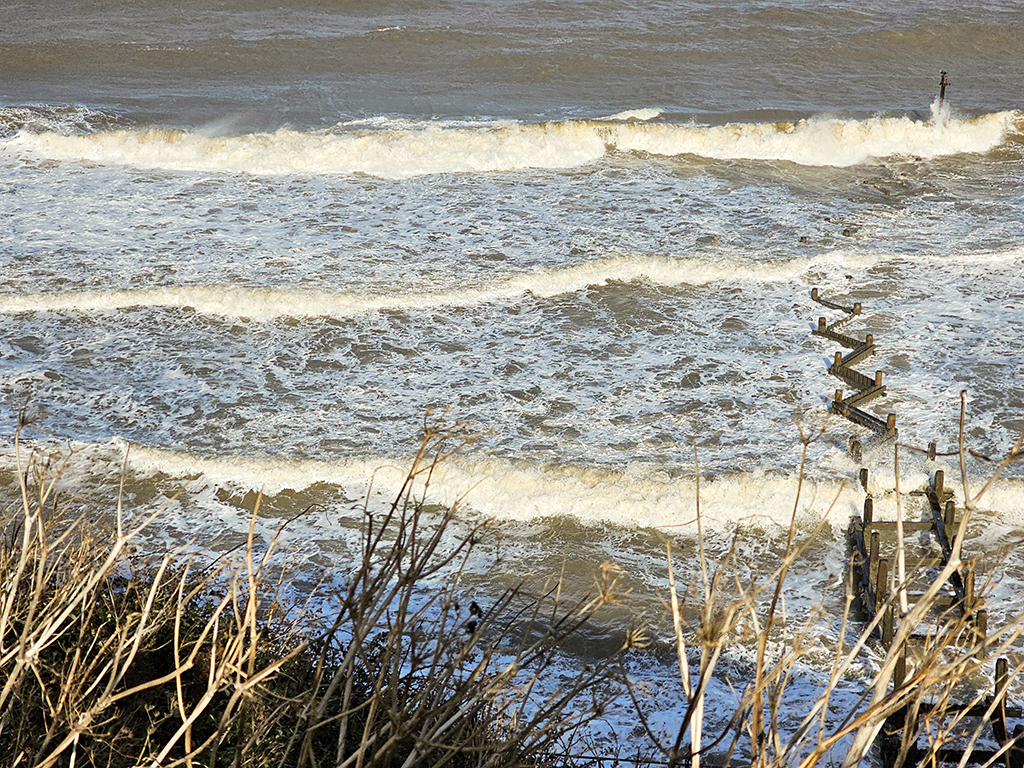
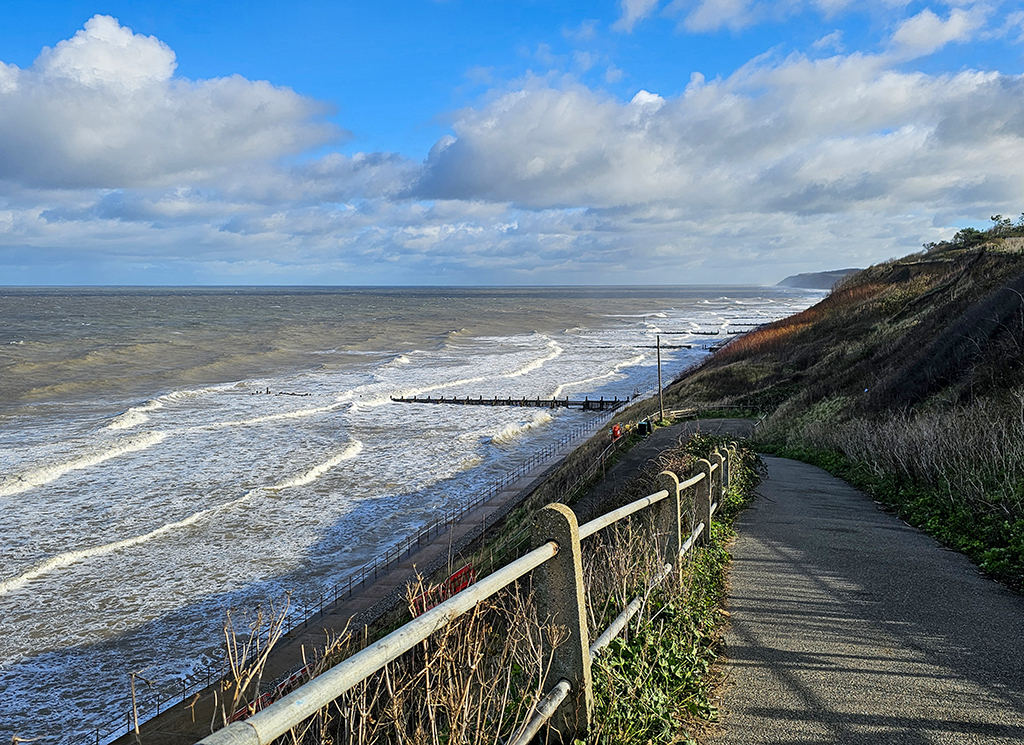
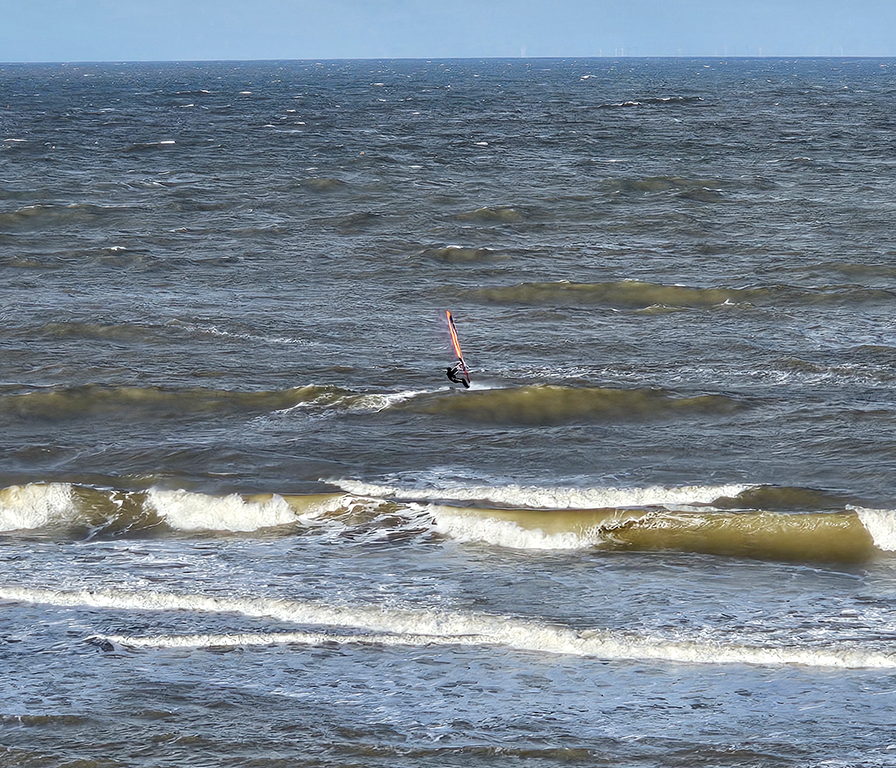
I managed to navigate the confusing one-way system in Cromer, and found myself on the coast road heading north through the miles of holiday parks to the village of East Runton. We had booked to have dinner there, so I wanted to check the parking situation. There is a large pay and display car park at the top of the cliffs above the beach. I sat in my car and enjoyed looking out to sea, where a windsurfer was sailing back and forth across the waves. Later another intrepid soul (in a wetsuit) launched a kitesurfer and raced around the base of the cliffs. In the far distance I could see offshore windmills, a reminder of another aspect of the economy of the county.
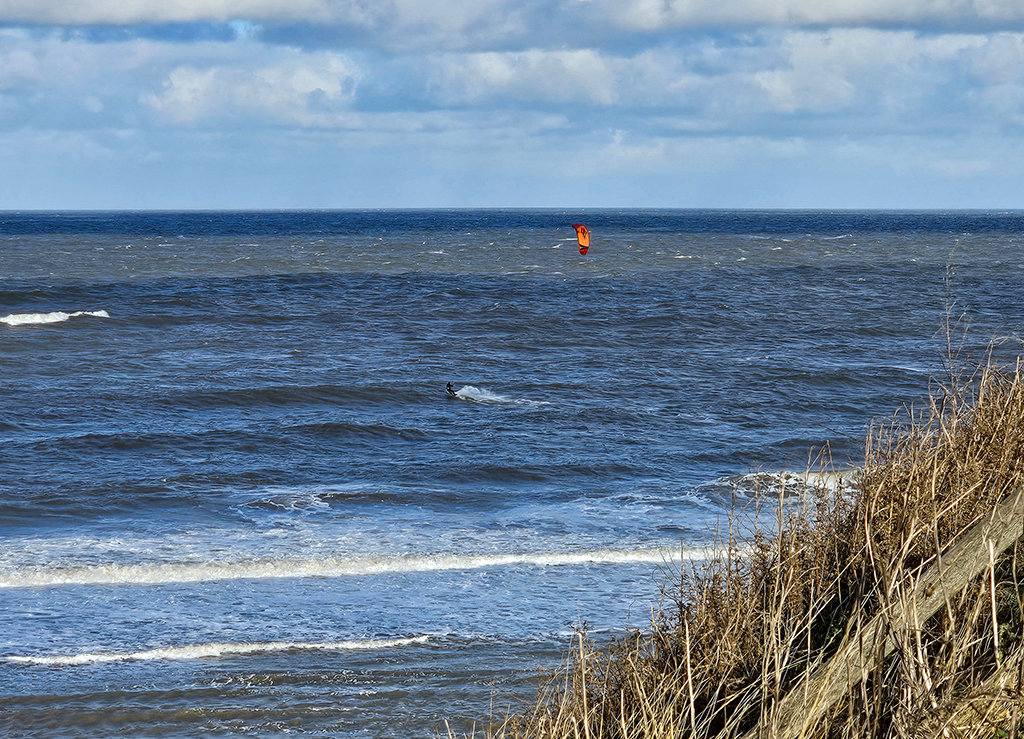
Eventually it was time to meet Sarah’s train. She arrived exactly on time, and we soon made our way back to East Runton. We sat in the car looking out to sea and chatting until it was time to make our way to the restaurant for dinner. The food was excellent.
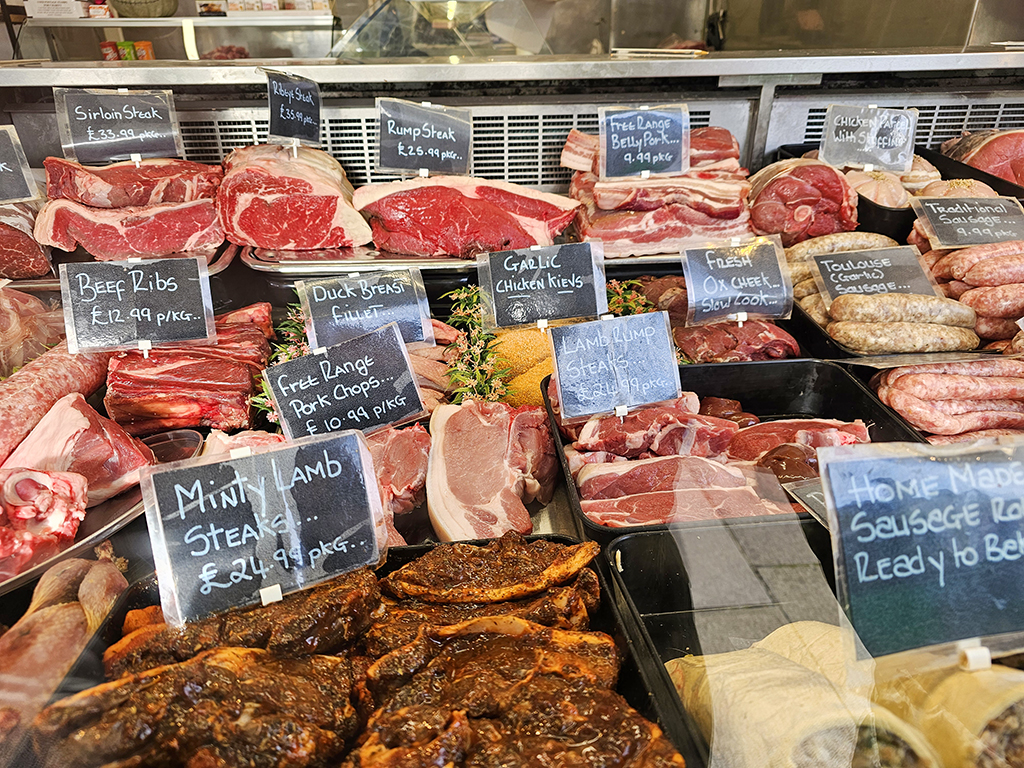
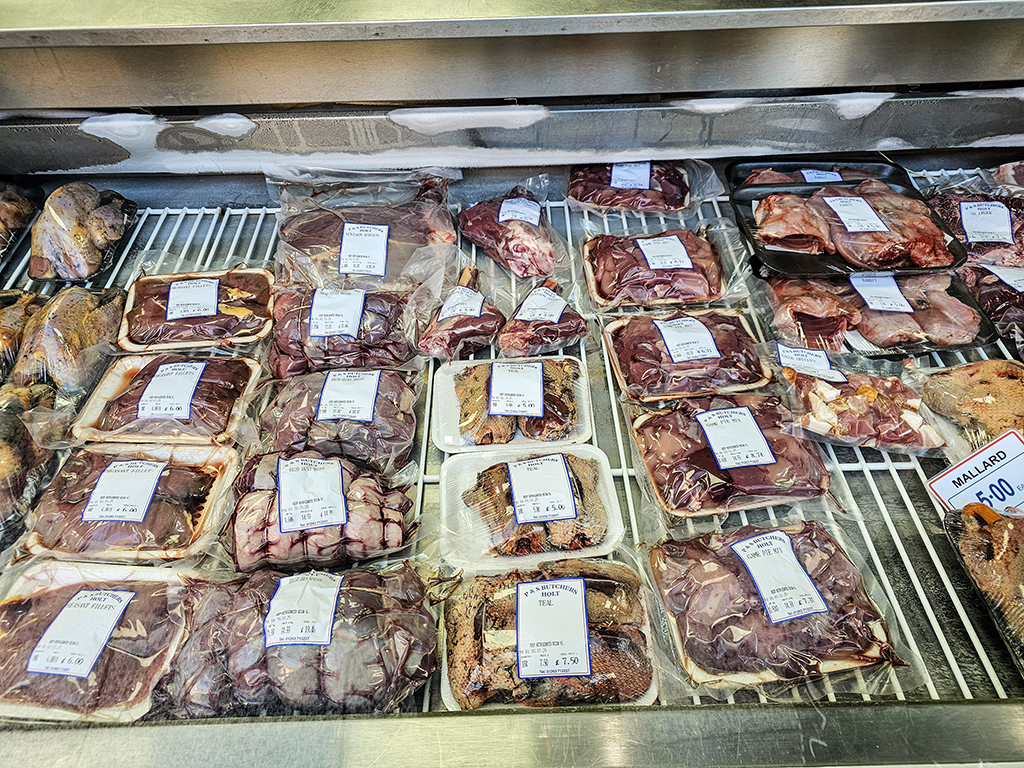
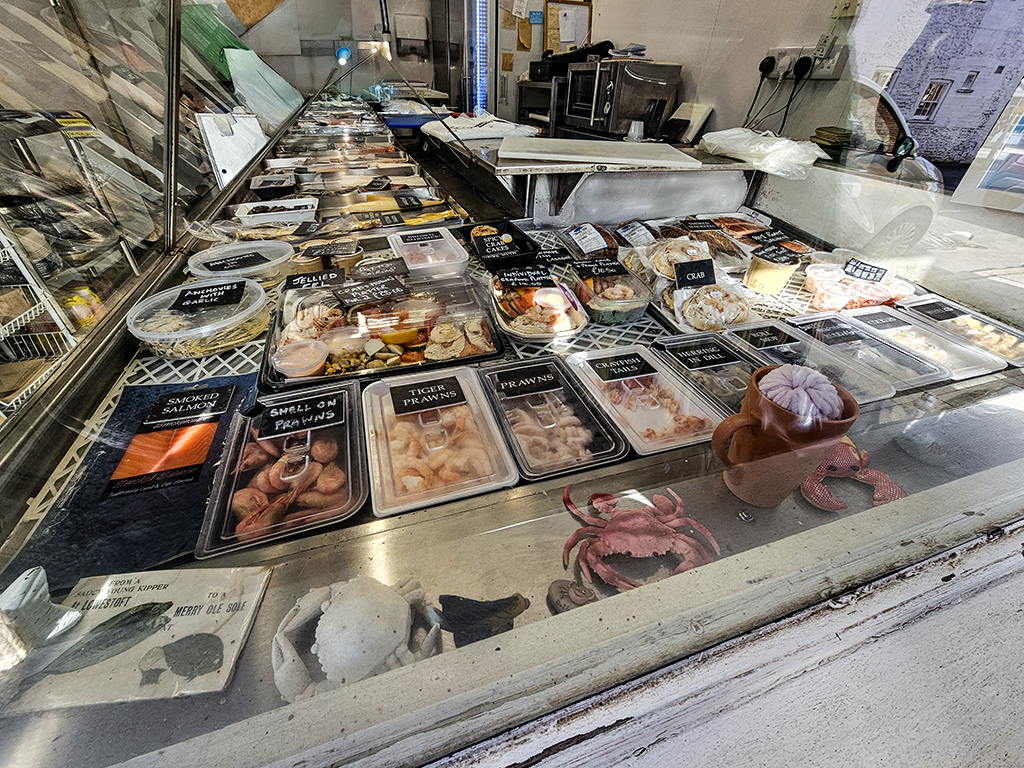
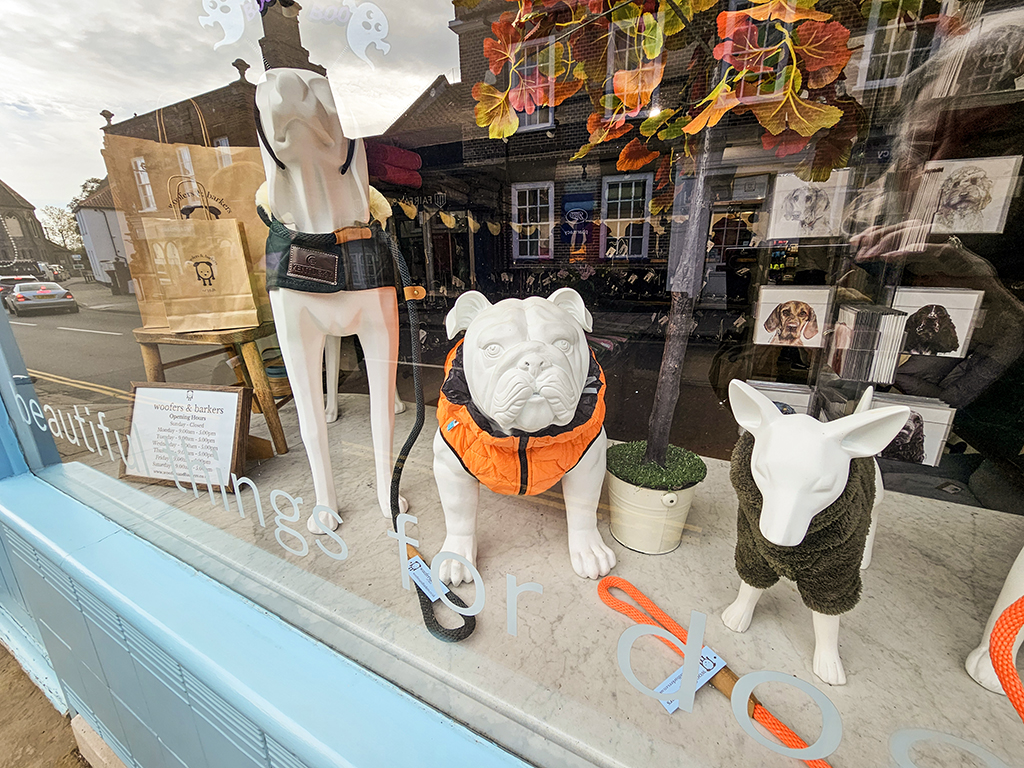
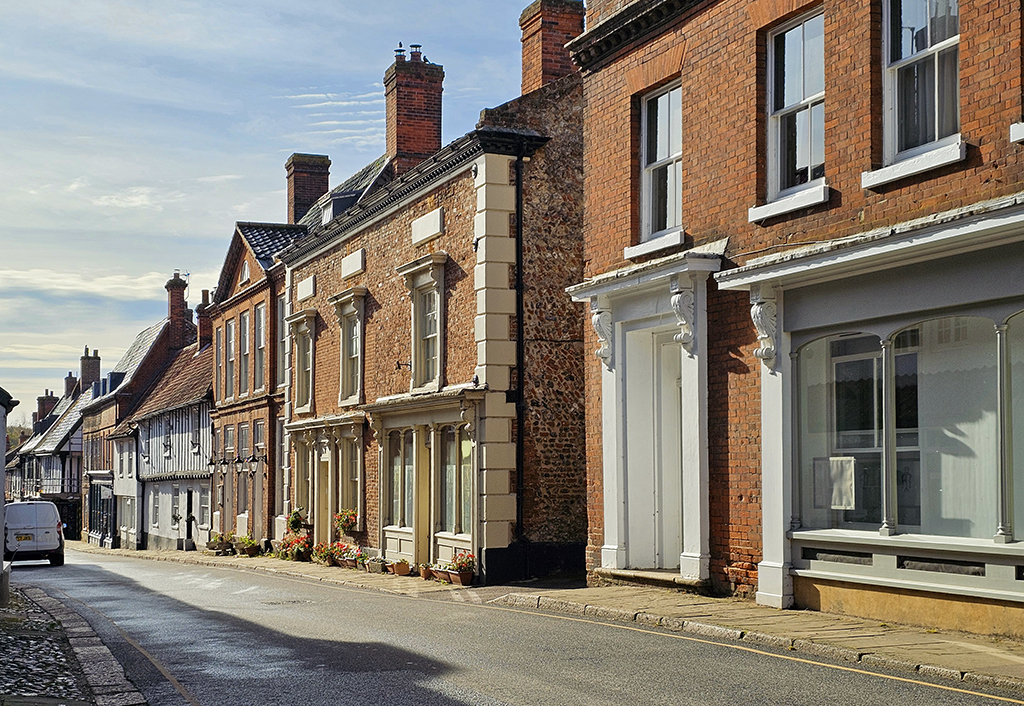
Our plan for the next day was a visit to the village of Holt. This is clearly where the wealthy folks from London and the county set hang out. A fire destroyed much of the town in 1708, so most of the buildings are beautifully maintained Georgian architecture. There is hardly a charity shop or chain store to be seen. There are antique shops, art galleries, craft shops, a specialty shop selling clothing for dogs, and a wonderful department store, Bakers & Larners, owned by the same family since the 18th century. The butcher shop has a whole section devoted exclusively to game. Sarah and I walked all over the town, taking time to thoroughly explore many of the shops, including an hour spent wandering around the food section of Bakers & Larners. I see that like many of the forward-thinking businesses today, they also have an online presence, so some of the unusual and exotic offerings can be ordered and shipped all over UK.
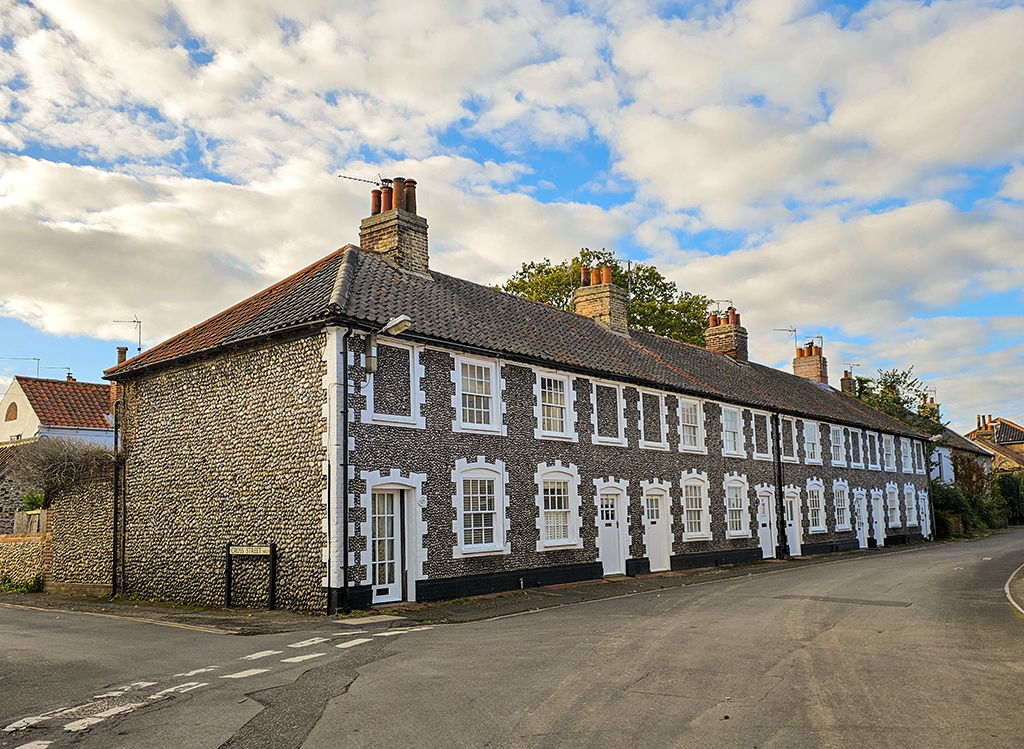
There is a beautiful row of character Georgian houses constructed from flint. These were probably once workers’ cottages. They are two-storey and the rooms are of modest proportions. There are small gardens at the rear of each property, but the front door opens directly onto the sidewalk (pavement). The most recently sold was 2 bedrooms and 1 bathroom, and sold in 2022 for £325,000. One of the cottages, with just one bedroom, can be rented for a week in mid-July for £851.
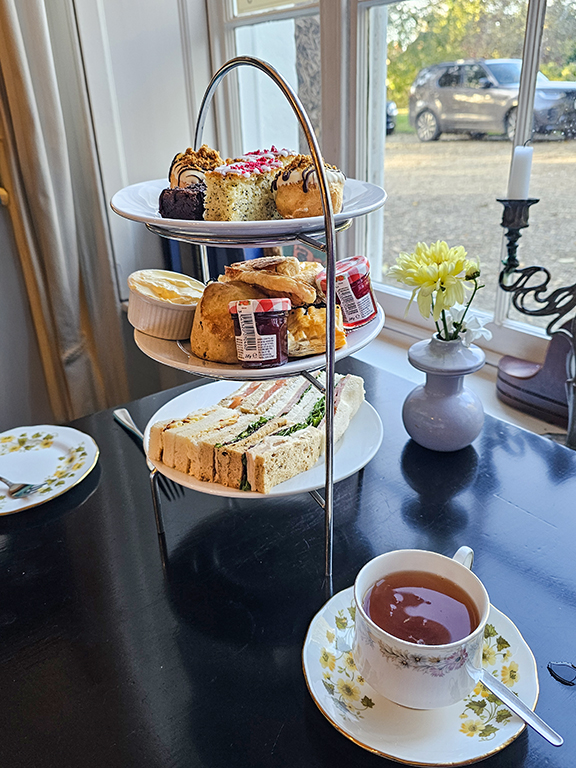
From Holt, we returned to the coast and stopped at a small country house hotel, The Grove, for afternoon tea. This was the real thing, with a choice of teas, and a delicious meal with tiny sandwiches, scones with jam and clotted cream, and interesting cakes. The service was very friendly, with the lady returning frequently to see whether we would like more tea.
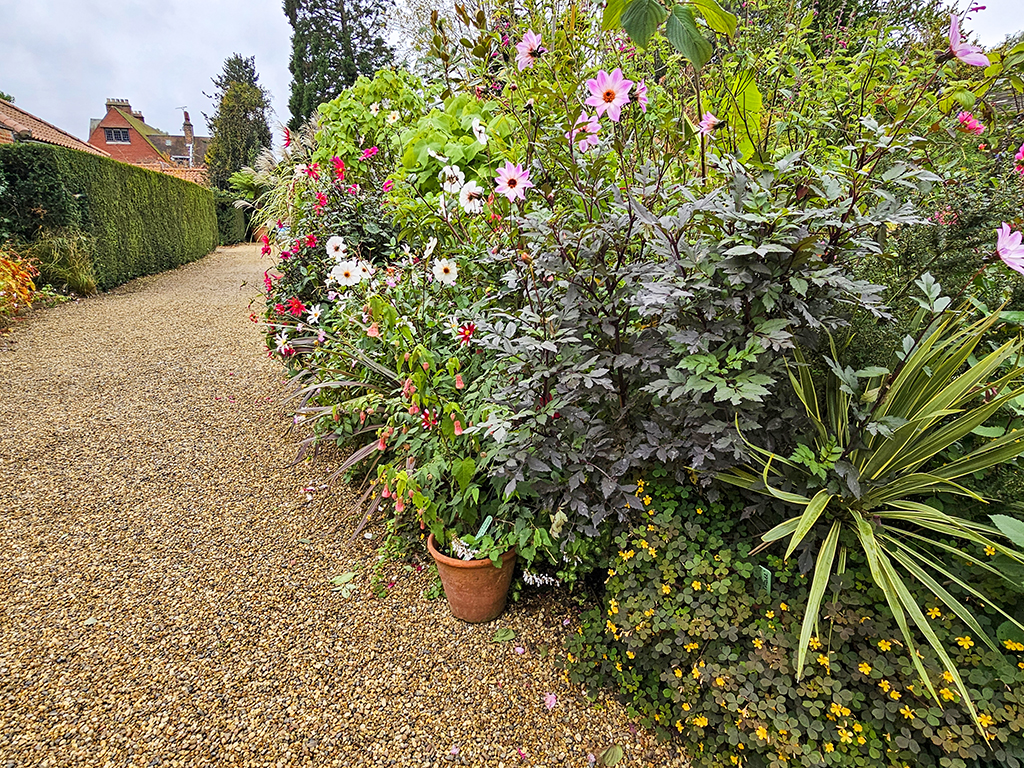
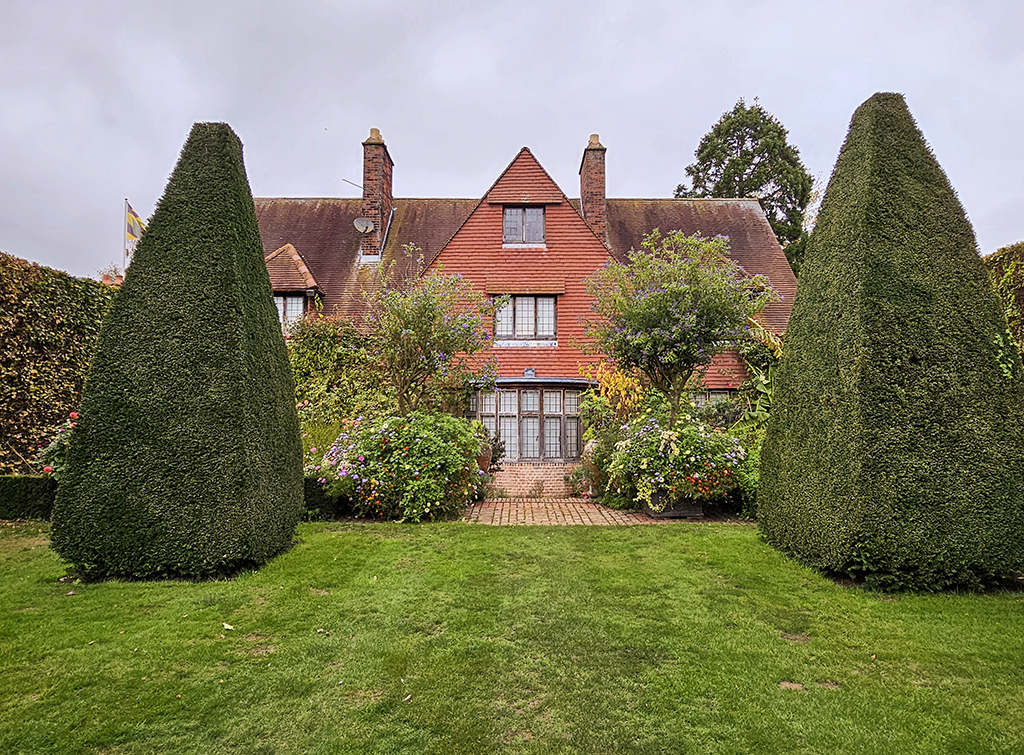
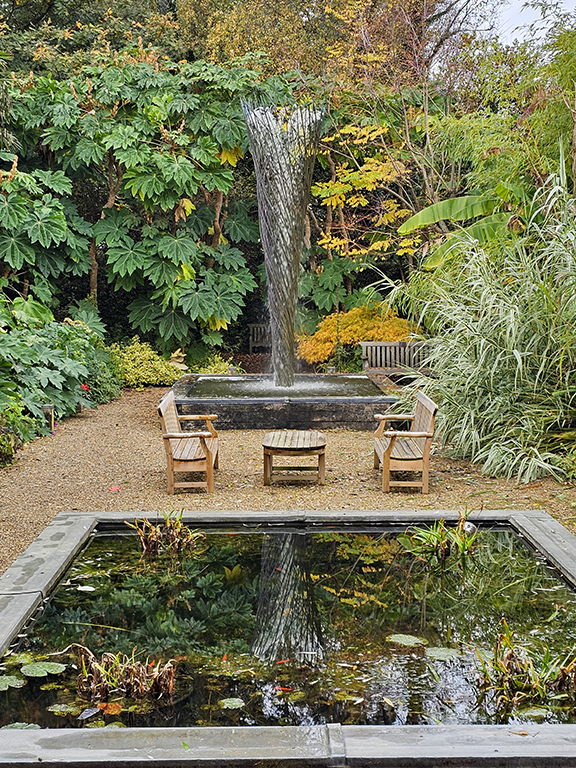
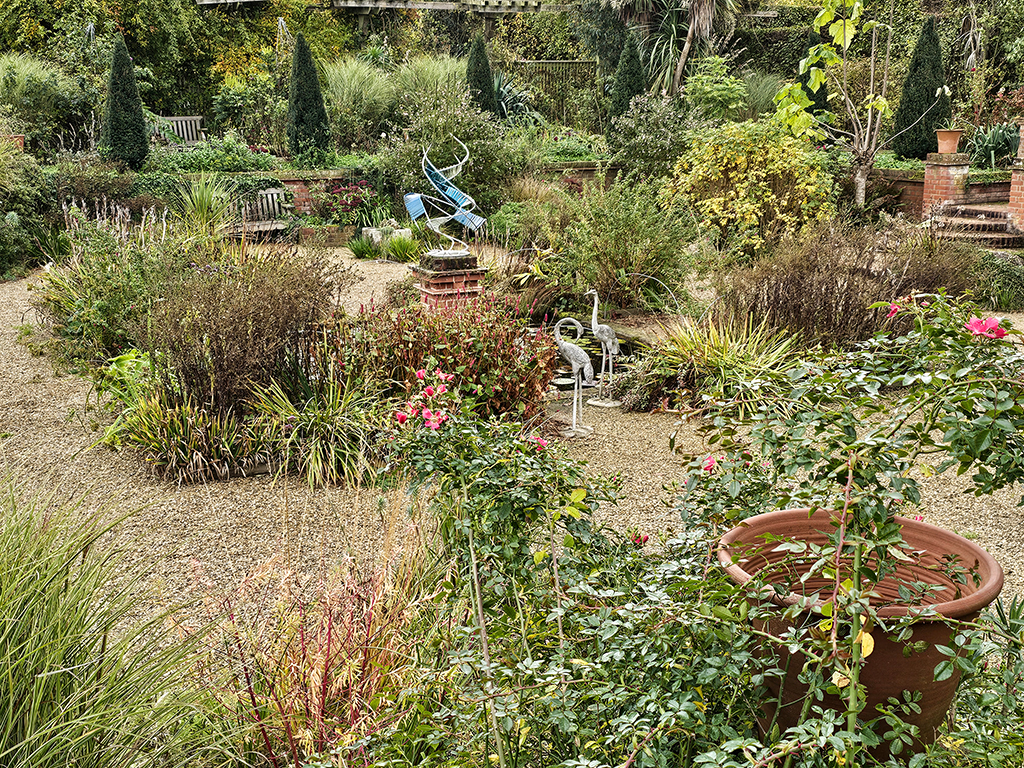
The next day was expected to be wet and miserable, but we made our plans anyway, and set off in the morning for East Ruston Old Vicarage Gardens. This property was purchased in 1973. At the time it had been vacant for 2 years, and the small garden was waist high in weeds. For the first years both men continued to live and work in London during the week, and then made the trip to Norfolk to spend each weekend working in the garden. From a beginning on less than 2 acres, they gradually acquired some of the local surrounding land and today the gardens occupy 32 acres. It is still fully private, funded by the owners, and they raise money for a local charity by plant sales and entrance fees.
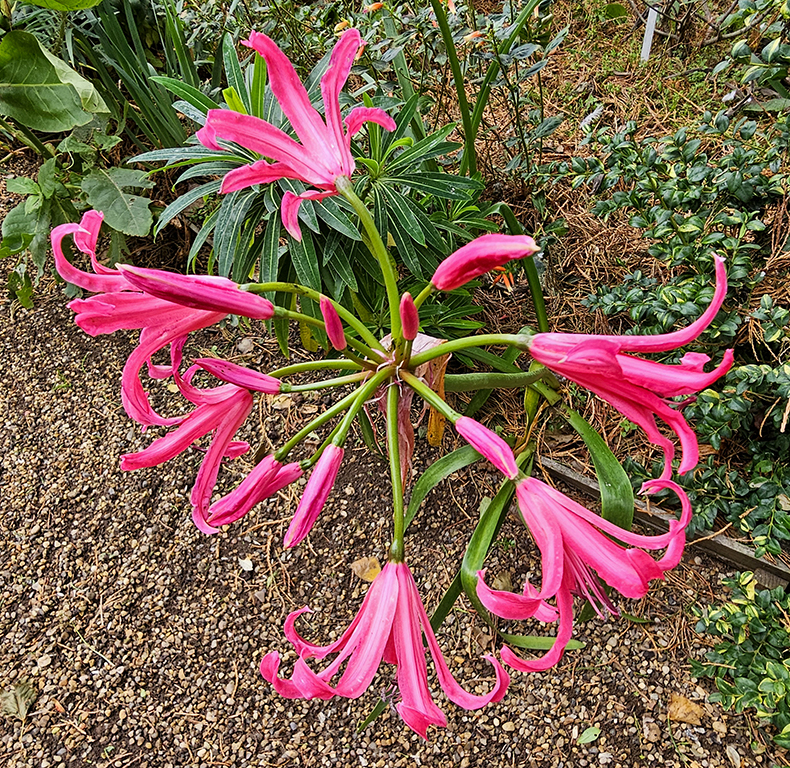
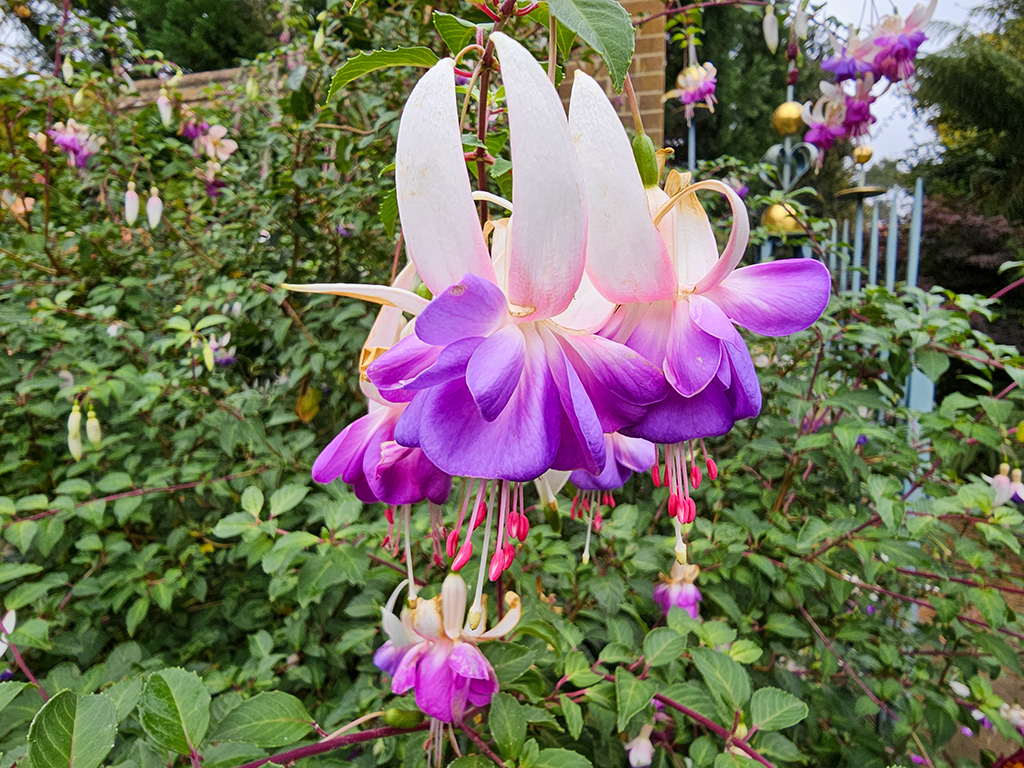
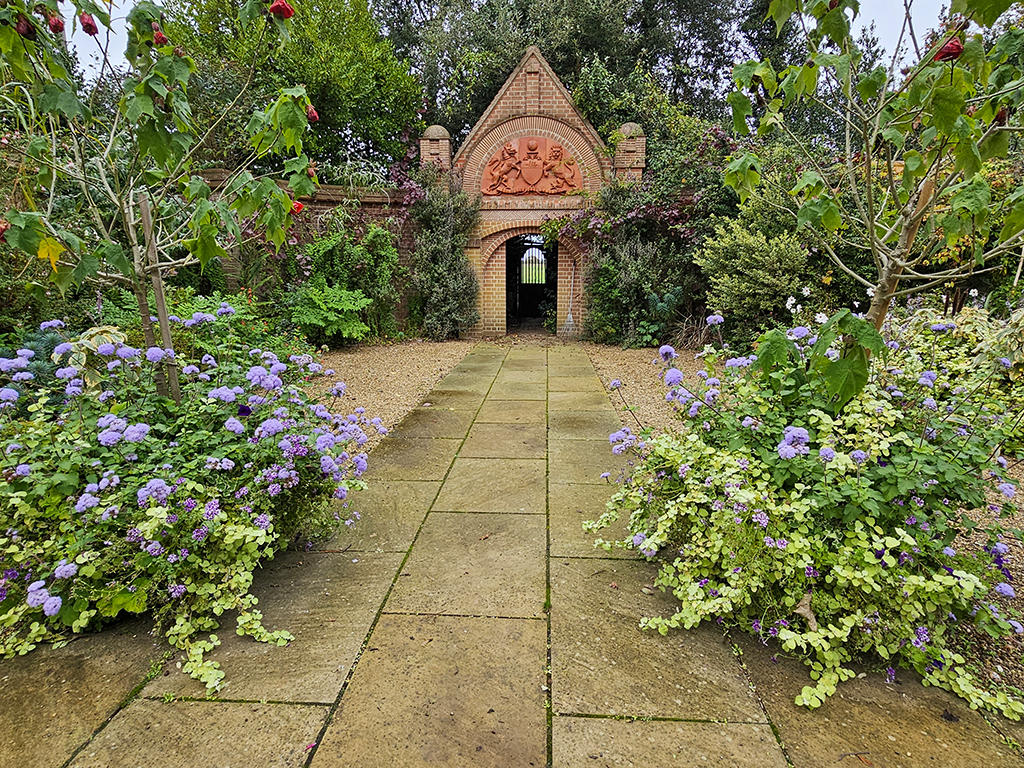
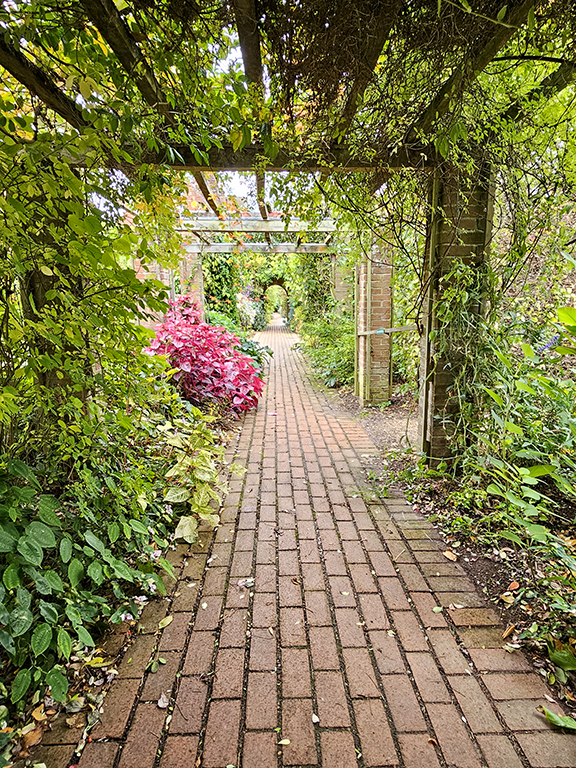
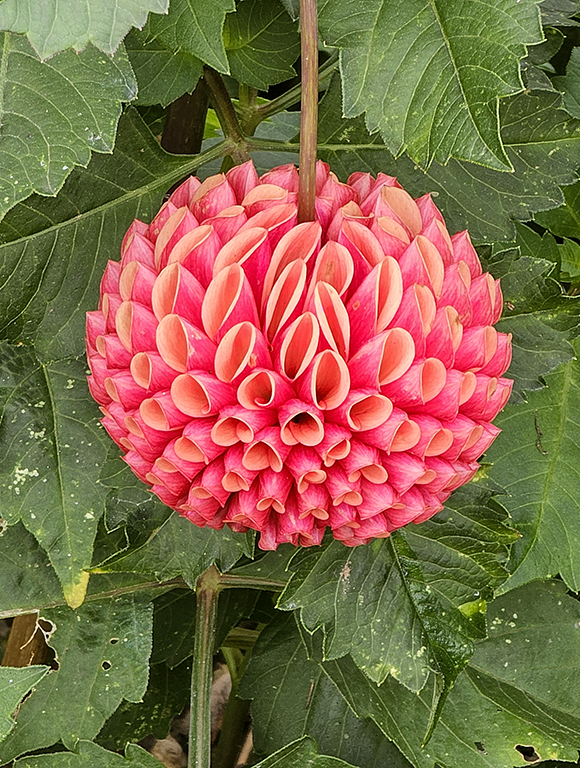
Sarah and I loved the gardens, and we were very surprised to see so many beautiful flowers and plants at the end of October. Apparently, the garden has a microclimate that is closer to the southwest of England than what would normally be expected just a few miles from the North Sea. Instead of large open areas, the whole site is made up of garden “rooms”, each with a distinctive character, and with substantial walls and hedges it is possible for many quite exotic plants to be grown in the warm, sheltered spaces. I hope you enjoy the series of photos I took as much as I enjoyed taking them! The weather cooperated, and while we didn’t see any blue sky, we also did not get wet!
Prior to visiting the gardens, we had time to look at the village of Happisburgh and the lighthouse. This is the oldest working lighthouse in East Anglia, and the only remaining independently run lighthouse in Britain. It was built in 1790, and is 85 feet tall, with the light at 134 feet above sea level. The flashing light can be seen up to 18 miles away.
In 1789, during a severe winter storm, 70 sailing ships were lost off the Norfolk coast with 600 men dead. Following an enquiry into the tragedy, Trinity House, the general lighthouse authority for England and Wales, built a pair of lighthouses that allowed vessels to be guided around the treacherous Happisburgh Sands. The lighthouses became operational on New Years Day in 1791. Can you imagine any government “enquiry” being completed in less than 2 years today, let alone a solution agreed and two major structures built and in full operation?
When the shorter of the two lighthouses was no longer viable because of erosion, in 1884, the taller one was painted in characteristic red and white bands, in order to distinguish it during the daytime from another lighthouse at Winterton, roughly 10 miles away.
By 1929, new methods of fueling the light meant that the lighthouse no longer had to be manned, and the Keeper’s cottages were sold. Today they are still in private hands. In 1988, the lighthouse was scheduled to be decommissioned, but local residents were able to raise funds to create a Trust, that operates the lighthouse to this day.
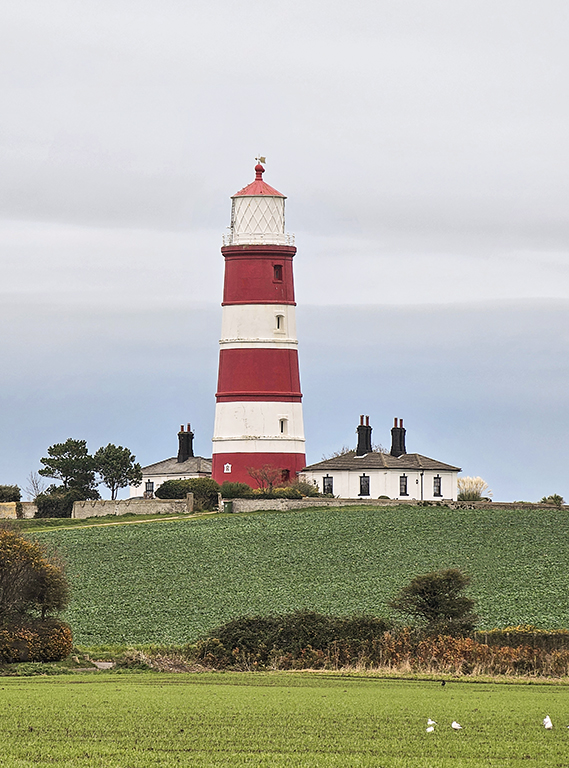
One of the Keeper’s cottages is now available as a holiday let. It has 2 bedrooms and 1 bathroom, and is fully booked for most of next July. It is still available for a week at the end of July for £1336.
On our way back to Mundesley we stopped briefly to look at Stow Mill. This is a fully restored windmill. It was built between 1825 and 1827 as a flour mill, and was used for its original purpose until 1930, when the machinery was removed and the mill converted into an annexe to the existing miller’s house. For much of the 20th century it continued to change hands, until the 1970’s, when the then current owner hoped to fully restore the mill, but he died before work could be completed. The mill had been open to the public as a tourist attraction since the 1960’s. Ongoing efforts to restore the mill continued through the 1980’s and 1990’s, but it proved to be too expensive to turn it into a working mill, so instead it was refurbished to become accommodation. It took 3 years and 4 planning applications to finally get permission to change the use of the mill to a holiday let (as opposed to the full time residence it had been). The renovations have been done to a very high standard, and at the same time, the owners have been able to restore both the cap and the sails, so that the mill turns with the wind as it had not done for over 50 years. You can rent this unique holiday home for a week in July for about £1600. (2026 rates are not yet published).

After a stop to change clothes and refresh ourselves with a cup of tea, we set off for Cromer for an exploration of what was touted as a street of independent shops, followed by dinner at a fine dining restaurant. As we drove down the street, we were confronted by the largest charity shop I have seen in UK, taking up enough space to house 5 or 6 regular shops. There were no less than 3 additional charity shops on the same street, plus an optician, a solicitors office, and a tea room, as well as the restaurant we were looking forward to. We had not found any other interesting places in Cromer for shopping, so we just waited elsewhere until it was time for our dinner reservation.
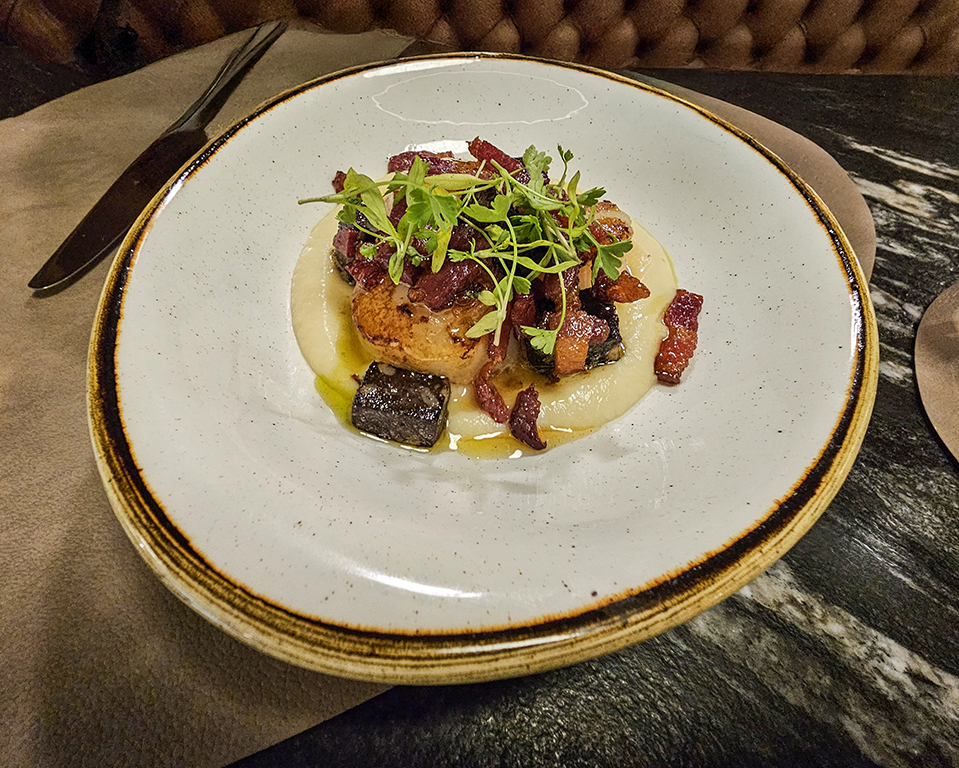
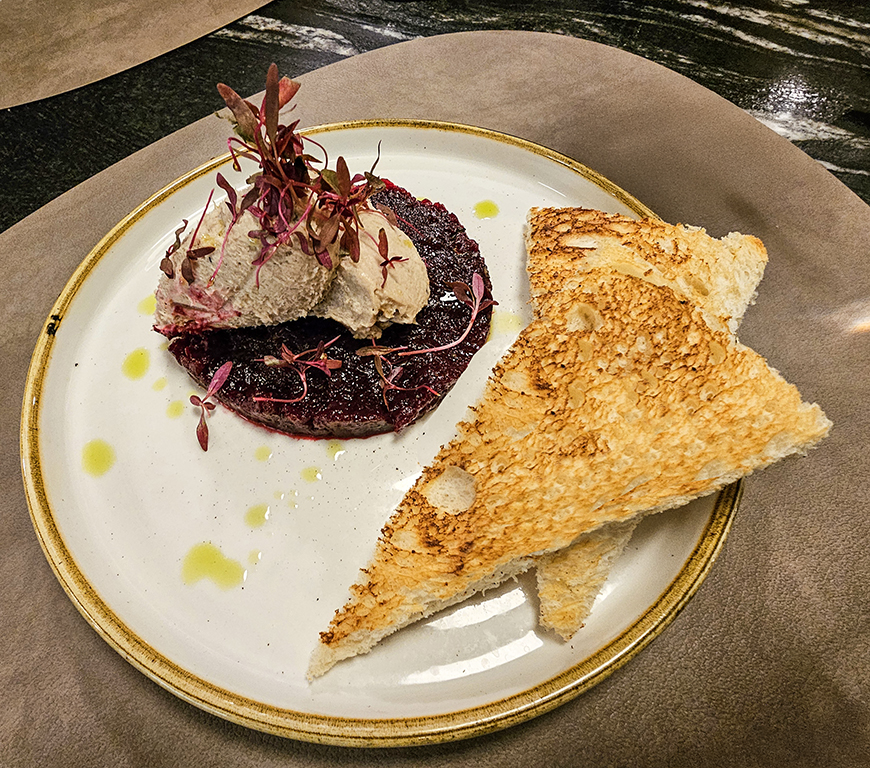
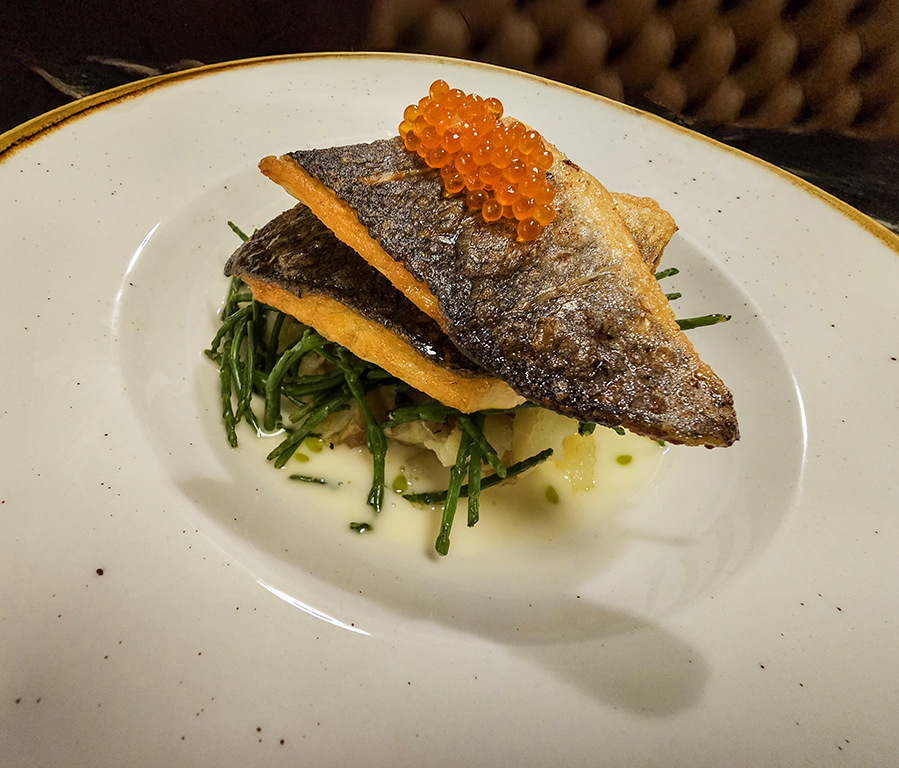
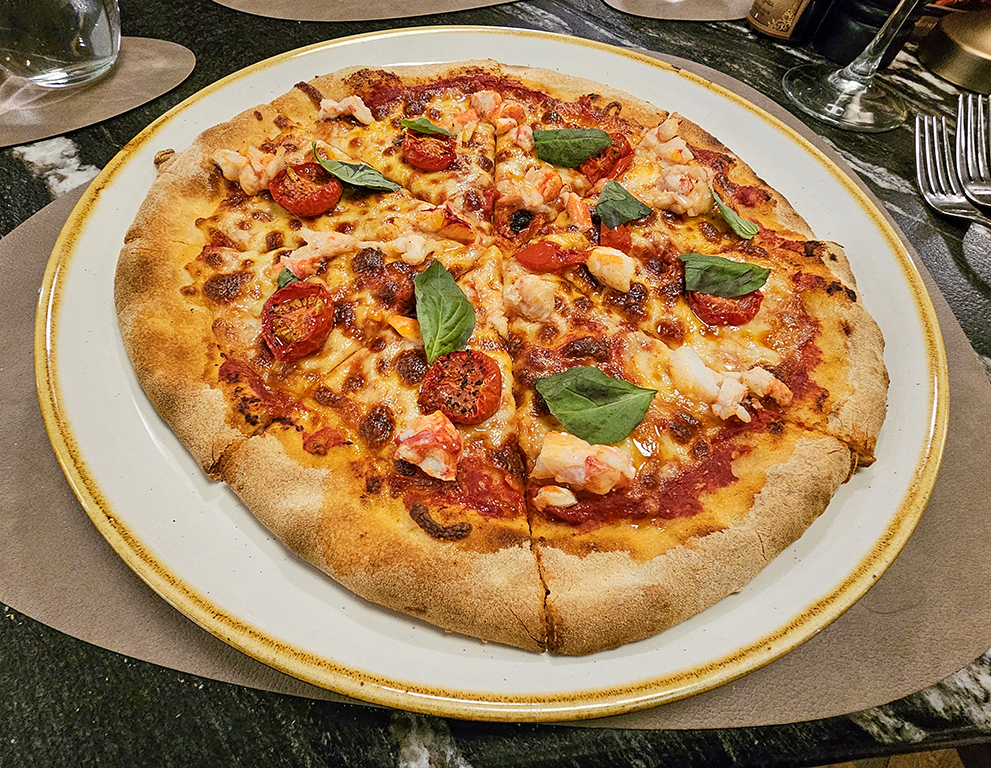
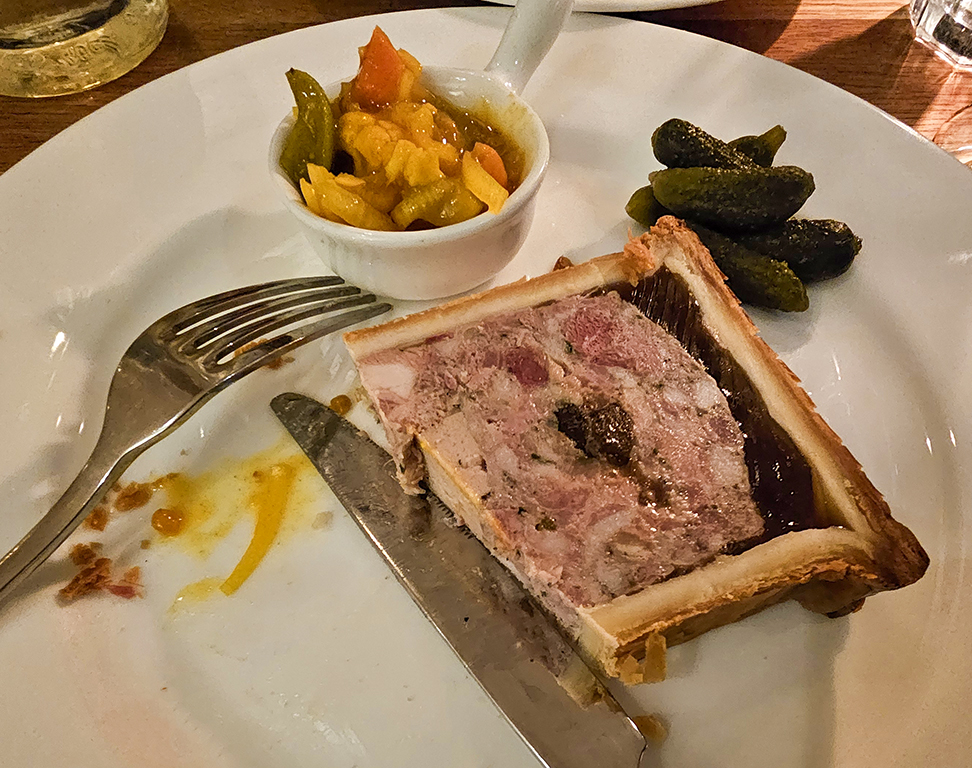
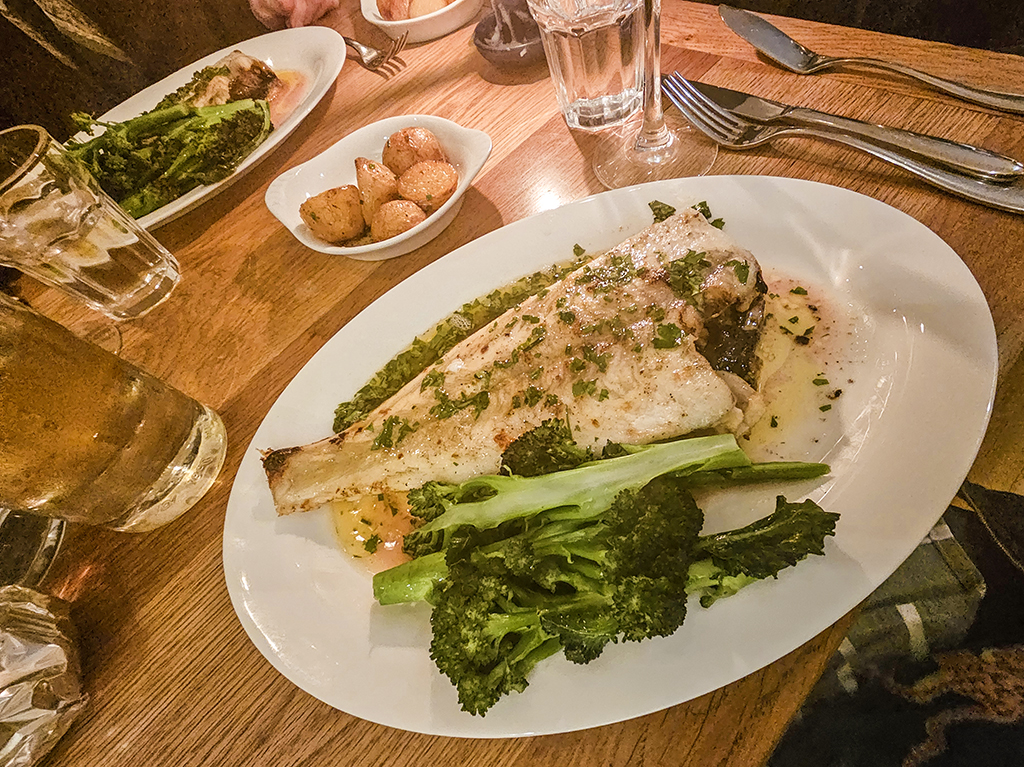
Fino was an excellent choice. From the very friendly greeting to the delicious food and efficient service, we thoroughly enjoyed the evening. I had deliberately booked on a Wednesday, as they offer half price on all their wines. We shared a carafe of a very enjoyable Spanish white. In fact, we were choosing between that and a French white, so our host offered us tastes of both, and gave us generous amounts of each so we could decide. Sarah started with a crab thermidor dish, while I enjoyed my pate of different kinds of meat in a pastry case. We both chose the whole plaice for our main course, and they were delicious and perfectly prepared.
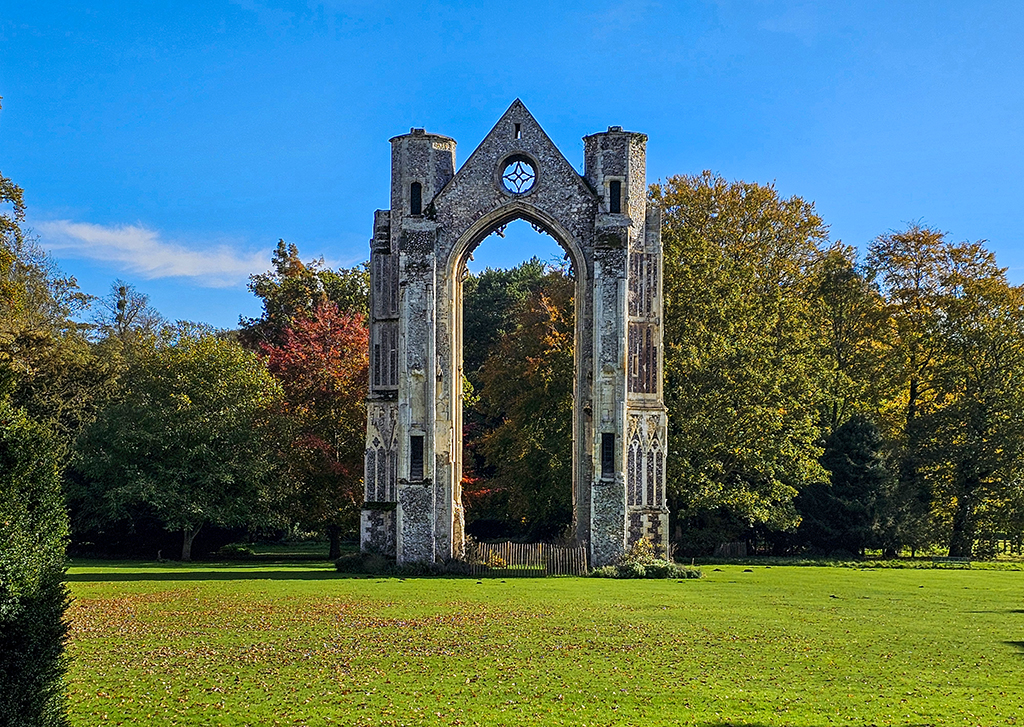
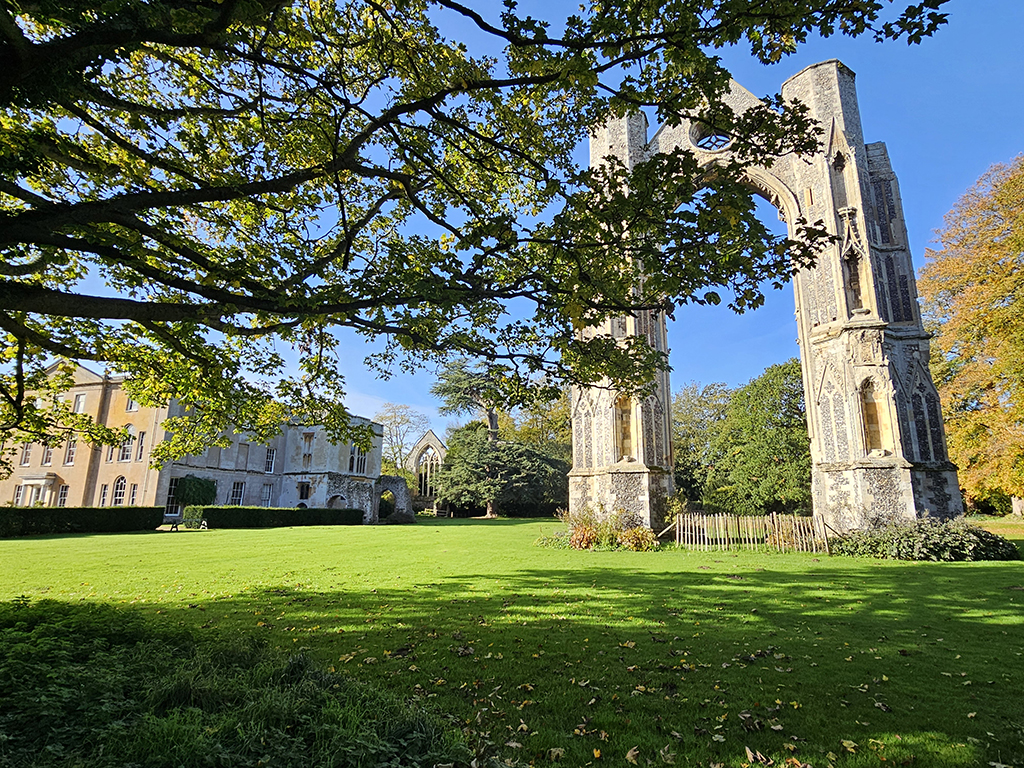
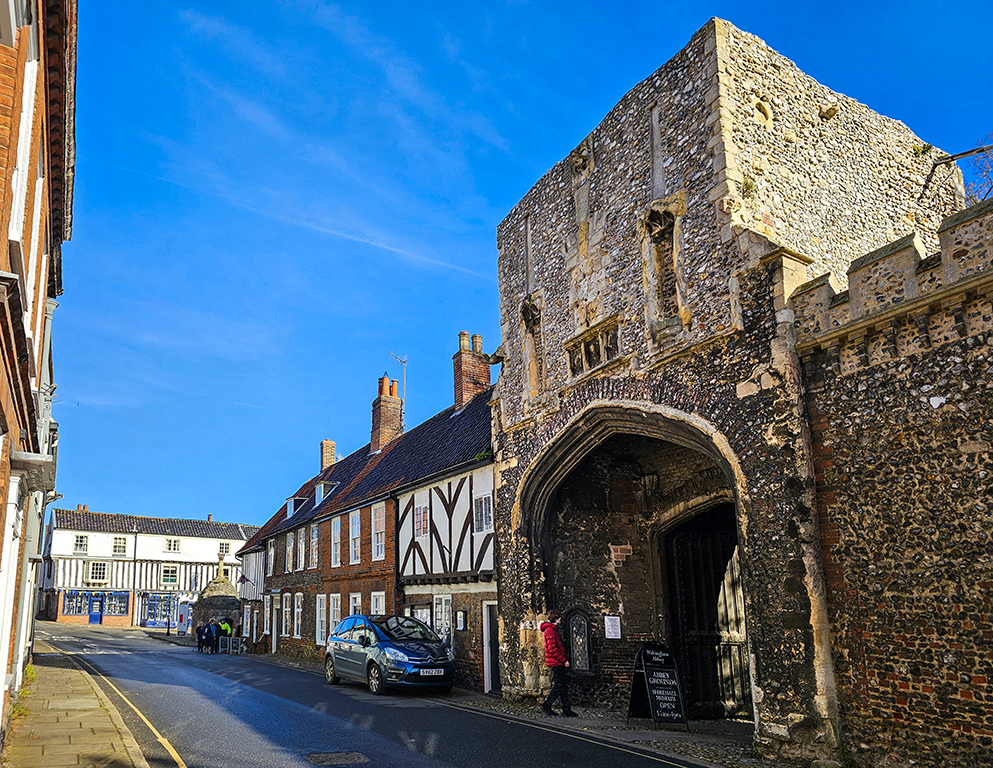
Sarah left the next morning, and after taking her to the station, I continued on to Walsingham, to visit Walsingham Abbey. An Anglo-Saxon chapel and shrine were built in the 11th century. The shrine was recognized as a holy site, and attracted worshippers from across Britain and Europe. Walsingham Priory was built in the 12th century, and was an important place of pilgrimage for 4 hundred years, until the Dissolution of the Monasteries in 1538, when it was seized by the Crown and ordered to be destroyed. In its early years, the Priory expanded to reflect its wealth and importance, and the beautiful East Window that is all that remains of the former church dates to the 14th century. Seven kings of England, including Henry VIII before his split with Rome, visited and worshipped at the Priory. After the priory was destroyed, the site was sold, and various owners expanded the former Prior’s Lodging, incorporating some of the ruins, which became known as Walsingham Abbey. In 1921, nearly four hundred years after the original shrine was destroyed, the local vicar decided to restore the shrine and see if it would attract modern pilgrimages. His vision was successful, and in the 1920’s a hospice and church were built. Today, hundreds of thousands of visitors arrive each year to visit two shrines and a chapel dedicated to the Virgin Mary. Walsingham Abbey is completely separate from the shrines and the pilgrim’s chapel, which I did not visit.
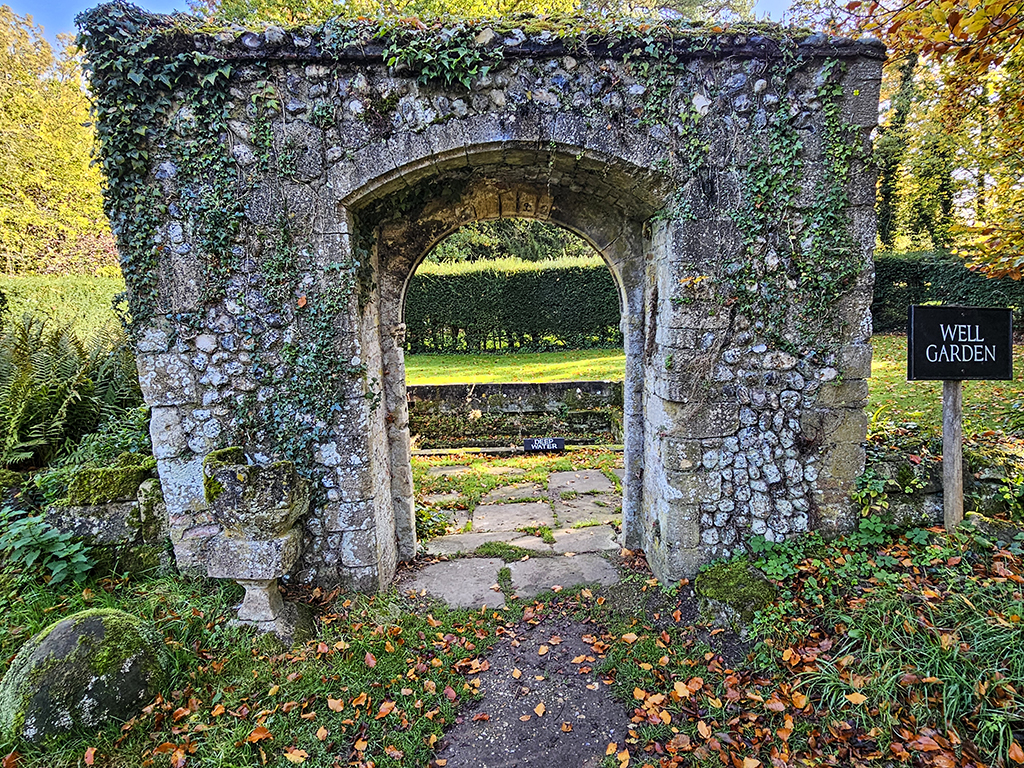
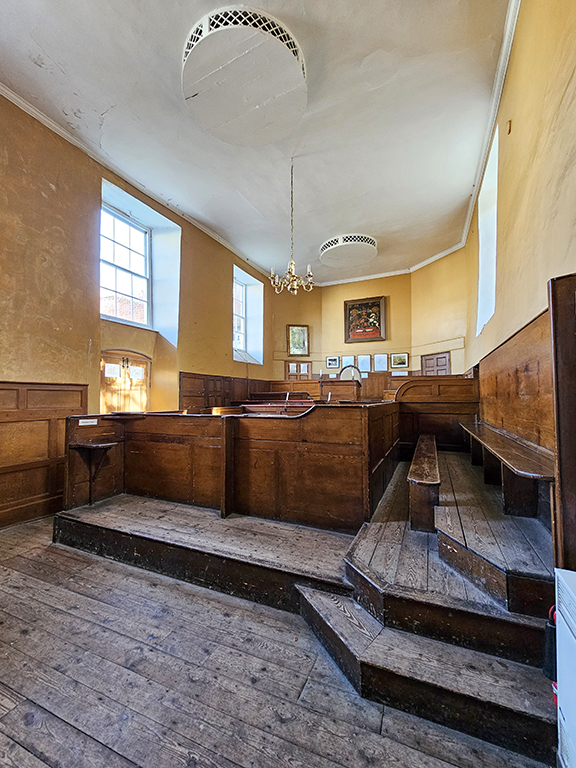
The Abbey grounds are beautiful in autumn, with the romantic ruins of the Priory Church in the 19th century landscaped grounds. You can also visit the Shirehall Museum, housing the former courtroom. From this court, a great many prisoners were sentenced to be transported to Australia, while others were ordered flogged. The courtroom was used right up until the 1970’s (although there is no suggestion that miscreants were flogged, hanged, or transported recently). In fact, transportation was stopped as a punishment in the 1860’s. Flogging continued until 1948, which explains the rather gruesome photos that are proudly displayed in the museum!
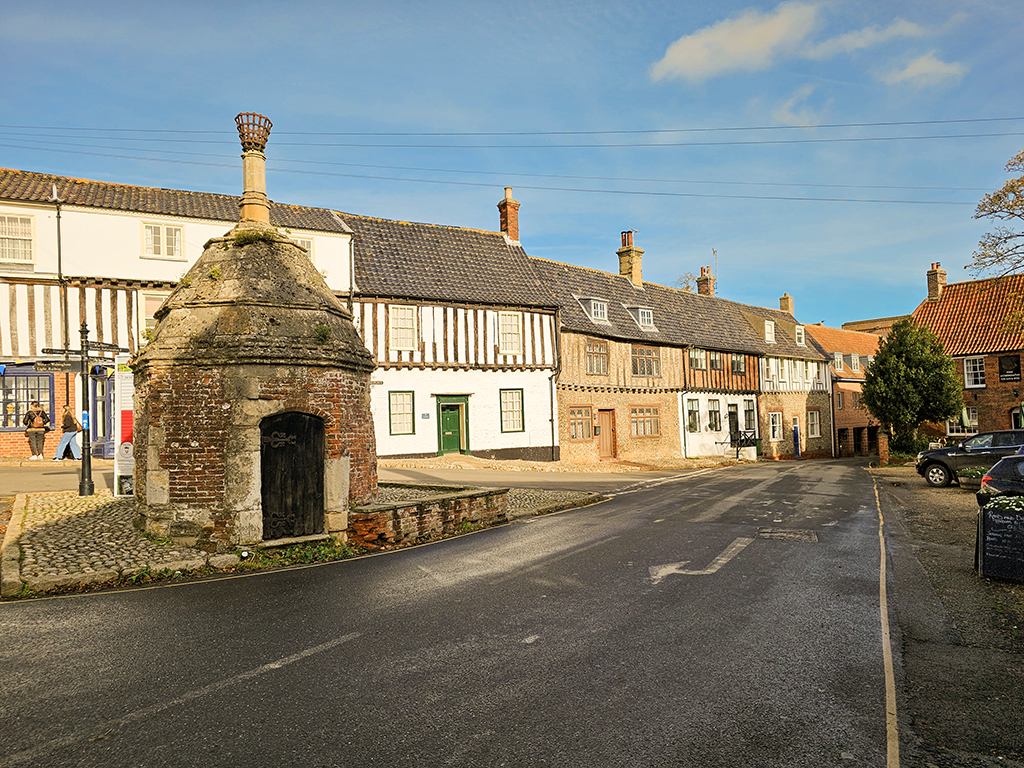
On my way to Walsingham, I had driven through the villages of Little Snoring, and then Great Snoring. One should probably not be surprised that I noticed that there seemed to be a lot more homes in Little Snoring, perhaps due to its proximity to the main road. There is a fascinating church, The Church of St Andrew. I stopped on my return to explore.
The tower was probably built before the Norman Conquest (1066), and was constructed of the most available local stone, flint. Apparently, the art of brickmaking was lost when the Romans left, and builders had to use what stone was available in the area. Flint usually appears as nodules of silica in chalk, and there was, and still is, an abundance of this hard building material available in Norfolk. Initially, the stones were used whole, but by the 14th century it became possible to use knapped flint, that is, nodules that have been cut in half so that the shiny flat silica surface is what appears on the outside of the building or wall. Brickwork and/or concrete is added to both types of flint to provide decorative elements. These flint walls are very distinctive and are seen everywhere in the county. (And yes, for our more alert readers who are wondering, flint is what stone age men used to create axes and sharp tools)

According to the historians who wrote about St Andrew’s Church, flint towers were generally built in a round shape, because the material does not lend itself well to sharp corners. Also, many of the towers from that early medieval period did double duty as lookout towers for protection from raiders from the sea (or the land). Nobody knows why the tower of this particular church is completely detached from the main building, although of course there is much debate among historians.


My next stop was an antiques warehouse that promised lots of interest and managed to be incredibly disappointing. It was in a ramshackle building down a dirt lane, with junky outdoor stuff stacked randomly outside. Stepping inside did not improve things. I have seldom seen such a large collection of unmitigated junk at vastly inflated prices. Nothing was older than mid-20th century.
Friday was my last day in Norfolk, but the forecast was poor, so I decided to stay in for the morning. Lunch plans were for a well-regarded pub, The Vernon Arms. Like many destinations in this county, the village was only accessible down one of several long and very narrow lanes. After a week of exploration, I had worked out that the best option was to try to find one of the routes that travel between large fields, so that you can see well ahead when another vehicle is coming and you can pull into a passing place. After several miles of tiny lanes, I arrived at a surprisingly large village with modern houses around the historic centre. The pub was old, and “not tarted up” as my lovely old friend used to say. Scrubbed pine tables and slightly uncomfortable chairs were the option in the restaurant section, or you could choose to perch on a small stool or sink into a deep settee and try to eat from a plate on your lap. I opted for the restaurant!
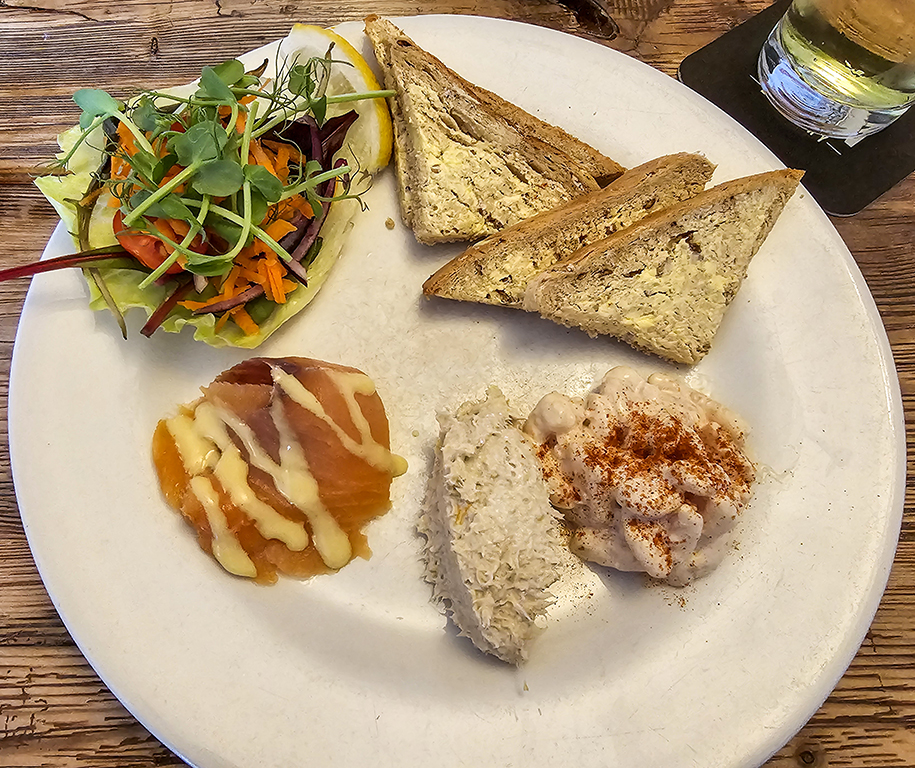
I was one of the first to arrive for lunch, but by 1pm (normal lunch time in UK) the place was nearly full. In addition to a lunch menu with sandwiches, and a “lighter fare” menu, the regular dinner menu was also available, so I opted for two starters. I began with a nicely presented and quite delicious seafood platter. There was a little smoked salmon, some mackerel pate, and some prawns (small shrimp) in Marie Rose sauce. All this was accompanied by a small mixed salad, and slices of buttered granary bread. Prawns Marie Rose is one of my all-time favourite British dishes, usually offered as a sandwich, as a baked potato topping, or as a salad. These days they seem to have been eclipsed by more fashionable crayfish tails, so I am always delighted to find them on the menu. For my second course, I opted for mushrooms in stilton cream sauce with a crusty roll, which were delicious. I decided to forego dessert, as I thought I might find something at the tearoom at my next stop.
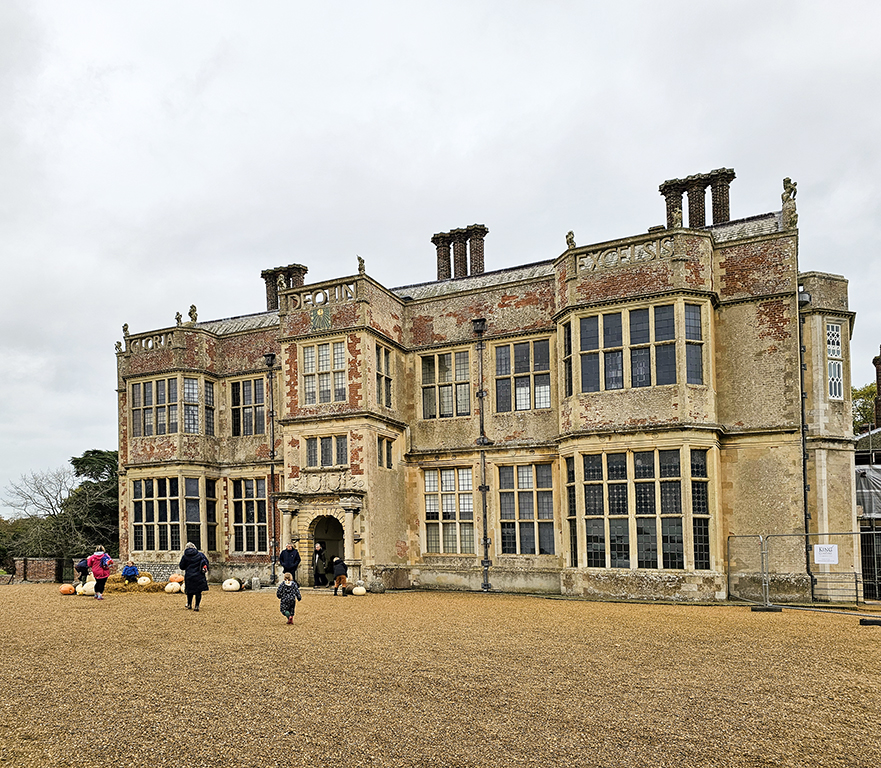
Felbrigg Hall is a stately home, built in about 1620 by the Wyndham family. It has passed through the hands of 4 local families before being given to the National Trust by the last Squire on his death in 1969.
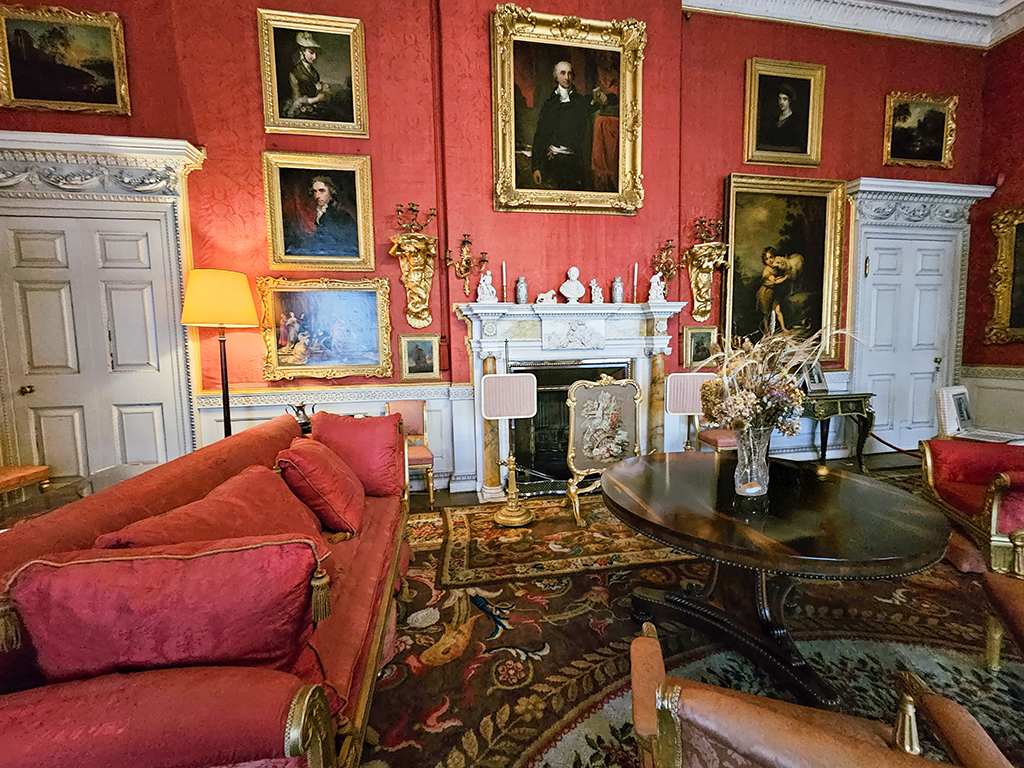
I wanted to round out my visit to Norfolk with a stately home, but as I have a deep-seated dislike of the National Trust and all its works, this one was perhaps a mistake. I found the usual muddy-field-as-parking-lot, for which you pay £5. The enthusiastic volunteer at the information booth told me happily that for the £5 I could park all day! Given that it was already after 2pm, I was not there to walk a dog, and all I was going to do was visit the house, and possibly spend money in the tearoom, I felt that I was hardly getting a bargain. Entrance to the house is £15. There is no discount or concession given even though a large part of the house is currently under reconstruction and inaccessible. The rooms are interesting, in a vastly overblown style that is mostly lacking in any sort of cohesion (or good taste for that matter). They are also quite dark.
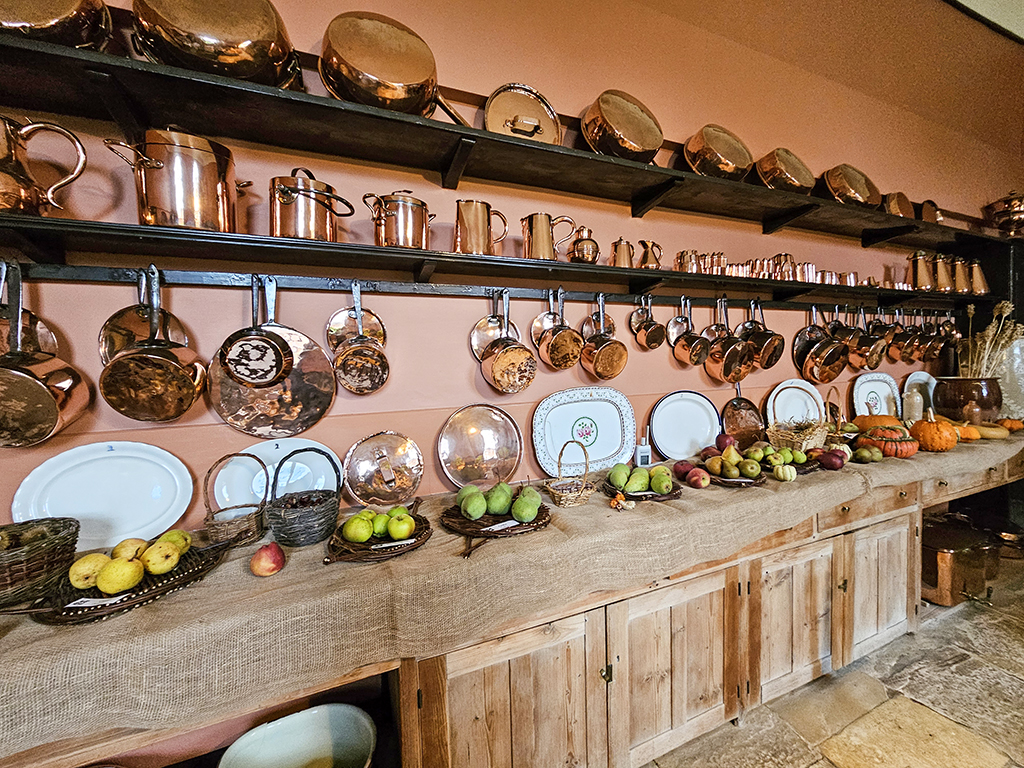
The very keen volunteers in each room were excited to tell you about the rooms and the family members who acquired all the paintings and treasures. I have been in a great many stately homes in UK over the years, and while they are seldom my favourite way to spend an hour or so, I can usually find something to appreciate. On this occasion it was the kitchen. Clearly, the extravagant taste of the owners of the Hall had not extended to the kitchens, which were simple, large, and functional. What made them stand out was the beautifully polished copper pans and other kitchenalia. The volunteers had also created a very tasteful Harvest Home/Halloween decoration with fruits, vegetables, and lots of interesting squashes and pumpkins around the copper displays.
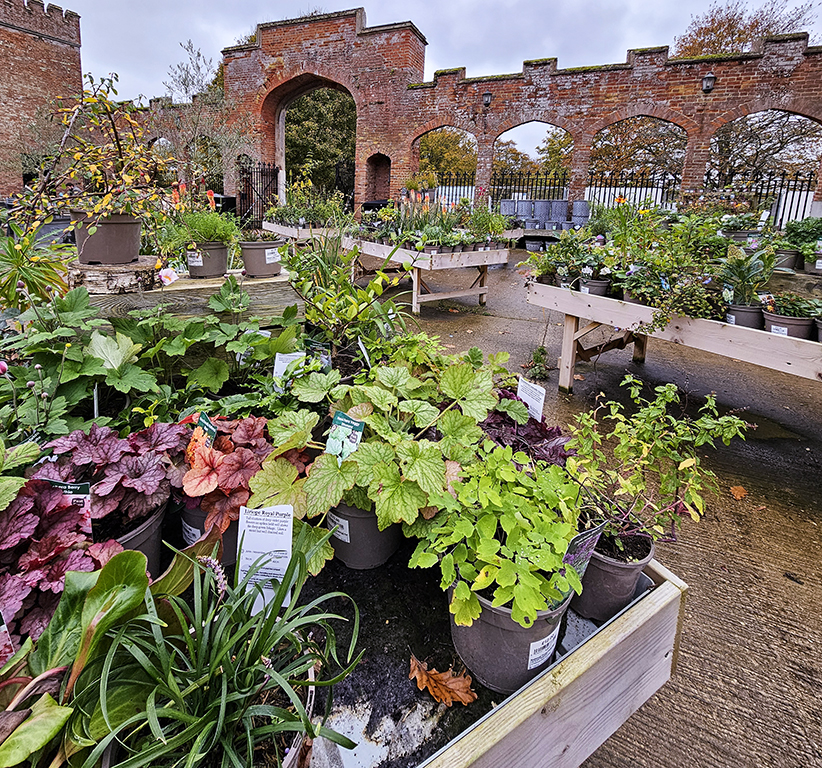
Outside I found the shop (the usual National Trust offerings of kitsch with very little that was local), and a large courtyard with plants for sale. These did look like something that one might enjoy, but since I am still two weeks away from home, I can’t consider buying anything for my garden. It happens to be half term in this part of the country (that is the week’s holiday for schoolchildren that occurs on a staggered system in October), so there were a lot of badly behaved children rushing around and being generally noisy and irritating. I decided to pass on any temptations from the tearoom.
I made my way back through Cromer to the holiday let, and arrived just before the drizzle turned into heavy rain for the rest of the day and overnight.


Leave a Reply