
November 8 to 14
Change day started out well enough. I had made a good start on preparations (and even part loaded the car) the day before. I was out of the driveway well before 10am. A certain amount of wrestling with the two routings on my phone and the car was required, so it took rather longer than it should have done to get out of Buxton and on the right road that would avoid the half-hour delay that I knew about on the A6 route.
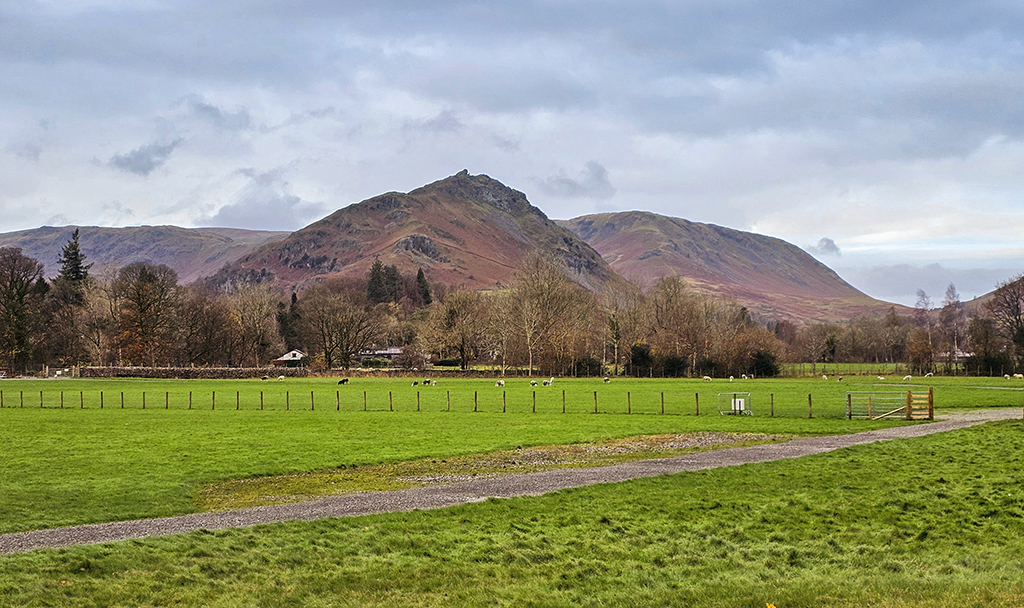
Buxton may be England’s highest market town, at 1000 feet, but it is still down in a valley, and as I climbed out, the mist came down, and visibility was very poor. This was a road that I once knew very well and always enjoyed because of the stunning views in all directions. No views today. However, every layby was packed with parked cars as intrepid British walkers were out and about on the hills, despite the cold and drizzle, and the mud underfoot. Remember that what the British call walking, Americans call hiking. So, a walk is likely to be a trek between 3 and 10 miles, over hills, on the many trails that crisscross the countryside.
Eventually the winding roads came down into Macclesfield and then on to the south side of Manchester. Again, I needed to ignore attempts by the car and the phone to put me on their routings, but this is my old stomping ground, and I knew where I wanted to go. As we passed the outskirts of Manchester, the sun came out and there was blue sky and puffy clouds. Sadly, the weather closed in again a few miles north.
There was no practical way to avoid motorways on this journey, and I knew that there were at least two sections of construction on the M6, so I was mentally prepared for a lot of sitting in traffic. The first slowdown occurred much sooner than expected, as an accident brought the highway to a near standstill. Half an hour later I passed two very sad-looking cars, but the owners were standing talking to police and there had been no ambulances, so it was a good day for them, although I don’t imagine they thought so! I cannot get over the sheer volume of vehicles on the motorways these days. In the early 90’s there were 21.2 million cars registered in Britain. Today it is over 36 million. Then there are the trucks. The speed limit is 70, but many cars passed me in the fast lane doing at least 80 and more.
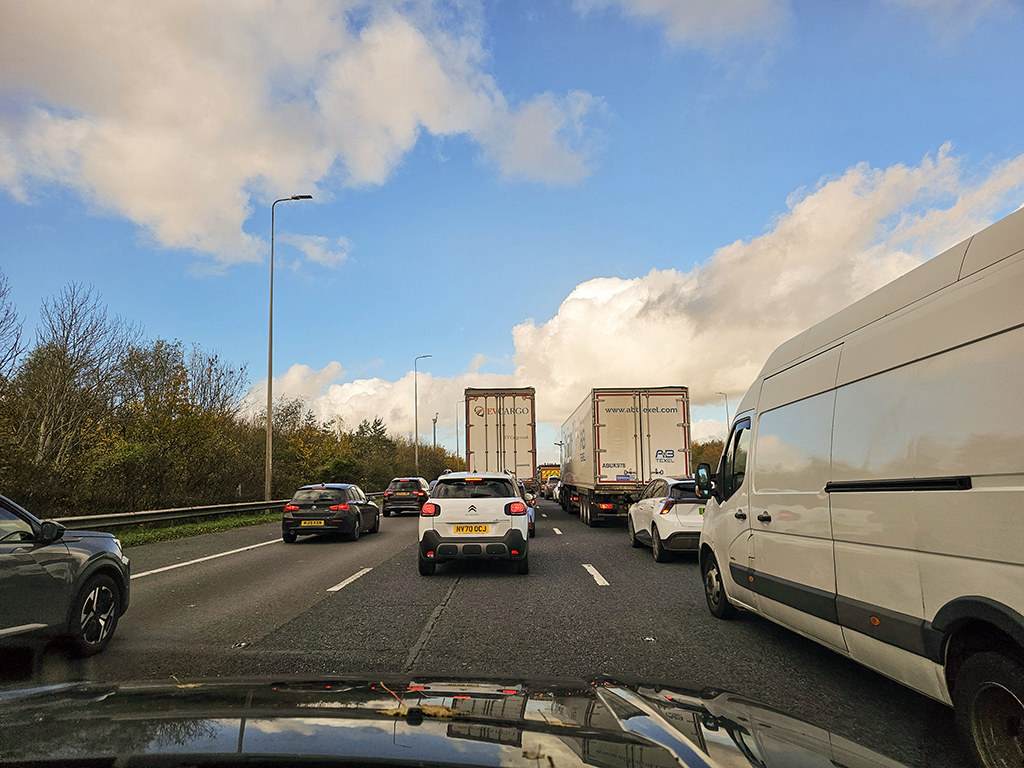
Fortunately, after the accident slowdown, there were no further delays even as I passed through the construction areas. Many fewer trucks on the road on the weekend. Eventually I took the turnoff for The Lakes, and was back in some of my favourite countryside.
Dick and I first visited the Lake District in 1976, and I have been returning regularly, on my own, and with Dick, ever since. For a while we thought we would buy an apartment in one of the towns, but prices went through the roof, and we found our wonderful house in Yorkshire. No regrets, especially when I see the traffic and how the honeypots (the main tourist towns) are heaving with tourists, even on a dank day in November. Still, this is countryside that I love. I have walked all over it, bagged many of the peaks, and know it better than any other part of England. As I drove down into Keswick, it felt like a real homecoming.
The euphoria did not last. I had no trouble finding the parking lot with the space designated for the apartment I was renting. As I arrived, another car was parking in the space beside mine, and it was quite clear that I was not going to fit. The ladies in the other car were very helpful, maneuvering their vehicle so it was tucked right up against the wall, thus allowing me to actually get out of mine. I was parked right in the middle of my designated space, and there were just 6 inches on each side of my wheels. I had visions of coming back to the car during the week and finding that there would be no way of getting into it. Granted, the Freelander is an SUV, and a bit larger than the little runabouts that are favoured by many Brits, but it is not considered a large car by any means!
The agency was entirely unhelpful. I was essentially told to go jump into Derwentwater (that’s the lake). “Nobody else has ever complained about the parking!” As far as I am concerned, the listing should have specified that there is designated parking for a small car only. I already knew that the parking lot was not beside the accommodation, but I had expected it to be closer than down a lane and across the road before the entrance to the building. Something that would eventually amuse me (just not that day) is that apparently the problem with the parking is entirely my fault for having a “big” car. A very British attitude. The Freelander is not even that big, there are two Land Rover models that are larger, plus a host of SUVs from other manufacturers.

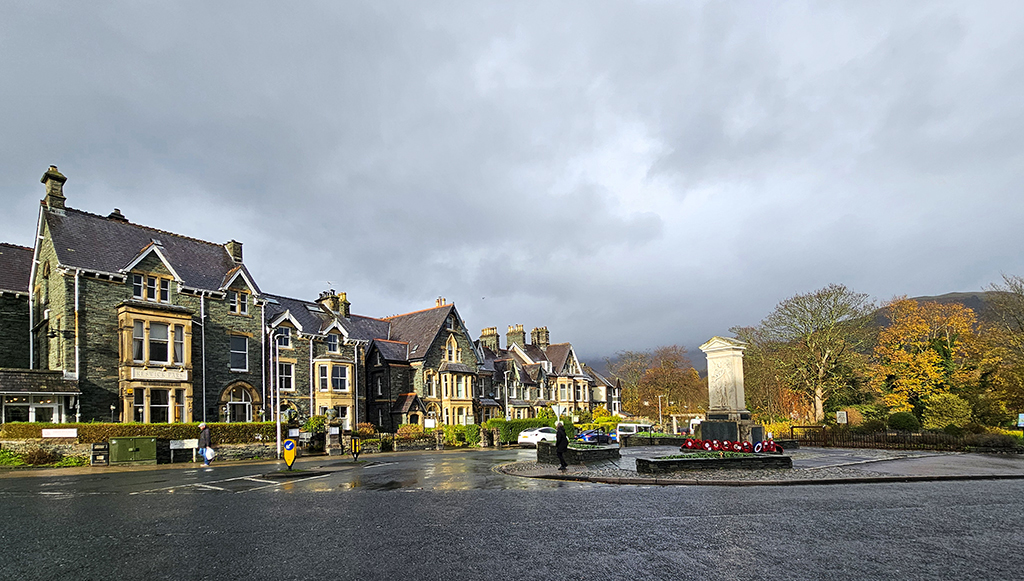
The Royal Oak (the building now converted to apartments) is a former coaching inn, and there is a rather florid description of its past at the bottom of the stairs. Apparently, its history goes back to Elizabethan times. One doubts that there is any fabric of the building that is so old, but there was most certainly a surge in prosperity in this area during the 16th century. Once the monasteries were dissolved and lost their grip on the economy, wool and sheep diversified, and there was also an increase in mining in the area for copper, followed by a new material, graphite. The 18th century seems to have been the heyday for the packhorse trade, and Keswick and the Royal Oak were also important coaching stops. Later, the house was frequented by Lakeland poets and writers including Coleridge, the Wordsworths, Shelley, and Sir Walter Scott. Tennyson and Robert Louis Stevenson were also visitors.
In addition to the story of the hotel, there is a large, framed plague with excerpts from the diary of Effie Gray, written on her honeymoon in 1848 with John Ruskin. They stayed here in the Royal Oak. I was amused to read, “This is a pretty place, but the day is not good, so I will say nothing about the Hills, which as far as I can see, are merely good hills without colour or crag like our Highlands, but I will tell you more about them when I get up Skiddaw. But still everything looks very sweet. We went to the one church this morning, and had a good sermon, we were rather late and had all the juveniles in the place staring us in the Face.” Later, Effie was rather more complimentary, and wrote about a sail on Derwentwater, “which is small but lovely” and their excursion to the top of Causey Pike, with white ponies and a guide. Today’s walkers have to climb the 2090 feet without benefit of equine assistance. Even so, Effie and her new husband had to come down on foot because it was so steep, “and we felt all over aches and bruises, but the view was beautiful…”
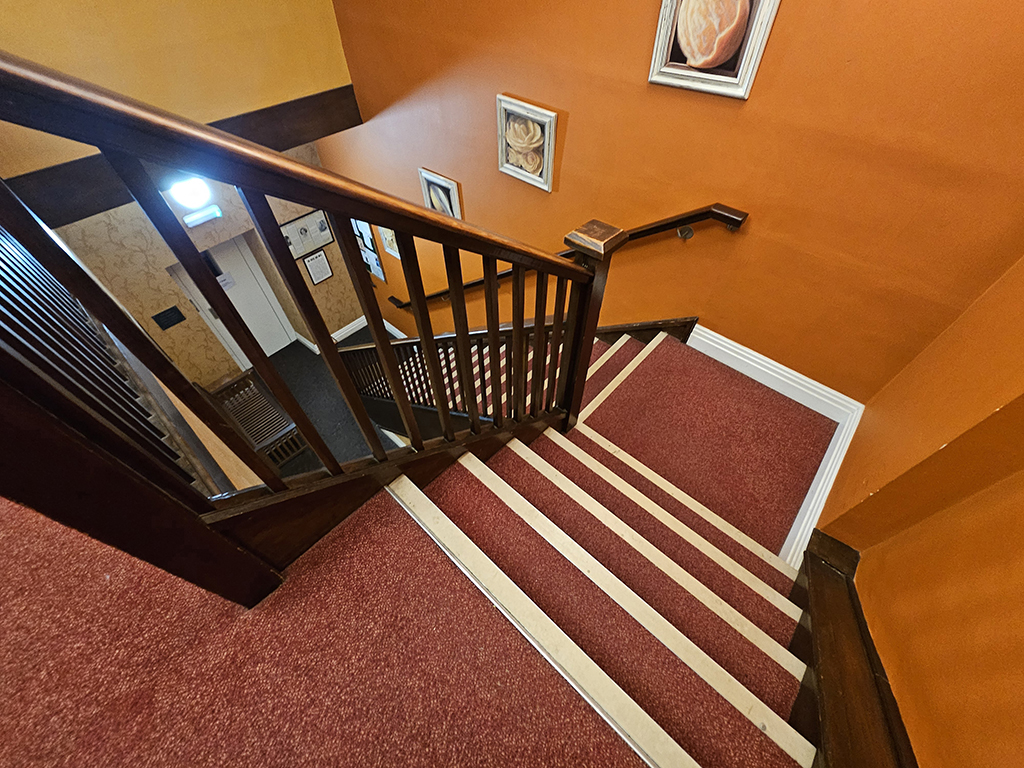
After I figured out the somewhat obscure instructions and gained access to the Royal Oak building, the disappointments of the day were not over. I was aware that the flat is on two floors, with the second, upper floor having the kitchen and living space (to take advantage of the views). What was unexpected was that the elevator to the first level was out of order. So everything had to be carried up two long flights of stairs. A review of the rental from a month earlier suggested that the elevator is often out of order, but since it was only mentioned by one guest, I had assumed that they had been unlucky. From the eyeroll of the neighbour, I am pretty sure it has been out for weeks, if not months. After my four trips back and forth to the car, and then carrying everything up the stairs, I could not decide whether I needed a cup of tea (and chocolate) or a large whisky. Ultimately, I chose both.
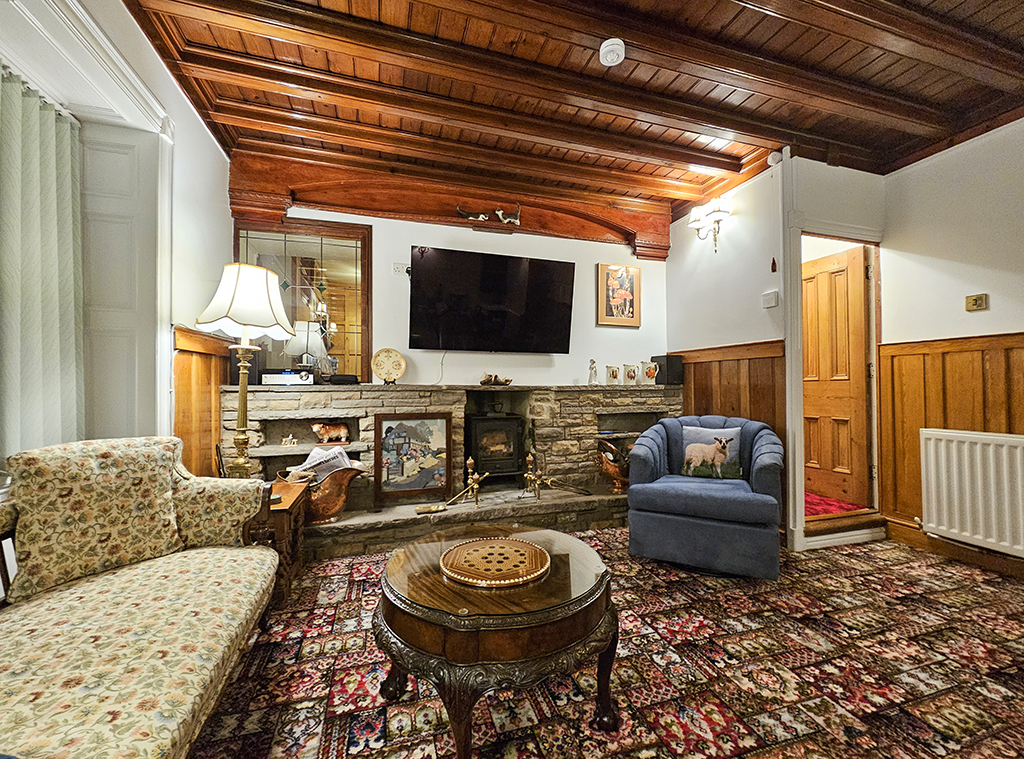
The apartment is pretty much as I had expected. Reasonably spacious and well equipped, relatively clean, and there are signs that the owners are gradually trying to update everything. Unfortunately, the (recent?) painter managed to be very sloppy, and there is paint all over the carpets and the windows. The carpets are badly stained, but again, clean is what matters more. No extra touches here. This is the Lake District, you can do as little as you like and pretty much charge what you like! There were tea bags and tubes of instant coffee, but no sugar, no milk in the fridge, and no cookies.
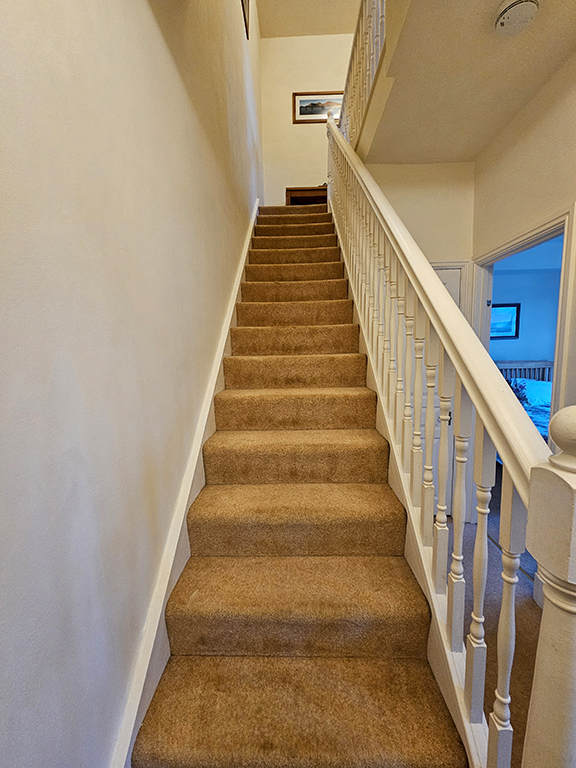
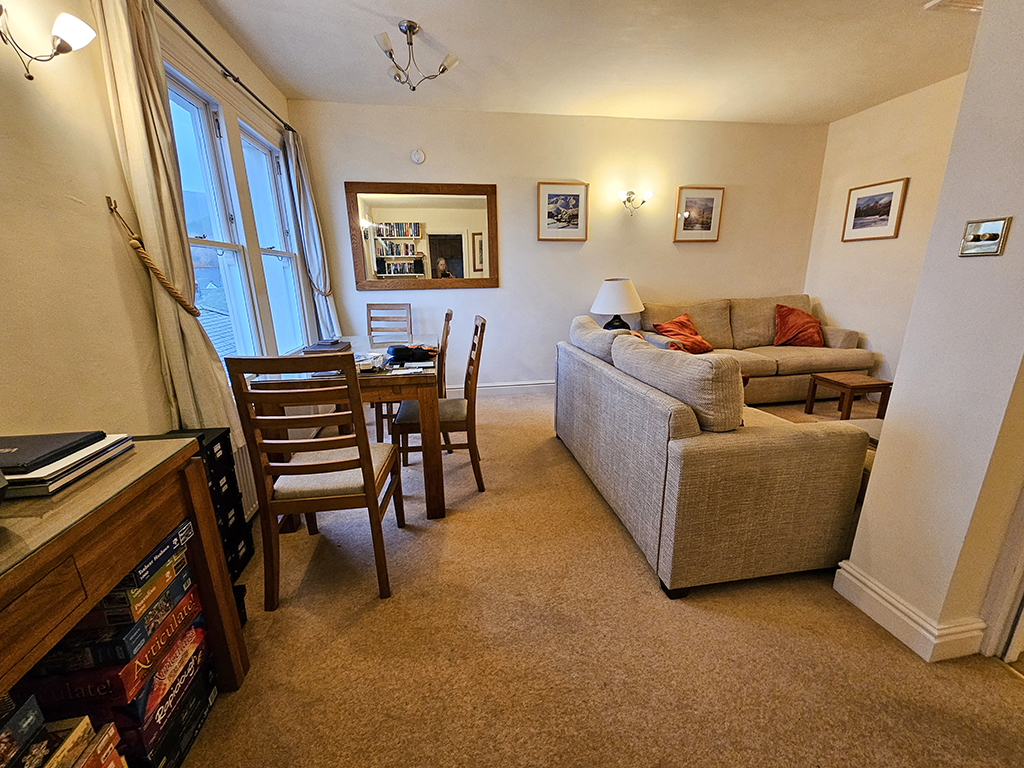
After what had turned out to be a long and tiring day, I rummaged in the fridge and prepared myself a creation of toast with cheeses and chorizo, heated in the microwave.
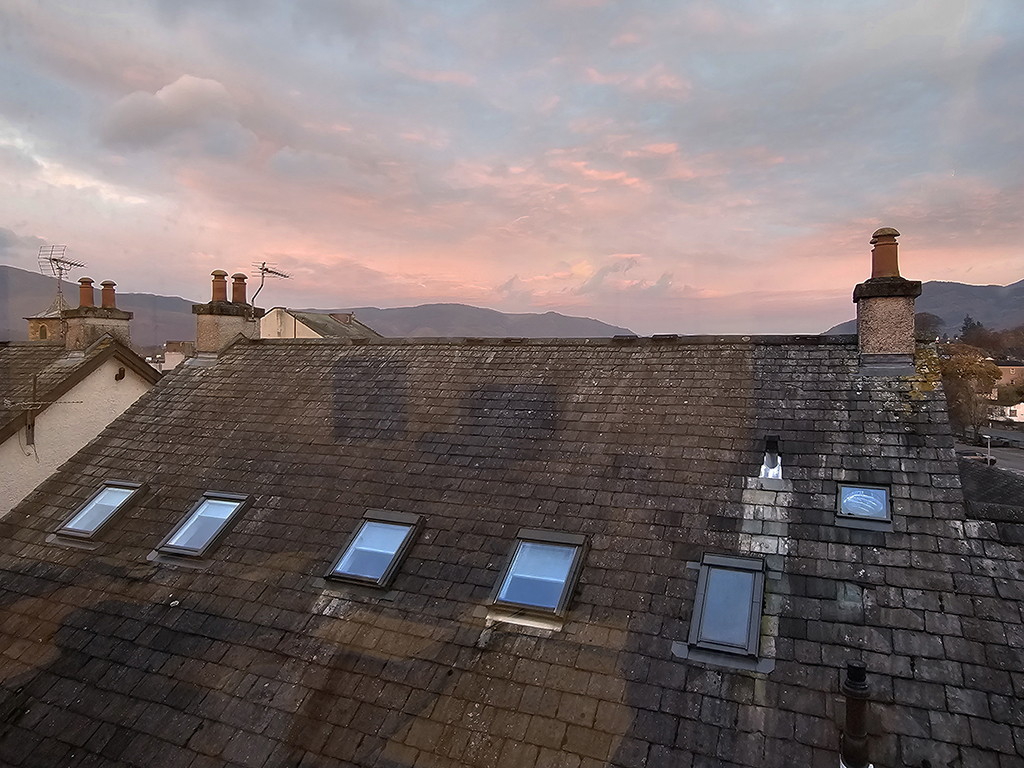
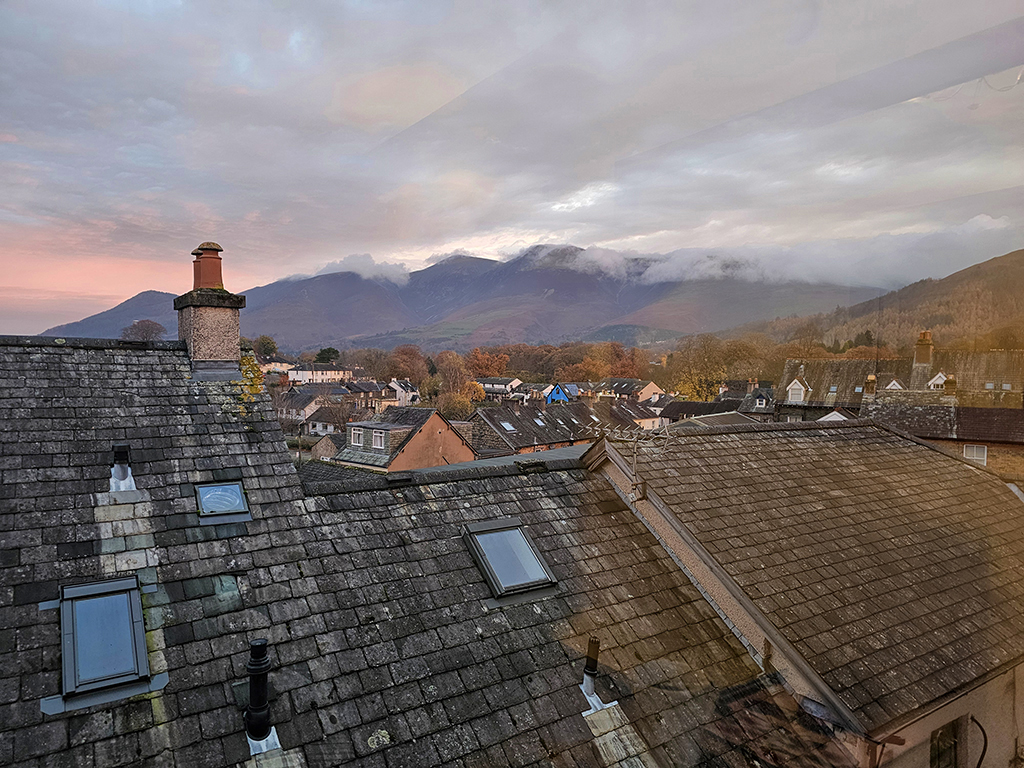
The wispy sunrise was the best part of the next day, sadly it was then very wet until late afternoon.
I had booked for Sunday lunch at a nearby country house hotel where we have enjoyed meals in the past. This time it was even better! What was looking quite old fashioned and tired a few years ago is now smartly refurbished in a style that suits the historic venue, and yet is clean and fresh. I was far too early, so after sitting in my car waiting in vain for the rain to slacken, I scurried through the front door and found the comfortable lounge. I enjoyed a cappuccino while I waited for the lunch service to begin.
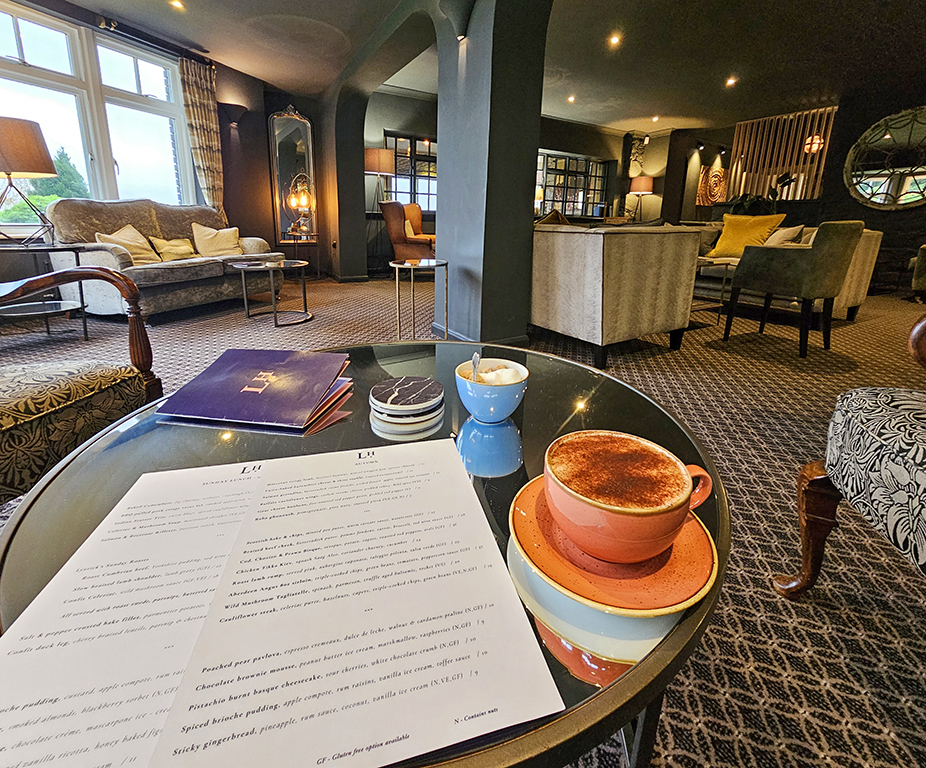
Sunday lunch is a very British tradition that is still going strong. It is the day when the big roast is served (with Yorkshire pudding, even if you aren’t in Yorkshire). It is a mid-day meal. In fact, my dear Auntie used to refuse to go out to a restaurant on Sunday evening, because she was certain that the food would be mostly left over from the lunch, and the staff tired and cranky. Experience suggests that she was quite right! Typically, in a restaurant there will be several choices of roast meats (beef, lamb, pork), or you can often have some of each. The meat is accompanied by generous portions of a mixture of vegetables, and plenty of potatoes. There are usually alternatives for those who prefer something other than meat. People still get dressed up for Sunday lunch, even the men!
I started with a wonderful celeriac and mushroom soup. It was incredibly thick, more of a potage, and absolutely delicious. Instead of a meat choice, I had the hake, which was coated with crisp panko and served with parmentier potatoes and a pea puree. It was excellent.
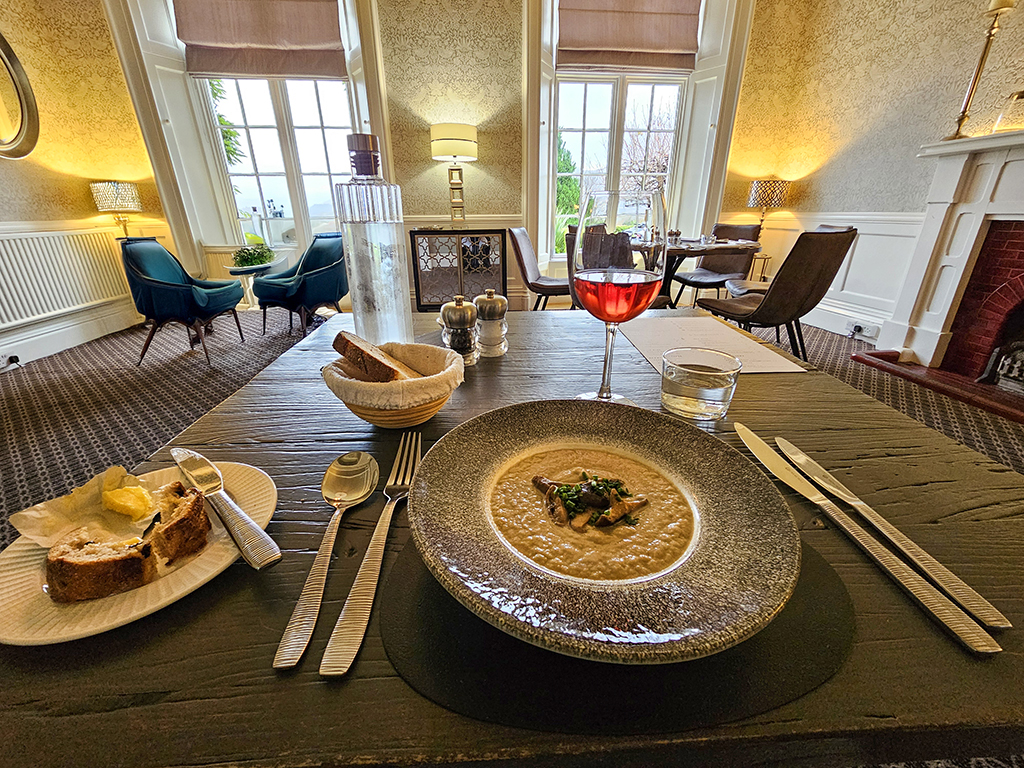
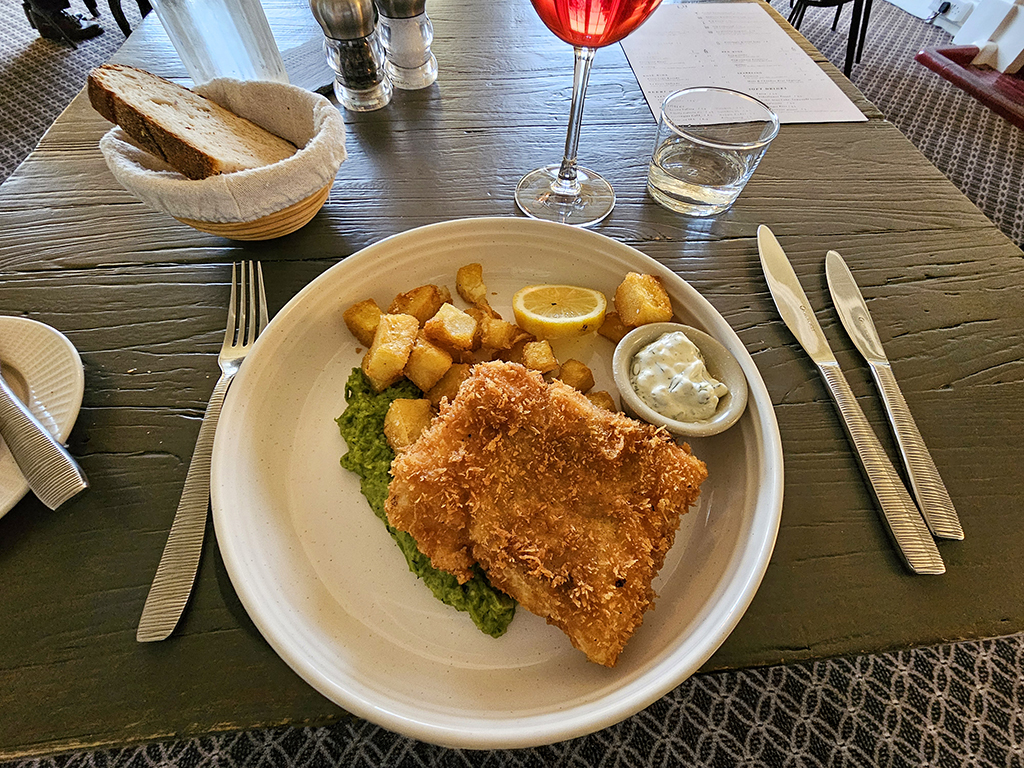
Something that I always appreciate in this country, and miss when we are elsewhere, is how hot the food is generally served. It is quite unusual to be given a dish that is merely warm, and usually the plate is also heated, so that the food does not get cold quickly. My fish was piping hot, as were the potatoes. One is pretty sure that everything has been cooked to order, not sitting on steam tables.
Much as I would have loved to try a dessert, having eaten all of the soup and most of the main course, I had no room for anything but a cup of coffee before I headed out into the rain to return to Keswick. The parking space was as I had left it, so I was able to park and get out of the car. After a bit of quiet time to just sit, digest, and read a book, I spend the afternoon researching the possibilities for alternate accommodation. The prospect of having to simply stay in town because I couldn’t get into the car, or the other option of having to pay for overnight parking in a public lot if I returned to find that someone had parked too close, was a serious concern. I spoke with the neighbours and knew that while their car would be gone on Monday, after that there would be someone else using their space, and almost certain to block me in.
The next morning, I made the decision to abandon the Keswick apartment, finding a holiday lodge near Ambleside, and booked it for Tuesday through Saturday. After spending hours doing the research and making the reservation, I was ready to get out and explore Keswick.
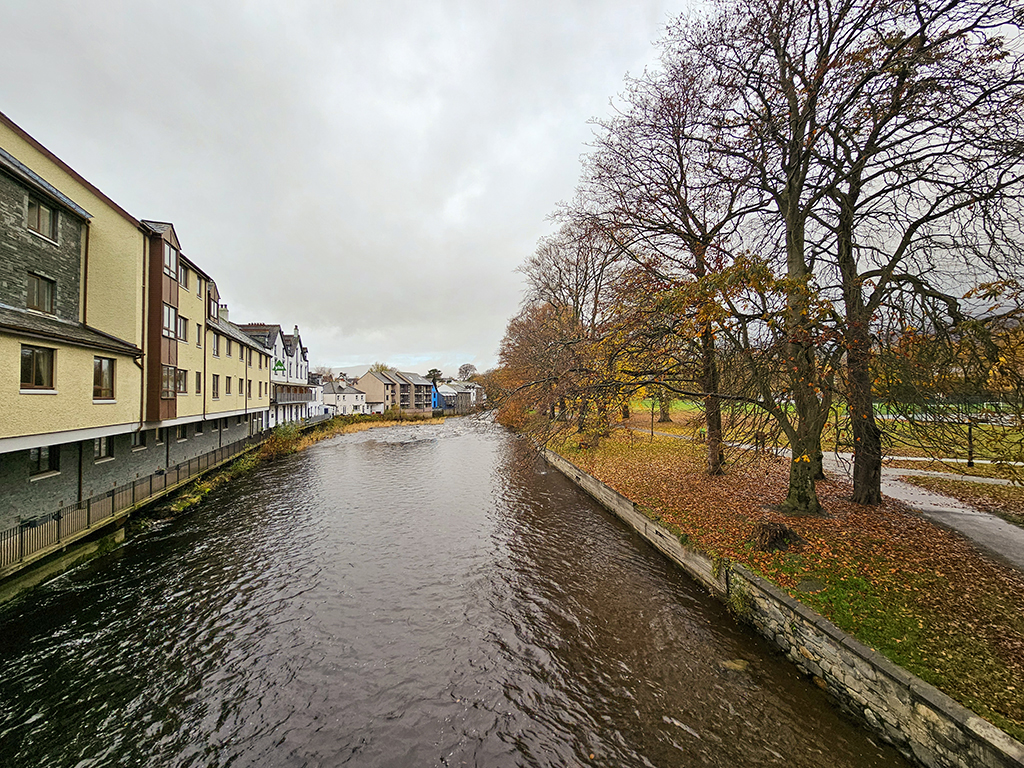
There was a time when we thought we would like to buy a home in Keswick. It has been a market town since the 13th century, and was an important mining area for copper, graphite, and slate. Since the 18th century it has been a tourist hotspot. It was a favorite haunt of the Romantic writers and poets, and each year it hosts an evangelical gathering that generates well over 2 million pounds of revenue annually. Keswick is one of the Lake District’s “honeypots’, and attracts something over half a million visitors each year. Interestingly, that figure of half a million is likely to be highly inaccurate. As far as I can tell, they only count people who call in to the Tourist Information Centre. So, for example, I would not be counted, because I did not need their assistance. Many of the visitors come for the walking. They set off each day to hike the hills of the Northern Lakes, and then collapse into the tea rooms after their day out. Bad weather is the norm, but these tourists are intrepid, and you see them out in their waterproofs and hiking boots even when the rain is falling. The wettest place in England is Seathwaite (over 3550mm, 140 inches a year), which is just nine miles south of Keswick!
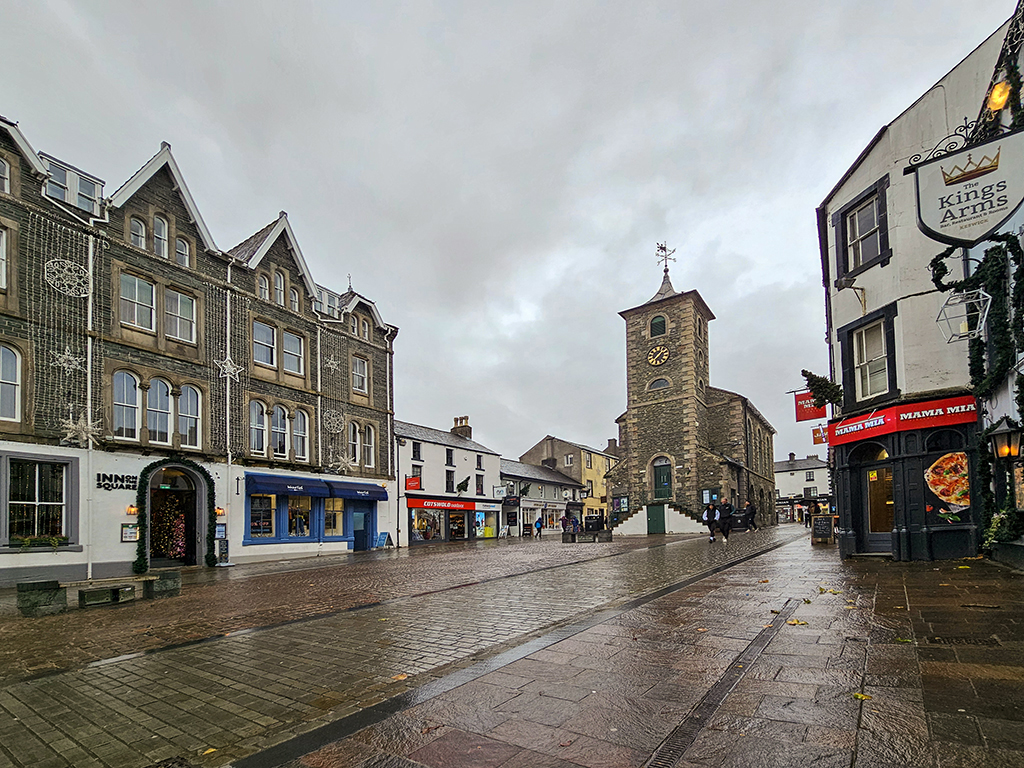
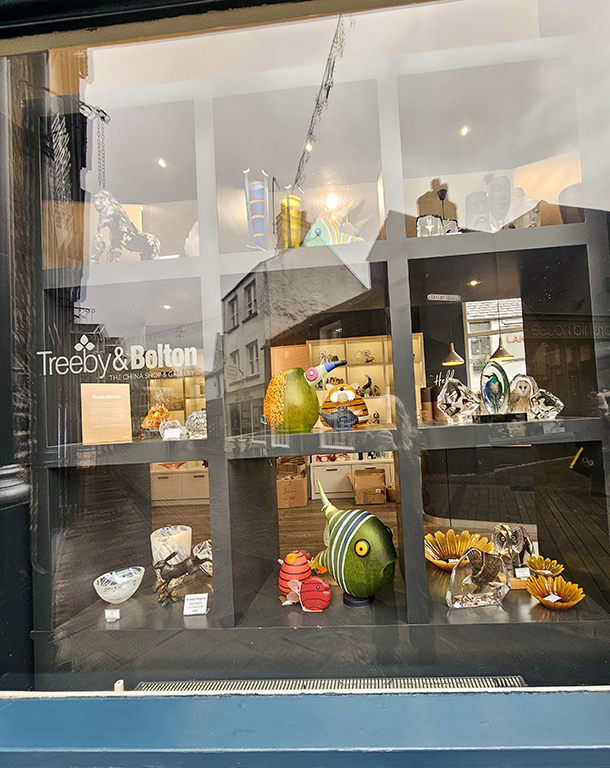
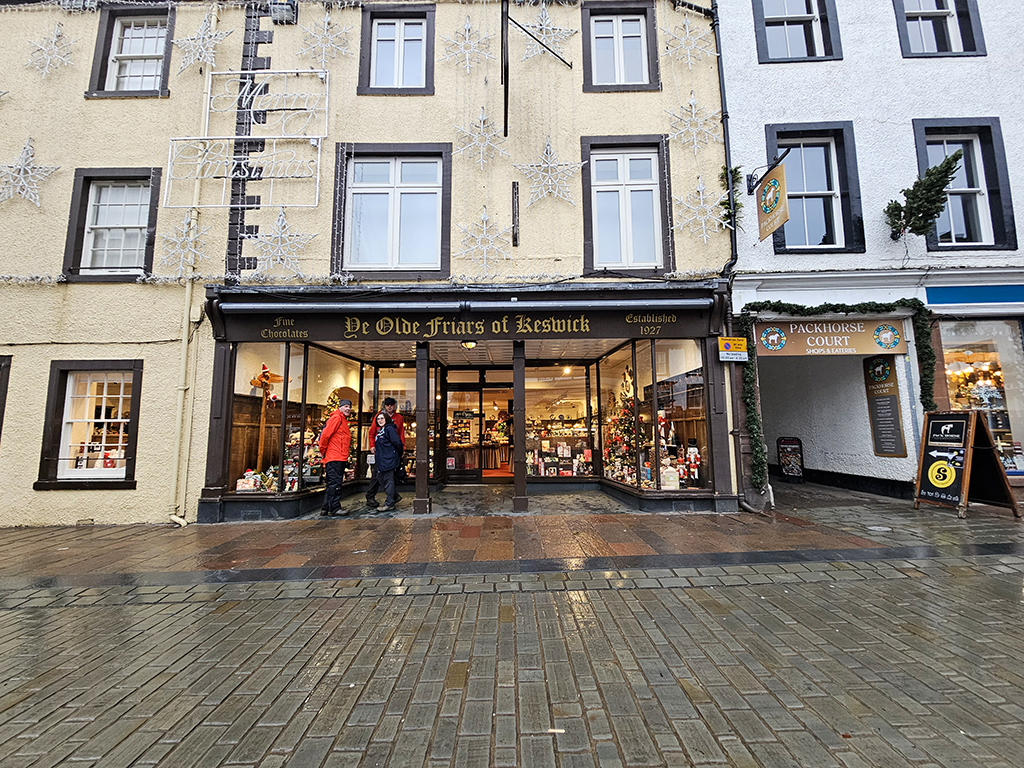
Over the years we have enjoyed our share of the walks in the area, and visiting the various interesting shops in the town. As I walked around, I could see that this is no longer the town that we knew so well a few years ago. Many of the independent shops are gone, and their places have been taken by some of the chain stores that appeal to a younger demographic, and by a great many charity shops. I was unable to find a single restaurant in the town that had consistent reviews and served food that I would want to eat. The china shop now sells only modern art pieces, and those small shops that are not outdoor clothing merchants all seem to be pitching the same stuff. At least the lovely bakery and tea room, Bryson’s is still in business after 75 years, and Friar’s Chocolate Shop is nearly 100 years old. I was glad to see that some things remain the same!
Tuesday, I got up very early, and with barely a pause for coffee and toast, I started packing up and staging the bags in the hall. I felt reasonably confident that I would not be blocked in before 10am, but I wanted to be out of the parking lot as early as possible. The forecast was for rain all day. I had several very helpful notes from the owner at the lodge I was moving to, in fact she told me the evening before that I could arrive any time from right then! This was very helpful, because it is only 40 minutes from Keswick to the holiday park. I had everything loaded (5 trips) and was out shortly after 9am. It was raining, but not hard enough that I got soaked. Normal check in time would have been 3pm, I was at the lodge just after 10am.
As soon as I got on the road the rain got heavier, and the main road, A591, was starting to flood quite a lot as I drove south. I noticed that even the intrepid Brits were staying home, with few cars in the various laybys and no sign of walkers on the roads, apart from the occasional person with a bedraggled dog. The car park in Ambleside was quite full, so I assumed that people had decided that this was a day for shops and tearooms.
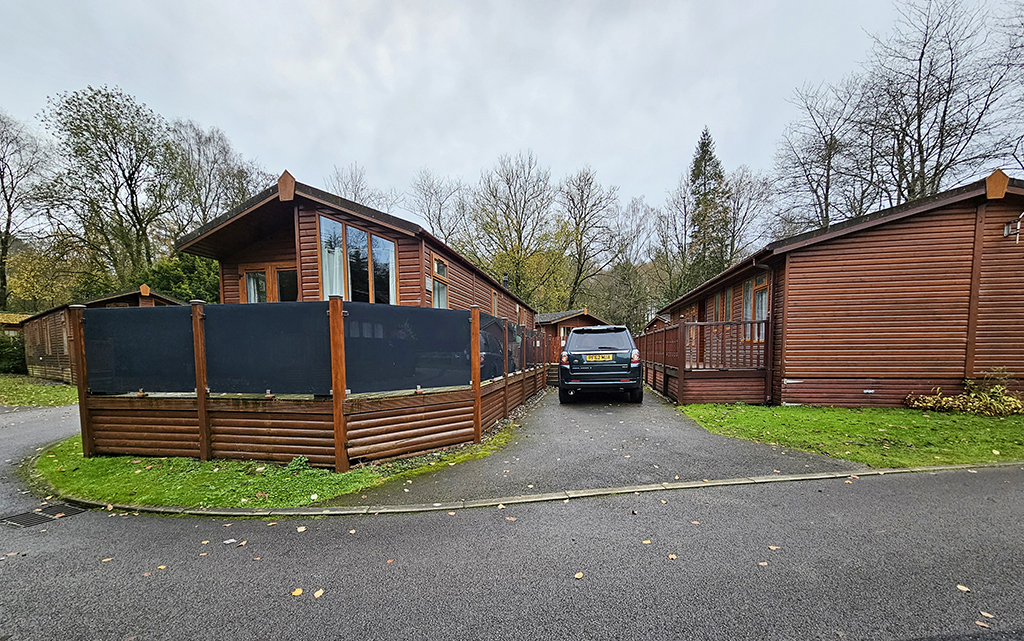
I have never visited a British holiday park, and certainly never set foot in a “lodge”, so this was to be a new experience. The lodges are something between a fixed trailer (caravan) and a cabin. Many are sold to individual owners and can be privately rented. The one I booked is remarkably spacious, certainly as roomy as the apartment in Northumberland, or even the one in Keswick, with the possible exception of the kitchen space. Two bedrooms, two bathrooms, generous living/dining room, and a well-equipped galley kitchen. Parking is right beside the lodge, and hooray! I could get the doors open on both sides of my car!
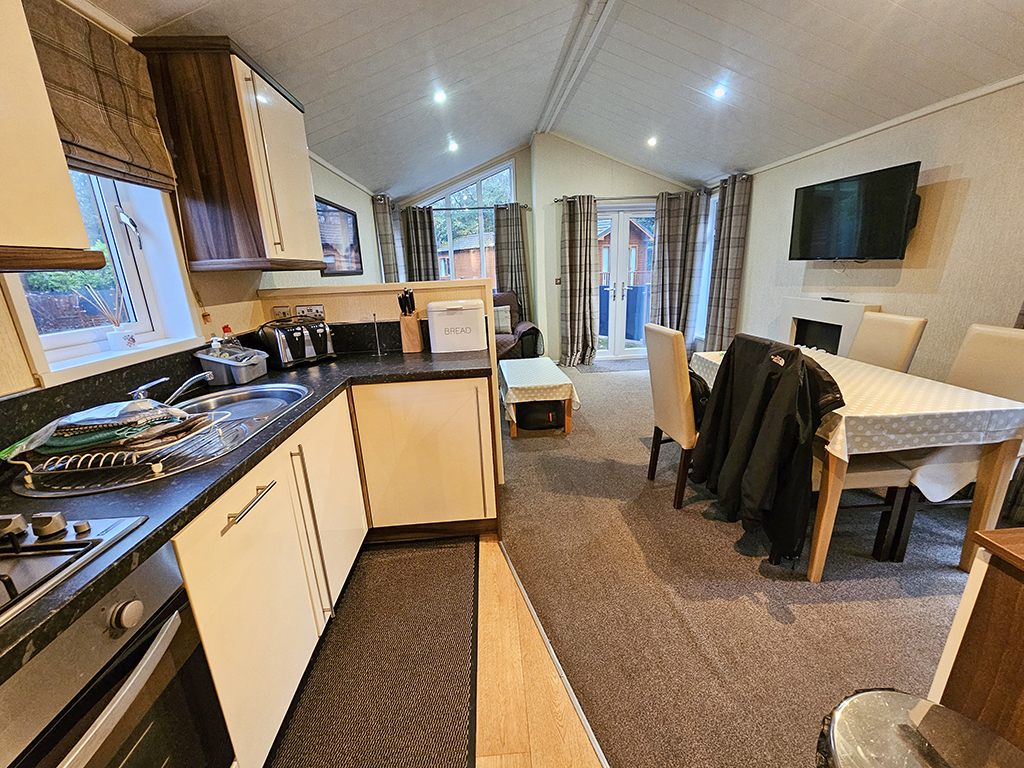
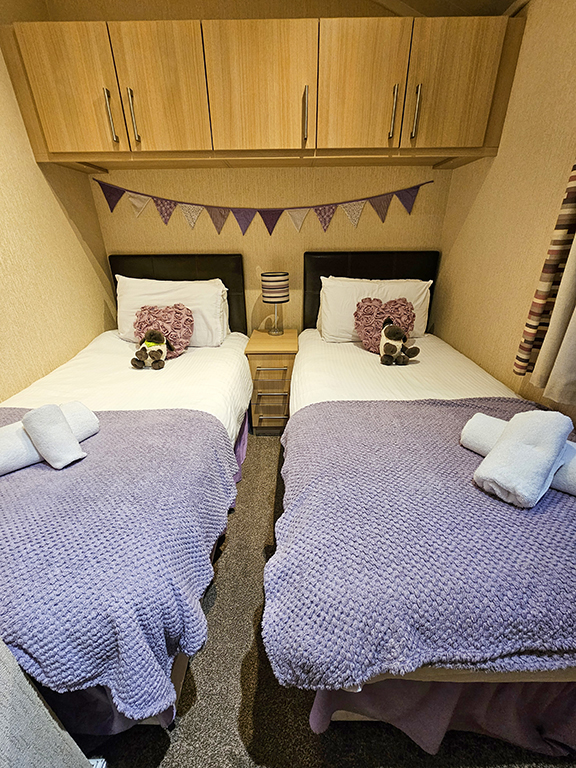
The owners seem very nice, and we carried on a conversation online, as the helpful lady made sure that everything was fine and helped me to work out how to operate the heating system. In fact, half an hour after I asked how to operate it, two fellows from the park maintenance department knocked on the door, just making sure that everything was working properly.
After the early start and all the exercise, not to mention stress, I was happy to spend the rest of the day relaxing and catching up.
Wednesday was my day for visiting Ambleside, our favourite town in the Lake District.
The weather was smiling! Blue skies and sunshine. I was in the parking lot by 10:30 and had time to walk all around the town before my lunch reservation.
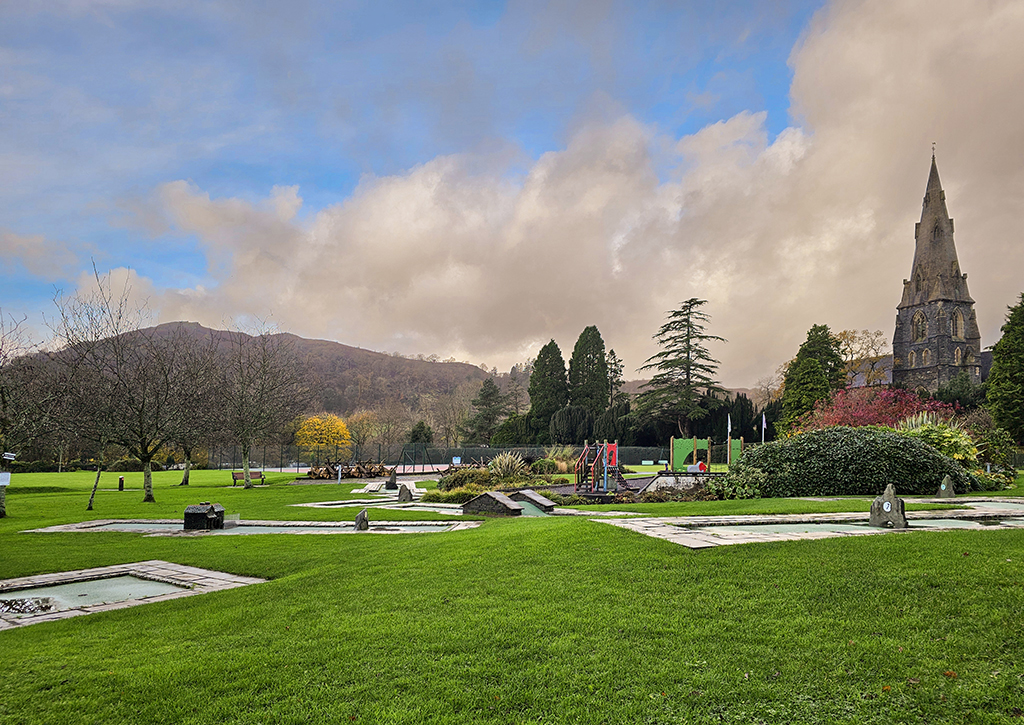
Some familiar shops are gone, but they have been replaced by other independent (and interesting) stores. Only one charity shop, and the chain stores are all of the outdoor clothing type. Of course, there are lots of restaurants and tearooms, but even these are mostly unique and different from each other.
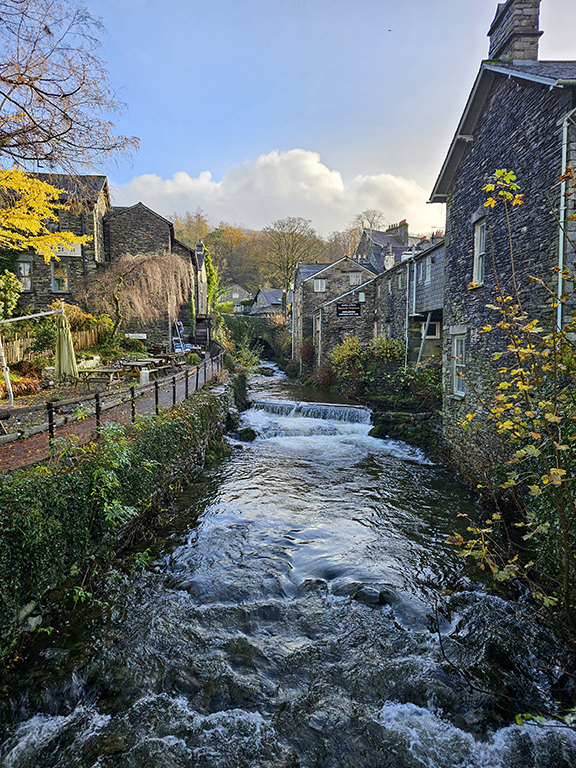
I hope you enjoy these pictures from my walk around Ambleside! Travel writers might post 20 pictures of New York or Hong Kong, me, I put up 20 pictures of a small town in northern England…

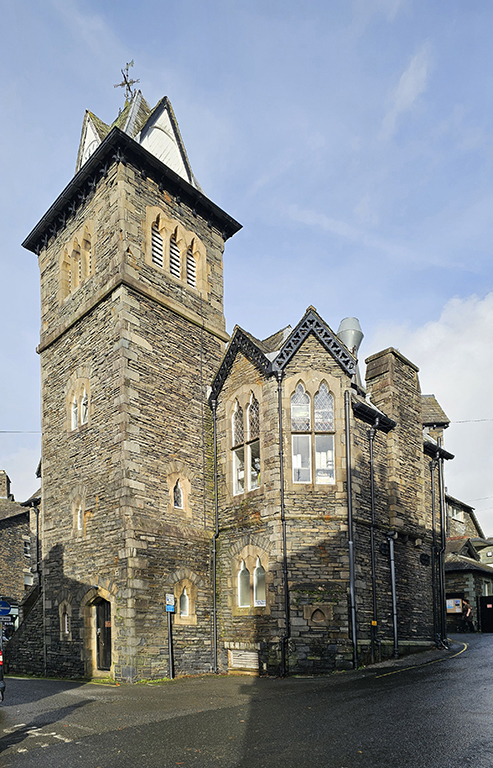
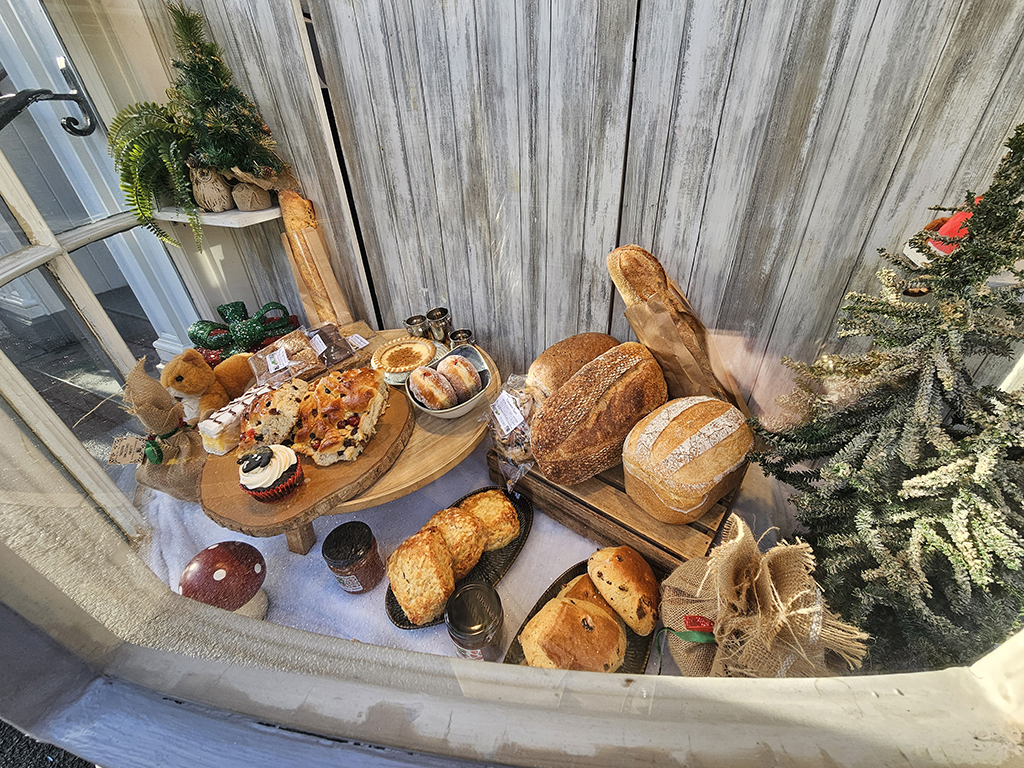
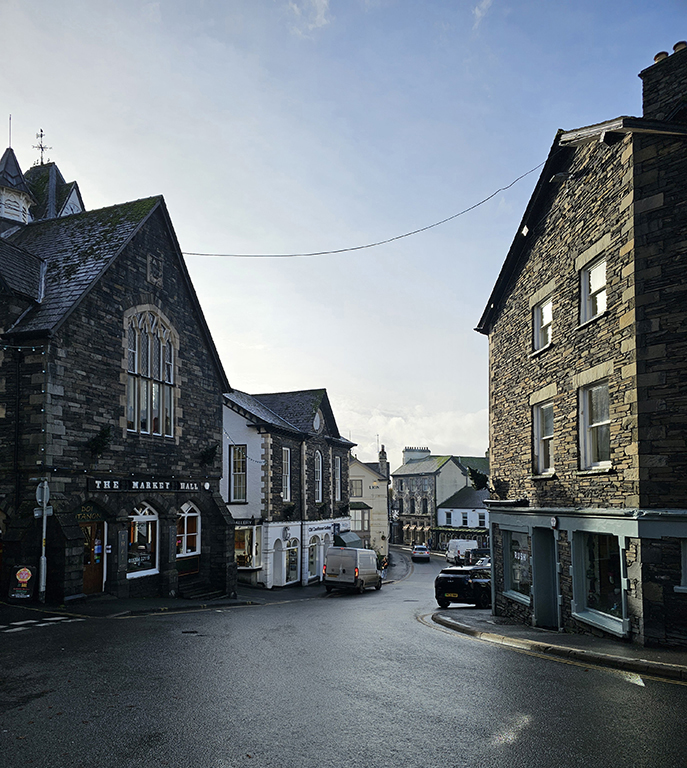
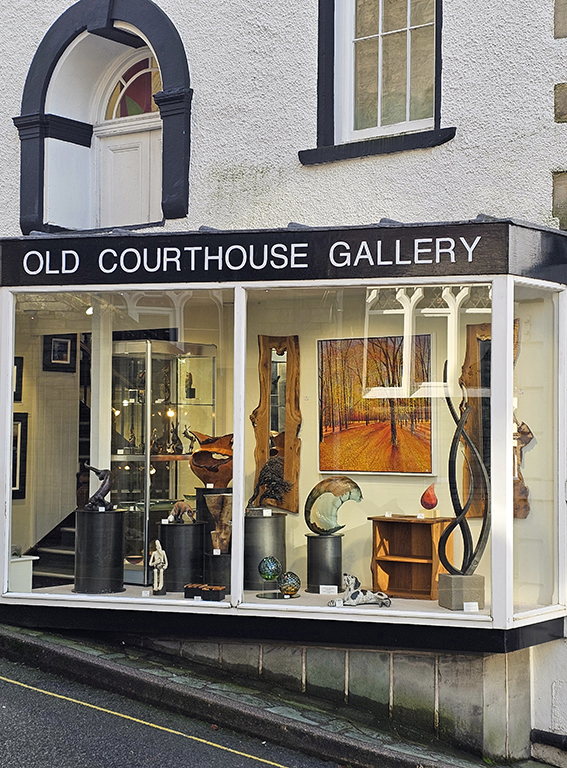
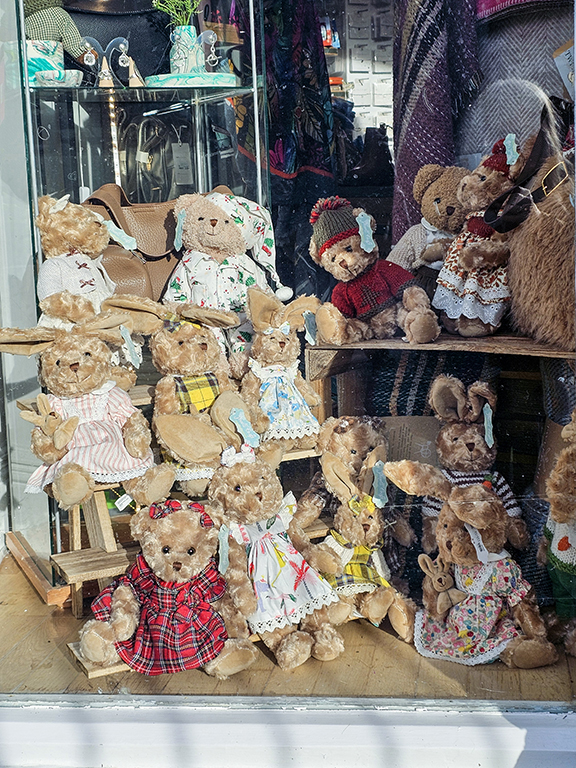
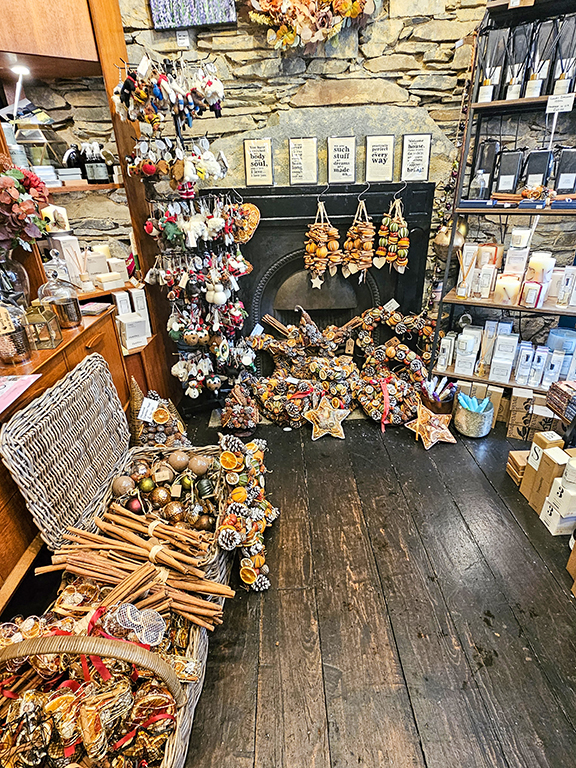
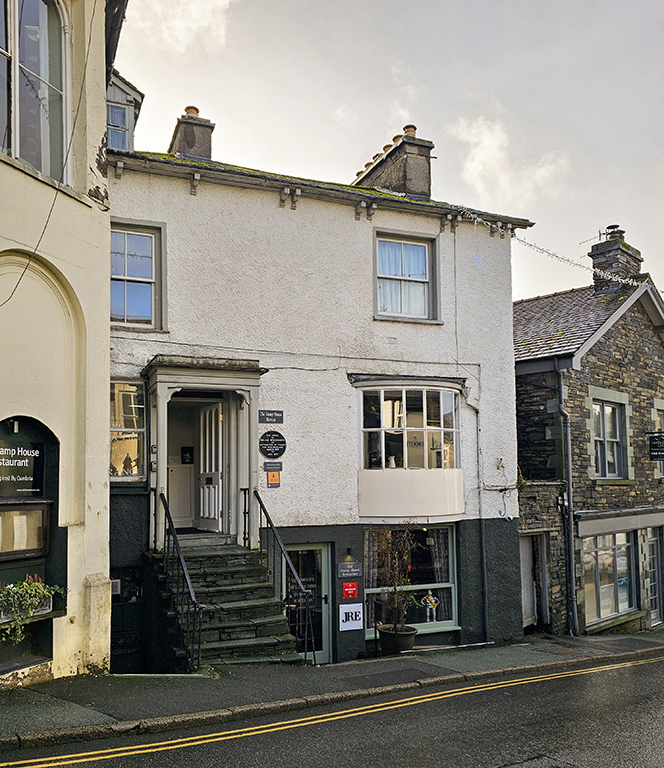
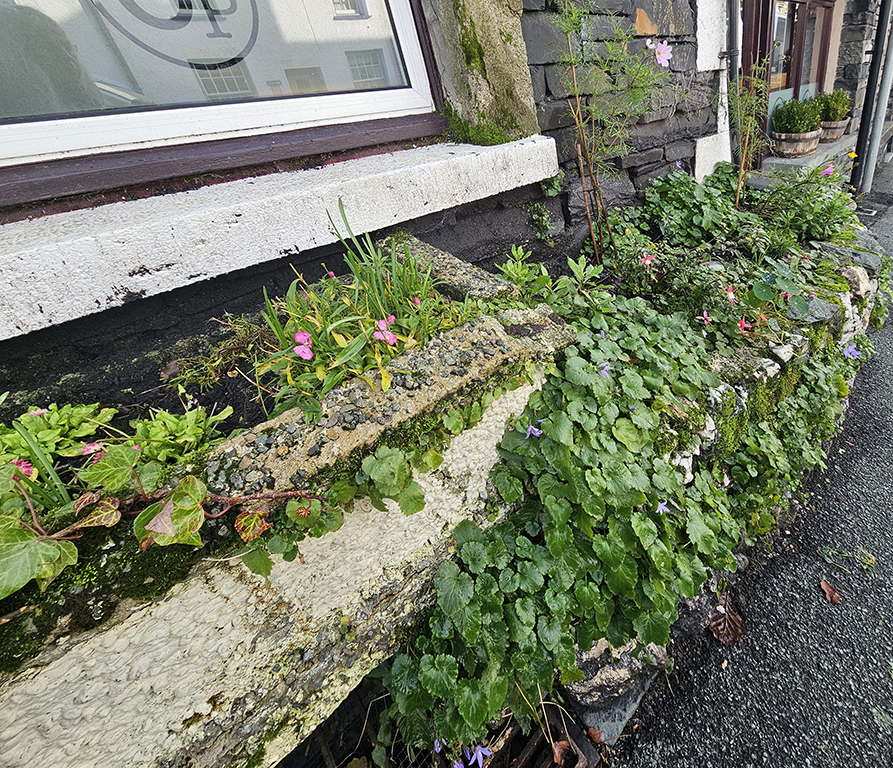
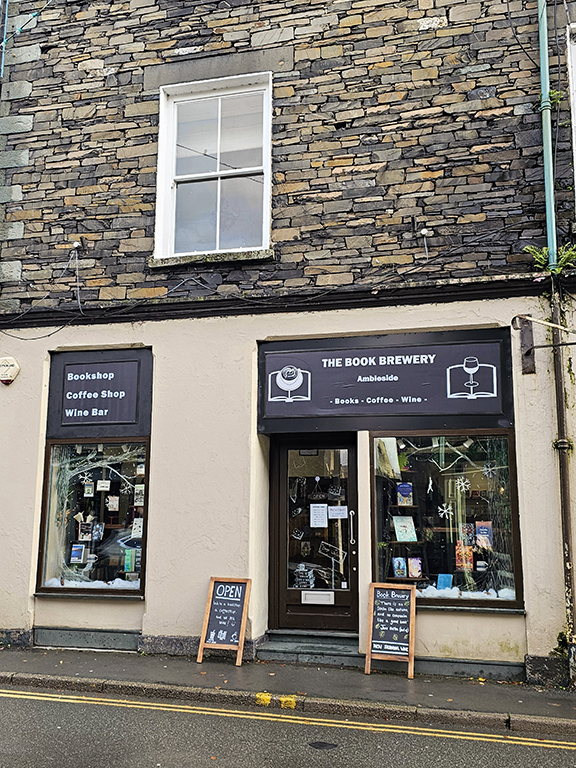
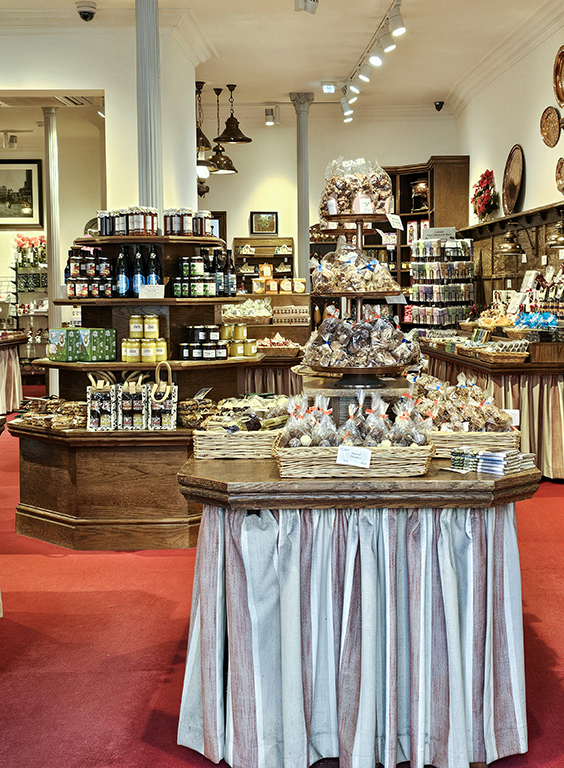
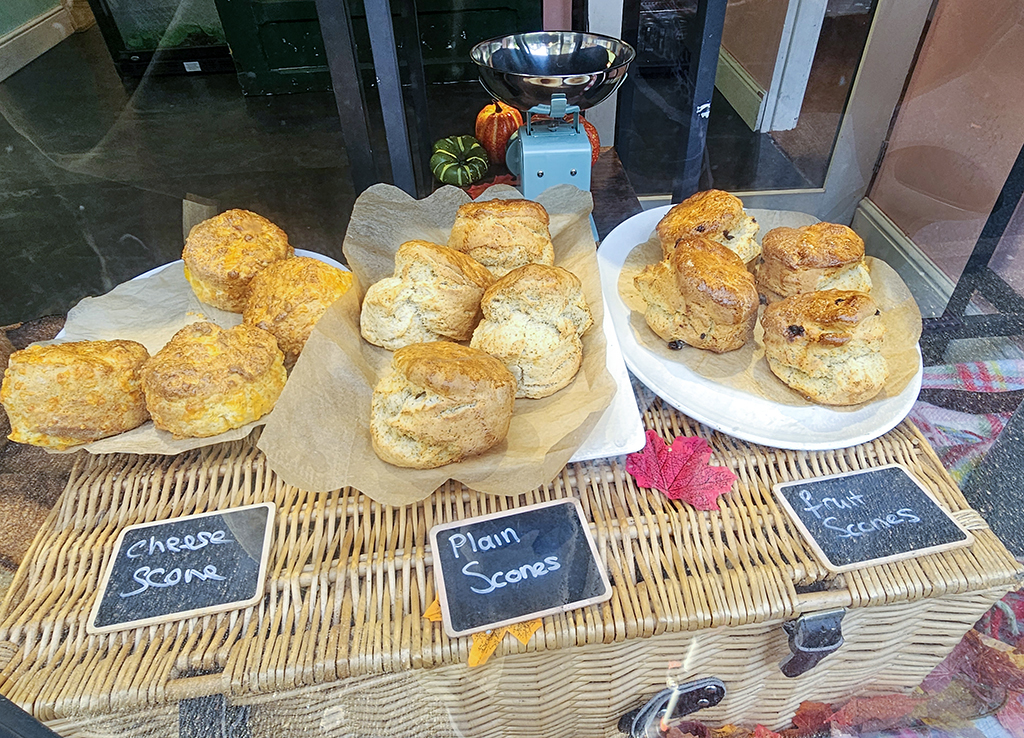

Ambleside is the town at the head of Windermere, England’s largest lake. The Romans were here, and built Galava in 79AD, but it seems that the town did not become a significant place until somewhat later than many, having been granted their market charter in 1650. Most of the buildings in the town are Victorian, easily recognizable by their construction of grey slate, although there are a few older cottages.
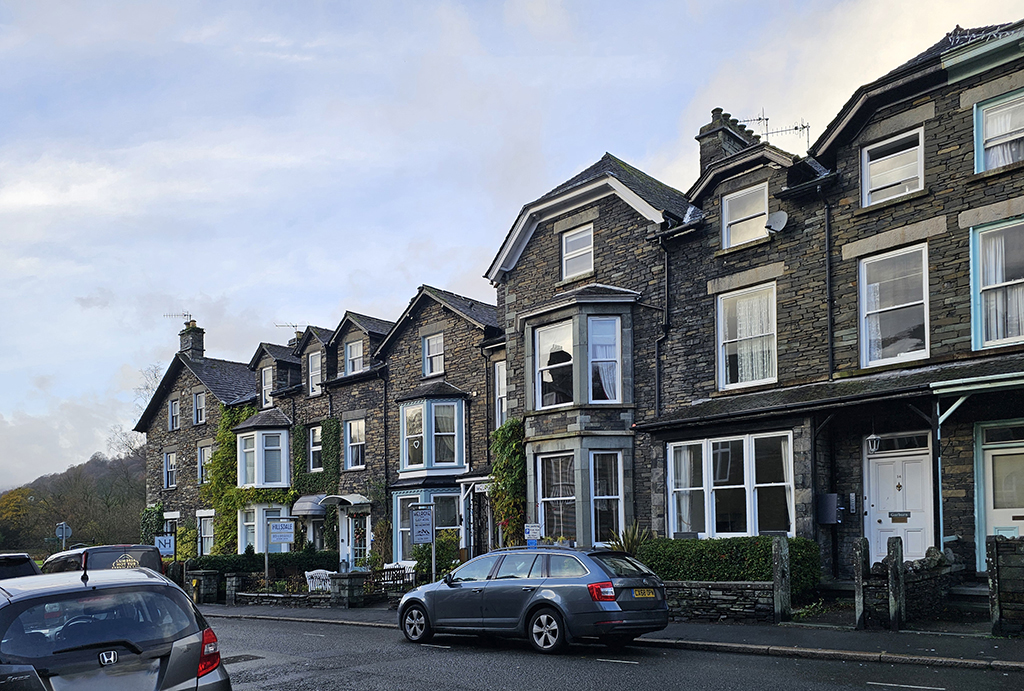
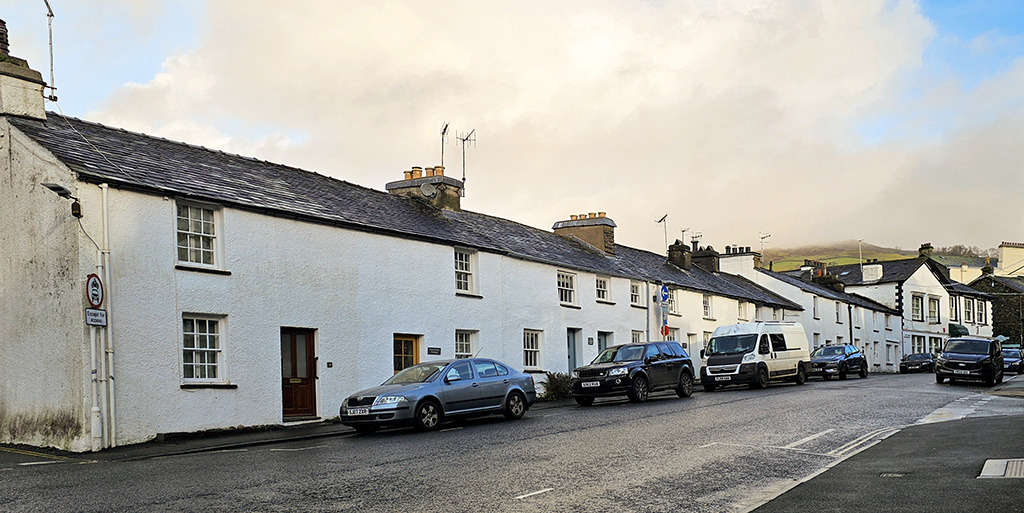
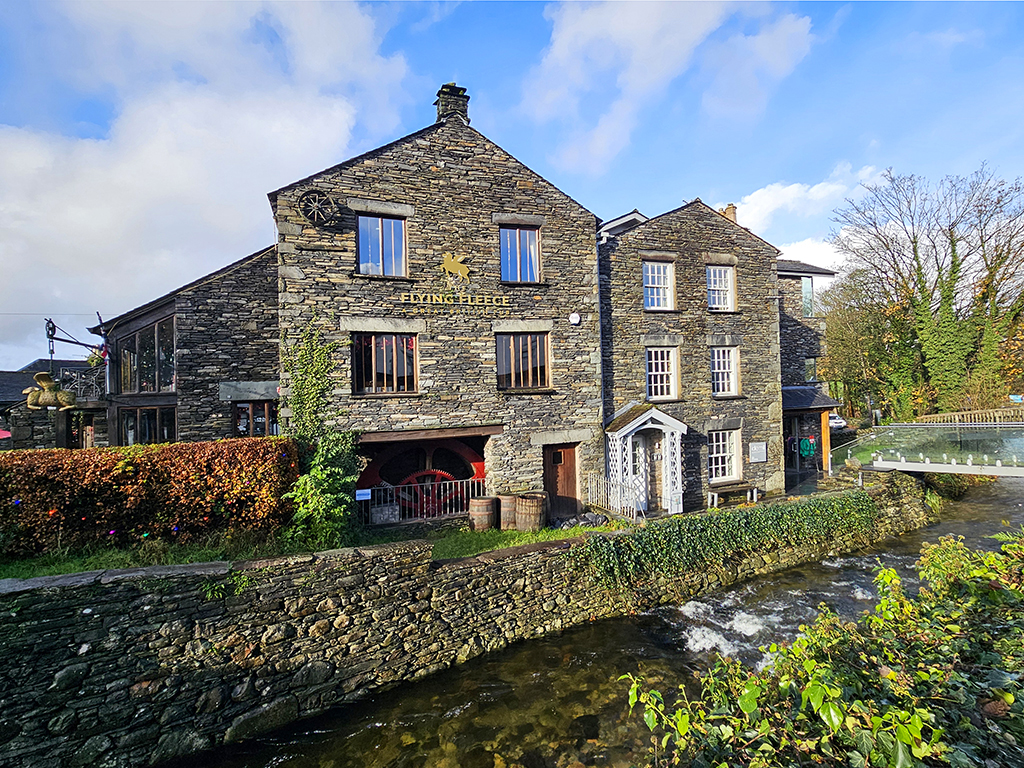
There were a number of mills in the town during its earlier history, beginning with fulling mills supporting the wool trade. When those closed, there were bobbin mills, and sawmills. There are still two of the mill buildings on Stock Ghyll. The one that houses The Flying Fleece Pub is claimed to date from the 15th century, and was a fulling mill. The weir, millrace, and wheel have been preserved.
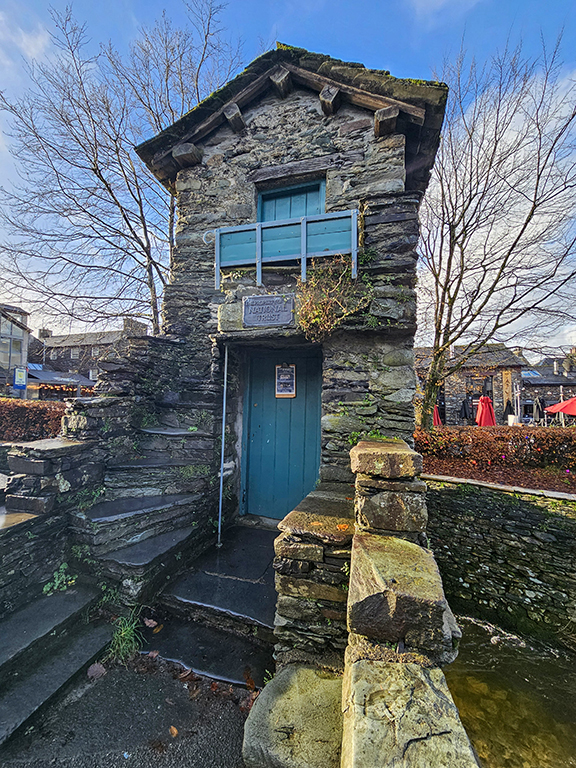
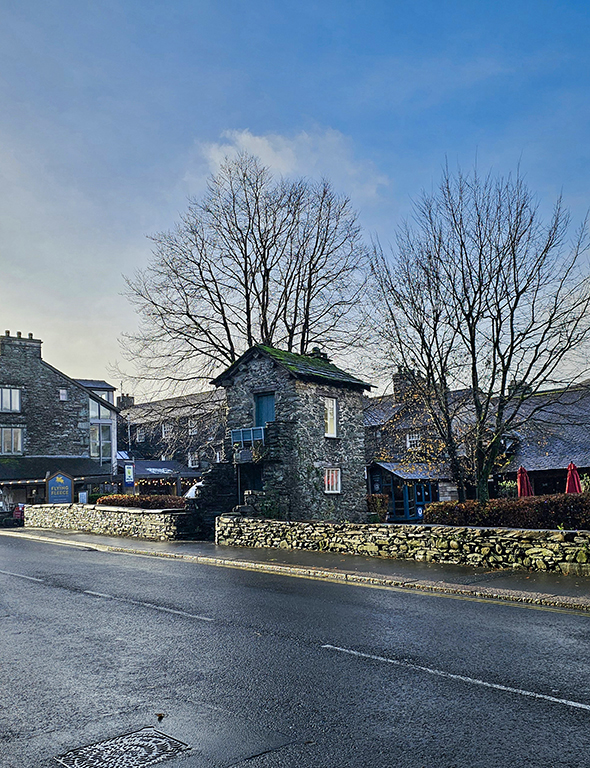
Probably the most famous building in Ambleside and possibly the Lake District is the Bridge House, a strange building that straddles Stock Ghyll. I had always been told that it was originally a real house, but in fact it was built in the 17th century by local wealthy landowners to access their lands across the river and to store apples from their orchards. It was used as a counting house in support of the mills, a weaving shop, a cobblers, a chair makers, briefly a house (with a family of 8), and a tearoom (no surprise). In fact, I can remember seeing a tearoom, and also a souvenir shop, but in recent years, although the National Trust claim otherwise, I have never seen it open to visitors.

My lunch reservation was at a new restaurant opened by the same people who operate one of our absolute favourite restaurants anywhere. The Schelly is following the trendy style, with sharing plates. The idea is that you order several plates of each size, depending on the size of the group, they arrive when they are ready (as opposed to in a particular order) and you all share. The venue has only a few conventional tables, and a long row of high-tops that look out onto the street (and the hills in the distance). This actually seems rather odd, because you are sitting beside your companions, not facing each other, so that will be less than ideal for chatting. In fact, I watched at least three couples peruse the menu outside, and then come in and request a table. When told there were only the high-tops available, they turned around and went straight out again.
I had made a reservation, and specified a table. I sat by the window and loved watching all the people passing by, half of them accompanied by an extraordinary variety of tail-waggers (dogs).
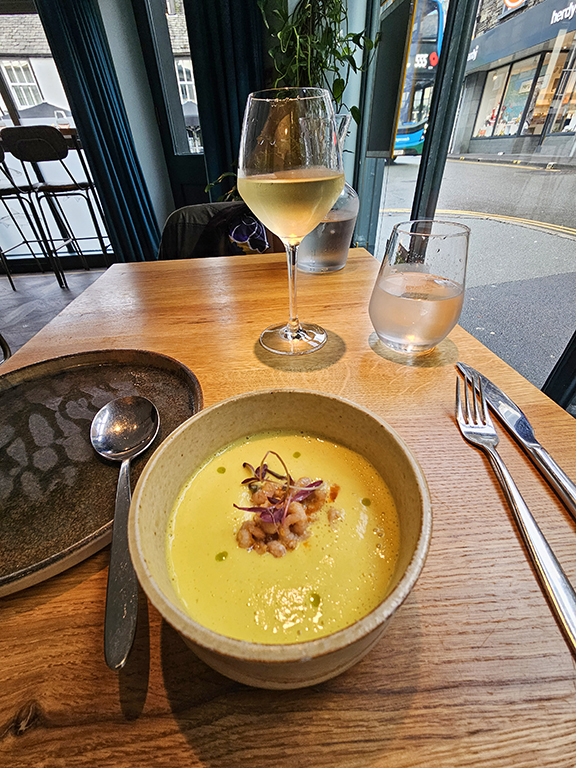
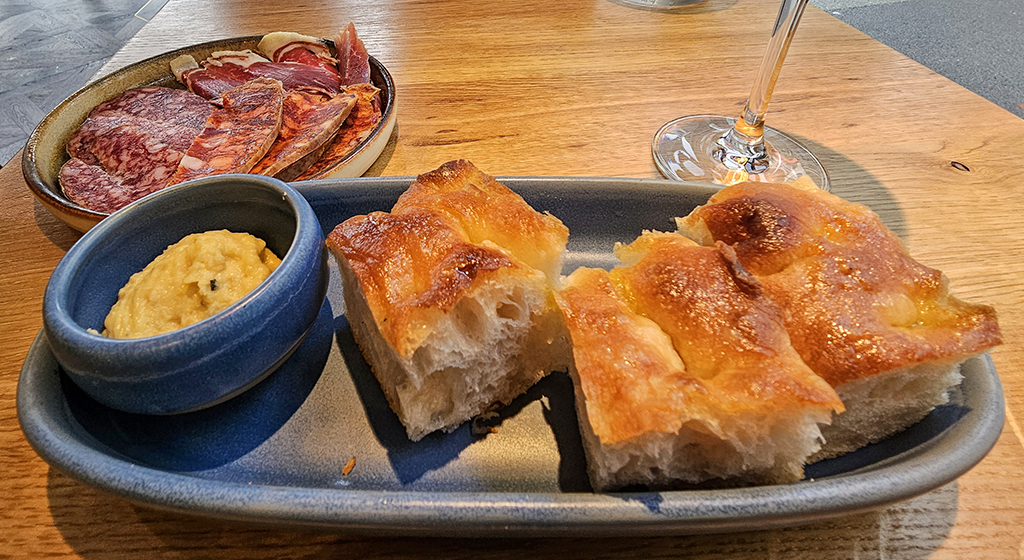
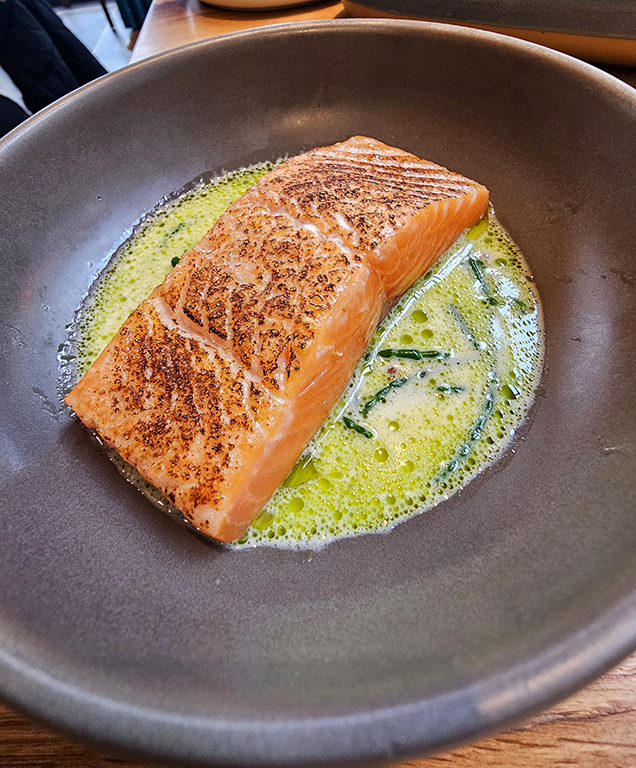
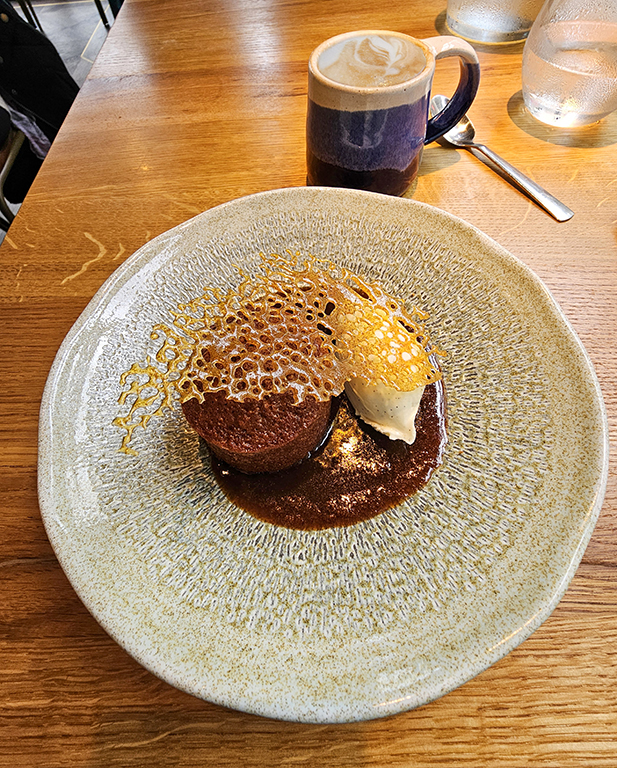
I chose three of the “small” plates, and one “medium”, accompanied by a glass of Sancerre. Everything was delicious, and I had room for dessert and a cappuccino! The service was as excellent as I would expect, and the presentation was exquisite. This was not a cheap meal, but it was worth every penny.
Afterwards, the rain held off long enough for me to take a walk down to Windermere at the Holiday Park. And yes, it is Windermere, not Lake Windermere. The trick question for tourists is, how many lakes are there in the Lake District? The answer is one, Bassenthwaite Lake. The rest are called meres, waters, or tarns. In fact, there are 16 bodies of water of a significant size and hundreds of smaller tarns in the National Park. Just to round out the facts and figures, there are over 200 “peaks”, called fells, in the Lake District. The 10 highest are all over 890 metres (about 3000 feet).
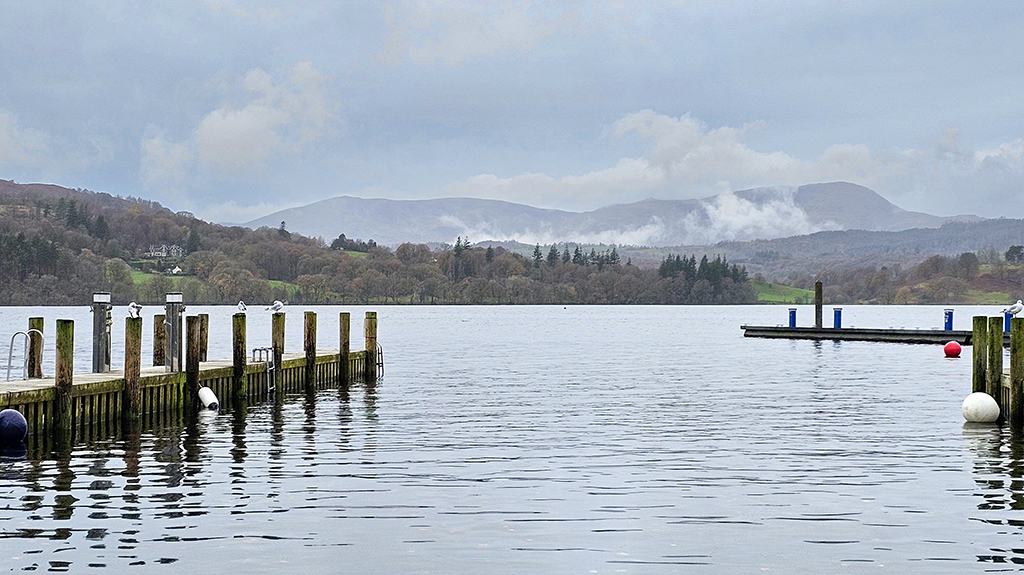
By late afternoon the rain had started again, and it continued throughout the night. In the morning, I checked various websites, and there was flooding, especially in the northern areas of the county. All schools were closed. My plan had been to visit the Distillery on Bassenthwaite Lake, one of our favourite places. They have an excellent Bistro that does a wonderful lunch, and I had made a reservation. I cancelled (they were quite understanding and did not charge for the late notice) and made the decision to stay indoors for the day.
The forecast for Friday was better for this part of the Lake District, so I was able to get out and about. A named storm was arriving further south, and winds from that were affecting Cumbria, but at least it wasn’t raining! Much.
After the previous day’s rain, I knew that I didn’t want to venture too far north, so I planned a visit to Grasmere and the Wordsworth Museum. Normally I am not much of one for museums, but this museum experience includes a visit to Dove Cottage, where William Wordsworth, his sister Dorothy, and his wife and children lived from 1799 to 1808. Entry to Dove Cottage is timed, so there are only a few people inside at a time, and one can really get a sense of how they might have lived.
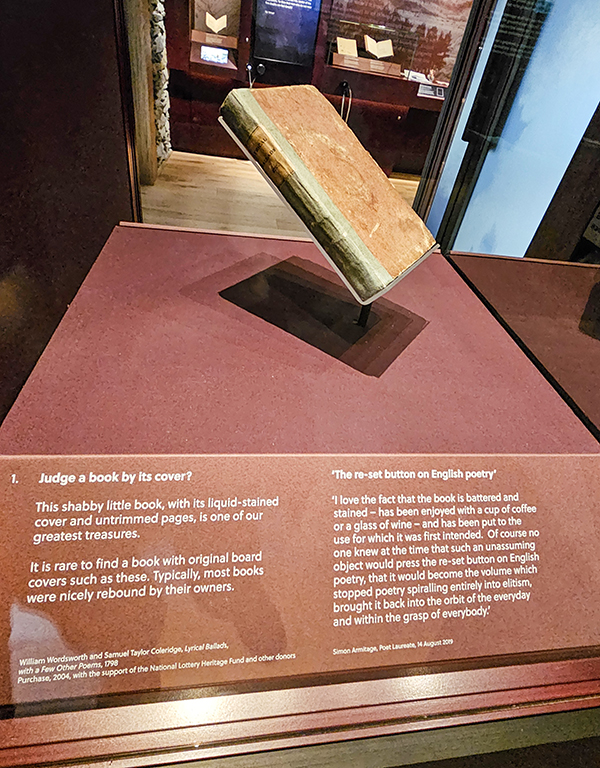
William Wordsworth was one of the greatest of the Romantic poets (and arguably the most famous). His words still resonate today. When he was born in 1770, the American colonies had not declared independence, the population and economy of UK were mostly rural, and travel to London from Windermere was by stagecoach. By 1850, when Wordsworth died, the French Revolution had happened, the United States had elected their 13th President, and travel around Britain was by steam train. The urban population outnumbered the rural.
The Wordsworths were born in Cumbria, just a few miles north of Grasmere, but the children were separated quite young, as their mother died and their father sent William away to school, and Dorothy to live with relatives. They were reunited 9 years later, and set up house together in 1794. Five years later, they settled in Dove Cottage.
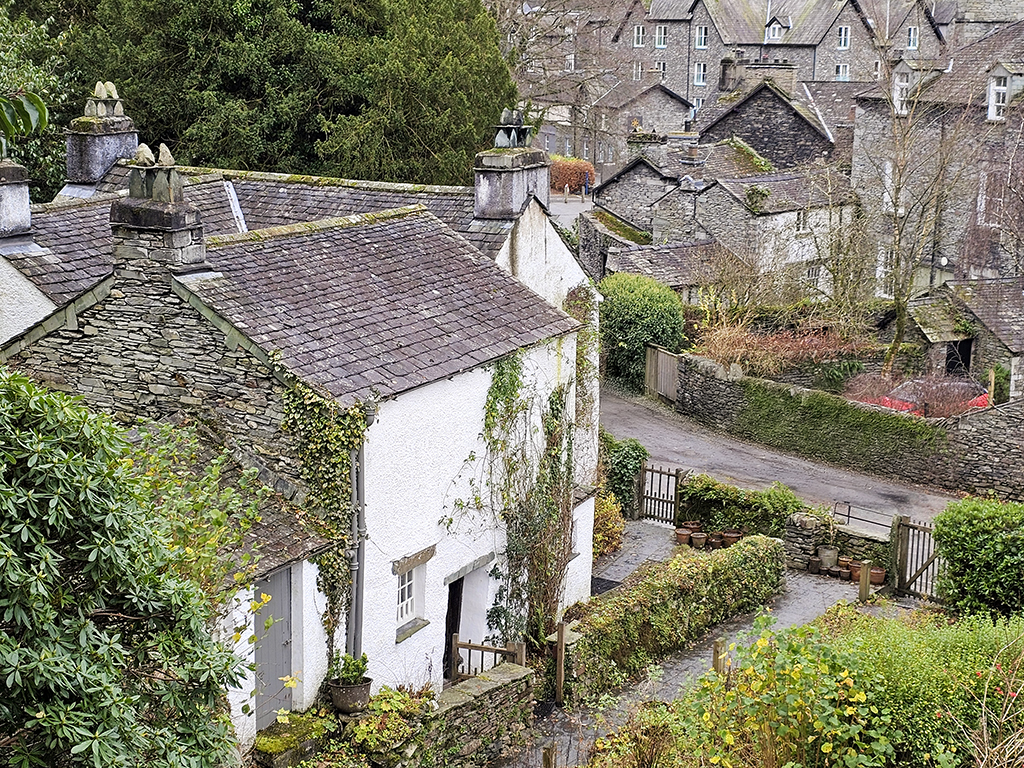
Dove Cottage had been a pub, in the village of Town End, outside Grasmere. I was intrigued to be told that the cottage was whitewashed because that way it would show up better in the dark for pub goers! I have always wondered why so many houses in Cumbria are whitewashed, and the practice is generally not followed in Yorkshire, even though the buildings tend to be of the same age. Further research offers a more prosaic explanation. In fact, the whitewash protects the house from moisture in the very wet climate.
Wordsworth’s first poems were published in 1793, and in 1795 he received a legacy of £900. By judicious investment (primarily in the East India Company), he was able to live on the proceeds of the legacy, support his sister as well as his wife and their children, and also support Annette Vallon, a French woman who he met during the French Revolution, and their daughter.
The Wordsworths lived in Dove Cottage for 8 years, during which he wrote most of the poems that he is best remembered for. Friends came to visit, and, as was customary at the time, stayed for weeks and months rather than days! Eventually, they outgrew the cottage and moved to a larger home a few miles south. The Wordsworth Trust acquired the cottage in 1890, and it has been preserved as a museum ever since.
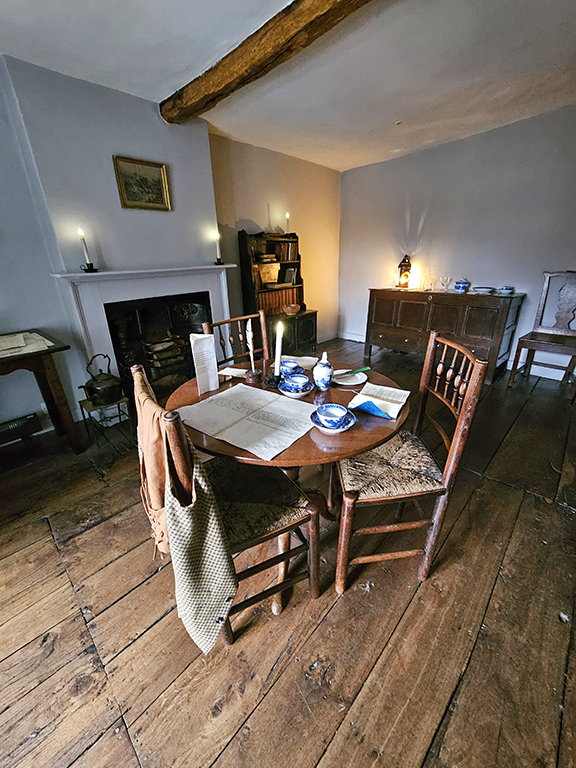
I wandered around the museum until it was time to visit Dove Cottage. For me, seeing how the Wordsworths lived is of more interest than reading about his career and the writings of his sister. I was surprised at how much room there actually was in the Cottage. I can remember my grandmother’s tiny council house, and my dad once took us to a farmhouse where his family lived in just two rooms when he was 5 years old. Dove Cottage is a mansion compared to those places. I enjoyed seeing the kitchen, with the recipe book and the makings for gingerbread laid out. In one of the bedrooms, the walls were papered with sheets of newspaper, and there was a book and a candle on the floor beside the bed. Of course there was no bathroom, and “the necessary” was outside in the garden. My dad’s maiden aunts, who lived in a church-owned charity cottage when they were in their 80’s, did not have an indoor toilet, Aunty Mary with her bad hip had to make her way down the garden to the outhouse.
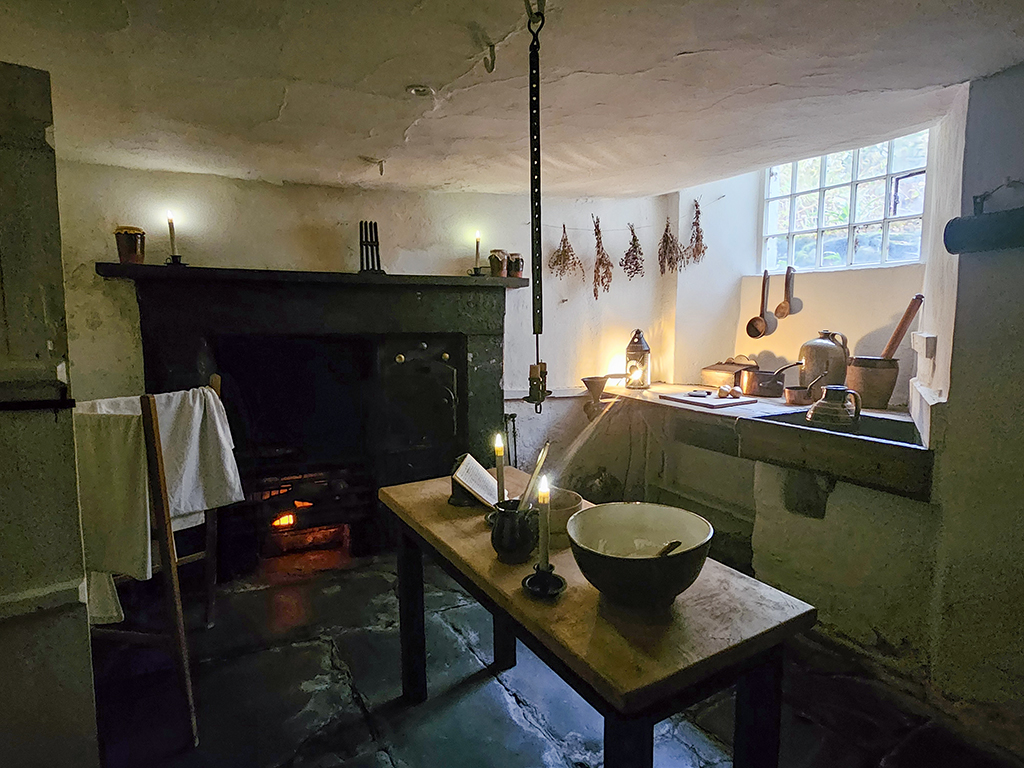
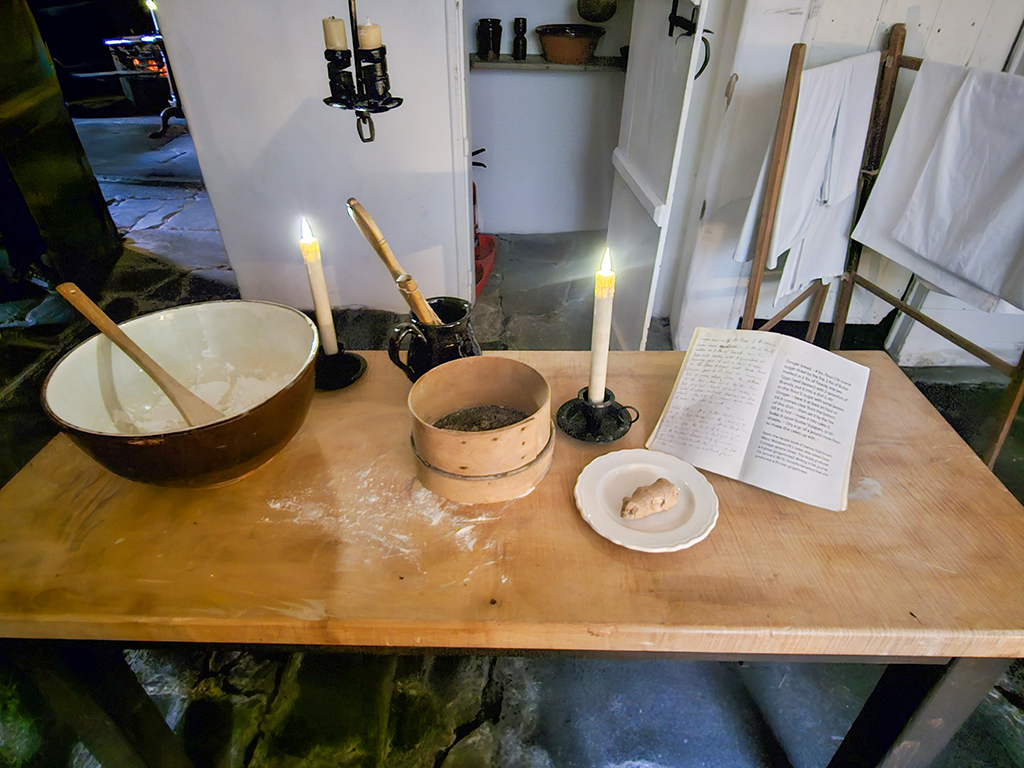
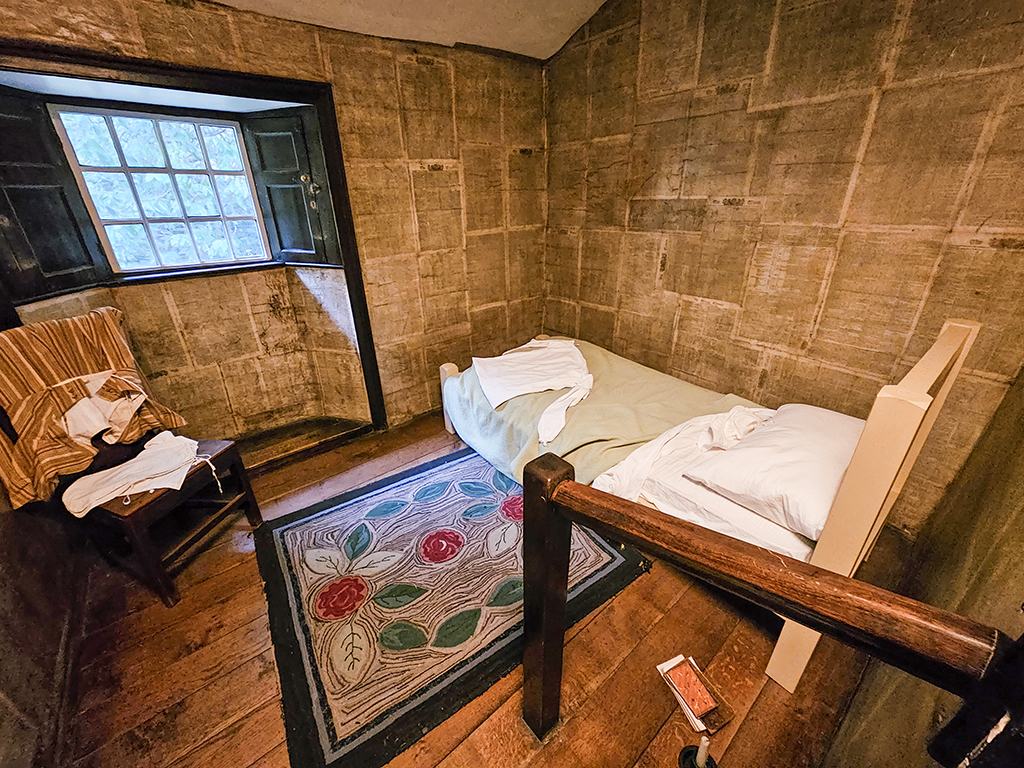
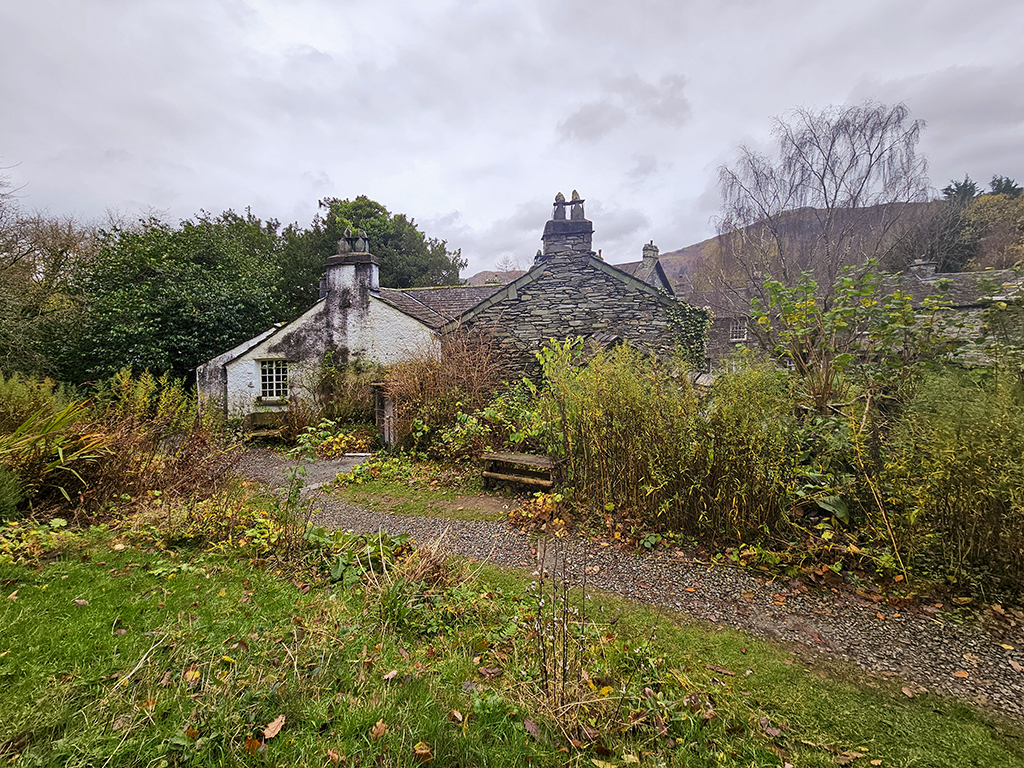
While the Wordsworths lived at Dove Cottage, Dorothy would walk to Ambleside several times a week, an eight-mile round trip, to pick up post and to shop. Brother and sister were great walkers, and hiked all over the hills of the Lake District. At the time, it was considered quite scandalous for women to go walking, but Dorothy was a very independent soul, and she ignored convention.
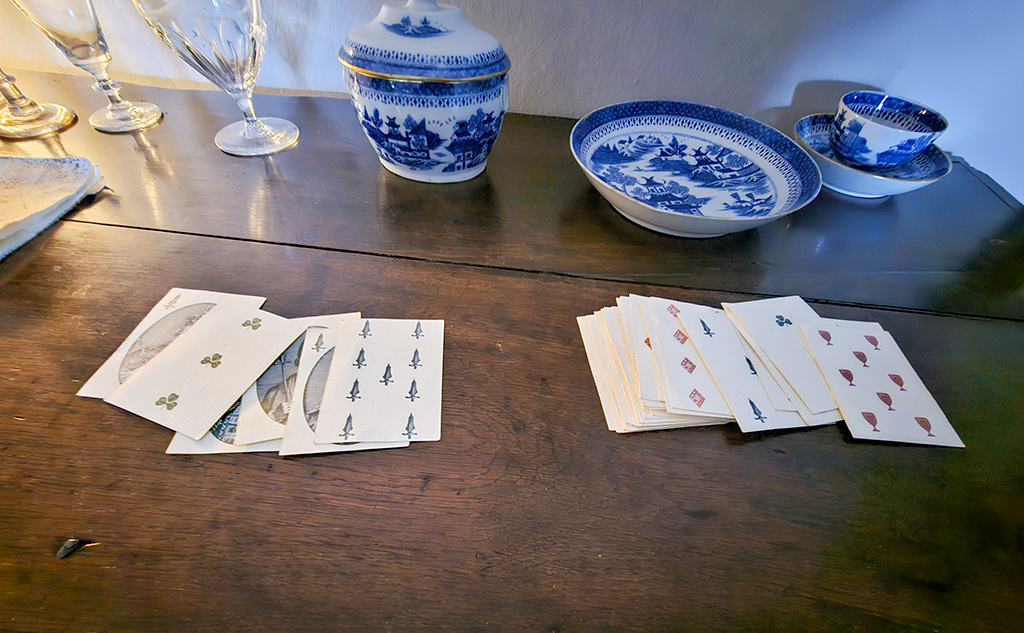
I was intrigued by what was apparently a set of playing cards. Card games have been popular in England since the 15th century. There are enough mentions in Dorothy’s diaries for us to know that playing card games was something that the Wordsworths enjoyed with visiting friends, and I read that whist was likely to have been the usual game. The deck of cards is unusual, and I cannot find enough references to be sure, but I note that some of the figures on the cards, the cups (equaling hearts) and the swords (equaling spades) are in a Spanish, rather than the English style of the times
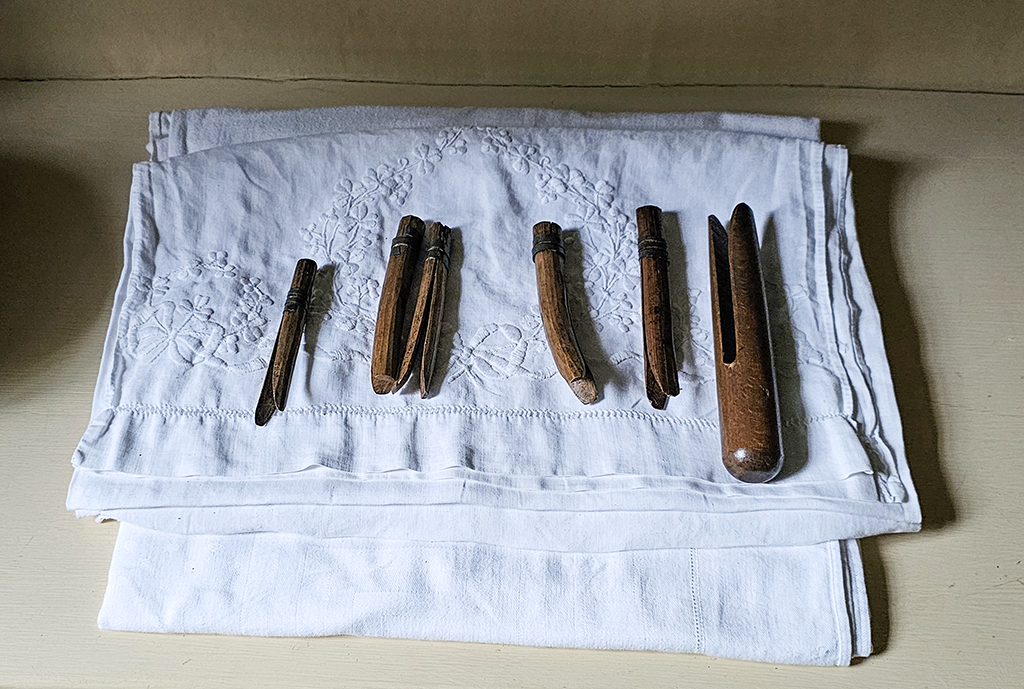
The linens laid out with pegs of varying sizes are a reminder that laundry was pegged out on a line. I hang laundry to dry, but I don’t typically use pegs, nor do I line dry sheets. On the other hand, across the road from me in Hawes, on any relatively dry day, one of the neighbours pegs out all of their laundry including sheets and towels!
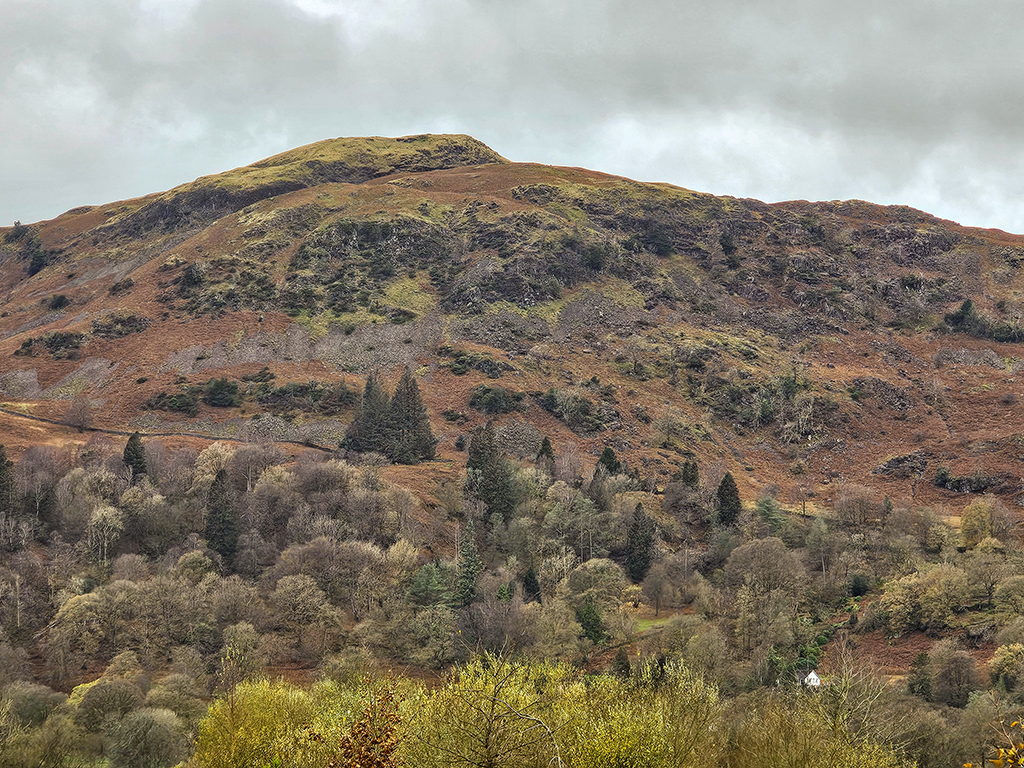
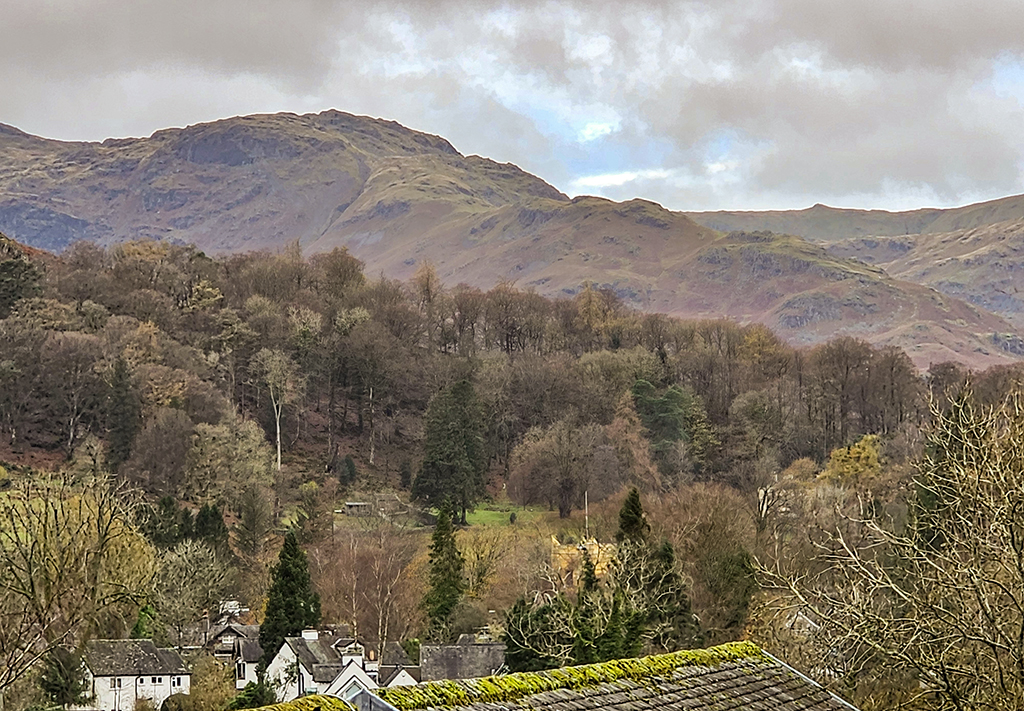
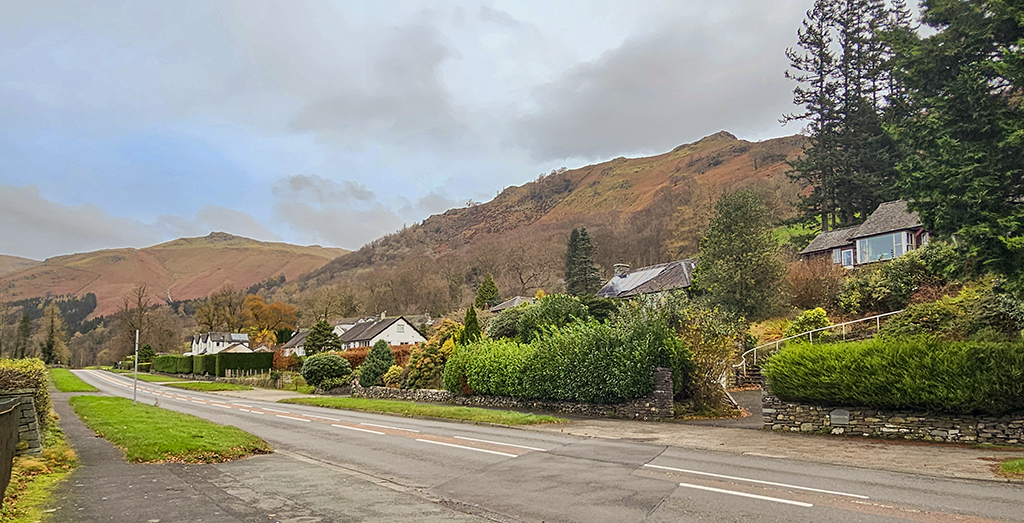
After the museum, I walked a little way down the road to take in some of the views of the hills and the countryside.
I planned to have lunch at the Badger Bar, just a short distance south in Rydal. We have passed that establishment countless times, but never stopped in. When I arrived, only the bar was open, and I was directed to choose a table, given a menu, and told to order at the bar. I picked a smaller table, which was an unfortunate mistake.
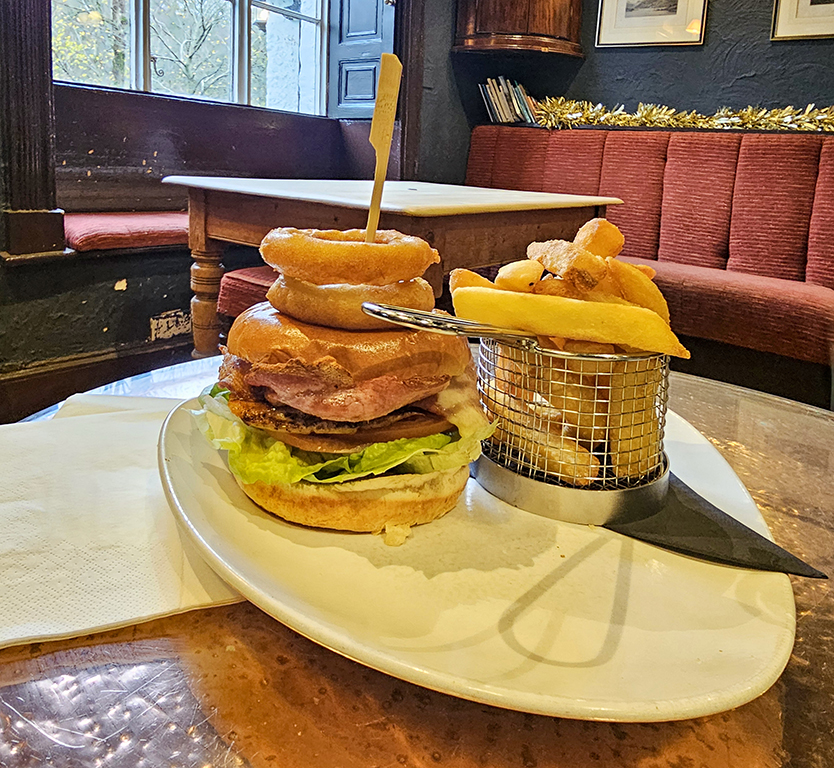
I decided to change my usual practice, and rather than have starters, I ordered a Cajun chicken burger that was accompanied by chips (fries) and onion rings. The chips were excellent, as were the onion rings, and the burger was incredibly tasty, built with grilled chicken breast, tomatoes, lettuce, bacon, and cheese. It was so huge that there was no possibility of eating it in normal burger fashion, so I deconstructed it with knife and fork, and ate it that way. It was delicious.
I didn’t realize that the door beside me led to the hallway and the front entrance, plus the men’s toilets. People went in and out continuously, and each time a draft came whooshing around the corner. As the traditional British lunch time arrived (1pm), a great many walkers, some with dogs, came bustling in, and it was a bit like trying to eat in a railway station. The final straw arrived with a group of younger walkers and their large, anxious dog. After trying to sample my chips, he was dragged to the table across from me, and told to sit. He didn’t. He became more and more anxious, in spite of liberal applications of treats, and began barking. Between the constant to-ing and fro-ing, the barking dog, and the cold wind, I gave up, having pretty much eaten all I could handle of the enormous burger, and I left.
Returning to the holiday park, I settled down for a quiet afternoon and looked forward to returning to Hawes the next morning. It had been a long three weeks!
I am planning to write something about December (called the run-up to Christmas) in Wensleydale, and during Christmas and New Year, Dick and I are planning to visit Devon and Kent, so those are the planned postings for the next few months.

 Scene and Done
Leave a comment