

November 1st to 7th
The drive across country from North Norfolk was absolutely beautiful. So few travellers experience crossing England from east to west (or the other way), because “all roads lead to London”. Really, they do, historically, and so do all the main train lines. Tourists visit London (of course they do, regardless of how many times they have been there before), and then most of them head north as fast as they can to Edinburgh and the Scottish Highlands. Thus missing most of the beautiful English landscape.
Okay okay, some people do visit a few other places. Devon or Cornwall perhaps. Oxford or Cambridge. Some have heard about the Lake District and dip into Windermere for a day or so on their way north to Scotland. In 6 years of operating a vacation rental, we have not had a single booking from outside the British mainland. Only one friend has visited us from Europe, and one from USA/Canada.
When friends and acquaintances tell me they have been on a “tour”, most of them have hopped from city to city, stopping only briefly in the location of the day, be it Downton Abbey, All Creatures Great and Small, or perhaps Poldark. Heaven forbid, cruise ship visitors see even less, queuing to get on a bus that takes them on a 2.5 hour bus ride, each way, on major highways to the Cotswold’s famous Burton-on-the-Water. All these tourist destinations are beautiful areas, and very nice to visit, but these visitors, whether driving themselves or riding a bus up the motorways, are never really seeing the beauty, the diverse landscape and culture, and of course the fantastic local eateries that this country has to offer.
Rant over. Okay, for those of you who are giving me “that” look, rant over for now…
I wanted to describe the beautiful drive across country, on a glorious autumn day when I got sidetracked…. Fall colours here mostly lack the bright reds of eastern North America (except in landscaped gardens), but the leaves turn shades of yellow and gold, as well as a luminous brown, and absent major storms, they last a lot longer. Driving through woodland was like going through a corridor of gold, as the sun shone through the trees and lit up the leaves. Fields have been ploughed, and many have already been planted with winter crops that are already carpeting the fields with bright green, a stunning contrast with the golden trees.
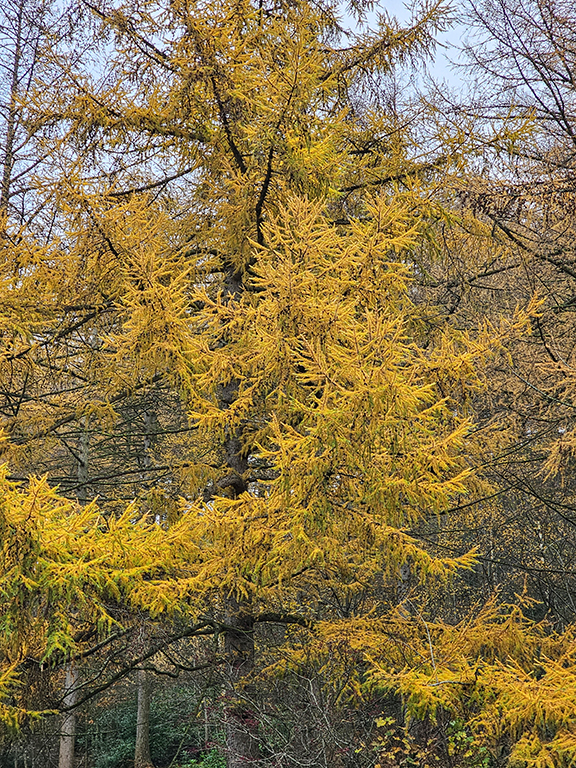
Unfortunately, there were no suitable places to pull of and take pictures, so you will have to try to imagine how lovely the countryside was from my descriptions.
Norfolk was looking bucolic, with its enormous fields, mainly full of winter vegetables, and a lot already harvested (the sugar beets and the grain crops). There were some cornfields, with farmers taking advantage of the delights of the season and offering maze experiences through the high corn, and quite a few pumpkin patches. Next came Lincolnshire and the area of the Fens. This part of the country was drained long ago, starting in the 1630’s and is wide, low-lying and flat with huge drainage channels and automated pumping stations. The fields are smaller than in Norfolk, and are intensively farmed. I saw mostly autumn and winter vegetable crops. Nottinghamshire has more villages and built-up areas, and the land is less flat and the roads less straight. At last, we came into Derbyshire, with deep valleys and rolling hills leading to the southernmost area of the Pennines, the low mountain range that forms a spine down the middle of northern England. (Our home, Hawes, is on the eastern edge of the Pennines further north).
The Buxton apartment, in a divided-up, large Victorian house, is handily on the ground floor, and was very nicely refurbished quite recently. Sensible grey carpet does a great job of keeping the floors warm (and quiet) and it is not so light that it shows every stain. Rooms are generous, and there are two shower rooms for two bedrooms, very civilized! Heating turns itself off in the British style, but it is on from 6am to 10pm, and at night the flat does not get much cooler than the settings on the radiators. The owners left nice extras. As well as the tea and coffee and a jug of milk as one expects, there are good quality biscuits (cookies) and to my great surprise, a generous bunch of fresh flowers on the dining room table! Strangely, no extra toilet paper was left, beyond what was already on the holder. That I find hard to understand.
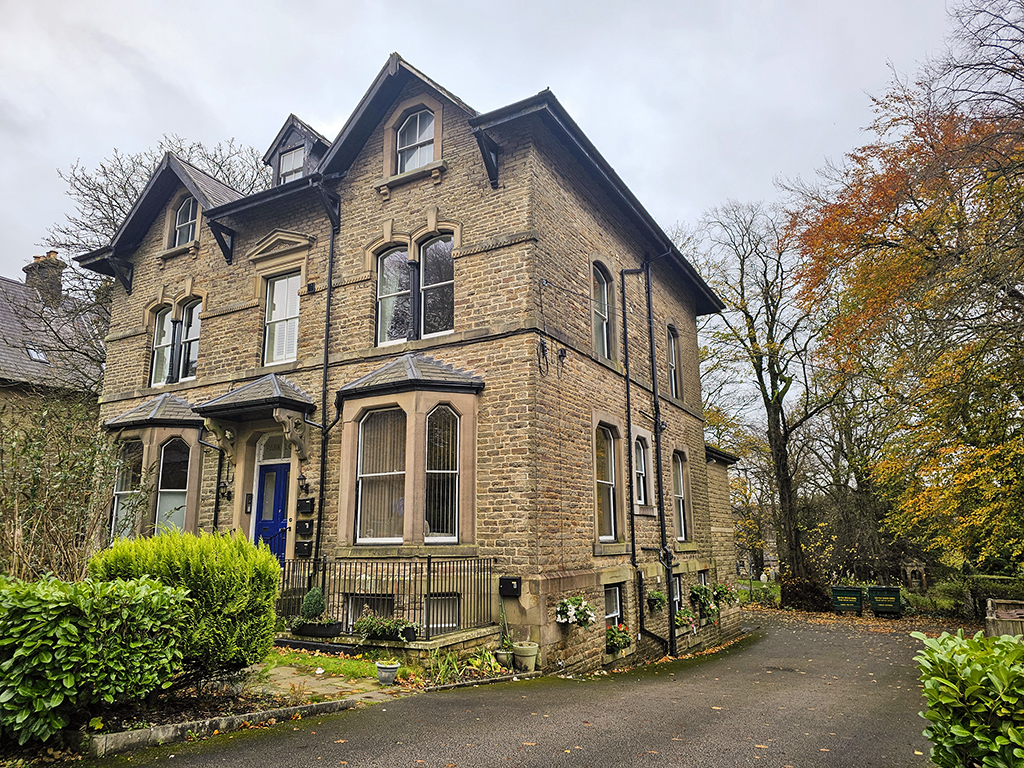

I spent Sunday catching up online, enjoying my weekly Zoom chat with Dick, and then took several hours to research the area and make plans for sightseeing and meals for the coming week.
Buxton has been settled since the Stone Age. The Romans were in occupation throughout their time in Britain, building a town known as Aquae Arnemetiae, loosely translated as Baths of the Goddess. The Goddess in question was Celtic, so predates Roman occupation. Evidence of Roman baths were uncovered during various renovations of what is now The Crescent.
In the 12th century, the town of Buckestones was recorded as part of the Peveril Estate, and by the 15th century the mineral spring had been declared holy and a chapel had been built and dedicated to St Anne. By the 18th century, the town was known for its healthful waters, and the Dukes of Devonshire used profits from copper mines to develop the town into a spa. Once the railways arrived, Victorians flocked to the area to “take the waters” and much of the architecture of the town dates from those years. Following a decline in the 20th century, the town managed a resurgence as a centre for theatre, culture, and festivals. This is a posh town. When we lived in Cheshire in the 1990’s I came to an antique show here. There were no prices on any of the items displayed on the tables, all the men wore suits and ties, and the women were dressed to the nines!
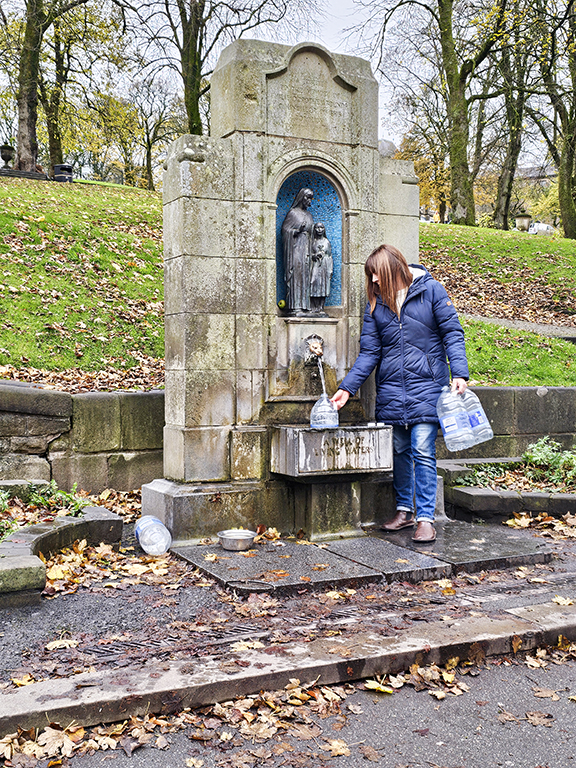
St Anne’s Well still exists, and the water that comes out of the tap is the same as that in the baths. Buxton Mineral Water (owned by the Nestlé conglomerate) is bottled from the same source. Each time I passed the Well, I could see people filling various plastic bottles and containers and taking them to their cars, so clearly, they still believe in the healthful effects of the water.
While tourism is a major component of the local economy, there is a well-regarded university, local quarries, scientific research, and the bottled water industry. The town certainly seems busy and prosperous.
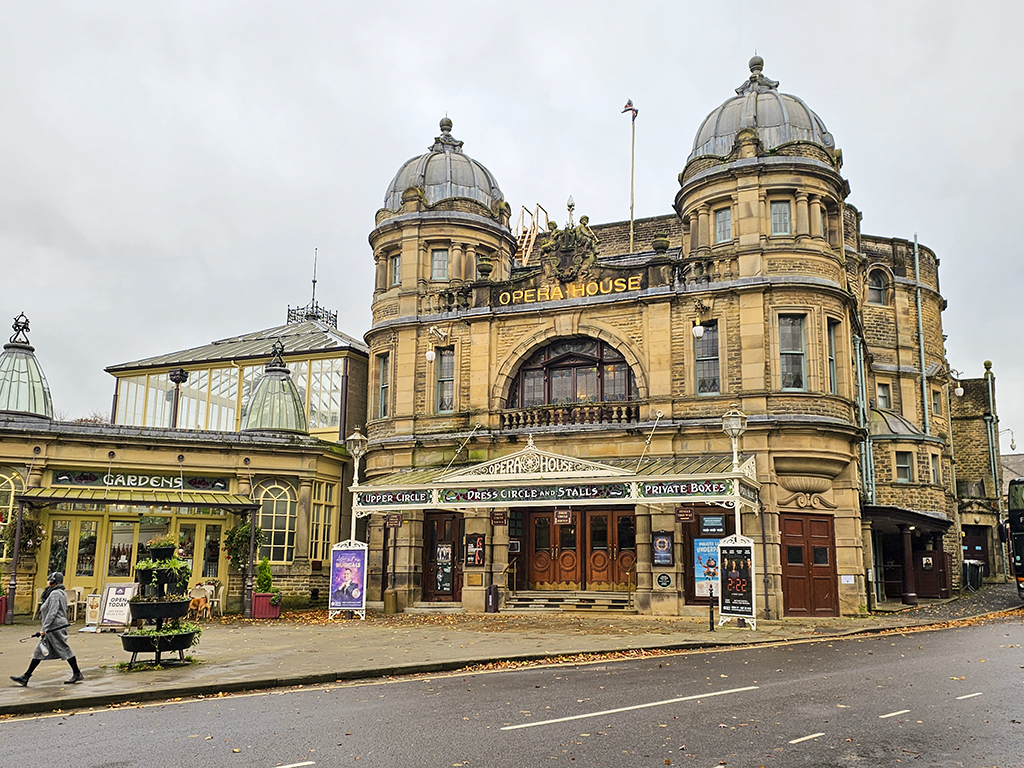
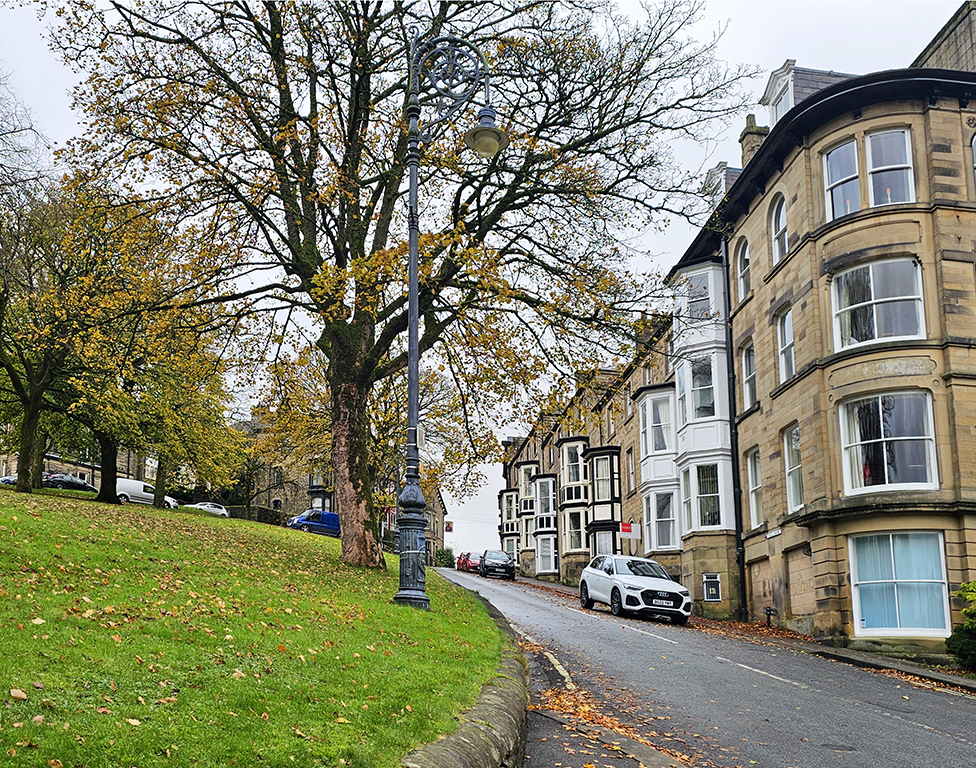
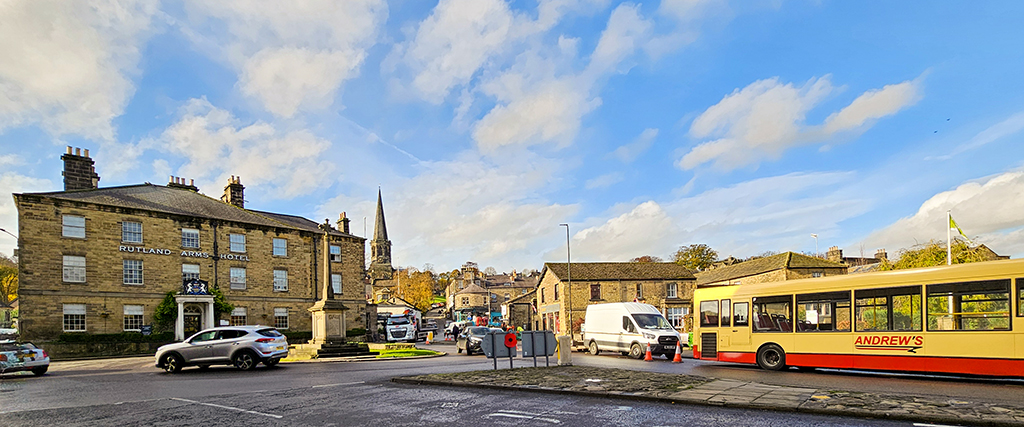
Monday was my day to explore Buxton. I had booked a ticked for an Irish Christmas Show at the famous Buxton Opera House, so I wanted to collect the ticket, and also take a look around the area. The holiday let is in a perfect location! It was about 2 blocks to the Opera House, and only a little farther to the historic gardens and shopping area. I planned to have afternoon tea at a well-regarded restaurant across from the Opera House.
The Pavilion Gardens were laid out in 1871 on land gifted to the town by the Duke of Devonshire. Alert readers may wonder, as I did, why the Dukes of Devonshire are associated with Derbyshire (including the famous Chatsworth House) when Devon is in the south of England. There is an explanation, but it is somewhat convoluted. It resulted from the political climate at the time the Dukedom was established in 1684, honouring the Cavendish family, who were (and still are), some of the most politically powerful members of the British aristocracy. As far as I can tell, the Cavendishes never held lands in Devonshire. That bit of research was quite a digression from my investigations into the origins of Buxton!
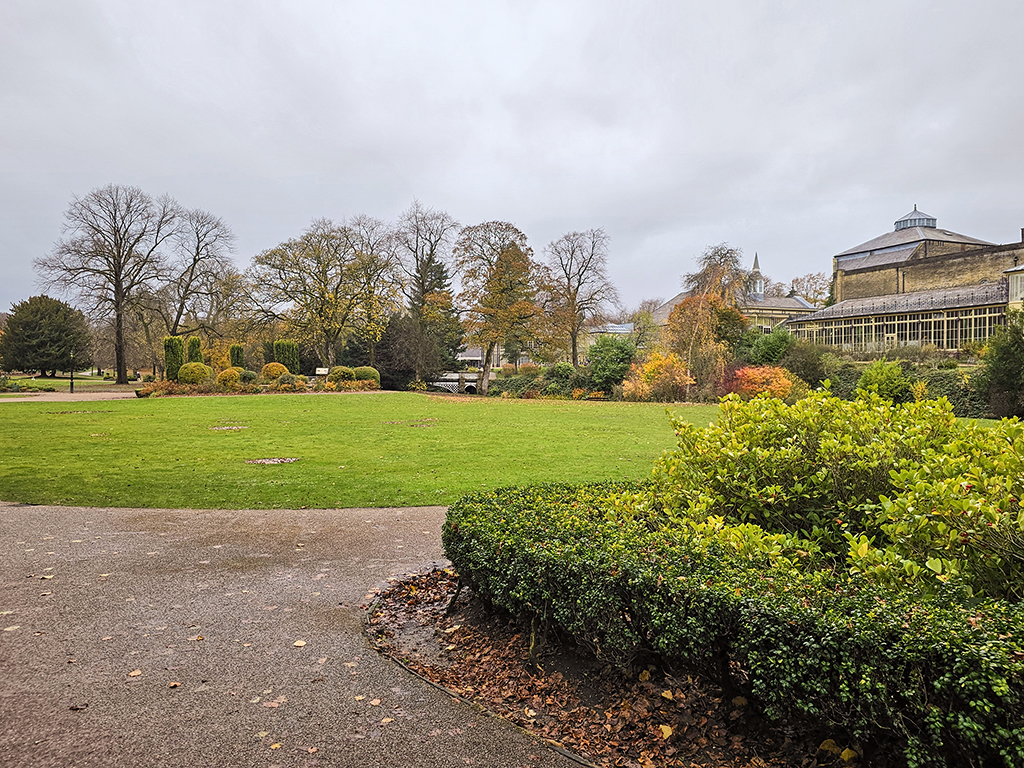
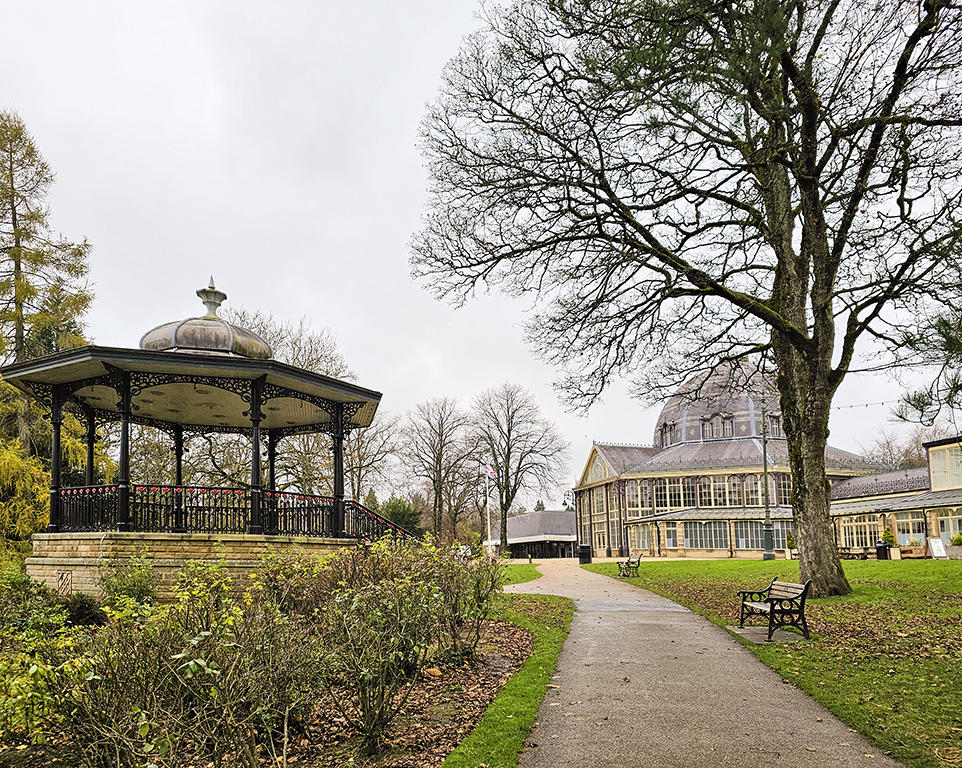
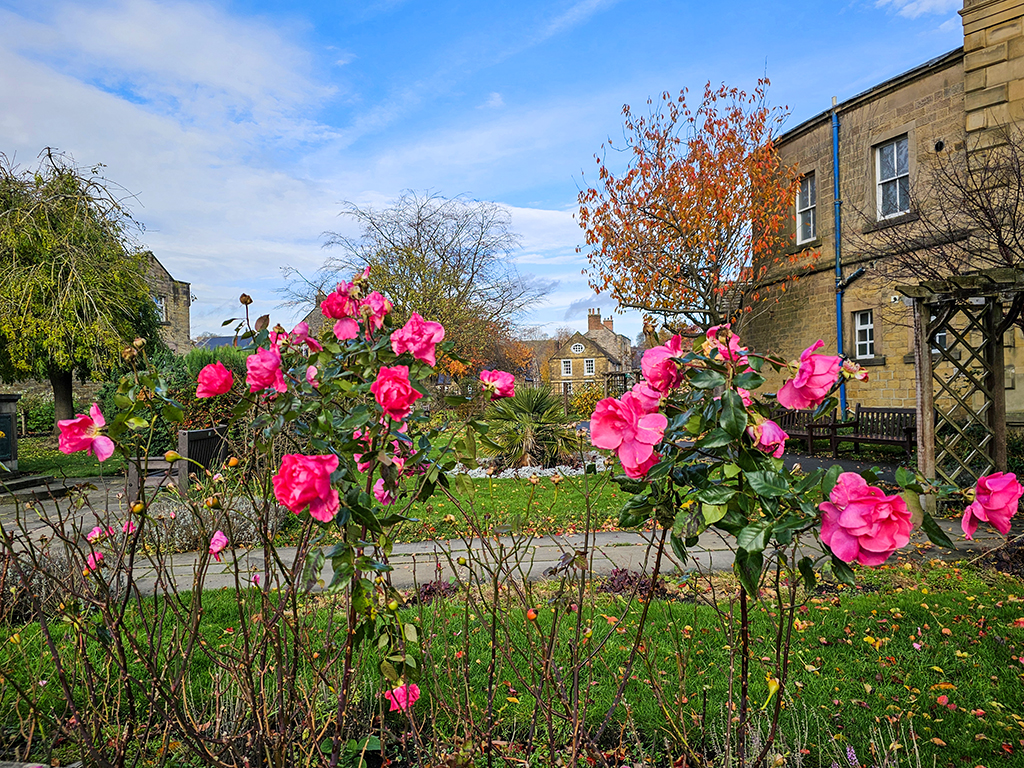
The Pavilion Gardens were built along the winding path of the River Wey, and a number of public buildings for entertainment and exhibitions were sited around the gardens. There is a conservatory with exotic hothouse plants, a boating lake, a miniature railway, and lots of winding paths and bridges across the river. On a damp and windy day, the gardens looked somewhat sad and unkempt, but there were lots of people enjoying the walks and more were browsing the art galleries and enjoying lunch in the restaurant.
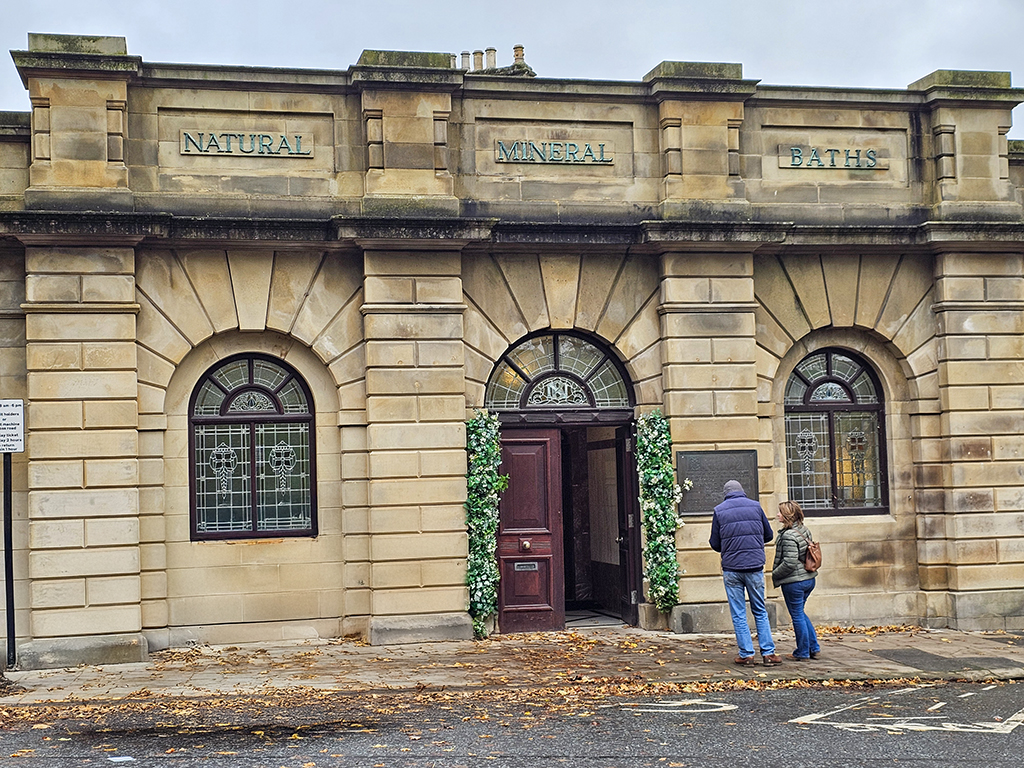
The Buxton Baths are natural hot mineral baths that have been used since Roman times. They are fed by a geothermal spring that produces about a million litres of water per day at a temperature of 80F. The water has a very high magnesium content. The present Baths were built in 1851 and were renovated to form part of a Health Spa Hotel, after sitting empty and unused during the latter part of the 20th century.
The Crescent is a distinctive feature of the fashionable 18th century spa town. It was originally built to include a hotel, five lodging houses, and a grand assembly room. It is flanked by the mineral baths, and faces St Anne’s Well. The Assembly Rooms were the social heart of 18th century Buxton. Today the building has been completely refurbished and turned into a spa hotel, but a few of the rooms are still open and decorated as they would have been in the Victorian era. For a price, you can enjoy a guided tour of these rooms.
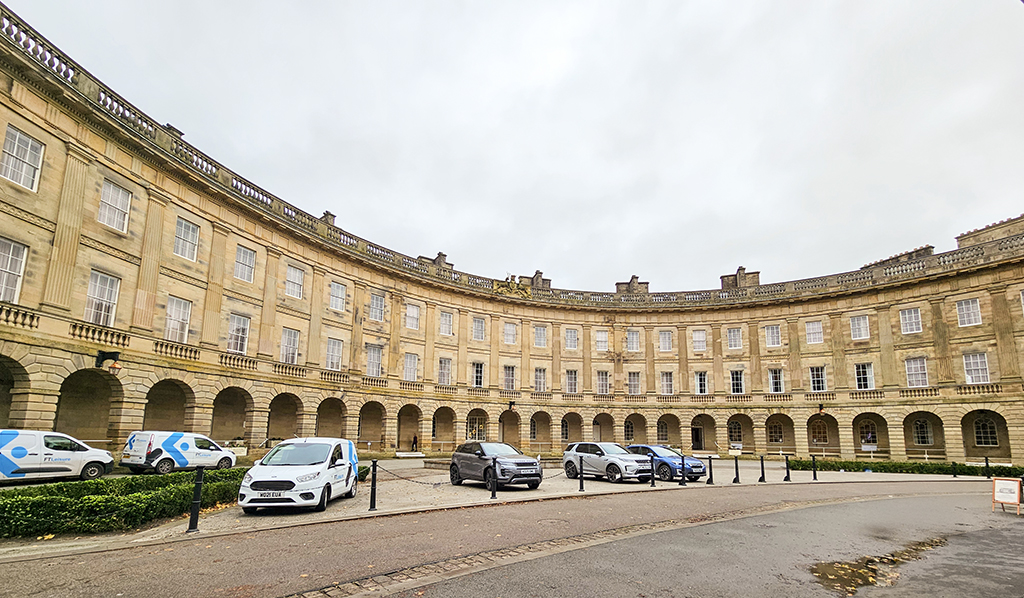
After the original hotel fell derelict in the 20th century, various schemes were set up to fund a restoration of the historic and significant building with the eventual goal of turning it back into a spa hotel. In 2003 the property was put out to tender. The winner of the tender expected the project to be complete and the hotel to be opened by 2007. Problems were continuous and more funds were required at all stages of the work. There was also an issue with Nestlé taking the water for the Buxton Mineral Water business from the spring under the proposed spa. After 17 years, the hotel finally opened in 2020. Sadly, it is up for sale again, after the hotel management company defaulted on some of its multiple loan obligations.
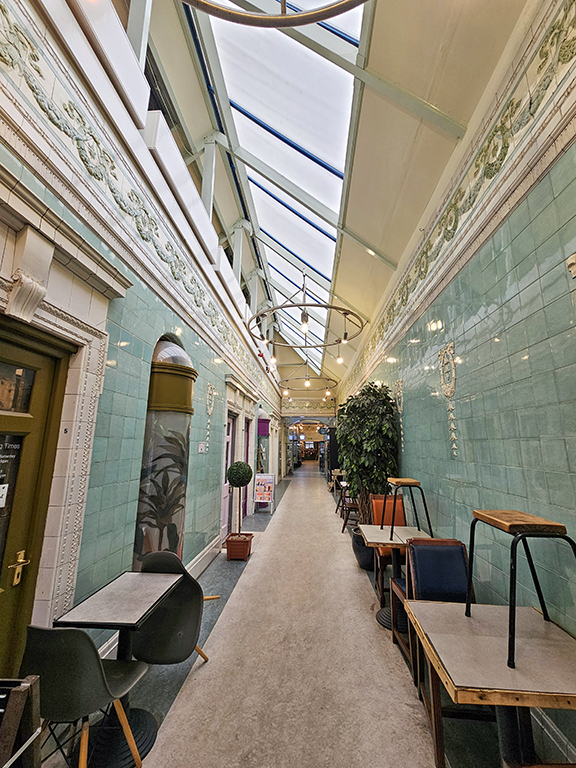
The Cavendish Arcade Shopping Centre was converted in the 1980’s when the original Hot Baths, built in 1811, fell out of fashion. The walls retain the original Minton tiles, and the whole place is a reflection of past glories. I wandered around some pretty little shops and was very tempted by the gorgeous offerings at a jewellery store. This is the kind of jewellery that both Dick and I like, but I prefer to buy such things in his company (and using the credit card that has my name on it but he gets the bill), so we can be sure he had a narrow escape from an expensive afternoon!
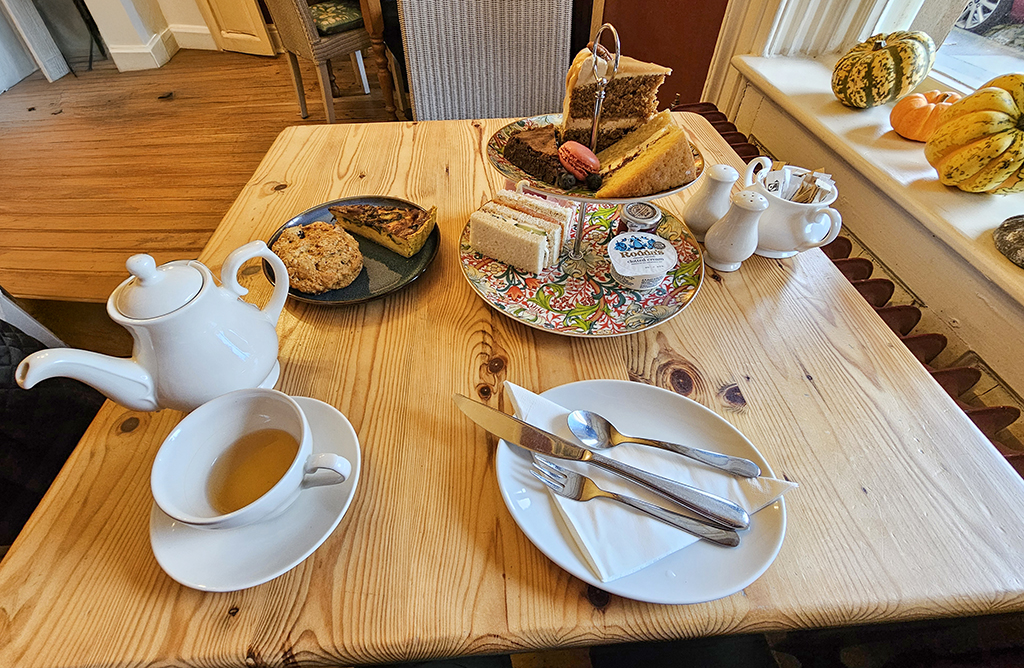
The afternoon tea was a very mixed experience, mainly because the enthusiastic changes to traditional recipes did not appeal to my taste. The sandwiches were acceptable. The quiche was just odd, with cashews and zucchini (courgette) strips, which would have been all right, but it had a sweet taste that I found most unpleasant. Move on. The scone was large (as they all seem to be today) and it too had been fiddled with to become pretty much unrecognizable. Almond essence had been added liberally, and it was full of glacé cherries. Since these are two flavours I seriously dislike, only a few bites could be tolerated. Why a restaurant will offer strangely changed scones that are meant to be served with jam and cream I do not know. From the happy exclamations I could hear from the other tables, I am very much alone in my convictions. There was a lot of dessert, an outstanding jam sponge cake, a very nice raspberry macaron, plus a brownie, and a large piece of layer cake that waited for another day, as I took them home.
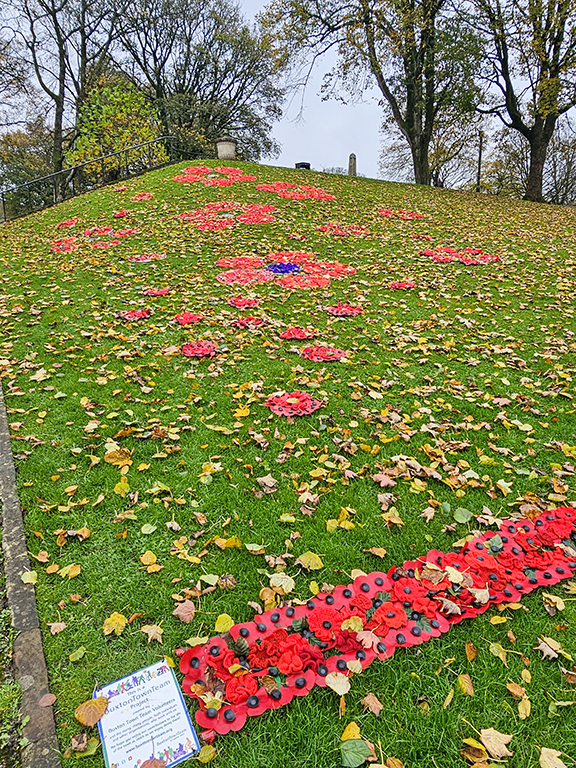
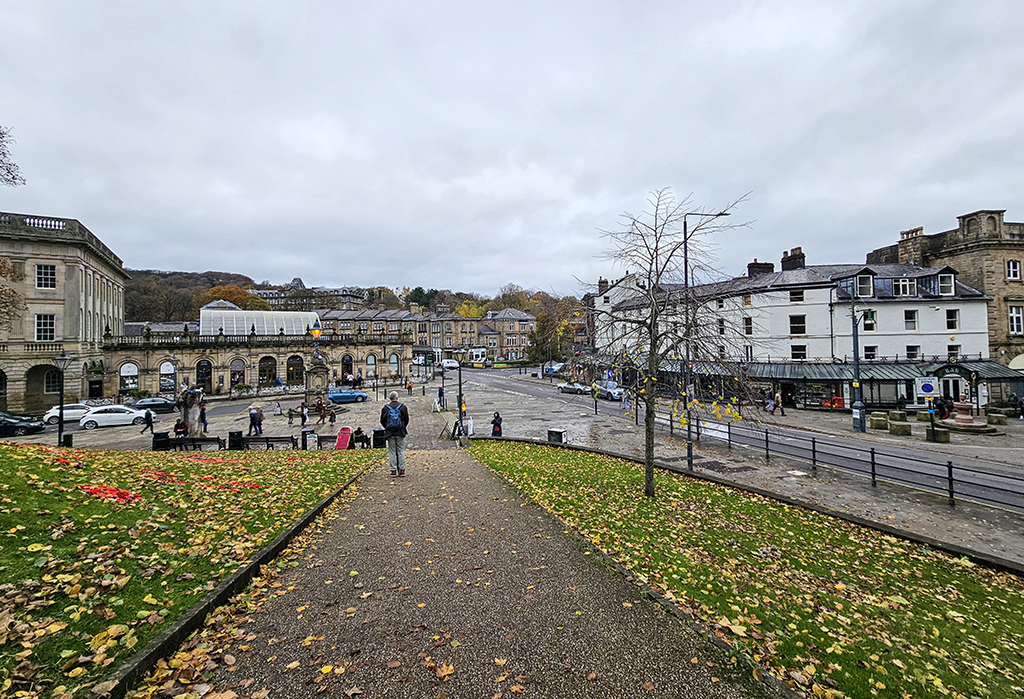
Yarn bombing has taken off recently in this country. I read that it started in Houston, and is seen as a feminine answer to the overly masculine practice of graffiti. A few years ago, when we first saw the adorable cozies covering the round tops of the posts on the railings leading down the road in Hawes we were absolutely charmed. Later examples of festive covers for post boxes at Christmas were equally enjoyable. This year I am seeing a less attractive trend, with ever larger structures, that quickly start to look faded and seedy as they are out in all weathers. Hawes had a huge, ugly rocketship with a life-size Buzz Aldrin balanced on it in the middle of the waterfall for most of the summer, until one of the late August storms washed it away. The display for Remembrance Day here in Buxton is nicer than many I am seeing lately, and an unusual presentation as well, consisting of crocheted poppies laid out on the hillside on the grass in the park.
Hargreaves and Sons is a shop selling fine china and gifts, in business since 1865. There is a display cabinet in the antique section upstairs that was built for the opening of the shop. There are very few such businesses these days.

For more than 150 years, the pharmacy business of C.R.Clowes and Son has dispensed remedies and high-quality personal items to the public. The windows show an assortment of tastefully arranged expensive hairbrushes, perfumes, makeup bags, soaps of all kinds, mirrors, and an incredible array of beauty products.

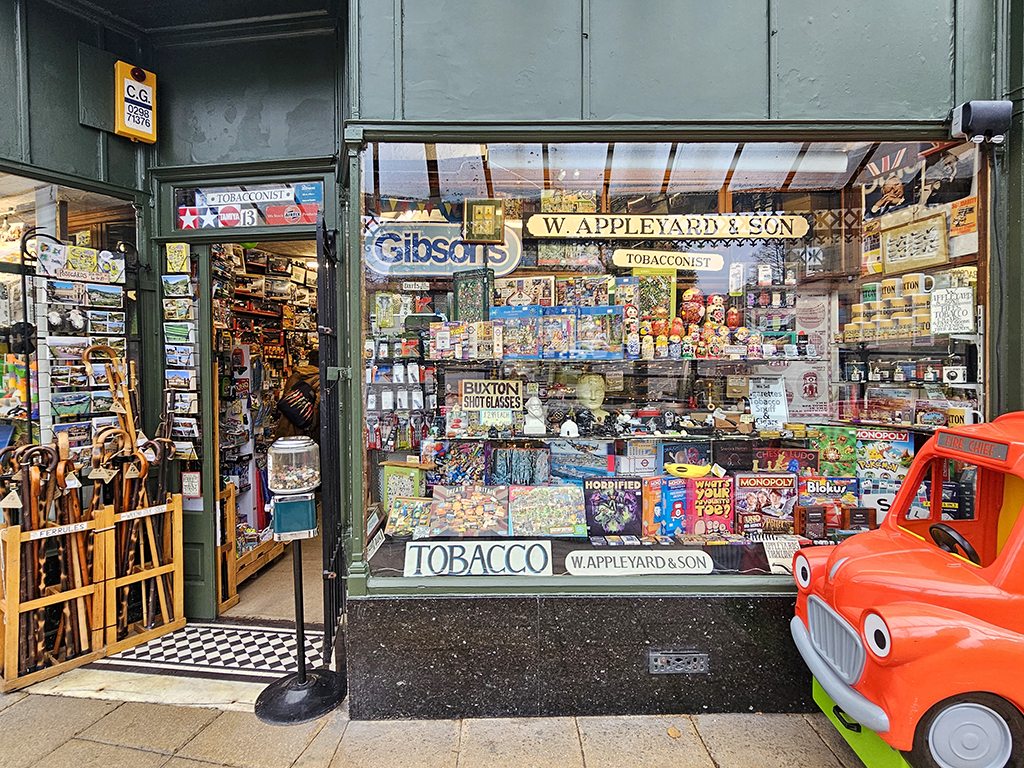
W. Appleyard and Son is a very odd combination of toys and tobacco, complete with a coin operated ride-on red fire engine in front. Besides toys and tobacco products, they sell jigsaw puzzles, board games, Russian nesting dolls, walking sticks, and scale model building kits.
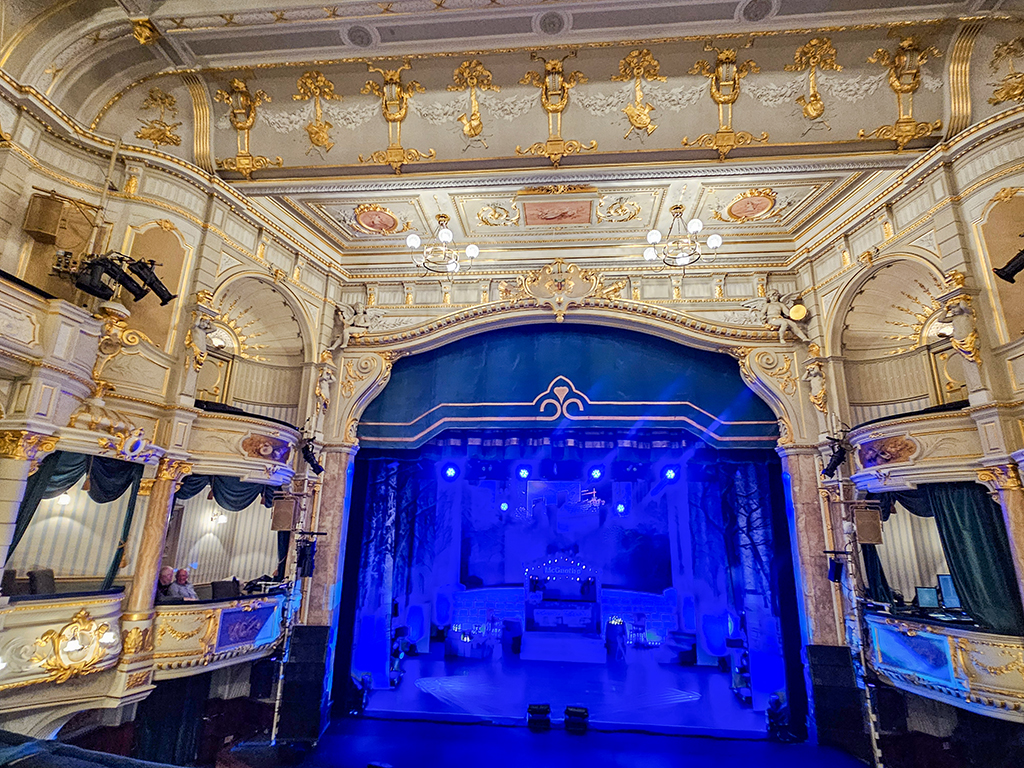
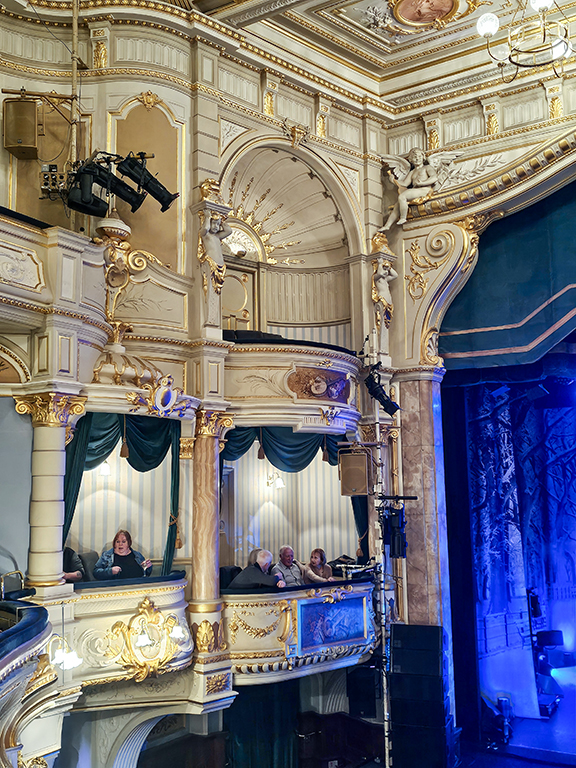
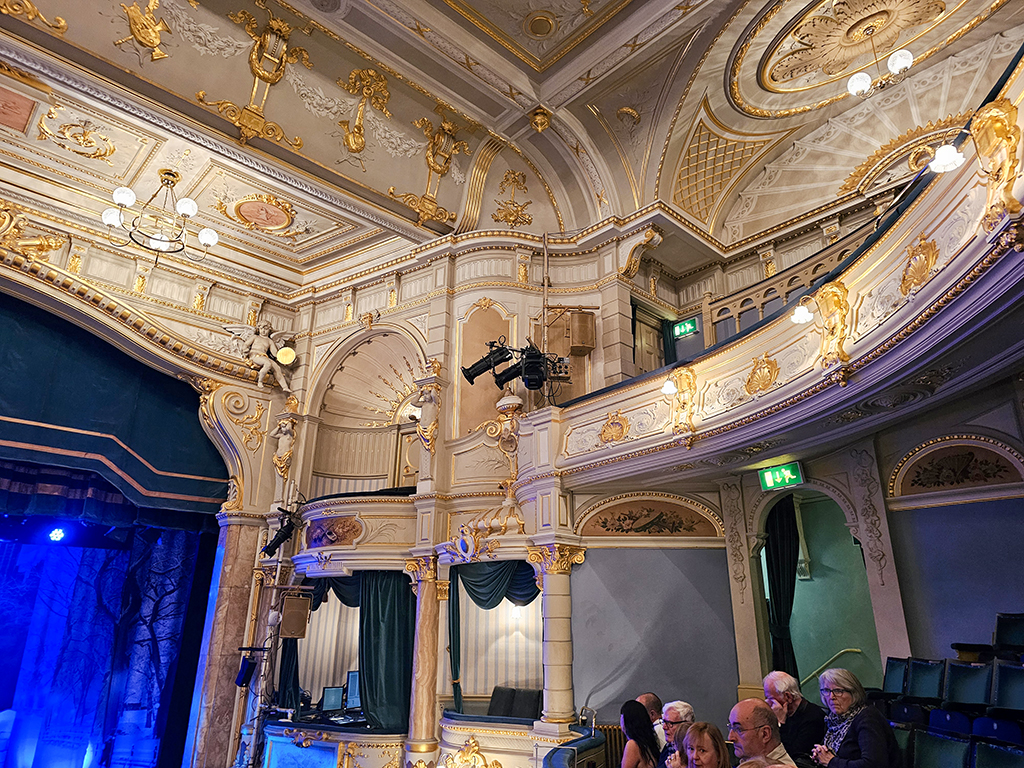
In the evening, I set off for the Opera House. I had been lucky to find a single ticket in the second row of the Dress Circle (the first balcony, or sometimes called the mezzanine in USA), and right in the middle of the row. The seats were perfectly staggered, so that even though there were people in the seats in front of me, I could see perfectly.
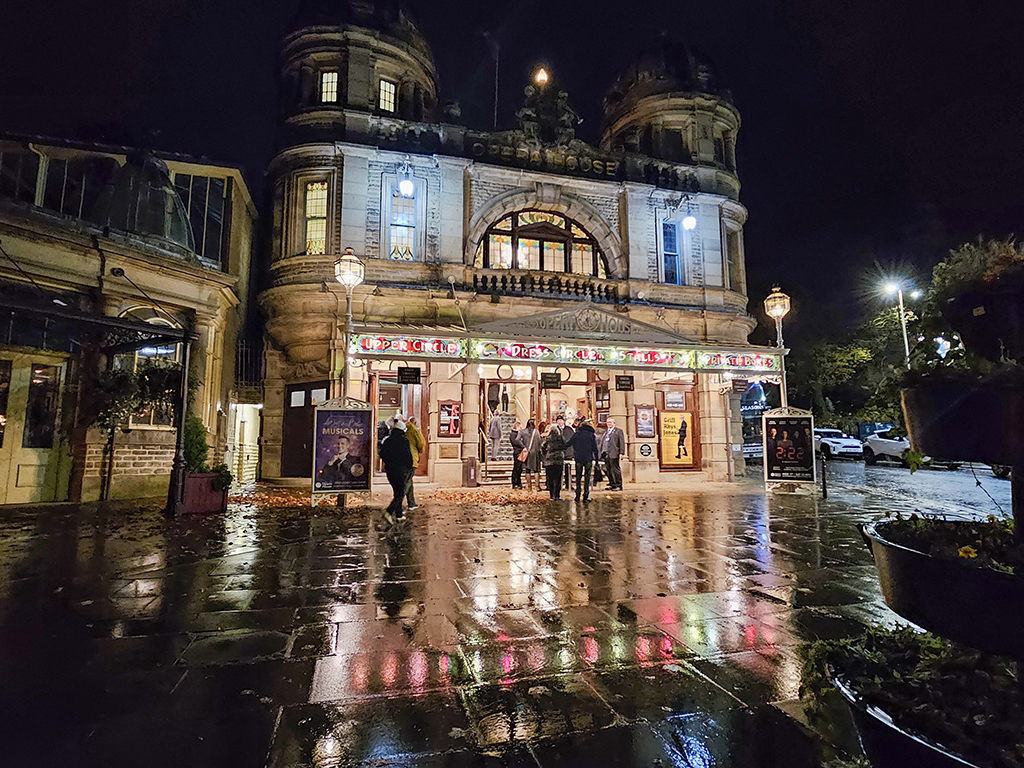
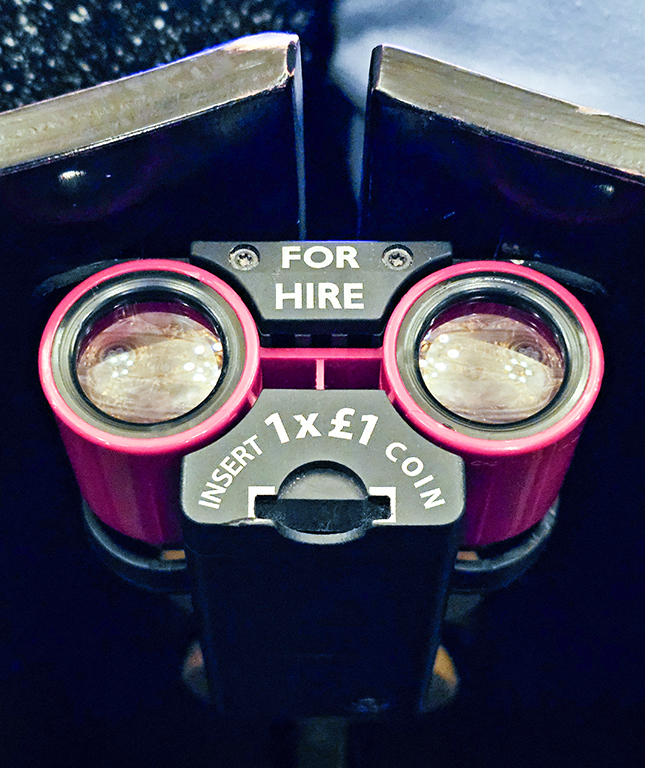
The show was called A Fairytale for Christmas, and was billed as an evening of Irish music and dancing. The dancing was far and away the best part, although the whole production was beautifully choreographed with all performers dancing while they sang and played their instruments. The dancers did mainly Irish Dancing, which is always energetic and impressive, and they were outstanding. Unfortunately, the sound was horribly muddy. The background musical accompaniment drowned out the miked singers and their instruments completely, except on the few numbers when they played and sang alone. These opera houses are designed with acoustics for unamplified music and singers, and when you put in over-loud and badly mixed amplifiers, the result is not as it should be. I had thought I might go to another production at the Opera House on Friday, a tribute band performing Led Zeppelin and Deep Purple numbers, but given the poor sound I decided not to bother.
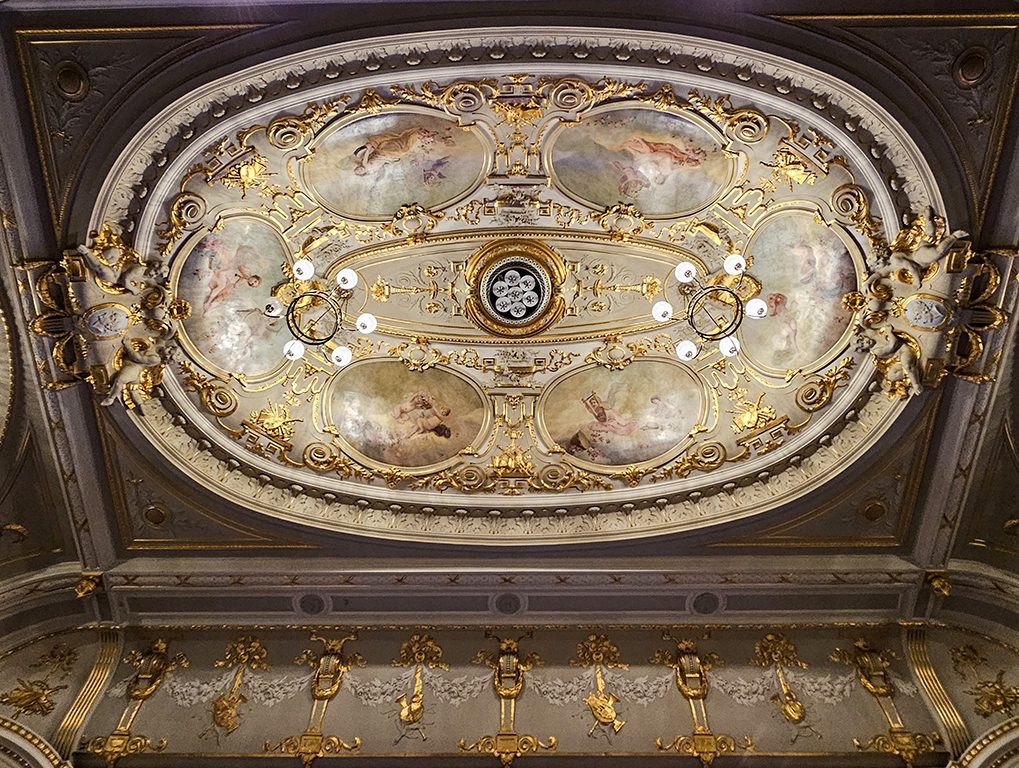
I enjoyed the evening anyway, and was glad I went. The building is stunning. The audience was interesting. As is usually the case, most of the women had dressed up, and most of the men had clearly not. I would have liked to take one or two pictures of the performance, but I noticed that while a lot of people took pictures before the show, nobody did while it was on, so I followed their lead.
The forecast for Tuesday was awful, so I switched my plans about and headed for the Chatsworth Estate Farm Shop. Chatsworth House is closed this week to make their Christmas preparations, so I could not visit the house as I had originally planned. On the other hand, I knew the farm shop would be a good one, and I was not wrong!
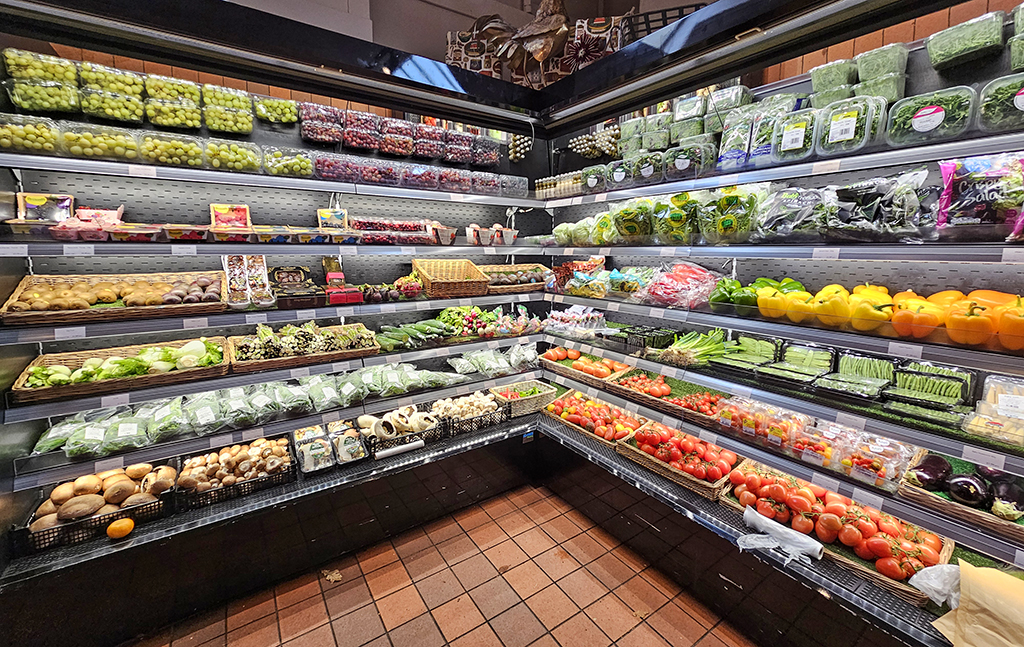
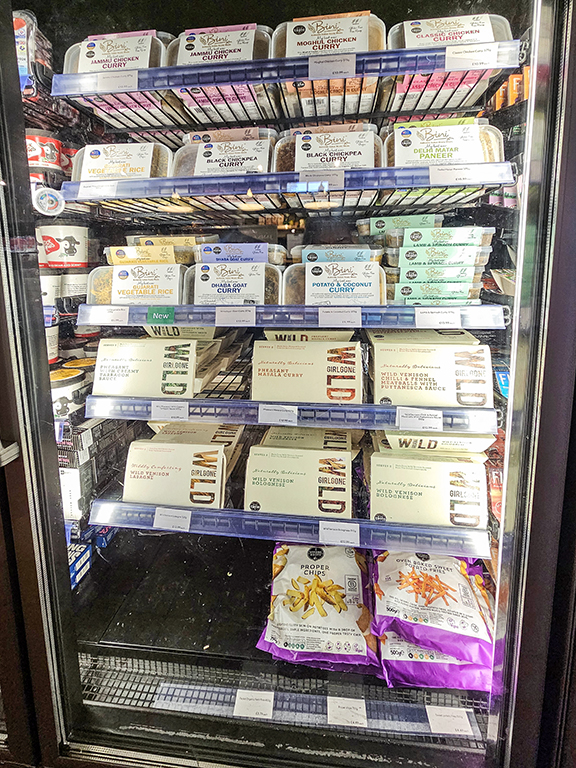
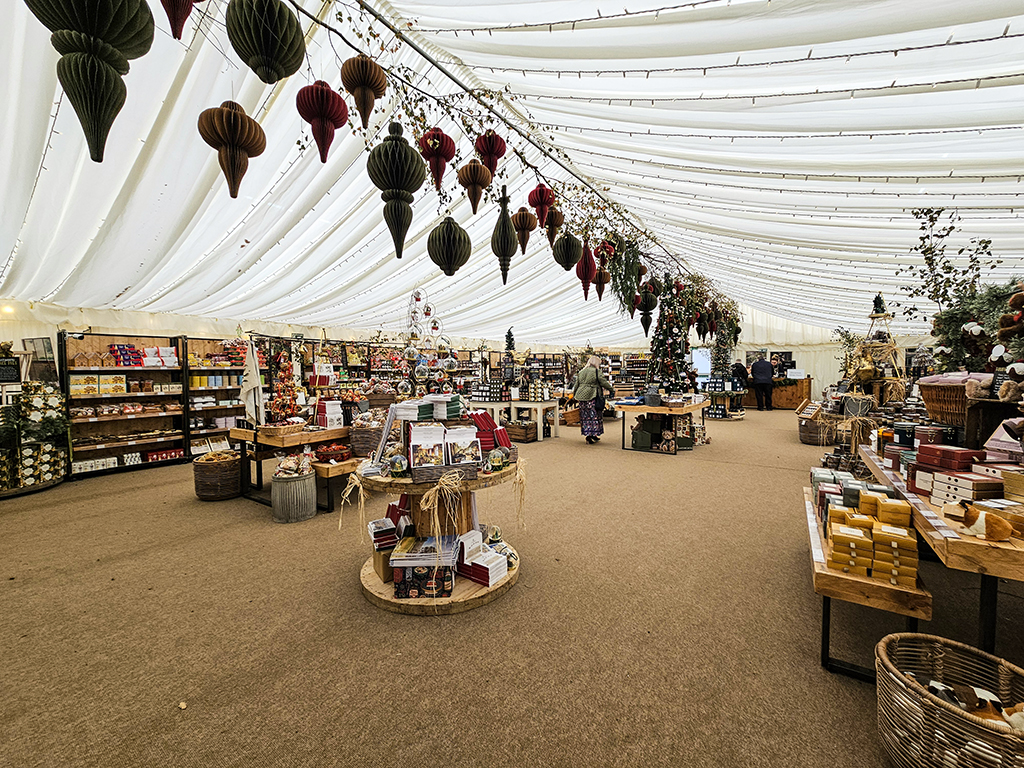
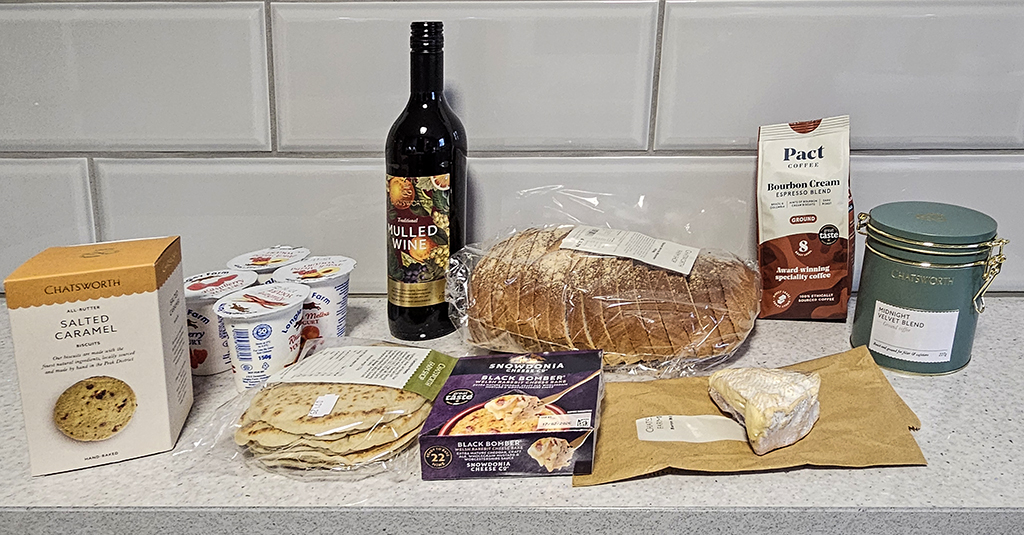
The first thing I saw was a beautiful display of tomatoes grown on the estate. They looked so gorgeous I was tempted to buy them, but reality set in and I realized that I would be unlikely to eat more than two of them, given my various meal plans over the next few days. Inside I found bottles of mulled wine, so one of those went into my basket to serve at home in December. The butcher counter was amazing, and there was a good selection of fresh fish, even though Derbyshire is a long way from the sea. Mostly it was unusual foods and special treats. There is a separate pavilion for Christmas foodie treats, and it was fun looking around the well-presented displays. After stocking up on a few things I needed, and some that I probably didn’t, I paid for the groceries and headed out to the tearoom.

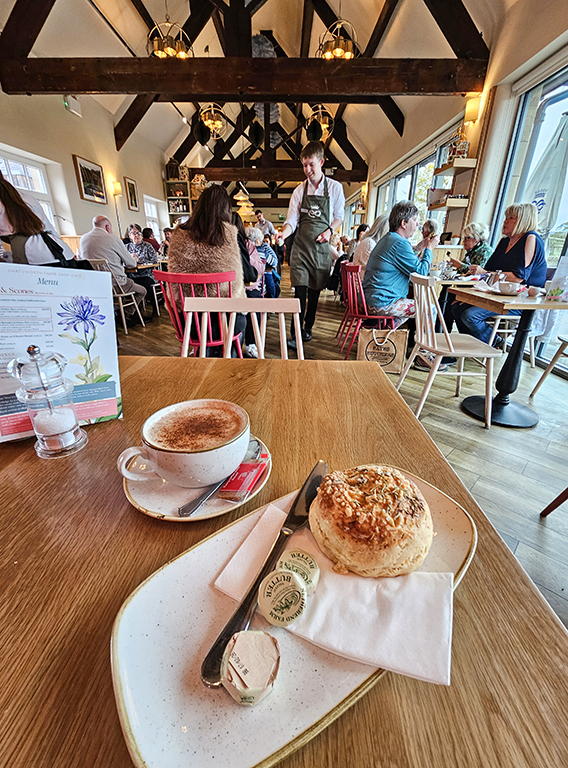
I seem to be on a mission to find properly served scones with jam and cream. After Monday’s awful offering, I was feeling wary, and asked the waitress whether the scone was plain. She told me they don’t make plain scones. The scone that day was blueberry and cherry (and at another table I could see that the cherries were my pet hate, glacé cherries). I settled for a cheese scone with butter and a cappuccino. I was glad I didn’t order sandwiches, they were enormous, as were the various lunchtime savoury choices. I enjoyed my selection, and looked forward to some of the nice things I had in the fridge for supper later.

Although it was very gloomy and drizzly, the drive was still enjoyable, through the winding roads of the Derbyshire Dales. In the 1990’s, when we lived on the south side of Manchester, I had a Jaguar XJS (year about 1986), and I loved driving these roads in that powerful sports car. It was gold, with a wonderfully grumbly 12-cylinder engine that loved nothing better than twisty roads and steep hills, unless you count the motorways, which at the time were usually driven at 80mph or faster (and were not nearly as crowded as they are today). It was the only automatic transmission car I have ever owned. When we test drove the 6-cylinder standard transmission version, Dick discovered that there was not enough room for his big feet with the three pedals in the tunnel! We sold that car when we moved to Prague in 1996, having been advised that it would disappear out of our driveway in ten seconds if we took it to Eastern Europe. You can buy one today for pretty much the same amount as we sold ours, taking inflation into account. As I drove towards Chatsworth, I found the road quite familiar, even after all these years, and enjoyed remembering driving those roads in my beloved Jag.

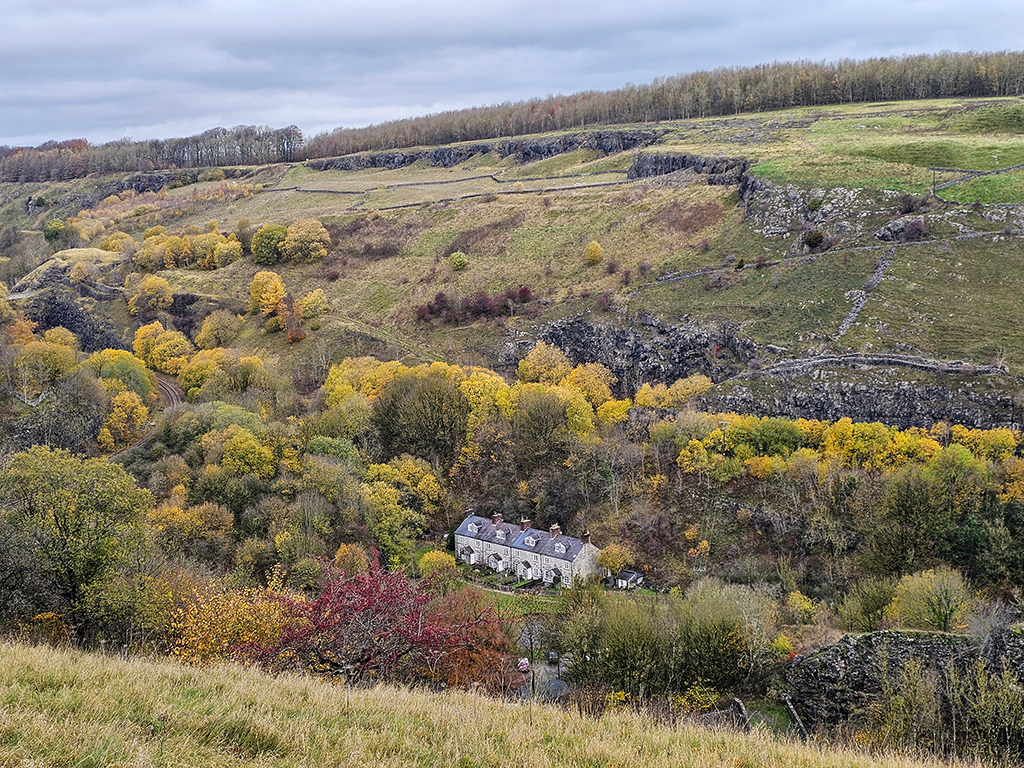
I set off on Wednesday for Bakewell. I made a brief stop to look at Chee Dale Gorge, which is cut through by the River Wey, and is the site of a quarry that produces high purity industrial limestone. The sun came out unexpectedly, so I turned off to visit Ashford-in-the-Water, a very pretty village that I had seen earlier in the week.
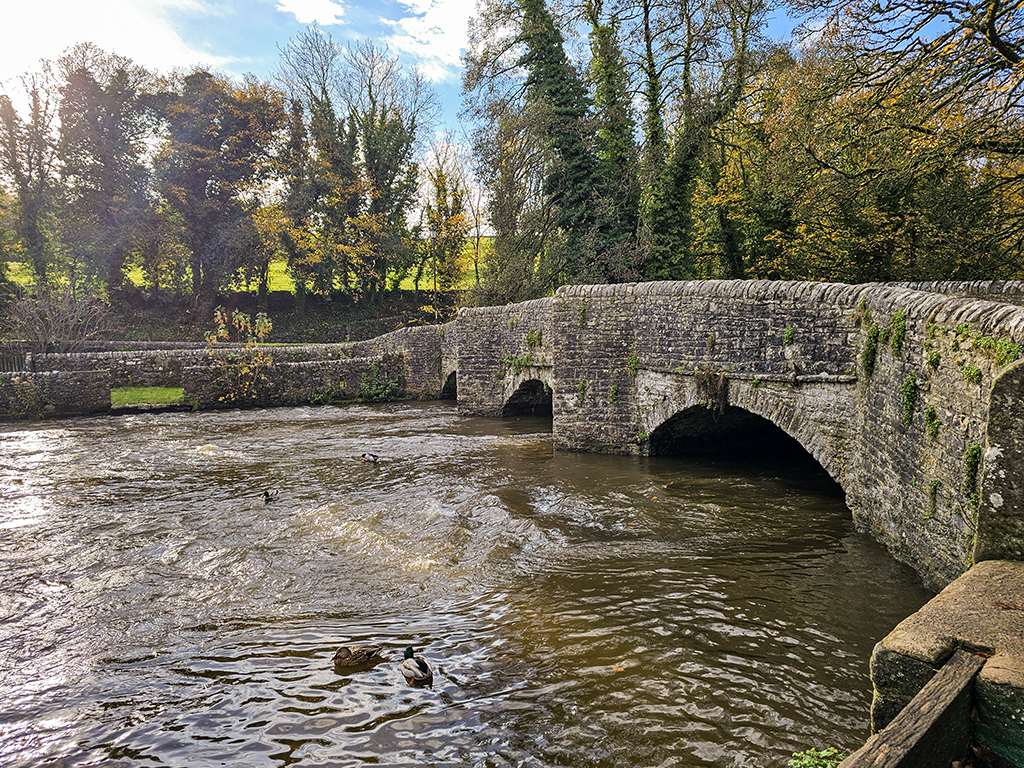
This is an ancient town on the bank of the Wey, mentioned in the Domesday Book. The Sheepwash Bridge, a packhorse bridge dating from the 17th century, crosses the river in the middle of the village. Apparently, the name is quite descriptive. A pen with lambs was placed on the bank on one side of the bridge, and the ewes swam across the river to get to them. As they swam across, shepherds pushed the sheep under water to clean the fleece before shearing.
The local parish church, The Church of the Holy Trinity dates from the 12th century, although very little of the original structure remains. The Norman tower contains a ring of 6 bells, cast in 1954. Anyone who watches All Creatures Great and Small (or, if I remember correctly, at least one episode of Midsomer Murders) will be familiar with the practice of bell ringing. Long ropes hang down from the bells in the tower, each of which have a different tone, and the ropes are pulled in turn by bellringers, to create a “change”. The bell is controlled by holding the “sally” the puffy bit, and the tail end. Ringing is both physically and mentally challenging, and is also considered a great social activity. The most difficult ring is a peal, which involves many different sequences and can take over 3 hours to complete.
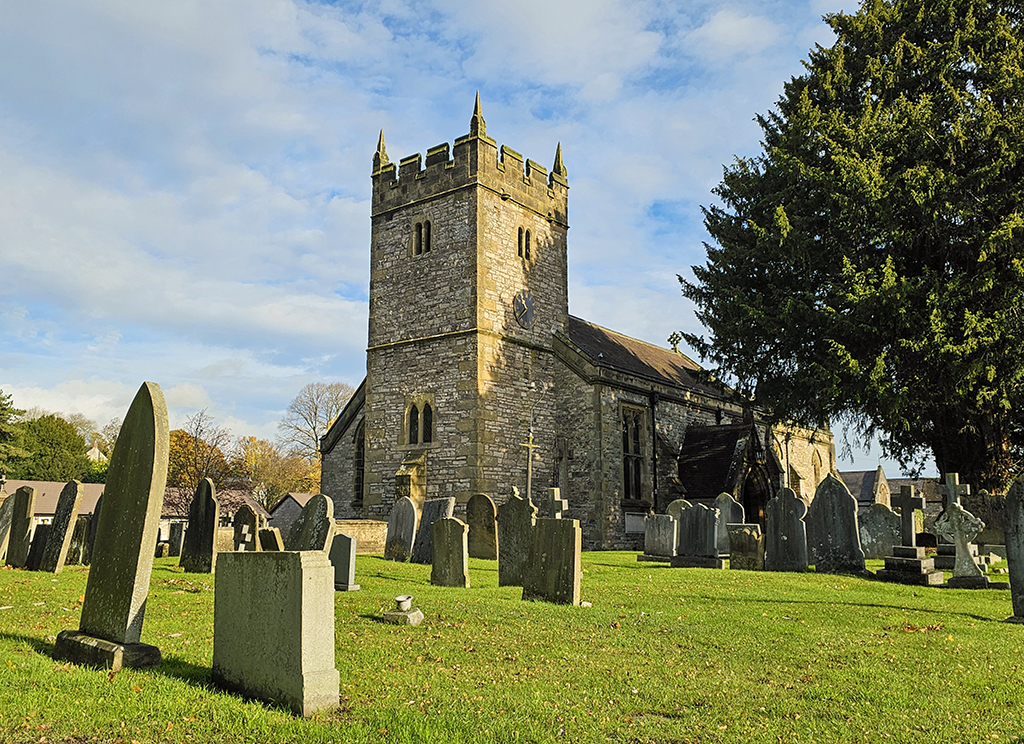
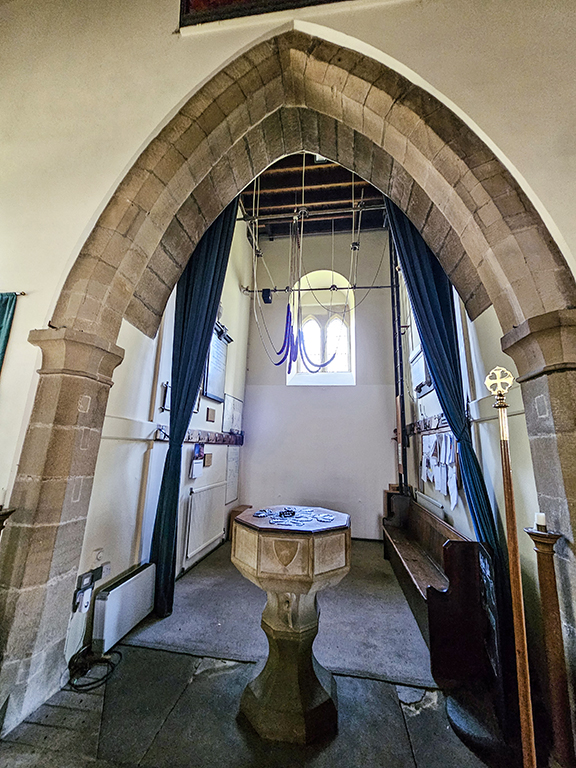
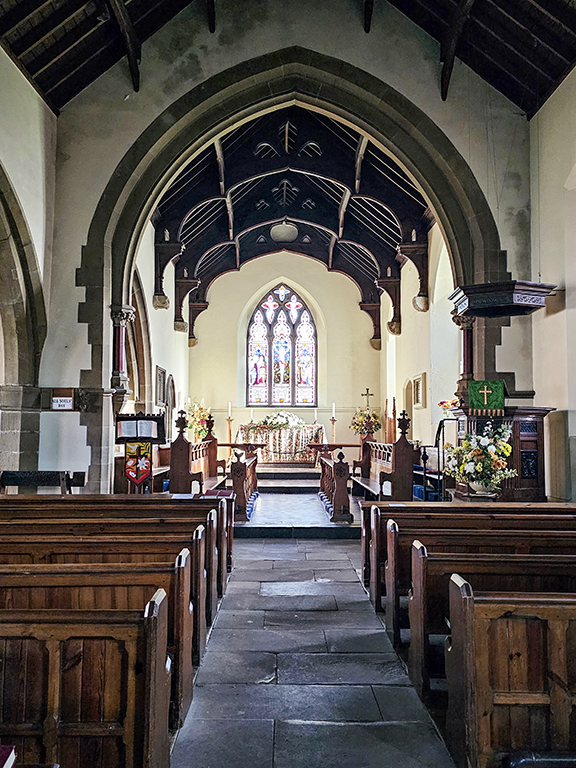
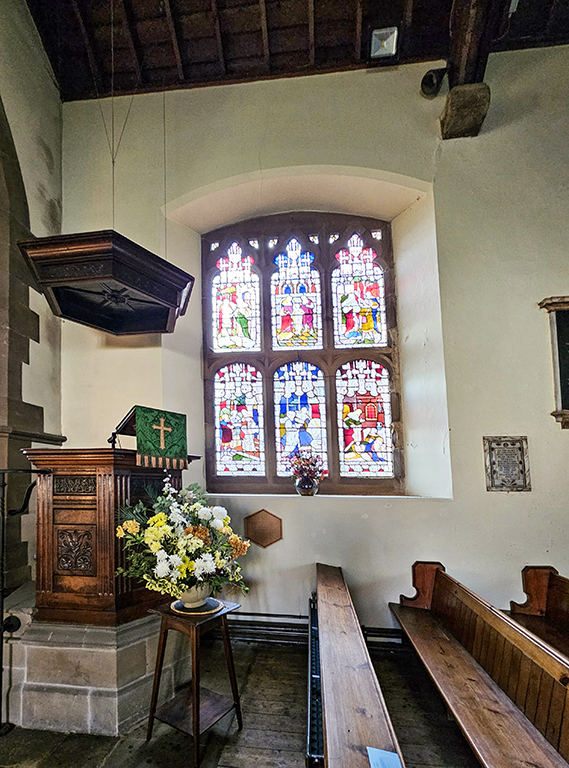
There are several stained-glass windows. The Haworth Window dates from 1880. It shows the Six Works of Mercy from the Parable of the Sheep and the Goats in St Mathew’s Gospel.
After wandering around the pretty village and admiring the quaint houses and gardens, I drove the couple of miles to Bakewell.
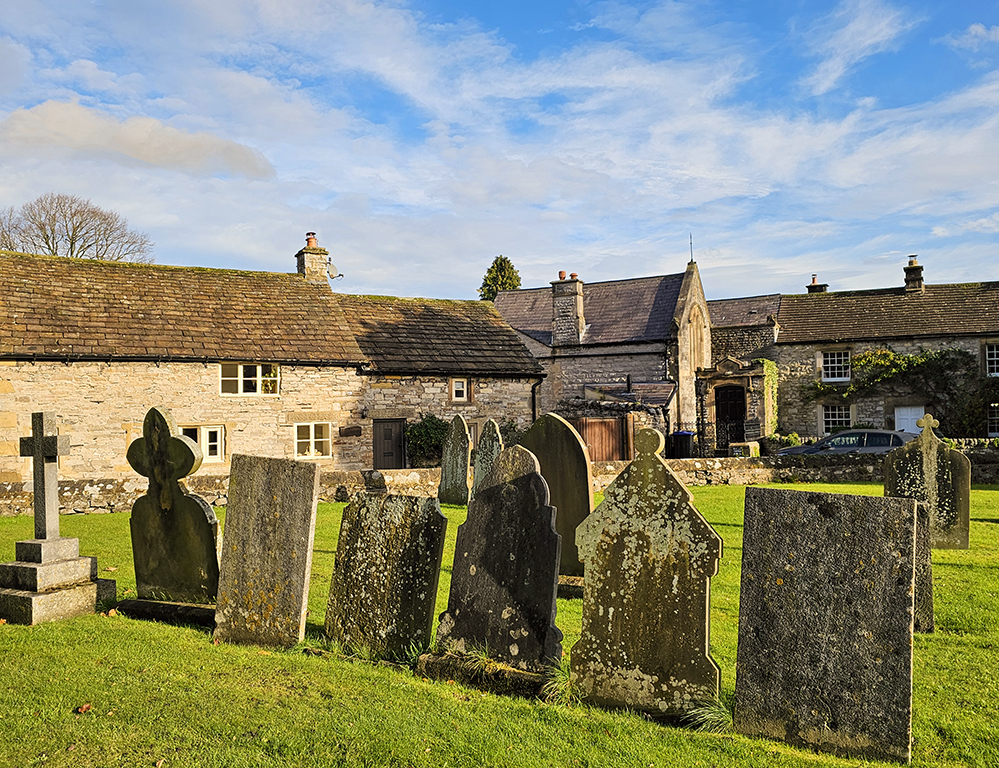
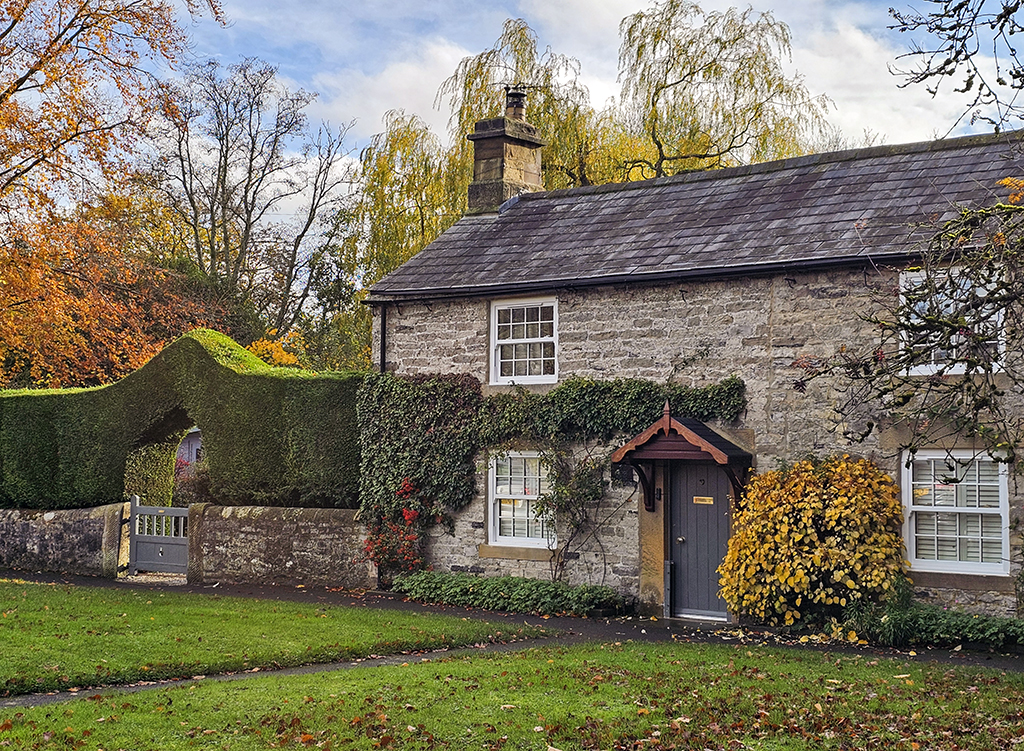

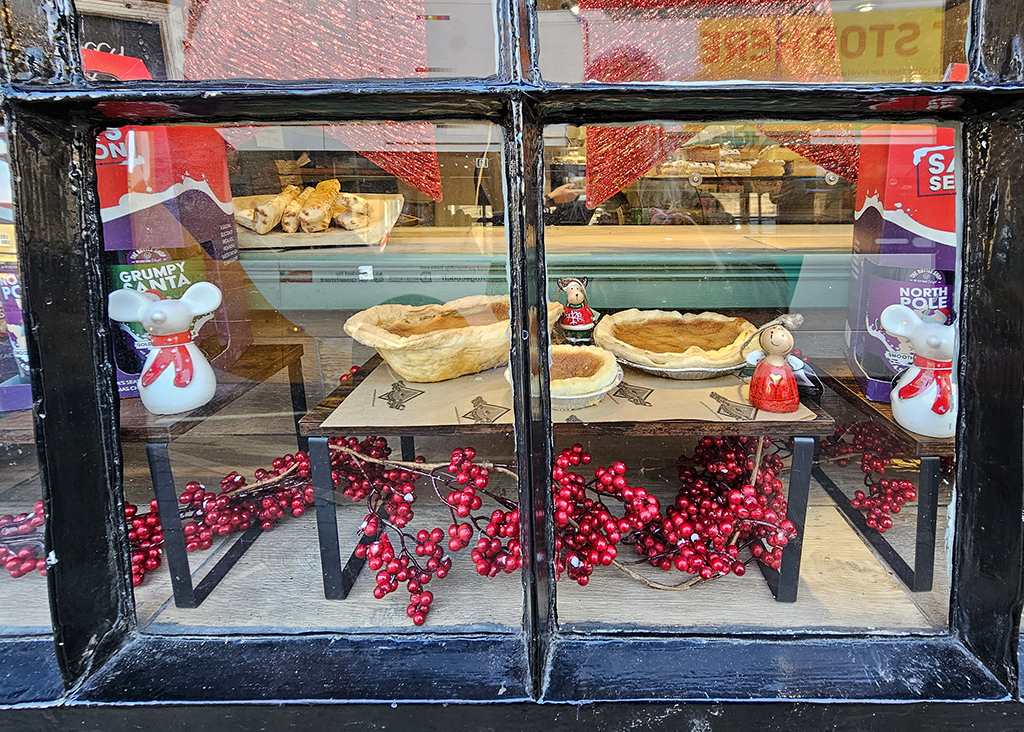
Bakewell is another ancient town, probably Anglo Saxon. It was a market town from 1254, and developed into an important trading centre. A brief, and unsuccessful attempt was made to turn it into a spa town in the 18th century, but a cotton mill was built in 1777 that employed over 300 people and ensured the future of the town. It is now a major tourist honeypot. It is famous for Bakewell Pudding, a sweet pie that supposedly happened when a cook at the White Horse Inn made a mistake when preparing a jam tart. There are no less than 3 establishments in the town that claim to have the original recipe for Bakewell Pudding. It should properly be made by spreading raspberry jam over a pastry crust, and topping it with a mixture of eggs, sugar and ground almonds. This bakes into a slightly misshapen (but delicious) dessert. Later versions, including Bakewell Tart, are fancier, sweeter, and have a lot more almond flavour (ick, says I). I learned to make Bakewell Pudding from my mother, and it is always well received, but it is some years since I have made it.
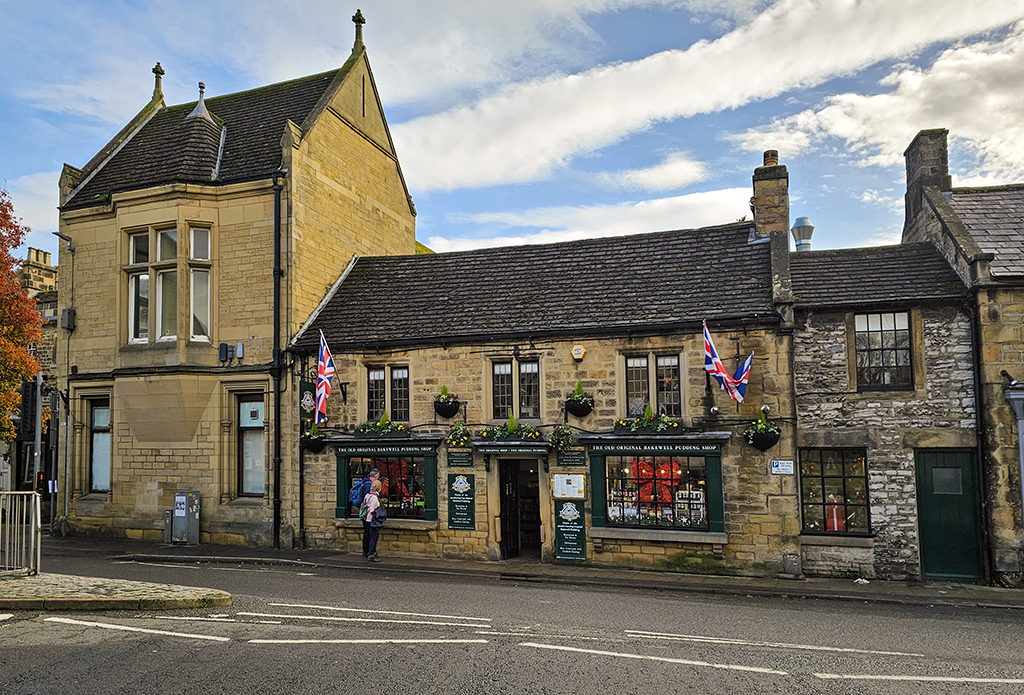
It took a long time to navigate the town centre and find parking, so I was glad I had planned to be early. The first public parking lot I found had more than half of the 17 spaces dedicated to electric vehicles (they were all empty), and all but three of the rest were coned off and in use by commercial vehicles. The next parking lot was larger, and had plenty of spaces. Examination of the pay and display machine revealed that while the fee of £2.80 for 2 hours is not excessive, that is the limit, and you cannot pay and stay any longer. I asked the waitress in the restaurant if she thought that returning and getting another ticket would work, but she told me that they are quite enthusiastic with enforcement of the 2-hour limit. In fact, when I returned, I could see the parking attendant wandering around, just waiting to pounce on anyone who foolishly returned late or tried to take another ticket. The fine for overstaying is £70. What a marvellous way to make tourists feel welcome. I just felt like a mark.
I had time before my restaurant reservation to wander around the pretty town and look at some of the interesting shops. There are some nice gardens in the centre. If I had been able to stay longer after my lunch I would probably have bought something in the shops.

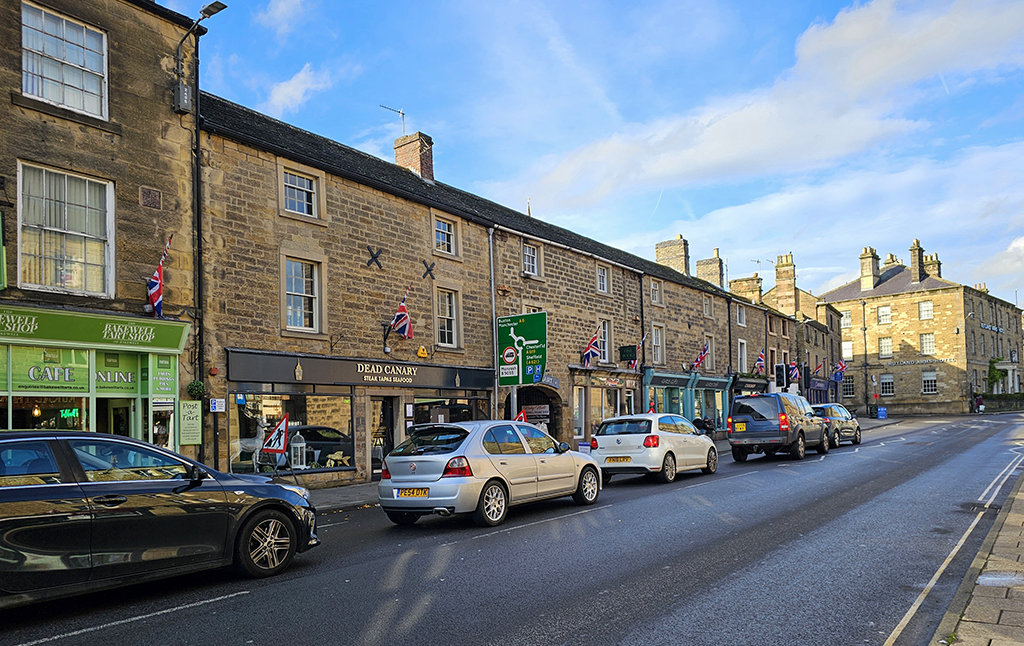
Down one street I saw the strangely named Dead Canary Restaurant. I had to look it up! Leaving aside the inability to focus on any one style of dining (steak, tapas, seafood), apparently, they have no liquor licence. You can bring your own wine, but you have to somehow know this ahead of time (this information is not on the website). The odd choice of name comes from the owner’s grandfather, a Welsh miner who saved many of his fellow miners when his canary died from toxic gas poisoning, thus giving early warning. A slightly gruesome choice of name, one might think there could be another way to honour a heroic grandfather. Although, in my opinion, it was the canary who was the dead hero.
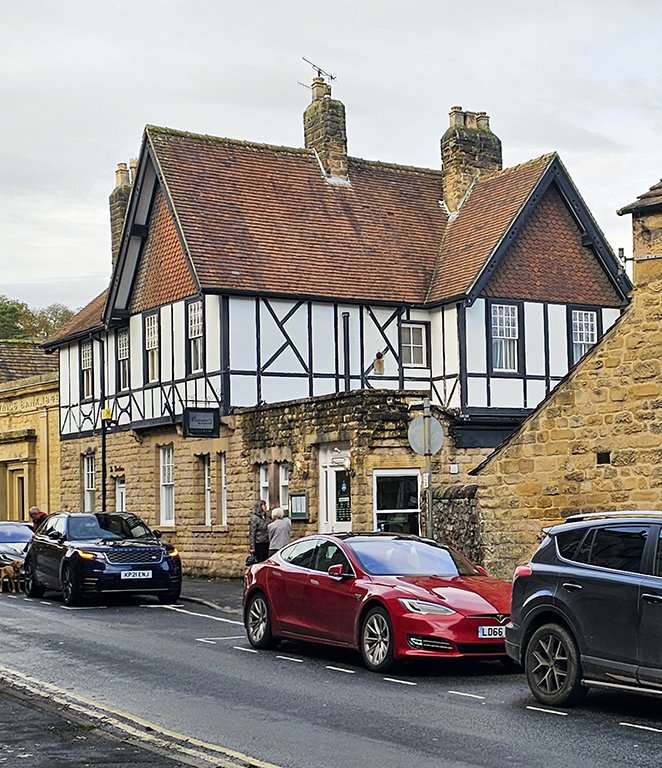
The restaurant, Piedaniel’s, that I had planned to have lunch at is in a character old house, and it appears that the dining area has been created from what was once a courtyard garden. They follow the highly civilized (but vanishing) practice of showing you first to comfortable seating, where you can sip an aperitif while you peruse the menu. You are called to your table when your first course is ready to be served.
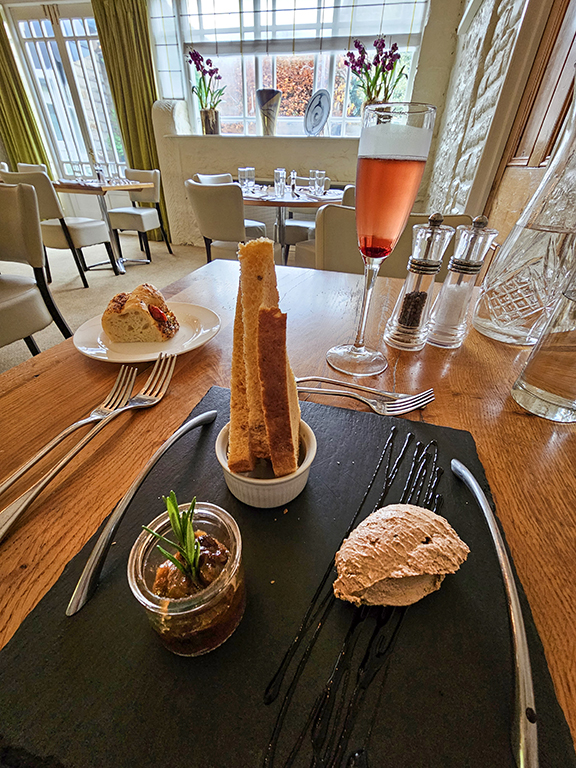
I ordered a kir royale and two starters instead of a starter and a main course. Kir royale is a drink made from champagne mixed with crème de cassis, blackcurrant liqueur. It was a perfect start to an outstanding meal, one of the best I have had. I chose the chicken pate to begin. It was served with hot, crisp toast and some very nice chutney. A piece of tasty focaccia was also brought to the table. My second course was a blue cheese souffle, served in a red wine sauce. It was absolutely delicious. When I told the owner how much I enjoyed it, she said that they try to create recipes that are “unusual without being strange”, which I thought was a perfect way to describe it. The fairly robust flavour of the blue cheese held up with the sauce and it was a great combination. Believe me, I am thinking about how I might make something similar for our next dinner party.
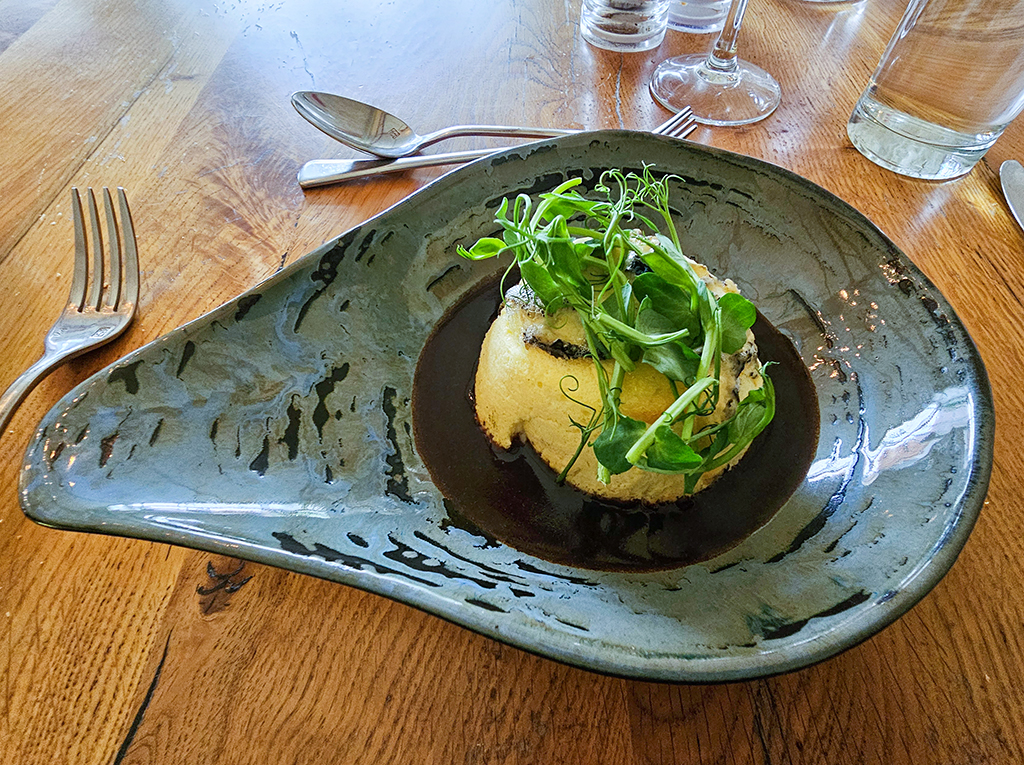
There was sadly not enough time to try any of the desserts. I wished that I could return one evening for dinner, but since I am on my own, I would not be happy driving the half hour through the countryside after dark.
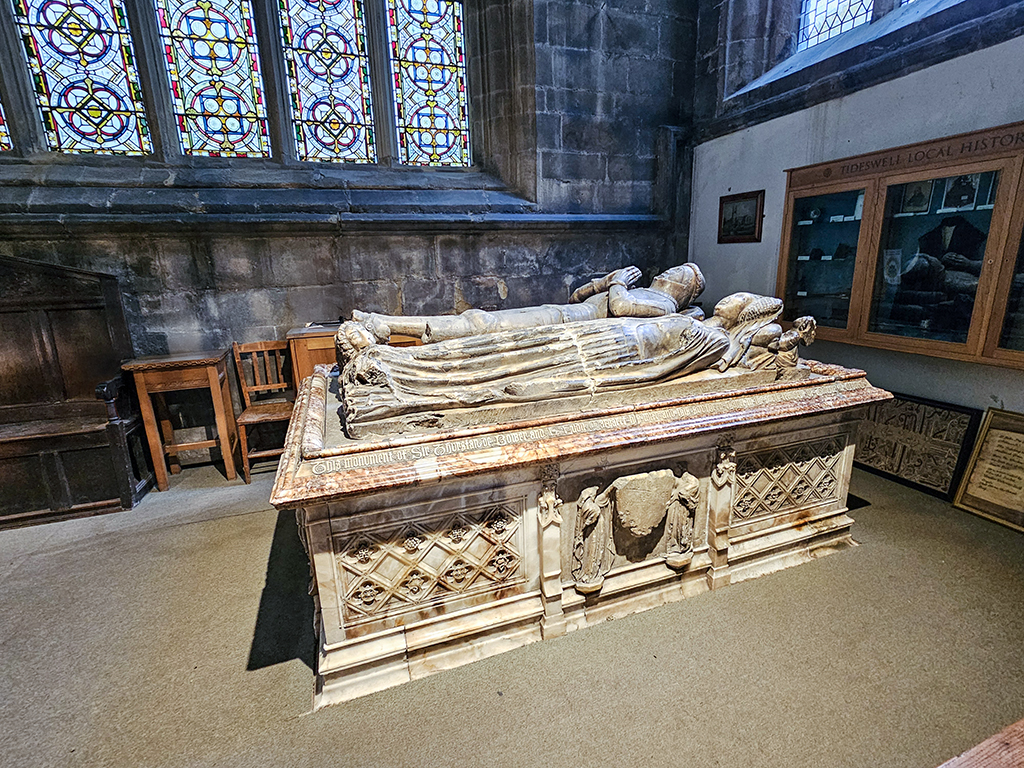
After leaving Bakewell I decided to explore a little, and followed signs for Tideswell and “The Cathedral of the Peak”. I drove into quite a substantial village, and in the centre was the beautiful, large Church of St John the Baptist, constructed between 1320 and 1400. I parked (nobody is fleecing tourists in this town, there are no restrictions and lots of on-street parking!) and went into the church to look around. It was beautiful, with a lot of elaborate carving and even a side chapel with a historic tomb of a knight and his lady.

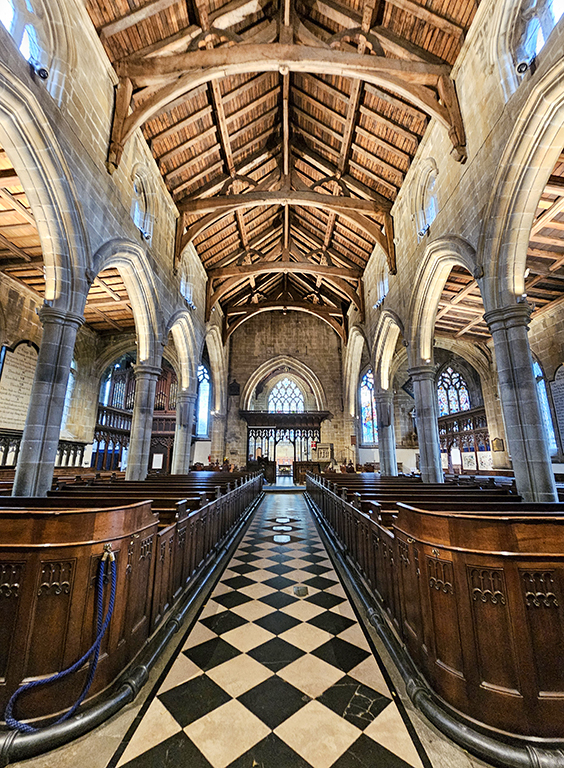
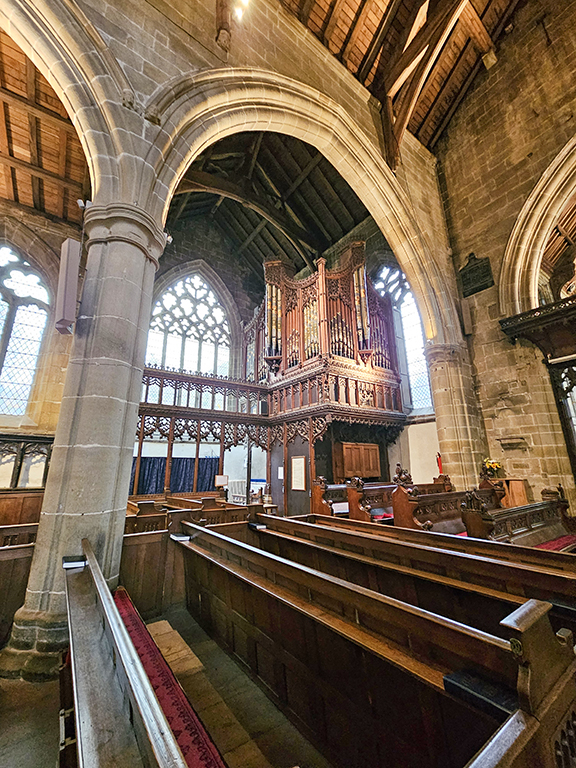
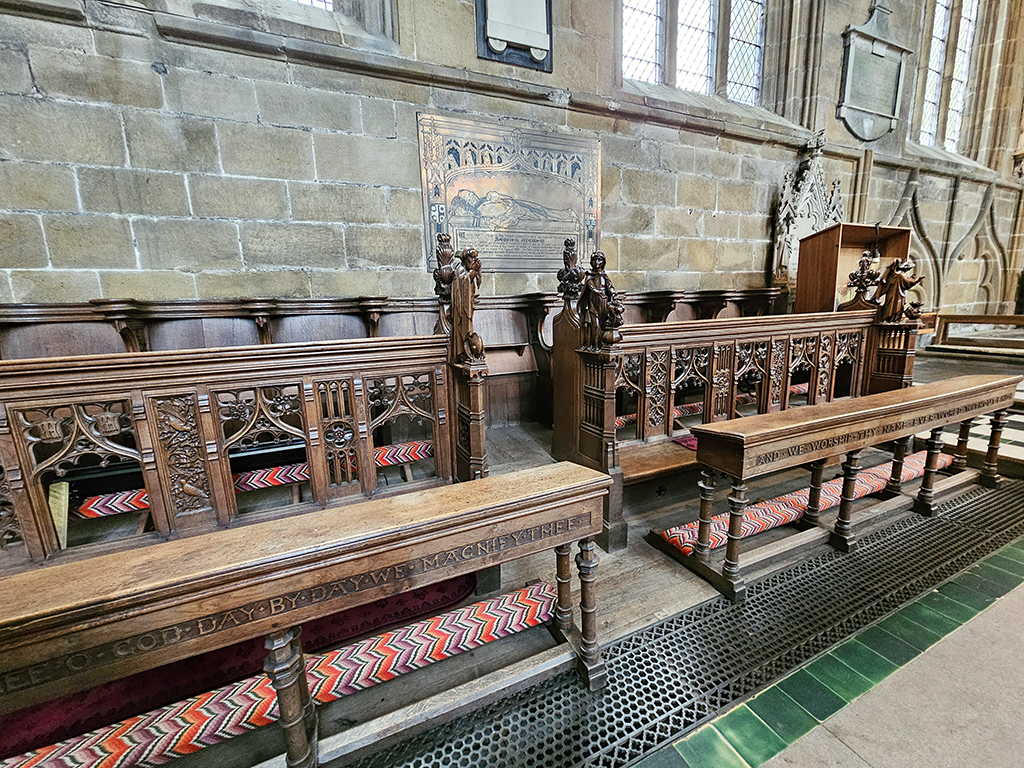
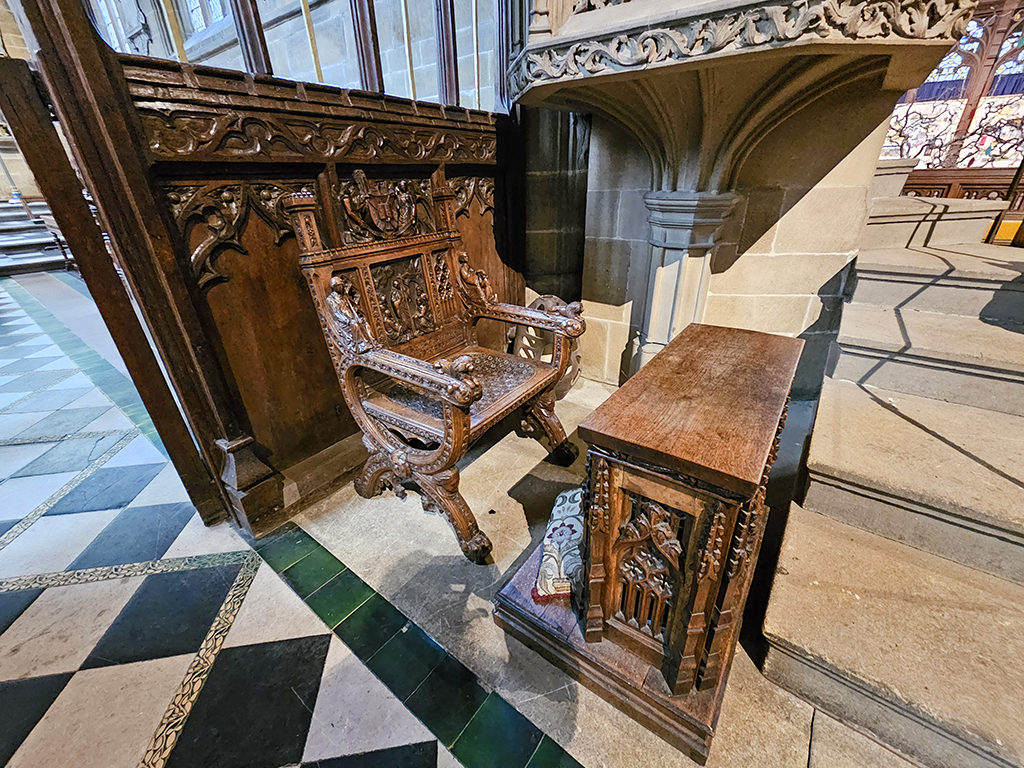
Later, I researched the history of the church, and it makes quite a tale. Essentially, from its earliest days, it was the subject of disputes between Lichfield Cathedral, and Lenten Priory, both of which are in Nottinghamshire. The disputes continued right up to the Dissolution of the Monasteries, and on several occasions were taken to the court at the Vatican. On one occasion, the monks of the Priory armed themselves and tried to steal wool and lambs from Tideswell. The wool and sheep were moved to the nave of Tideswell church, but the monks did not respect the sanctuary, and invaded with horses and weapons. 18 lambs were butchered or trampled by horses, and another 14 were carried off by the marauding monks. The crime was investigated by a commission appointed by the Pope, and the Priory was made to pay a heavy fine, but the disputes continued until the Priory was dissolved by Henry VIII.
The tomb of the knight and his lady is interesting. It looks just like many that I have seen in churches all over England, but there is a mystery about the occupants. There is no record of a knight called Sir Thurstan de Bower, or his lady, but there was a yeoman of that name. Descendents of the Bower family were convinced that their ancestor was a knight, and funded some of the windows in the chapel. Nobody knows who the effigies actually represent. There is an interesting account of the knight that was written in 1862. The author was absolutely certain that there was a hero knight of that family, who erected “at his sole cost the whole of the spacious south transept”. There was certainly a family called Bower, living in Derbyshire at the time. In fact, there is some suggestion that the Ladybower Reservoir was named for this family.
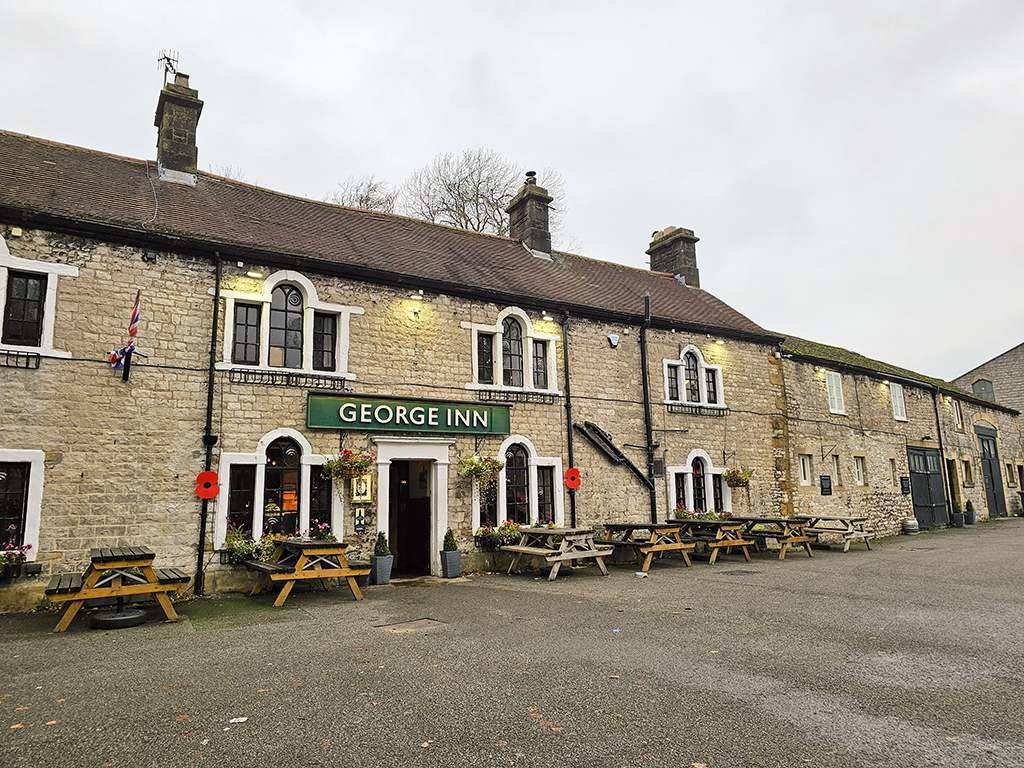
The George Inn was a coaching inn. The present building was built in the late 18th century and is reputedly haunted by Old Sarah, a barmaid who searches for her husband. I didn’t see her when I stopped in for a cappuccino.
The weather forecast for Thursday was the best of the week, although it rather let me down. I planned a day of driving to the northern part of the county, the area known as The High Peak, and the Hope Valley.
My first stop was the Ladybower Reservoir. This is one of three joined reservoirs that provide water for cities in the East Midlands. They supply over 200 million litres of water per day, enough to serve 573,000 households. When full, Ladybower holds 6.1 billion gallons of water. It is unusual for a couple of reasons. The dam is not the usual masonry, instead it was constructed of a clay-cored earth embankment. There are two spillway overflows (locally called the plugholes) that prevent the water from overtopping and damaging the dam in times of high water. The plugholes are a big tourist attraction. After the drought this summer, they are high and dry, and you can see from the pictures just how low the reservoir is.
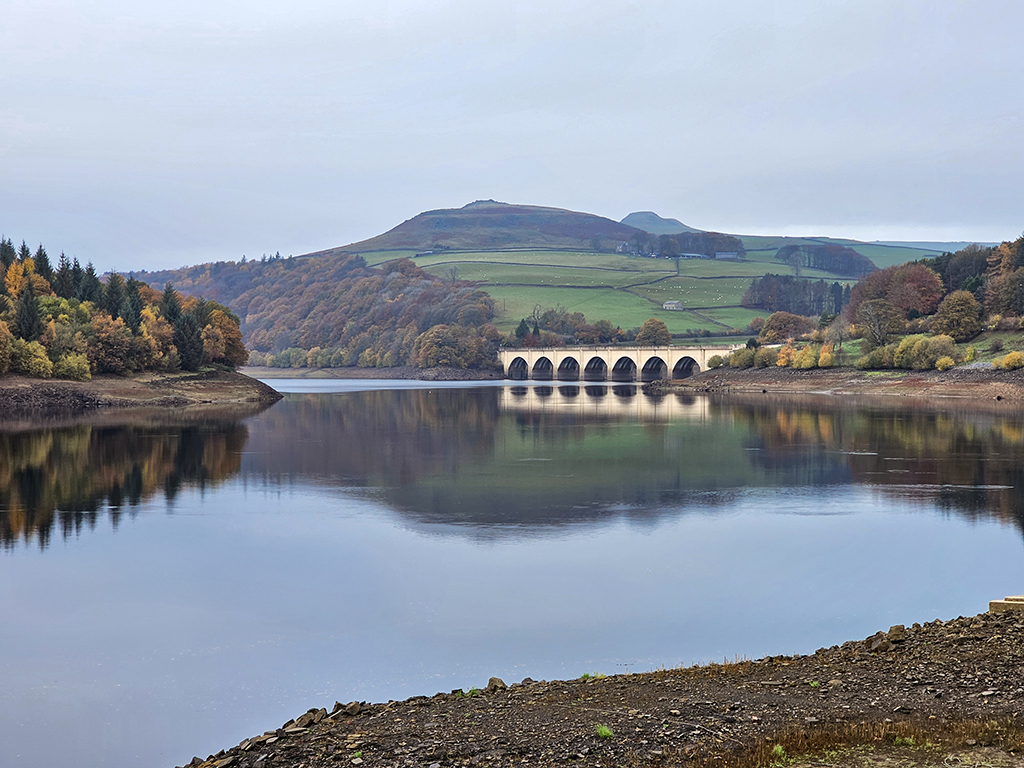
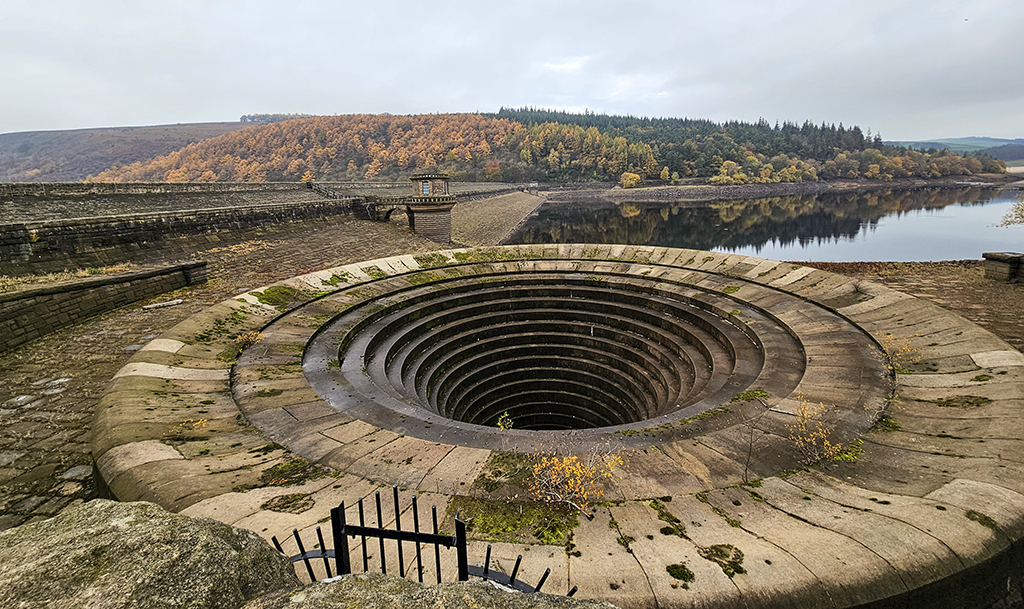
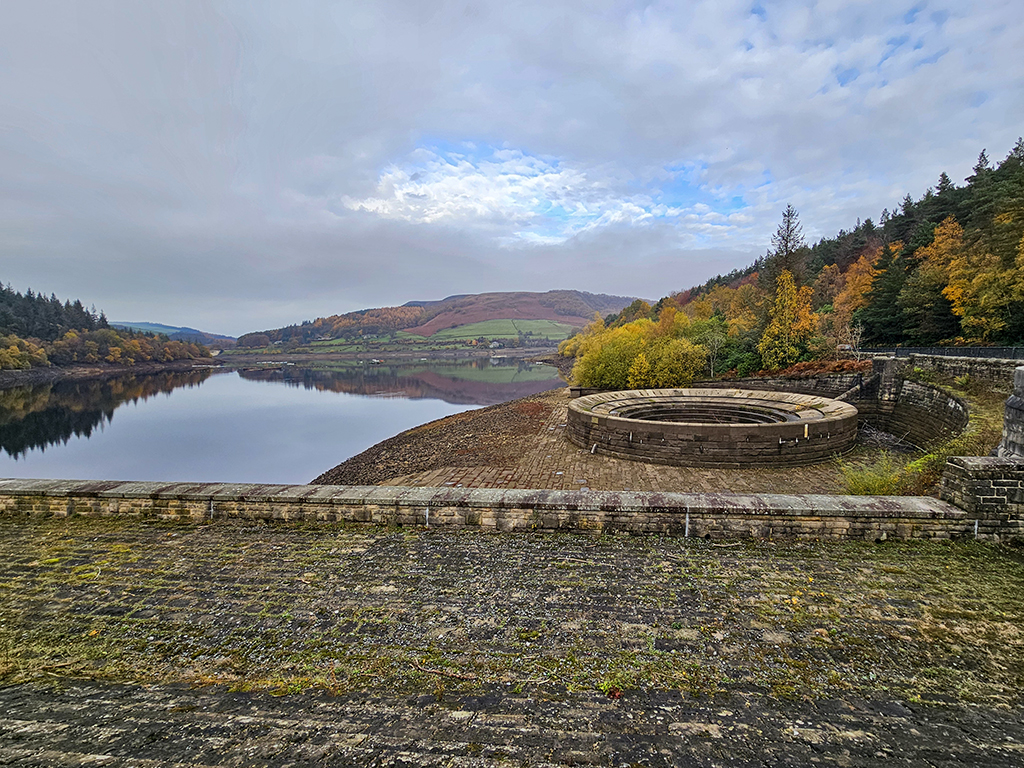
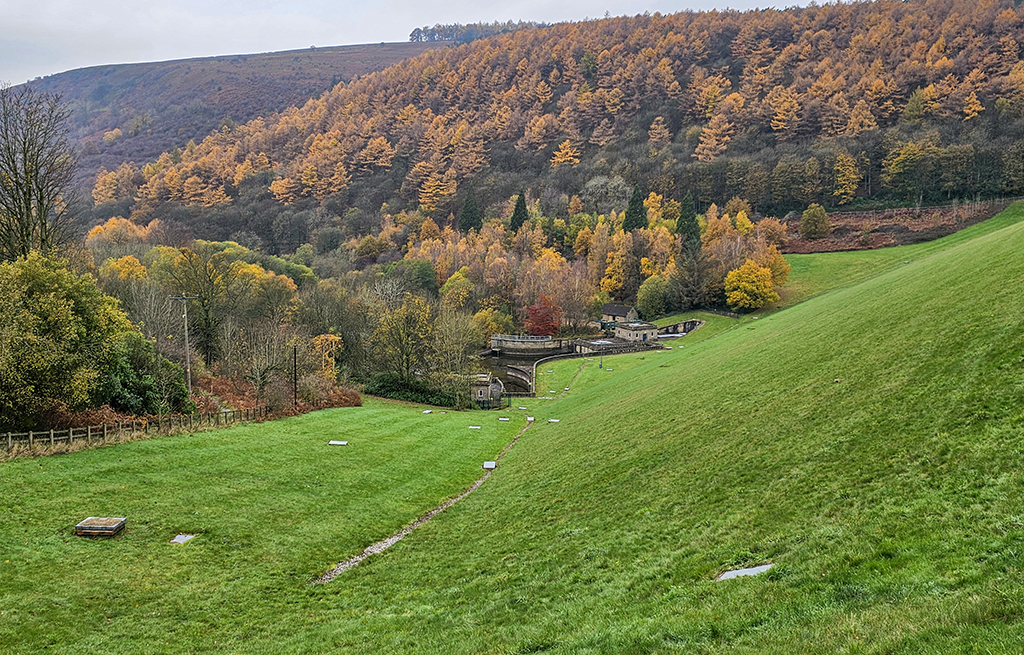

Creation of the reservoir between 1935 and 1943 drowned two villages. In times of drought, including this past summer, the ghostly remains of the villages are revealed. There has been enough rain since August that the villages are again covered.
Severn Trent Water (the company that owns the reservoir), announced in 2022 that it planned to increase the size of the three linked reservoirs, or alternatively, create a new one. There was immediate opposition, for all the usual reasons, but any expansion would have drowned some of the remaining ancient forest and be something of an environmental disaster. The company announced that it was abandoning the plans a year later.
I parked at the official lot, contributing again to the coffers of Derbyshire County Council. As I walked along the road, I could see several places where I could have parallel parked for free. Interestingly, there is a large (and entirely unoccupied) section of the car park designated for handicapped parking. It is helpfully near to the toilets, but like the rest of the car park, it is a good half mile from the dam and the part of the reservoir that is the tourist attraction! I took advantage of the toilets, and was surprised and pleased to find they were remarkably clean!
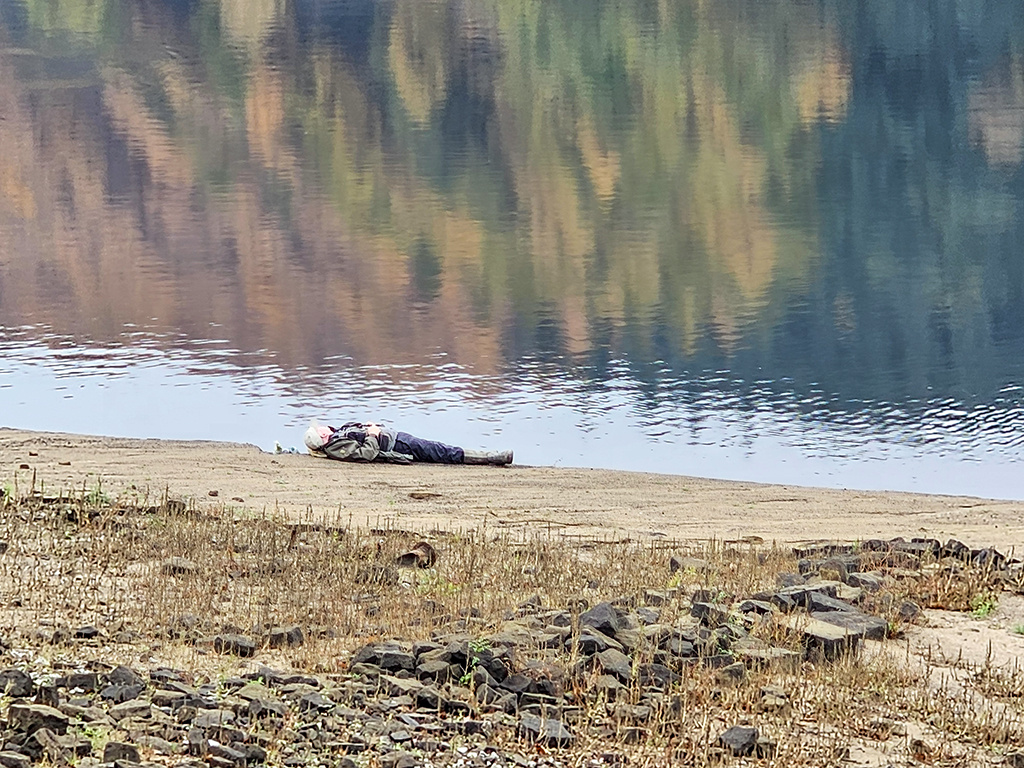
The reservoir is used by fishermen, and there are serious restrictions on who can access the water. You absolutely must be a paid up member of the fishing club that owns the rights. There were several keen fellows out that day, hoping for their dinner. There are both brown and rainbow trout in the waters. You can keep up to two rainbow or blue trout per day, if you are a member of the angling society, but all brown trout must be catch and release.
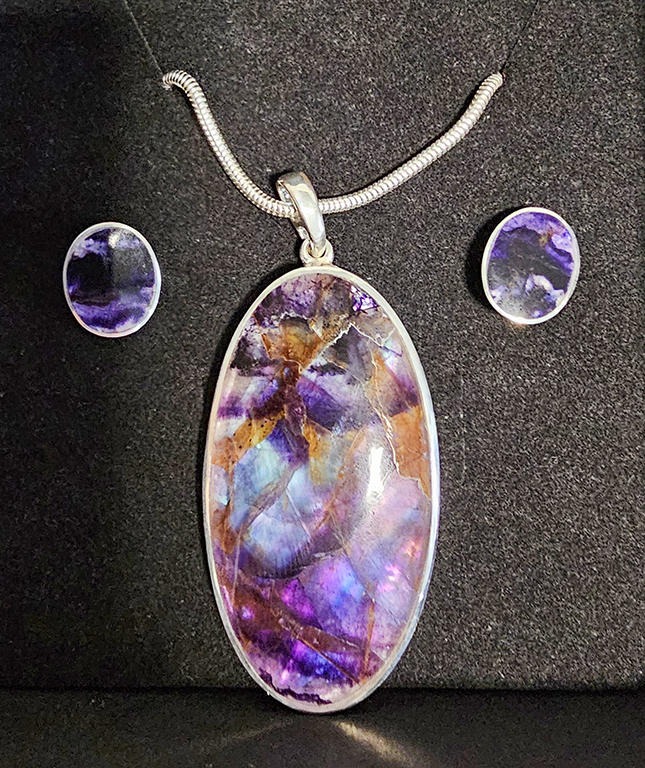
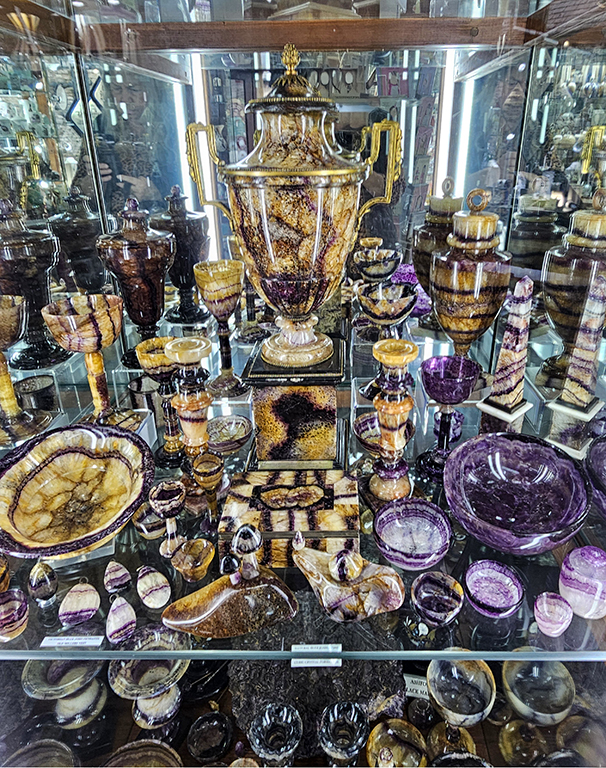
After enjoying my walk, I headed to the town of Castleton. This is the nearest place to the mines of the Blue John stone, a semi-precious stone that has been mined here since Roman times. The only location in the world that this particular variety of calcium fluorite is found is just outside the town. It is mainly purple and white, with veins of orange separating the bands. It is extremely brittle, and can only be worked by continuously dipping the piece into resin. It can only be mined by hand. The mine is played out, with no large veins left, but there are still small pieces that can be made into jewellery. To give you an idea of the rarity (and the price), a small bowl, about 2 inches across, was for sale for just under £500.
About 30 years ago, I visited Castleton with friends, and was intrigued by the beautiful jewellery then, but did not buy. I remedied that on this visit, finding some modestly priced pendants (and of course one requires matching earrings) in a jewellers that have been in business since 1977. All the pieces are made in their workshop above the store.
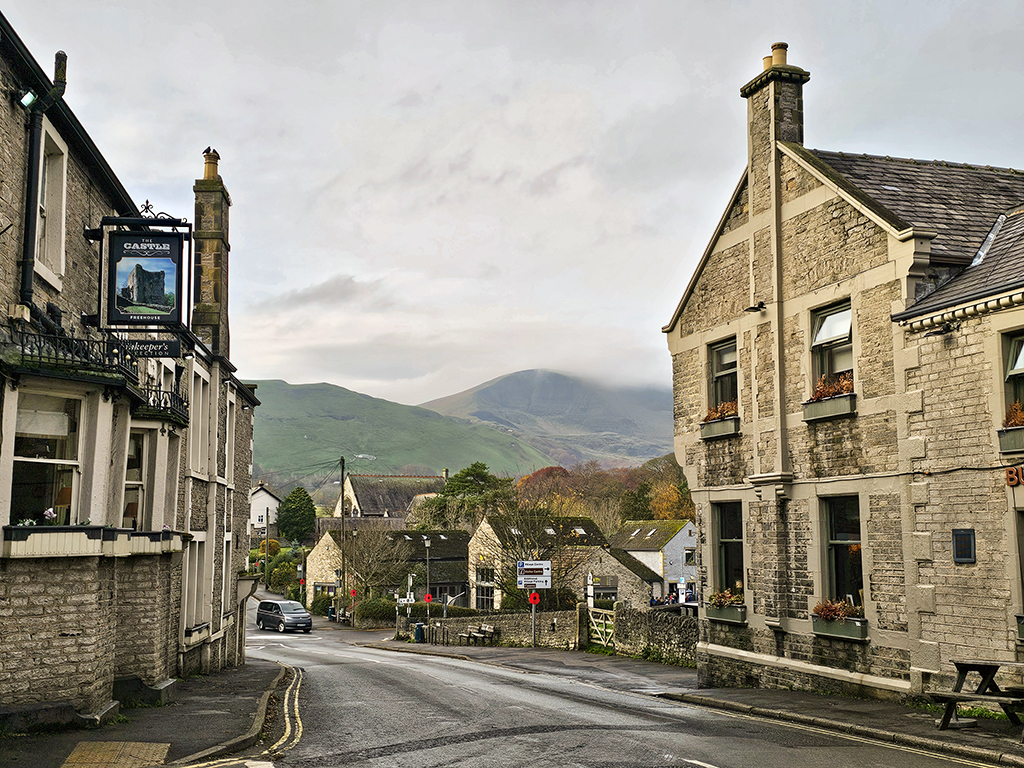
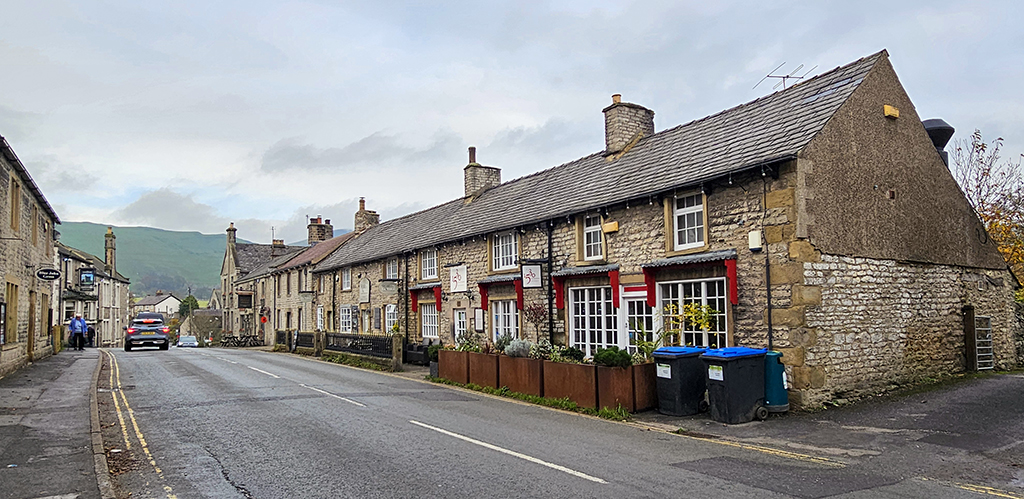
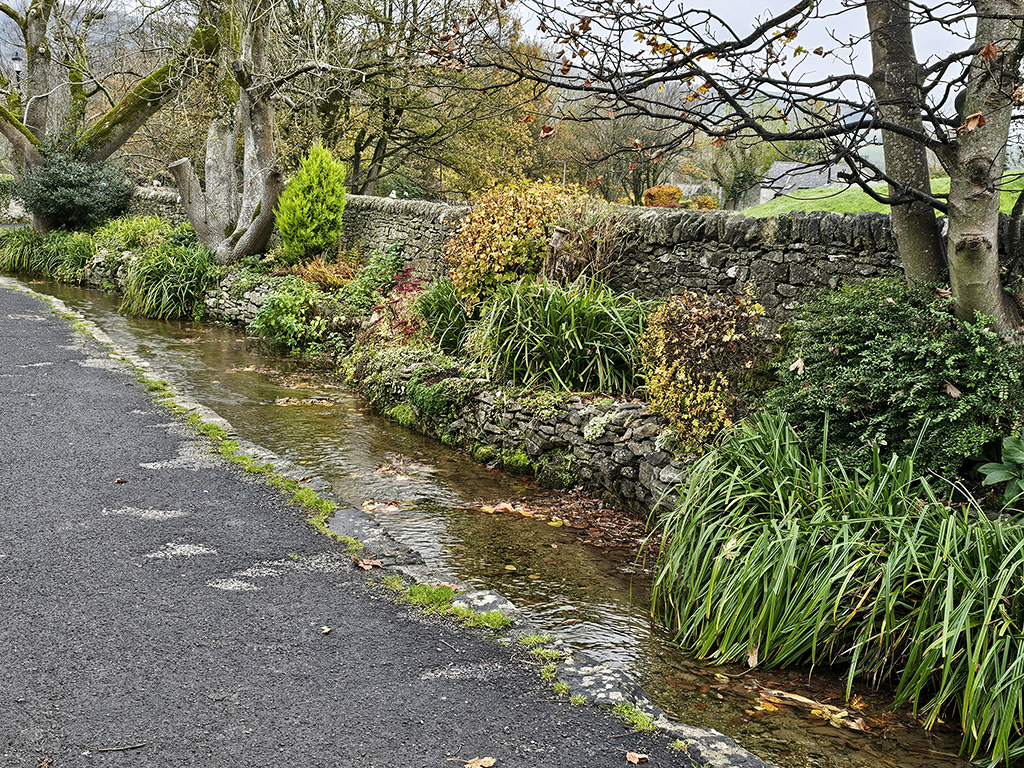
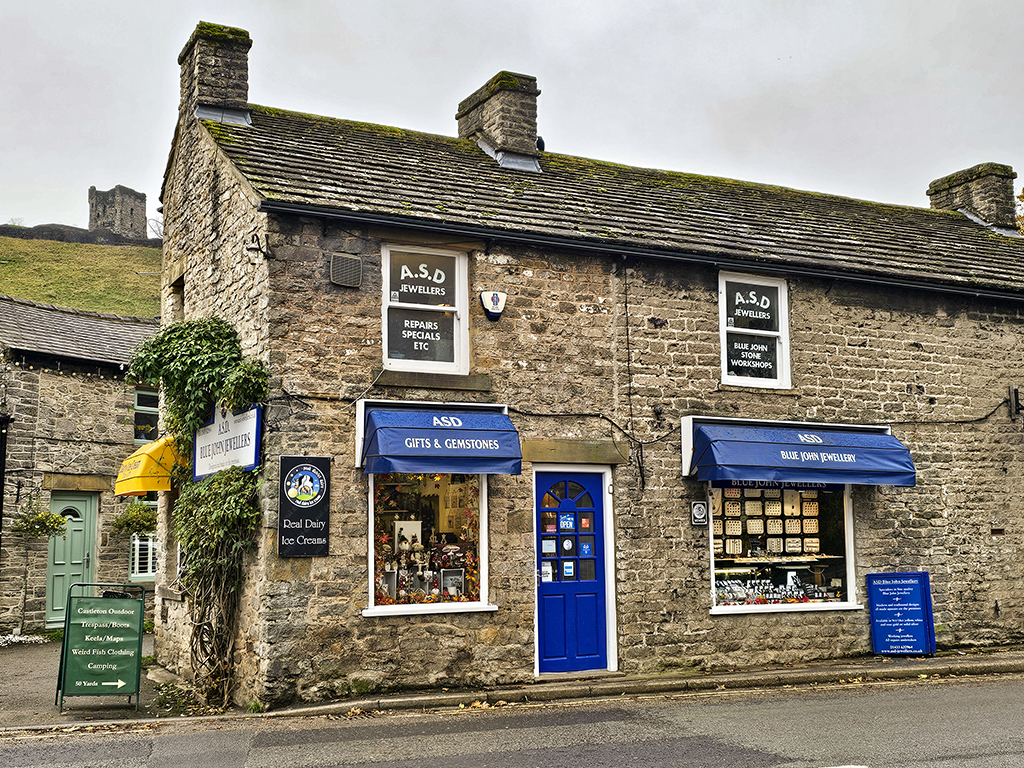
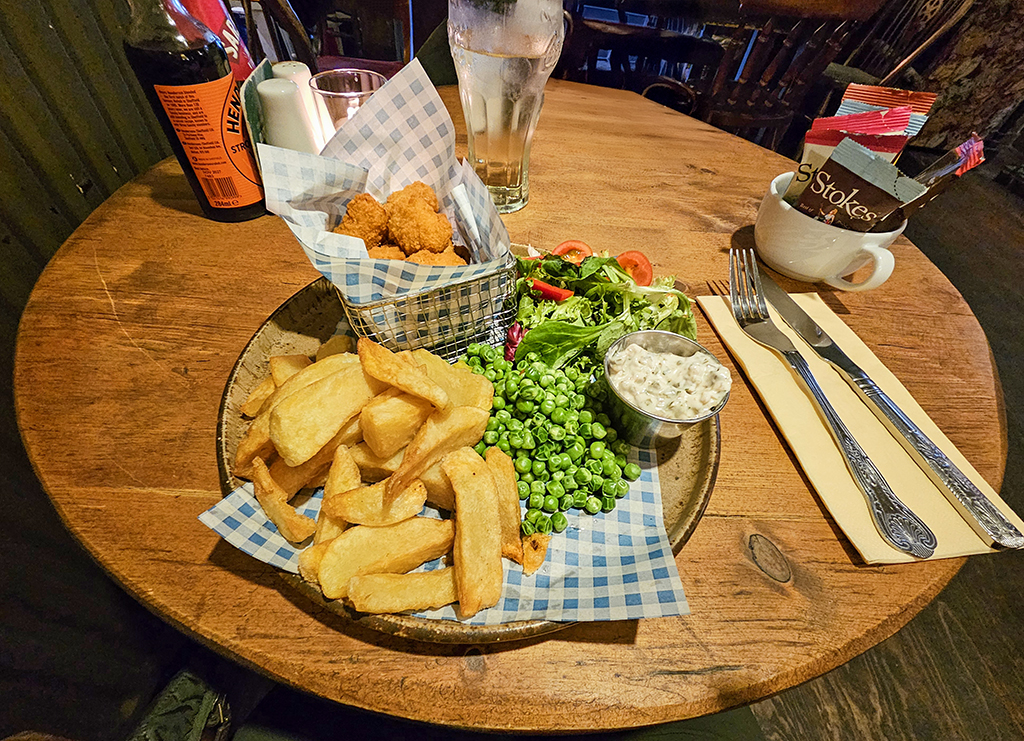
Parking in Castleton continued my sense that I am buying land in Derbyshire one parking space at a time. Having just paid nearly £3 for 2 hours at Ladybower, I pulled into the car park in Castleton to discover that I had to pony up another £4 for the next 2 hours. I did enjoy walking around the village (and of course my shopping), and I decided to have lunch at the apparently well-regarded pub in the hotel. I ordered scampi and chips. For my non-English readers, scampi in this case means breaded shrimp. These supposedly came from Whitby (they always say they do), but I have my doubts. It was quite a tasty pub meal, although all the food was unevenly hot. I was not surprised that the price of the meal came to just under the threshold where they refund your parking charge. Google’s AI tells me that I should expect to pay between £10 and £15 for this meal in a typical English pub. My bill was just over £19.
Note to self. Try to avoid stopping for a meal in any honeypot!
The weather on Friday was dank and drizzly. I stayed in and occupied myself with packing and various emails and phone calls.
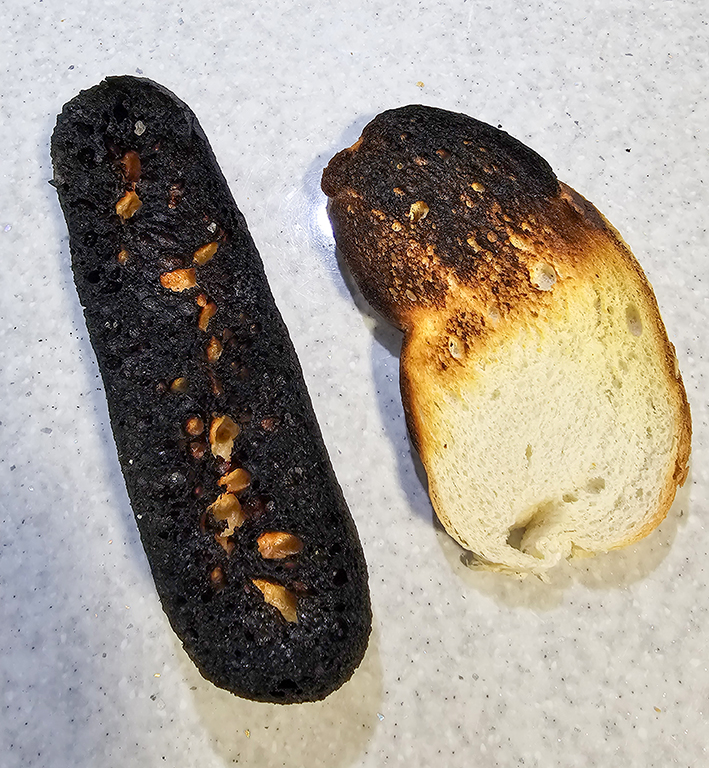
I gave some thought to my dinner plans. There was a tiny French bistro very nearby, and they offered a pre-theatre fixed price menu that looked delicious. On the other hand, I had plenty of food and some of it needed to be eaten! I decided to stay in and prepare a pizza baguette. It was a complete and utter disaster. To start, I have a lot of trouble deciphering the incomprehensible European symbols on modern appliances. The provided instructions for the oven were impenetrable and more concerned with operations using a timer than anything straightforward. I managed to bake the baguette, but then everything went horribly wrong. Halved and buttered, I put the baguette into the oven to toast, and nothing happened. I waited a while, and the bread was then so blackened that it set off the smoke detector and I had to open the front door to clear the smoke. New plan. I got a couple of pieces of bread out of the freezer and put them into the toaster. More smoke and blackened toast.
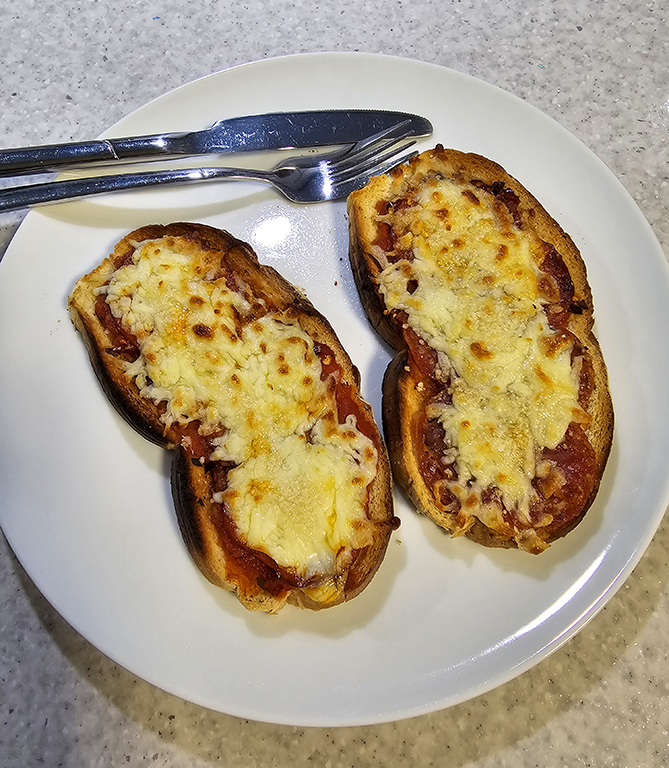
I got out more pieces of bread and tried again with the toaster, with reasonable success. Spread with pizza sauce, layered with pepperoni, and topped with grated cheese, it should have been a tasty meal. Unfortunately, the bottle of red chiles didn’t have any small holes in the top, and I dumped considerably more than I planned into the pizza sauce, thus rendering the whole meal blow-your-head-off hot. The oven cooperated and melted the cheese, but the spicy chiles meant that it was far from my best cooking effort.
I finished the preliminary packing and planned an early night to be ready for the long drive the next morning.

 Scene and Done
Leave a comment