
October 11th to 18th, 2025
It was an uneventful drive from our home in Wensleydale, Yorkshire, to Beadnell, Northumberland. I had plans to drive cross country, rather than taking the motorway route, but the GPS (Satnav for our English friends) in the Freelander did not cooperate. Just as well, the drive took only 3 hours, but I had been delayed in leaving the house.
I had no difficulty finding the property, and there was a private parking lot at the back of the building. Unfortunately, the vacation rental was on the second (English = first) floor of a row of houses, with the entrance door at the front while the parking was at the back. I schlepped all the various bags, boxes, and suitcases around the building and up the steep, narrow stairs, and then discovered that I could have parked on the road for easier unloading.
Initial impressions were not enhanced by the very clean but very stained biscuit-coloured carpet in the apartment. The problem with today’s fashion in décor is that everything is aimed at “light and bright”, and in a vacation rental, light-coloured furniture and carpets quickly start to look dingy and stained. Next disappointing discovery was that the fridge had a smaller than usual freezer section (even for England), and that was 50% frosted up. I had spent several days cooking meals and freezing them into individual portions for this week and a future trip. I had to decide which ones to thaw and plan to eat within a few days. There was no dishwasher, which I already knew, and, as expected, almost every glass and most of the dishes had to be washed before I wanted to use them. Clearly, other people’s definition of clean is radically different to mine!
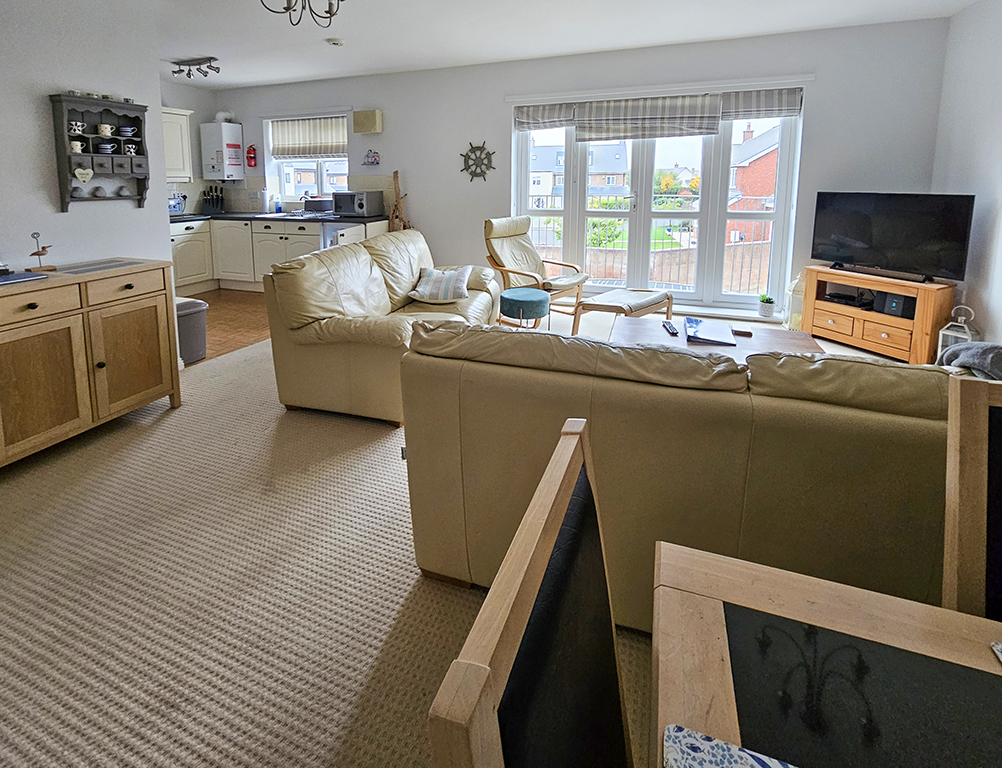
Who would guess that the kitchen equipment would include an electric milk frother, but no means of making coffee, not even a French press. Again, having had quite a lot of previous experience, I had brought my own cafetiere. Beds were comfortable, and there was more than just freeview offered for the modern TV. Good wi-fi, something that should be taken for granted these days but is often a problem.
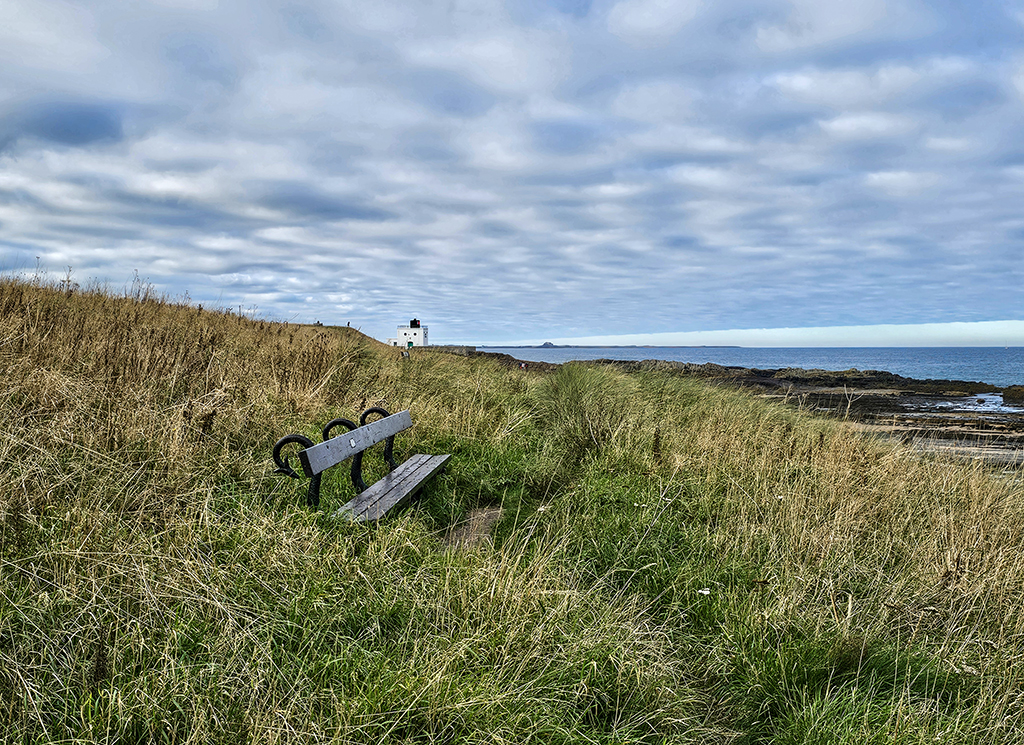
The beautiful sand beach, the only beach in Northumberland where you can watch the sun set over the sea, was just a few blocks away. There were some potentially interesting restaurants in the village, but with the prepared food having to be eaten, we didn’t try any of the local eateries.
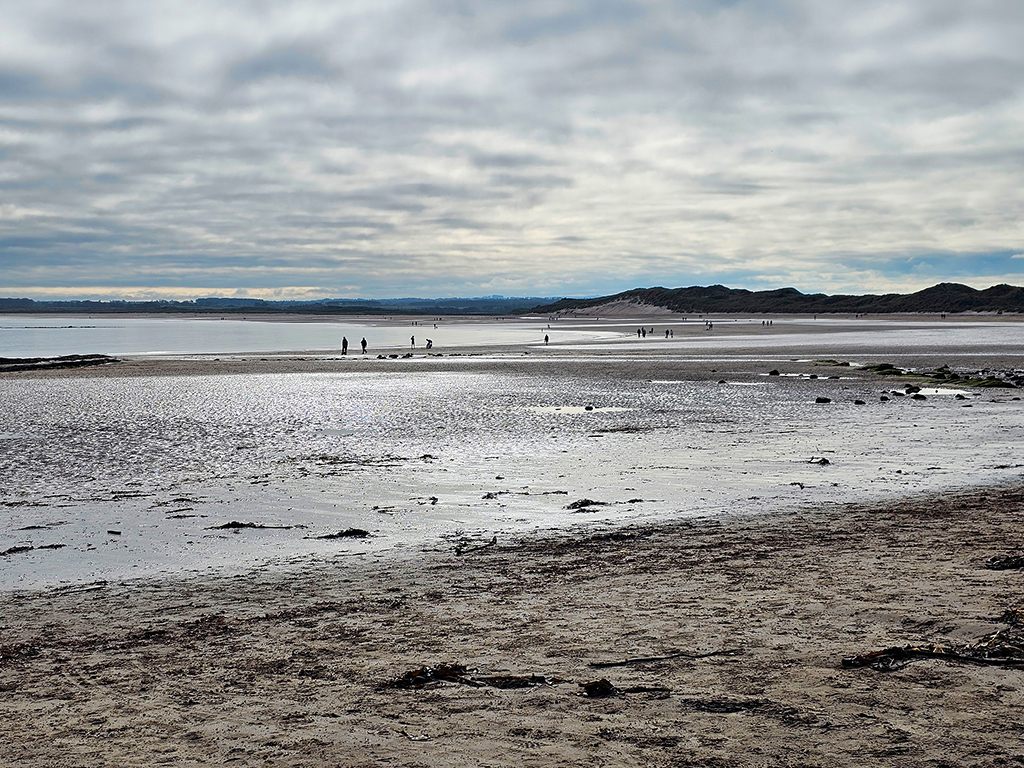
Sunday was a quiet day, catching up further with the various emails in preparation for our upcoming renovation and dealing with things that I had let go while I rushed around the previous week. In the afternoon I took a walk along the sea front, and then made my way around the point to discover the lime kilns and the huge sand beach.
Most of the eastern shore of Northumberland is part of the Great Whin Sill. This is a broad, flat layer of igneous dolerite (sub volcanic) rock that stretches across the northern part of England between the North Sea in Northumberland, and the North Pennines. Much of it is in the form of high cliffs, and these cliffs were ideal for fortifications and defence. The Romans certainly recognized the defensive capabilities of a natural rampart for keeping out the unfriendly Picts when they built Hadrian’s Wall. Not to mention the effectiveness of having limited access in both directions for travellers and particularly traders, allowing taxes to be collected. Later conquerors took advantage of the high cliffs of the Whin Sill in Northumberland to build castles that commanded the landscape for many miles. Bamburgh, Dunstanburgh, and Lindisfarne all took advantage of the high vantage points. In the Beadnell part of the coastline, the Whin Sill is lower, and is in the form of long fingers that reach out into the sea. Barrier islands are also present, The Farne Islands broke off from the mainland and formed an archipelago offshore.
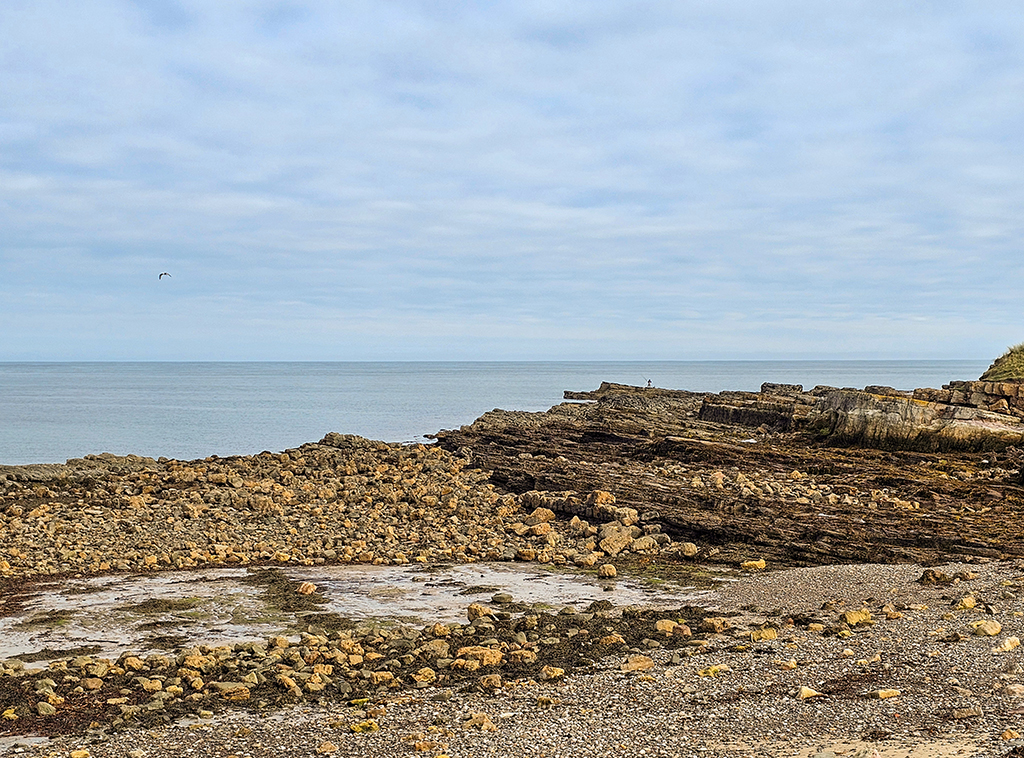
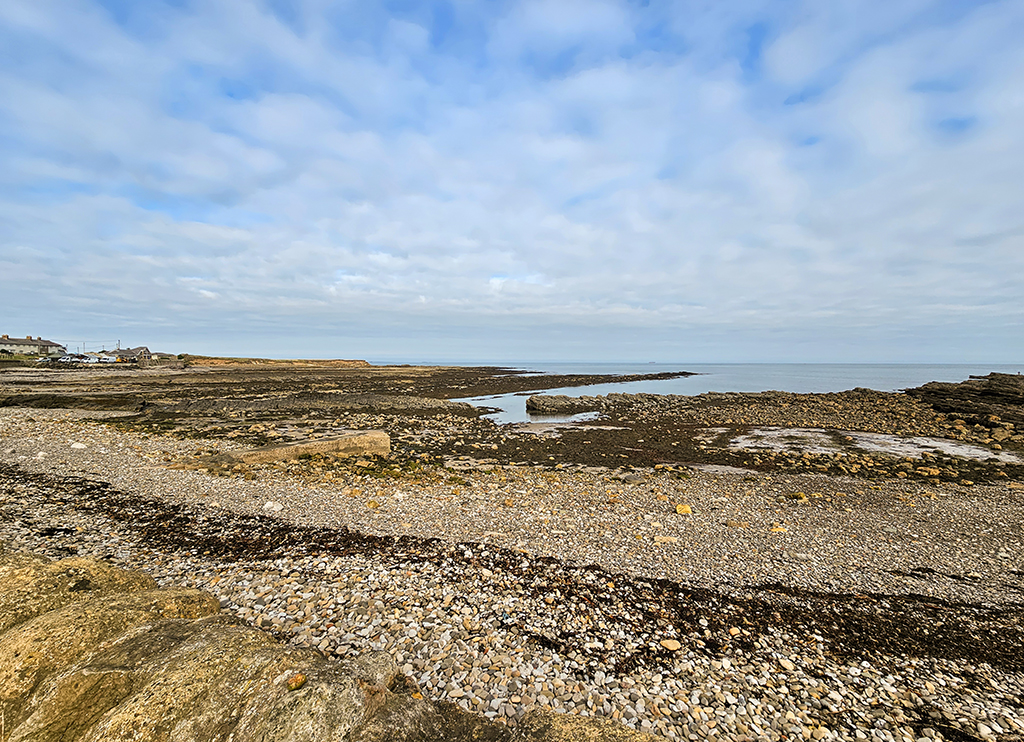
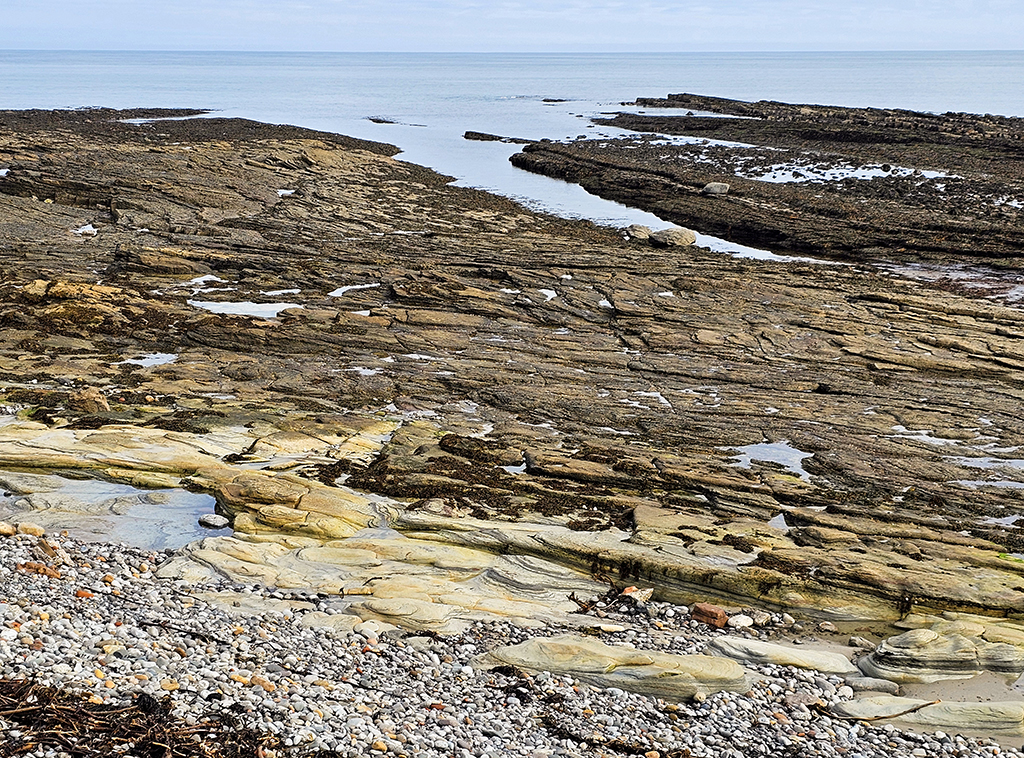
In 1798, Richard Pringle began building a lime kiln in Beadnell for John Wood, a local landowner. The limestone and coal were extracted from Wood’s estate, and the lime sold so well that two more kilns were quickly built. Each kiln produced at least 1000 carts of lime each year, which was mainly exported to Scotland, but some was used as fertilizer in nearby fields. The business was short-lived, in just over 20 years the kilns had fallen out of use. They were used by local fishermen for curing herrings, and today they are storage for lobster pots.
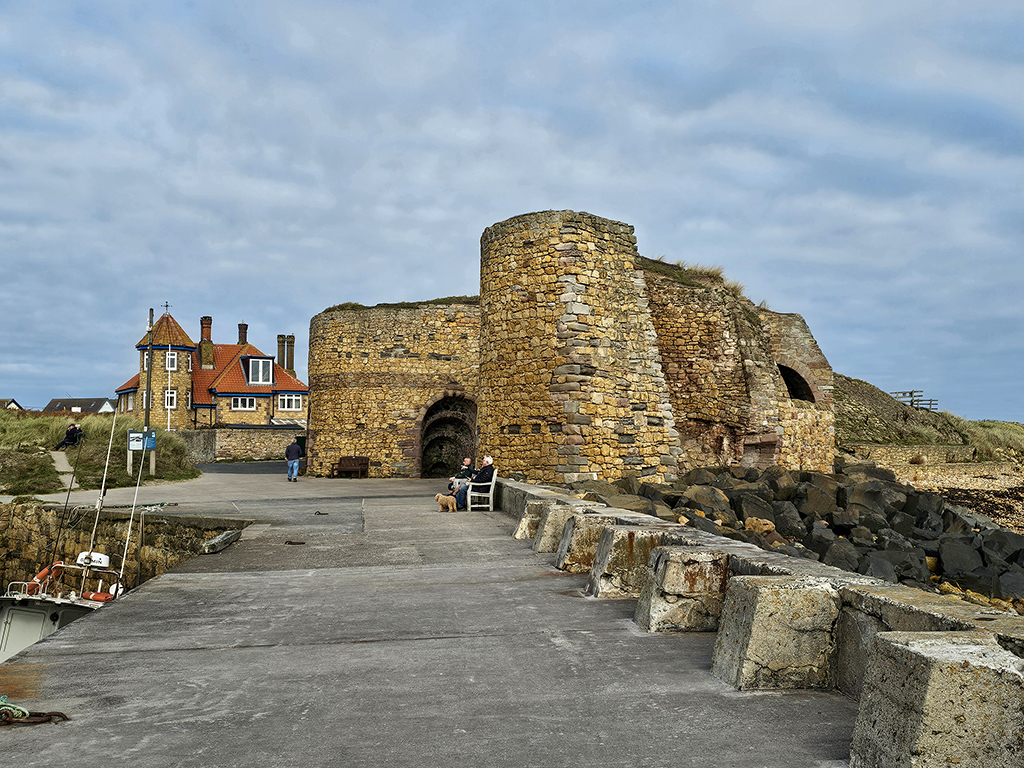
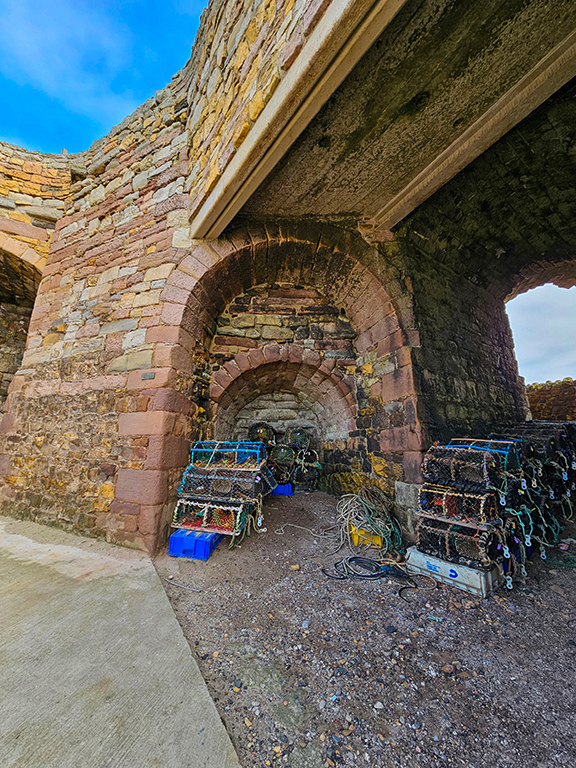
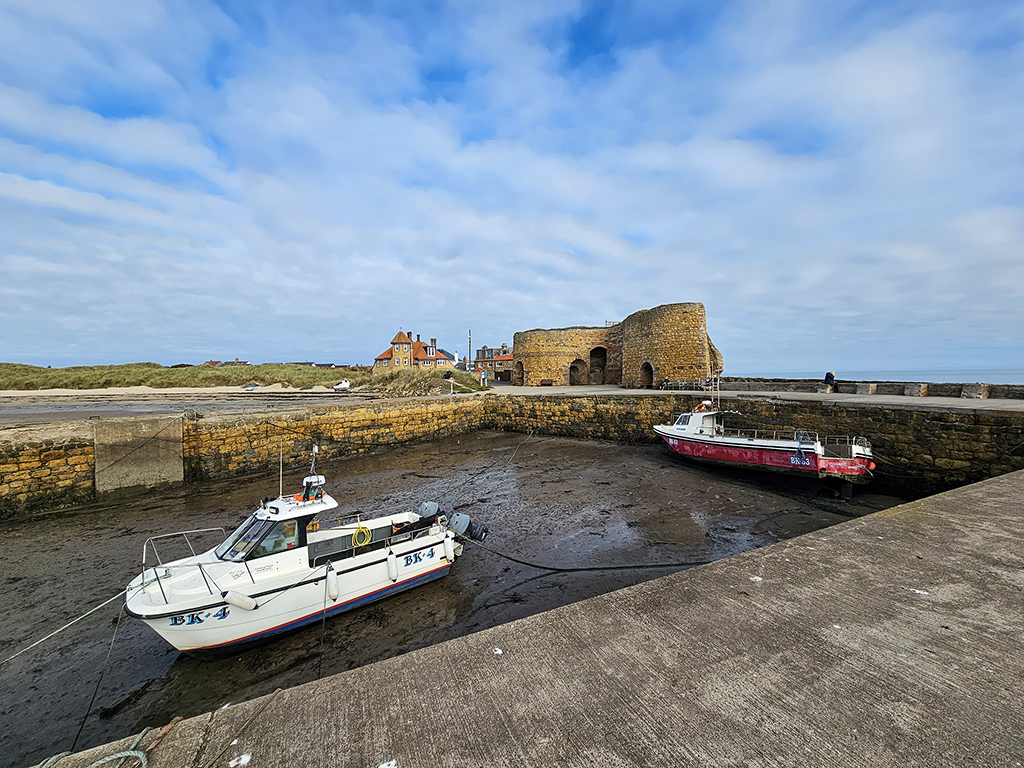
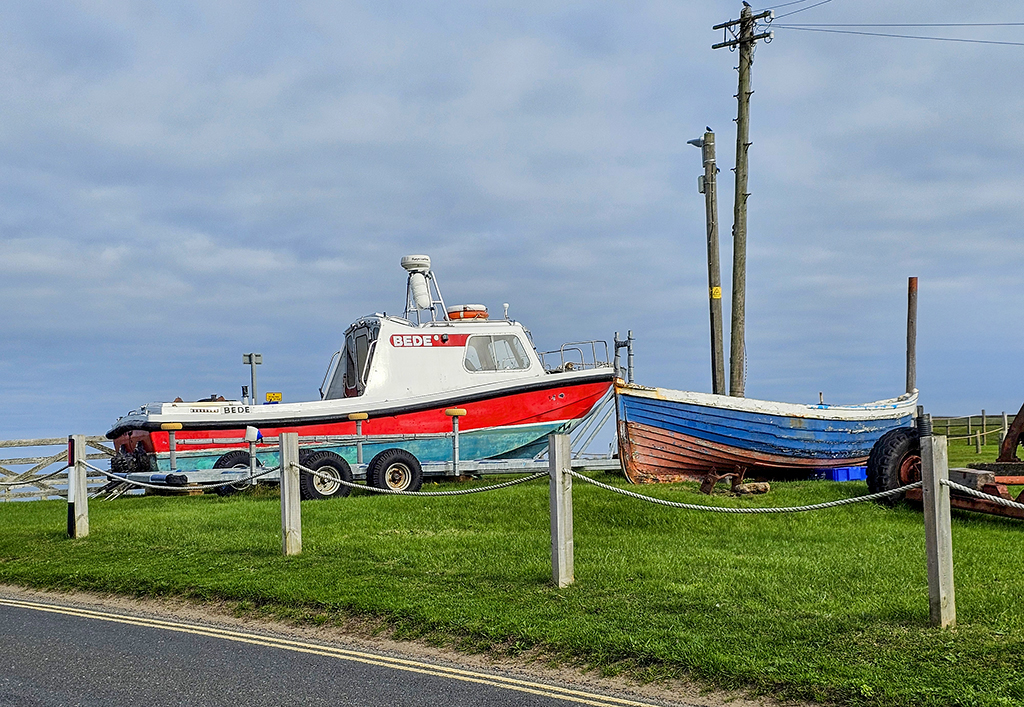
The medieval village of Beadnell was further north, but by the late 1700’s there was industry and trade in the area and a protected harbour was built, the only west-facing harbour in this part of the coast. Previously, fishing boats and traders had to be drawn up on the beaches. Lime and grain traders used the harbour in its early years, and there were several fishing boats on the sand at low tide when I walked around.
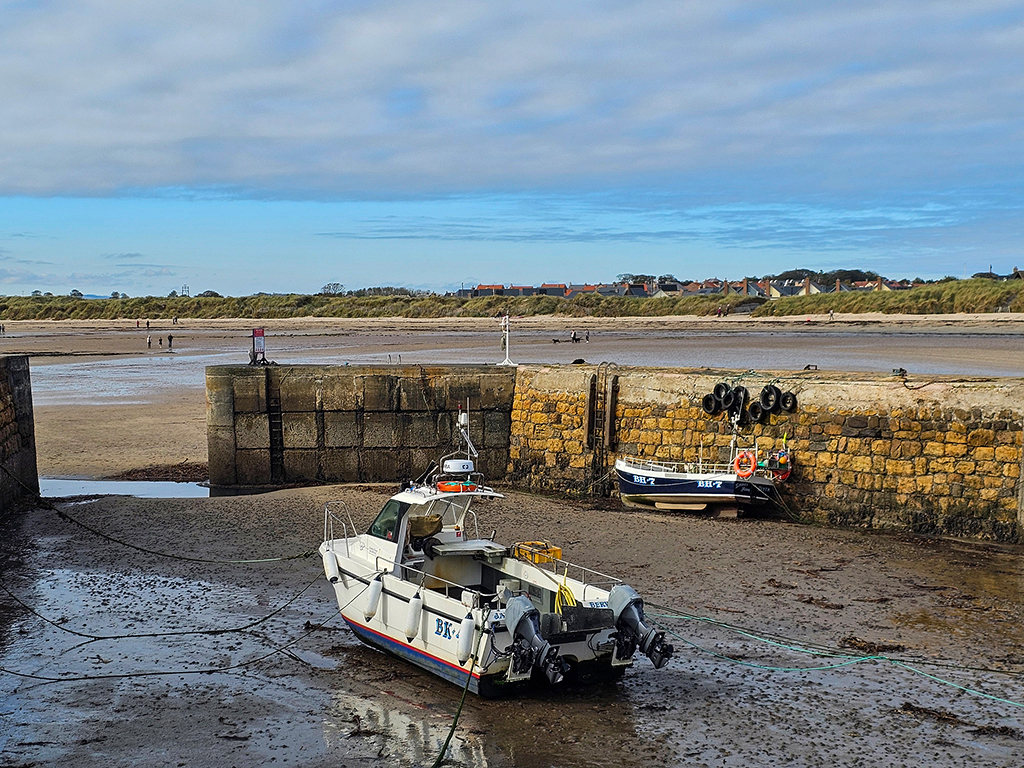
On a sunny Sunday afternoon there were lots of people on the beach, taking advantage of the fine weather, many with dogs, but some families were sitting on the dry sand and digging holes to China and enjoying other traditional beachy activities. The beach parking lot was full, and many people were trying the food at the on-site restaurant. Tempted though I was, I dutifully walked back to the flat and heated up some of my prepared dishes.
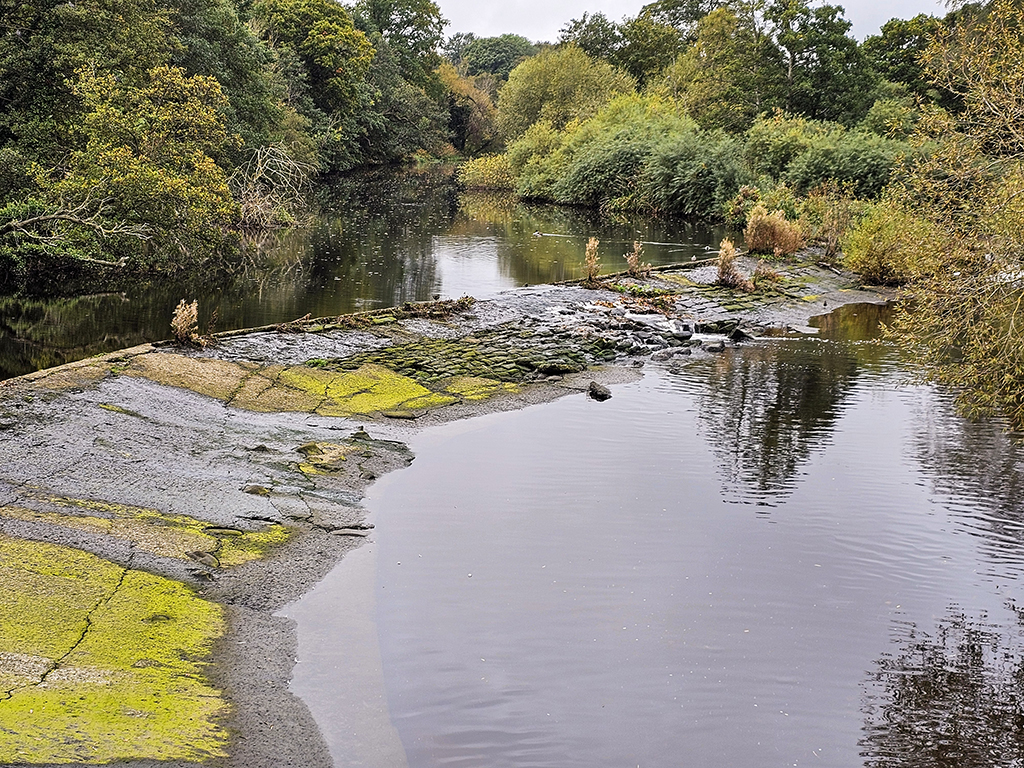
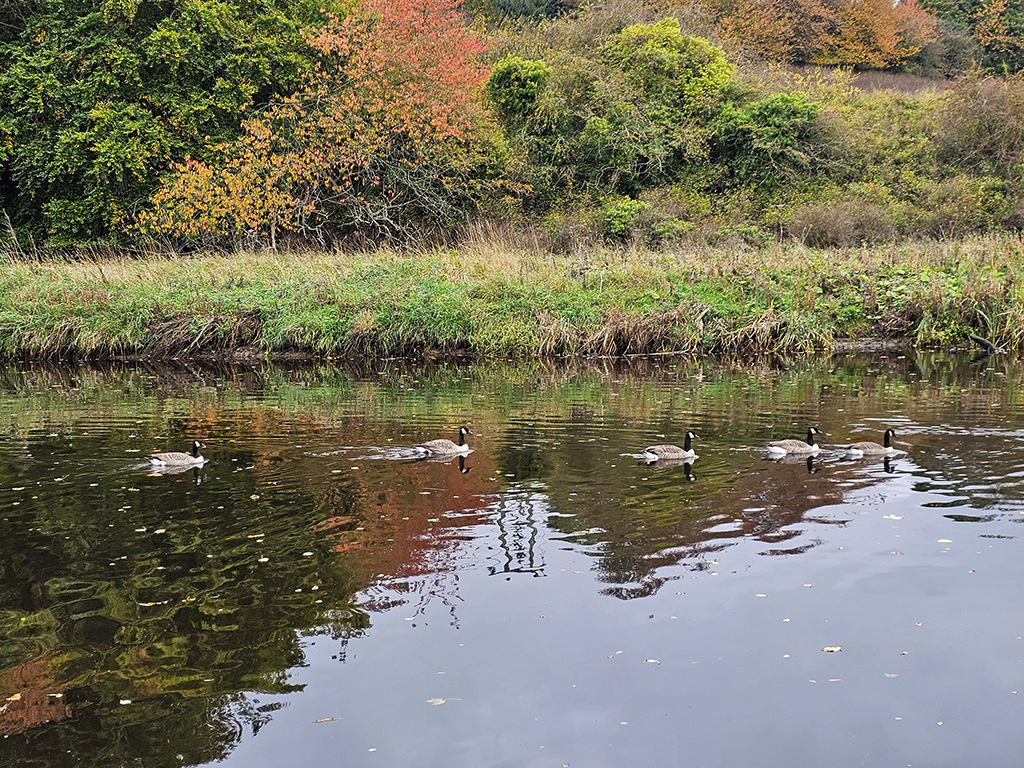
Monday morning, I was ready by 9am for a photography day out. I have been out several times with Northern Experience Wildlife Tours in the past, and it was great to catch up with Martin and hear about his new ventures. We began with a walk along the Wansbeck River, watching for Kingfishers. We saw one Kingfisher, a Little Egret, several Little Grebe, and lots of gulls and Canada Geese. The fall colours were lovely, reflected in the still river. As we drove towards our next destination, we saw a Barn Owl sitting on a post, and then hunting across the dunes, an unusual sight during the day. Most of the wildlife was out of reach for the camera lenses I had with me, but I enjoyed seeing the birds.
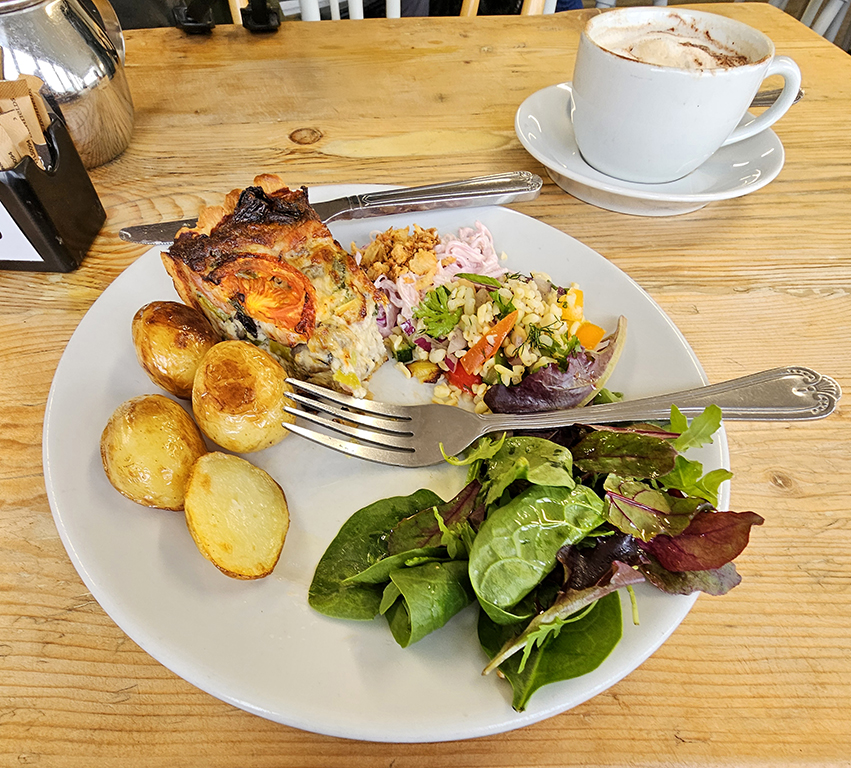
We had a nice lunch at a local cafe, and then went on to the Howick Bathing House. The Bathing House was built in the early 19th century by former Prime Minister Earl Grey. He had a large family with 16 children, and built the house on the shore so that they could all go swimming together. Charles was the second Earl Grey, and his tenure as Prime Minister from 1830 to 1834 saw the passage of the Reform Act of 1832, and the abolition of slavery in the British Empire in 1833. The Reform Act enfranchised a large segment of the (male) British population, who until that time had no vote, and it also redistricted to address an unequal distribution of Parliamentary seats.
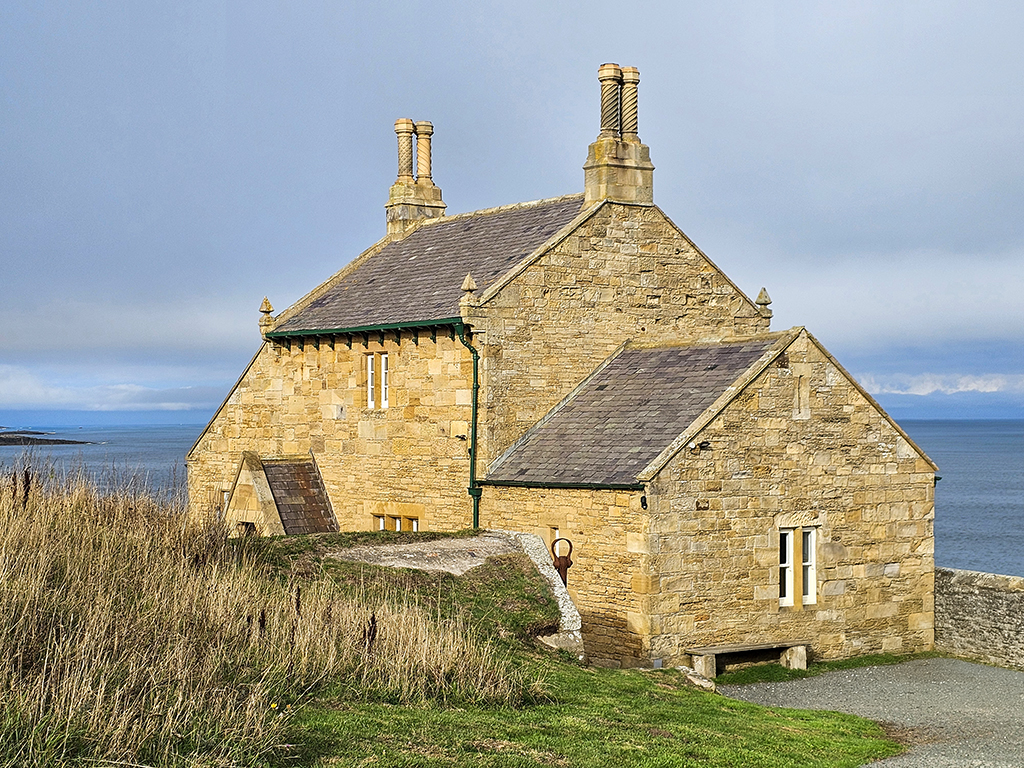
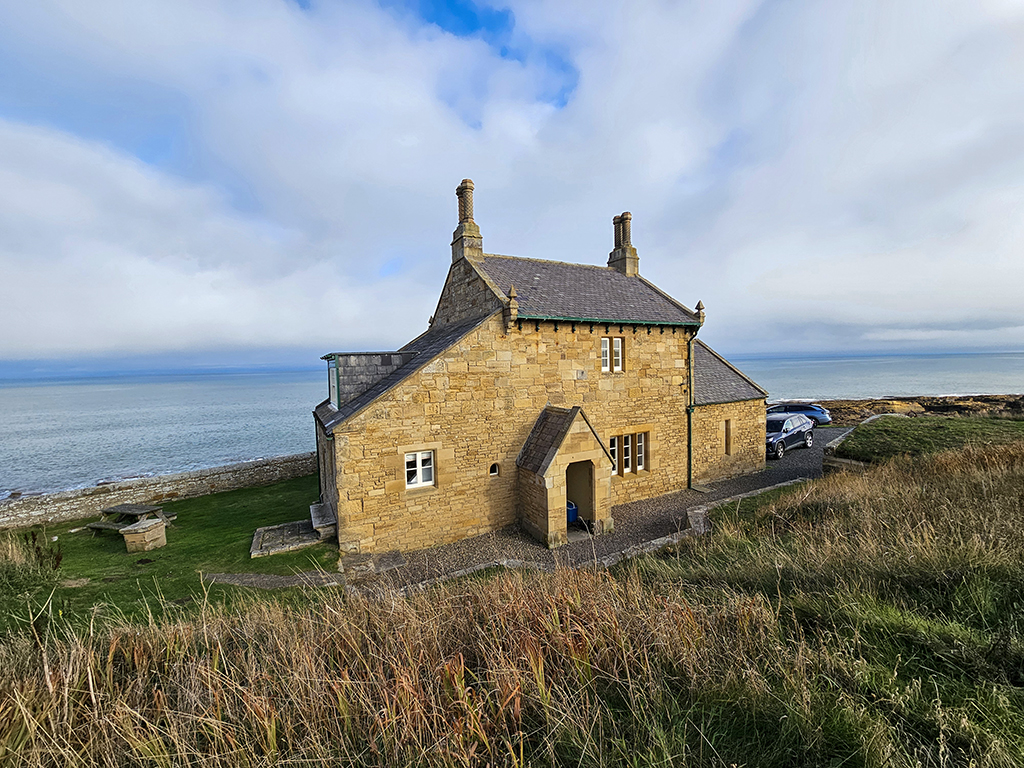
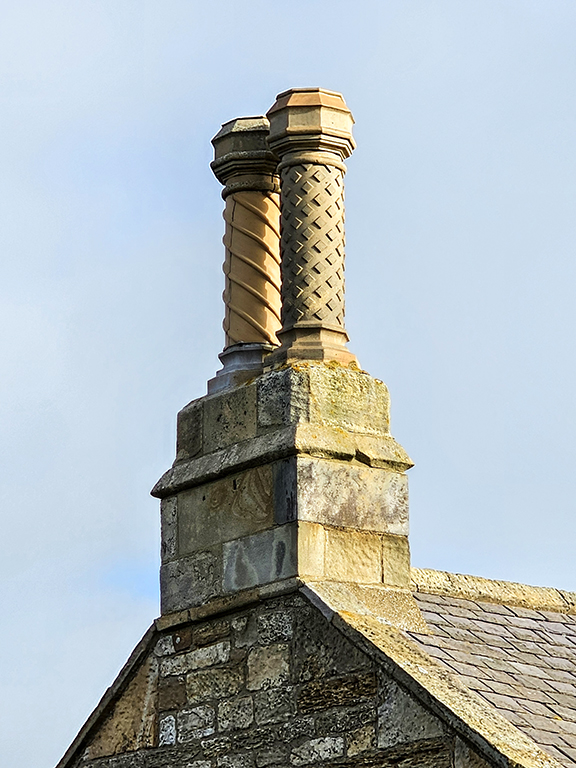
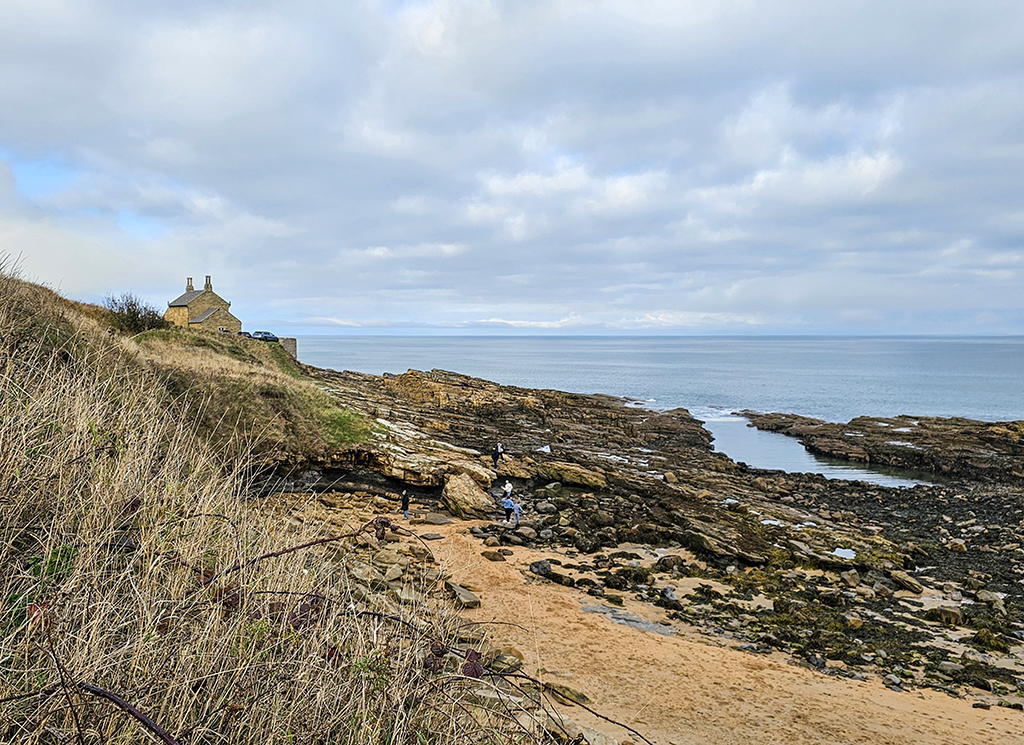
The second Earl Grey earned many accolades during his time. Perhaps for most of us, Earl Grey tea is the most memorable, although it is unlikely that he and any association with it! Earl Grey was a great reformer and politician, serving mostly as opposition beginning in 1786 until his resignation from the position of Prime Minister in 1834. He resigned over unresolvable disagreements in the Cabinet regarding Irish affairs.
Today, the Bathing House is a 5-star, 3-bedroom, 2-bathroom vacation rental, sleeping 6. The earliest availability is February, when you can secure a week in this isolated spot for £2300. If you would like to visit at a more salubrious time, you can have a week in July for £3500. Just as a note of comparison, our equally rated 5-star, 4-bedroom house, with 4 ensuite bathrooms, sleeping 7, rents for £1496 for that same week in July.
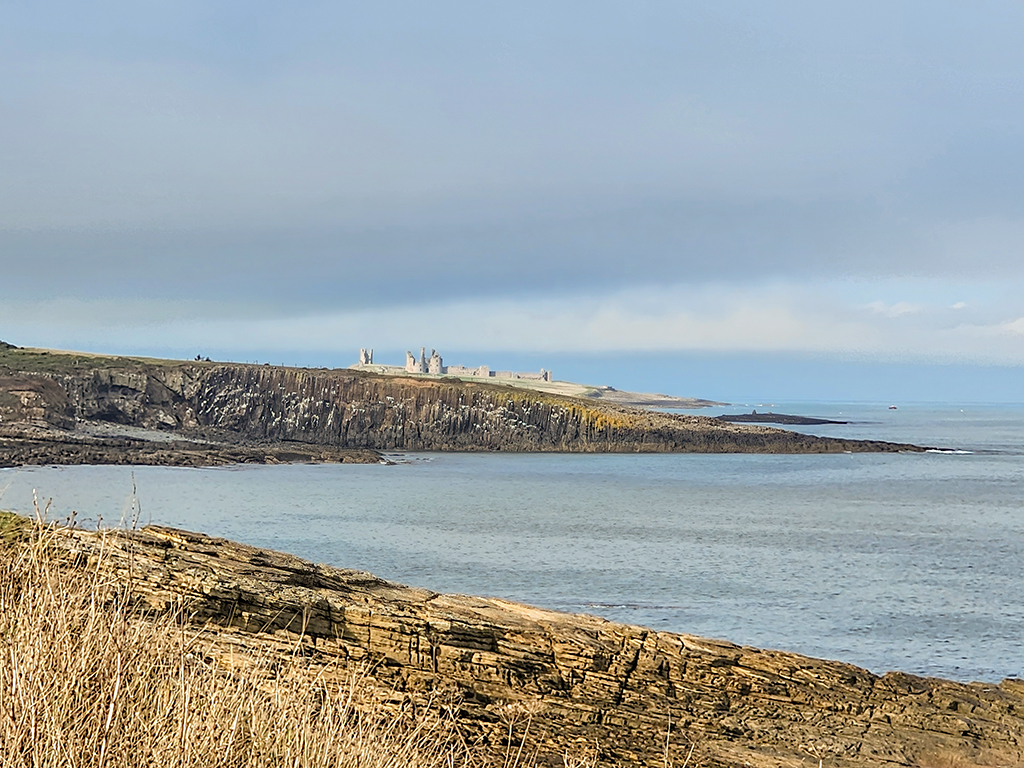
The beach at the Bathing House is a fascinating geological area, with soft sandstone instead of the dark Whin Sill. The eroded sandstone creates interesting pockets and pools that would have been perfect for safe swimming for the children of the Earl (as it is for visitors today). Looking north, you can see the magnificent Dunstanburgh Castle on top of the cliff. Although open to the public, it is not an easy castle to visit. The closest you can get to it by car is one mile walk along the beach. It is an atmospheric ruin, but after you have trekked along the beach there is the imposing cliff to climb as well.
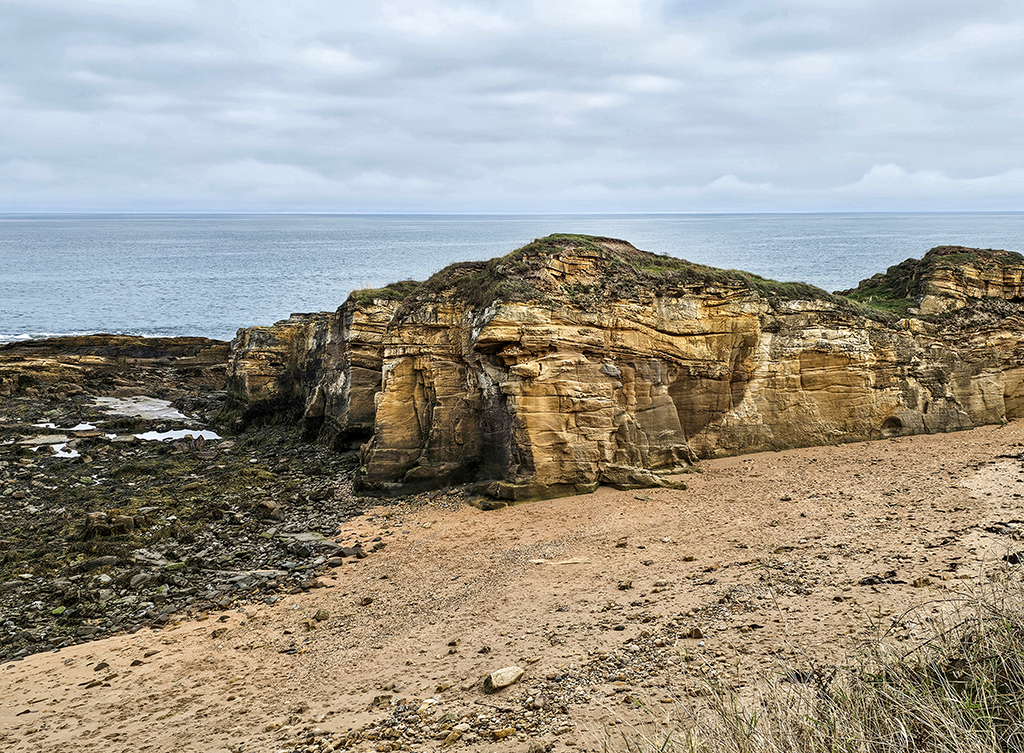
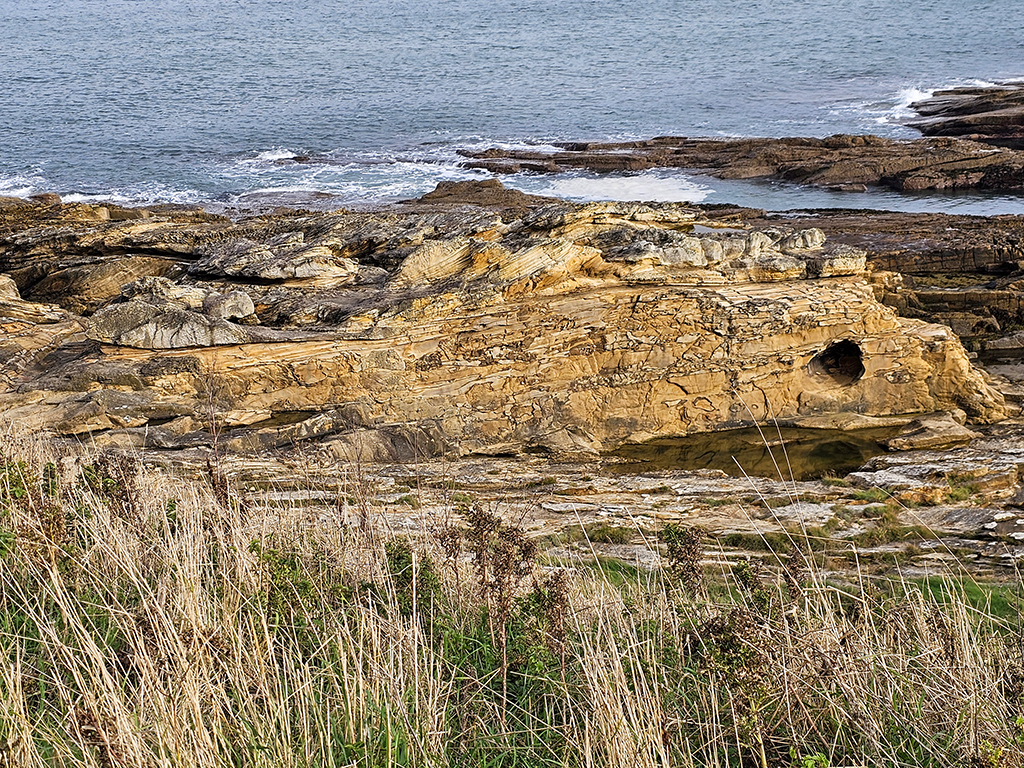
After Howick, we drove north to Bamburgh, so that Martin could show me an interesting place to view the castle and the beach for another day. We returned to the flat by about 4:30, and Rosemary arrived shortly after that to stay for the rest of the week.
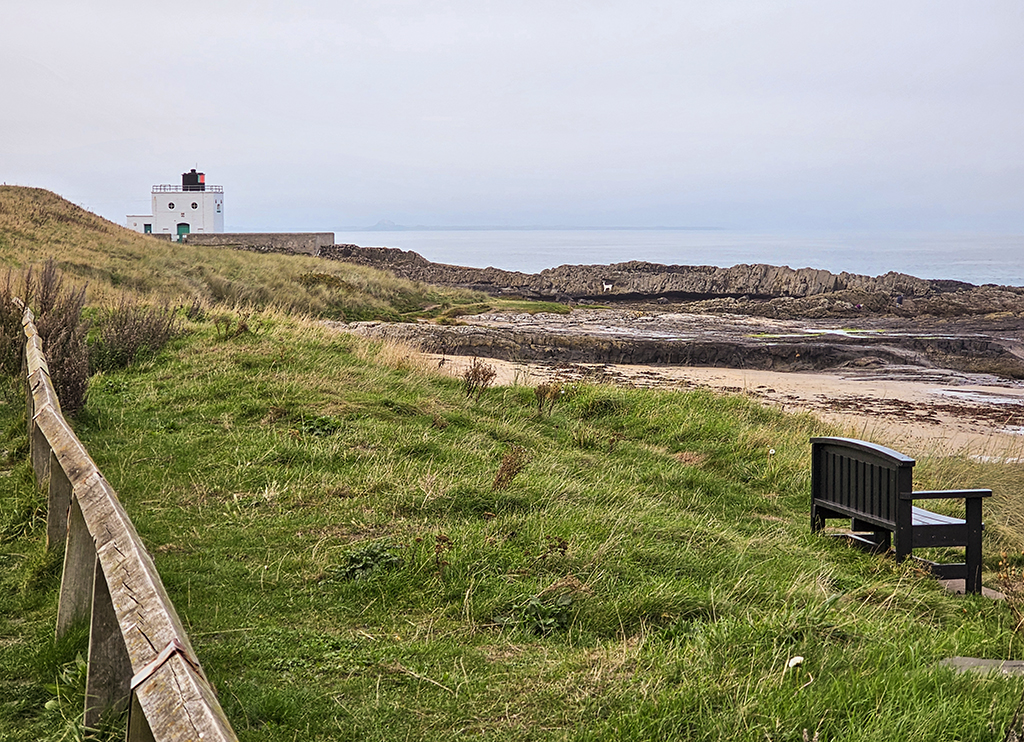
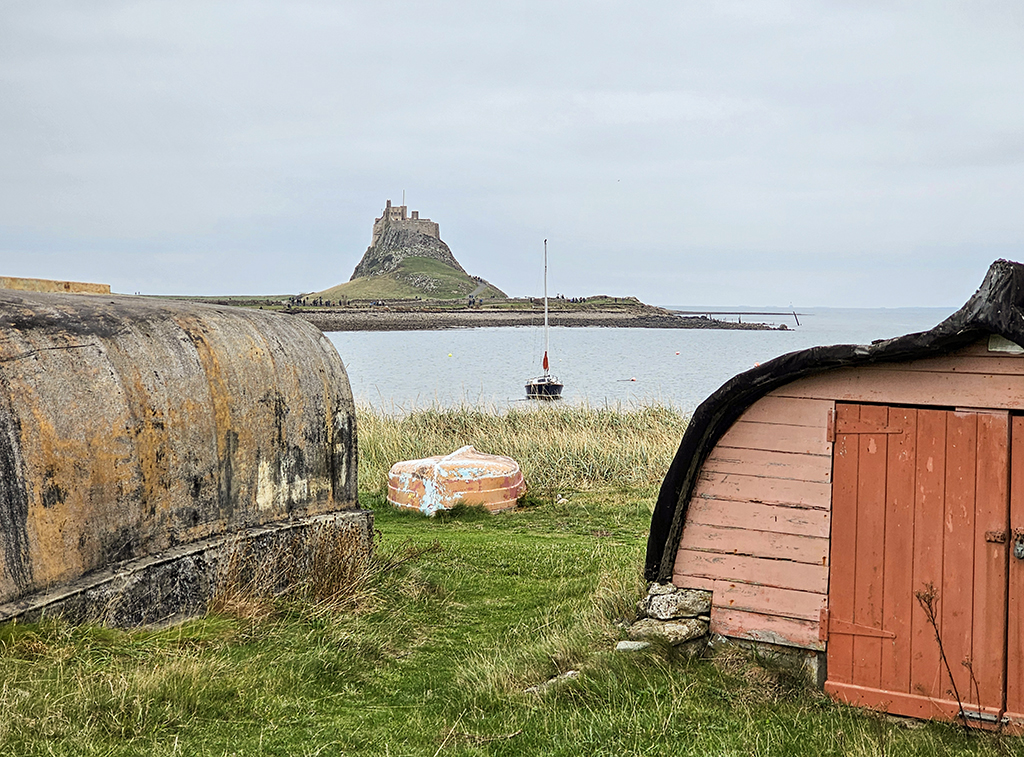
We set off the next morning for Lindisfarne, also known as Holy Island, having checked the tide tables. The island is only accessible for cars by a causeway, that is completely covered at high tide. Lindisfarne has a recorded history of occupation from the 6th century, and has always been an important centre of Christianity. The original monastery was destroyed by Viking raiders, but a priory was established by the Normans after the conquest. A castle was built in the 16th century on a high promontory looking out to sea. The island is just over ¾ of a mile from the mainland. There is a modern causeway for cars, and an ancient Pilgrim’s Way, that crosses the mudflats at low tide. We could see many people walking over as we crossed. Given the long distance to the village from the crossing, we thought that you would spend most of your day coming and going, and have little time to explore. I suppose that for keen walkers, it would be an interesting day out.
The causeway is open from about 3 hours after high tide, until about 2 hours before the next high tide. There are very prominent signs and warnings, but as many as one vehicle a month gets stranded and either the Coastguard or the Lifeboat have to come out to rescue the driver and passengers. A sea rescue will cost around £4000, while an airlift will be upwards of £7000. Of course, the vehicle will also be a write-off after being drowned in salt water! The safe crossing time may also be shortened in stormy weather.
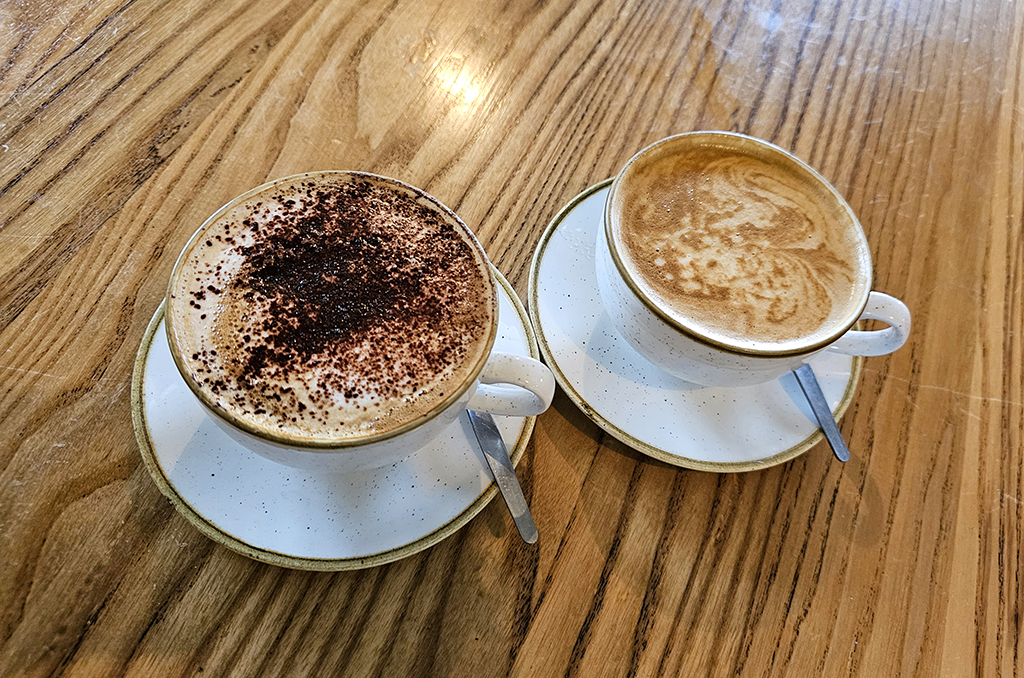
Rosemary and I had looked at the tide tables, and worked out our earliest crossing time, but when we arrived, we were still too early. We went back along the road to a large farm tearoom and enjoyed a coffee, as did lots of other people! The safe crossing times were prominently posted on a blackboard, and there was a mass exodus at the start of the safe time.
Parking near the village, in very typical British fashion, isn’t near. It is also about double the cost of most Northumberland County car parks elsewhere, for the privilege of parking in a muddy field. It is about 300 yards to the village, and then quite a bit further if you want to visit the castle. Rosemary and I were more interested in the photography opportunities at the harbour, the priory ruins, and the various village attractions, so we didn’t bother joining all the people trekking to the castle.
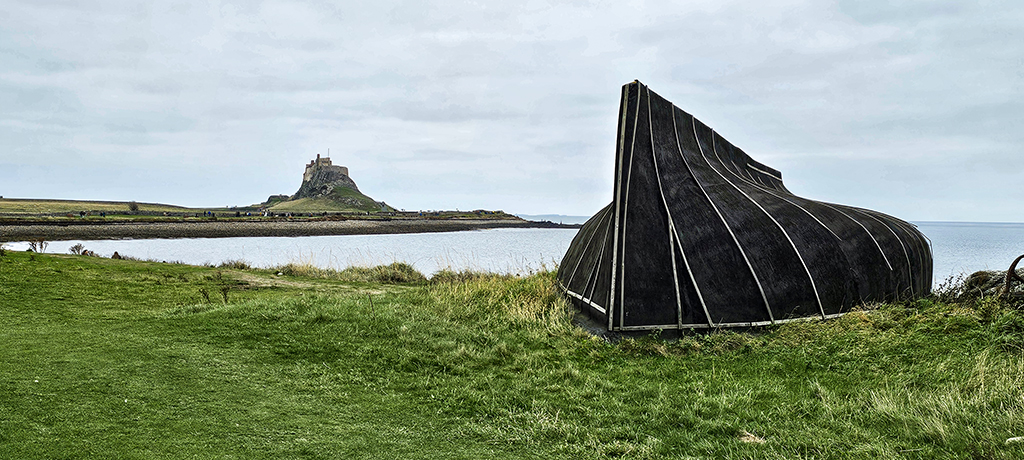
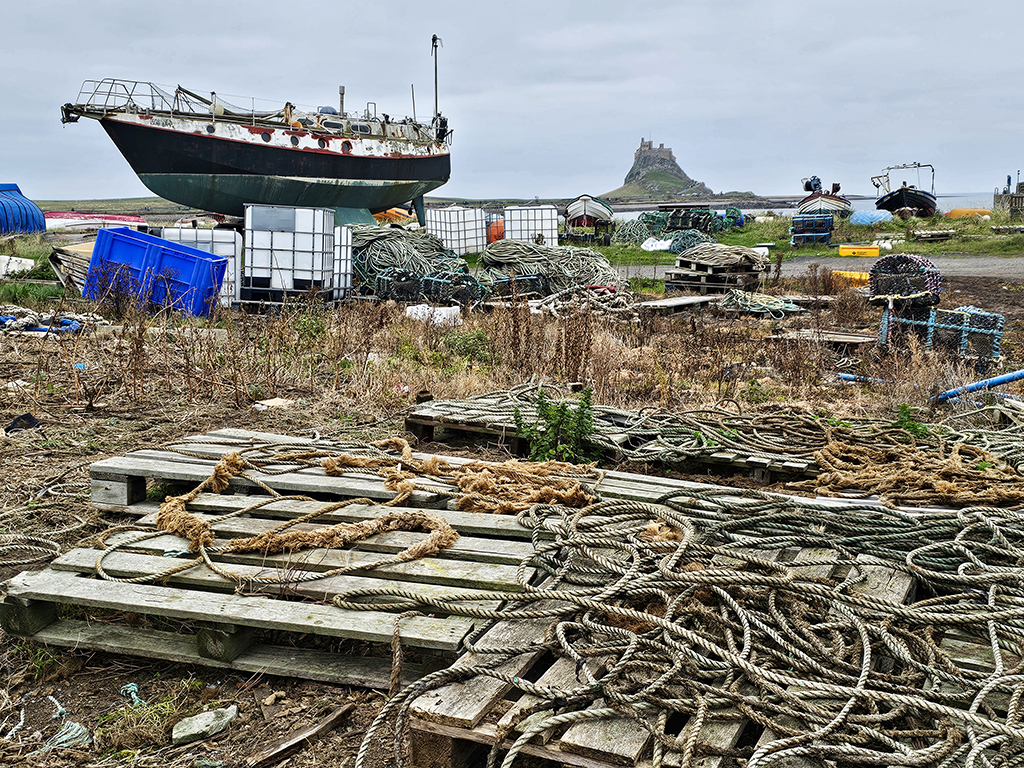
Lindisfarne is very much a working harbour. There are plenty of fishing boats, workshops, and boats out of the water for repair or restoration. An interesting feature is a few large former fishing boats that have been turned over, set on a concrete base, sealed, and fitted with doors to create storage sheds. There is a suggestion that the practice dates back to the Vikings, who may have used upturned boats as temporary dwellings.

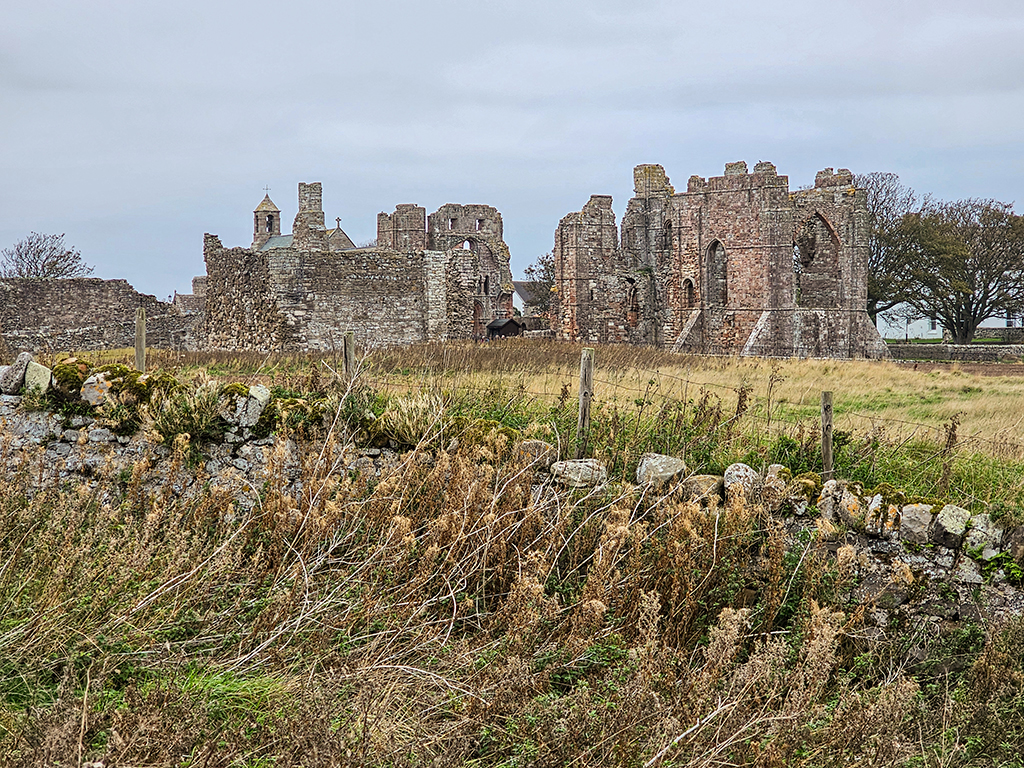
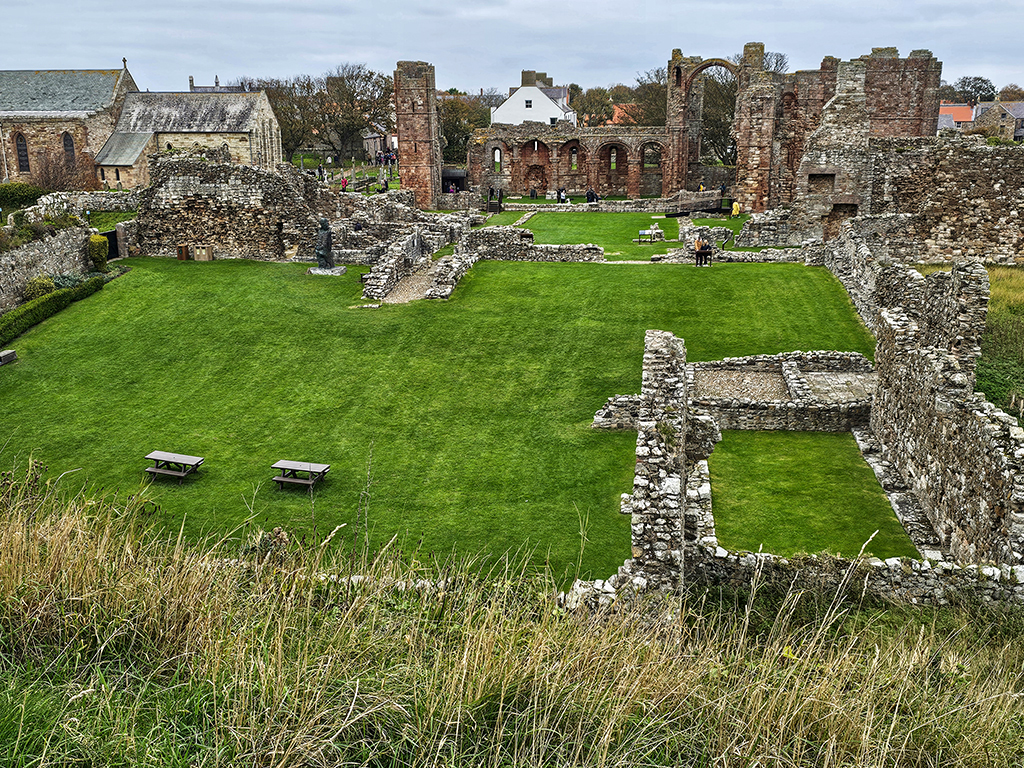
After a turbulent history on the island before the Norman Conquest, a priory was built in 1093. This continued and thrived until Henry VIII dissolved the monasteries, and it was closed finally in 1536. Today it is a picturesque ruin, but the village is still occupied, and while it is very much a tourist destination, there is a small permanent population. Pilgrims continued to visit the island after the priory closed, and organized pilgrimages continue to the present day. Following the dissolution, the village saw occasional use as a military post, and during the 19th century there were lime kilns and quarrying on the island. There is also a long tradition of making mead on the island. In the past, we have enjoyed an interesting ginger wine from the Lindisfarne Distillery, but mead is not generally to our taste, so I can’t comment on it!
The Lindisfarne Gospels were made in the 8th century, an illuminated manuscript in Latin of the four gospels. The manuscript is still in existence and can be seen in the British Library. Later, an English translation was added to the text. The illuminations (illustrations) are considered to be some of the most important surviving examples of Celtic, Germanic, and Roman fusion art. I remember studying and being required to write papers on the Lindisfarne Gospels when I took Art History 101 at university.
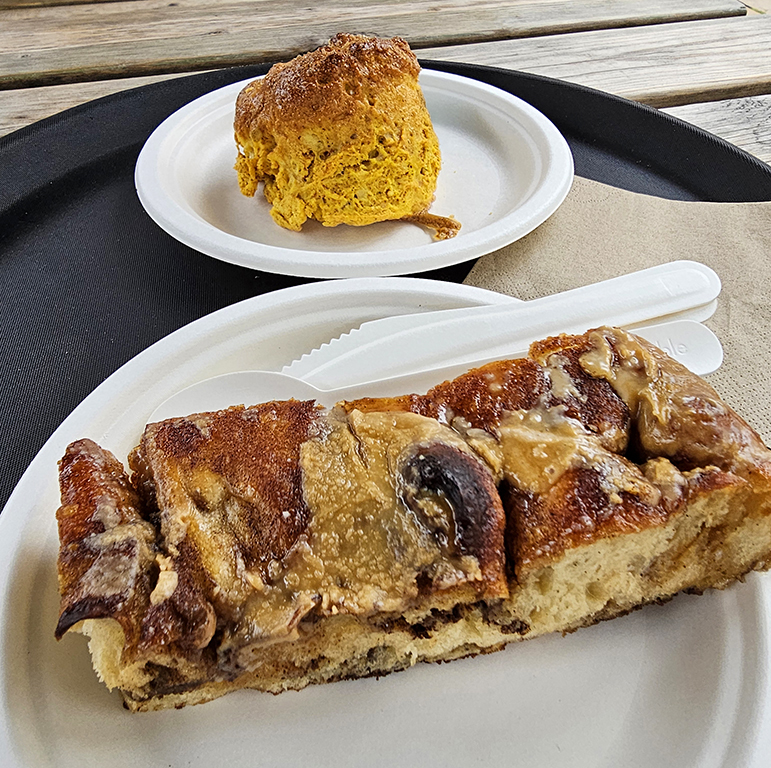
We enjoyed walking around the harbour and the views from the promontory, and then we descended into the village in search of a tearoom. Naturally, all the other visitors to the island had the same thought, but we managed to get in just ahead of the rush to a well-regarded eatery. The offerings seemed somewhat strange, but Rosemary tried what purported to be a cheese scone, while I tried a slice of vegan coffee cake. Both were extremely odd. The cheese scone was a rather violent orange, that I suspect owed more to an excess of turmeric than actual cheddar content. The coffee cake had substituted a great deal of sugar for any fat or dairy content, and only copious applications of butter (fortunately normal, salted, butter from Cumbria) made it remotely edible. The coffees were decent.
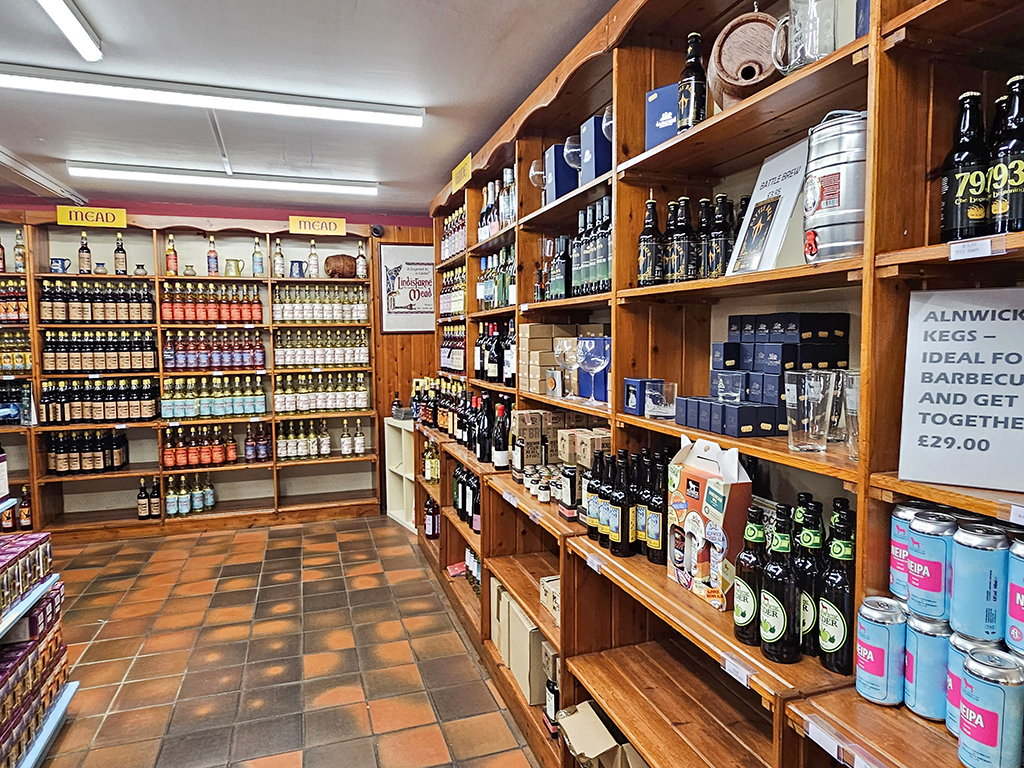
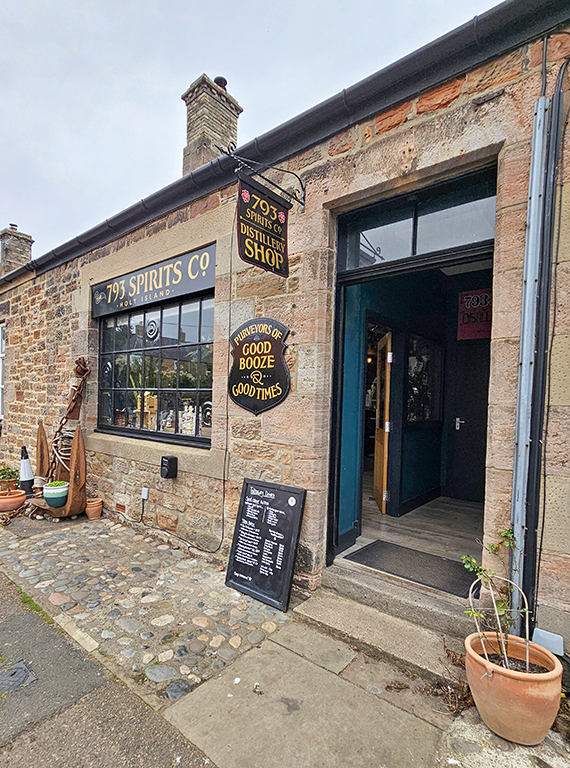
Refreshed, we stopped in at the distillery with the idea of possibly buying some ginger wine, as it can be difficult to find in my local shop. For some reason, the marketing has changed the label, and I have a feeling they have altered their product as well. In addition to the ginger wine, they now have a variety of fruit wines, as well as a large selection of different kinds of mead. Tastings were offered, so I tried the ginger wine, and it seemed much stronger and more like liqueur than wine, so I resisted and did not buy any. We had a quick look in a couple of other shops, but there was nothing of interest.
We returned to Beadnell and enjoyed another supper of the thawed dishes I had prepared.
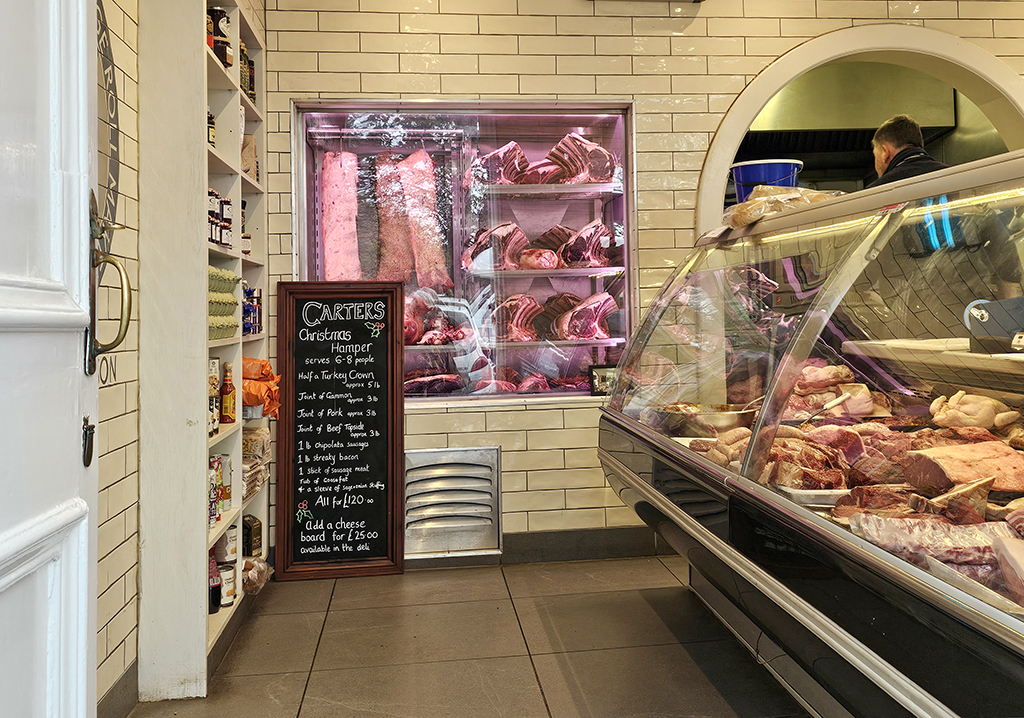
The next morning, we set off on a tour of several local attractions. We thought that Alnwick might have some interesting shops in the town centre. We went first to a so-called farm shop on the outskirts, but it was very disappointing, with almost no produce, and the offerings were mainly a meat counter. The town centre was as unprepossessing as it was when I last visited 12 years ago, so we carried on towards the town of Warkworth
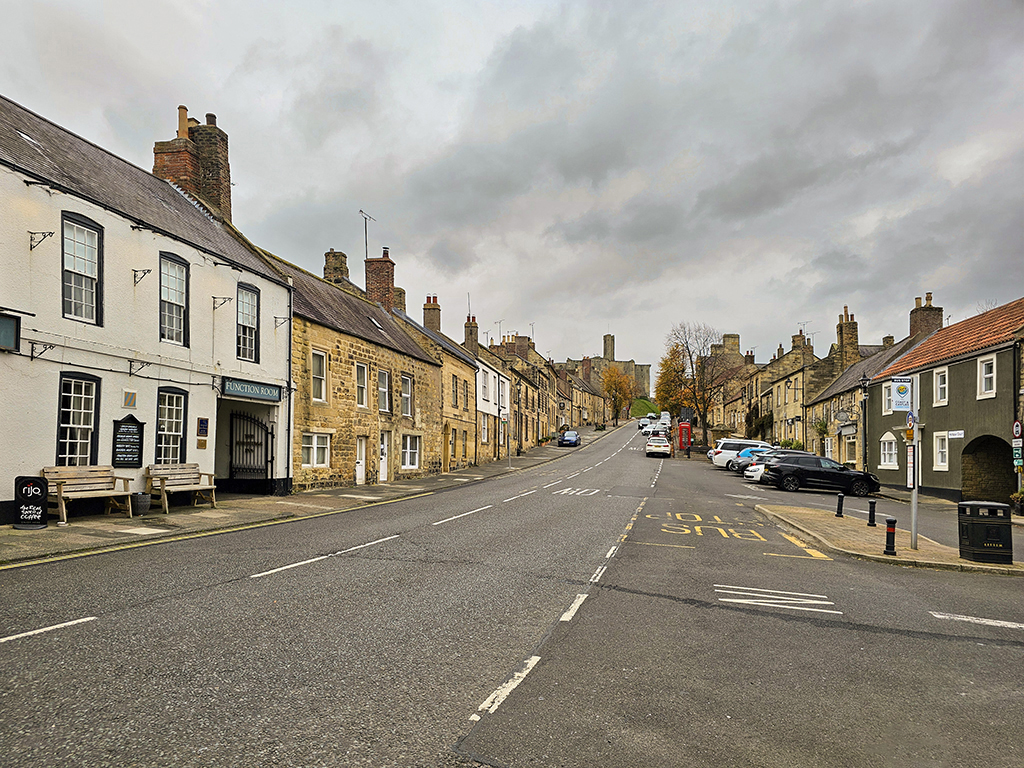
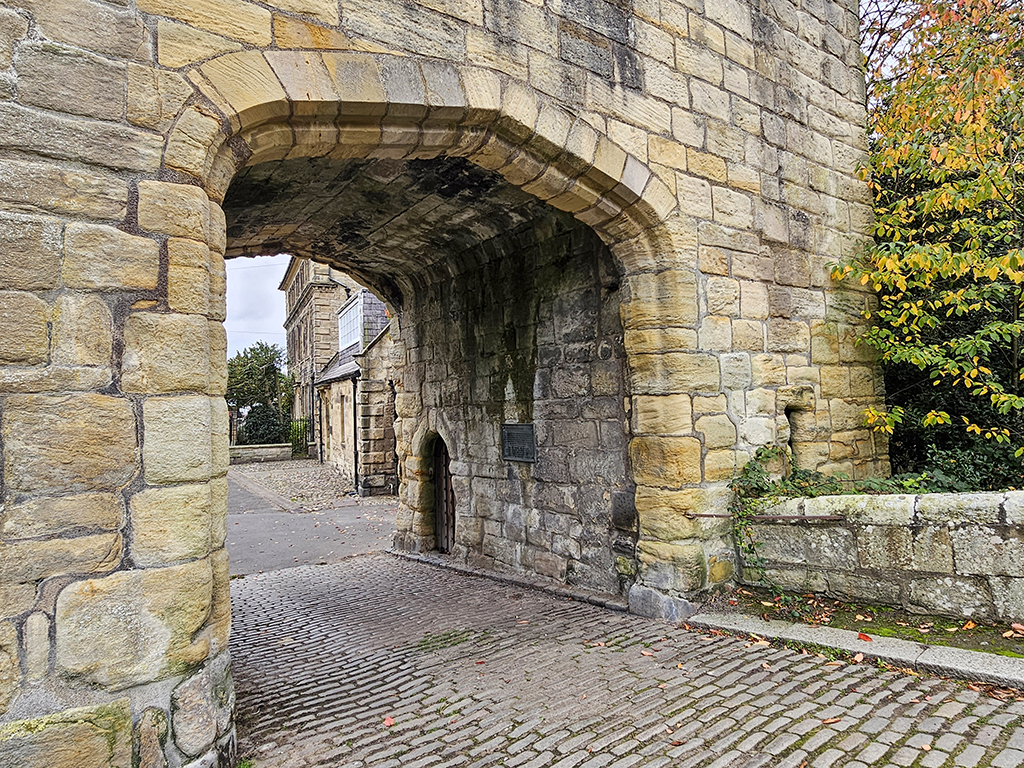
This is a charming location, with a very steep main street leading from the River Coquet to a picturesque castle at the top of the hill. Dick and I visited the castle some years ago, so we didn’t bother on this occasion, but we parked in the town centre and had a look around the shops and along the river.
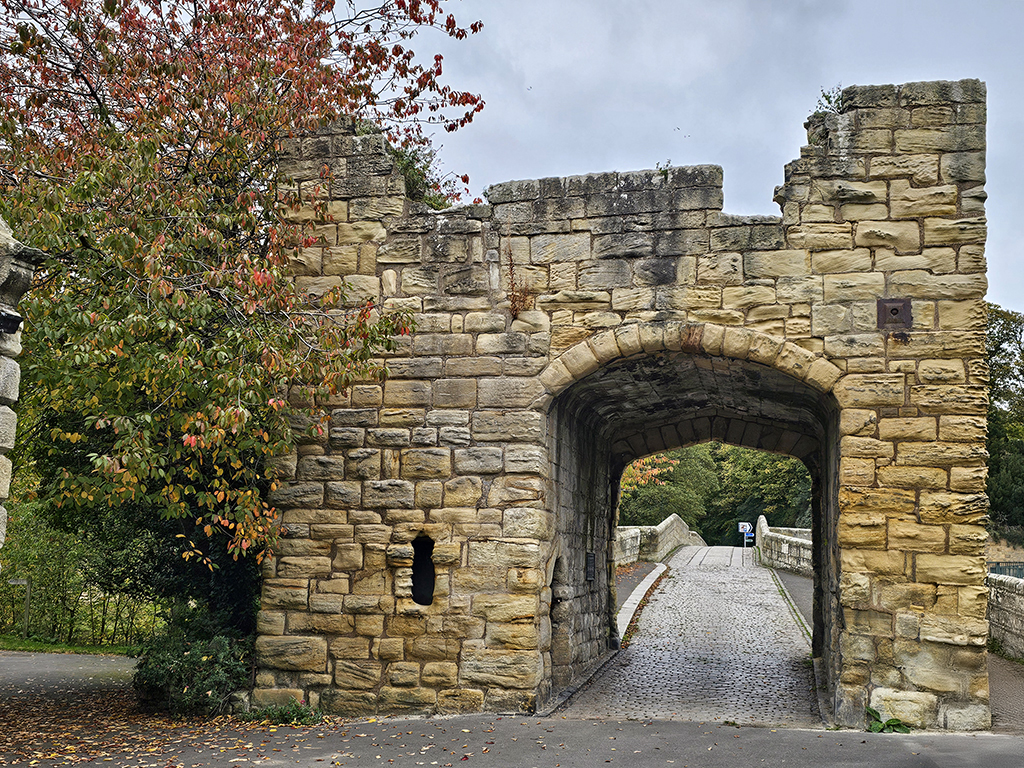
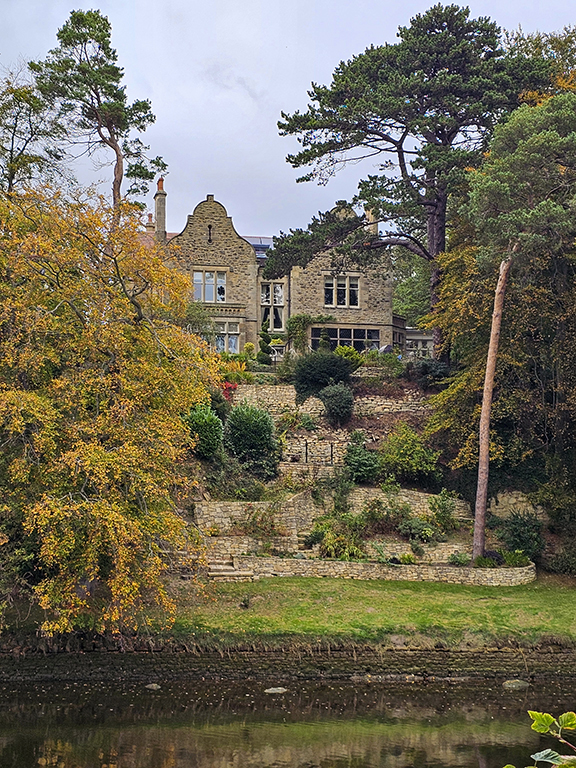
From Warkworth we drove north again to Bamburgh. We had planned to have dinner at a highly recommended seafood restaurant. That morning, I had tried to make a reservation, and something went wrong and instead of getting 6pm, the booking ended up being 4pm. There was also a £5 deposit required. I absolutely understand why restaurants have to do this now, but because the restaurant was dealing with Open Table, there was supposedly no way to change the reservation to the next day (and the preferred time) without losing my deposit. Sometimes, a restaurant’s procedures and advertising just irritate! Their website said they were open all day, so we decided that we would arrive some time after 3pm, and that might give us time after the meal for photography in afternoon light if the weather was cooperating. As it happened, we got there at 3:30, so only had to wait half an hour before being allowed to order our meal. The website does not mention that no food is served between 2pm and 4pm! At the end of it all, Rosemary’s choices were quite good, but mine not so much. My scampi in white wine had some sort of strange, breaded stuffing that simply got soggy and unappetizing in the wine, while the shrimp were somewhat overcooked. No need to return to that particular restaurant.

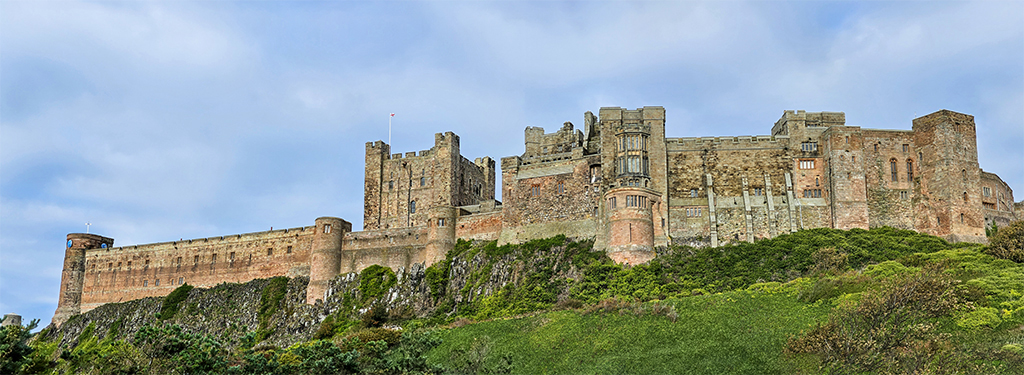
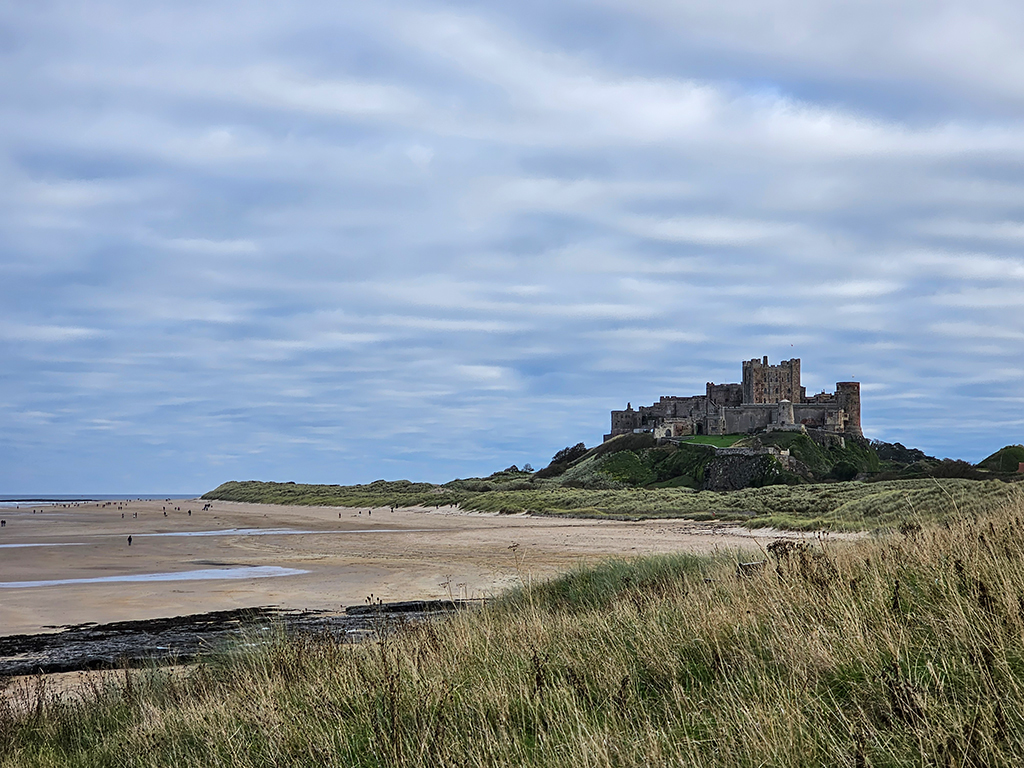
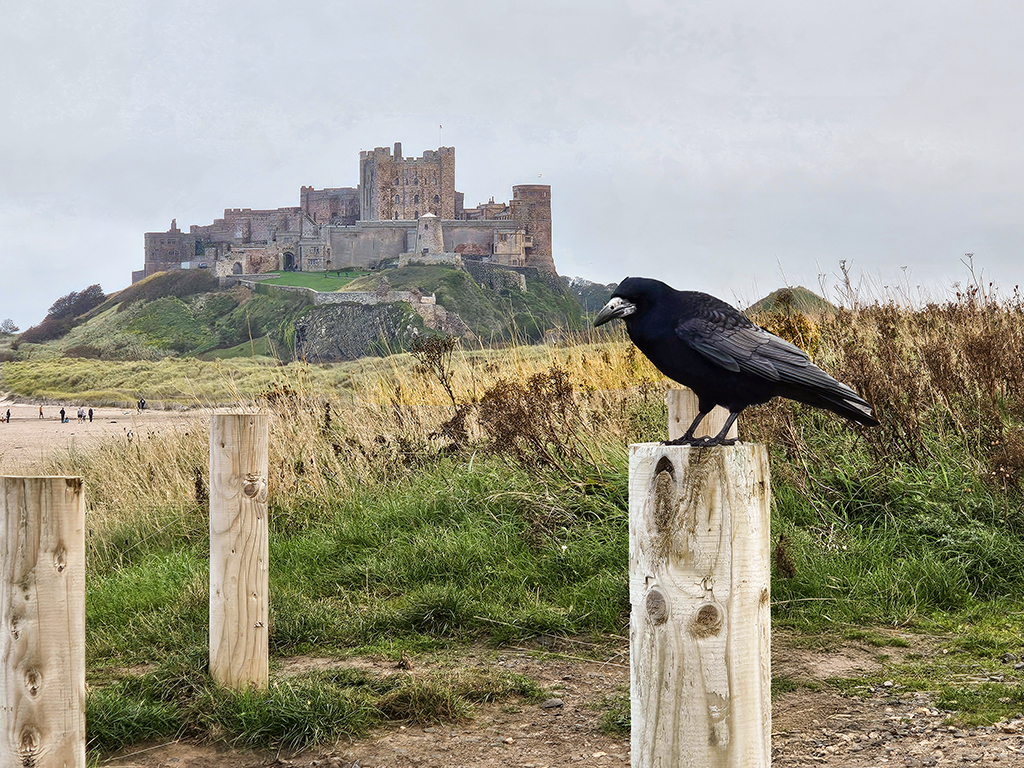
Earlier in the afternoon, our exploration of the town of Bamburgh and the area around it was a lot more enjoyable. In Anglo Saxon times, Northumbria was the largest and most powerful of seven kingdoms, and the huge outcrop was chosen to be the royal capital, called Din Guaydri. In 1095, William Rufus, son of William the Conqueror, arrived at Bamburgh, and it became an important border garrison. A strong Norman castle was built, and it is that fortress that remains at the heart of the current sprawling building. Bamburgh was a Lancastrian stronghold during the Wars of the Roses in the late 15th century, and it became the first castle to be severely damaged by gunfire. By 1610, the English Crown was tired of the expensive upkeep of obsolete fortifications, and the castle was given away and then allowed to fall into ruin. A hundred years later, funds were set up to begin restoration of the castle, now in private hands, and by the late 18th century, the castle had been somewhat restored and turned into a Coastguard Station. In 1786, the first ever lifeboat was launched at Bamburgh. By 1894, the castle was again becoming impossible to maintain, and it was sold to a wealthy industrialist. William Armstrong was an inventor, a scientist, engineer, and environmentalist. His manor at Cragside, inland in the same county, was the first house in the world to be lit by hydroelectricity. Although he began the full restoration of Bamburgh Castle, he did not live to see it finished. After he died in 1900, his nephew completed the restoration and made the castle into a family residence. Although parts of the castle are open to the public, it is still owned by the Armstrong family, and they still live there.
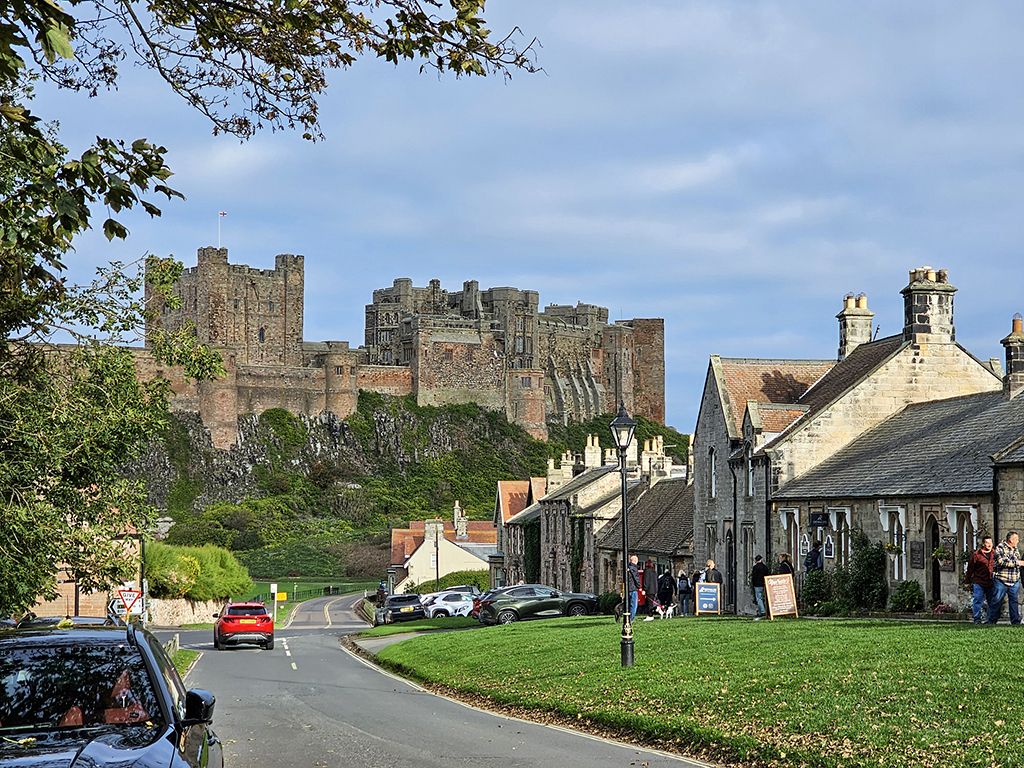
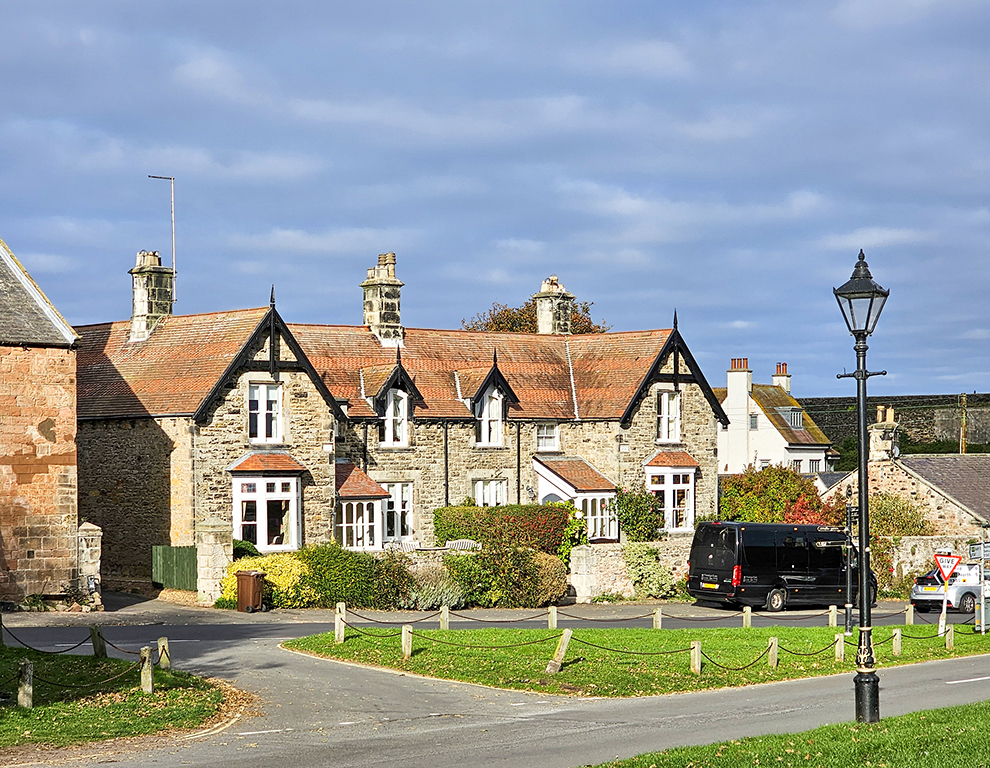
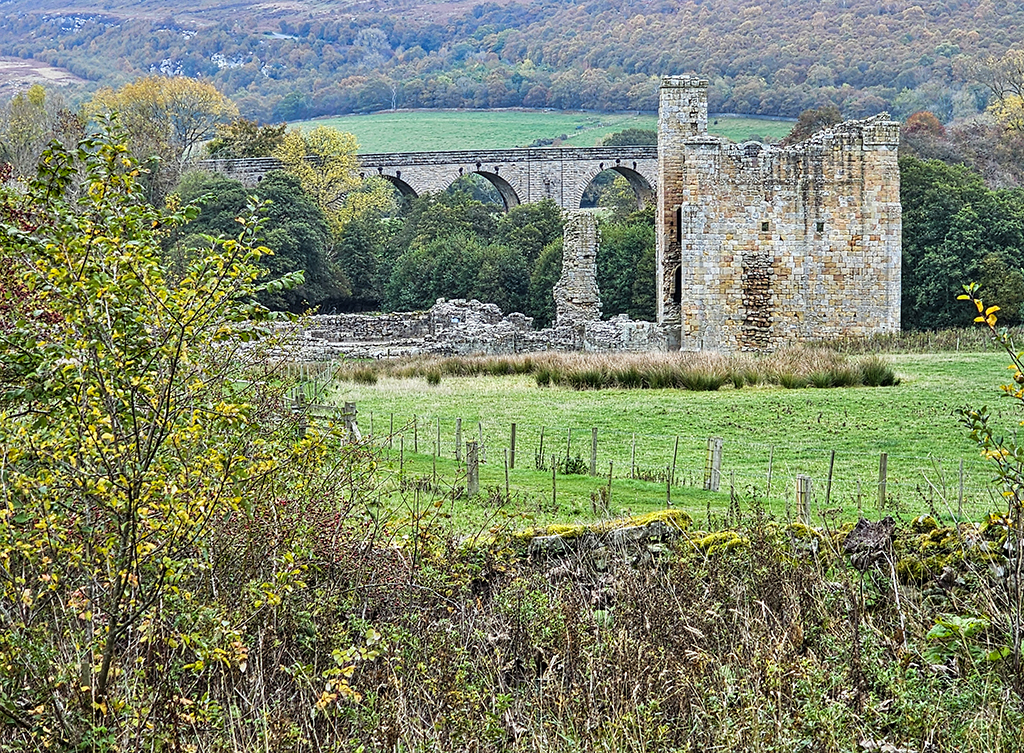
The next morning, we set off for Edlingham. The castle is a romantic ruin, down in a valley, with an interesting Norman church. Most of the castle has fallen down, but the former solar tower remains. A solar was often built in private castles and large manor houses to provide private living and sleeping quarters for the family. It was usually in a tower, and may have been named from the latin, solaris, because it was likely to be the brightest and sunniest room. Here the ladies of the estate would gather to sew and to chat. Access to the castle is down a muddy lane, and the light was very flat for photography of ruins, so we contented ourselves with a visit to the charming small church.
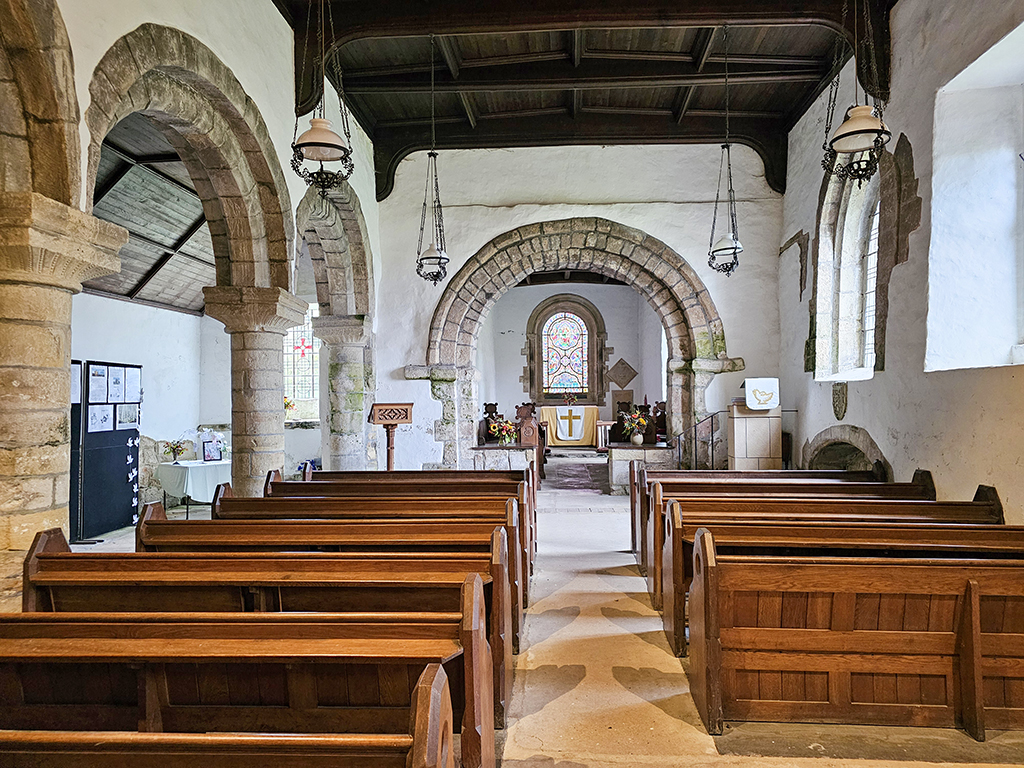
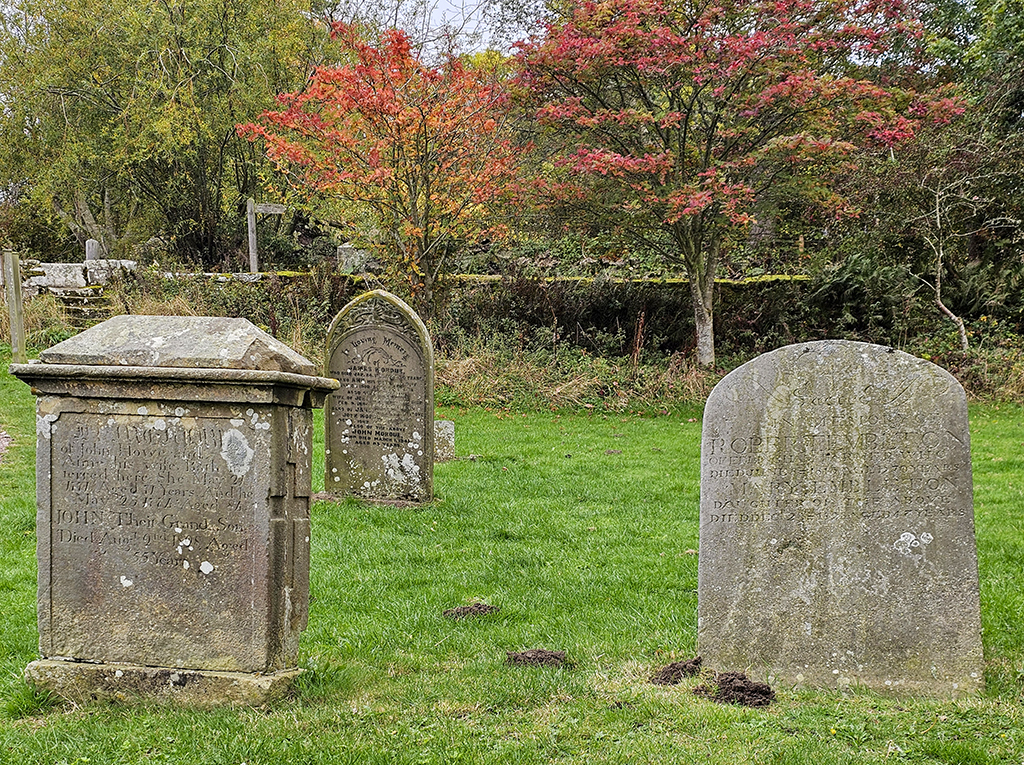
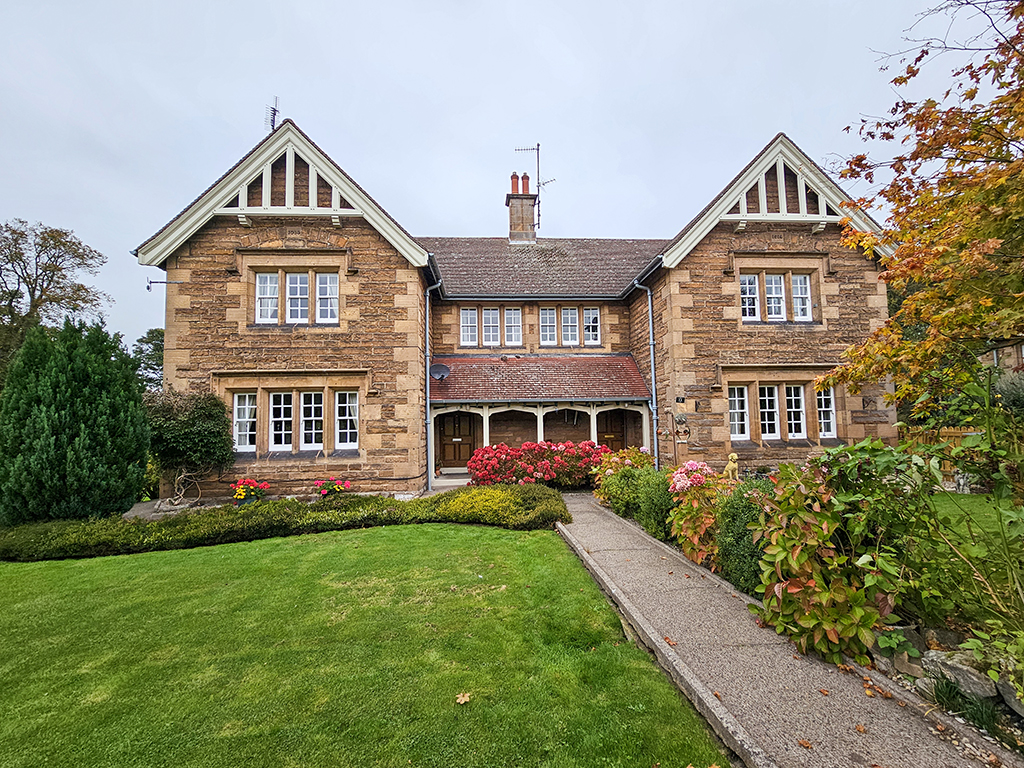
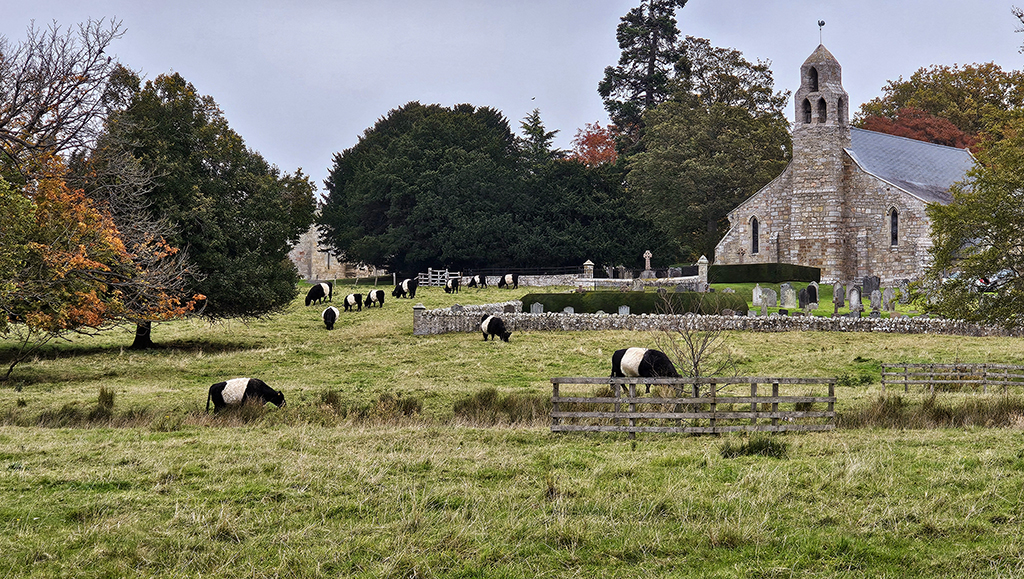
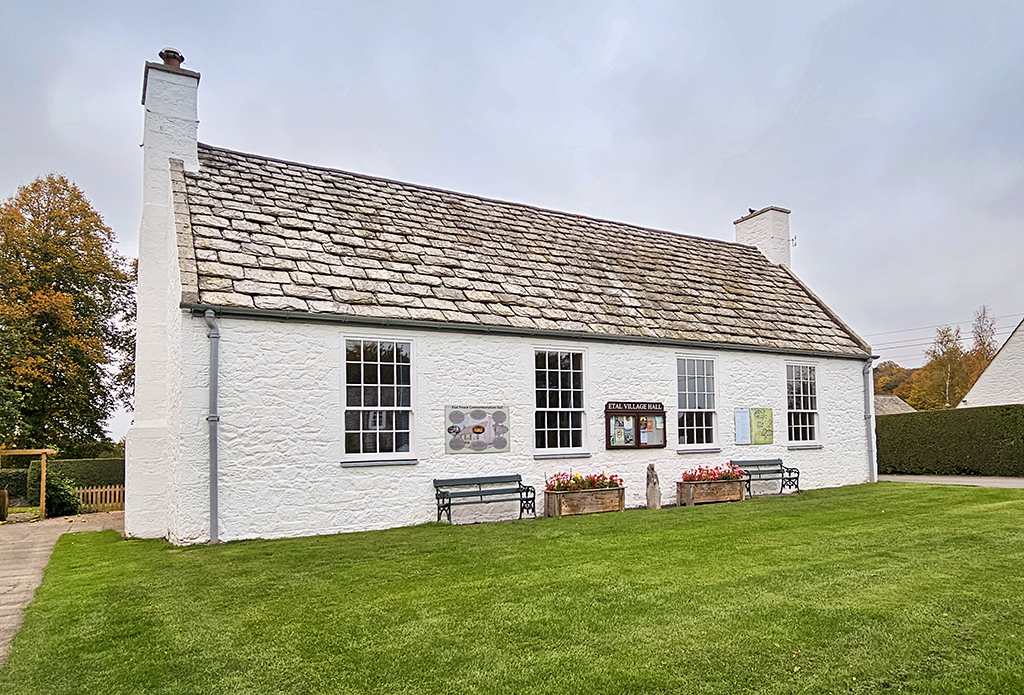
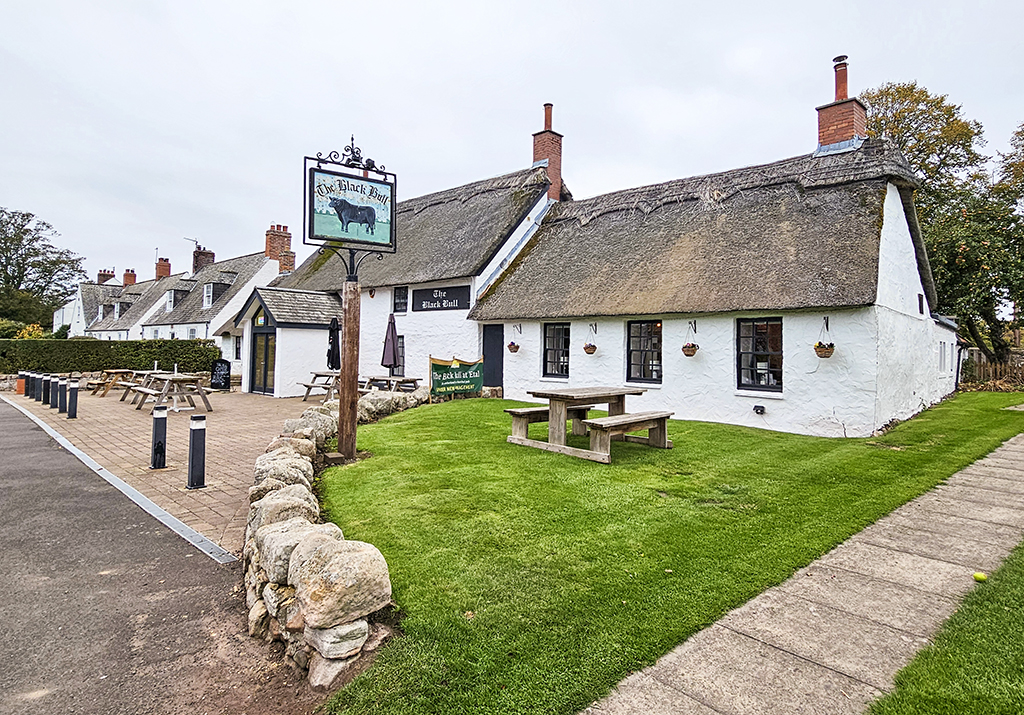
From Edlingham we drove north to the estates of Ford and Etal, a pair of villages in a working farm estate in the valley of the River Till. It has been owned and managed by the same family for 100 years, and is still a private, going concern. A few years ago, I drove through the area, and was somewhat underwhelmed, but on this occasion, we were in search of a tearoom, and we discovered something wonderful, Lady Waterford Hall.
Louisa Anne Beresford, Marchioness of Waterford, was an accomplished artist and philanthropist. When she inherited the Ford estate, she redesigned the village, built a school, and founded a temperance society. She spent 22 years decorating the school building with a series of inspirational watercolours on paper, which were applied to canvas and mounted on the walls and gables of the school hall. The school was in use until 1957. There was a lot of information about Lady Waterford in the tearoom, and my recollection is that not only was she concerned with the welfare of all of her tenants, she was also very interested in educating and encouraging girls and women. Her watercolours were well received, although not displayed in galleries until the 1870’s, long after she had been widowed. Queen Victoria was said to have enjoyed her style, and bought some of her paintings.
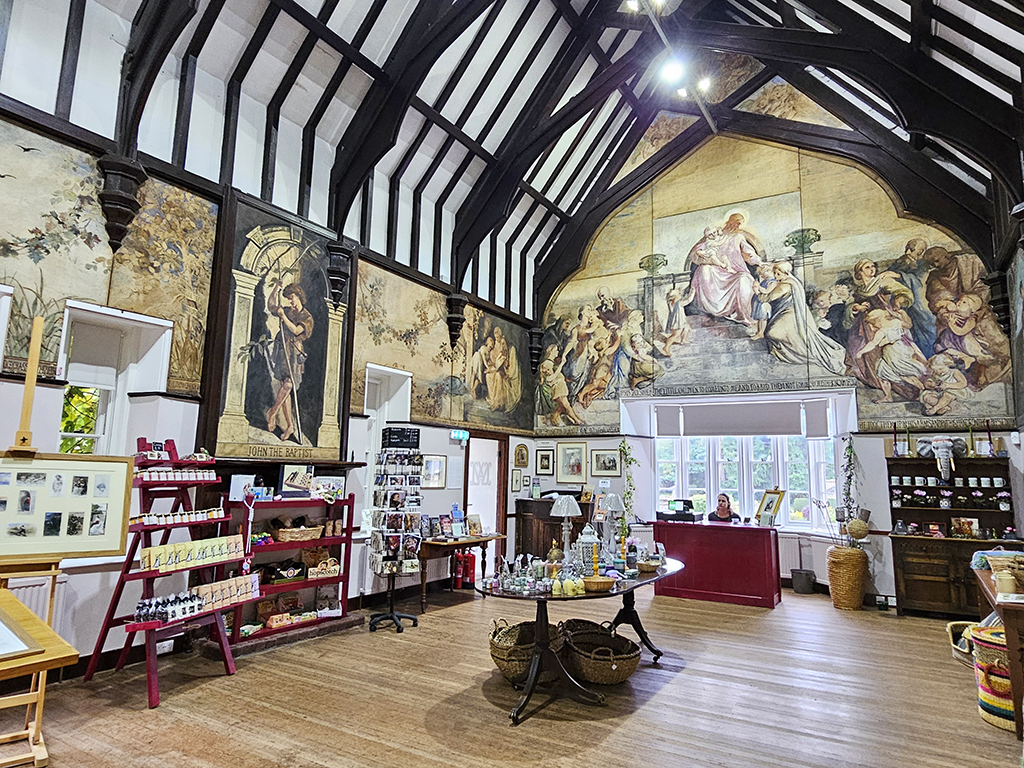
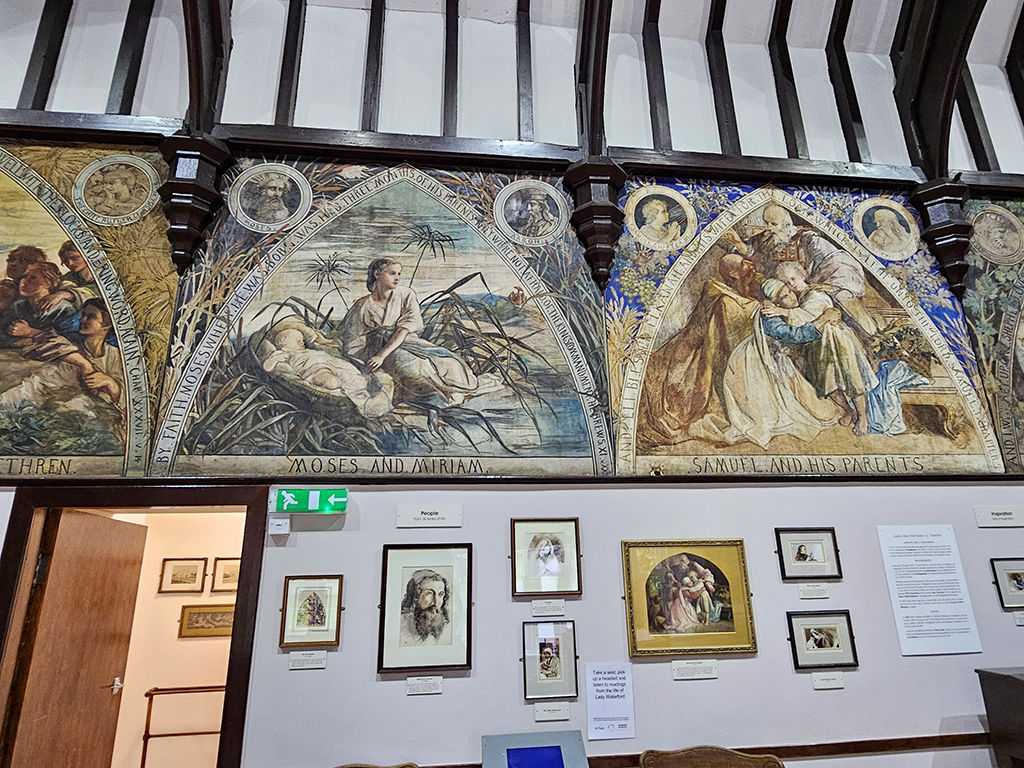
We had some coffee and some very nice (normal) scones, and then after a small walk around the village we drove on to Etal, for another short look around.
Our last day in Beadnell had been forecast to be overcast all week, so the plan was to visit a waterfall, as that is the best kind of light for photographing moving water. I had concerns about slippery access, so Rosemary set off on her own. It was sadly a wasted trip. She could see that there was very little water going over the falls, and there was no safe path to get down to see it. In the afternoon we drove the short distance to the pretty and historic town of Seahouses.
Our destination was a smokehouse that had been recommended by friends. Just as well, because it is not located in the middle of town and there would have been no way we would have just stumbled across it.
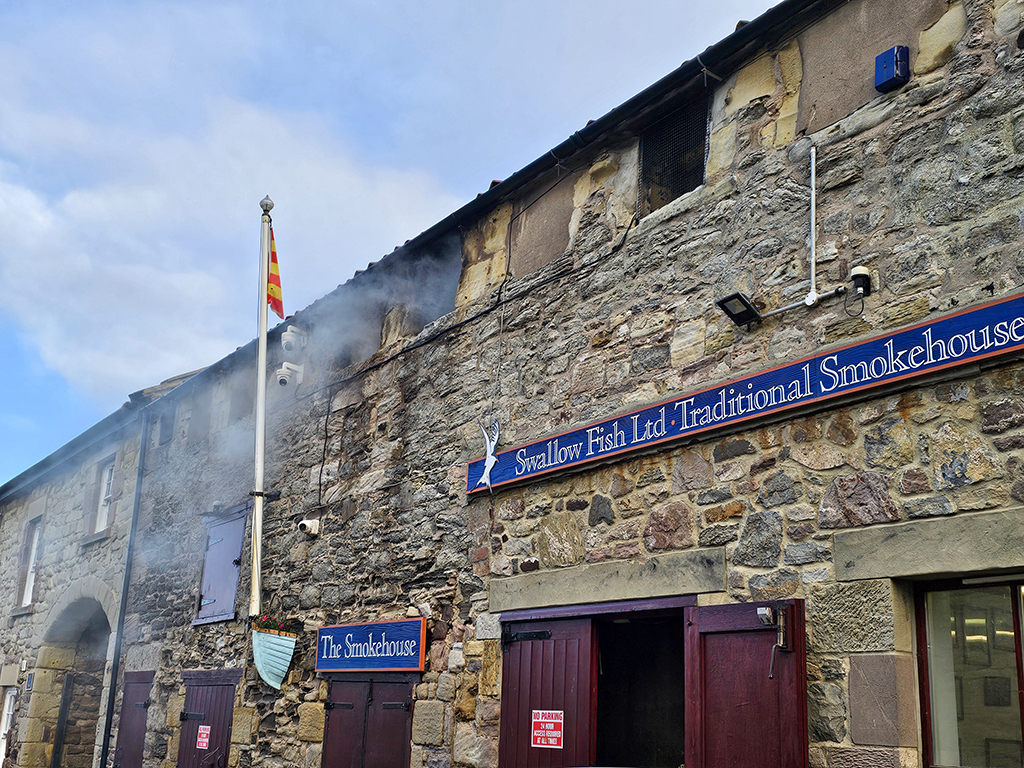
Apparently, a guidebook for Northumberland from 1888 described Seahouses as “a malodorous place, where fish-curing is extensively carried on.” Herring was the main catch, and the harbour was full of fishing boats. Today there is still an active fishery, but there are also a great many tourist boats that carry passengers out to the Farne Islands and on dolphin and whale-watching excursions. The fish were unloaded from the boats and taken to herring sheds, where gangs of “herring lasses” would clean the fish and pack them into brine for shipment. In 1843, six thousand barrels of herring were shipped from this harbour. The herring lasses followed the fishing fleet, starting in Shetland and Orkney in spring, and working their way south along the coast to finish in Lowestoft and Yarmouth in autumn. They slept in dormitories above the herring sheds. They could earn as much as ten shillings a day, which was a lot of money in those days.
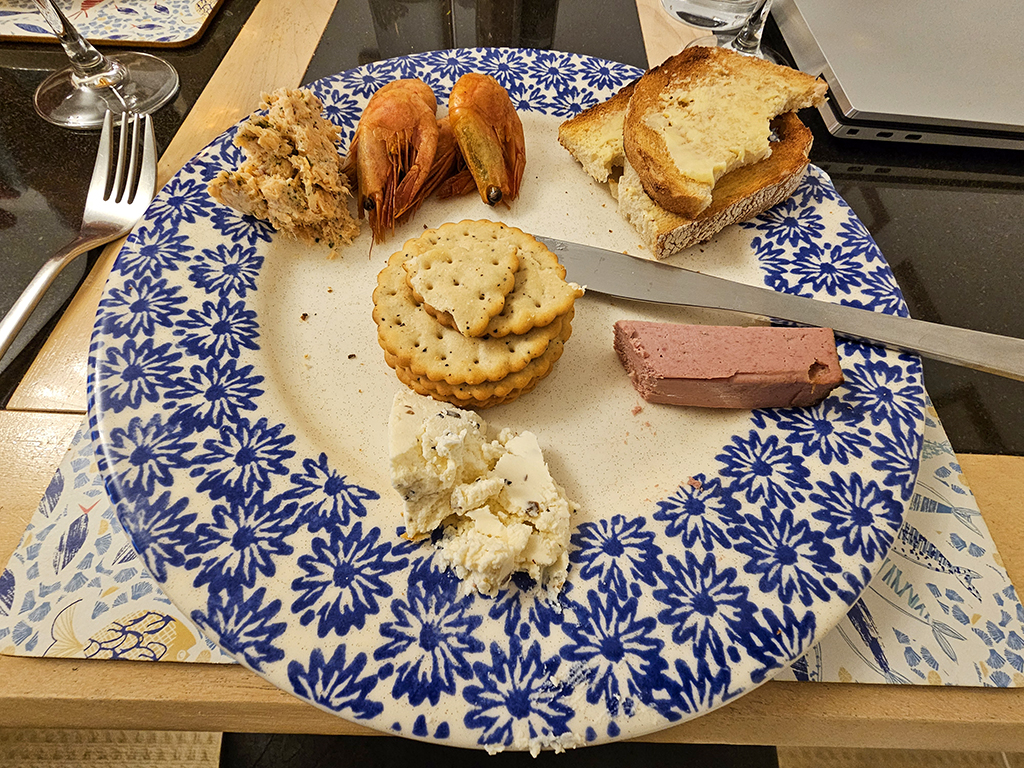
Have you ever tried that quintessential English breakfast fish, smoked kippers? You would know if you had. In fact, you would know if anybody in the dining room was indulging, as they are extremely powerful smelling! The meat is tasty, but absolutely full of tiny bones, not a happy mouthful. Seahouses claims to be the location where the kipper was invented. The story goes, that some split and cleaned herring were left overnight in a shed where a fire had been lit for warmth. In the morning, the accident was discovered, and all the fish were thought to be ruined. Some brave soul decided to taste it, and the kipper was born! It was such a popular dish that many of the herring sheds were converted to smokehouses. We were visiting the last remaining of the original smokehouses, Swallow Fish. Smoke was billowing out of an upper window. Inside, we bought some smoked salmon and smoked prawns, as well as some delicious salmon pate. I see that while the business is rooted in the past, they are modern enough that you can place an order for their various offerings and it will be shipped to your home anywhere in UK overnight.
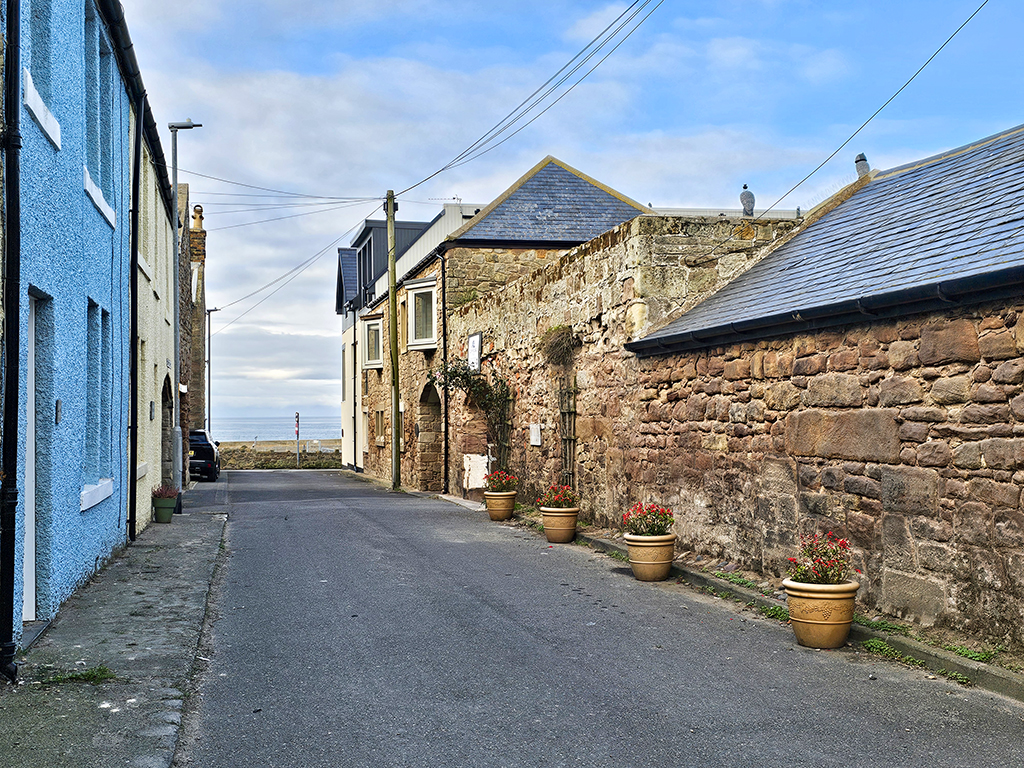
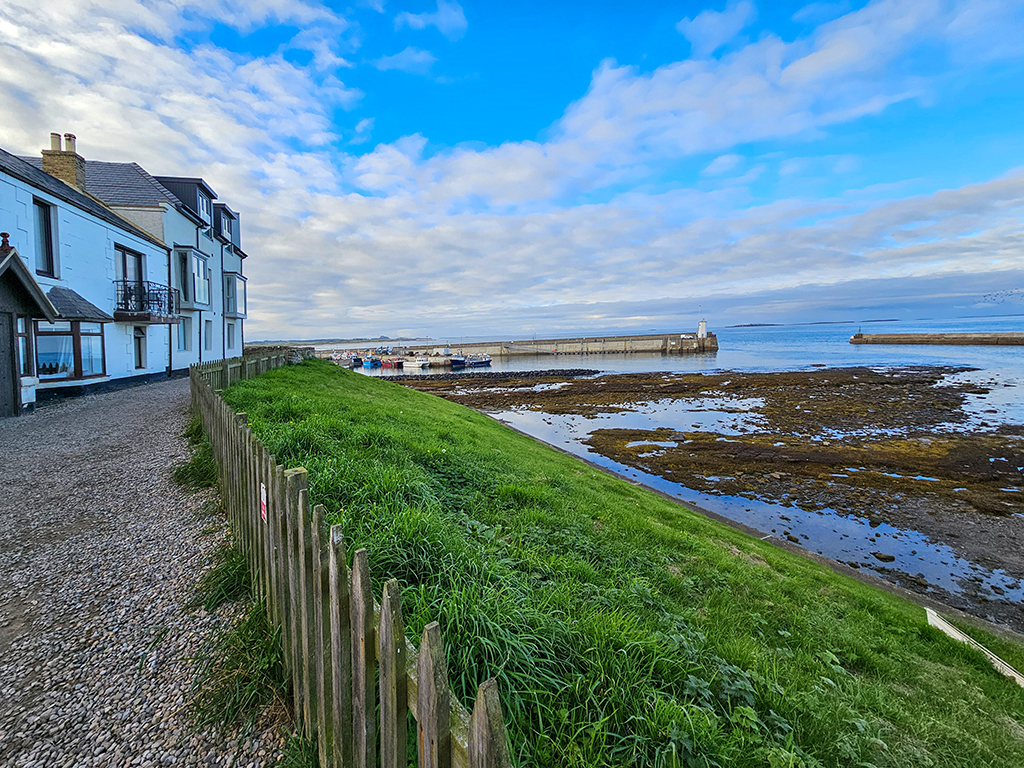
After a quick exploration of the old town with its fisherman’s cottages and a look at the harbour, we popped into a very nice small speciality food shop and picked up some cheeses and beautiful strawberries to accompany our fish purchases for supper.
The next morning, we packed everything up and said our goodbyes. I made careful notes so that I could drive back to Hawes across country. I set up both the car GPS and google maps on my phone with directions. There was an amusing interlude when both GPS/Satnav ladies tried to take me down different single lane tracks to correct a mistake when I followed their instruction to “continue straight” where I was apparently meant to follow the road around a sharp bend. Eventually I found my first destination, Corbridge.
Corbridge is a nice little town in the middle of Northumberland, located in Hadrian’s Wall country. Some years ago, Dick and I explored an extensive Roman excavation of the Roman town of Coria, today’s Corbridge. I have stayed in the town at a very pleasant vacation rental located above two shops in one of the town’s two main squares. There used to be several very interesting stores, and I had planned to park and explore as well as have lunch.
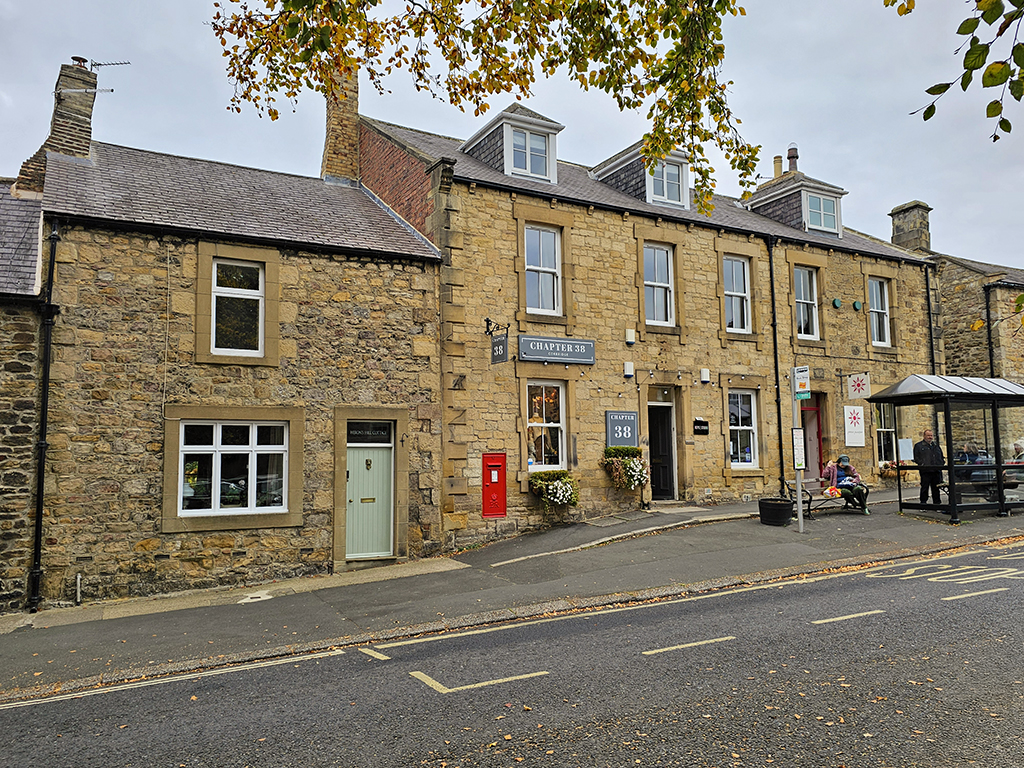

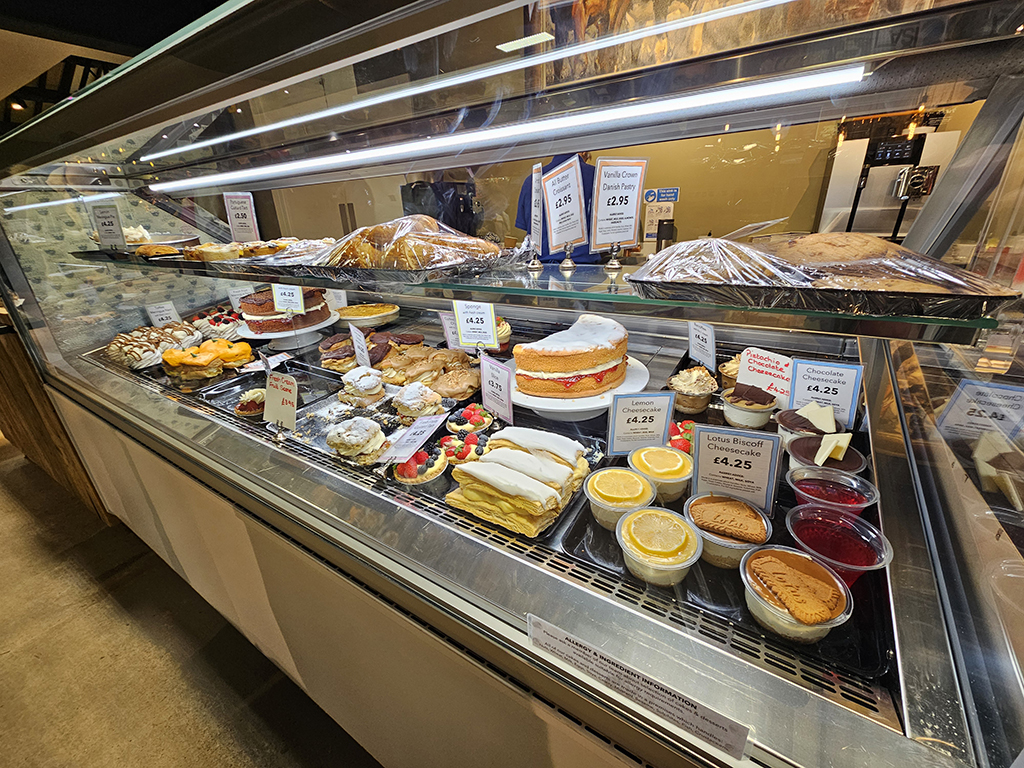
Parking is free for the first half hour, to encourage people to come into town for their shopping. Sadly, the machine and I had something of a falling out. I read the directions, and then put in first a 1 pound coin, and then a 50 pence coin, expecting to get a 2 hour ticket. Instead, just the first, free, half hour was printed. Muttering, I pushed the coin return and was rewarded with the return of my 50 pence. Nothing I could do was going to get me the rest of my paid time on a ticket, so I muttered some more, put the ticket into the car, and crossed over to the tearoom hoping to at least get a coffee before my time ran out. Sadly, it was lunchtime and there was a huge crowd, clearly nothing was going to work out. I availed myself of their facilities, bought an interesting looking package of biscuits and some mushroom pate, and returned to the car.

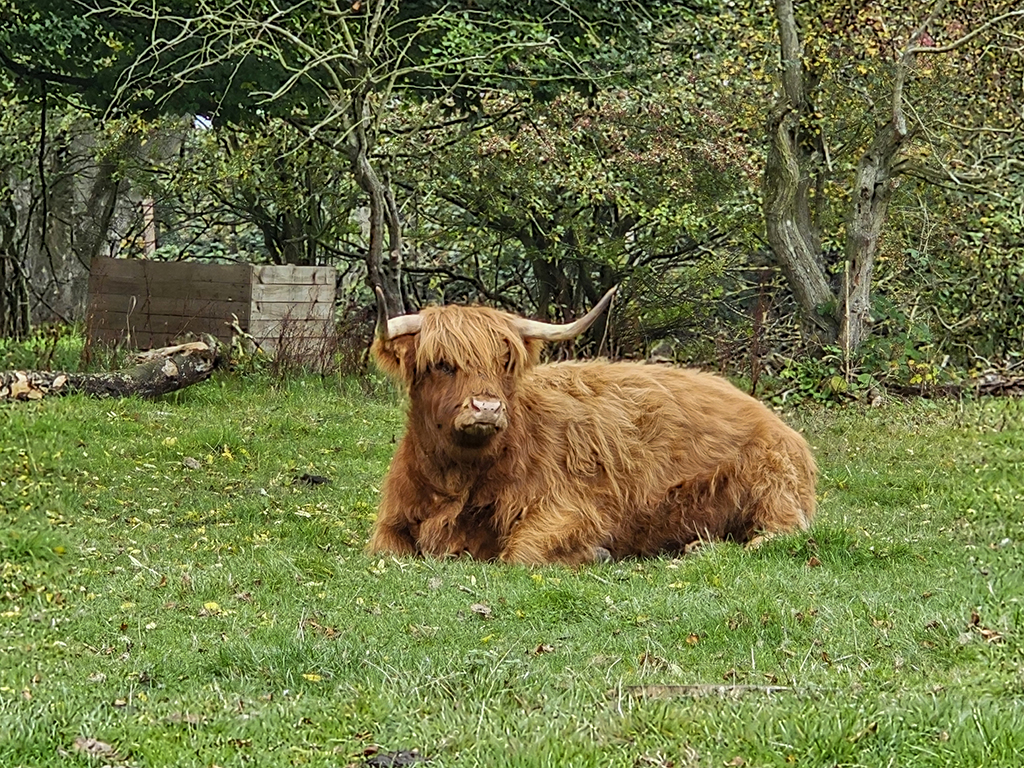
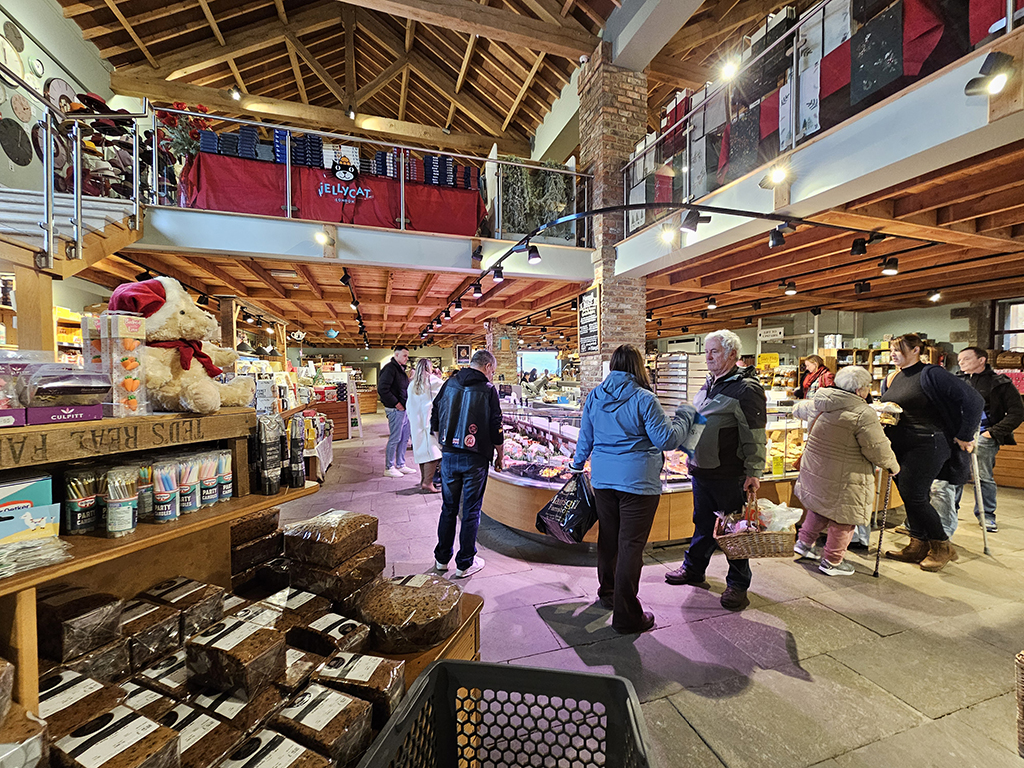
My next stop was far more successful. We have visited the Mainsgill Farm Shop on several occasions, and it just goes from strength to strength. As I arrived, I experienced a “huh???” moment, as I saw two camels and another not very English herbivore grazing in the field. After parking, I investigated the open sheds, where last year Dick and I had admired some cattle waiting for milking. Now these sheds have been devoted to goats, pigs, Shetland ponies, and Alpaca.
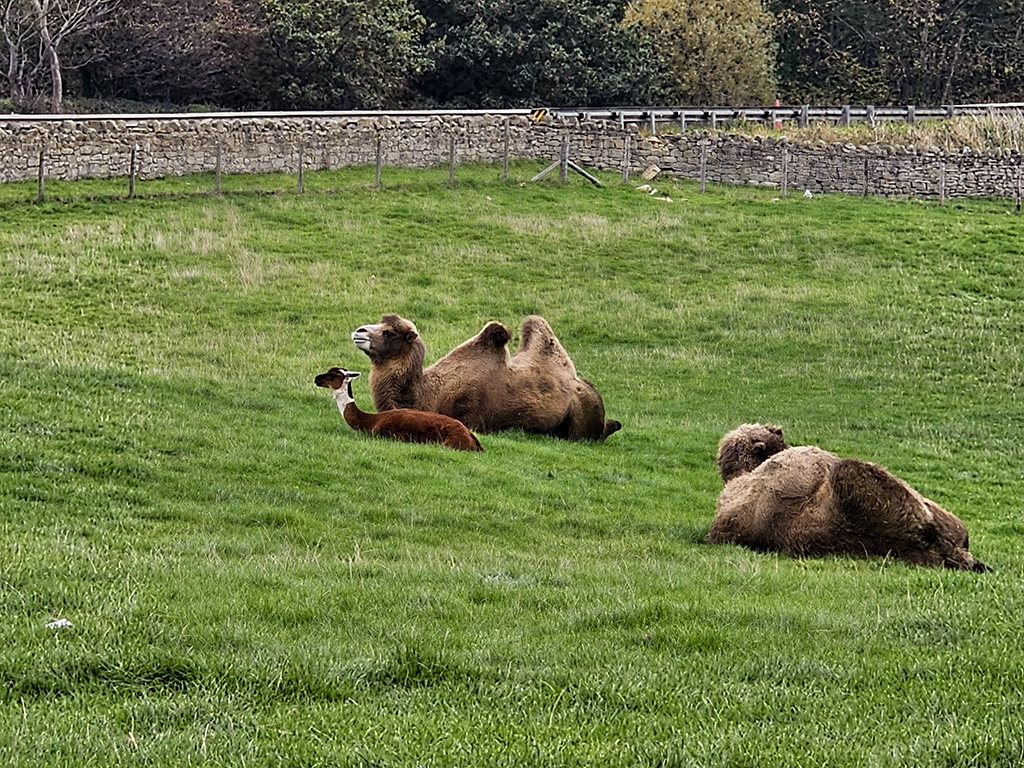
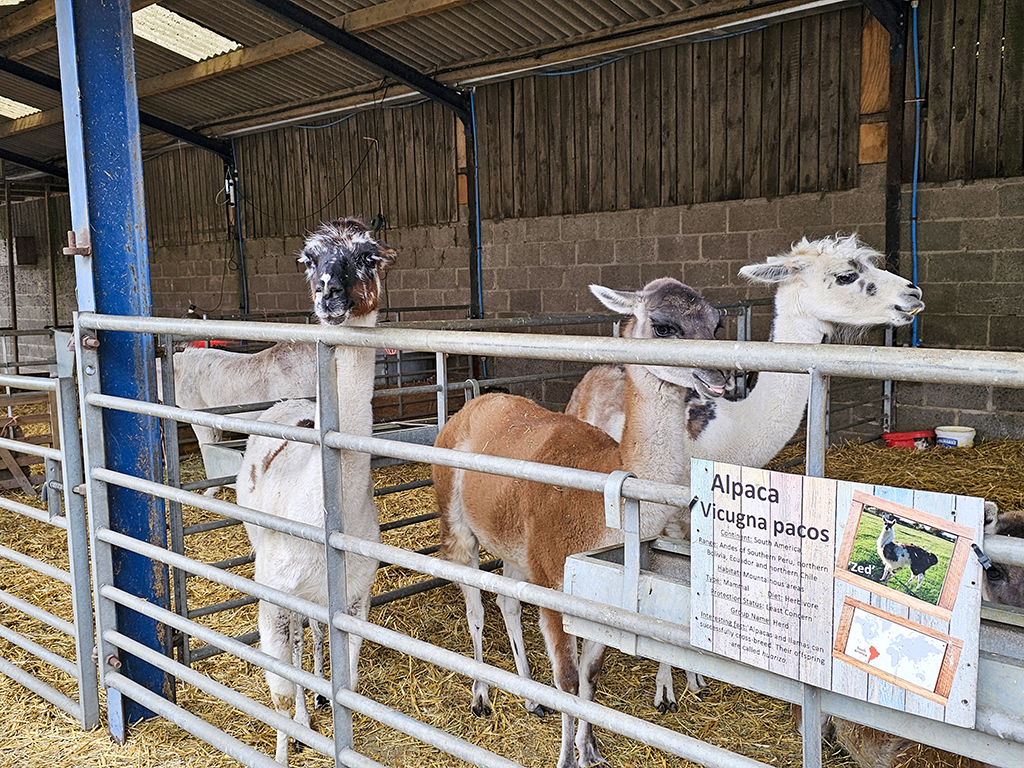
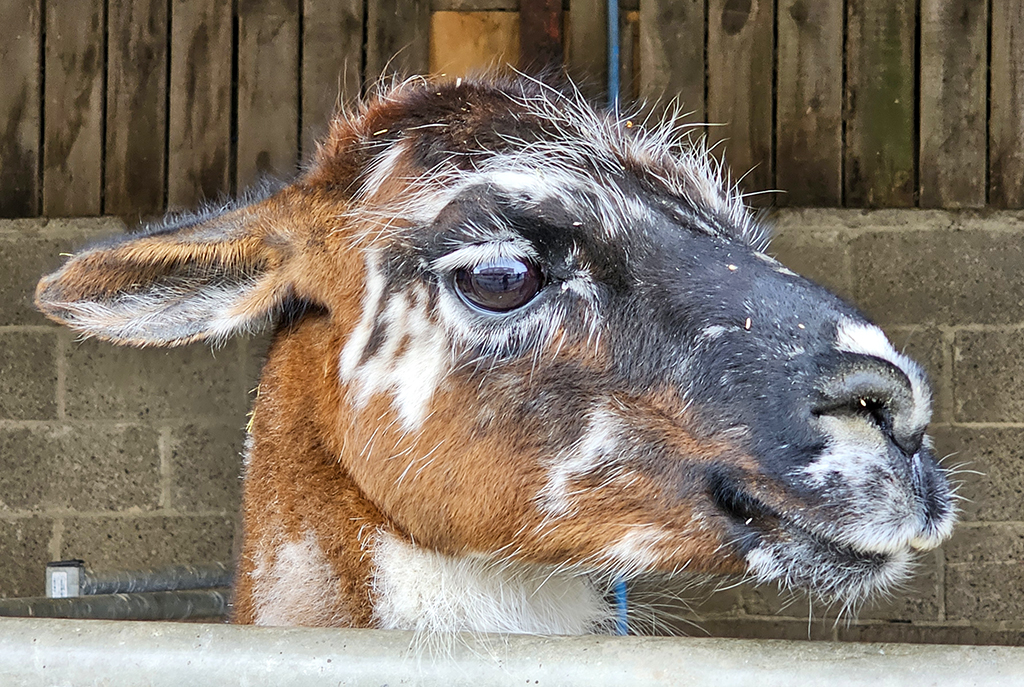
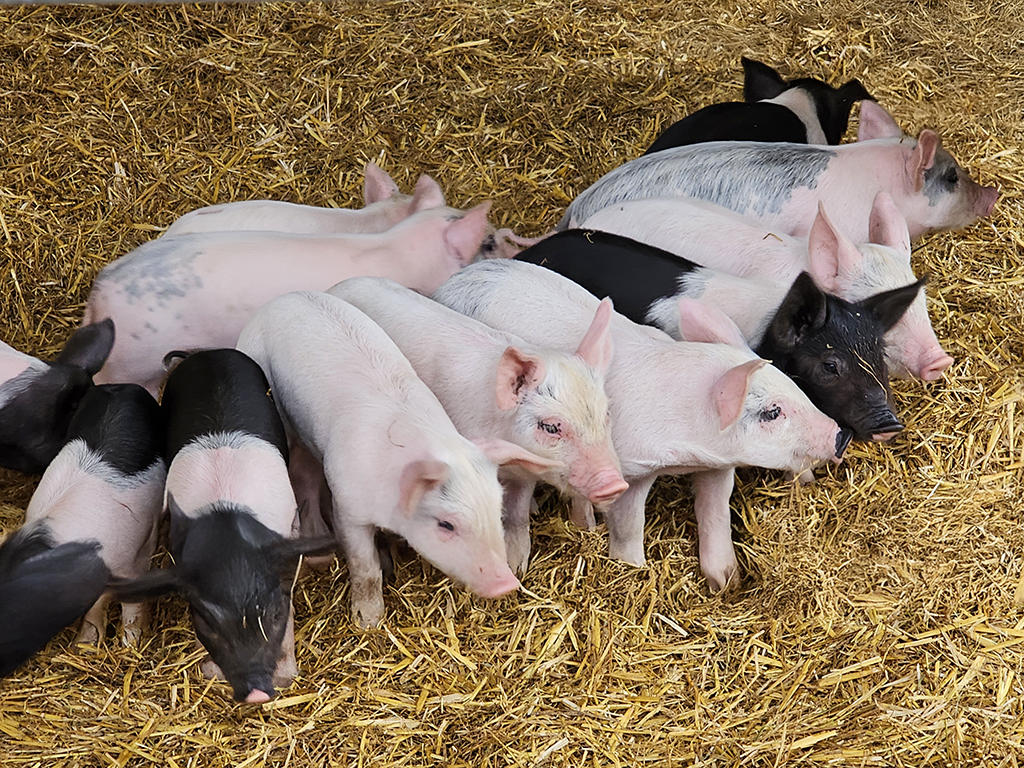
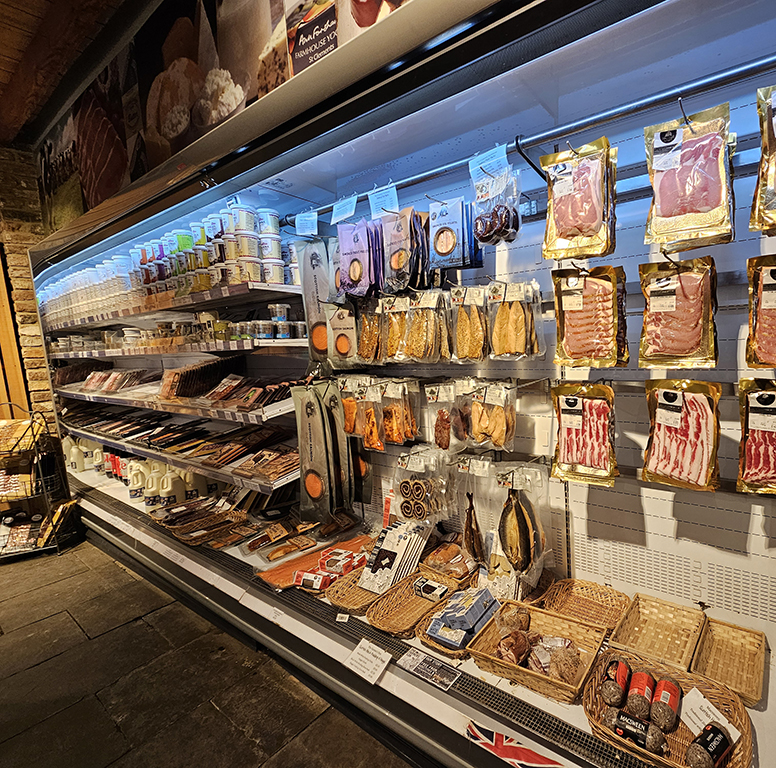
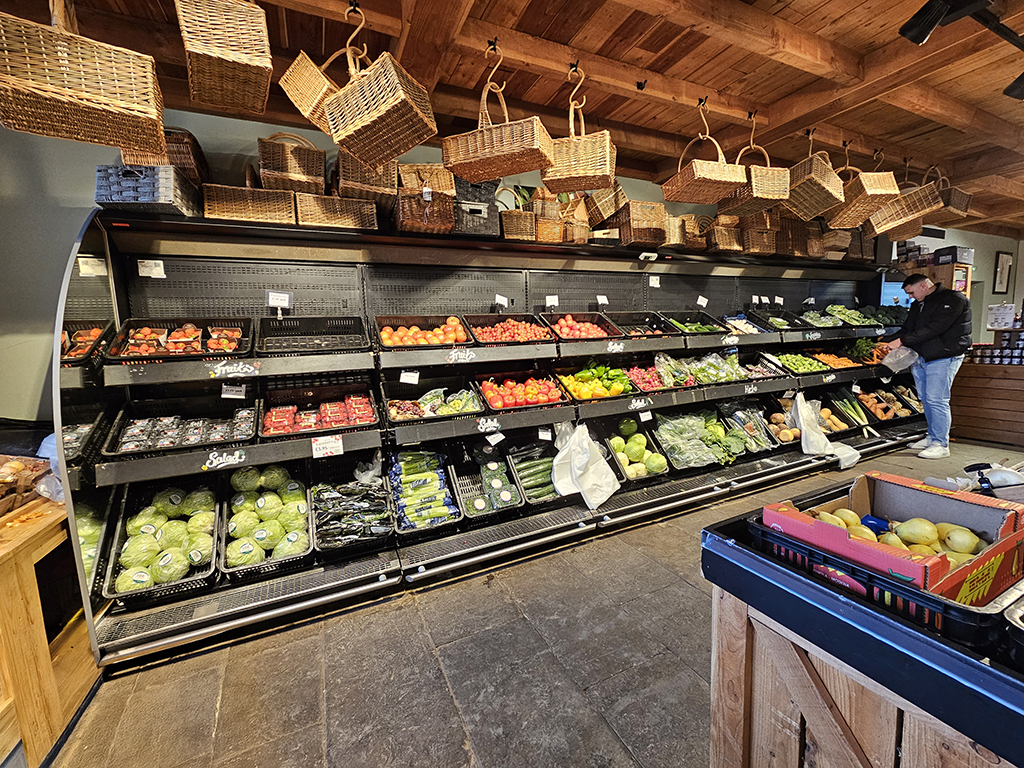
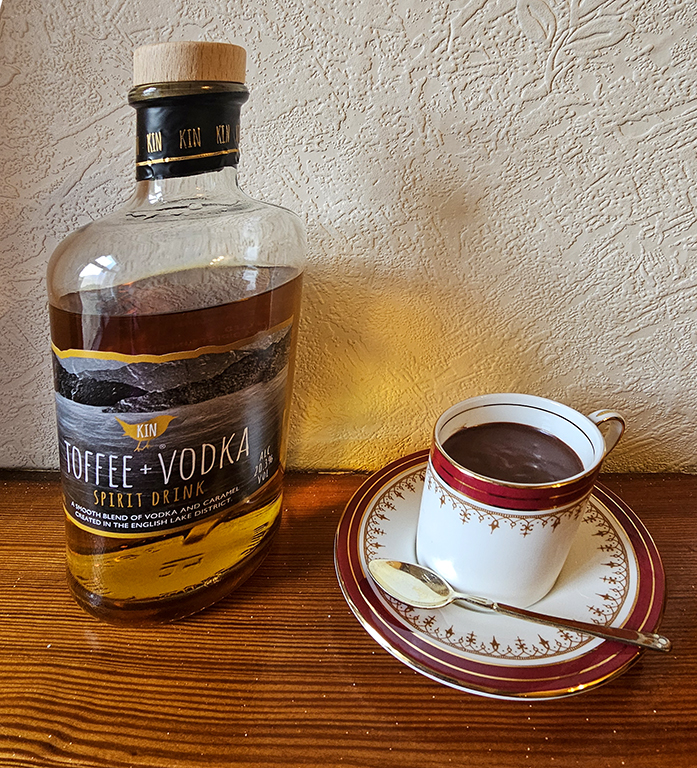
After watching the animals for a bit, I went into the farm shop, which is already bringing in some of the speciality items for Christmas. I found smoked meat, some really nice cheeses, more of the gorgeous strawberries that Rosemary and I had enjoyed, and a few goodies for taking away with me over the next few weeks. I also picked up a bottle of our favourite Kin Toffee Vodka, delicious as an after-dinner drink, but also a prime ingredient for tiny, chocolatey, and very decadent pots de crème.
As I turned off the main road and onto our local highway and saw the hills of Wensleydale silhouetted in the late afternoon light, I felt a wonderful sense of homecoming. The house was warm and welcoming, and I looked forward to a week at home before setting off on my travels again.

 Scene and Done
Leave a comment