
Before I continue with part two of our UK boating adventures, I thought I would delve into the history of the canals and give our experiences some context.
The canals and river navigation systems of Britain were built to accommodate new trade routes, at a time when roads were virtually non-existent and the Industrial Revolution was transforming a society based on agriculture into a mechanized, urban economy.
In post-medieval times some rivers had been canalized for boat traffic. Plans for the Wey Navigation were approved in 1651, when permission was given to make the River Wey navigable for boats between Weybridge and Guildford. This required building 12 locks, and 10 miles of artificial cut. Mill owners were generally opposed to canals, because they needed the flowing water to drive their mill wheels, so even in the early days, building navigable waterways was controversial. Farnham Potteries shipped their wares to London on the Wey. Canals are particularly well suited for transport of both heavy materials such as sand and gravel, and delicate, breakable goods such as china and pottery.
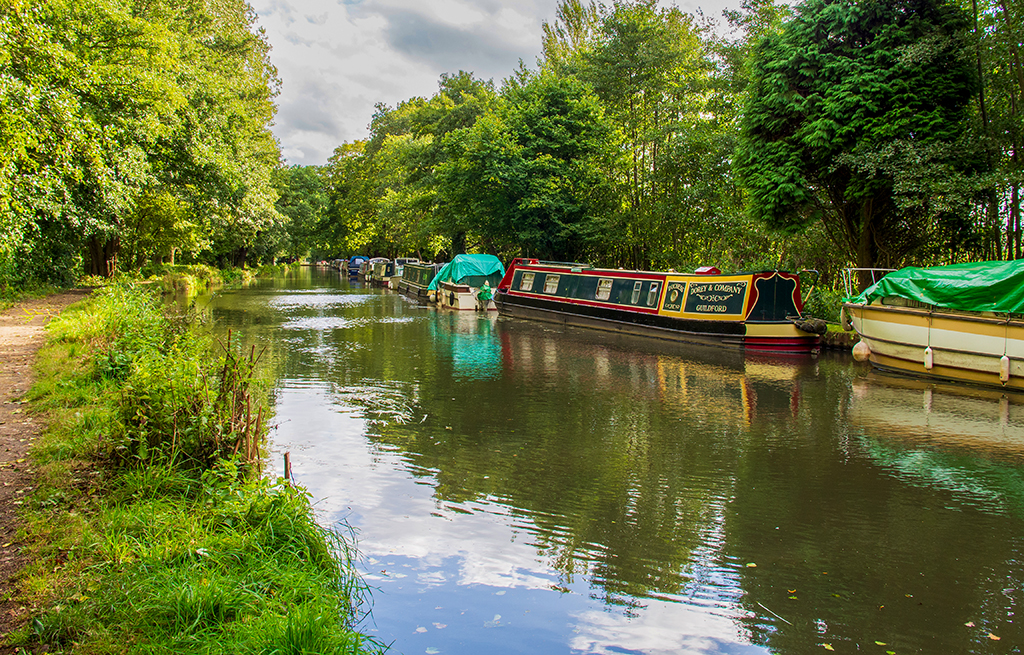
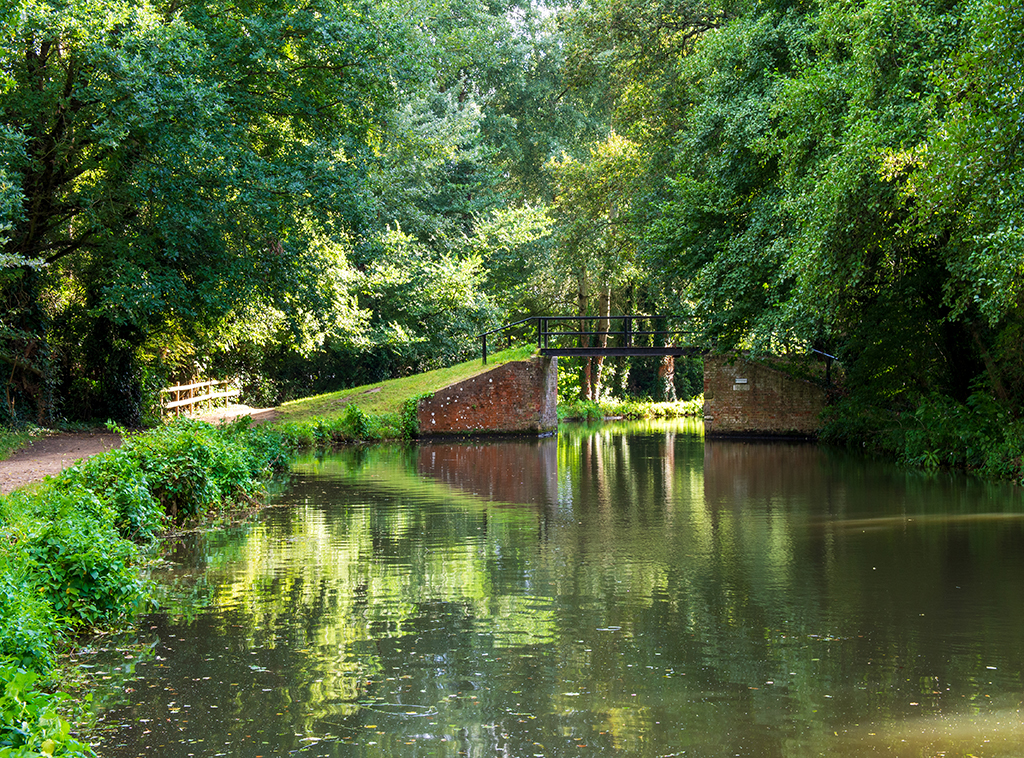
The heyday of canal building in Britain took place over a 100-year period beginning around 1750 and ending by 1840, with over 4000 miles of navigable canals and waterways in the network. The first public railway for freight and passengers was opened in 1825, and the railways overtook the canals for freight transport over the next years, quickly followed by better and more efficient road networks. Investment that had gone into building and maintaining canals was diverted to railways and roads, and many canals were abandoned in the early 20th century.
There was some use made of the canals during two World Wars, but the impetus for revival began after the creation of the Inland Waterways Association in 1946. Leisure became more important for use of the canals than freight, and by the 1960’s a growing leisure industry was able to prevent further closures. Enthusiastic volunteers began to restore many of the canals during the 1970’s.
Today the canal and river network is well supported by the Canal & River Trust, and restoration and even new construction are ongoing in spite of chronic shortages of funds. I have read that today there is more construction on the system than there was in its heyday during the 18th and 19th centuries.
The most common freight carrying boats used on the canals were called narrowboats, and were a maximum of 72 feet long and 7 feet wide. Many of the canals in the system are single width, and bridges and locks will not accommodate boats that exceed those dimensions. I have been told by some people that “we call them longboats”, and many others refer to canal boats, but in fact the correct term for the distinctive vessels is narrowboat.
The first narrowboats were barges. That is, they did not have any mechanical propulsion, instead they were towed by horses walking along the towpath. All canals have a towpath on one side or the other, and the design of the bridges that cross over when the towpath changes to the other side of the waterway can be quite ingenious. The goal is to be able to lead the horse over the bridge to the other side without having to unhook the barge and drag it under the bridge manually.
In the early days the barges were operated by boatmen, typically a man to steer the boat, and a boy to lead the horse. The families originally lived on land, but as competition from the railways began to cut into income, a house on land was no longer affordable on a boatman’s wages. The families moved on board, living in the tiny cabin that occupied part of the boat, with the rest devoted to cargo. The families, including women and children, provided unpaid labour for the operation of the boat, only the boatman was paid. Eventually engines provided propulsion, and horses were no longer required.
Two boats were often paired together, one with an engine, and the other, called the “butty” was towed. This allowed for more space for the sometimes large families and also doubled the amount of cargo that could be transported.
By the early 19th century, steam engines were introduced on narrowboats, but they were generally used only for long distance runs, because the engines took up a lot of space that could have been used for cargo, and they required up to 7 men to operate a pair of boats.
The boatmen and their families initially came from rural and agricultural backgrounds, and were well regarded due to the importance of their work and the hard work required to operate the boats and transport freight. Over time these families became a close-knit, separate culture, and began to be regarded with suspicion by their Victorian land-based counterparts. It was assumed that they were likely to be associated with theft and smuggling. This added to the cultural isolation.
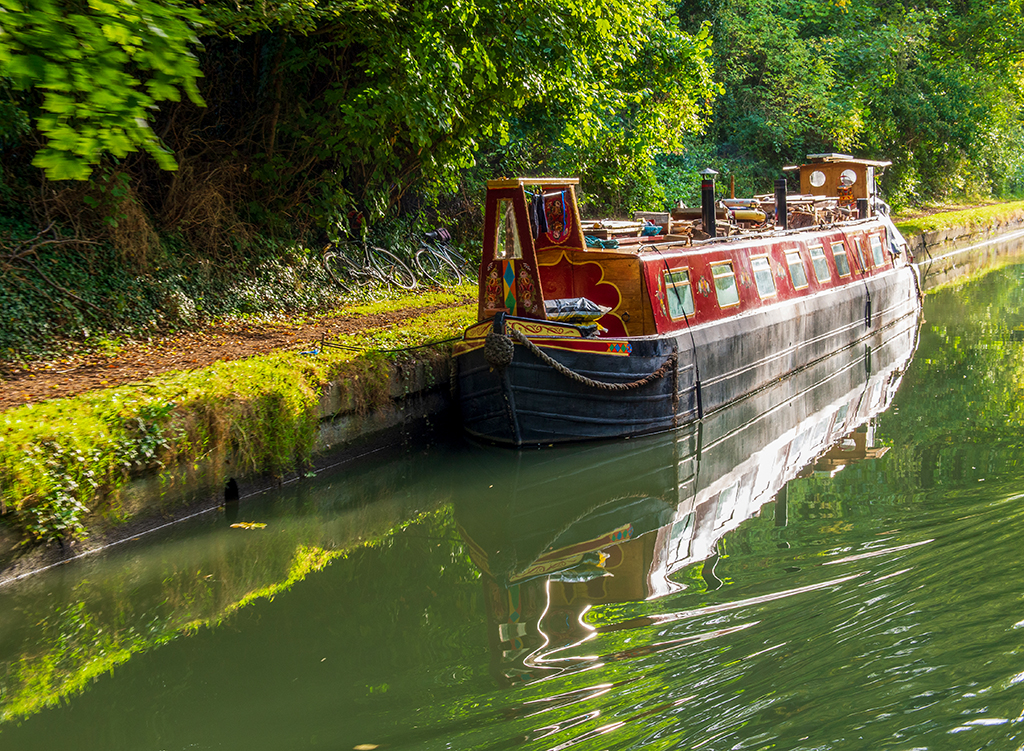
Moving freight is a dirty job, particularly when the boat has a steam engine, and there was a lot of pride taken to show that the families and their homes were spotless. Boats were painted with bright colours and decorated with pictures of “roses and castles”, in a distinctive and highly recognizable style. Women wore spotless white aprons and caps, and their cabins were kept immaculate, in spite of the crowded living conditions.
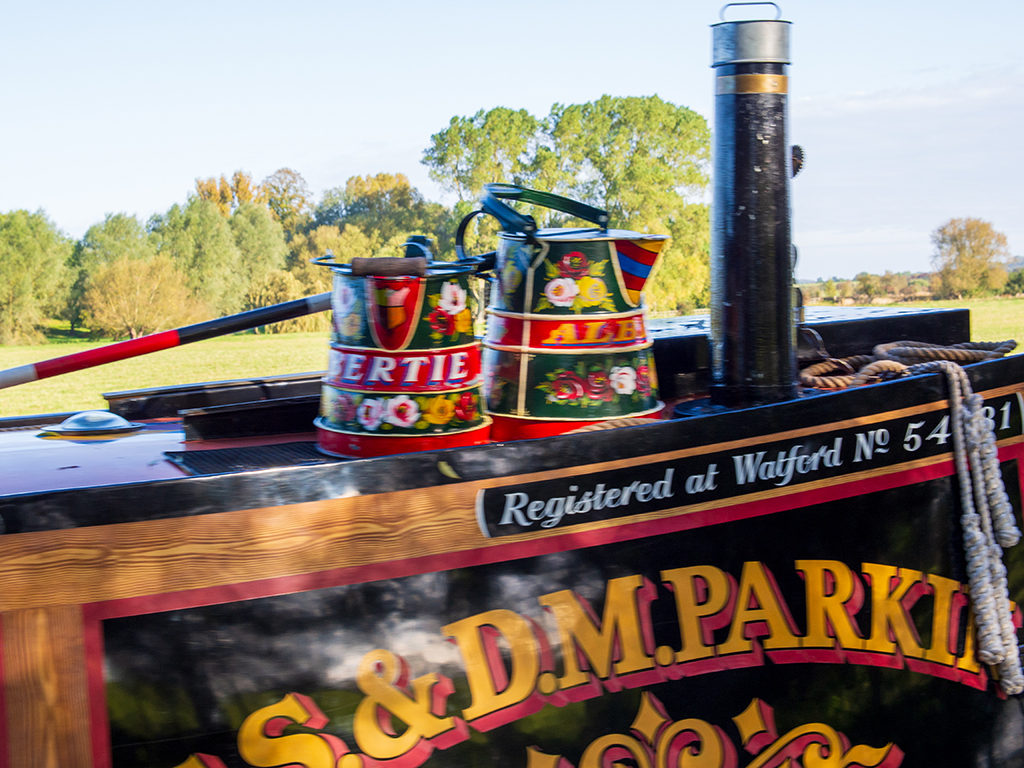
By the 1950’s many canals had been neglected, some abandoned, and some were intentionally closed by British Waterways and the land repurposed. Abandoned narrowboats were collected and sunk in several large basins. By the 1960’s awareness of the canals and their potential began to revive, and over the years most of these boats were raised and restored. You can see them today, plying the canals, some carrying freight, and some with beautifully restored steam engines. It is generally easy to tell the difference between these historic wooden vessels and the modern steel versions, because the old ones have a distinctive high prow. Of course, there were many different types of boats on the canals and waterways of Britain, but the old wooden narrowboats are the ancestors of today’s comfortable steel craft.
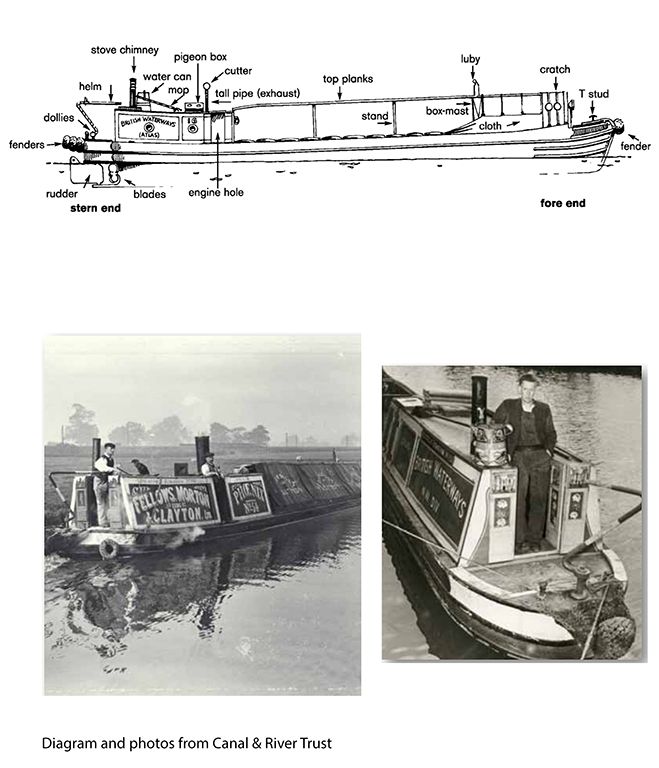
The Canal & River Trust, who manage the waterways today, has an excellent website. A diagram of a historic narrowboat and a couple of old pictures are reproduced below.
Today there are still people who live and work on the canals. They may transport heavy or delicate freight. Some small business such as cabinetry, locksmithing, and painting and decorating can thrive on the canals. Some people just prefer to live on a boat. The canals have many places where liveaboard boats can be permanently moored, as well as some that limit occupancy to 14 days and less. There is no money for enforcement, and the limits are often ignored.

Some might find it surprising that we always seem to be able to find a pub for our evening meal at the end of each day’s travel. In part this is because of a lot of hard work in the planning on my part, but it is true that there are often pubs on the waterside, about a day’s journey apart. Many of these establishments date back to the years of horse-drawn barges. They were built at locations about the maximum distance that a horse can pull a barge for a day, and provided stabling, fodder, and often meals for boatmen. Even when the canals were less used, roads brought customers to the pubs, and while there are many pub closures all over the country these days, those on the waterfront seem to fare better, and have been able to stay in business.
 Scene and Done
Leave a comment