
Part One, 2000 to 2003.
Between our experiences of sailing in the Mediterranean and the Caribbean with my parents, and our Nine Lives Great Loop adventure, we spent time enjoying the English canals.
The Big Pigs
Our first venture took place in spring 2000. I had seen houseboats for rent on the Thames River, so as a birthday surprise for Dick, I booked a weekend trip. These boats were a common sight at that time, somewhat resembling a barge with living quarters. They were driven from inside at the front of the vessel, and were quite unwieldy. Even with experience, you tended to fishtail back and forth, as it was all but impossible to maintain a straight line. They were relatively comfortable inside, with decent beds, cooking facilities, and showers, but they were old and most were beginning to look pretty tired!
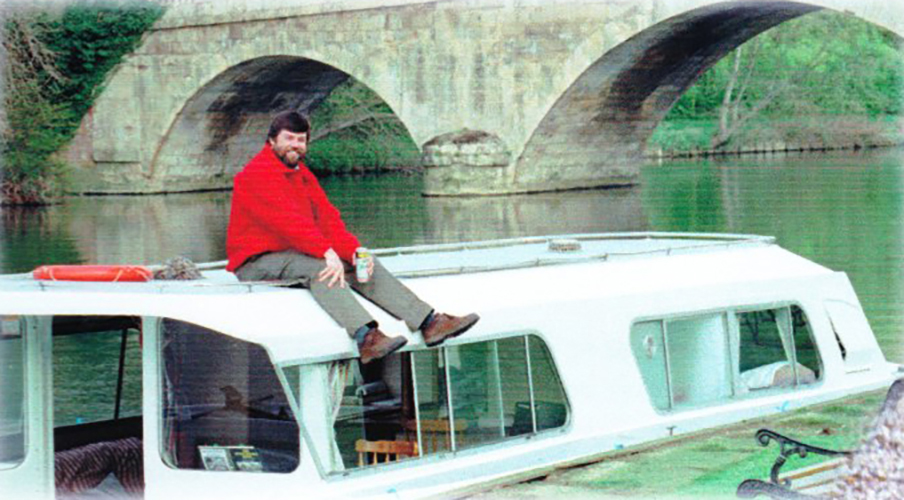
Dick and I sent off down the Thames towards Oxford. We had never been through a lock before, but fortunately the Thames locks are operated by the lockkeepers, so it was a relatively quick learning curve. We were told that we could tie up anywhere on the riverbank that did not specifically say otherwise. We decided to head towards the town of Dorchester-on-Thames for our first night’s stop. The guide book suggested that we could follow the River Thame most of the way to the town. We found the place to turn into the Thame, but immediately discovered that it was completely unnavigable. Looking again at the book, that I still have, I see that it says the Thame is navigable for “small craft”. Why we thought we were a small craft escapes me. We spent far too much time fiddling around trying to get up the river without running aground, and then we had to find a suitable place on the bank of the Thames to tie up. That accomplished, we set off along a narrow footpath and eventually arrived in the town. It was (still is) a very pretty and historic town, with a picturesque church, medieval buildings, and a wonderful old Inn called The George Hotel. The coaching inn was built in 1495, and still retains many features including oak beams and inglenook fireplaces.
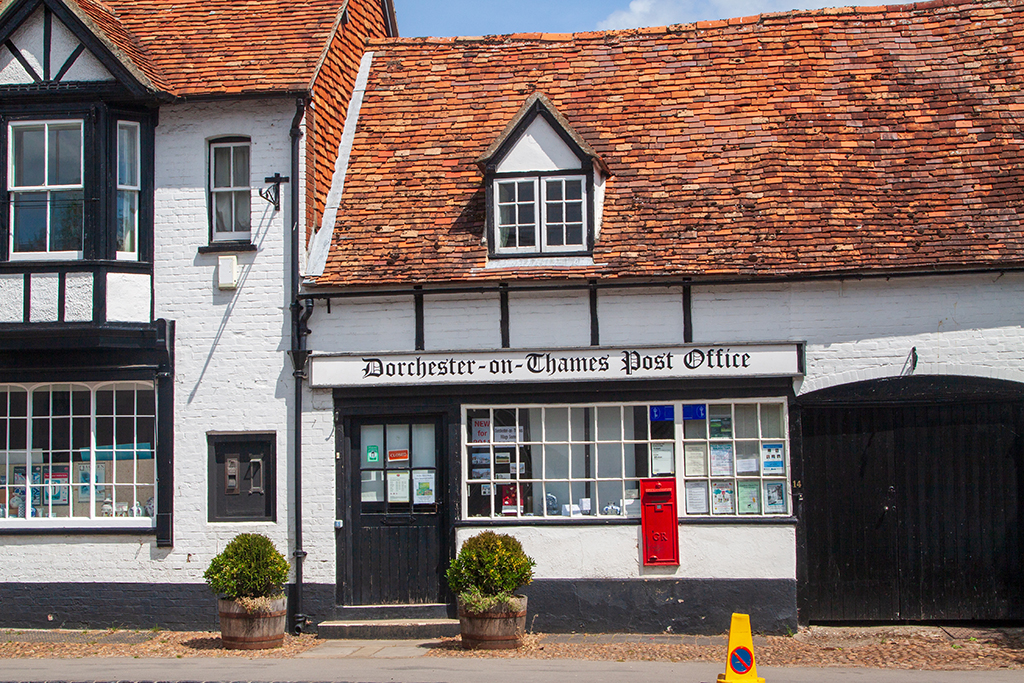
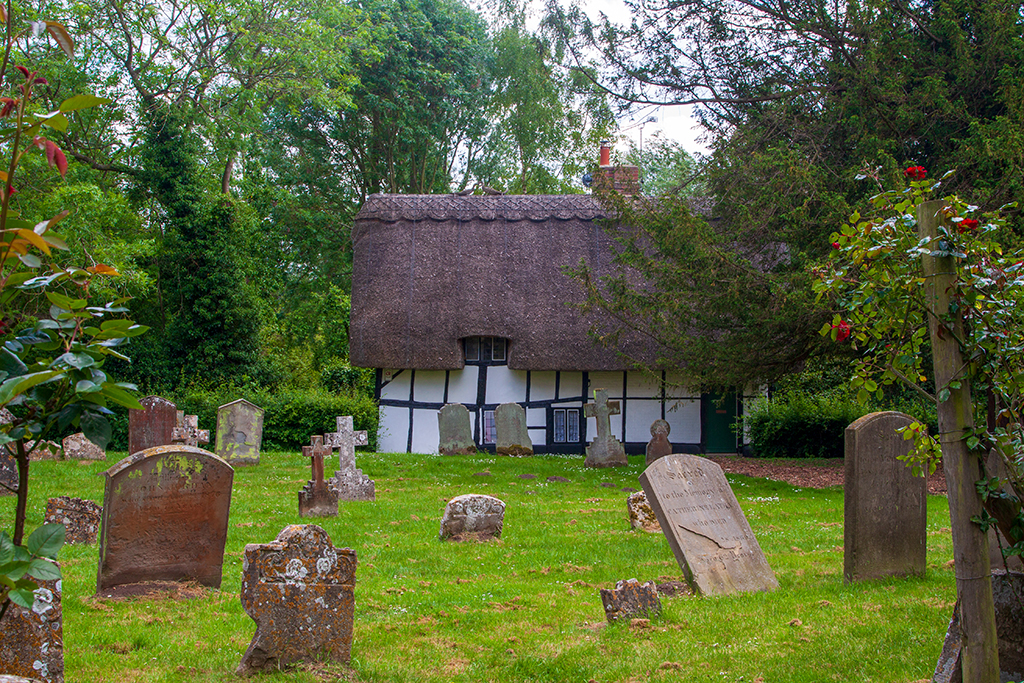

We were much later than planned, so no time for sightseeing, but we enjoyed a wonderful meal in the hotel. By the time we were finished, it was dark. Very dark. We set off in the general direction of the river, but we were unable to find the footpath that we had used to get there. Dick cheerfully strode off along the edge of a field, followed by his extremely unhappy wife. I was concerned that we were going to get very lost. Not to mention the possibility of encountering cattle, or falling into the river! After stumbling along the edges of the field, we managed to find a proper path, so Louise’s squeaks of fear reduced in volume and frequency. Eventually we also found the boat!
I don’t think we managed to get as far as Oxford that first trip, but we thoroughly enjoyed it, and soon made plans to rent another, much larger boat for a week with my parents the following year.
Increasing the size of what I have always referred to as a “big pig”, just made the vessel even more unwieldy and prone to heading off in random directions as you tried to steer. We enjoyed the trip, stopping at interesting places along the river. A highlight was Mapledurham Mill, where we were treated to an interesting tour of one of the oldest corn and grist mills on the Thames. Mapledurham was also one of the locations used for filming the 1976 film, The Eagle Has Landed, with Michael Caine, Donald Sutherland, and Robert Duvall. I can still remember the dramatic moment when the waterwheel comes up out of the river, revealing that the men are German soldiers! We explored Windsor, and also Eton which is across the river from Windsor. We found an excellent restaurant in Eton.
Meanwhile, there had been heavy autumn rains, and all that water flows into the Thames from its various tributaries upstream. We were moored to the bank on the Eton side of the river, where there is lots of space and large fields. A representative of the boat rental company stopped by to inform us that we were going to have to cut our trip short because of the strong currents. He offered to come back the next morning and drive the boat for us, but as experienced sailors none of us had concerns and we said we would be fine. Meanwhile, it was suggested that we should put out an anchor at the bow, just to ensure that the current didn’t pull us off our mooring during the night. We fished the anchor out of the locker, dropped it overboard, and thought no more about it. Literally.
Yes, the boaters among my readers are wondering what we were thinking! You do not anchor by just dropping the thing over the side, there are techniques. We knew that, but followed the instructions of the rental guy, just to keep him happy.
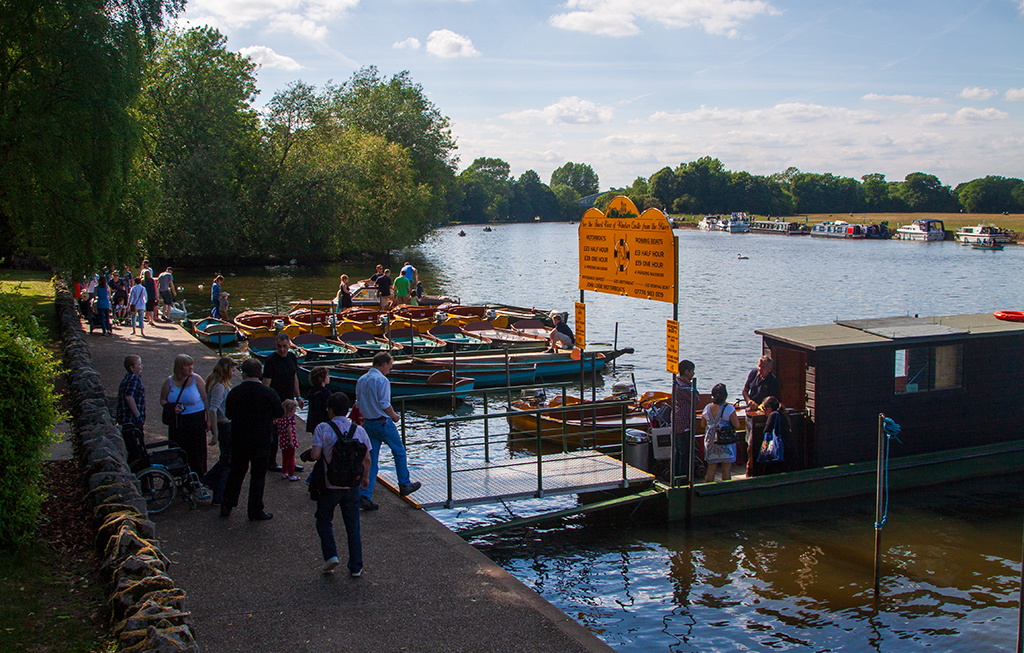
The next morning, after a leisurely breakfast, we were read to depart. A certain amount of manoeuvring was going to be required, because we were facing upstream, and needed to turn and head downstream. Dad was at the helm, and Dick was handling the lines. We got out into the river, and then to everyone’s surprise, the boat stopped responding to the helm. After a lot of fiddling around, a fellow who was watching this from the bow of his boat (great entertainment) took pity on us and called out, “Oi! you’ve got yer anchor down mate!” Oh.
By this point, the anchor was thoroughly dug in, and Dick found it was extremely difficult to pull out. He sat at the bow, and while Dad moved the boat forward over the anchor to loosen it, Dick gradually raised it, a few feet at a time. Back and forth, for quite a while. Did I mention that we were out in the middle of the Thames, watched by half the tourists in Windsor from the bridge that crosses the river just downstream of our position? Generally, when we are manoeuvring in front of an audience, we prefer to be demonstrating our exceptional boat handling skills, rather than being comic relief.
That was the last of the big pigs that we rented, and these days, you seldom see them on the waterways.
Discovering Narrowboats, the Kennett and Avon Canal
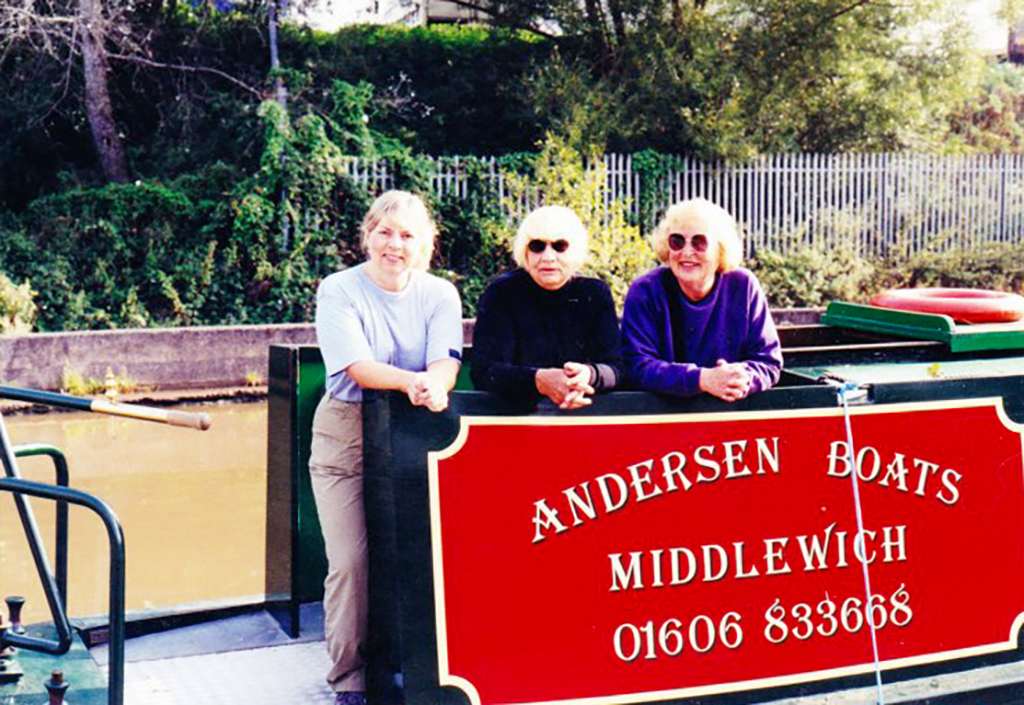
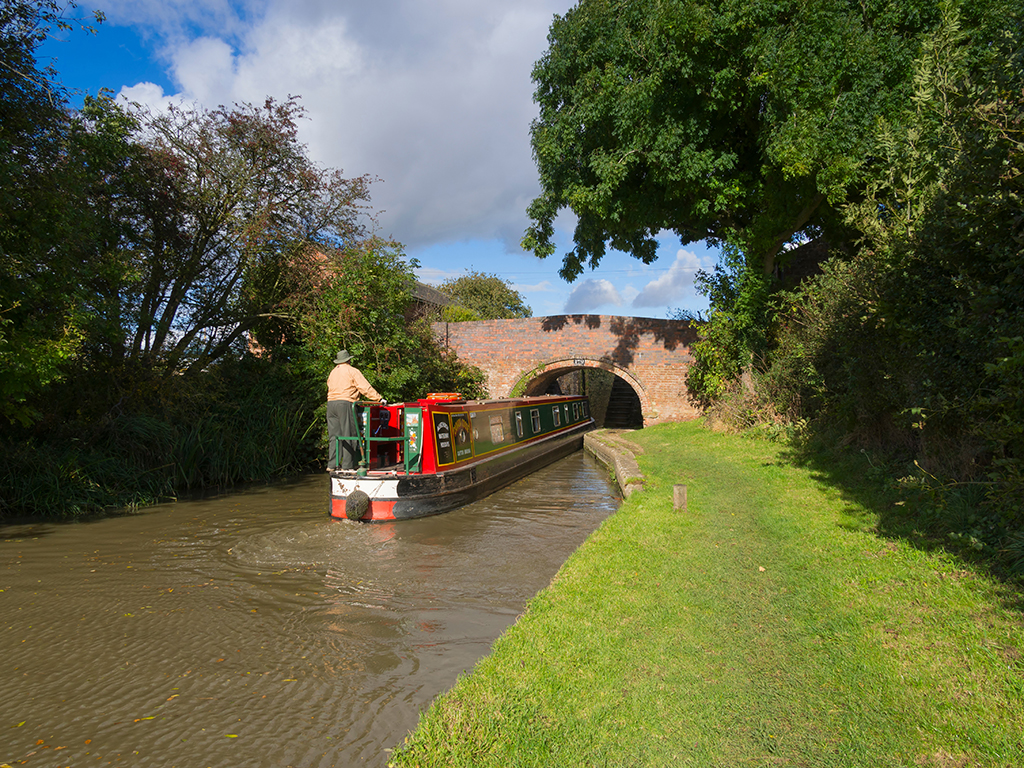
2001 was the year of the first narrowboat experience. For several years I had been joining lady friends on European trips to interesting places, and they embraced the idea of renting a narrowboat with enthusiasm. We chose the Kennett and Avon Canal for this first venture. The boatyard is just south of Devises, and you can head north east towards London, or in the other direction towards Bath. I bought a canal guidebook, and selected a suitable narrowboat model. This particular boat proved to be the best choice for groups of four or five, and we continued to choose this same model for years to come. It is 69 feet long. Like all narrowboats, it is designed to fit all the canals, so it is just 6 feet 10 inches wide. If you imagine a railway car, a narrowboat is not dissimilar in space. Typically, there is a lounge/dining room at the front, that can be converted to a double bed. Next is a reasonably well-equipped galley, and then the bedroom spaces (3) and shower/toilets (2) are spaced along the corridors to the back of the boat. A ladder takes you up to the helm from the back, and there are two benches to sit on. The boat is steered with a tiller from the stern, standing up, making it very manoeuvrable once you get the hang of all that length of boat out in front of you!
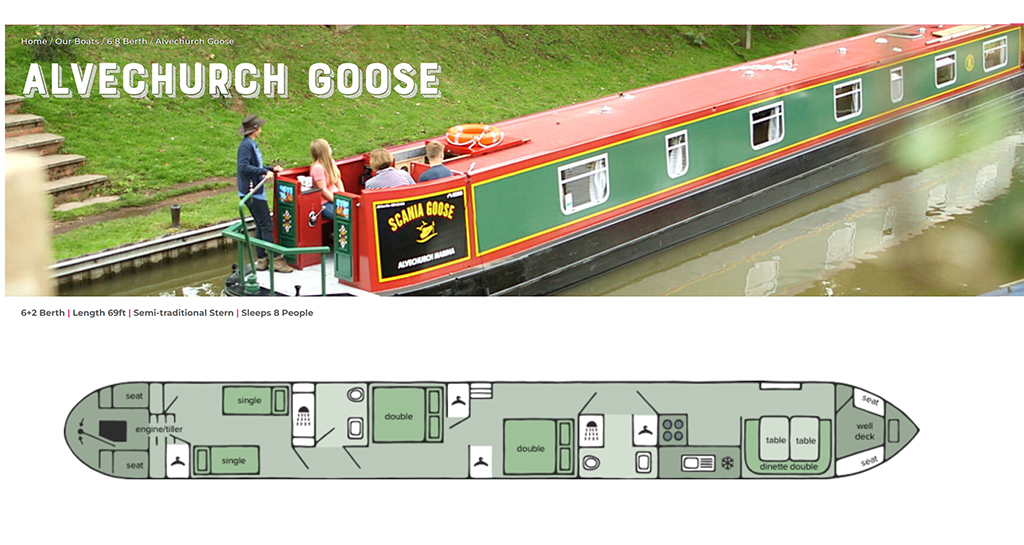
The boatyard we rented from had an excellent training area in the form of a large basin. The owner spent time explaining and gave each of us a chance to drive under his watchful eye. Later we found the best plan was for me to do most of the driving, with Carol as a relief, while Harriet and Dawn operated the locks and bridges.
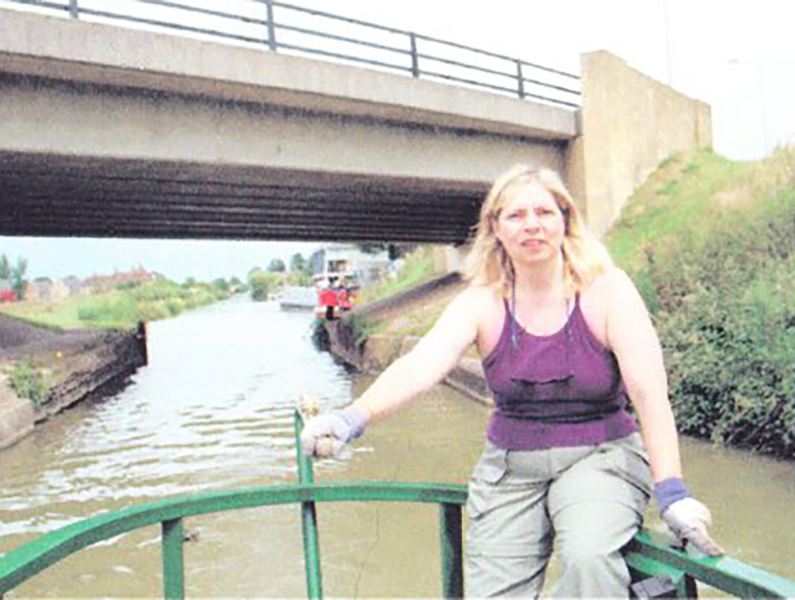
Eventually we were ready, and we set off in the direction of London. We had only one lock to transit that first day, and while I am not going to claim great expertise, we managed it without particular issues and eventually tied up for that first night beside a pub.
Over the years, this became the normal canal boating routine. Breakfast and lunch on board, and tie up at a suitable spot within walking distance of a nice pub for the evening meal. We do occasionally cook on board, but mostly the plan is to eat dinner on shore.
Flushed with success after our first day out, we sat down in the pub’s restaurant and decided to begin with a pre-dinner drink. The young waitress arrived to take our orders. Three of us asked for a glass of wine, but Harriet was in a celebratory mood, and rattled off an order for Tanqueray, 3 to 1 with a slice of lemon. The waitress was mystified, and tried twice to understand the order before she fled to the kitchen and returned with the owner. The nice lady understood immediately that Harriet was trying to order a martini, but not all pubs serve cocktails. She also had to explain that while they did have gin (although not Tanqueray) and vermouth, they could not possibly serve it as requested. All alcohol in UK is measured, by law, so the drink Harriet was requesting would have been 4 ounces of alcohol in that establishment. Leaving aside the sheer quantity, the cost would have been prohibitive! It took a surprisingly long time, but ultimately Harriet understood the issues and sadly chose a glass of wine instead.
The weights and measures act of 1985 set out standards in UK. Part of it deals with serving alcoholic beverages, the objective being to ensure that consumers are not cheated by being served short quantities of beer, wine, and liquor. Unfortunately for the consumer, while this means that dodgy landlords cannot serve short measure, it is no longer possible for them to be generous either! Dick and I find anything other than beer or wine is a ridiculous price at pubs and restaurants, so we save the cocktails for serving at home. Just in case you were wondering, you can certainly order a martini or other cocktail at a cocktail bar in hotels, it is only pubs that generally do not serve cocktails such as martinis.
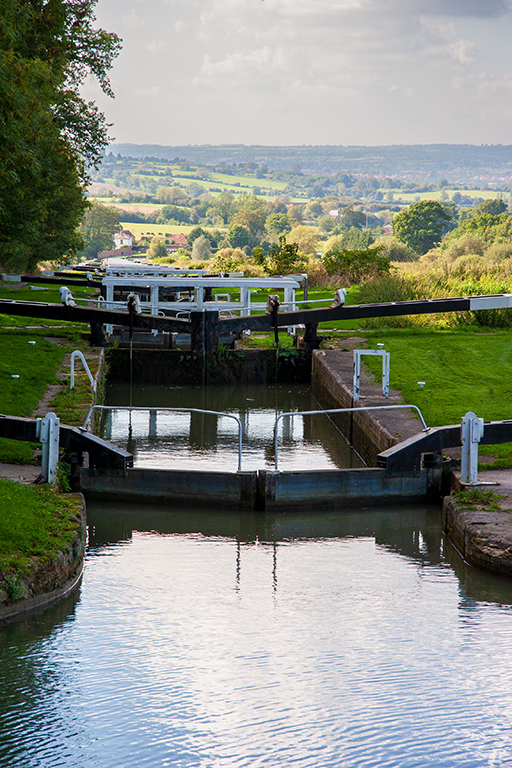
The highlight of that first narrowboat trip was unquestionably the Caen Flight. This is a staircase of 29 locks, that take the canal up 237 feet in two miles to the top of the hill. It is a daunting prospect! This particular flight has side ponds that are used to pump the water from as needed, so there is room between each section for boats to pull to the side and let a boat that is coming from the other direction go past. Two-way traffic saves water, as well as a huge amount of time. We had pulled over at the bottom of the flight, and were getting ourselves into the right frame of mind, when some people on another boat came over and asked if we would like to go up in tandem. The Kennett and Avon is a wide canal, so all the locks are wide enough to take two narrowboats side by side. The idea for the flight was that we would line up together, and match speed as we went into and then out of each lock. The great advantage for us was that the other boat had quite a few young folks, so it turned out that Harriet and Dawn did not need to do anything more than follow along, all the hard work was done by eager teenagers!
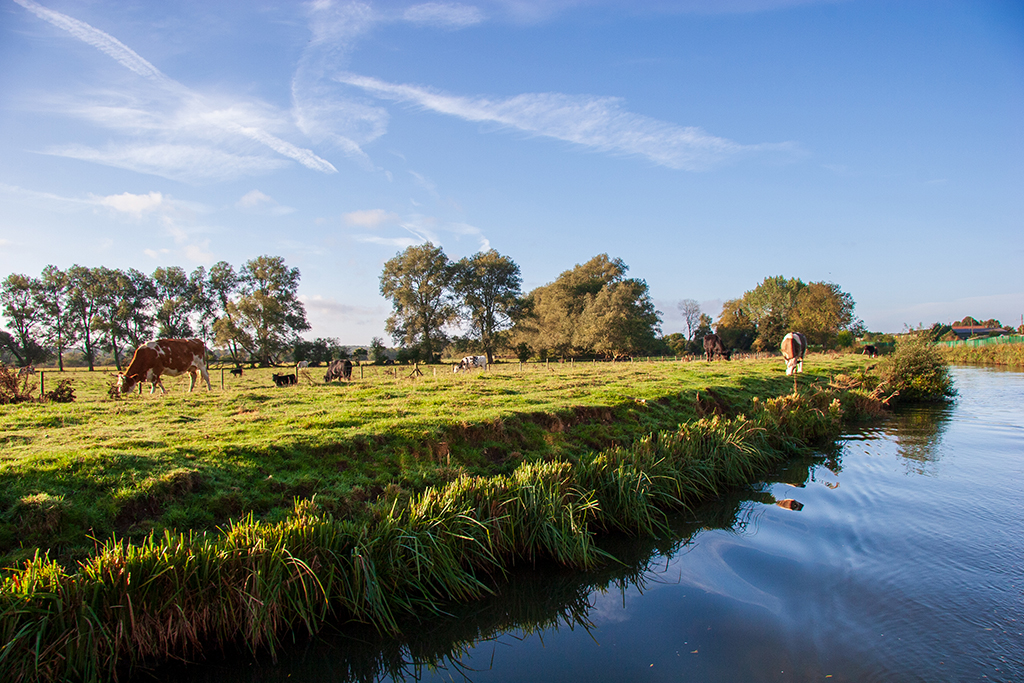
On that trip, we didn’t have the detailed plan that I made for all future canal adventures. Instead, we agreed that we would head east until we reached the halfway mark of our booking, and then turn around and make our way west, passing our starting point and getting as close to Bath as time permitted. We had a wonderful trip, and it was the first of many that I have taken with those ladies and with others.
Trip Planning
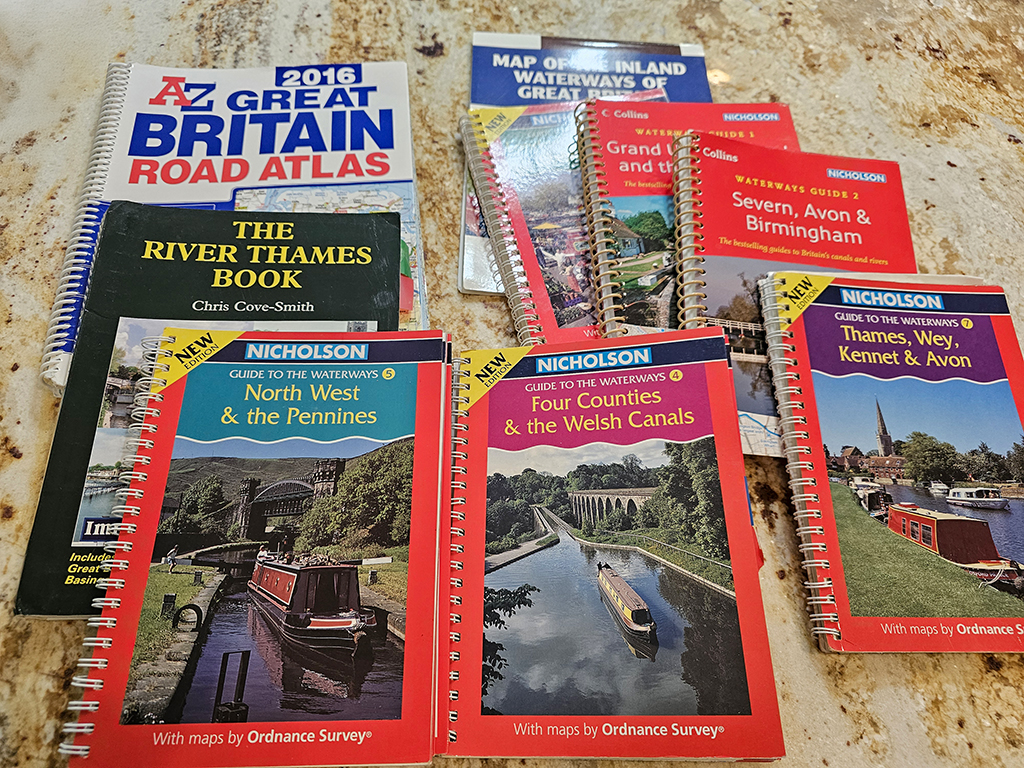
The planning that I did (and still do) for narrowboat holidays evolved over the first couple of trips. There are excellent spiral bound guides to the English and Welsh canals. I always buy the most current issue once we know where we will be cruising.
There is a wonderful online app called Canal Plan. It is crowd-sourced, and has up to date information on times for transit for the entire system. You enter your starting date and location, ending date and location, and the plan then offers you an itinerary with suggested stops. I create an initial itinerary using Canal Plan, but then I spend many hours refining it. The assumption is that one will tie up on a bank somewhere, but our preference is to be within walking distance of a good pub or restaurant. Using the book guides, Canal Plan, and also a guide (usually TripAdvisor) for pubs and restaurants, I adjust the plan each day to meet our requirements. These days I also use Google Earth, so that I can see just how crowded the proposed stopping point might be. Canal boating is very popular, plus there are a great many people who live aboard full time. Although there are designated moorings for short term stops, there is almost no enforcement, so many boats fill up the short-term spaces and do not leave. The final step, once I have the itinerary, is to make reservations for dinner at most, if not all, of the pubs and restaurants we plan to stop at. Over the years I have learned (the hard way) that reservations never hurt and are often essential.
The Cheshire Ring
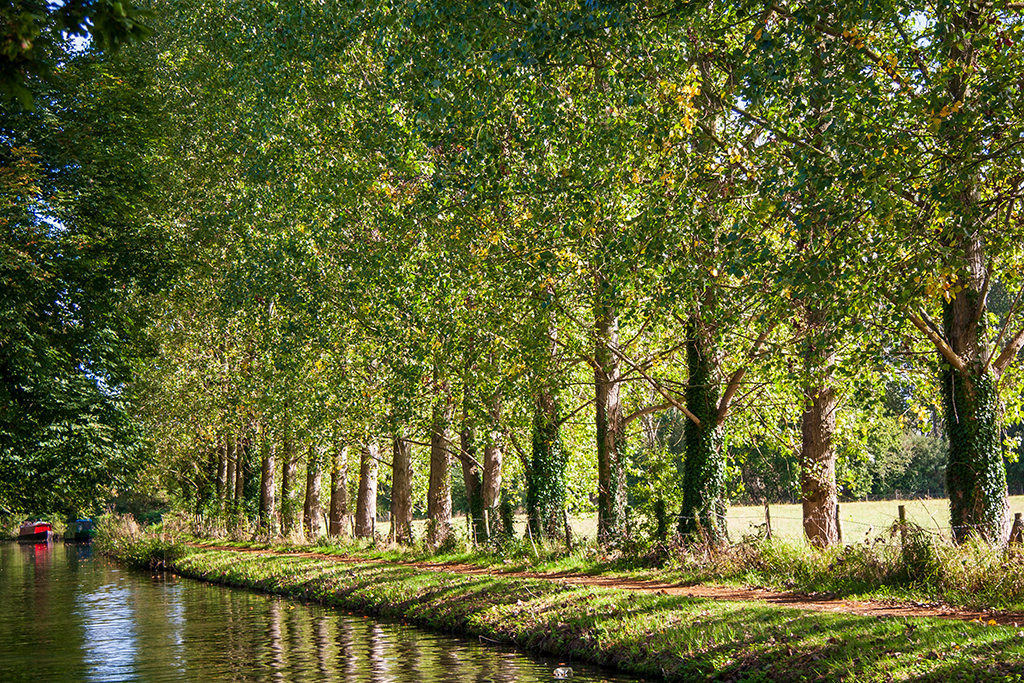
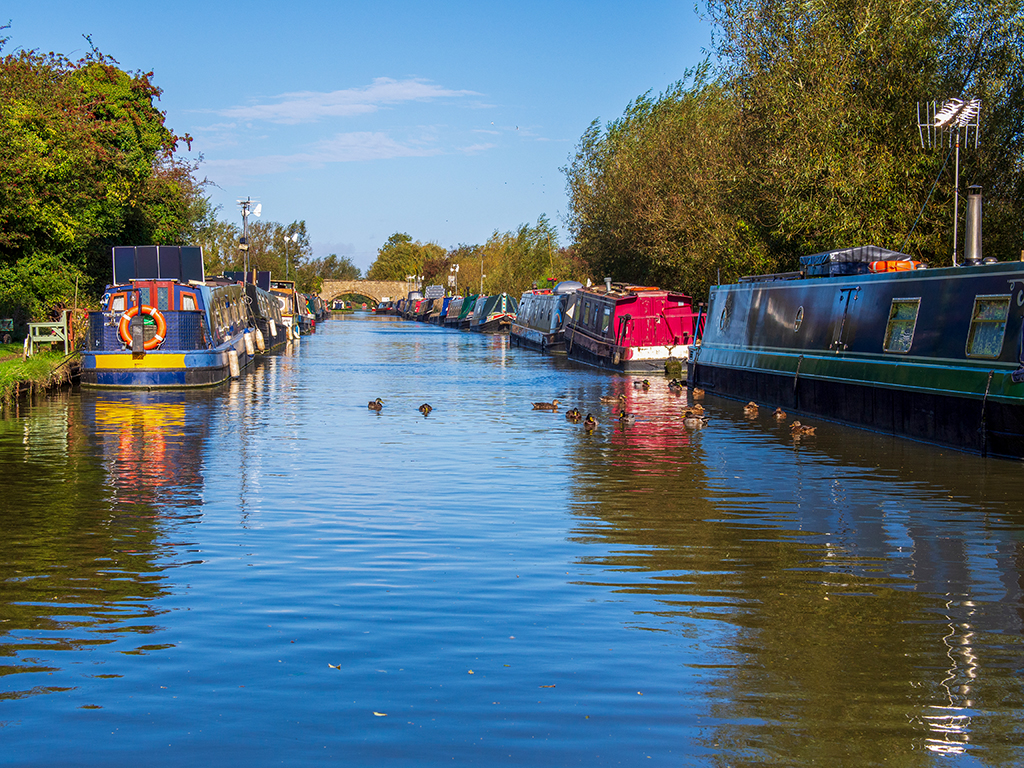
The next year, 2002, the same group of ladies gathered in Cheshire and did the Cheshire Ring. It can be more enjoyable doing a ring, rather than a there and back itinerary, simply because you see all new countryside and towns for the entire holiday. We started southwest of Manchester, and made our way south through Middlewich and Sandbach to join the Macclesfield Canal and head northeast. There were more than 35 locks to transit in this section! The Macclesfield Canal goes through beautiful countryside, with views of the Pennines around every turn.
At Marple, you find a staircase of 16 locks. This is an old canal, and the lock gates are quite leaky. As I stood at the helm, I found that I was being sprayed as we dropped lower in each lock, so waterproofs and a hat were called for. Partway down the staircase, the water began rushing even more, and I was standing under a waterfall! I looked ahead, and discovered that Harriet had decided that it would be efficient to open more gates, instead of waiting for us to complete the transit of the lock. She never really understood the way locks operate on the canals. If you open multiple doors, the weight of water will prevent them from being closed again, and ultimately it becomes possible to drain the canal! Harriet’s enthusiasm could have been an absolute disaster, but fortunately she heard our shouts and stopped rushing ahead.

Very few pictures survive from this trip, but I later returned to the canal at Marple and took a few photos of other boats and the locks.
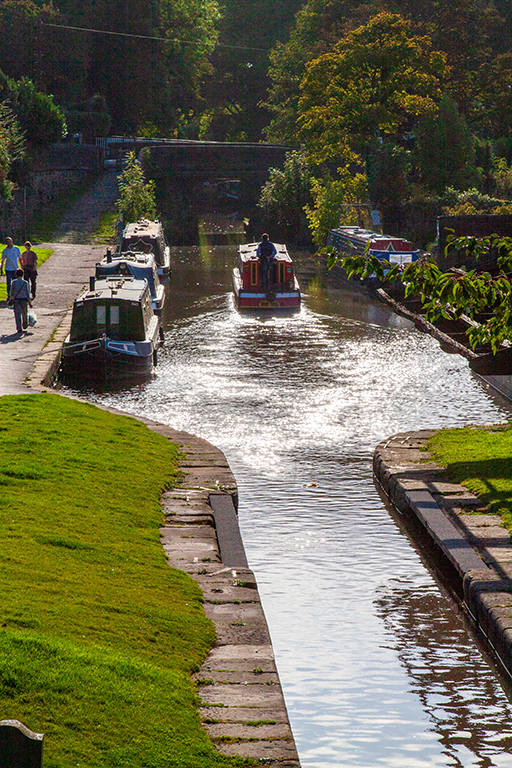
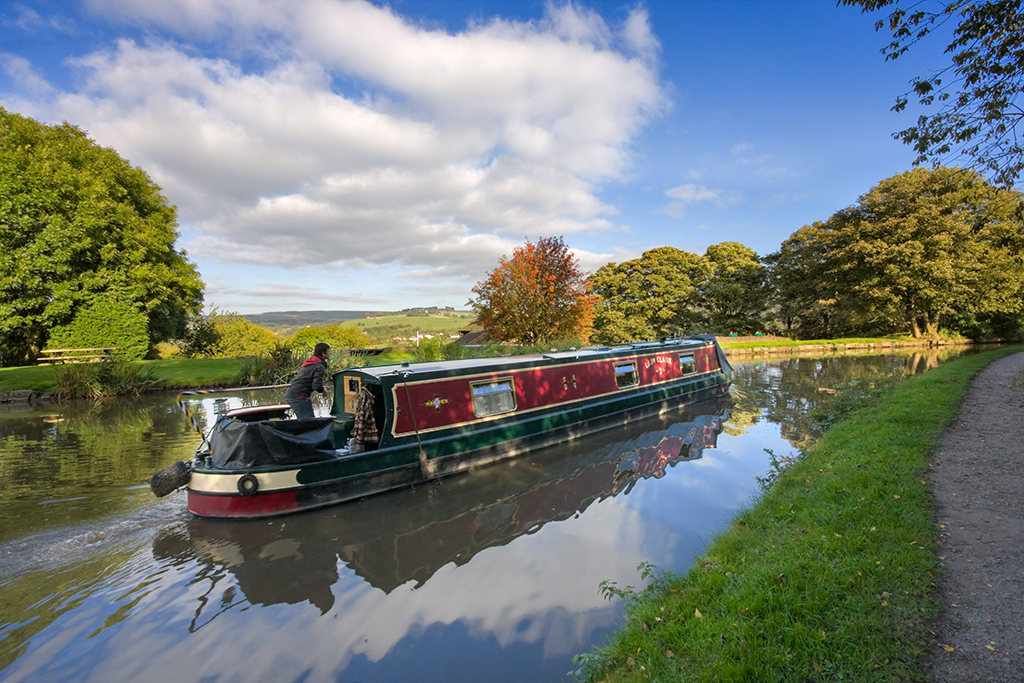
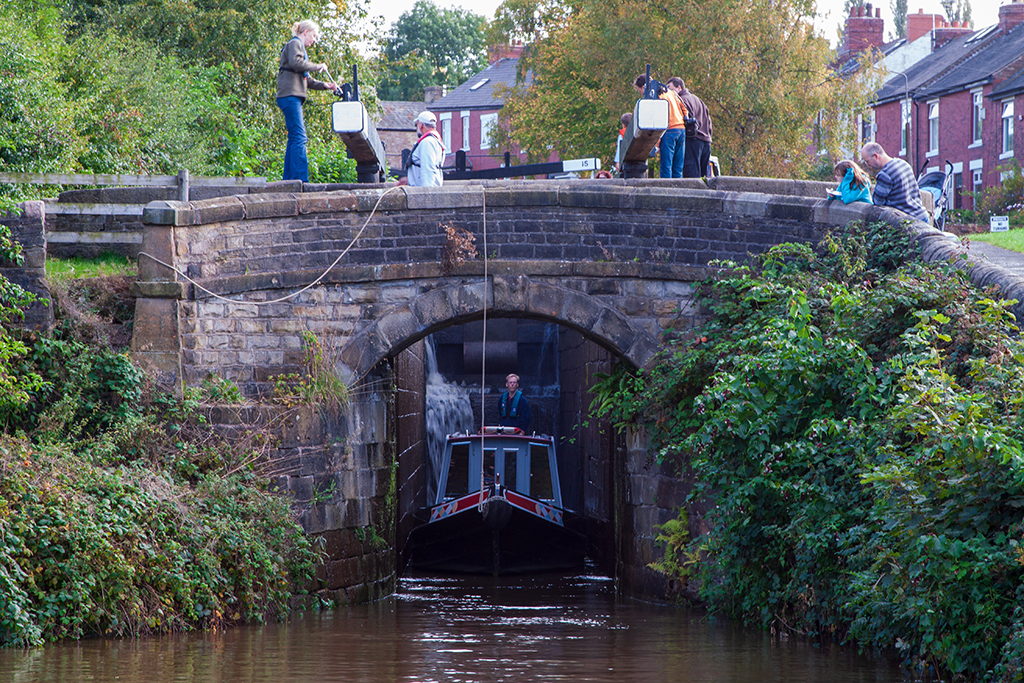
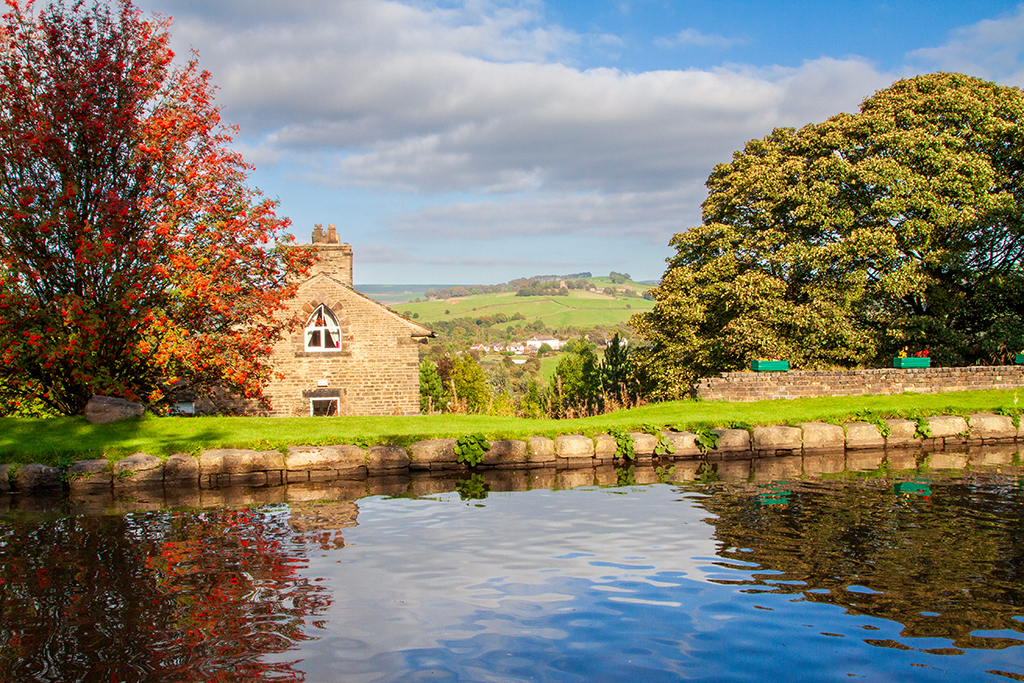
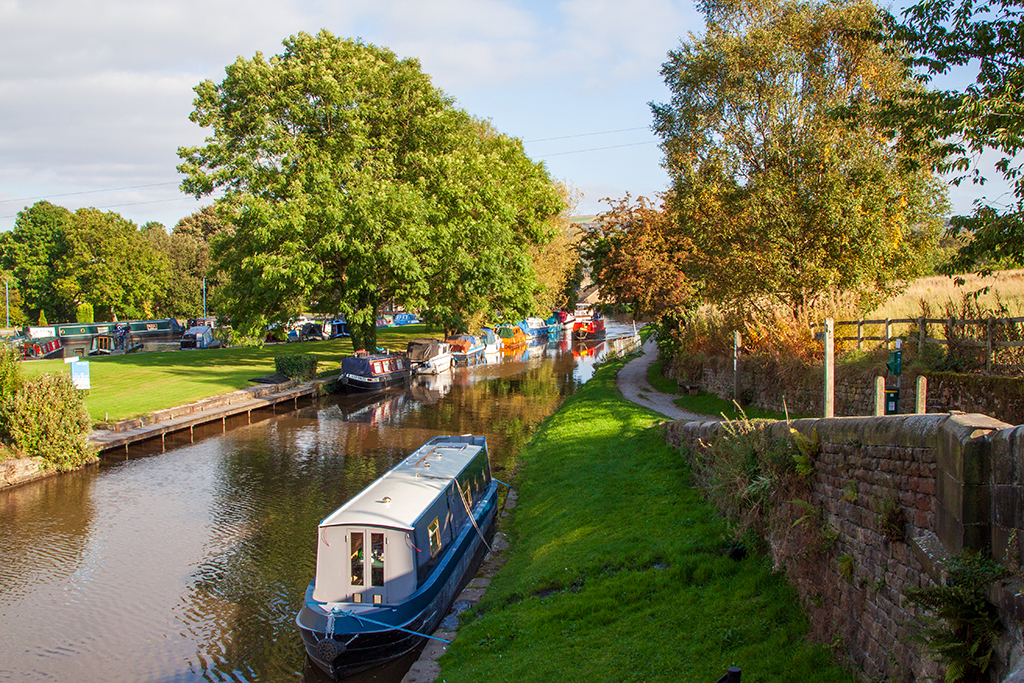
We knew from the guide book that the stretch of canal that leads to downtown Manchester can be a problem for boaters. It is a somewhat deprived area, and teenage boys have been known to jump onto your boat and ransack the cabin. We carefully locked all the doors and only two of us stayed outside, one at the bow, and me at the stern. We also, as advised, made the passage quite early on a Sunday morning, the expectation being that most of the young yobs would still be in bed. We did have stones thrown at us from one of the bridges, including one that hit me hard enough to bruise, fortunately not in the head. Later we met a canal worker, who gave us good advice for the safest place to tie up overnight.
This spot was in front of a new development of condos. We were across the river from the city, and while there was a footbridge, it had a coded lock, so we could not get through. There was no way to get out of the complex, so we stayed on board and cooked omelettes for our supper. This was the first, but by no means the last time we needed to eat on board when we had planned to go out.
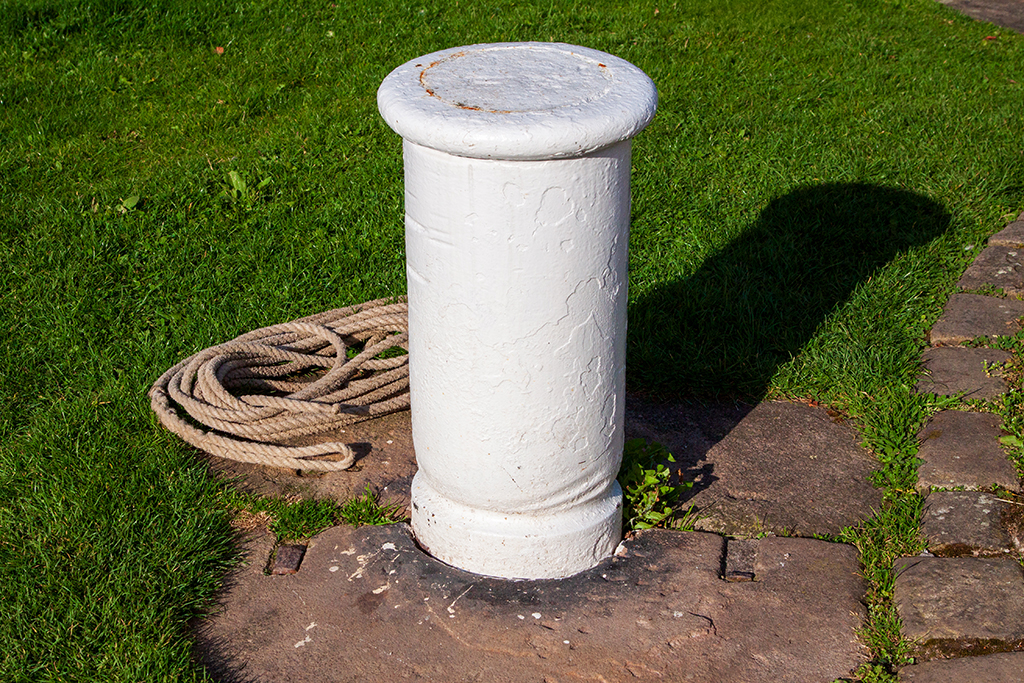
The next morning, we passed through the centre of Manchester, between high-rise office buildings. It was fascinating. At one lock, a gentleman in a business suit stepped up and assisted Harriet and Dawn with the lock operation. He said that in all the years he had worked downtown, this was the first time he had seen a boat come through the locks. My thought was that he clearly did not look out of the window much, because the Cheshire Ring is quite a popular route! Regardless, it was very interesting and quite a change from the usual open countryside and small villages. We enjoyed the trip very much, but after that the ladies returned by preference to driving holidays in Europe. Carol ceremonially presented me with her boating gloves at the end of the trip. I still have them!

The Grand Round
An ambitious circle route for narrowboating is the Grand Round. We chose to start on the Grand Union Canal at Stoke Bruerne, and head south to eventually join the Thames River at Brentford, in west London. We follow the Thames all the way to Oxford, joining the single width Oxford Union Canal and heading north to rejoin the Grand Union Canal and return to our starting point. On the route are a number of tunnels, a great many locks, the experience of a short stretch of the tidal Thames, and of course the beautiful and varied countryside.
In 2003 we planned a two-week Grand Round trip. My Mum and Dad were excited about joining us for the full two weeks. Dick could only spare one week, so for the first week it was arranged that American friends would fly over and join us. Just a couple of weeks before we were to begin, Dick realized that work commitments meant that he was not going to be able to take the time off to join us for the second week. I was somewhat concerned, given the ages of my parents (82), as it could mean that I might have to operate the locks on my own. At a social event, we met a couple who had recently returned to UK after a career in Singapore, and they mentioned that one thing that they were hoping to do very soon was take a holiday on a narrowboat. It seemed like a perfect opportunity, and they agreed with enthusiasm to join us for the second week.
As usual, I had planned the trip with great care, and our new friends were presented with a very detailed itinerary, giving all the planned stops and places that we would be eating. I also provided an introduction to canal boating, and it was explained that their accommodation would be the twin bed cabin at the stern. They would have sole use of one of the two bathrooms. As usual, their contribution to the boat rental was based on that single cabin, so one quarter of the weekly rental. Mum and Dad each had a cabin, and I used the fold down bed in the lounge/diner.
On the appointed day at the start of the trip, our friends Cheryl and Randy arrived and checked in to a local Bed & Breakfast in Stoke Bruerne. I always arrange for local accommodation and ask that everybody arrives the day before we get on the boat. This has proved to be a sensible precaution! The town is very pretty and there is a canal museum on the waterfront. The Grand Union Canal passes through the centre of town, and there is a lock directly across from the museum. Randy was looking forward to the trip, and wanted to be well prepared. Cheryl told me that as soon as they had settled in the B&B, he went and sat on a bench beside the lock and spent most of the day watching boats transit the lock, paying particular attention to the mechanisms for the lock gates.
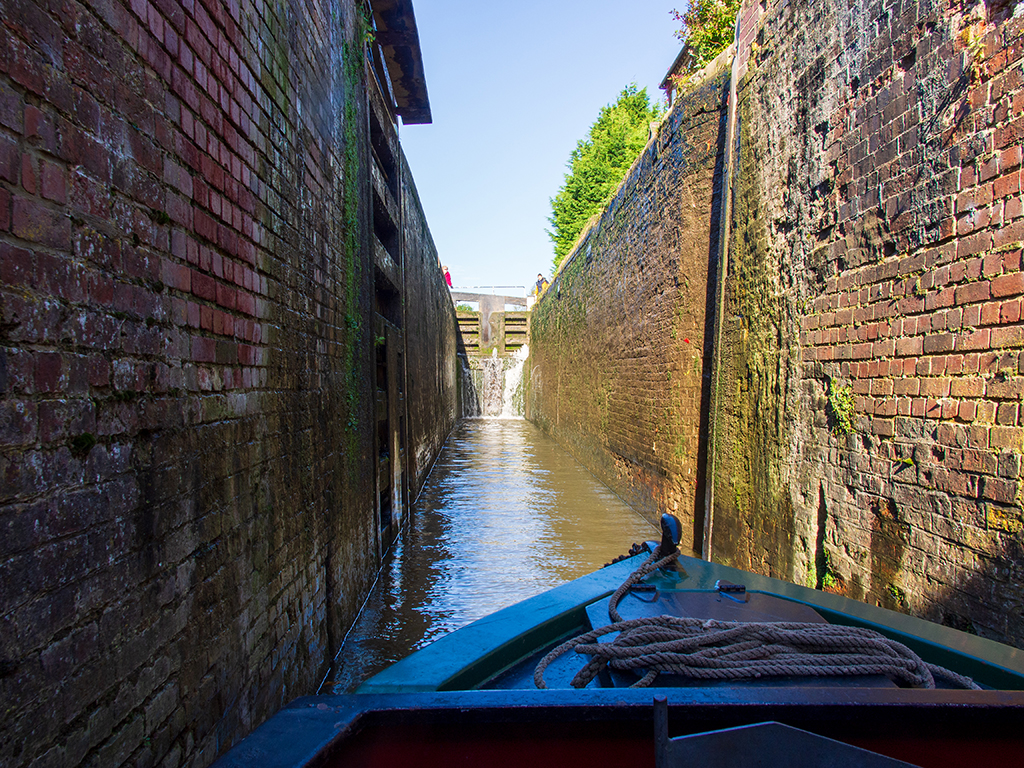
The next day we were all on board, and after a smooth passage through that first lock, we had just a few miles to go before arriving at Blisworth Tunnel. This is over 3000 feet long, the ninth-longest canal tunnel in the world. Construction began in 1793, but there were problems and an unfortunate collapse after three years of work. A new tunnel was started and finally opened in 1805. Until 1871, the only way to transit the tunnel was for boatmen to lie on their backs on top of their boats and push the boat with their feet. This was called “legging”. (And yes, this is the origin of the expression legging it!) Over time the tunnel deteriorated and became unnavigable, but in the 1980’s it was rebuilt, with some sections lined with pre-cast concrete rings. This rebuilding was used to test materials and techniques for the later building of the Channel Tunnel. We passed through the tunnel on this occasion without meeting an oncoming boat, although there is space for two boats to pass in the tunnel.

The first week of the trip went very well, with Cher and Randy being excellent guests/crew. Dad had expected that I would do all the driving, and he and Randy would operate the locks, but it became clear almost immediately that it was not a good idea. Dad was always a fellow who rushed everywhere, and at 82, he was beginning to show evidence of a weak heart. Not enough to be a concern, but enough that he should not be running (instead of walking) back and forth along the canal in addition to the exertion required to operate the lock doors. After the first two locks, we switched, and I worked with Randy while Dad did the driving.
The Grand Round is quite a demanding circle, doable in two weeks, but that requires early starts and long days. One day was particularly long, and we arrived at our stopping point at dusk. We were confident that we would be fine for dinner, because there was a pub just over a nearby bridge. We relaxed a bit after the long day, and then headed out for dinner. We were very surprised to see that the pub had been turned into luxury flats! There was a nearby taxi stand, and we were able to get a ride into the town and have dinner at a large Italian restaurant. Just as well I have no idea of the name of that restaurant. In addition to the incredibly loud music, that they refused to turn down, Dad found a very large shard of glass in his salad. It was clear from the attitude of the management that they thought we had put it there ourselves, to avoid paying the bill! Finally I said, “I would have thought you would be concerned about where the rest of this glass might be in your kitchen and what other food it may end up in!” At that point the manager finally saw the light, and she actually went pale with shock and rushed away to investigate. No discount on the bill was forthcoming.


The aspect of the planning that I spent the most time worrying about was the arrival at the junction with the Thames River at Brentford. There is a lock between the canal and the river, which is tidal at that point, but it is dry except for a couple of hours each side of high tide. After passing through that lock, you must get to Teddington Lock, five miles upstream, before the lockkeeper leaves for the day, as there is nowhere for visitors to tie up on the tidal Thames. To make everything even more complicated, the locks are using Greenwich Mean Time, which is an hour different from British Summer Time. I studied tide tables, calculated distances, and fussed over the plan until I felt reasonably confident that I had everything correct.
Well, I got it wrong. We arrived at Brentford as expected, to find that the lock was still dry and we had some hours to wait before the lockmaster would be able to let us through. The big concern then would be arriving at Teddington too late, but the lockmaster kindly consulted his colleague, and it was arranged that Teddington Lock would wait for our arrival.
We pass into the tidal Thames, and what a difference! From the quiet canal waters we were suddenly dealing with a strong tidal current and large wakes from passing commercial vessels. The narrowboat handled the water with great aplomb! I pushed the throttle down nearly all the way, and she cut through the water like a hot knife through butter! Modern narrowboats are steel-hulled, and also have a superstructure made of steel. This means that a typical narrowboat weighs between 15 and 25 tons. The sheer weight of the boat meant that we were not bounced around by passing commercial craft, and we made the five-mile passage easily. The Teddington Lockmaster was waiting for us, and we completed the required paperwork and passed into the non-tidal Thames easily.
Our long day was not quite over. Plans had been made for dinner at a nice local restaurant, but unfortunately, the only place available for tying up was a steep concrete slope leading down to the water. Randy and I were able to get off to tie the boat up, but there was no possibility that either Mum or Cher would be able to jump across and safely climb the slope! Fortunately, we had the ingredients for what I now refer to as the “emergency omelette”, so we ate on board and enjoyed a quiet evening.
The next day we needed a stop to take on water. The canal books are excellent for letting you know where to stop, and we selected a suitable place. When we arrived, there were a lot of boats in the area, and the dock where the water point was had been partly blocked by a cruiser. (We rudely refer to these cruisers as “plastic boats”, and have to give them a wide berth, because 20 tons of steel would do significant damage if we run into one, or even give it a slight nudge!) We got our boat secured on the dock, but because of the cruiser, we could not reach the water point. An elderly couple had set up a table and chairs and were having a picnic right there, so I assumed (correctly) that they were from the other boat. I went over and politely asked them to move, as we could not get to the water point. Readers should note that tying up at a water point for any purpose other than taking on water is absolutely not allowed. The man abruptly told me that there was plenty of space. I explained to him that there was not, and at that point he finally looked up and said, “Oh, you’re one of those dreadful narrowboats that are ruining the waterways for everyone!” Just as he said this, Dad arrived and heard what was said, not to mention the rude manner and aggressive voice. Dad took immediate umbrage and began to argue quite vehemently. I was certain that the two men were about to resort to fisticuffs! I think the wife realized that they were entirely in the wrong, and she calmed her husband down and persuaded him to move his boat the few feet needed to give us access to the water. Given that narrowboats predate cruisers by over 200 years, I thought that the “ruining the waterways” comment was rich!
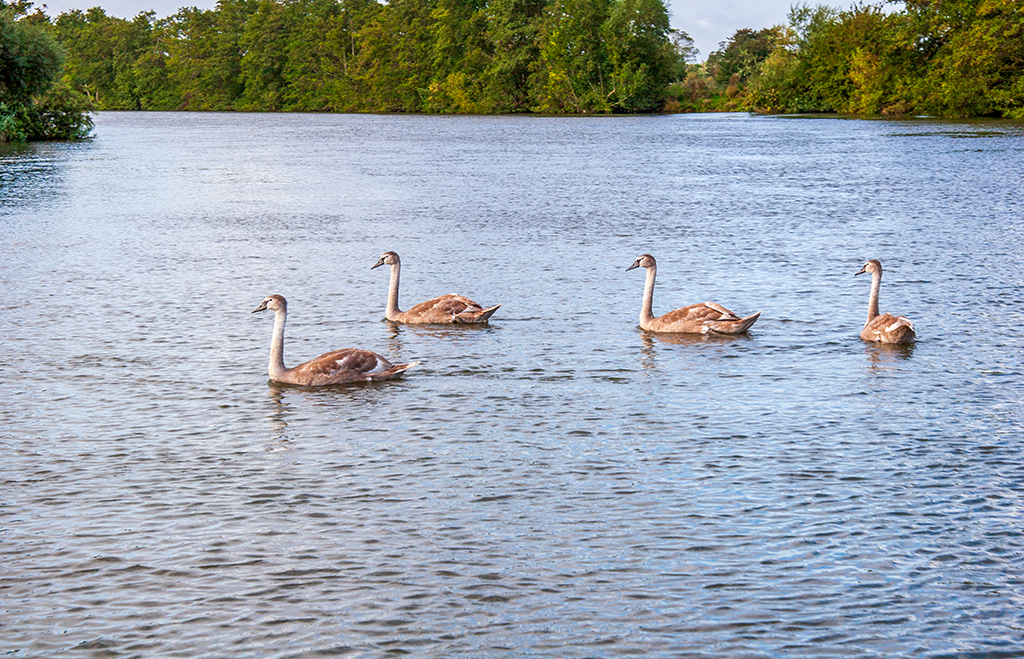
The Thames is a fascinating and historic waterway. We passed Hampton Court, and on through Richmond, and eventually arrived in Windsor, where we moored on the Eton side along the grassy bank of the extensive playing fields. Just where we had our embarrassing anchor experience two years earlier! A taxi had been arranged for Cher and Randy the next morning, to take them to the airport, and we expected our relief guests/crew to arrive by 10am. Time passed, and there was no sign of them. Around noon they finally appeared, dropped off by their son, with no apology or explanation for their late arrival. It was not an auspicious start and things did not improve.

One of the difficulties we always have when we have guests on board a boat is explaining that every drop of water has to be taken on at a special stopping point. We try to strike a balance by requesting shorter showers and minimal running of water during washing up etc, but until guests have stood and watched the boring task of filling the water tanks, they just do not understand. This lady was particularly obtuse, insisting on washing salad ingredients under running water and washing dishes under running water instead of filling a basin. They also did not like their accommodation. They complained continually that the beds were too narrow, and it was quite clear that they thought that Mum and Dad should give up their beds because they were small people! They also complained that there was an awful smell from their toilet, and no amount of explaining how the blackwater tank works on a boat would convince them to keep the lid of the toilet closed. We had not known that Mike had recently undergone a hip replacement, and while he was fully recovered, he was still being extremely careful about any physical exertion. Over time, both Mike and his wife participated less and less in the locking process, strolling up to offer a token push at the gates after I had done all the hard work. On the last day, with a number of locks and bridges to transit, including a 17-lock flight into Northampton, they stayed on the boat and left me to do all of it.
We are not giving up on sharing our boating experiences with guests, but this certainly stands as a cautionary tale and encourages us to choose wisely before we issue invitations!
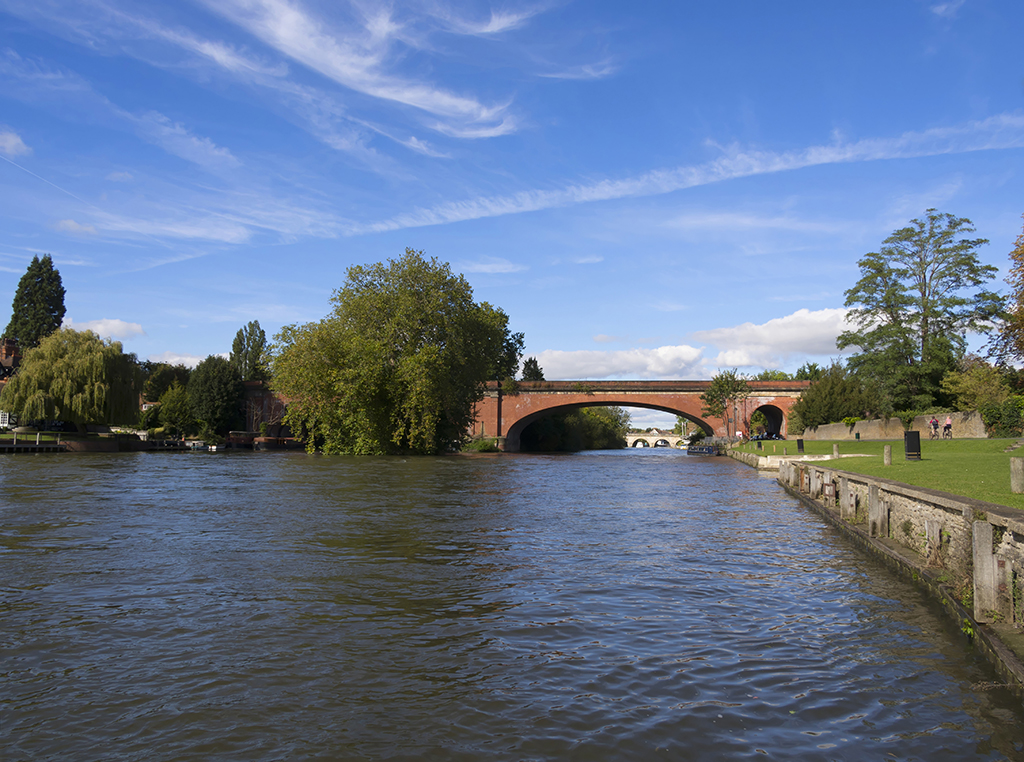
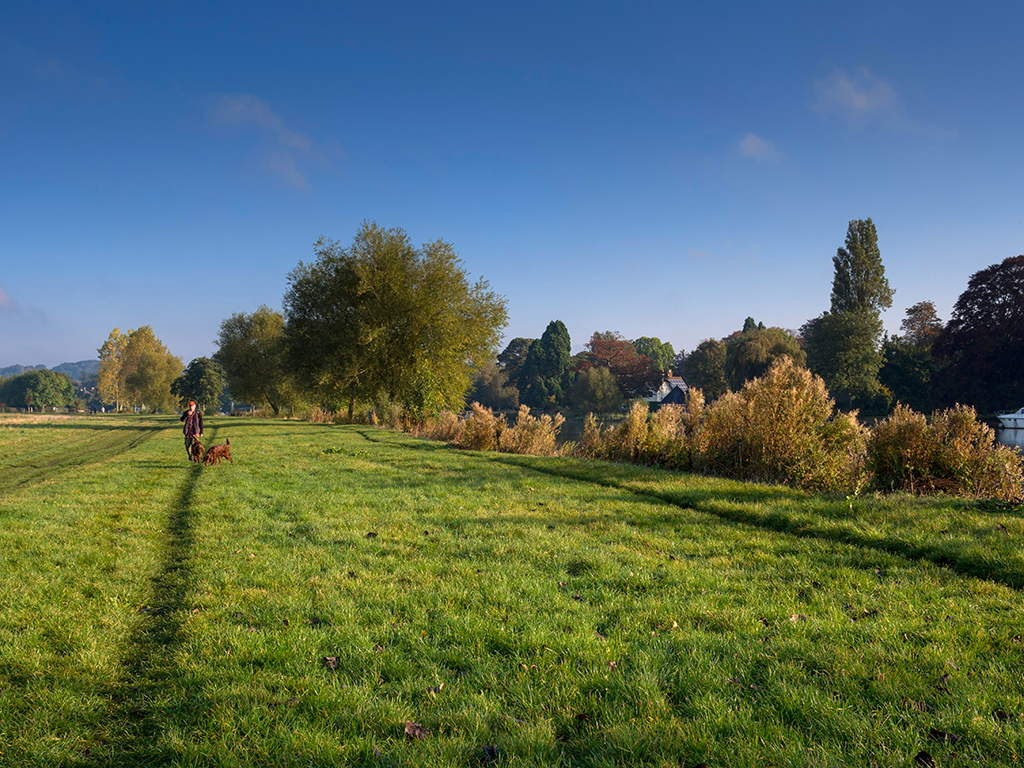
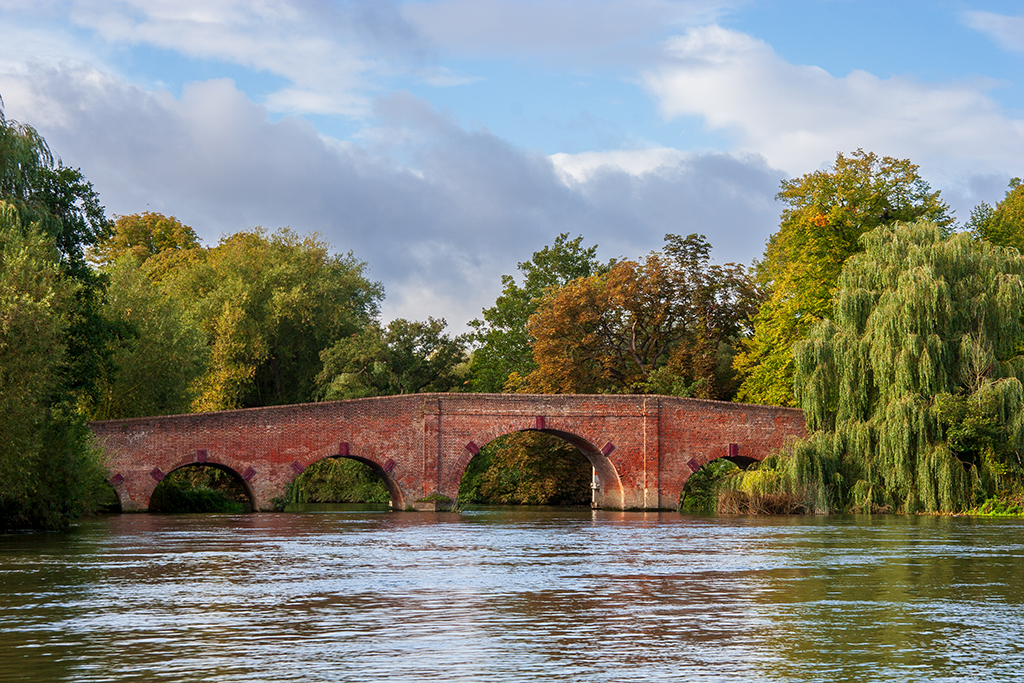
It is an interesting passage through Oxford. We tied up and spent a day exploring the famous city. Our next stop was just outside the city, at the Trout Inn, which features in an episode of the Morse TV series. The Oxford Canal is one of the prettiest canals that we have been on, and we enjoyed a peaceful trip.
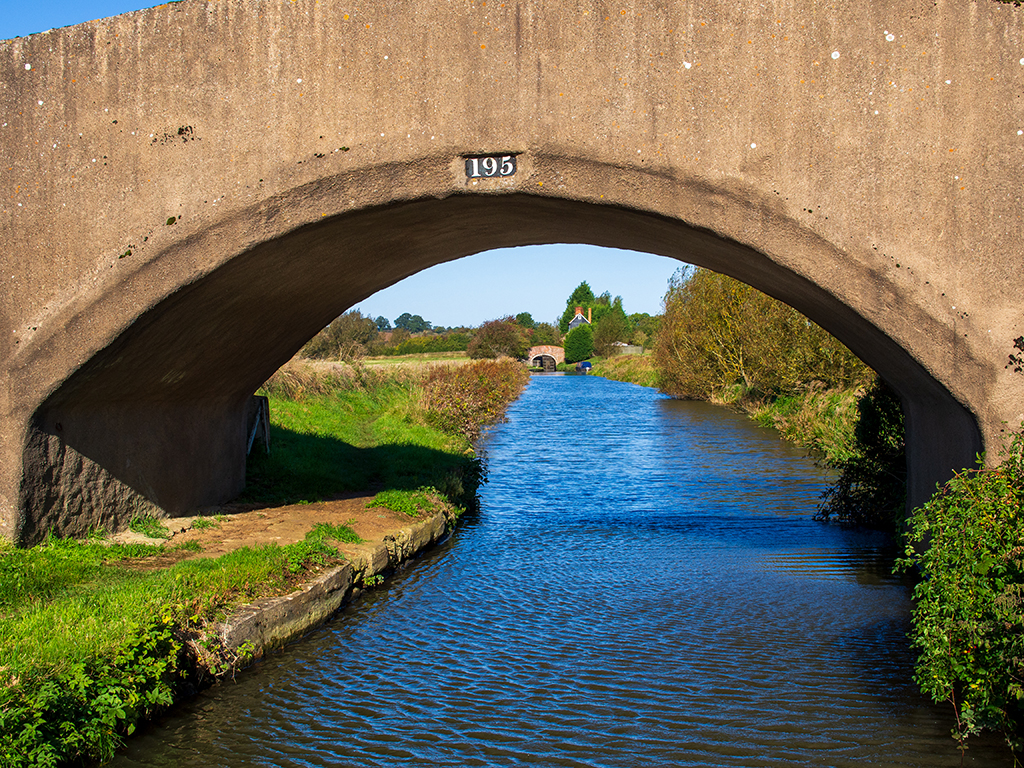
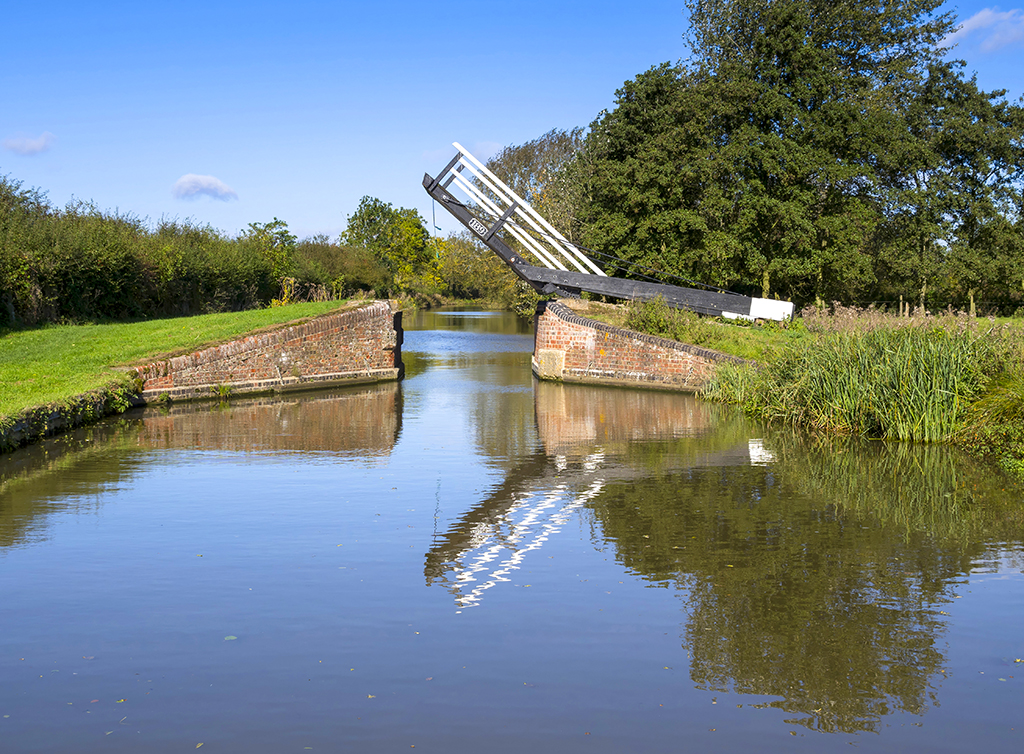
Eventually we turned into the Grand Union Canal and handed over the boat and said a heartfelt goodbye to our guests. We did keep in touch over the next few years, and I gather that any frustrations they felt were long forgotten and Mike kept a photo of the boat on his desk.
 Scene and Done
Leave a comment