
Our travels began with camping trips.
As I was preparing to write this first post, I consulted with some friends as to whether I should pull 6 cartons of photo albums out of storage and go through them to find pictures to accompany these stories. The answer was, no need to spend time searching and scanning old photos, “A good story will stand up by itself.” No pressure then. So I took a fascinating trip down memory lane, through more than 70 years of photos, ours and many from our parents. I scanned the ones I thought would be interesting, and I am supplementing those faded memories with more recent images taken during our travels.
When I was 8 years old, my parents decided that we would go on a camping trip to Maine. Dad built a wooden box to go on top of the car, and he borrowed a large tent from the next-door neighbours. Tents at that time were not straightforward, light, and waterproof; they were made of heavy canvas and had a ridgepole and guy ropes that pulled out the sides and required hammering tent pegs into the ground.
Mum, being a sensible lady, suggested that we have a practice at putting up the tent in the garden before heading off into the wild blue yonder. Dad scoffed, reminded her that he had been a boy scout, and announced that there was no need to bother with any practice.
Dad was always eager to get going, so on the appointed day, he had everyone out of bed by 4am. We stumbled around in the dark, my 3-year old brother and I “helping” to load all the stuff that had been accumulating in the back hall in preparation for the adventure. Shortly before everything was ready, Mum headed off to have a bath. Yes, really. She felt that baths were likely to be scarce on the trip, so wanted to save hers for the very last minute. After Dad, my brother, and I, had been sitting in the car for quite some time, Dad went back into the house to find Mum pottering around the kitchen. She said she was “waiting” for the rest of us to be ready. This was not an auspicious start, but I will say that it was the normal routine for road trips for all of my childhood!
Naturally, we were now setting off at the same time as everybody else who was taking a vacation, so we spent a lot of time stuck in traffic. In theory, today, it would take about 7 hours to drive from Toronto to Drummondville, Quebec, but by the time we sat in traffic, stopped for breaks, got lost… Oh yes, I forgot to mention that for reasons that still escape me, my parents never had a map in their car. Anyway, we arrived at the campground in Drummondville after dark. It was also pouring with rain.
A site was assigned to us, and Dad proceeded to unload the tent. This was when he discovered that boy scout or not, he had to spend half an hour untangling the guy ropes, sorting out the tent pegs, and figuring out which was the ridge pole and what other poles went where. Clearly, the folks we had borrowed the tent from were not as organized when it came to putting it away as one would have hoped. Eventually the tent was laid out on what seemed to be an appropriately flat part of the site, the ridge pole was slid into it, and my small brother and I were assigned to hold up the upright pole at one end of the ridge pole, while Mum clutched the one at the other end. Dad ran around with a hammer, pounding in the tent pegs. As soon as one side was apparently secured, and he started on the other side, the pegs he had put in first popped out of the ground. It took some time to find the right angles (and the right sequence) to get everything in place and the tent secure. Dad was soaked.
If you have ever been in a canvas tent in the rain, you will know that you must not touch the sides, and especially not the roof, because that creates a place where the water will seep through. I am sure there is a proper scientific explanation for this, I just know that this is what happens, and we had lots of drips inside.
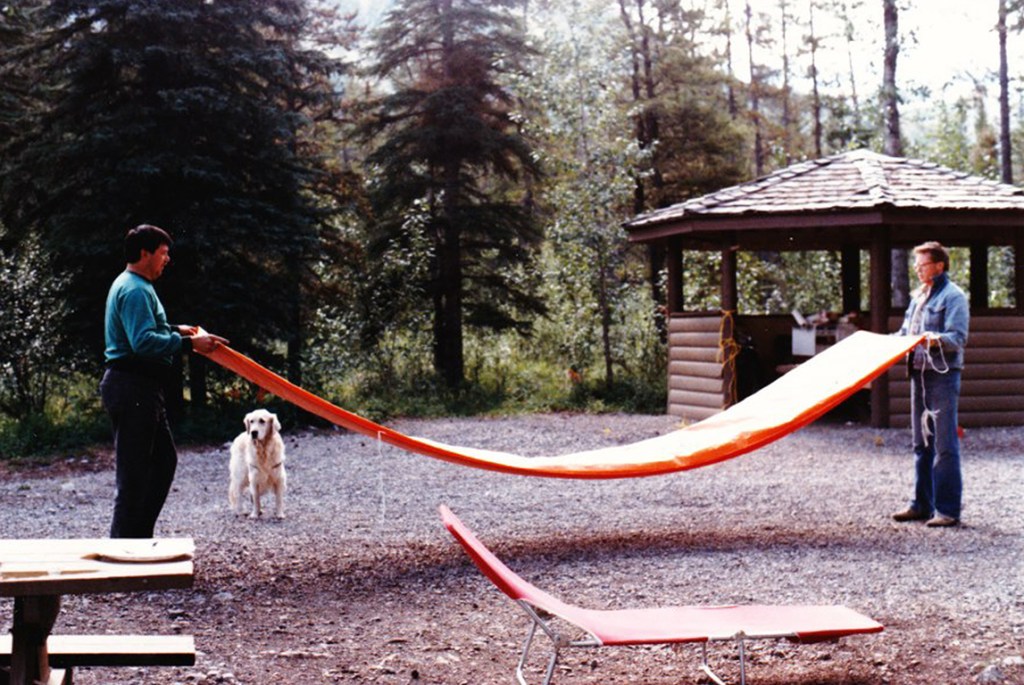
Mum and Dad had given great thought to bedding for this trip. Sleeping bags had been purchased for everyone, and two camp beds were acquired for the adults. The tent had a groundsheet, and that was considered adequate for the children to sleep on. My back hurts even thinking about it all these years later! The camp beds were of a design that folded up, with angled legs that formed a sort of triangle to support the canvas.
Everything was set, trips to the site facilities accomplished, and we all got ready for bed. It was quite cold, so Mum put on a lot of extra clothes plus sweaters and her raincoat before carefully climbing into her sleeping bag. Five minutes later, she decided that another trip to the facilities was required. Of course, Dad had to accompany her. Eventually they returned, and Mum was ready to settle down. Unfortunately, not being an engineer, she did not realize that the design of the camp beds was such that if you sat on one end, the whole thing would flip up, dumping you on the ground and then collapsing on top of you. My brother and I found all this drama very exciting. I suspect that both Mum and Dad used a few adult words, but very quietly, so as not to set a bad example.
After an uncomfortable night, we woke up very early to find that much of the tent floor was soaking wet. The nicely flat area where the tent was pitched straddled a gravel drainage path.
The next day’s excitement was a stop at a campground that featured “lean-to” accommodation as an alternative to pitching a tent. This was a large wooden structure, with an elevated floor and a sloped roof, completely open at the front. You set out your sleeping bags etc under the roof, and presumably kept a fire in the fire pit in front, to discourage the local wildlife. Now, Maine is not the western mountains, with resident predators that include grizzly bears and wolves, but there are certainly coyotes and what is described as a healthy population of black bears. True, tents do not keep predators out, but they do provide a psychological barrier! Not to mention small biting insects. I can still remember how terrified I was in that place, kept awake both by the distinctive eeeeeee of marauding mosquitoes, and the absolutely certainty that wild animals were creeping up on our campsite, drooling over an upcoming meal of small children! The night in the lean-to did give the tent a chance to dry out.
The rest of the trip went fairly well, as I can only remember bits and pieces. I know that the weather on Mt Desert Island was wet and miserable, and we eventually moved further south along the coast to a place called Hermit Island. That stay was remembered by all of the family as a highlight, and turned a holiday that began with far too many challenges, into a golden childhood memory.
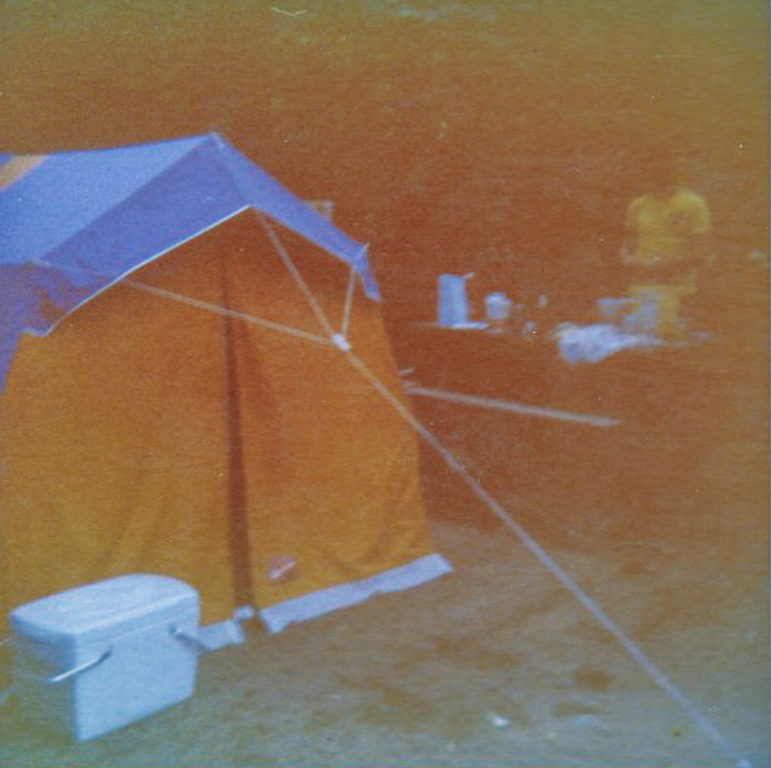
Fast forward about 12 years, to late August, 1974. By this time, Dick and I were a committed item, and we decided to go camping together, destination Lake Placid, NY. Dick’s brother had just bought a tent, and it was agreed that we could borrow that, as well as his father’s car, to go on our trip. When we arrived at the farm to collect them, the tent was pitched in the front yard. Mum told us that Ed had found it quite difficult to put up. While we were out and about, Ed took the tent down and packed it up. Later, I suggested to Dick that perhaps we should have a practice go at pitching the tent, particularly given the trouble Ed had experienced. With the typical disdain of the eldest for the younger brother, Dick’s response was, “We know it is all there, we saw it when it was up.” Is this beginning to sound familiar?
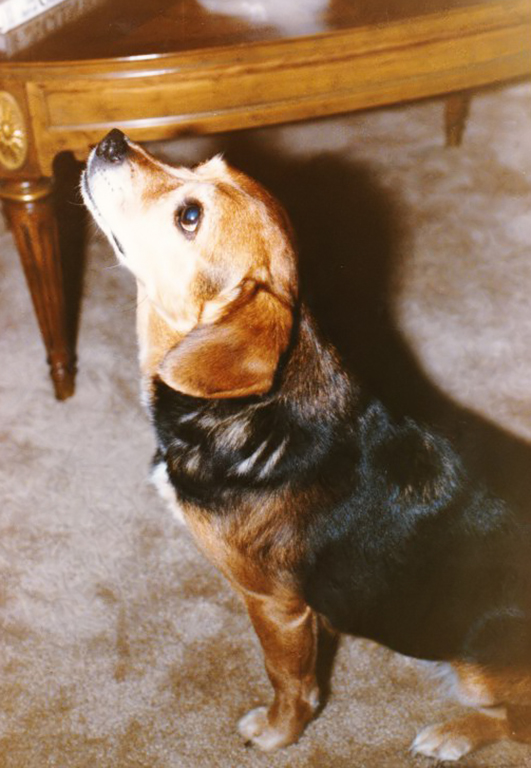
We set off from Norwood, accompanied by Jesse, the beagle chihuahua cross puppy that I had acquired in the spring. Today the drive would be about 5 hours. I can only assume that we must have been pretty late leaving, because we arrived just before dark. There was also a thunderstorm rumbling in the distance. Leaving Jesse to watch from the car, we unpacked the tent. I brought out the instructions and we began by laying the tent carefully on the ground and then picking out the “first y-shaped pole”. The first inkling that there might be a problem came when the instructions told us to fit the “second y-shaped pole”. There wasn’t one. There were lot of poles, that we tried putting together, but nothing would match that first y-shape. The diagram seemed to have no relationship to the reality of the tent and its equipment. It got dark, and we had to turn on the car lights to see. The thunder got louder. The puppy got restless. Nothing seemed to work.
At this point I was ready to burst into tears. Then I thought about it. We were students, and our money would either stretch to the few days camping that we had planned, or a single night in a motel. I knew that if I started to cry, Dick (who had not at this point been my husband of 40-some years…) would immediately agree that we should abandon our plans and go to a motel. So, I took a deep breath, and suggested that we just try to hold the tent up enough to get into it (with dog and cooler), and then figure it out in daylight the next morning. As soon as we threw away the instructions, everything went together perfectly and logically, and in a few minutes we were all set and ready to prepare our supper on the (borrowed) Coleman stove. There was only ever one y-shaped pole; one assumes that the person who wrote the instructions did not in fact have one of the tents in front of him. Jesse was a bundle of energy after her long ride in the car, and I remember standing apart and throwing a ball back and forth to each other while puppy raced between us.
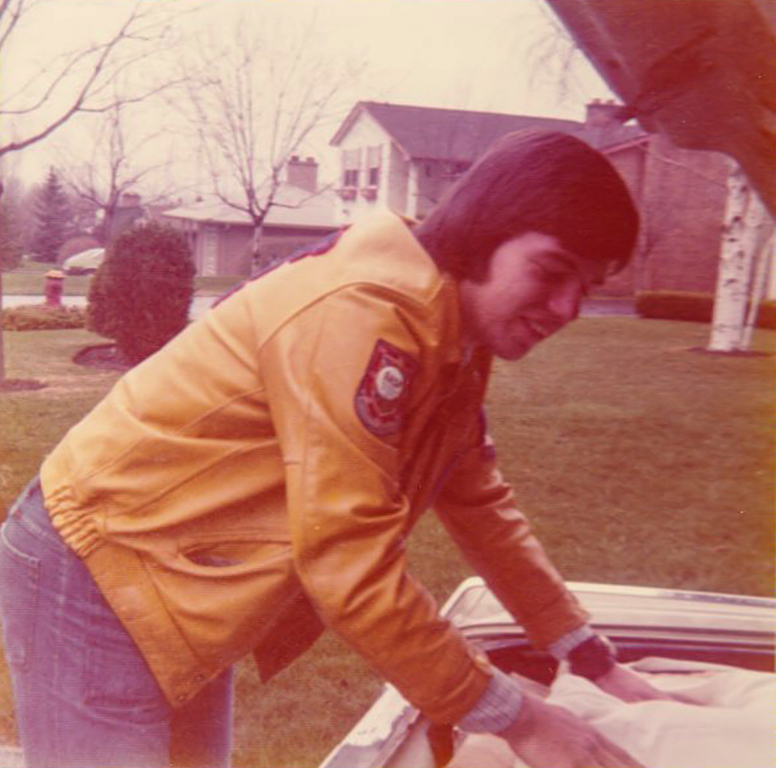
The holiday was our first together, and we have never lost our enjoyment of travelling, visiting new places, and returning to favourite locations.
We enjoyed a second “I told you so” event during that trip. We decided to take the drive to the top of Whiteface Mountain. As we set off, I suggested that perhaps we should fill up with gas. Dick did not believe then (and still does not), that anything over ¼ full requires a top-up. The mountain is part of the Appalachians, 4867 feet high. It is just 13 miles from Lake Placid, so in Dick’s defence, ¼ of a tank of fuel should probably have been enough. Sadly, he did not realize that the steep road with late summer traffic, finishing with hairpin bends, was going to take a lot more fuel than he anticipated. After we had visited the attractions and enjoyed the views, on our return to the car, Dick realized that we were nearly out of gas. His solution was to turn off the engine and coast down the road on the return. This meant that he needed to keep the brakes on the whole time, and by the time we were at the bottom and able to make it to a gas station, there was a distinct smell of burning rubber! Some time later, on one Dick’s visits home, his Dad commented that he couldn’t understand it, the brakes on the car needed redoing very soon after he had them done in the summer. Dick made interested noises, but failed to offer an explanation, and Dad was left scratching his head…
Dick and I got married in 1977, and there were more camping trips. One year we headed east to meet my parents in Nova Scotia, camping on the way there. They planned to join us at a campground near where they had been staying with friends, but the friends persuaded them to continue to stay with them, and (somewhat reluctantly) invited us to join them. Giving us a bedroom did not, however, convey status as favoured guests. We put the perishable food we had with us into their fridge. The first evening, we all ate the casserole I had made and brought with us. The second evening, Dad took everyone out to dinner at a local restaurant. In the morning, while Mum and Dad were offered freshly made breakfast rolls and the option of a boiled egg, Dick and I were presented with warmed up hamburger buns from our own supplies. It was a strange (and never to be repeated) stay, fortunately only two nights. We carried on with Mum and Dad to one of the great former railway hotels, the Algonquin Resort in St Andrews, New Brunswick. We stayed a few nights there (Mum’s treat), and played golf together on their lovely seaside course. This was the first of many camping and golfing holidays we took, both on our own and with my parents.
I like to include a little history with my stories. Dick and I grew up in Canada, and we learned about the Acadians in high school history lessons. Now generally, the victor writes the histories, and those histories can be quite biased in their favour. Perhaps Canadians are a little different. These are very polite people, who will apologise if you bump into them. (I still do that, automatically. Dick has no need, he is a highly visible individual, and nobody bumps into him.) Canadians also seem to have a penchant for apologetic histories. We were taught about the Acadians from the point of view of stories such as that told in the poem Evangelene, written in 1847 by Henry Wadsworth Longfellow.
The original white settlement of the lands of the French colonies in the north east of North America began with 60 families from the farming areas of west-central France in the early 17th century. This group increased over the next two centuries, and developed their own distinct culture. They were friendly with the local Mi’kmaq tribes. The British conquered the region in 1710, and over the next 74 years, there were 6 wars taking place in the Acadian region. The Mi’kmaq refused to accept British governance, and, joined by many of their Acadian neighbours, engaged in guerilla warfare, harassment of British troops and fortifications, and disruption of supply lines. In hopes of stopping the conflicts, an oath of allegiance to the British Crown was required of all Acadians. Many refused. It is thought that there was concern that signing the oath would put them in conflict with the Mi’kmac, and that there would be a risk of reprisals. Another reason could have been the fear that they would be sent to fight against France during wartime. There was also the problem that the committed Roman Catholic Acadians could not sign an oath that acknowledged the British Crown as head of the Church. In 1755, 11,500 Acadians ( about one third of the population of the area that is now Nova Scotia) were deported to locations in the British colonies along the eastern seaboard, from New England, to as far south as Georgia. Many of the displaced Acadians quickly returned to their former homes. A second wave was deported to France.
The Spanish government decided that these dispossessed people would make an excellent bulwark against British expansion that might threaten their colony of Louisiana. Many Acadians had already settled there, and they were joined by more of their compatriots. They did not make particularly good subjects of Spain, participating in a rebellion that ousted the Spanish governor and required Spanish troops to put it down. The Acadians developed over time into the Cajun population, with their own distinct culture and language. Today, in spite of the Acadian Diaspora, also called the Great Expulsion, or Le Grand Dérangement, there are still over 300,000 Canadians who identify themselves as being Acadians. The largest group live in New Brunswick, and one third of the people of that province speak French as their mother tongue.
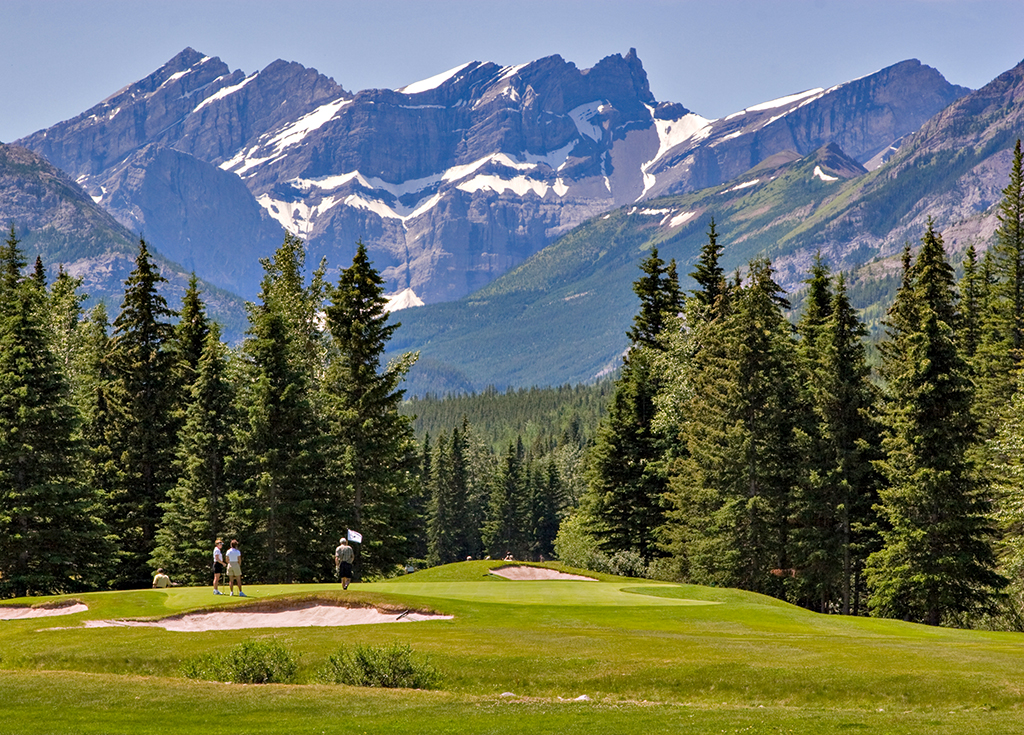
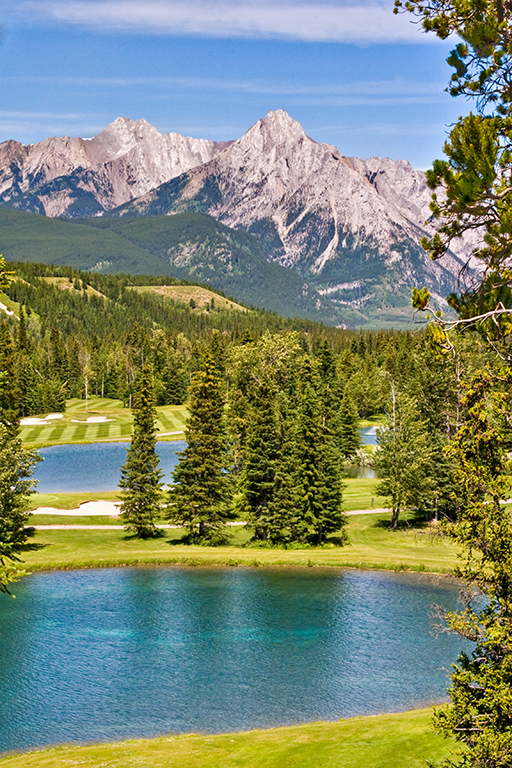
During the 1980’s, we lived in Calgary, Alberta, and the beautiful mountain golf courses beckoned. We continued to camp, thus saving money on accommodation, and played golf all over Alberta and in the mountains of British Columbia. Dick’s sister Betty joined us one year in late August, and had the dubious pleasure of waking up to four inches of snow on the tent and the ground at our campsite east of Banff. That day, after a round of golf at the famous Banff Spring course, we went shopping in the town, and Betty felt the need to purchase a really heavy-duty Arctic rated sleeping bag. I found a thick fleece onesie, complete with booties. Neither the sleeping bag nor the onesie were used again after that trip.
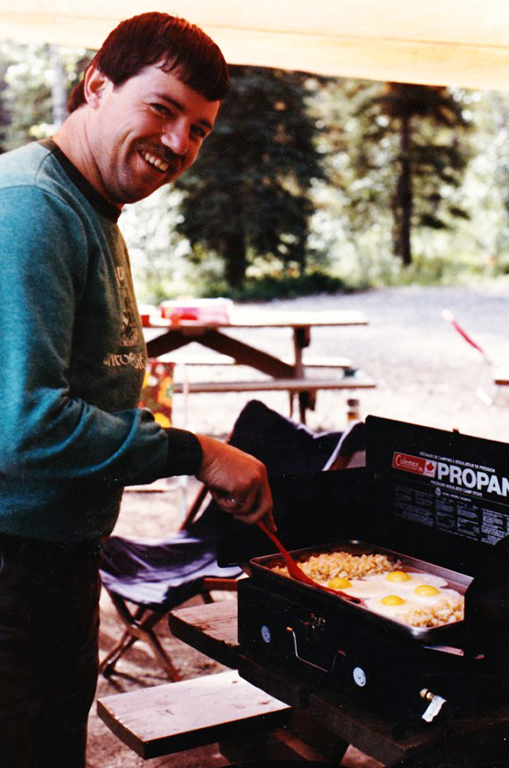
We also joined friends on group camping weekends at special campsites in the mountains. The sites were completely primitive, with no facilities apart from a johnny-on-the-spot. You could swim in the glacier fed mountain stream if you wished. Nobody did. During these trips, Dick perfected his special camping breakfast of steak and eggs cooked on the Coleman stove.
In the late 80’s, on a trip to England, I met a nice couple at a small hotel I used to stay at. They were (unusually in England) ice hockey fans, and a year or so later, Geoff stopped in Calgary on a trip through Canada one winter, going from city to city to attend NHL hockey games. He enjoyed his trip, so he and his wife decided that they would take us up on our invitation to visit in the summer. I asked them what they might like to do, and I suggested a camping trip. Waterton Glacier National Park is an easy drive south of Calgary, and you can travel on the spectacular Going-to-the-Sun-Road across the mountains to Kalispell, Montana and from there return to Calgary. The proposal was met with enthusiasm, even though neither of them had ever been camping, so plans were made. We had recently bought a much larger tent, although Dick had not yet experienced it. We had also kept the small two-person tent, so we were all set to go camping with visitors.
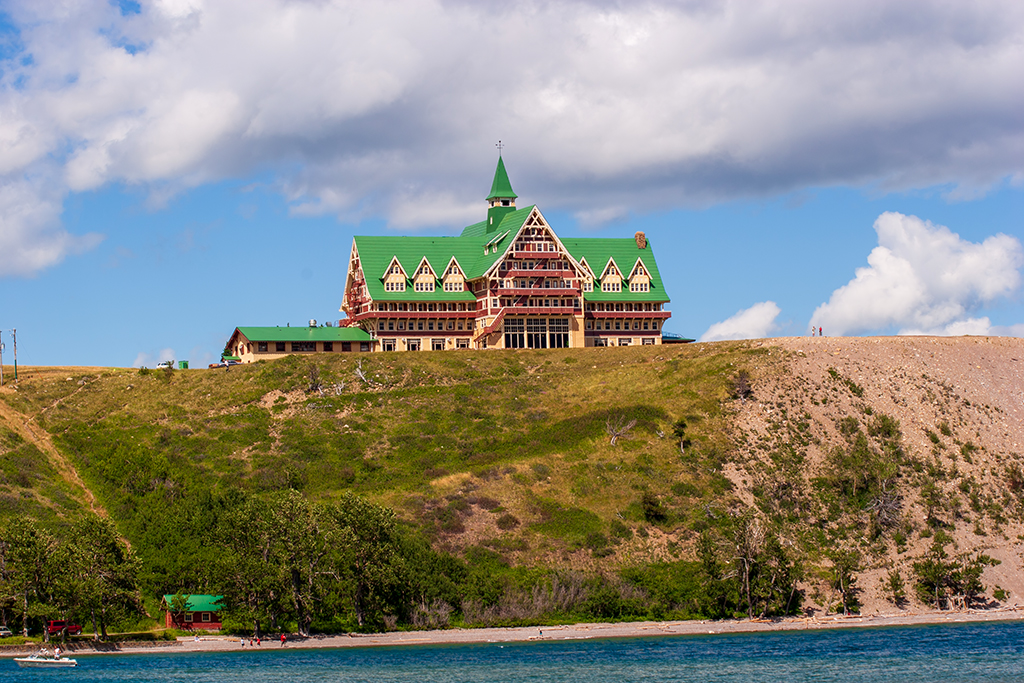
The Waterton Glacier International Peace Park is an amalgamation of two National Parks from each side of the border. The Park was proposed as early as the 19th century, and credit for the eventual establishment is given to Rotary Clubs from Montana and Cardston, Alberta. It was signed into law in the United States in 1931, the Canadians followed a few months later. The original concept of a “borderless” international park is somewhat amusing, as the only way to cross the border without checks is on foot through trackless, rugged grizzly bear country. The most well-known picture of Glacier National Park is taken from the Prince of Wales Hotel, which is in Canada. Not only are the two parks administered separately, they also have separate entrance fees.
The spectacular Going-to-the-Sun-Road crosses Glacier National Park, going over the Continental Divide through Logan Pass at an elevation of 6,646 feet. The highway was completed in 1933. It is a two-lane road with switchbacks and steep drop-offs, and overhanging rocks that also restrict the height of vehicles.
We set off for our first planned campsite in Waterton. On checking in, the lady in reception told us several times that “We do not have any sheltered sites left” and also explained that once we had paid for 3 nights, there would be no refunds. We could not understand the emphasis on sheltered sites and were even more mystified when we drove around to choose our spot. We could see that all the other campers had pitched their tents right beside the toilet blocks. It seemed a very strange thing to do, especially knowing that there would be people walking past your tent at all hours of the day and night! We selected what looked like a salubrious site and proceeded to pitch the two tents. The small one went up easily, but there was some difficulty with the new large one. It was a dome tent, and I had already learned that there was a critical order for putting in the three poles that lifted the dome (because they were three slightly different lengths). I tried to explain this to the engineer, but he was feeling impatient and ignored me. Being pretty strong, he forced the poles into their pockets and raised the dome, except that the result was not dome shaped, more like a slightly melting ice cream. Hungry, and fed up with tents, Dick decided that this was good enough.
As we faffed around with tents and all the other paraphernalia we had brought, the wind, that was already blowing when we arrived, increased considerably.
We set up the little hibachi to grill the steaks, and the Coleman stove to cook the rest of the dinner. By now, the wind was absolutely howling. The steaks blew off the grill, and it was hard to keep the stove alight. Brushing the dirt off the steaks and the meal finally ready, we ate, and all decided that it was certainly not a campfire night, and we crawled into our respective tents. Dick and I were accompanied by our two dogs, Sam, the Golden Retriever, and Hannibal, the English Mastiff. We also had the cooler in the tent with us. Not the wisest idea in Grizzly country, but we didn’t really think that through. Through the night, we could hear the wind start at the bottom of the lake, and increase its howl as it travelled up and then battered our somewhat unstable tent. At one point we felt the tent pegs give way. I suggested that we should step out and hammer them back in, but Dick’s position was that with two adults, two large dogs, and a cooler, the tent was going nowhere, and he was not prepared to get out of his warm sleeping bag. The wind finally died down just before dawn.
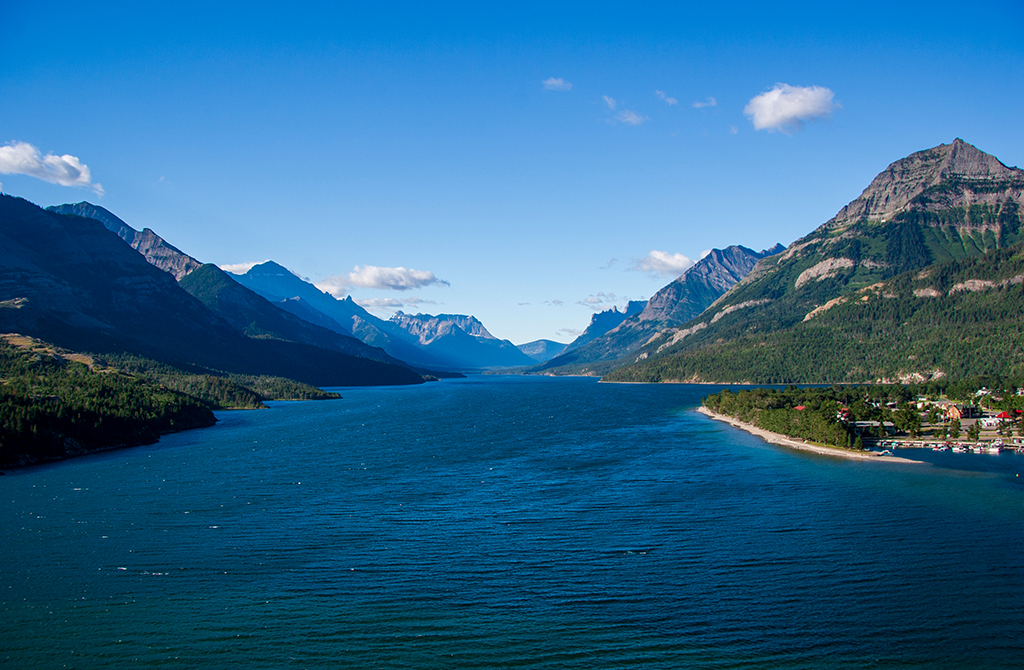
The next morning, our friends went for a long walk together. I am sure the conversation was along the lines of Mrs wanting to leave immediately, and Mr explaining that we had the cars, and there was no public transportation, and where would they go anyway! Meanwhile, Dick and I had decided that we would give up on our prepaid next two nights in that dreadful spot, and I would carry on to Kalispell with our guests, so they would not miss the wonderful experience of the Going-to-the-Sun-Road. Dick had always planned to return to Calgary from Waterton, and we had two cars with us. So, in fact, our guests could have returned to Calgary with him, but we sold them on the plan to carry on, since we knew that the campground in West Glacier would be far better.
Sadly, the drive was not a success. Our guests were absolutely terrified of the steep road, that winds along the side of the mountain well above the valley floor. My proposal to stop at the welcome centre at the top was met with the question “Do we have to?” Instead of oohs and ahhs of amazement and enjoyment, the drive was punctuated by small squeaks and gasps of fear from both passengers.
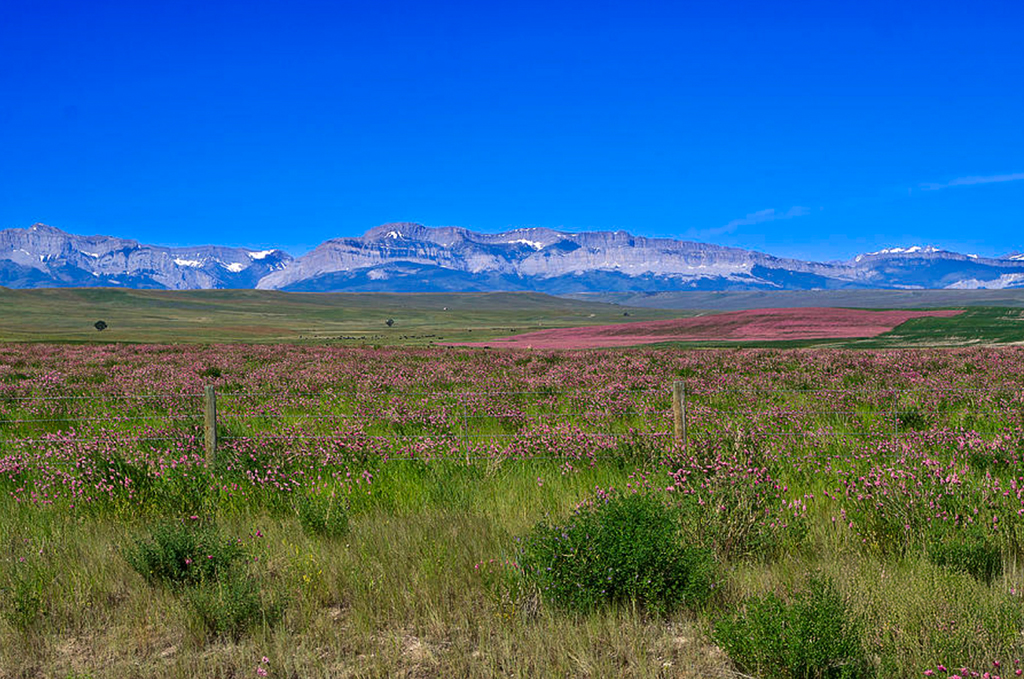
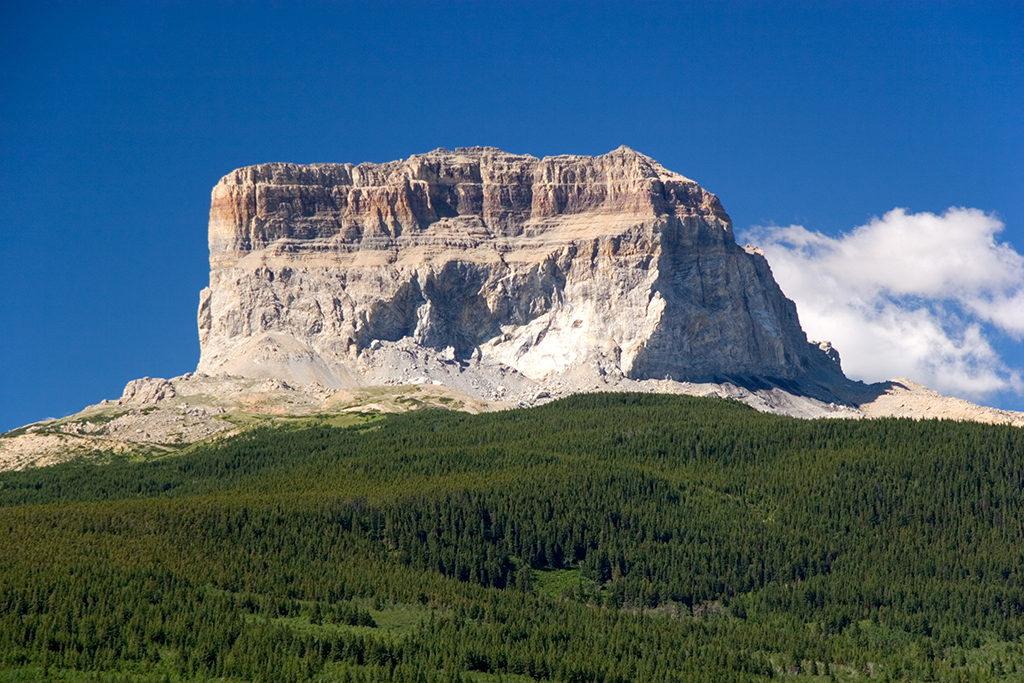
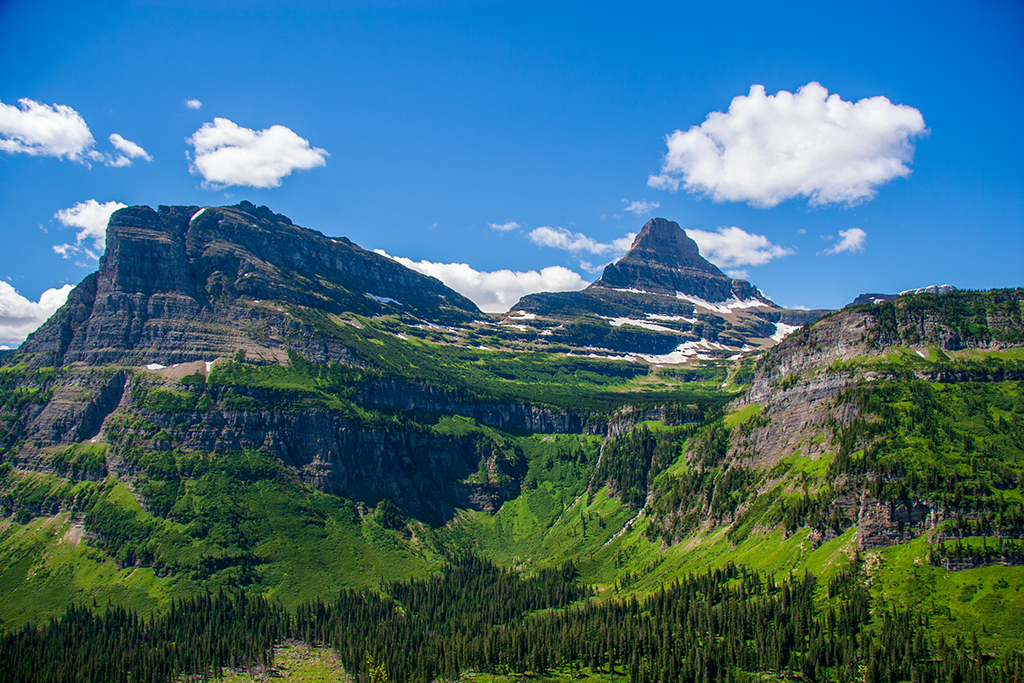
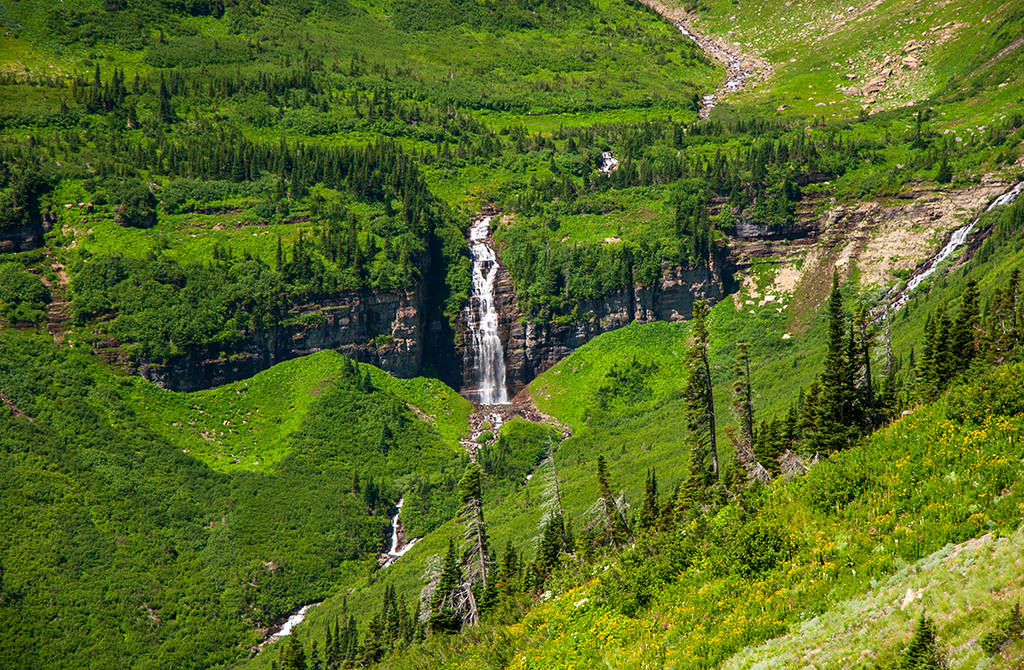
The trip improved dramatically once we were off the mountain and settling into our new campsite. The dome tent went up as easily as it is supposed to, once the poles were in the correct order, and our meals were delicious. There was no wind, and no rain. The dogs enjoyed it too!
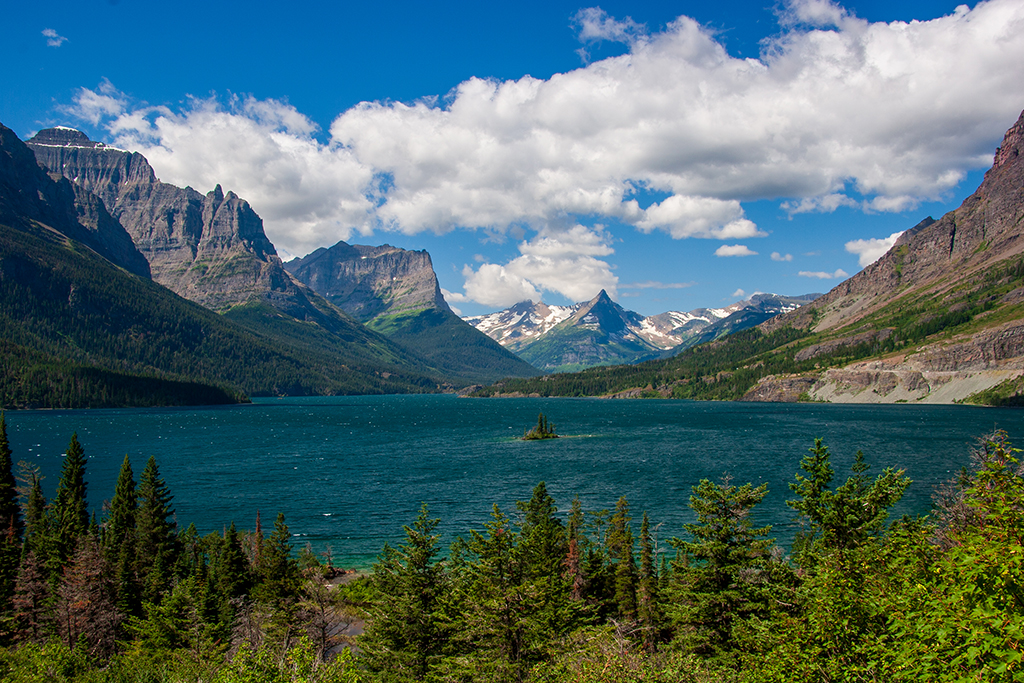
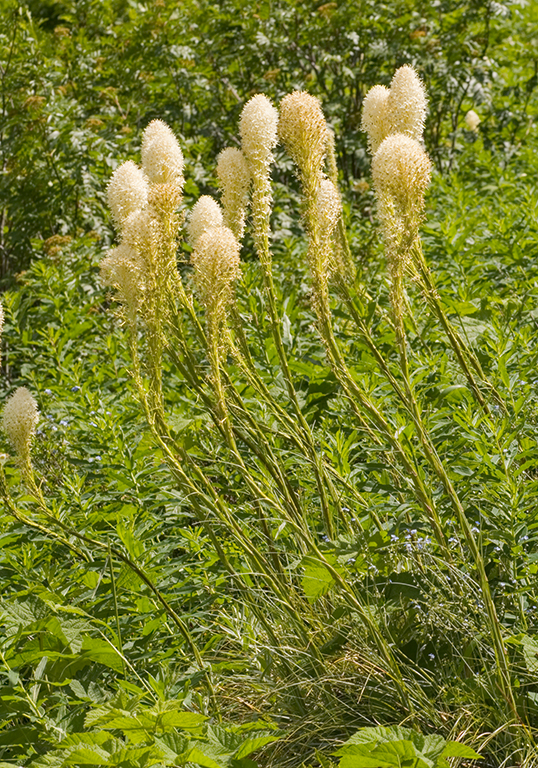
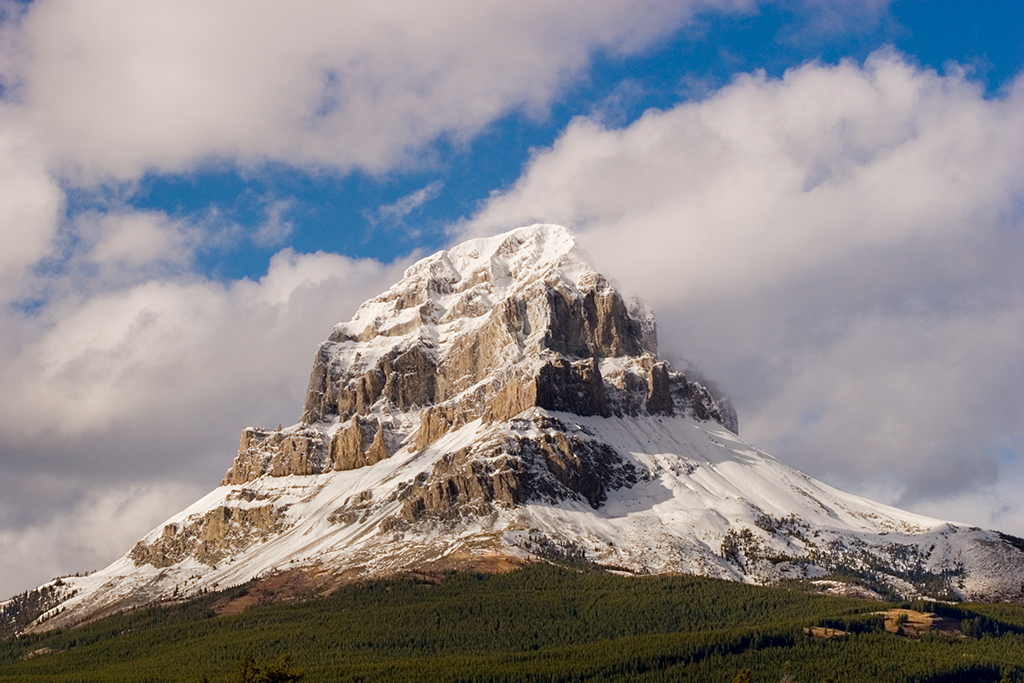
That was probably our last camping trip, as it was around that time that we bought our first timeshares. Just as well, we were getting old enough, especially Mum and Dad, to want a bit more comfort than is available from tents and air mattresses! We optimistically kept the tents for years, and the sleeping bags are still in our storage unit. I honestly can’t imagine camping again, but never say never!
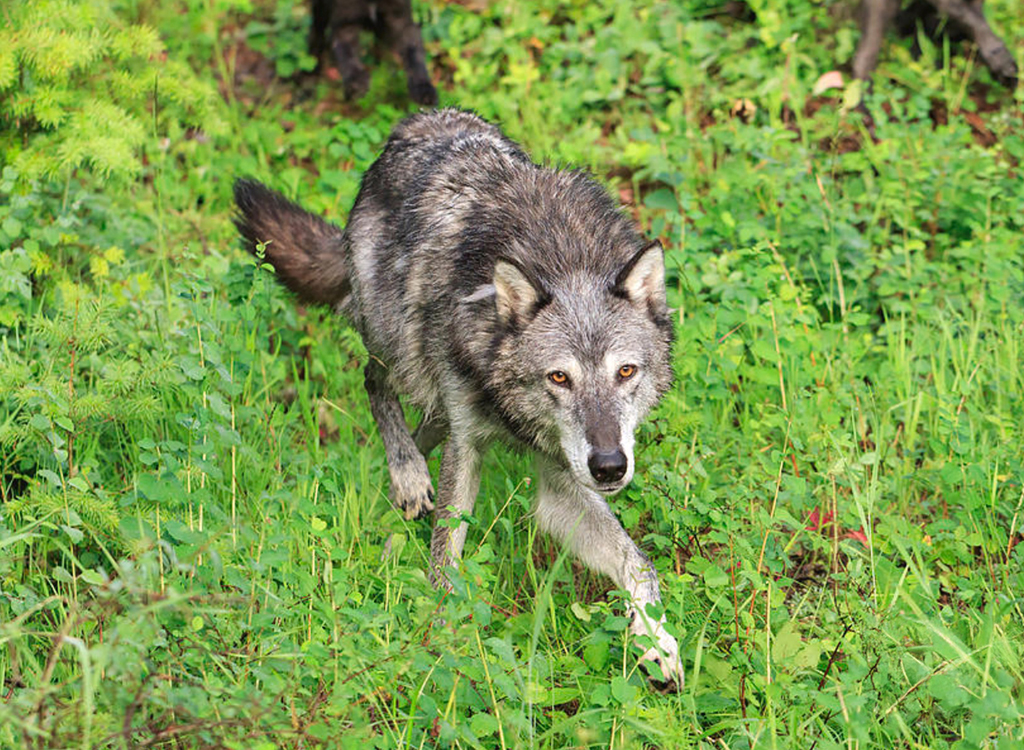
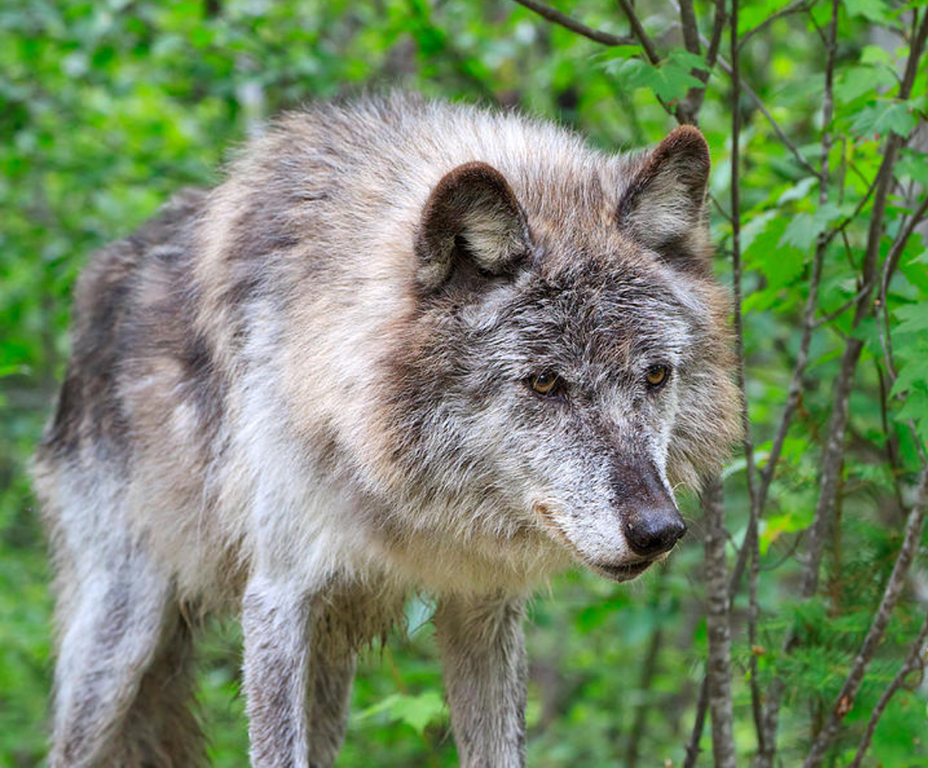
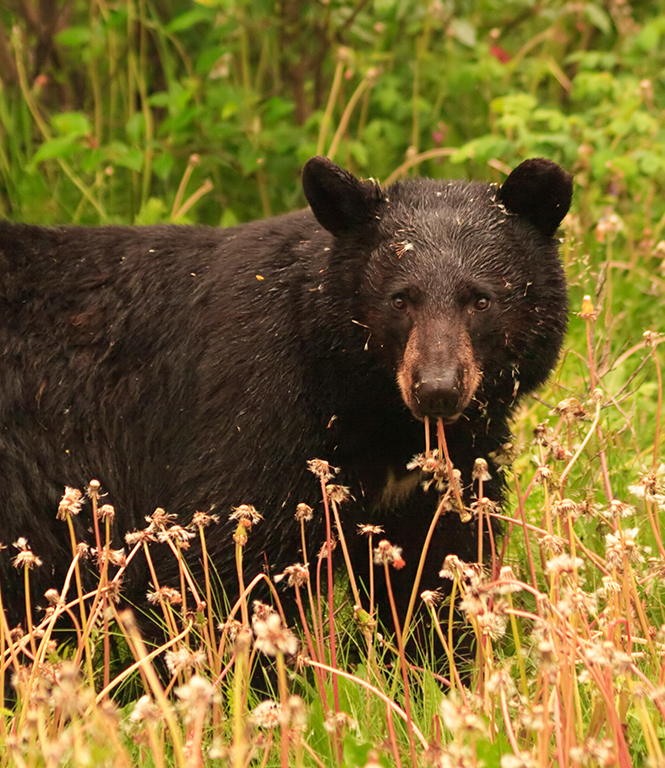
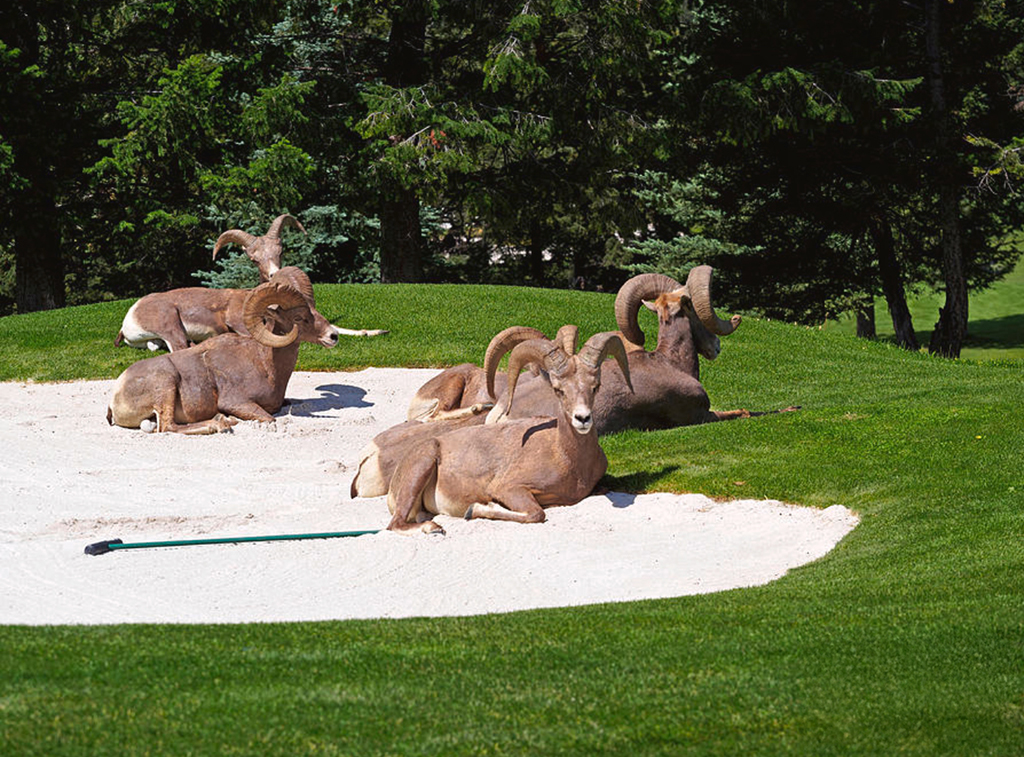
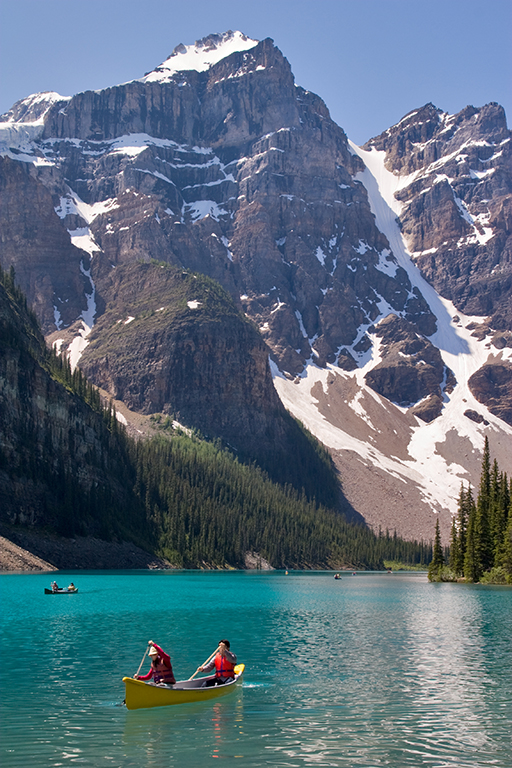
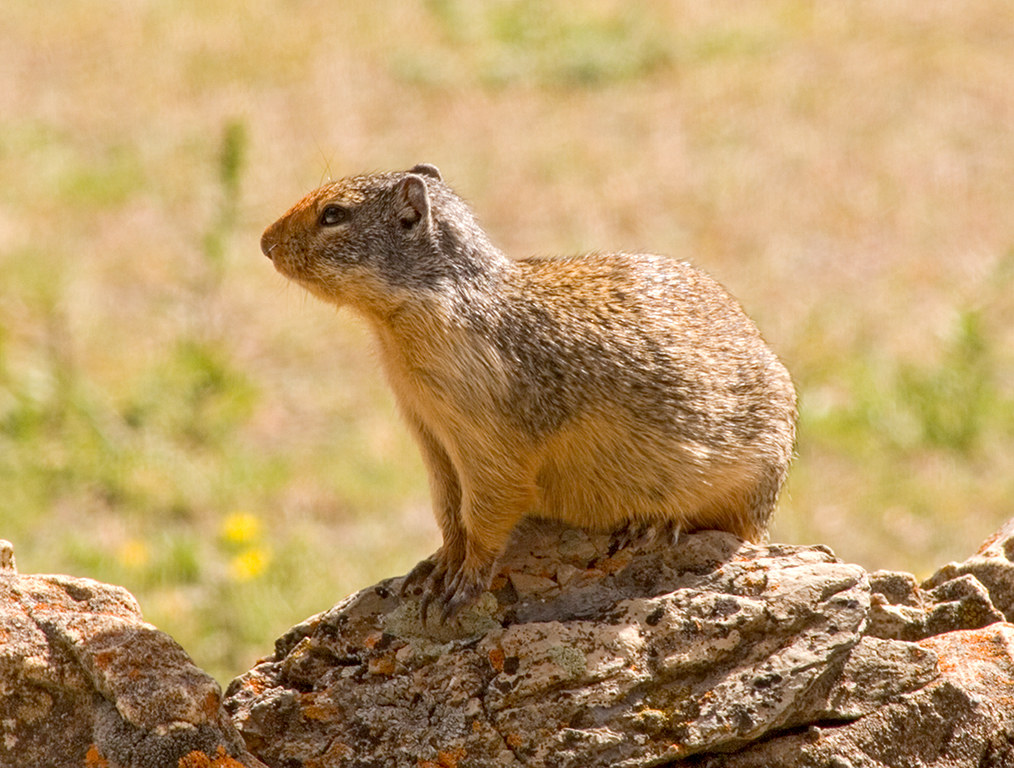
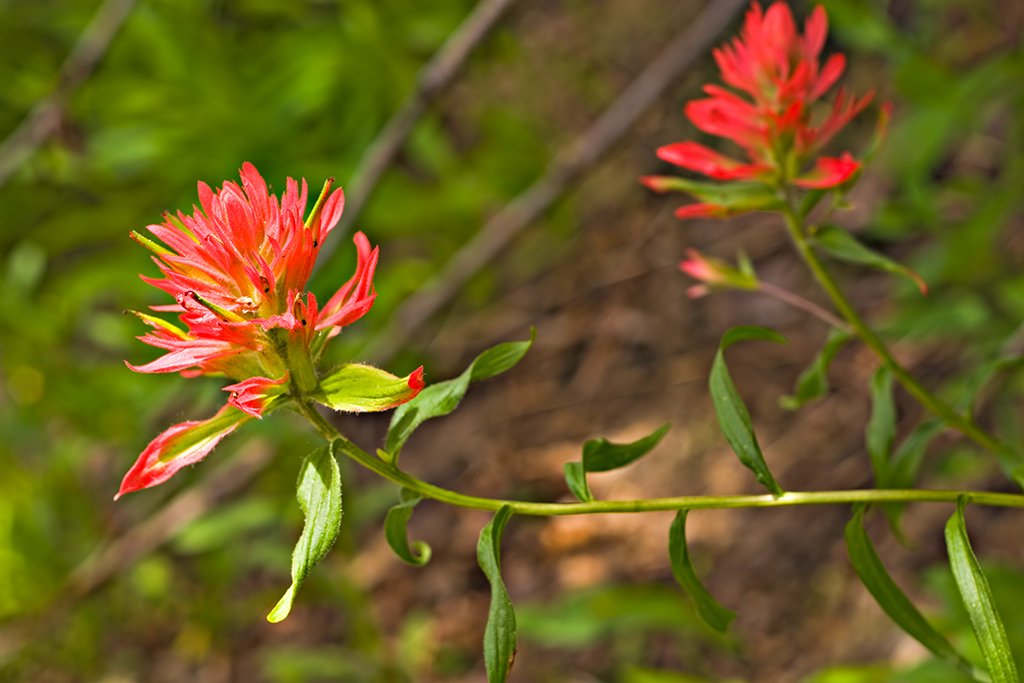
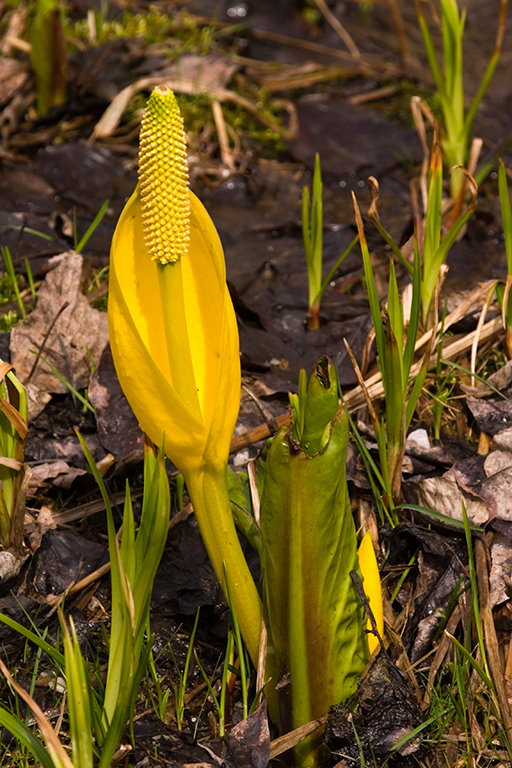
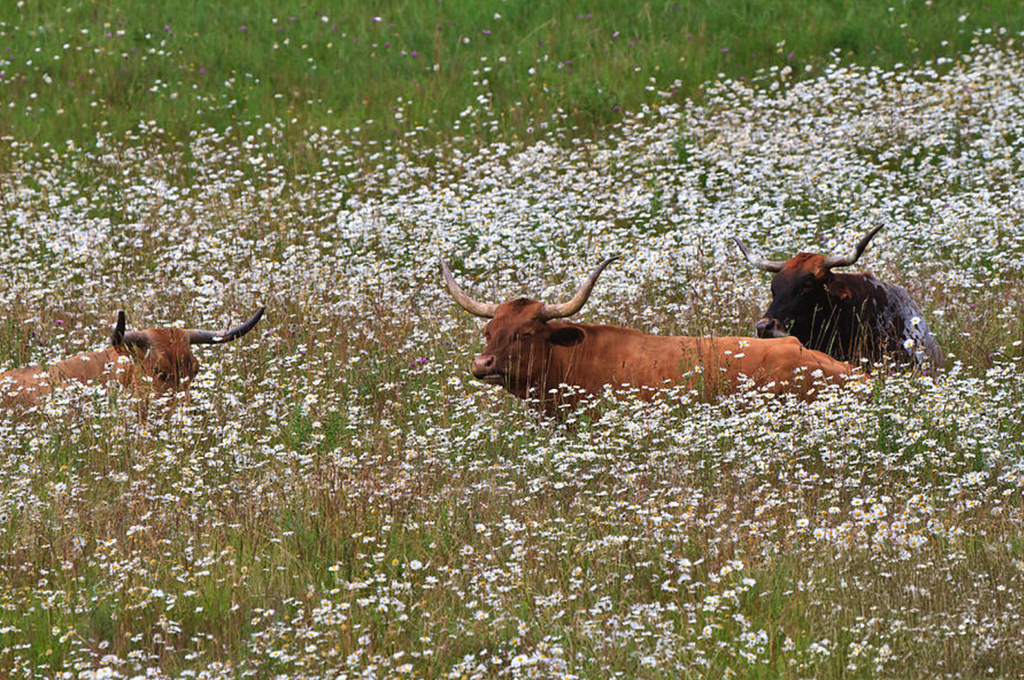
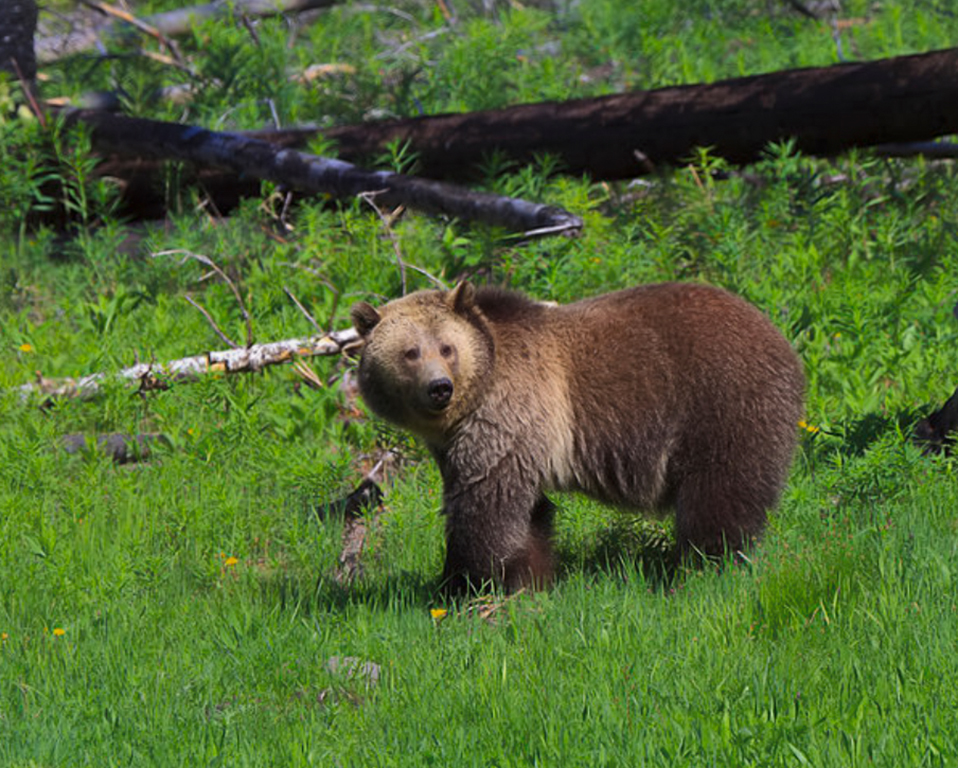
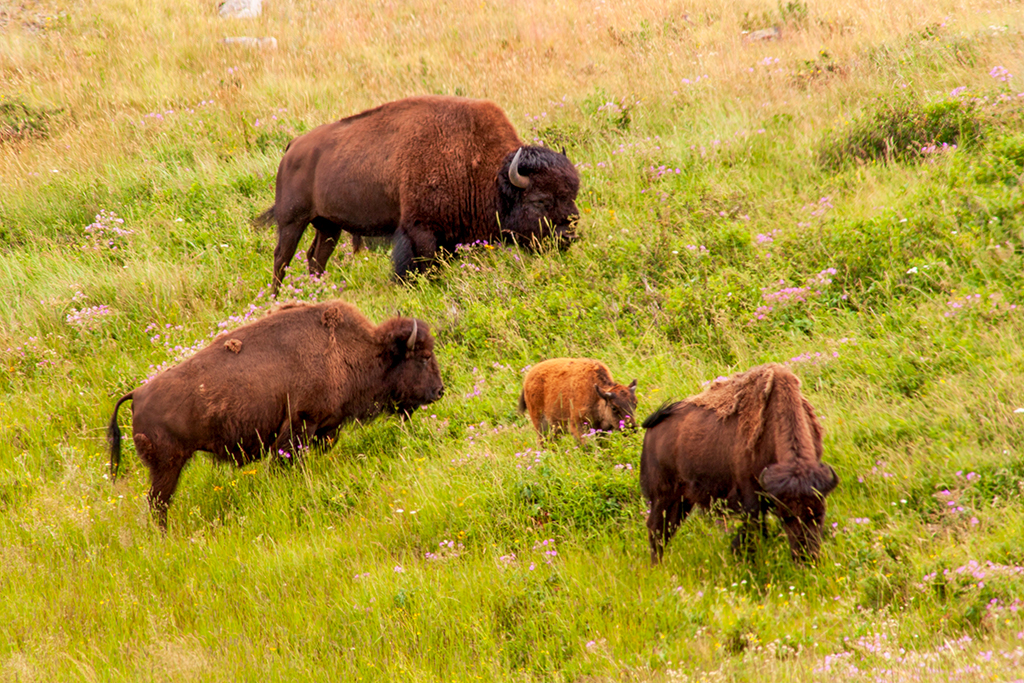
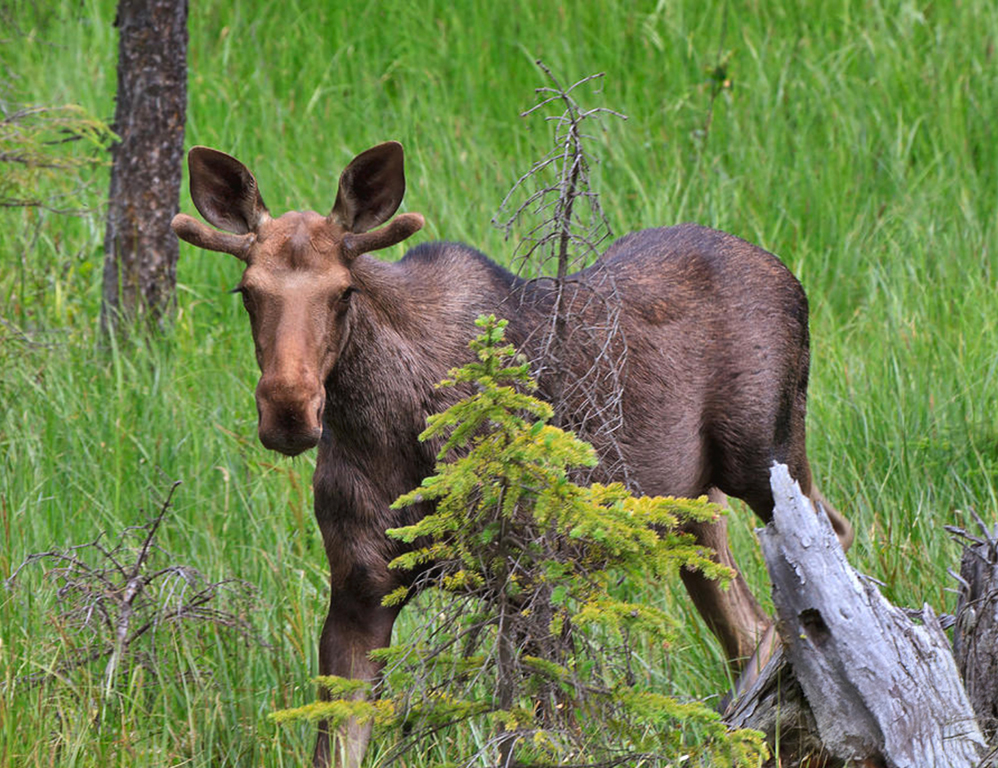
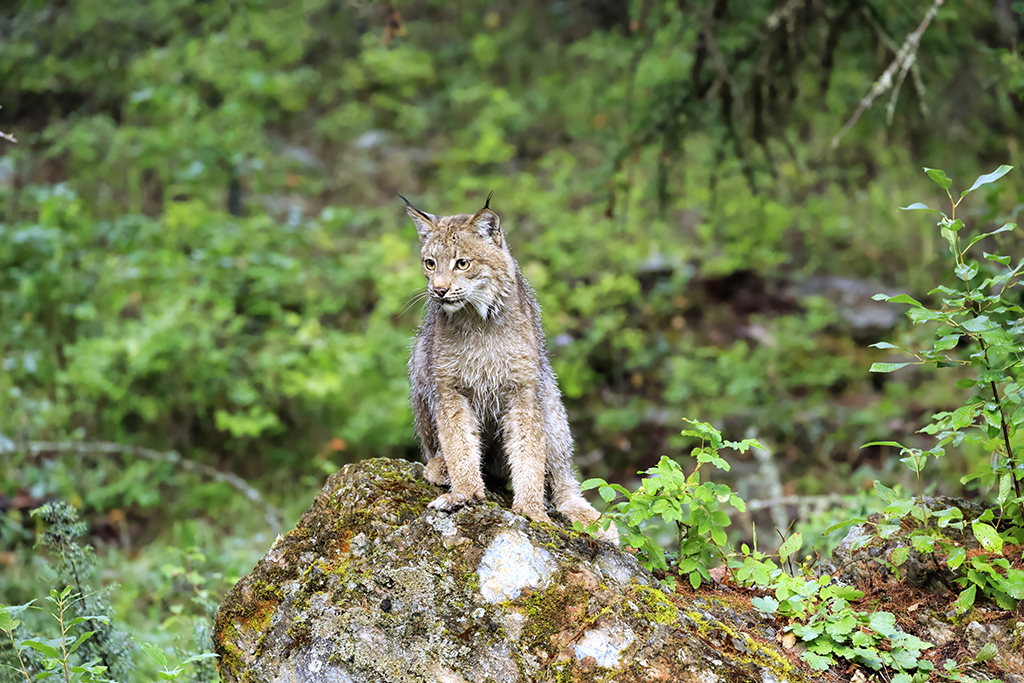
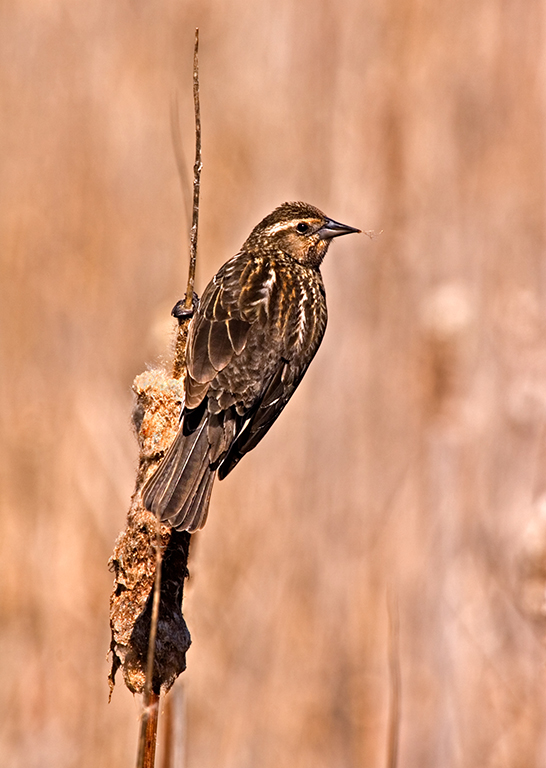
I will finish with some picture of wildlife that you might be lucky enough to see if you are very quiet and look around when you travel around the Rocky Mountains.
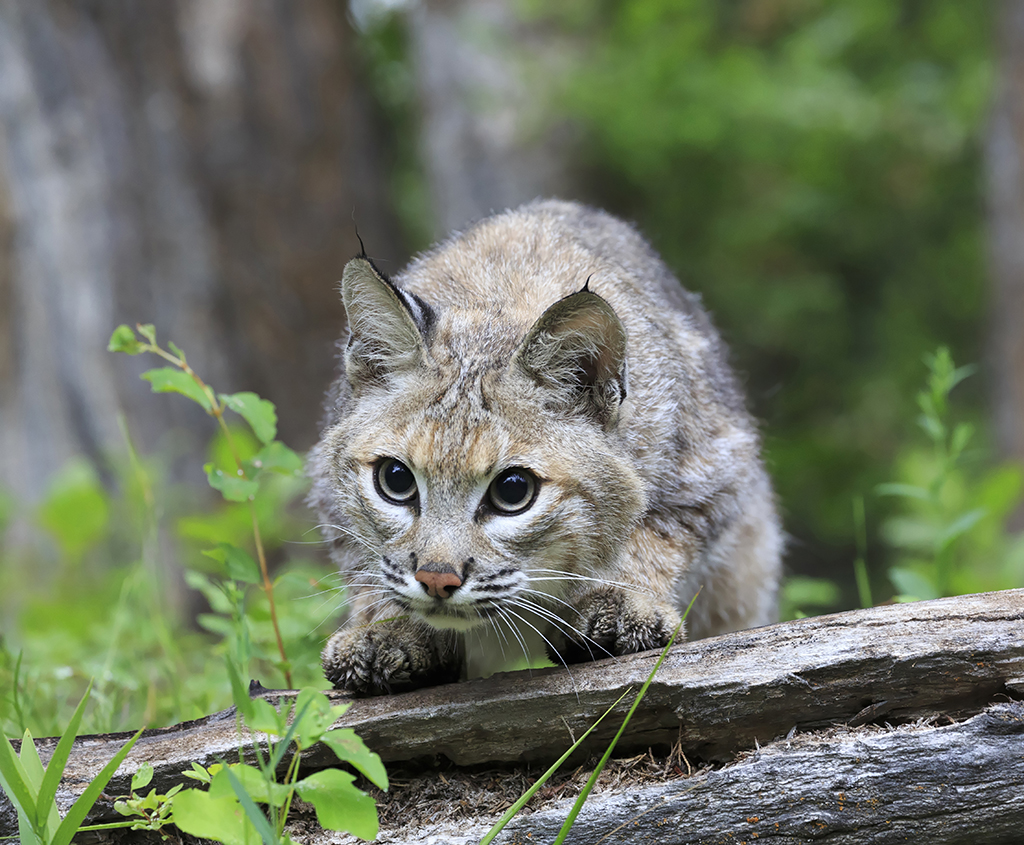
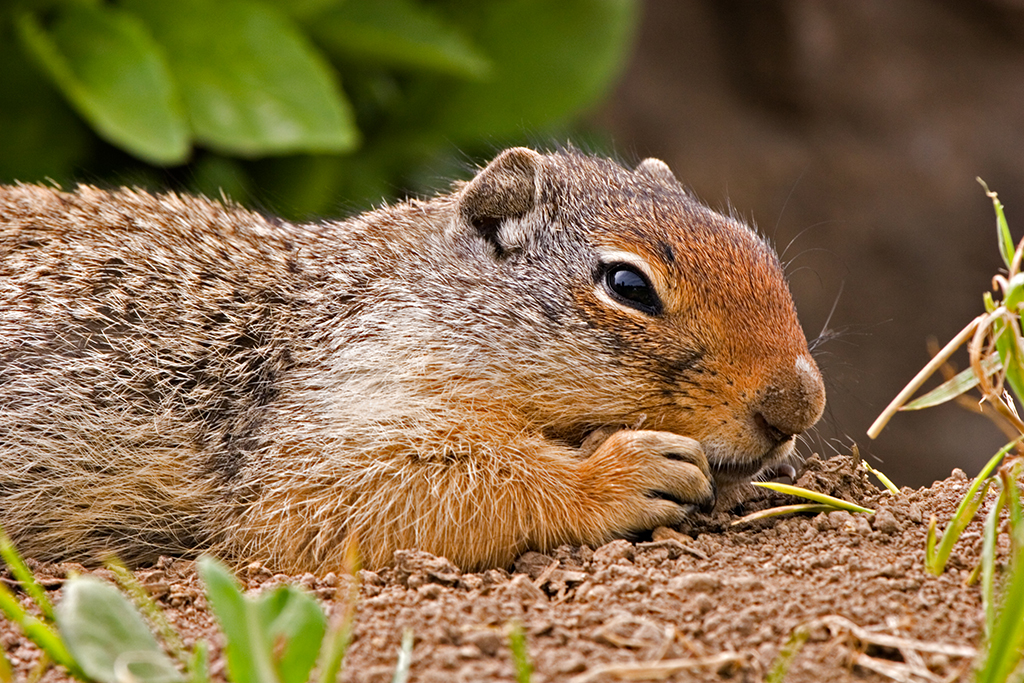
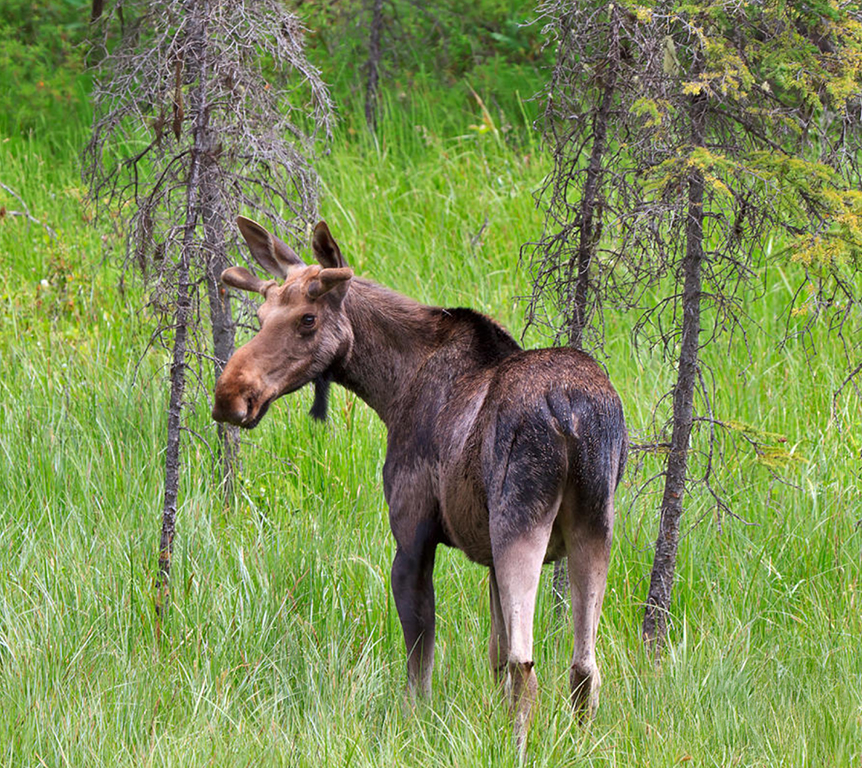

 Scene and Done
Leave a comment